Forum menu
I seem to be increasingly seeing reviews including owner reviews slating the quality of Tesla's especially for the price. Other manufacturers have caught them up in the EV world and it is only the batteries and supercharger network that now make Tesla's desirable.
A lot of people get giddy when test driving a Tesla, but most of it is generic EV compared to ICE, not Tesla specific.
already got an email from nationwide leasing with £125 off a month for a model Y.
My Kia e-Niro lease with Nationwide end in April. I was going to extend the lease for another year but your post prompted me to check Nationwide and the prices have certainly reduced from outrageous to merely laughable. 3 yrs and 10k per year on Model Y rear drive reduced from £677 to £590 per month. Trouble is a Niro EV lease on same terms is £570 per month (£160 per month more than I'm paying now) so if I was prepared to cough up that per month may as well have the Model Y.
They have done similar to powerwall customers only it’s to pump the price up right before install and then say pay up or we will sell it to the next guy.
Urban myth maybe? I waited a year after ordering to get my Powerwall installed. The price remained the same as when I placed the order, bloody bargain as the price went up about £2k in that year.
stick to the agreed price, or cancel & re-order but now they’re at the back of the queue again!
I can't imagine that queue is very long if they've just lopped 15% off the price. a quick play on their site shows a bunch of cars in stock and a 1-3 month wait for a custom order
Urban myth maybe? I waited a year after ordering to get my Powerwall installed. The price remained the same as when I placed the order, bloody bargain as the price went up about £2k in that year.
Your supplier took the hit then - was a Q4 2022 issue well publicised - many suppliers couldn't take the hit and Tesla wouldn't work with them.
1-3 month wait for a custom order
A colleague of mine did, indeed, only have wait for 3 months for his standard Model 3 co. car.
equally hilarious (as the article points out) for those who’ve ordered but not taken delivery yet – they either have to stick to the agreed price, or cancel & re-order but now they’re at the back of the queue again!
According to several people on the tesla uk facebook page, Tesla are honouring the new price for their order. They're going through the queue emailing buyers.
Experience from several buyers suggests you get the deal active on day of collection including free mileage etc.
My Tusker order for a Q4 Etron Quattro is now showing as late August 23(was May). There is an ability to cancel/change car up till a month before delivery. Think I’ll cost out an AWD Tesla model 3 and see how it now compares. Will need to be a factory build as need a towbar, but indication is I could have it in April..
I can’t imagine that queue is very long if they’ve just lopped 15% off the price. a quick play on their site shows a bunch of cars in stock and a 1-3 month wait for a custom order
Anybody got any guesses in what will happen to used model 3 prices?
Used prices have dropped a lot already. Might be another small readjustment but wouldn’t think huge. You can already get one for not much more than a used Kia Niro or Hyundai Kona - and having tried both (and gone for a Tesla) they are so much better cars.
Used prices have dropped a lot already.
So a quick autotrader browse - 2019 single motors are starting about £27k, there's one advert where one is up for £30k, the description says "was £40k, now £37k" so thats been sat for a while 😉
Dual motors are starting about £31k
We need a new car come June (LEV zone in Glasgow) and I've been looking about for a while. World anyone like to critique my calculations for savings EV vs Petrol?
We're doing ~12K miles/year (split maybe 9:3 city:motorway).
If I assume average of 4miles/kWh, 80% charging efficiency 34p/kWh I get yearly costs of £1275. Petrol car assuming 40mile/gallon, £1.5/litre I get £2045. So roughly £800/year cheaper to run an EV.
Does this seem fair? If so, it takes much longer to make the money back on a EV than I thought, though not so bad if electricity prices come back down (seems unlikely anytime soon if at all).
You should do the calculations for an EV tariff like Octopus Go. Depending on your home electricity usage and how much you are willing to move things like washing machines and dishwasher usage to the overnight cheap period it can take only a single full charge of an EV per month on the off-peak to makeup for the increased peak costs.
That indeed looks a lot better - at 12p/kWh I get £1600/year cheaper with the same other values. Not sure that works for us though, which is annoying, as we've been told that we can't have a smart meter (our gas meter is in an odd place and been told they can't change it and will only do the two meters together).
(our gas meter is in an odd place and been told they can’t change it and will only do the two meters together).
Maybe take that further with your supplier. Octopus installed my smart electricity meter. I should have had a smart gas meter installed at the same time but it wouldn't fit because of some weird configuration of the pipes in the meter box but there was no problem just installing the electricity meter.
Also consider using solar if you have PV panels. My EV tariff is 11p per kWh for 4 hrs per night so v cheap, but using the Zappi charger I can also charge for free from solar if it’s sunny enough, or set the charger to eg 20% from the supply and 80% from solar, meaning you can put some extra miles on for next to nothing.
Out of interest changing to an EV tariff was cheaper for me even before we got electric cars - just by moving dishwashing, clothes washing and water heating to the night time cheap hours saved about £20 per month. Now with 2 x electric cars should change from about £330 per month total fuel costs down to about £50 charging costs.
As above, you want the cheaper tariff, so get a second and third opinion about the smart meter. We have a smart electricity meter but not gas (because our gas supplier doesn't offer them yet) so I don't know why they would insist on both. Speak to Octopus, they're great.
The best tariff is Intelligent Octopus but you need a car or charger that supports it. We're on 7.5p/kWh, which we got before the last round of price hikes, but I think long term it's likely to come back down once the gas prices have come down.
@xntrx
As per Molgrips I just had an electric smart meter installed by Octopus. However I only had electric with them, gas was with someone else. So you could try just shifting electric over to Octopus or consult them. As well as Octopus Go, there are other smart meter tariff options with Octopus such as Octopus Agile, Octopus Tracker and one or two others (^intelligent), so decide which will work best for you.
If so, it takes much longer to make the money back on a EV than I thought, though not so bad if electricity prices come back down (seems unlikely anytime soon if at all).
Petrol prices could also come back down a bit too. By the time you get the money back on an EV the battery will probably be next to useless and car worth less than ICE equivalent that cost £10K less to start with. I don't think EVs are about long term money saving and more about lessening the environmental impact of pollution (assuming you are charging from renewable energy)
We've got an EV coming shortly. It is about money saving for us - if you do decent commuting miles and will charge 100% at home on a suitable Tarif it's a big saving. Like £2k+ a year saving kind of money
The economics are definitely questionable if you do low mileage, don't have cheap rate home charging or will need to make any significant use of public charging.
Does this seem fair? If so, it takes much longer to make the money back
not sure I ever thought of an EV as a money saving exercise.
To your arithmetic, while I think Tesla back in 2017 were suggesting close to half the fuel cost my estimates have usually been between 1/2 and 2/3. That’s with regular home electricity. Supercharging with our current Teslas costs rather more per kWh. The convenience and VAT cost I suppose.
The points on off peak tariffs and smart charging are spot on if you want to reduce your costs and can shift your usage. Most of our usage is in the day so it’s not been a change we’ve made. Still cheaper than petrol though.
We are going down the route of solar and battery. Hoping this will cut costs a bit. Though at the expense of capital. System should be running next Friday.
Your new petrol car presumably will avoid the LEV zone charges? If not you might want to factor that in. If so you might want to think about the local emissions and the weak performance you’ll be getting compared to an EV.
By the time you get the money back on an EV the battery will probably be next to useless and car worth less than ICE
can you show your working? What time periods are you estimating for ROI and battery failure?
At 100,000 miles battery degradation is expected to be around 5%. I think that an expected drop of ~17 miles range in mine.
more about lessening the environmental impact of pollution (assuming you are charging from renewable energy)
also about reducing pollution for fuel production. That crude oil doesn’t crack itself, the energy for that comes from somewhere.
Battery life of EV cars assuming there isn’t a fault is considerably longer in terms of miles than an IC engine.
Running costs are more than just charging too. Servicing is cheaper and brakes last a lot longer - I almost never press the brake when driving normally as the regenerative braking does it for me.
At 100,000 miles battery degradation is expected to be around 5%. I think that an expected drop of ~17 miles range in mine.
I can't help but feel that there's some exaggeration going on somewhere.
Article in The Times was quoting battery life of 100k.
(New battery tech might change that)
The other thing that bothers me is the very cheap overnight tarrifs.
I'd be very surprised if they carry on long term.
More electric cars = more overnight charging = less spare power.
Smart meters will also reduce the spare capacity also.
There will be a time when the leccy co's start recouping lost revenue.
Battery life of EV cars assuming there isn’t a fault is considerably longer in terms of miles than an IC engine
Hmmm. My car has 117k on the clock and is sweet as a nut.... Not a cheap car though, and who knows what's around the corner.
The thing is a battery may still be defined as "OK" but if the range has reduced to 50% of its original then it may be fairly unusable.
can you show your working? What time periods are you estimating for ROI and battery failure?
Nope, I have just guessed (taking something like an old Nissan Leaf) just like anyone else guessed the other way and can't see into the future anymore than anyone else can. The £10k additional upfront cost is always going to be there though so off to a bad start if the car then also drops to a lower price.
Buying a long term electric car based on a money saving point of view is naive IMO.
As the owner of an older Nissan Leaf that's just passed 150k KM on the clock I can assure you the overall package of costs is a lot lower than any other car I've owned - fuel, servicing, taxes, tolls, reduced parking costs have all been very favourable.
Still on 11 of 12 bars for the fairly primitive battery, but realistically I'd assume I'm at 80% of the original capacity
The £10k additional upfront cost is always going to be there though
it’s only there if you buy new/nearly new, and then run it to destruction/not economical to repair.
So that’s 100k miles by your reckoning. Higher from the optimists. What’s the fuel saving over that distance?
Also, related, and may have been answered already, the £500 luxury car tax, for the first 5 years. When evs stop being exempt from tax will they have to pay this?
what if what if what if what if ..........
My Tesla Model 3 has a battery and drive unit warranty of 120,000 miles. This is more miles than I have ever put onto a car before and that is just whilst it is still in warranty. Actual predicted normal lifespan is 300,000-500,000 miles.
From a cost point of view I calculated on an ev tariff that in 5 years I could afford an extra £10,000 in the cost of the car to be overall neutral in total monthly costs.
That is quite apart from the fact that it is infinitely more pleasurable and fun to drive.
Old Nissan Leafs had terrible battery management and the batteries get trashed really quickly compared to others. There are many high mileage EVs being reported with low battery degradation. Your very high mileage EV might need a battery refurb, some cells might need replacing, but it's not going to need say, a new EGR valve, new turbo, new exhaust, new injectors, head gasket repair, DPF replacement, timing chain, lambda sensor, camshaft position sensor etc etc etc etc etc etc. Vastly fewer moving parts in an EV and the electronics will last far longer as they aren't subjected to heat and vibration. An old EV with a refurbished battery will be as good as a new one.
Look at how many 'what's wrong with my car?' threads come up on this forum. That won't happen with EVs.
Article in The Times was quoting battery life of 100k.
(New battery tech might change that)
It absolutely will. Solid state batteries are coming soon.
The £10k additional upfront cost is always going to be there though
It isn't. The way that battery prices are falling means they will be cheaper than ICEs soon. I think the only reason they aren't in the UK is because demand is high. It's not even £10k now anyway; compare prices of a Nissan Leaf vs a Qasqai or a Juke (it sits somewhere between the two in terms of size).
More electric cars = more overnight charging = less spare power.
Perhaps - but what portion of electricity usage would be non-transport? Also consider that the more solar we roll out, the more daytime electricity we will have. EVs can actually help renewable energy generation because they can store excess charge.
Article in The Times was quoting battery life of 100k.
(New battery tech might change that)
That would be about right for a 30kWh Nissan Leaf with fast charging to max on every charge.
Cell manufactuers publish the number of cycles before detrioration to say 80%. Multiply the number of kms you can get out of a cycle by the number of cycles and you have the battery life. Someone on the renault forum did it for 50kWh Zoé and it came out well over 200 000km being pesimistic in every part of the calculation. If you cycle between 20% and 90% rather than the cell manufacturer's max and min the battery will last even longer.
Big batteries in cars are more likely to die of old age than over use.
Anyone signed up for the Elli network?
https://www.elli.eco/en/tariffs
I've signed up for the free monthly deal, through Audi, but I've not be able to determine which networks are included. The card is due to arrive this week, so I guess I'll find out then, but it all seems a bit opaque.
An old EV with a refurbished battery will be as good as a new one.
Bold statement - hadn't realised they were building EVs fully with materials that don't corrode .
The £10k additional upfront cost is always going to be there though
It isn’t. The way that battery prices are falling means they will be cheaper than ICEs soon. I think the only reason they aren’t in the UK is because demand is high. It’s not even £10k now anyway; compare prices of a Nissan Leaf vs a Qasqai or a Juke (it sits somewhere between the two in terms of size).
https://www.thetimes.co.uk/article/affordable-electric-cars-not-viable-shp5q3p2q
Article in The Times was quoting battery life of 100k.
(New battery tech might change that)
Even current battery tech is beyond that.
Assuming that whoever created the battery management strategies has an IQ higher than (US) room temperature.
Mismanaging batteries is what kills them.
Trying to charge or discharge them faster than the particular chemistry and physical architecture can cope with.
Some manufacturers have got the hang of this, some haven't. Or have decided that marketing is more important than battery life.
@sharkbait a paywalled article, and I can't find a reference to his comments elsewhere by googling.
But here's an alternative viewpoint https://news.sky.com/story/electric-car-prices-are-about-to-plummet-heres-why-12536407
Perhaps, when ICE cars are banned or simply not made any more, this will tie into the other thread about car dependency?
But here’s an alternative viewpoint https://news.sky.com/story/electric-car-prices-are-about-to-plummet-heres-why-12536407
/a>
That article seems to be somewhat short on substance; the battery improvements and price drops it talks about have been imminent for the last 5 years and yet still seem to be years away and the other point it makes is that second-hand EVs should be more available soon so they'll be cheaper, but fails to point out they still won't be as cheap as a second-hand ICE. The Times article seems more substantial and reports the views of a manufacturer that you would expect to have an interest in making small cheap EVs if that were possible. It points out that the battery cost is still disproportionate to the total cost of a small EV and there's no sign of that changing in the short term.
the battery improvements and price drops it talks about have been imminent for the last 5 years and yet still seem to be years away
Not really. Solid state batteries are in pilot production right now, and if you don't think prices are going down then there's this:
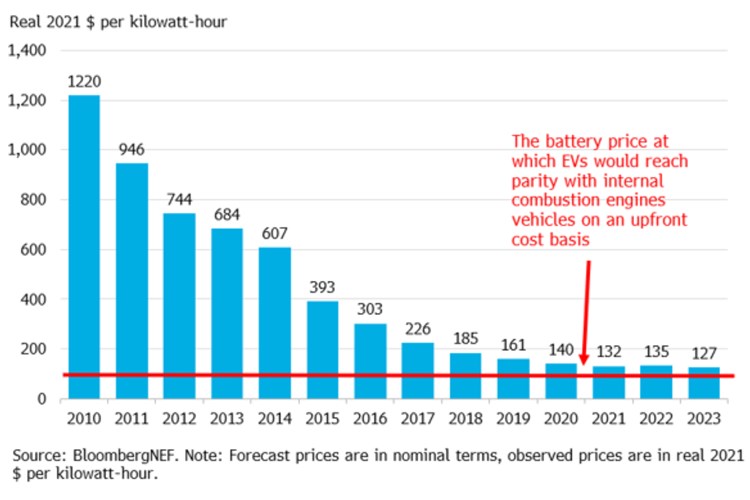
Sure, it flat-lined, but that also coincides with a huge surge in demand and a restriction of supply due to the semiconductor problems. It will come down - there's loads of capacity being rolled out all over the world.
Prices apparently now on the up after a while of flatlining. It seems to me we're at the point where they're dominated by commodity costs rather than manufacturing costs so extra capacity coming on line may not help with the price. I'm not sure where that red line for parity with ICE comes from; it's obviously wishful thinking as EV battery capacities vary hugely, but at $125 per kWh a 50kWh battery is going to cost you $6,250 plus pack assembly costs etc which is a cost you can't hide in a small car, which is the point the Kia bloke was making in the Times article.
a paywalled article, and I can’t find a reference to his comments elsewhere by googling.
Sorry... here you go:
A mass market in affordable electric cars will not happen soon because of the difficulty of producing them on a commercially viable basis, one of the largest makers of zero-emission vehicles for British drivers has warned.
Paul Philpott, UK chief executive of Kia, the fast-growing South Korean car company, said it had no immediate plans for a mass-market electric product.
Some fear there is a prospect of a society of haves and have-nots in the electric car revolution because of the sheer cost of buying or financing a zero-emission vehicle.
Philpott’s prediction also threatens to undermine the government’s ban on selling petrol and diesel vehicles by 2030.
With price inflation roaring ahead in the past couple of years, there are only a handful of electric cars available below £30,000, compared with the less than £20,000 that motorists would expect to pay for mass market or entry-level petrol cars. Even the smallest electric car, the zero-emission version of the Fiat 500, starts at about £30,000.
This month the Advanced Propulsion Centre, the government’s automotive electrification agency, significantly cut electric car forecasts for 2025 because “buyers are expected to stick with cheaper options for longer”.
While European and Asian manufacturers have been stepping up production of electric vehicles, they have been concentrating on more expensive models to make healthy profit margins on the cost of installing electrified systems. The battery pack is the costliest component of an electric car. The smaller the car, the larger the proportion the battery in its production cost.
Unveiling Kia’s product launches, Philpott outlined plans to increase the 16,000 electric cars it sold in the UK last year to more than 20,000 in 2023. But he conceded: “The electrification of the small car is really difficult, economically speaking.”
Kia is Britain’s fastest-growing motoring brand among the traditional carmakers, selling as many as Peugeot, Citroën and Fiat put together. Its record sales of more than 100,000 last year showed 10 per cent growth in a falling UK market that hit 30-year lows.
British and European manufacturers are slowing down production of electric vehicles because they are too expensive for the vast majority of motorists, an industry body has said.
The Advanced Propulsion Centre, which disburses taxpayer money to push the automotive industry towards a zero-emission future, said in its latest quarterly review of the market that British factories would produce 280,000 fully electric cars and vans in 2025, out of a total production of 1.1 million.
It previously forecast 360,000 battery-only vehicles to be produced out of a total one million. If correct it would mean only a quarter of UK assembly output will be electric within two years, compared with the prior forecast of more than a third.
Business Briefing: Morning and midday updates on financial and economic news from our award-winning business team. One-click sign-up
In its report, the centre said: “An uncertain economy is expected to drive buyers towards cheaper models and reduced BEV [battery electric vehicle] production is planned on that expectation. Buyers are expected to stick with cheaper options for longer. Although BEV production is reduced, overall production is increased, with more plug-in hybrids and hybrid vehicles [both of which include petrol engines].”
This is not just a UK phenomenon, the centre said. It is now expecting electric vehicle production across Europe to be 1 million units lower than expected at 12 million, thanks to the impacts of the rising cost of living, inflation and the vehicles’ affordability. It added: “A recovery for 2030 that gets BEV production back on track is uncertain due to an uncertain geopolitical situation and potential supply issues.”
The centre has previously warned that these supply issues, especially the availability of lithium, a key ingredient in batteries, could put the brakes on the fuel transition and lead to more manufacturers looking at accelerating plans for hydrogen vehicles as an alternative.
Food for thought perhaps.
Well, I'm sceptical that they haven't just cherry-picked reports that suit their conservative agenda, but we'll see. Demand seems pretty high for EVs so it seems rather odd that manufacturers would cut production. Especially as many are stopping ICEs altogether.
I do think a change of attitude is needed though. People seem terrified that their car won't do 250 miles on a single charge, but I really don't see how this is a fundamental problem. I would have no problem relying on my 180-mile range car as a sole driver. I would take it to Scotland if that's where I was going, and get there a couple of hours later. Still a lot faster than walking and cheaper than the train.
Caveat - I recently went to Scotland and didn't take the EV for a few reasons:
- There ended up being three of us, which meant using a bike rack and I didn't have one for the EV.
- The diesel is a more comfortable car and it was there on the driveway already
- I wanted to get there for a particular time to register for the event and it would've needed an earlier start.
However, if I'd had no choice I could have worked around those problems, they are absolutely surmountable. Arguably I should have anyway.
The Audi Charging (Elli network) came through and I can get Ionity for around 30p per kwh which is a bargain.
At the opposite end of things there are a couple of new PodPoint chargers down at the gym, where the charge is £1 per kwh - mental!
For those with EV's as company cars, what are you being reimbursed for mileage? And how are they dealing with longer journeys and having to charge on route?
Our company reimburses mileage only, and for EVs is something like 7p a mile, which is a bit problematic because it's much more than you spend if you can charge at home but less than you might need to pay on the road, if you are unlucky.
As for time - I've never heard of anyone being given a maximum allowed journey time. We just need to be in a certain place at a certain time and we plan accordingly. The charging time is not much more than I'd spend on breaks anyway. How far are work demanding you drive? A 4hr drive might require a 15 minute top-up on the way - you don't need to brim it when you stop on the way - but you would arrive depleted. If there's no charger at your client site then you need to go and find a charger on the way home. Clearly that's travel time. A more difficult question would be when you are staying away: you drive to the customer, work all day then in the evening you need to spend 45-60 mins to go and find a fast charger. Is that work time?
The time isn't even on the cards, contracted hours is 37.5, don't think I've ever been anywhere near it!
The most I'm going to do is 400miles in a day, I'll bake the charging into the days work, so I'm not hanging around, once the thing is fixed and I'm happy, I'm on my way hunting down a charging point.
The polestar 2 I have will do 220 miles, which equates to 11p/mile if you are charging at home, but on a 400 mile journey, 180 miles will come from at worse case a supercharger which is circa 85p/kw.
At 11p reimbursement, it leaves me £25 out of pocket for that journey.
The polestar 2 I have will do 220 miles, which equates to 11p/mile if you are charging at home
Are you on an EV tariff? You should be paying what, 3p/mile?
But you shouldn't be out of pocket, so talk to your HR and tell them that.
Looked at this just under a year ago as I was first company car driver at our works - the wording of the HMRC rules states that the company can pay you what they want, as long as it's justifiable. So in order not to be out of pocket, which you should never be for work miles, I worked out and agreed 15p a mile. Car does 3.5 miles per KWh as an average on all journeys, house electricity is at the cap 34p per KWh and accounts for ~70% of the charging for work miles with the other currently being at rapid DC chargers. If it's ionity I get it at 25p until my Hyundai card year 1 deal runs out in April. After that it's going to get marginal for break even on longer work journeys unless prices start to fall or I can negotiate an increase.
Blimey, given that as mentioned I'm trundling round in a Nissan Leaf with 150,000 km on the clock and 11 of 12 battery stripes on the clock I guess I'd better expect the end of the world for the thing soon. Or is my car automotive Jesus.
You can already get batteries for sub 100 USD per kWh, but they don't go in the cars sold in Europe.
Anyone want a French runaround? Renault is doing an official motor and battery swap kit for the Renault 4 and 5!
You keep the original running gear (and gearbox). I'm off to look for a mint R4...
For those with EV’s as company cars, what are you being reimbursed for mileage? And how are they dealing with longer journeys and having to charge on route?
Hot topic in our office. My Manager recently took the train from London to Barrow-in-Furness for a meeting rather than use his iX3 as he worked out he'd be about £60 out of pocket if he drove.
His boss queried why he'd taken the train when he has a company car.. after explaining the situation he was told HR/Finance have no plans to do anything about the current situation - so it looks like more of us will have expensive company EVs decorating our driveways whilst we get the train for business travel.
Anyone want a French runaround? Renault is doing an official motor and battery swap kit for the Renault 4 and 5!
> https://www.hagerty.co.uk/articles/news-articles/renault-lets-you-electrify-your-r4-r5-or-twingo-with-official-retrofit-kits/ < You keep the original running gear (and gearbox). I’m off to look for a mint R4…
Awesome - If someone would do this with the R55 Mini Clubman, I'd be all over this! It's going to be a big sector in a few years.
It sounds like it's a simple swap of the greasy engine bit with an electric motor that bolts to your gearbox. I assume the batteries go in the boot, or spare space in the engine bay and then you still get the dash-mounted gearstick to use/stir and you're off. Ace town runabout.
Talking of which, someone's EV'ed my ultimate pickup - a '50s Chevy stepwise.
<div class="gmail_default">1951 Chevy Stepside EV</div>
<div class="gmail_default">
</div>
they accelerate slower (once they’ve gotten over the buzz that an electric car can give) because its more peaceful/sedate.
More of it just spins the tyres if you try to floor it.
But you shouldn’t be out of pocket, so talk to your HR and tell them that.
Hahahahahahaha. Yeah right.
My company would just point out that it’s no different from you choosing to run a gas guzzling petrol car as your company car where you’d still be out of pocket as the mileage rate doesn’t touch the side when you car does 20mpg. There’s a statement in our car policy that says you’re responsible for choosing a car on the car scheme that suits your role, and more so if you choose an EV, but we only pay the HMRC advisory fuel rates, and that’s it, tough.
Now, I’m pro-EV, and I’ve been able to comfortably run my Tesla on business trips for the 5ppm fuel rate, but if I couldn’t I’d just minimise the outlay and enjoy driving what I like. Same as I did when I ran a v8 Jaguar on the 20ppm rate. That Jag cost nearly £1 a mile to run!
As a heads up, Ev rate changed as of 1st December 2022 for company cars from 5p/mile to 8p/mile
so it looks like more of us will have expensive company EVs decorating our driveways whilst we get the train for business travel.
A good result, tbh. Fewer cars on the road for business travel, and when it is being driven it's low emissions.
It sounds like it’s a simple swap of the greasy engine bit with an electric motor that bolts to your gearbox.
There's a youtube video where someone's swapped the ICE for an electric motor but he decided it was easier to just bolt it to the existing gearbox. You could select any of the gears whilst stationary and drive off in them - you just went slower or faster.
thank god my company doesn't use those advisory rates! We're still on 48ppm for first 10k and then 28ppm.
I thought we were getting a raw deal as it's been at that rate for about 20 years, looks like I should stop moaning and keep my head down.
I'm still using an ICE and do between 20-25k company miles a year - looking into a used Model 3 but as I'm away from home 3 nights a week it would mean paying for charging a couple of times a week (going on how much I usually have to drive etc).
Still seems a no-brainer from a fuel point of view - just need to find £30k ish to buy one and when my 6 year Octavia Diesel only costs what it takes to run/insure/service it's a bitter pill to swallow, even knowing the fuel savings/earnings from company mileage would take the sting out of it a bit
My employer only pays something like 15p/mile for a 2l diesel but that's because they also give us a car allowance which is meant to cover the purchase and maintenance of a car. However, you always consider it a part of your salary so it still seems like you're spending your own money.
Just dropped my EV off for a service at Hyundai. £180 they want, apparently for an air filter, brake fluid (after 2 years??) and a 'full check'. Absolute rip-off but it's a lease so I have to. That demonstrates that EV servicing requirements are indeed a lot less, but that main dealers are happy to over-charge to the point where it's still a bit cheaper than ICE but they are obviously making more profit.
As it happens, after dropping it off I walked down the 'car dealership road' that exists in every city, keeping an eye out for EVs for sale. I saw very few except for the Nissan place where there was a row of maybe 10 Leaves outside. I was quite surprised by the prices - as low as £18k for a 38k mile new style Leaf. There was one old model Leaf too at £11k. If these cars keep hitting the middle of the market between brand-new long range sexy and actual cheap cars, I might be able to take advantage in October. A loan for that kind of money would be cheaper than a lease.
Brake service has always been around £100 and has always been every 2 years. Air filter maybe £20? It's not exactly a ripoff is it?
A 2 year interval seems to be one of those 'it's always been that way' things but probably isn't necessary any more. But in any case it's only £40 at Halfords. The 'air filter' is of course the cabin filter.. at least, I hope it is!
Still seems steep - 3 hours of work? Even 2 seems like a lot.
I'm guessing you havent had the 40000 mile service yet then Molgrips? That was quoted to me at £500. Replace coolant, brake fluid and do the normal 'checks' that they charge £80 for every 10000 miles. I get that it needs some checks but the 10k intervals are way too short, although it does mean it gets a proper wash every 6 months or so.
I’m guessing you havent had the 40000 mile service yet then Molgrips?
No, and I wont, it's going back in October 🙂
it does mean it gets a proper wash every 6 months or so.
Hah. The lat £80 service had about £60 worth of air freshener sprayed in it. It took weeks before I could drive it without my eyes watering.
Brake service has always been around £100 and has always been every 2 years. Air filter maybe £20? It’s not exactly a ripoff is it?
Attach laptop, attach catch pots, run brake purge whilst topping up with DOT 4. Yeah I can see how that's worth £100. 😕
I thought EV's didn't use their brakes anyway? 😉
Just dropped my EV off for a service at Hyundai. £180 they want, apparently for an air filter, brake fluid (after 2 years??) and a ‘full check’. Absolute rip-off but it’s a lease so I have to.
Glad I'm returning my Kia eNiro a month early on the 2 year lease so I don't have to service it.
Mandatory changing of brake fluid is a rip off when it should just be tested for moisture content and only changed if the moisture is above the warning limit.
Just taken the Zoé for the three-year service at a main dealer : 120e. Brakes checked but nothing changed. The next service is in two years so it'll be five by the time they change the brake fluid - if it's deemed necessary. The only thing they changed was the cabin filter and the only things topped up were the washers.
how do you all manage such long service intervals? Are you doing very low mileage and doing on time rather than mileage intervals? We went for an EV as live in small village so do quite a bit of mileage doing dull daily tasks like school run. I wouldnt mind the service intervals if they at least changed the oil, but as has been pointed out above (and come in essential a couple of times already) I need to do it to keep the manufacturers warranty in place.
The bonus is that they are at least fairly low cost for the most part, and the big coolant one is hopefully going to be at the same time as recall / warranty work on the coolant so I am hoping that can knock a chunk off the price.
change of choice time... I am getting an EV through a Tusker lease via salary sacrifice work scheme. Back in June I ordered an Audi Q4 quattro, and it is now scheduled for August delivery. I have been idly looking at other options with similar level of spec (I want leather seats and a towbar) and have realised I could get a BMW i4 for the same cost per month. It would arrive in October, and my current PCP runs till Feb next year if I need to.
I am currently on my 2nd diesel Audi on a PCP - a Q5, and I had an A6 Avant before that. Before going to Audi I had a couple of BMW tourers, as company cars, a 3 then a 5 series.
So I know the brands and like them both. Family space not such a priority now as boys are 16 and 20 and not with us so much. Bikes will go on towbar, or in the boot if just me. The i4 has a hatchback and will take a bike just about as easily as the Q4.
Opinions ? Thanks
One of the best looking EVs, that's for sure 🙂
Should be efficient given it's car shaped.
I’ve got an I4 on test for two days from Wednesday so I’ll post up my thoughts afterwards. For me it’s up between the i4 and the newly refreshed Polestar 2 (due to the selection on my company car list) as a replacement for my Tesla Model 3 later this year.
I demoed the Polestar a couple of weeks ago and really liked it. Quieter and more comfortable than the Model 3, better built with nicer quality materials inside. A touch smaller in all areas but the hatch boot gives more flexibility. The bigger battery and new motors of the refresh should put the range up where I need it.
The I4 is going to have to be pretty special to get me to go with it, as for a comparable spec to the Polestar it’s going to be between £150 and £200 a month more expensive.
What about something a bit leftfield and exotic?
I’ve had one of these for 3 weeks now.
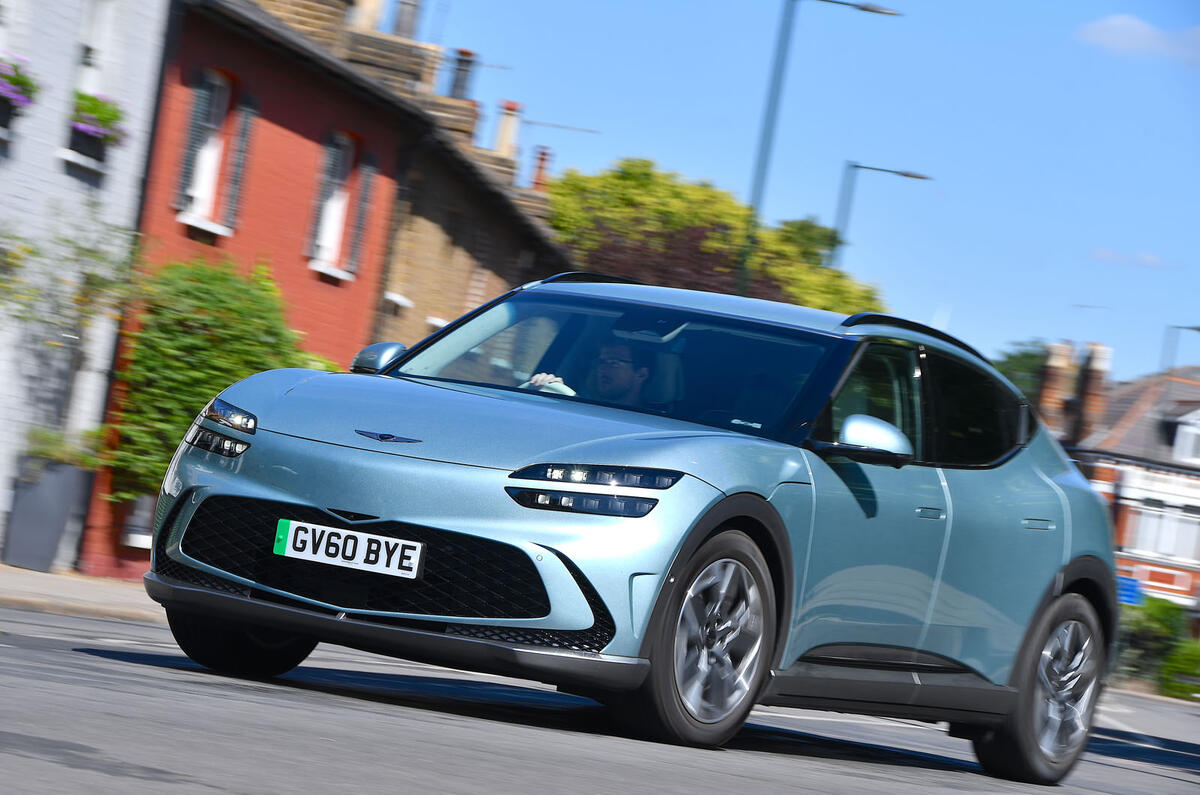
It’s brilliant.
matthewlhome
Free Member
how do you all manage such long service intervals? Are you doing very low mileage and doing on time rather than mileage intervals?
There's virtually nothing to service, even brake pads get much less used because of regen braking.
Well, took a jaunt to the local bmw dealer late afternoon, along with wife and youngest son (who at 16 yrs old and 6’1” and very into cars is a good judge of space !
Very impressed with the look and feel of the i4 and it seems more practical than I had envisaged - long low flat load space with seats down will easily swallow a bike with front wheel off. Rear seating is 2 bucket seats really, with space for the dog in the middle 🤪. Rear legroom for junior was ok with drivers seat set for me and he felt his head was just about touching the roof, but not overly cramped. He and his brother are same dimensions.
Home and onto the Tusker site to configure and spec out, so went with cheap paint (white), and added towbar and leather. It comes in at about £15 a month more than the Q4 Etron Quattro that was on order, so a quick call to them and that’s the order swopped over now 😁👍🤞👌
Just gotta wait 35 weeks now..
Hi...DrP joins the EV crew!!!
After an impulse buy of a 2018 Nissan Leaf 40kw, I'm now in the club!
My neighbour bought it at a dealer auction last week, with the intent of selling for a few grand more than he paid.. i offered him a few hundred over what he paid, and as he's a mate (and he wanted to get lots of sales under his belt ASAP) he sold it!
Lovely little thing to drive around on TBH..
Not much needing doing - gonna stick new tyres on it as though they've got tread, even gentle acceleration spins the frints. They feel really hard and plasticky!
Looking at changing our UW tarriff to an EV one now, or simply charge at work (i apy the bills either way..though one is PRE tax!)
Need to look into what's involved in a yearly service..if it's filters and pads, I can do that..
DrP
Welcome to the club! You might find that the fronts spin up regardless of the age or type of the tyres - unless they truly are bakelite ditchfinders. It's the torque, innit - loads of it instantly, can easily catch you out if you're joining a dual carriageway from a b road etc.
Whichever gives you the lowest pence per kw is the answer to your charging question. I actively avoid charging anywhere other than work but that's because I don't pay for it 🙂
Cheers....
I'm a huge fan of cross climates, and fit them to all my cars, so going for those..
Will probably charge at Lidl down the road! 12p/kw.... Proper cheap!
DrP
Unless your LIDL is very much non-typical I very much doubt it is that cheap. Usually pod point 22kw or 50kw chargers, the latter is 50p/kWh. Slower one will be cheaper but highly doubt that cheap!
I like the look of the i4. It may well be my next ev after the eTron. Need to get a test drive if one.
^^^ yes, we were really impressed sitting in it and having a poke about. It is roomier than I had thought.