a carefully driven Hyundai Ioniq Electric could nudge 6 miles/kWh
Speaking from experience, it is possible to beat 6 but only on low speed open suburban runs and only in mild summer. On a long trip 5 is realistic, I've got 5.2 on a few long runs recently. But 6 - no chance, and I do pay attention to economy.
the Ioniq 5s WLTP is 303 miles from a 77kWh pack with real range of around 260, so under 4m/kWh.
He's talking about the Ioniq EV not the Ioniq 5 - completely different car with the same name. Well done Hyundai.
But 6 – no chance, and I do pay attention to economy.
Jesus I did say nudge it not achieve it. 5.6 miles per kWh is nudging it in my book. Honestly if I said Newcastle United played in black and white you'd say they played in white and black.
See below from an actual Ioniq Electric. Apparently it included a trip on the motorway too.

Jesus I did say nudge it not achieve it. 5.6 miles per kWh is nudging it in my book.
Just as an e-Niro is nudging the same size as a Fiesta 😉
Joking aside, 5.6 isn't really nudging anything. 5.85 is worth talking about. Still, at least someone else is designing car shaped cars.
Electric motors are approaching 95% efficiency, Tesla have gone from 80>90>94%, but that’s not the only source of loss. Resistance in the pack and electronics are another as are thermal properties in different regions and efficiency losses at different speeds. There’s more to be had.
Not much, you're starting to get into the realms of fighting physics which requires great expense for marginal gains. You could probably make it more efficient using exotic or well selected conponents but if its not affordable to build what's the point for maybe another percent? We're not sending folk to Mars here, don't let perfect get in the way of great.
See below from an actual Ioniq Electric. Apparently it included a trip on the motorway too.
How fast did it go on that motorway? I'm saying, from experience, that it's pretty difficult to get numbers like that on extended trips.
at least someone else is designing car shaped cars.
That's why I went for it. But I suspect that the SUV shape is still easier for packaging batteries. Hyundai make the Ioniq and the Kona, both available in ICE and EV form. The Kona is available with a small (38kWh) and large (68kWh) battery, however the Ioniq is only available with the smaller one.
ICEs, especially diesels are killing kids according to George Knox of Brimingham university. Google translate is your friend.
"Le monoxyde de carbone et le butadiène-1,3" rather than tyre rubber dust according to the article.
Speaking from experience, it is possible to beat 6 but only on low speed open suburban runs and only in mild summer. On a long trip 5 is realistic
Just about doable but you have to drive annoyingly slowly, in my view. With cruise control set at 72mph on my Model 3 LR last week I averaged 5.3 miles/kWh. When sitting at 65 this increases to about 6 miles/kWh. I reckon you could bump this up another 15-20% easily if you dropped the speed to 56 mph and sit behind HGVs.
I lack the patience.
I went to the launch of the Megane last night. A show, the big nobs from Renault France, Jurançon, Bordeaux, Suchi, men in white shirts, what's not to like?
Likes on the car:
130DC or 22AC charging
470km puts it in the same category as the Kia/Hyundai
The interior, it felt roomy for a c-class, seat very comfy
Not so sure:
The slot rear window, I still reverse by swinging round in my seat and looking out the back.
The rear seat: there's enough space for 3 equal seats so why the seat on a middle bump?
The high waist line, kids that can't see out easily vomit.
Hates: the ninja disc wheel design: I'd buy a black rattle can to paint them uniform black. And does a family saloon need 20" wheels? I think not.
Would I buy one? Yes, and two rattle cans obviously, but I'm happy with Zoé for the moment.
Agree the Megane looks like a good proposition. I'll add a like, Android infotainment, and a couple of hates, charging port on the front wing and the boot has a huge lip.
I'm off to our local Kia dealer next week for the Kia "electric experience" to have a close look at the new Niro EV and the EV6
I reckon you could bump this up another 15-20% easily if you dropped the speed to 56 mph and sit behind HGVs.
I lack the patience.
Yeah, plus it's highly disingenuous to massage up your economy figures by slowing down, even if it is good for the environment.
I may do a trip at lorry speed one day just to see how much better it is.
Megane looks good and can tow (so towbars will be available for bike rack users) but not much, only 900kg.
The WTLP range divided by the stated battery capacity gives 4.6m/kWh which is decent for a car that size, hope it holds up. We need more cars like that at a decent price although I can't see what the RRP is.
Just seen this pop up on my YouTube feed:
I want more of this. I want a bolt in kit for conversions and I want it simple enough that people can do it themselves.
ICEs, especially diesels are killing kids according to George Knox of Brimingham university. Google translate is your friend.
Certainly not yours. That study was published in 2005. Furthermore [url= https://www.thetimes.co.uk/article/scientists-dispute-traffic-link-to-childhood-cancers-whh9dqxllkwCancer ] Research UK and the Leukemia Research Fund disputed his findings[/url] since they were based on data gathered between 1955 and 1980 and compared to pollution maps compiled in 2001. So not really all that shocking if you want to use data from a time when we still had leaded 2 strokes on the road.
Here's the actual study: https://jech.bmj.com/content/59/9/755
404 error on your first link.
From your second link:
ain results: There were excess relative risks (RR) within 0.3 km of hotspots for carbon monoxide, PM10 particles, nitrogen oxides, 1,3-butadiene, benzene, dioxins, benzo(a)pyrene, and volatiles; and within 1.0 km of bus stations, hospitals, heavy transport centres, railways, and oil installations. Some excesses were attributable to mutual confounding, but 1,3-butadiene and carbon monoxide, mainly derived from engine exhausts, were powerful independent predictors. They were strongly reinforced when associated with bus stations, hospitals, railways, oil installations, and industrial transport centres; RR = 12.6 for joint <0.5 km exposure to bus stations and 1,3-butadiene.
Conclusions: Childhood cancers are strongly determined by prenatal or early postnatal exposures to oil based combustion gases, especially from engine exhausts. 1,3-butadiene, a known carcinogen, may be directly causal.
And you acuse me of not reading your links - do you read your own ? 😉 last weeks red herring was wood burners of which the local pollution factor hasn't been denied on this forum at least. This week it's two-strokes which form how much of the traffci around bus stations? Negligible.
You keep on finding excuses to slag off EVs when it's so much easier to slag of ICEs, Squirrlking.
eNiro - bootspace isnt great (considering the size of the car) but remove the crap under the boot floor and I can easily get 2 pretty dry bags down there (as well as the cables and otherguff). As for efficiency, bang on 3.5m/kWh over the last 5000miles but got 5.5 yesterday on a 25mile drive A-roads and motorways, perfectly possible if go easy on the power.
You keep on finding excuses to slag off EVs when it’s so much easier to slag of ICEs
It's not an absolute issue, there's no need to be tribal. All cars can be 'slagged off' for a variety of reasons. EVs are less bad but they still aren't an overall good. This isn't a willy waving competition.
Managed to se 6.2 on today's 15-20 mile round trip to the pool and back but it wasn't sustainable, finished at 5.6. that's on 40 and 50mph suburban roads.
To be fair he hasn’t done that. That’s just the pomme frites on your shoulder.
This has been done before and ends in personal attacks such as falsly claiming I have a chip on my shoulder. Squirrelking has slagged off EVs throughout the thread and it's not just me who's noticed, I'll hand over to Daffy before I get a ban for arguing and being right:
::::::::::::::::::::::::::::::::::::::::::::::::::::::::::::::::
Daffy
Full Member
squirrelking
Free Member
And as usual you miss the mark completely and come to a conclusion based on opinion rather than fact. Tell me where I suggested EV’s were bad? I never.
Where to start!? Page 31, 32, 33, 34, 37 and 42 of this thread! With EVs are bad because:
1. “they’re heavy”
2. “they use too many resources”
3. “they’re too expensive”
4. “Charging is difficult”
5. “the range isn’t good enough”
6. “they catch fire”
And whilst I haven’t gone back through, there may have been something about towing, but, whatever. You’re clearly right, you’ve never intimated that they were bad….
I’m just agreeing with trail_rat that your figures are pish and cherry picked to suit your agenda. You’re constantly shifting goal posts
No – you’re (and to an extent trailrat) shifting the goal posts. My original point (if you could be even bothered to read) was that in the 5th Gear Recharged article, they compared two, equally specked, equally financed Corsa models and compared the TOTAL costs over 3 years with the EV being cheaper by a substantial margin. Both were financed, both had the same deposit contribution.
the latest being that nobody talks about deposits because they can get them from work.
Again, wrong. I did talk about deposits and I did not twist figures. Others did that in saying that the Corsa EV was £30k and the petrol was £20k. I addressed that. I ran my figures through a leasing site with (I think) 3 down and 33 to pay. Yes the EV deposit was higher and the monthly payment was higher, but the overall costs were lower.
I simply pointed out not all of us have or want that option and in a general discussion about EV’s I don’t see the problem.
I agree, but finding £700-£1000 as a deposit for an EV is no different to finding £700-£1000 for a banger. In both cases, you’re expecting to write off the initial payment, but for the EV you KNOW it’s once every 3 years, whereas the banger could be dead in 3 months.
As a supposed pragmatist and scientist I’d frankly expect better, acknowledging other arguments without shouting them down for a start.
NOt shouting down, but I’ve spent enough time in Science and Engineering to know that people are always quick to latch onto what can’t be done and why, especially if it adds complication or difficulty.
Usual STW ‘unable to think of any situation other than my own as being anything other than an edge case’ mentality
Utter rubbish. My critique and feedback was based purely on real data, real experience with EVs and background in technology adoption modelling.
You’ve been a largely consistent negative voice in this whole thread, very quick to latch onto what’s wrong, what’s difficult, etc. Whilst I agree, they’re not for everyone right now, continually pointing out the negatives which make it unsuitable for you at the present time rather than considering a way that could make it work for you seems a little pointless.
It seems like you’re still on the downward slope of the Kubler-Ross curve…
Much love. D.
Posted 4 months ago
Reply | Report
The block quotes have gone from that but you get the idea, th eoriginal is on page 49 of this thread. Squirrelking uses any frivilous excuse to slag off EVs and minimise the ills of ICEs then people disagreeing with him get banned for arguing.
And sometimes you should stay out of the playground bullying rather than join in, Molgrips.
-
I want a bolt in kit for conversions and I want it simple enough that people can do it themselves.
I've been thinking about this. My Merc would make a brilliant EV. There's enough room in the engine bay and the huge transmission tunnel for a load of batteries, and the motor could go at the back in place of the diff, and I reckon you could fit in 60kWh of batteries without increasing the weight so the suspension etc would be fine. You'd have to fabricate three odd shaped battery packs though for the engine bay, transmission and fuel tank.
And if you knew your way around the CAN protocol you could create a controller that would spoof the engine and transmission ECU I reckon. Only issue is having the money and will to demolish a perfectly good ICE car.
There's a German company that does bespoke kits but also have off the peg plans for classic Mercs at 20k. Thing is, at that price plus ten grand for a donor car it's actually a decent proposition.
Whilst I agree, they’re not for everyone right now, continually pointing out the negatives which make it unsuitable for you at the present time rather than considering a way that could make it work for you seems a little pointless.
This should be a pinned post at the start of this thread.
We've heard all the negatives, some real some myths, but as the alternative is importing and burning lots of highly flammable, toxic and expensive hydrocarbons from corrupt, immoral and aggressive regimes whilst trashing the climate and environment lets look at how we can get electrified transport (and home heating, and steel manufacture etc etc) to work.
My EV tyre wear after 1 year seems to be about the same as an ICE car but on average maybe an EV does produce more tyre particles but the argument is moot seeing ICE cars will be disappearing.
Recent research suggests that tyres are the dominant source of ultrafine air pollution, not tailpipes, so I think we should all be concerned about that. Heavier EVs only make it worse. Ultimately,it's going to need regulation.
Couple of quotes
The average weight of all cars has been increasing. But there has been particular debate over whether battery electric vehicles (BEVs), which are heavier than conventional cars and can have greater wheel torque, may lead to more tyre particles being produced. Molden said it would depend on driving style, with gentle EV drivers producing fewer particles than fossil-fuelled cars driven badly, though on average he expected slightly higher tyre particles from BEVs.
Dr James Tate, at the University of Leeds’ Institute for Transport Studies in the UK, said the tyre test results were credible. “But it is very important to note that BEVs are becoming lighter very fast,” he said. “By 2024-25 we expect BEVs and [fossil-fuelled] city cars will have comparable weights.
The wear rate of different tyre brands varied substantially and the toxic chemical content varied even more, he said, showing low-cost changes were feasible to cut their environmental impact.
“You could do a lot by eliminating the most toxic tyres,” he said. “It’s not about stopping people driving, or having to invent completely different new tyres. If you could eliminate the worst half, and maybe bring them in line with the best in class, you can make a massive difference. But at the moment, there’s no regulatory tool, there’s no surveillance.
So looks like there could be a reasonably simple way to vastly reduce the particulate emissions and probably with a bit of research reduce them further longer term now we know its a problem.
Recent research suggests that tyres are the dominant source of ultrafine air pollution, not tailpipes, so I think we should all be concerned about that.
I was going to say it'd be tricky to solve the tyre issue, but uponthedowns' quote is interesting. It is possible to get 15k or 40k from a set of tyres, and if some tyres are actually more toxic than others this is something that could be legislated against. I would assume cheap shitty tyres wear faster for the same driving, so they could be removed from the equation.
People opposite bought a new Merc GLA and now have cheap no name tyres on it...
As I said elsewhere. Most people don't give a toss as long as they get a car that does their particular job. Many people seem to think that the worlds population wants to live for ever. They don't. They want their children to survice and thats about it.
@Flaperon - M3 LR is 75kWh. So you’re saying at 65mph, you could get 450miles out of it on a charge…? Really?
I think people claiming 6m/kWh are conflating driving snapshots with actual performance. The WLTP has the M3 LR at 348miles so 4.64m/kWh. Lucid are aiming for 6m/kWh on the same test cycle. That’s a big jump.
@everyone else
I was going to say it’d be tricky to solve the tyre issue, but uponthedowns’ quote is interesting. It is possible to get 15k or 40k from a set of tyres, and if some tyres are actually more toxic than others this is something that could be legislated against. I would assume cheap shitty tyres wear faster for the same driving, so they could be removed from the equation.
Yup it's something that can certainly be legislated against and its worth looking at further.
It would be interesting to see if better tyres are worse culprits or if there is a correlation between cost and pollution generated. Even the different compounds used between passenger vehicles and the remoulds on HGV's.
The Audi recommended one is a 7kW pod Point, which they quote as about £800 installed.
I have a pod point, which gets used 4 or 5 times a week to top up my tiddly 10.5 kwH battery. Been using it for 15 months with no problems. It’s not the prettiest thing to be honest, but I got a discount through work, and I hid it up the side of the house.
What we need, Sqirrelking is a scientific paper from teh medical profession which compares the toxicity and health risk of tyre dust and nano diesel soot, If you find one post it and I'll read it. ICE cars produce a mass of CO2 which isn't regarded as toxic, nano diesel soot is, how that compares with tyre dust in terms of toxicity were not sure but my money is on the diesel soot being more toxic when you take into account both volume and toxicity.
As someone supposedly educated to such a high standard you have a demonstrably poor record for critical evaluation of the data you present. You persistently post second hand journalism in place of actual links to the reports or papers concerned, you persist in posting foreign language journalism pieces despite the lingua franca of the forum being English
Seems to me that the above is:
and when challenged you respond with accusations of bias, xenophobia and bullying
https://singletrackworld.com/forum/topic/negative-forum-sentiment-can-we-break-the-cycle/
What we need
We have one. Which you ignored because you claimed it was influenced by big oil, it was then pointed out that it was written under the auspices of a government funded organisation. You then disengaged. I'd post it again but I don't think it would be helpful.
Anyway it's been tedious, as always, but I have a lovely weekend to be cracking on withand I'm not going to ruin it by wasting my time in a to and fro with you. As always, the report button is in the same place.
When I was at Welsh Water the most sold out scientists I encountered were working for the CEGB - which was very much publically funded until priatisation in the nineties. Paid to counter claims that power station emissions were repsonsible for acid rain. The rain water monitoring network I set up was part of the weight of evidence they were indeed responsible. There were enough honest scientists working on various other projects to eventually provide enough evidence to force the fitting of scrubbers. Along with other measures taken the quality of emissions improved and with it the quality of rain fall. Unfortunately the CO2 content is still there and we're on our way to the climatic conditions of periods in geological history with similar levels of atmospheric CO2. It's gonna be hot, hot, hot.
Drive an electric if you feel the need to own a car and cut off the gas to your house if you want to be part of the solution
I went as far as the Net allows with the funding of your scientist and his research institute and quoted their web site in block quotes: their clients are mainly the oil industry and the private benefactor is not named. Read back, please.
It's in the Guardian now and they've taken it up a ntch interms of the hype. There's a delightful quote:
“Tyres are rapidly eclipsing the tailpipe as a major source of emissions from vehicles,” said Nick Molden, at Emissions Analytics, the leading independent emissions testing company that did the research. “Tailpipes are now so clean for pollutants that, if you were starting out afresh, you wouldn’t even bother regulating them.”
This reminds me of a France 2 investigative journalist who contested Peugeot's claim that the exhaust gas from their Euro 6 car was cleaner than city air and the car actually cleaned the air. All was going well for the Peugeot scientist/engineer until the journalist demanded the scientist/engineer breathe the car exhaust fumes for a few minutes to prove it.
All was going well for the Peugeot scientist/engineer until the journalist demanded the scientist/engineer breathe the car exhaust fumes for a few minutes to prove it.
Well to a certain extent that's true- depends what you mean by clean. The exhaust of a fully warmed up Euro VI diesel is very clean in terms of NOx, carbon monoxide and particulates and driving through a city the exhaust could have well have less of those compenents than the ambient atmosphere. The carbon dioxide it emits is also very clean but like the Peugeot engineer I wouldn't want to to breathe it.
It’s in the Guardian now and they’ve taken it up a ntch interms of the hype. There’s a delightful quote:
Do keep up eddy boy. I quoted that 10 posts above yours 😉
The crux of the matter is that ICE cars are still producing an average of 1.4kg of CO2 for every 10km travelled. Your average set of tyres lasts ~23k km and loses ~2kg of rubber in that time. In the same time, your ICE car will emit 3.2tonnes of CO2! That doesn’t even account for all the other particulates.
Also Rubber particulates are also over 1000* the density of other fine particles, so will be held in suspension in the air for far less time than exhaust particulates.
Aren't NOX emissions linked to the way the engine is being tweaked for efficiency? So you can get, theoretically, 75 mpg out of your diesel estate but at the expense of NOX being high?
Aren’t NOX emissions linked to the way the engine is being tweaked for efficiency? So you can get, theoretically, 75 mpg out of your diesel estate but at the expense of NOX being high?
That compromise is true for the engine itself - higher temperatures and more excess air drive NOx formation. It’s one of the reasons why EGR and after treatment is used these days - DOC catalysts etc which bring the
NOx levels right down whilst still allowing the engine to be optimised for high efficiency and other emissions. It’s all a complex game of trade-offs.
The crux of the matter is that ICE cars are still producing an average of 1.4kg of CO2 for every 10km travelled. Your average set of tyres lasts ~23k km and loses ~2kg of rubber in that time. In the same time, your ICE car will emit 3.2tonnes of CO2! That doesn’t even account for all the other particulates.
Which, whilst true your EV will still (at this point in time) have emissions linked to its propulsion, just not at the exhaust which improves local air content (of course that will be more efficient and the CO2 content should drop through time).
Also Rubber particulates are also over 1000* the density of other fine particles, so will be held in suspension in the air for far less time than exhaust particulates.
Perhaps, but if I was offered a bit of nuclear waste that was 1000 times less radioactive than a fuel stringer I'd still be keeping well away from it.
I think the overall point of the report is that air quality doesn't begin and end with exhaust emissions and that there is still work to be done. Sadly I no longer have access to the article or I'd have read it for proper context. I think it definitely warrants further study regardless of what the motive system is. It certainly isn't an attack on EV's but is using them to illustrate just how problematic it is (its not like anyone is claiming the problem disappears when you put an engine in the mix).
Aren’t NOX emissions linked to the way the engine is being tweaked for efficiency? So you can get, theoretically, 75 mpg out of your diesel estate but at the expense of NOX being high?
Selective catalytic reduction allows the engine to be run hot for improved efficiency, letting the NOx level increase and leaving the SCR system to remove the increased NOx. It also has the additional benefit that the engine produces less soot. Now this is all very well when the SCR system is up to temperature but whilst its warming up the engine still has EGR to keep NOX down untill the SCR system is ready. Its worth mentioning that Euro 6/VI regs allow engines to breach emissions limits whilst warming up so the emissions of all those Euro VI Chelsea tractors on the school run with barely warm engines will probably be above normal limits. There's talk that the Euro 7/VII regs being brought in over the next year may require engines to be under emissions limits at all times which will be a big problem as it will require catalyst heaters etc.
My point was that total emissions from combustion FAR exceed any possible air particulates generated from tyres and as such, trying to use the fact the EVs are heavier as a means of saying “look, EVs are bad because..” is a silly thing to do.
EVs can and do reduce emissions and will only get better over time. ICE can’t and won’t do this.
Even assuming we still have a FF mix in 10 years, then the point of combustion will be moved out of urban environments, and by burning in discrete locations will enable carbon capture. ICE can’t do this.
EVs are still in the introductory phase, they will get cheaper, more efficient and greener. ICE won’t, they’ve reached the apex and won’t get better.
If you want more - Get the government to legislate max speeds, max weights end of life targets and yes, by all means tyres. But in targeting efficiency and limiting speed and weight, you’d do this by default anyway.
EVs are the future and the market has already decided that. Even with piss poor subsidies from UK Gov, more EVs were registered in Q1 of 2022 than in the entirely of the previous 5 years combined. The tipping point has been reached.
Emissions Analytics?
Aren't they the dullards who made headlines (and millions) from announcing that if you drive wildly differently from the emissions cycles, you get different emissions?
trying to use the fact the EVs are heavier as a means of saying “look, EVs are bad because..” is a silly thing to do.
It is. Nobody said that though.
If you want more – Get the government to legislate max speeds, max weights end of life targets and yes, by all means tyres. But in targeting efficiency and limiting speed and weight, you’d do this by default anyway.
That's the actual important part, entirely agree with you there. Nothing wrong with looking at tyre toxicity though as unless it has a specific function (like improved grip) then it could be done away with.
electric car grant has now been completely scrapped. I don't think it'll make much of a difference, but it sends an interesting message.. https://www.bbc.co.uk/news/business-61795693
That's just for plug in hybrids which were only ever a stepping stone
Sucks. But - order books are literally overflowing, and charging infrastructure is pretty poor so they might have a point. IF they actually follow through on the infrastructure, that is.
That’s just for plug in hybrids
I don't think so...?
Grant for most PHEVs went in 2018, they had to do 70+ miles on electric to qualify after that.
I think it's largely moot now, manufacturers didn't bother to do much adjusting of prices/spec for the last cut, most cars sold don't qualify as they're too expensive, and the people who can afford any EV aren't likely to be swayed by £1500. With constrained supply, manufacturers are happy selling all the higher spec, higher margin stuff they can.
Just read that VW are returning to 3 shifts a day in one of their big EV plants producing 1300 a day! Chip shortages seem to have eased up.
Fingers crossed they can all start making more and bringing costs down in a few years' time.
Which, whilst true your EV will still (at this point in time) have emissions linked to its propulsion
Indeed. Are you counting the big amounts of energy used in cracking crude to produce gas/diesel in the emissions calculation of your putative ICE vehicle?
Fingers crossed they can all start making more and bringing costs down in a few years’ time
That would be super molgrips. VW though. Slow to the party and slow to get into the groove.
That’s just for plug in hybrids which were only ever a
stepping stoneWeak attempt at handling ‘fleet’ based emission measurements
FTFY
VW though. Slow to the party and slow to get into the groove.
What makes you say that? They are some.of the first pure EV platforms, I think they just skipped the halfway house of converted ICE cars.
VW were the first of the major manufacturers to go full EV. They didn’t really have a choice after Dieselgate. No one was going to buy a VW, diesel or otherwise, so they went full EV earlier than most. Only BMW really dipped their toes before this.
Toyota seem to be feet dragging. I know someone that had a petrol Yaris and a hybrid one as a replacement, and the hybrid didn't do much better mpg at all. Our old 99 plate Mk1 would do over 60 mpg on the motorway, and that was the 4 cylinder petrol. SIL's Prius is 'worse' on fuel than their old 2.0 diesel Avensis.
Piddle poor from Toyota. Yaris GR it is then !
SIL has just ordered a Yaris Hybrid. Bloody pointless IMHO - she has the Prius as well. My Mrs was asking what 'would' I buy, and I said hybrids just aren't giving the fuel efficiency over an ICE car, and leccy cars are way too expensive for our use.
SIL’s Prius is ‘worse’ on fuel than their old 2.0 diesel Avensis.
Yeah they are very sensitive to driving style. We would get similar economy to the Passat in our MK2 Prius, around 57-60mpg on motorways but that involved sticking the cruise on 70 and leaving it there. It was however far better in town than the Passat, worst trips were 50mpg vs about 35. And of course no NOx problems and no diesel smoke.
That was an old one though, newer ones should be better. My colleague gets low 70s from his MK4. But you have to know how to drive it well.
But yes, they are slow on the EV rollout.
That’s because Toyota seem to be of the belief the Hydrogen and fuel cells are a better solution than batteries.
I can understand their point, and it works for aircraft, but for cars, where mass is less of an issue and where you’re left having to create more and harder infrastructure for H2…I’m not sure it stacks up. They must know quite a lot that I don’t.
Are you counting the big amounts of energy used in cracking crude to produce gas/diesel in the emissions calculation of your putative ICE vehicle?
Well given the context of my point it would be silly not to.
VW were the first of the major manufacturers to go full EV.
If you ignore Mitsubishi, Renault Nissan, BMW, PSA (Stallantis), Kia, Hyundai... . VW were very late to the party with the E-up which wasn't even a specific platform like those before it.
Toyota seem to be of the belief the Hydrogen and fuel cells are a better solution than batteries.
They need to cut the energy losses in hydrolysis and fuel cells by half to equal the efficiency of battery EVs. Planes yes, cars no on current levels of efficiency.
Currently Hydrogen seems to be a good choice for applications where refuelling is needed rather than recharging - things like trucks, building and mining equipment etc which have to work all day and can’t economically be switched off to recharge plus would need a ridiculous battery pack to keep them going.
Hydrogen production is also in its infancy - a lot made from oil right now which rather defeats the point but that’s just an enabler to get the distribution and end user side of things up and running while the electrolysis and energy source (renewables) is ramping up.
Hydrogen can also be burned in an IC engine or used in a fuel cell. Engines are a short term option, fuel cells the medium.
No one, including the big industry players knows which tech will win out in the long term - for example battery technology might develop sufficiently that it dominates. For the short-medium term though both are being developed.
Batteries seem to be dominant for cars, as they’re already “good enough” and will only get better - 300 mile ish range is enough for the vast majority of people and journeys, and a 30 min ish recharge stop after driving for 5 hrs (300 miles at 60mph) is well under what what would be needed for normal human comfort & safety reasons anyway.
See here for some of the stuff that we are doing at work (I work for Cummins and we’re actively working in both areas plus others)
Toyota seem to be feet dragging. I know someone that had a petrol Yaris and a hybrid one as a replacement, and the hybrid didn’t do much better mpg at all.
They got badly burned (!) when Europe chose which version of a lower emission ICE was going to be favoured. They went with standard engines with a Cat, Toyota had put a lot of work into lean-burn tech with good results and were behind the curve at a stroke when the regs were changed. They are not keen to suffer a similar fate when we shift to non-dinosaur fuelled vehicles.
If you ignore Mitsubishi, Renault Nissan, BMW, PSA (Stallantis), Kia, Hyundai… . VW were very late to the party with the E-up which wasn’t even a specific platform like those before it.
I meant full EV - Not just one (additional) car in the lineup, but replacing mainstream models. VW group now has ID3/4 and their Audi, Skoda and Seat equivalents, Porsche Taycan and it's equivalents and a host more. VW announced in 2017 that by 2030 they would be full EV, this has been pushed back to 2035 for VW group due to commercial vehicles. They also stated in 2021 that there would be no more ICE developments - at all.
The Zoe, the Leaf, the I3, the earlier Ioniq's, etc were all additional. The ID3, ID4 and Buzz were to intended to supplant the Golf, Transporter, etc.
VW were the first of the major brands to do this. Mercedes, Ford, GM, etc have followed suit on the coat tails of Tesla and VW with plans to fully electrify.
Suspect green hydrogen might be needed for inter-seasonal storage of energy (the harvesting in summer will be higher than the use in summer and vice versa in winter) rather than vehicles of any kind.
I note JCB are already producing electric diggers - the high torque characteristic of electric motors makes sense.
In terms of range, my first Ford Escort used to manage about 300 miles on a tank back in the 90s. Diesels that do 600-700 miles are a more recent option.
Speaking to folk who know, we already have quiet a lot of public EV charging points relative to the number we’ll need. I forget the comparison between petrol nozzles and public EV chargers - but I think there are more chargers (might be petrol stations and chargers).
I reckon I can get the EV charging load onto the distribution system even once all cars are EV (and that’ll be a while).
We just had a couple of EV chargers fitted to the outside of our garage, and 7kW of solar arrives within the month.
So why are we driving two diesels?
We ordered our EV in November and we’re still waiting for a delivery date.
PS - at the moment split hybrid makes sense. One EV that you use as much as possible, one diesel for long motorway journeys / cruising to the Alps with bikes and boards. Uses each vehicle in its sweet spot and avoids flying. Hybrid vehicles make little sense unless you have a very short every day use.
I considered a plug in hybrid as a “next car” - doesn’t make any sense for my use which is mainly weekly 100 mile is round trips and few short journeys so I’d spend most of my time using the IC engine and would be a step back in efficiency from my current diesel. Those with lots of short trips - sure that makes sense.
An EV would suit my use A usually charged at home or work, and for the occasional (4-5 times a year) long trips would need a charge at public charger to top up - I’d be making a food / coffee / toilet stop on those trips anyway, so as long as there isn’t a queue for a charger that would be a nonissue.
Now the question of actually affording one is different - I can’t do it’s purely hypothetical right now sadly.
One EV that you use as much as possible, one diesel for long motorway journeys / cruising to the Alps with bikes and boards.
That is our current (haha) model. My wife is trying to get a new job that does not require a car but that is proving tricky. So we might be looking for another car when the EV goes back in May. Hoping supply eases up.
“Present model” please molgrips 😉
Those with lots of short trips – sure that makes sense.
Not necessarily, old team leader has a Pug 508 or something, bought it for exactly that reason. It stops running on electric after a while and needs a few long runs before it will play again. Tbh full electric would have made far more sense for him but he wanted the long range flexibility for weekends away.
@squirrelking - I mean plug in hybrid, as the whole point of that is to use electric on short trips. If they behave as your old team leaders one does that completely defeats the point !
I think I mentioned a few weeks ago on this thread that I was planning a 1000+ mile round trip in my M3P, the longest since I got it over 2 years ago.
The first thing to note is I relied completely on the car to plan the route and pull me in when it deemed fit to charge. I started looking at routes and supercharger locations but in the end decided I would just plug the postcode in for where we were going in Cornwall (from Newcastle) and let the car do the rest.
It was about 450 miles to Newquay airport where I was picking up my wife and daughter. After fully charging the night before the car pulled me in twice on the way down (Woodall and Bristol) for ~20 mins a piece. By the time I’d been to the gents and grabbed a coffee/sarnie the car was saying it was ready to continue the journey.
The Tesla infrastructure is very very impressive, the whole thing was a doddle. The car was preconditioning batteries for up to 40 minutes in some cases ready for fast charging. The chargers at Bristol were 250kW and I was clocking over 1000 miles per hour when I first plugged in. Getting on for ICE levels of refuelling that.
None of the supercharger locations were on the recent non Tesla rollout. They ranged from me being the only car on a bank of 8 to one on the way home which was fully utilised when I returned to the car (another bank of 8).
I was very early arriving at Newquay airport after having a great run down. 8 hours door to door including two stops so plugged into a 50kW GeniePoint charger at the airport. And this is where I realised how far ahead Tesla is, it’s light years. It took me 15 mins to get the thing even charging despite having already registered all my details with them and there was no pre conditioning. By the time I got it going at a much slower rate I would have nearly been ready to set off again at a supercharger.
I wouldn’t hesitate to do a journey like that again in an EV but it would absolutely have to be a Tesla. Once you’re off their infrastructure it’s a shit show, broken chargers, slow, occupied, etc. I stopped at Cornwall services and out of 4 bays there was only 1 rapid CCS connection that was functional and there was an MG on it and an iPace waiting. So that would be at least an hour before I could even plug in.
The non Tesla infrastructure has a long way to go and the rate EVs are selling I’m worried about how it will keep up. I’m positive though because once the whole lot is as good as Tesla is now it’s completely viable even for these edge cases where people tow a boat to the south of France once a decade.. 🙂
I wouldn’t hesitate to do a journey like that again in an EV but it would absolutely have to be a Tesla. Once you’re off their infrastructure it’s a shit show,
And that's why Tesla can't make enough cars to meet demand no matter how much they increase their prices. However I wouldn't call the non-Tesla charging networks a complete shit show. I try to stick to reliable easy to use networks like Instavolt, Osprey, MFG and maybe Gridserve and whilst it takes a bit more journey planning than putting a post code into a Tesla nav system and I've had to use my plan B or C a couple of times I can't say my public rapid charger experience has been a shit show.
Aye you’re right, I was perhaps being a bit harsh there calling it a shit show. I think I’ve been spoiled with 150kw minimum chargers for over two years that are always available and working so when I leave that I get a shock.
I think what my journey did demonstrate was the value in the connected systems that Tesla operate. I.e. they know which cars are where, state of charge, which superchargers are on the route etc etc so can manage occupancy at chargers and ensure batteries are ready for charging. The rest of the infrastructure needs to be joined up like that too eventually.
I was clocking over 1000 miles per hour when I first plugged in. Getting on for ICE levels of refuelling that.
Don't think so, I csn put 600 miles in my ICE car in about 5 mins.
Fair enough but I said getting on for not equal to.. 20 mins to near enough brim the battery compared to 5 mins to brim a tank of dino juice is not exactly worlds apart is it?
9 months into EV ownership and the public charging network still disappoints me. As mentioned above, even new ‘good’ chargers are over complicated to operate. Trying to get an ionity charger to start took nearly 10 minutes as it decided to eventually talk to the internet and then the web page on my phone. Why can’t they just work with a contactless card like InstaVolt?
This was after not being able to use another location because the elderly gentleman in his new car still had ‘50 mins to charge’. Yes, that’s because you are already at 86% so it’s now charging slowly- can I use it as I am part way through my journey home and have another 150miles to go and no charge? He was very nice but didn’t ‘get it’. He did helpfully suggest the free Tesco charger across the road.
There need to be guides to etiquette posted on chargers to help with stuff like this.
I am now much more confident getting near home when the tortoise appears on the dash 😆
@whatgoesup it is a PHEV! Like you I assumed that would be perfect usage conditions but it seems not. Unless it's that famous PSA reliability at play.
they know which cars are where, state of charge, which superchargers are on the route etc etc so can manage occupancy at chargers
The non-Tesla networks very much need this at least until there are many more chargers. A simple overstay fee like Tesla use would help enormously to reduce the number of vehicles left parked on rapids with a complete charge or drivers determined to charge to 100% even if it would be faster for them to move on. Instavolt are considering implimenting overstay fees which would be marvellous.
The BP Pulse hub at Milton Keynes is infamous for fully charged MK Connect Vans being abandoned for for hours on end blocking all the chargers
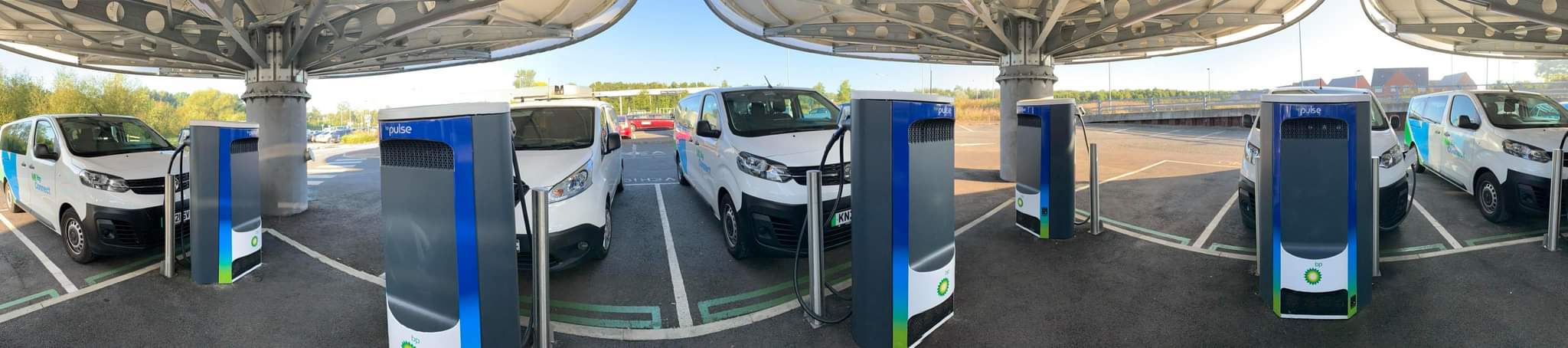
Q4 Quattro Etron ordered through Tusker today, delivery date June..23 ..
It can be cancelled right up to a month before delivery, once date firmed up, so we’ll see 🙄
The German cars in my company Tusker scheme were outrageously expensive, and the range wasn’t great. I ordered an Ioniq5 fully loaded for almost half the price and an extra 50 miles of range. It’s just docked at Tilbury…..
I wouldn’t hesitate to do a journey like that again in an EV but it would absolutely have to be a Tesla. Once you’re off their infrastructure it’s a shit show
Yep was off piste last weekend and used a none Tesla charger,
lots of hassle and I wouldn’t like to have to rely on them on a trip.
Q4 Quattro Etron ordered through Tusker today, delivery date June..23 ..
I ordered a Volvo XC40 Recharge as a replacement company car at the start of April. Delivery date stated as 12-Jan-23, but i'll be amazed if it turns up on time.
Can't come soon enough considering the current diesel prices!
From June 30th all home chargers are required to be "smart" chargers and have a data connection.
On the face of it, provides good benefits especially on cars that dont have on board charge timers to allow you to take advantage of cheaper off peak power.
But a tin foil hatted part of me wonders if this is just paving the way for taxing EV charging - as a way to recoup fuel duty in the future.
Are all cars capable of "granny charging" off a standard wall plug? Will this get around the issue? Most cars will do 7-9 mph charge speed like this, so you could get 60-80 miles of range added overnight which will do for most people, most of the time.
Yes, they'll all granny charge off a regular socket - plus there were thousands of non-smart domestic charge points installed even before smart ones were required for the grant.
The "smart" stuff mandated now is around defaulting to off-peak charging, adding a random delay to the start of a charge (both overrideable if you want), and supporting some new demand regulation standards (which you can choose to sign up to).
As homes get more electrified (car charging, heat pumps, induction hobs, etc) there's a need for more smartness to manage demand - both within your house, and on the wider grid.
The future will be road pricing, not trying to tax EV "fuel" separately to domestic energy.