
Subscribe now and choose from over 30 free gifts worth up to £49 - Plus get £25 to spend in our shop
I’ve no experience with PHEVs. Why is this? More braking that’s not regenerative? With a BEV your around town consumption is likely to be near enough as low as your 60mph consumption, I reckon. Worse because more regen braking, which has its inefficiency, better on drag.
Around town I have the regen braking turned right up but it’s a long way off one pedal driving.
eh? assuming 45mpg (its a hybrid), you get 360miles petrol range, plus whatever the electric gives you (20 miles?) – plus ‘filling it up’ is a 5 minute stop. to only get 220 miles range you would have to be averaging 25mpg..
From that Autoexpress long term review I mentioned
Longer journeys mean the petrol engine is working hard, which ensures it’s not that economical when there’s no electricity left to help out, especially as it has to carry around the 150kg extra weight of a battery and electric motor. On petrol power alone, the MINI will manage around 35mpg.
Fitting all of that extra hardware has also meant the fuel tank has been shrunk to make room, with the capacity going down from 51 litres to 36 litres. As a result, those longer journeys are a bit of a chore – on a recent long haul we had to fill up twice in one day as the range dips down to 220 miles. Add in the need to plug in, too, and it all starts to seem like an inconvenience.
220 miles at 35 mpg means he was using 28.5 litres out of the 36 litre tank so not running on fumes before filling up. Also on a long road trip unless you stop to charge up the battery as well you lose any hybrid fuel consumption electric range after the first 20-30 miles.
It could be because the Merc PHEV has an 8 speed box which keeps the power consumption down (as it would do with revs on an ICE engine),
No, I don't think so. ICEs need gearboxes as they can only operate over a narrow speed range, and the more gears they have the more they are able to keep the engine at its optimum speed which is a function of a quite a few things all of which have other effects.
EVs on the other hand don't have them because they don't need them. They can operate at any speed more or less up to a maximum which is probably determined by how much power the inverter can deliver at maximum frequency and still have the motor stay in sync, I don't know. The efficiency (as far as I know) is determined by the amount of heat lost in the wiring, and the more current is flowing the more heat is generated. The amount of current flowing depends on how much torque you have requested (again afaik) which is not dependent on the speed of the engine.
Also on a long road trip unless you stop to charge up the battery as well you lose any hybrid fuel consumption electric range after the first 20-30 miles.
I don't think they just chew through the battery then start on the ICE unless you ask them to. It should function as a non-PHEV hybrid, recovering wasted energy from the engine and braking etc whilst keeping the battery charge.
Alright, but in 15 years time when there are old cars knocking around with 3-4 owners and people are buying privately it’s going to be a right pain when you can’t depend on decent battery condition, and there are going to be many more cars getting trashed because the batteries were trashed by some uncaring or unknowing person abusing their 12 year old car.
Fair enough but I think this concern can be tempered a bit-
- you can get a report on battery capacity at any time, so a buyer should know what they're getting
- also my understanding is that by the time we get to significant degradation, even from heavy users of superchargers to high charge percentage, we're talking well over 100k miles. Maybe even double that.
Model Ss have been about since about 2012 so there are now loads of pretty high mileage ones knocking around in the USA. Accepted these were probably better treated by their early adopter wealthy middle aged climate concerned buyers than your average car but it's still getting us to some significant data.
So it's certainly a thing but I put it in broadly the same box as the kind of behaviour that's always been able to harm an ICE car.
If I were buying, I’d get a used 38kWh Ioniq (190 mile range) for £15k unless I were rich in which case I’d get an iD4 based on the paper specs.
Where are you seeing used 38kWh Ioniqs at this price? I've been keeping an eye on these now and again each time something breaks on the car (53 plate so not lasting much longer). I don't think I've even seen the 28kWh at this price never mind the 38kWh.
Hardly any 28 at that money, seen a few higher miles ones at that.
38 starts around £22k.
Any views or alternatives for a Mini Countryman PHEV?
Renault Capture PHEV. Superb bit of kit with a comfortable ride.
No, I don’t think so. ICEs need gearboxes as they can only operate over a narrow speed range, and the more gears they have the more they are able to keep the engine at its optimum speed which is a function of a quite a few things all of which have other effects.
Don’t know then. You’ve got me doubting myself, so I’ll keep an eye on the consumption next time I’ve done a town run.
I don’t think they just chew through the battery then start on the ICE unless you ask them to. It should function as a non-PHEV hybrid, recovering wasted energy from the engine and braking etc whilst keeping the battery charge.
This. The battery will recharge on braking and deceleration, plus a certain amount of mileage can be covered “gliding” of course.
If I’m out on a long run, I’ll put the journey into the Sat Nav and let the car decide what engine to use. It always defaults to electric mode in traffic and in towns. There is also a battery save option that will keep the battery at the current level, when selected, which I’ve used a bit. ( ICE cruising on the motorway or in country lanes, electric in town and traffic)
A woman at work has a Mini Countryman PHEV. Not a massive petrol tank and small electric range but she likes it.
Would have liked one myself but wasn't sure they would be on the list when my car lease came up so when I had the chance to change mine early for full-electric I went for that option instead. I would have loved a fully electric Mini but the range is impractical for what I wanted.
I've had a Renault Captur PHEV for 8 months now. Average MPG of 115 with a mixture of driving conditions over a tank full. 60 MPG with no plugging-in. 49 mpg while towing a 400kg car on an "A" frame over 300 mile journey. It uses 2nd and 4th gear of the automated constant mesh manual gearbox. I very rarely use the brakes as the regenerative braking is very good if left in the "braking" mode.
I don’t think they just chew through the battery then start on the ICE unless you ask them to. It should function as a non-PHEV hybrid, recovering wasted energy from the engine and braking etc whilst keeping the battery charge.
My only experience of a PHEV is a Mercedes 330e I had for a few months. It would just chew through the battery at low speed unless you went onto a fast A-road or motorway when the ICE would kick in straight away but even then the battery depleted quite quickly despite it having a bit of regen. It actually never allowed the traction battery to fully deplete and kept a few % back I guess to help the ICE up hills or under acceleration. In mixed driving with the journey being longer than the battery's range the real world fuel consumption of PHEV's is wildly less than their official consumption figures.
I’ve worked out I get around 40 mpg on a motorway journey with the ICE, being assisted by the motor. Not great compared to a diesel, but better than my last car (BMW 320i).
I don’t think they just chew through the battery then start on the ICE unless you ask them to.
yep, "makes the Countryman PHEV the first rear-wheel-drive MINI when in ‘Max eDrive’ mode, which allows all-electric driving at speeds up to 78mph. Auto eDrive prioritises battery power below 50mph, but acts more like a hybrid, with the petrol engine chiming in for bursts of acceleration. There’s also a setting to favour the petrol engine and save battery power, coming in handy if you plan to visit an urban area later in your trip."
I'll take a look at the Captur, thanks
Just to add my 2p to the discussion about battery life as EV usage progresses
Fair enough but I think this concern can be tempered a bit-
– you can get a report on battery capacity at any time, so a buyer should know what they’re getting
– also my understanding is that by the time we get to significant degradation, even from heavy users of superchargers to high charge percentage, we’re talking well over 100k miles. Maybe even double that.
There is a third effect - as engineering and materials knowledge progresses, the design margins become more and more well understood. As a design and technology lifecycle progresses, the value engineers get to work, removing that excess value (or adding it, depending on your point of view), meaning that products will get closer and closer to the actual lifecycle specified. For example - the first cars on the road are still working, and will probably continue to do so as long as someone has a lathe. I doubt that most, maybe even any, cars made today will last 100 years.
It's the same effect as "they don't make them like they used to". No, they don't, and in some ways, because they know better. That is, they know how to achieve the same result for less raw materials and effort.
To make it more relevant to this thread - there's a good chance that the early EVs were over-engineered, and as designs progress, they will get cheaper, but have less in the way of margin for excess battery life.
I might consider a PHEV to replace the Passat, due to towing requirements. But then, it hardly ever needs to do town driving so there's probably little point.
Where are you seeing used 38kWh Ioniqs at this price?
You're right, the cheaper ones are all 28s. I did a quick flick through Autotrader at some point a while back. Cheapest 28 on there now seems to be £13.5k
also my understanding is that by the time we get to significant degradation, even from heavy users of superchargers to high charge percentage, we’re talking well over 100k miles. Maybe even double that.
Yeah but battery aside, the contents of an EV should last yonks. It might be that Teslas last 15 years like you expect your ICE car to last, but maybe Hyundais will last 25 years. Certainly longer life is possible with an EV.
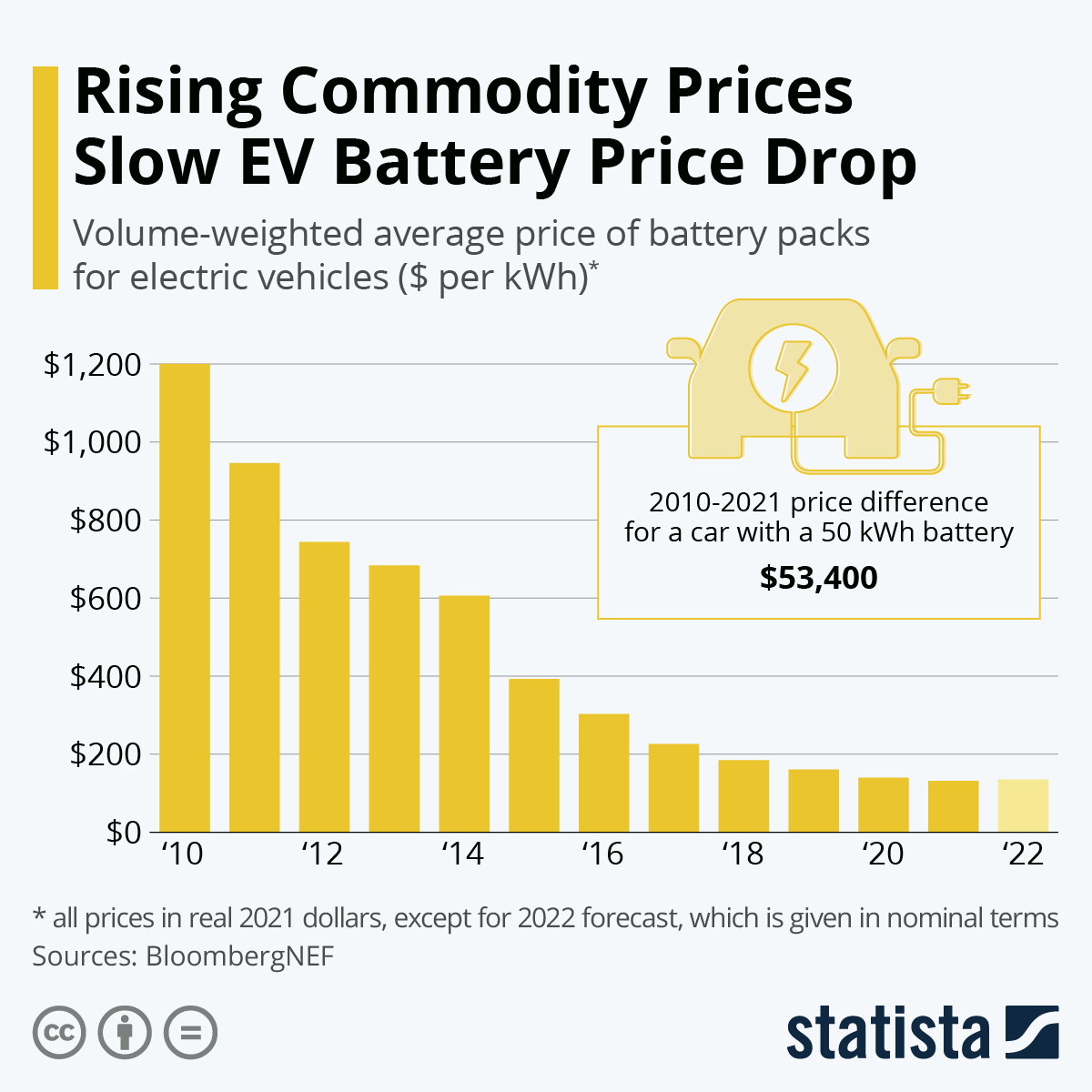
EVs will become much cheaper over time due to economies of scale with battery manufacturing. It is said that when batteries get to $100/kWh the cars will cost the same as the equivalent ICE car:
There is a third effect – as engineering and materials knowledge progresses, the design margins become more and more well understood. As a design and technology lifecycle progresses, the value engineers get to work, removing that excess value (or adding it, depending on your point of view), meaning that products will get closer and closer to the actual lifecycle specified....
Fair point. Itse also the case that some of the early models of EV suffered pretty bad battery degradation (early Nissan Leaf?) while others did not. Anecdotally that was about battery heat management. Until 2019 Tesla had a service schedule that included quite expensive regular checking of the battery cooling fluid/systems, which to my eyes negated the oft quoted EV benefit of minimal servicing cost. They then dropped this having apparently found/proved it unnecessary. Another quirk about tesla is their habit of using their customers to test things. Clearly a riskier proposition from the customer's perspective but there are also benefits. I guess this one goes hand in hand with the small battery buffers.
Yeah but battery aside, the contents of an EV should last yonks. It might be that Teslas last 15 years like you expect your ICE car to last, but maybe Hyundais will last 25 years. Certainly longer life is possible with an EV.
I think logically so but I'm not going to hang my hat on it for my first one! But if I do 300k miles in this car it will end up remarkably good value despite its bonkers purchase price. It'll look like one of those rat cars by then though. Back to tesla build quality...
Anecdotally that was about battery heat management.
It's cos the battery was air cooled, and that couldn't cool it enough or warm it enough when required. Modern cars have heat pumps so that the battery is always at optimum temperature, and it also can be used for cabin heating much more efficiently. It'll be interesting to see what happens this winter in our car. The morning commutes however won't be too bad as it warms the battery (and cabin) whilst plugged in.
It’ll look like one of those rat cars by then though.
They all will - car interiors, seats, carpets, switches and the like start to break after 15 years. The lumbar adjustement on my Passat for example doesn't work, and some of the display is going on the stereo.
Voltaire the ID3 is home now and is meeting Evangeline the T5.
Looking forward to this electric adventure; it feels very 21st century!
In mixed driving with the journey being longer than the battery’s range the real world fuel consumption of PHEV’s is wildly less than their official consumption figures.
PHEVs are an "engineering solution" so that automakers can economically continue producing cars with ever-tighter Euro emissions regulations, and will result in the vast majority of new cars in the near future lugging around a heavy and useless pile of electronics, using an over-stressed small petrol engine. Change my mind!
Enjoy Lister.
Mine has been loving this hot weather the range has jumped right up.
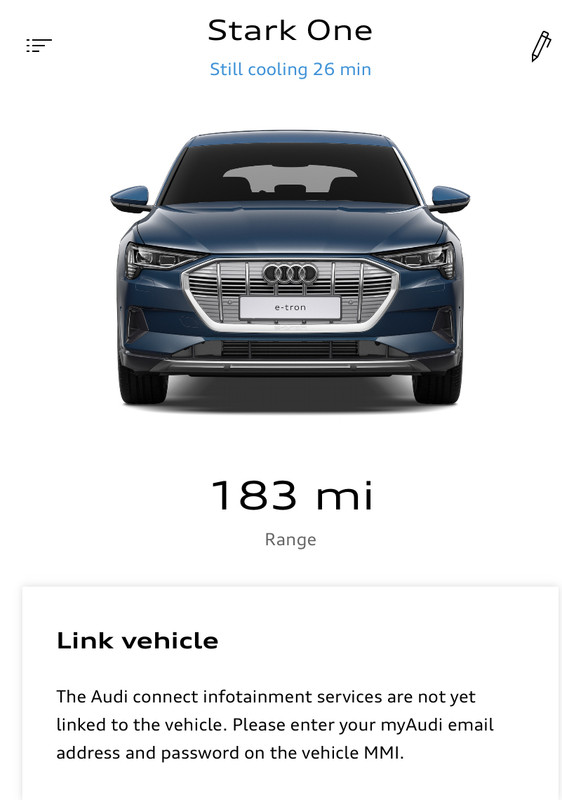
Must agree with Drac, EV's love this warm weather, mine charged to 266 miles today 😀
The cost for electric car batteries is below $100 per kWh now , so yes, they are now cheaper to buy than an equivalent ICE car now in some countries. Why do you think Tesla, Polestar and Kia can cut their purchase prices by 20% and still make money?
Re. battery life , I used to have a link, and am looking for it, to a story about a couple of Telas that had been used for rental and were on over 300,000 miles already.... 9-10% batter wear. I can live with that. There are so many 2015 scare stories still doing the rounds.
PHEVs are an “engineering solution” so that automakers can economically continue producing cars with ever-tighter Euro emissions regulations, and will result in the vast majority of new cars in the near future lugging around a heavy and useless pile of electronics, using an over-stressed small petrol engine. Change my mind!
Can't disagree. Mrs S picked up the nearly new Countryman PHEV on Friday and its just under 300kg heavier than the equivalent petrol version. But, she loves it and as we all know a happy wife=a happy life.
Although she did get a bit of a shock when she taxed it and it cost her £480 as the list price new was over £40k - for a mini FFS!
She could have had a Model 3 or Mach E for £40k!
PHEVs are an “engineering solution”
Not sure what you mean by this. PHEVs are petrol/diesel cars but with a battery for all those short trips where it's much more efficient. Surely it's that simple?
PHEVs are an “engineering solution”
When you're running on battery you're lugging a heavy engine, gearbox and fuel tank around (I know that in these applications the drive is still going through the gearbox but the electric motor only needs a simple single speed gearbox).
When you're running on petrol/diesel you're lugging a heavy battery and electric motor around.
Drag, weight and friction are the enemies of efficiency - PHEVs have a weight penalty compared to either pure petrol/diesel or battery.
Not sure what you mean by this.
Simplest description is that they are a hack or bodge. They offer no advantage over a pure ev or ice car. About their only benefit is as a hand holding device from ice to ev (or as a tax avoidance scam).
I never understood why range extended models didn't take off. By relegating the ice part to purely a generator looks on paper like a good idea. Can be very small as does not need to be able to supply enough for the instantaneous demands of the motor, just enough to be averaging more in the is going out.
PHEVs are used by the legacy manufacturers to game the regs and allow them to milk the ICE for a few more years.
Not sure what you mean by this. PHEVs are petrol/diesel cars but with a battery for all those short trips where it’s much more efficient. Surely it’s that simple?
But for those short trips you're carrying essentially 200-250kg of engine, gearbox, fuel which you don't need. Likewise when you're running on dino-juice, you're carrying around over 300kg of almost useless HV unit, cables, motor, batteries. It's like loading your car up with your entire family and their requirements for a 2 week holiday for every small journey. Also, the motors are not efficiently sized for the vehicle, the're another compromise, so use more power than a proper EV.
Even the newest Mercedes Hybrids have a 16kWh battery pack and yet return only 20 miles of real world range on electric power. My i3 has a 33kWh battery (2x the size) and does around 140 miles (7x the range). It too has an engine (Range extender) but it only weighs 90kg inc fuel and can give the car around another 90 miles of range from 9litres of fuel, so 45mpg.
When you’re running on battery you’re lugging a heavy engine, gearbox and fuel tank around (I know that in these applications the drive is still going through the gearbox but the electric motor only needs a simple single speed gearbox).
When you’re running on petrol/diesel you’re lugging a heavy battery and electric motor around.
Drag, weight and friction are the enemies of efficiency – PHEVs have a weight penalty compared to either pure petrol/diesel or battery.
this is demonstratably untrue. An XC40 is available with battery, phev or internal combustion.
The diesel weighs 1700kg, the phev is 1750kg (smaller, simpler engine takes the weight penalty down) and the electric is 2150kg.
The PHEV is thus a 400kg and £10k better solution than pure electric, plus if you mostly do shorter journeys, it is more efficient (due to less weight) than a pure electric version, as well as better for the environment, and more convinient to top-up when a very long journey (>300 miles) is needed.
if you're doing 200 miles a day, it obviously suffers, but the vast majority of users are not in that bucket. Yes its an "engineering solution" - a well engineered compromise that optimises cost, efficiency and weight.
this is demonstratably untrue.
Only if you're not comparing apples to apples. You're comparing the heaviest Diesel Engined XC40 to the lightest spec Recharge.
A correct comparison would be:
Volvo XC40 T3 @ 1550kg. Volvo XC 40 Recharge T3 @ 1812kg... so 260kg.
Mitsubishi Outlander Phev (19-21) - 4c 2.0l petrol - 1395kg. 4c 2.0l Petrol Phev - 1810kg - over 400kg!
The upcoming Cupra alternative to the ID3 is a bit of a looker. Not much to beat compared to the ID3 though.
The new Kia EV6 GT looks blummin impressive. 300 mile range, 7 year warranty, 0-60 in 3.3s,
[img] 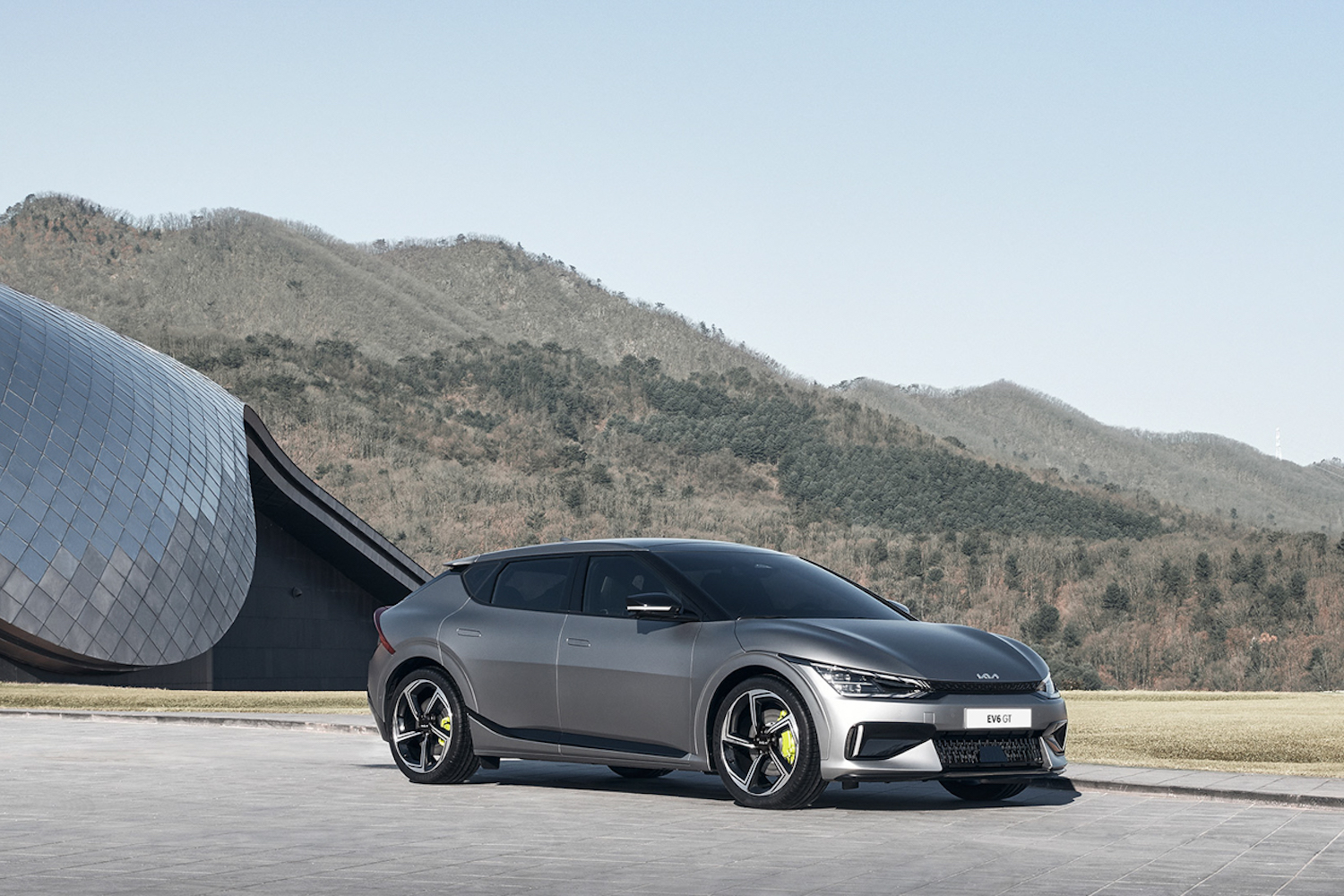 [/img]
Yep Kia based on same platform and tech as that Hyundai ioniq 5 which has just won a car of the year award. These are really getting close to tesla now (with better looks!) and as more networks of high powered chargers are being deployed quickly, the advantage tesla have gets smaller in my mind. These are miles ahead of the VW group's offerings in my list- range efficiency, charging speed, performance, looks, build quality........
The new Kia EV6 GT looks blummin impressive.
I agree. Hope there are going to be plenty of these in stock when the lease on my e-Niro runs out in 18 months or so. At the moment its between this or a model Y
I can't really profess to knowing a great deal about all the different EV options and the advantages of one over the other, but a mate of mine got a Skoda Octavia PHEV a few months back. It's a company car & he is currently averaging an equivalent of 75mpg. I suspect that will drop in the winter time, but seems pretty good to me.
About 20mpg better than my Leon diesel, although I guess on a long run that will probably not hold true.
But for those short trips you’re carrying essentially..
Yes, but it still has advantages over both pure EV and pure ICE. Don't get me wrong, I'd rather see everyone in EVs, but PHEVs fill a niche for now.
These are really getting close to tesla now
They seem a much better bet now, for me. Comparable range, what looks like better design and the build quality, engineering and support of a traditional major manufacturer. And they aren't ugly as hell as a bonus.
Mind you, I hope the infotainment in that Ioniq 5 is better than the one in my Ioniq. That really lets the car down IMO and I'm normally pretty generous with such things.
Today, Tesla CEO Elon Musk was asked about the plan to open the Supercharger network during Tesla’s Q2 earnings conference call and confirmed the strategy:
We are thinking about a real simple thin where you just download the Tesla app, you go to the Supercharger, you just indicate which stall you are in, you plug in your car, even if it’s not a Tesla, and you just access the app to tell “turn on the stall that I’m in for how much electricity”, and this should work for almost any manufacturer’s electric car.
I'm looking for an EV to replace my wife's PoS Fiesta
Renault Zoes can be had for under £6k. Is a 2014 Zoe worth a punt? It would be used for short urban journeys so a sub 100 mile range shouldn't be an issue.
Buying a car with 7 year old batteries kind of gives me the fear though
Mind you, I hope the infotainment in that Ioniq 5 is better than the one in my Ioniq.
Molgrips have you checked to make sure you have the latest infotainment firmware? Although my e-Niro is MY21 it didn't have the latest firmware which you can upgrade yourself via the cars USB port. Not saying it will vastly improve things but it might help.
Two things with the Zoe:
1) Is it battery a battery lease one, saves worrying about the battery but additional monthly cost.
2) Before the ZE50 Zoe they all rapid charge using a Type-2 connector which is mostly no longer supported on new and upgraded rapid charging locations, so not that great for long trips.
I had a Zoe from 2015 to 2017 and even took it on several trips from Derbyshire to the west coast of Ireland and Northern Ireland. At the cheap used end of the EV market I'd maybe be looking at Leafs or a little more for a Soul EV (which I've also previously owned)
Renault Zoes can be had for under £6k. Is a 2014 Zoe worth a punt? It would be used for short urban journeys so a sub 100 mile range shouldn’t be an issue.
Buying a car with 7 year old batteries kind of gives me the fear though
Will be on battery lease at that price, ie you buy the car but take over the lease of the battery from Renault. Mileage dependent but from £49pm.
You do get a battery warranty for as long as you have it leased (capacity drops below 70%, Renault replace it) and breakdown cover (including running out of charge) included in that. You can buy out the lease on them now, a couple of grand for a ZE20 (first gen) Zoe.
https://www.gogreenautos.co.uk/buyers-guide/battery-lease-explained
I'll add that when looking at EVs that are out of the standard warranty check about getting an extended warranty, some of the replacement parts are quite frankly ridiculously priced and will economically write the car off if they fail. Fortunately this is getting better with independent EV specialists and an increasing number of scrapped cars for parts.
This time last year I went looking at 8-9k Zoe's. All battery lease at the price which I didn't see as an issue (low mileage). The basic model you got for that was not that great in my view. Wasn't nice inside and ride was poor. Also lacking power. Gave up on the idea and on a whim drove a 1 year old ze40 with higher trim level to see how they were with more power. It felt like a different car to the point I bought it at the end of the test drive. Was more like £19k though still on battery lease. It's still not fast but I have an Elise for that. We now use the Zoe more than the golf estate despite the golf being a nicer place to sit. I've always been a fan of manuals with power but being able to glide around in the Zoe is nicer most of the time.
Molgrips have you checked to make sure you have the latest infotainment firmware?
Ah no, I'll check that out.
We are thinking about a real simple thin where you just download the Tesla app, you go to the Supercharger, you just indicate which stall you are in, you plug in your car, even if it’s not a Tesla, and you just access the app to tell “turn on the stall that I’m in for how much electricity”, and this should work for almost any manufacturer’s electric car.
Isn't that how all the rapid chargers work?
Isn’t that how all the rapid chargers work?
No a lot like Instavolt, Shell Recharge, Gridserve and Osprey you plug the car in and present your contactless bank debit card to the charger and it starts charging. If you have a Tesla and use a Tesla rapid charger you simply plug the car in and walk away, the car and charger take care of the rest. You don't need an app to buy petrol so it should be the same for buying electrons. If EVs are to go mainstream all charging should be payable by contactless as most people will simply not understand why they should have a smartphone full of apps or a wallet full of RFIDs in order to charge their cars.
using a Type-2 connector which is mostly no longer supported on new and upgraded rapid charging locations,
I have never been to a recent charger without a Type 2. It's the most common standard out there.
If EVs are to go mainstream all charging should be payable by contactless as most people will simply not understand why they should have a smartphone full of apps or a wallet full of RFIDs in order to charge their cars.
Octopus Electric Juice lets you use one card for many places and it's just added to your electricity bill. There's not a huge advantage to this over a credit card, but it does stop places like Instavolt putting a sixty pound hold on your card, and you get a slight discount (5% roughly) for doing it.
The PHEV is thus a 400kg and £10k better solution than pure electric, plus if you mostly do shorter journeys, it is more efficient (due to less weight) than a pure electric version, as well as better for the environment, and more convinient to top-up when a very long journey (>300 miles) is needed.
I suppose it depends on the cost of the servicing,the Tesla Model 3 currently has no servicing requirement. I think they advise changing the cabin air filter yourself after a few years and rotate the tyres but that’s it, the regen braking means you really aren’t using the brakes like a normal car as well.
The Long Range has a Battery and drive warranty of 8 years or 120,000 miles (192,000 km), whichever comes first, with minimum 70% retention of Battery capacity* over the warranty period.
I’d say there’s more stuff to go wrong with a phev tbh.
If you have a Tesla and use a Tesla rapid charger you simply plug the car in and walk away, the car and charger take care of the rest.
Yep it’s very slick.
For all the Tesla bashing they did get that right and investing in the charger network.
last time I attempted to use the Superchargers they were rammed, with people waiting (Tebay), I went onto a Booths 4 x Instavolt down the m-way which was empty
Opening them up to everyone is generally a good thing tho, if only to encourage more people to make the leap of faith.
Does anyone have any experience of the Easee Home Robot charger?
Local installation company quoting £800 installed, which is a bit more than I wanted to spend. For an 11kwh PHEV, which charges fine using a granny charger but I figure I should get a proper charger before the grant stops next year.
Most chargers seem to have contactless now.
Type 2 chargers are very common but superchargers use CCS which are ace.
There’s not a huge advantage to this over a credit card, but it does stop places like Instavolt putting a sixty pound hold on your card
IIRC Instavolt's hold is something like £30 for 2-3 days. Its Ionity which hold £67 and in my experience hold it for 6-7 days. One way round this would be to use a credit card rather than a debit card so you are free to spend your own money whilst the hamsters at Ionity turn the wheels. Gridserve hold £20 but they seem to be processing the transaction as soon as you finish charging.
For all the Tesla bashing they did get that right and investing in the charger network.
I have no idea why they get so much hate, especially from EV enthusiasts. If it wasn't for Tesla the EV would be at least 5 years behind where it is now. Its only Tesla that's keeping the legacy manufacturers honest.
Yep it’s very slick.
For all the Tesla bashing they did get that right and investing in the charger network.
That’s because Tesla are essentially a Tech company and knew that selling a service is far more profitable and more likely to build a customer base than selling just a product.
It’s a common theme in almost everything Elon Musk has done.
Paypal made online payment simple and accessible.
Tesla made electric car ownership simple and (mostly) accessible,
SpaceX made Earth to orbit simple and accessible - a service to be bought, not built to order.
It’s something the major automotive companies are just switching on to.
Picked up a 17 plate Zoe, q90 40kwh about 3 weeks ago, when collected from dealer battery range on screen said 205 miles, when I charge it fully it only shows between 139 and 150 any ideas why??
Pay at pump petrol in the UK used to be a £1 authorisation followed by a settlement record for the full amount. The card schemes moved to authorise for maximum amount (and allow issuer to authorise for a lower amount, so if the pump asks for £100, the issuer can say authorised for £80). The £1 scheme put the risk on the petrol station, the new scheme balances the risk and means no long holds.
The same thing could be done for electric car charging - we'll probably have to wait for the EU to push the card schemes then the UK can adopt it.
The current authorise for maximum amount is good for the charger provider and bad for the consumer - might be worth raising with your MP pointing out the difference between petrol and electric practice?
It guesses based on previous drives. You can reset it on the Zoe (like this, which will show a very high number and it'll come down as it re-learns.
Even the newest Mercedes Hybrids have a 16kWh battery pack and yet return only 20 miles of real world range on electric power.
Nah - Regularly get 38 miles electric only running from my A Class without trying too hard. Battery is just under 16 kWh, but you can only charge up to 11.
This is significant
https://pushevs.com/2021/07/30/gac-aion-with-fast-charging-speed-comparable-to-refueling/
Wow that's a game changer. It can charge at over half a megawatt! Just as impressive it's still charging at 480kW at 80% state of charge. OK 600kW chargers are non-existent in the UK but a car that could charge at 350kW from 0-100% SOC would mean 10 min charging stops.
Nice, that kind of battery tech has been in development for a while, glad someone finally has a car with it.
One of the things that is a little concerning for a natural born tinkerer like myself is that future DIY repair of BEV's involves some pretty big scary numbers (pasted from the GAC Aion link)
855,6 V
562,8 A
I know EV's are mechanically far simpler but at some point a motor/controller/battery pack will need repairs. Better dig out my 1000v insulated Marigold gloves!
Petrol is bloody scary stuff as well

I know EV’s are mechanically far simpler but at some point a motor/controller/battery pack will need repairs.
You will be able to isolate the high voltage parts and make them safe, and you will need to do very little if anything to the drivetrain. My Prius had a 300V battery and there was a plug to remove to disconnect everything.
Loaded my E-Tron up and drove 268 miles to the west coast of Scotland on Thursday. Stopped at Sterling Park and Ride for some food a sleep as I’d been at work. An hour later on my way fully charged, it’s cost me a total of £0.
Stopped at Sterling Park and Ride for some food a sleep as I’d been at work
If you mean my home town Stirling then you are braver man than I. With Chargeplacescotland network changing admin from BP Chargemessup to Swarco there were reports of the CYC app not working even though the official changeover date was 26th June so when we travelled up to Scotland on the 16th July I chickened out and took our diesel simply because we had to make a trip down the Mull of Kintyre and there are no non-Chargeplacescotland charger options there and of the Chargeplacescotland chargers only the in Lochgilphead one appeared to be in operation. Good luck with the rest of your trip as post change over Chargeplacescotland network appears to be a complete sh!tshow. Hopefully Swarco will get their act together soon. We stayed in the Premier Inn in Stirling for a couple of nights and I noticed the nice new fast chargers in the car park opposite on Forthside Way. Hopefully I can make use of them when I'm next up end of August.
Oh I was nervous but you can just ring them tell them there’s an issue and they’ll activate it. I just used my CYC card.
Does anyone have any experience of the Jaguar iPace? Hints/tips? Reliability?
My dad is thinking of getting one and isn't sure about buyng a used one, though it looks like you can get one about 2 years old, 20,000 miles for £20k less than new which is pretty significant!
I'm also assuming that there is a long wait to get a new one?
He's also more of a buy it outright than get a lease sort of buyer.
The current authorise for maximum amount is good for the charger provider and bad for the consumer – might be worth raising with your MP pointing out the difference between petrol and electric practice?
Tesco have already started charging max authorisation at the pumps, they can bugger off if they're starting that nonsense.
You will be able to isolate the high voltage parts and make them safe, and you will need to do very little if anything to the drivetrain. My Prius had a 300V battery and there was a plug to remove to disconnect everything.
Awesome, how did you check the circuit was dead and had no residual charge? Disconnecting the battery is the easy bit, checking its safe isn't, even trained sparks screw that bit up.
Awesome, how did you check the circuit was dead and had no residual charge? Disconnecting the battery is the easy bit, checking its safe isn’t, even trained sparks screw that bit up.
It's relatively easy to isolate the battery from the rest of the car because the battery contactors open when they lose 12v power.
Personally I think this is as far as the home mechanic would ever need to go.
Seems that it'll just drop into the same sort of situation like at home where you can safely and cheaply do your own plumbing but you're an imbecile with a death wish if you attempt to step up to your own gas work.
It’s relatively easy to isolate the battery from the rest of the car because the battery contactors open when they lose 12v power.
Which is exactly my point, that proves absolutely nothing. Residual charge is a thing and a very bad thing at that. Your average home mechanic is utterly ignorant to the risk as they aren't electricians used to high power circuits.
Which is exactly my point, that proves absolutely nothing
Well, what was your point? You can't service any of the high voltage parts of an electric car yourself but the rest of it is fair game.
You can kill yourself in a thousand creative ways working on any car - whether that's injecting super-pressurised diesel into your body; creating sparks near petrol vapour; dropping a spanner across a 12v battery; or just by being crushed by it.
My dad is thinking of getting one and isn’t sure about buyng a used one, though it looks like you can get one about 2 years old,
No personal experience but I've seen lots of comments that they, the early ones at least, don't play well with public rapid chargers.
Awesome, how did you check the circuit was dead and had no residual charge?
I removed the battery safety plug, which is specifically designed to make the car safe (so I doubt Toyota would have designed in the chance of killing a mechanic), then I un bolted the battery and removed it, testing everything I could find at every step of the way. Then I put it on the bench, stripped the casing off it and using tools with insulation tape wrapped on the handles I removed the bus bar from the battery, which was the only risky part - wearing high voltage insulating gloves all the while. But because of the way it's built you can only accidentally touch neighbouring battery modules so you would only get 8 or 16V or so. To get a 300V shock you'd have to grab opposite ends of the thing which you could only really do on purpose.
Jaguar iPace
When I was looking, a couple of years back, I saw too many reports of relatively poor consumption per mile. I recall that Harry's garage fellow getting 440Wh/mile on a steady 75mph motorway journey, which in my subsequent experience isn't great, over 30% worse than my similarly sized (albeit lower, but the ipace is only really half SUV) car does in similar use. It'd move real world range from a non issue to a fairly regular inconvenience for me.
I'd be very disappointed if the public charger trouble wasn't dealt with by now.
440Wh/mile
If my maths is right that's 2.2 miles per kWh which is about twice what my Hyundai uses, although I drive at 70 rather than 75.