UPDATE: CLASSIFIEDS section refreshed, redesigned, searchable: Go take a look
I'm just a little jaded as I seem to kill HT2 BBs after every Dyfi, and have just killed a Hope BB bearing in six rides. OK, it's been biblical, but still... Hope? Six rides?
Ever considered that it may be a problem with your end, rather than the BB standard. are you doing something silly when installing them? 😉
WTF is this thing...
[img]  ?0[/img]
The weird offspring when you mate an ant, an inline skate and a bike?
hishairyness - Member
The gearbox! This just has to be sorted once and for all. Its a no brainer and will happen, then all you need to do is strap it into a fatbike and we're all sorted. The Ultimate off-road bike!!
I thankyou...I'll get my coat.
[img]
 [/img]
electronic shifting - cordless.
The future is -
Carbon fibre brake mounts made of spoons
A space between "mountain" and "bike"? 😆
Tom_W1987 - Member
Seriously. The very next big thing will be wider tyres.
Surly have 3.0 and 2.75" tyres, so not as big as a fat bike tyre, a nice sensible middle ground.Why? The larger tyre has a tiny weight penalty for a significant increase in traction. So you can climb harder, brake harder, and most importantly corner faster. This is a serious advantage, and a lot of fun.
Why this has not happened before is a mystery. Why are surly (a fairly oddball outfit) dictating the next big thing? (They were on the 29 scene very early) Maybe it's because most bike companies would rather sell you expensive shit that breaks, shocks and electrics, and remote this and that gizmos.
Let me see....hmmmm....
1) Increased rotating weight, 2.5's can add a pound of it over 2.3s.
2) Increased rolling resistance, why would I need more grip if I don't need it? A set of 2.5 minions is the most I'll ever need.
3) Increased lateral instability or tyre roll. Why would I want that when I can have softer compounds on the cornering part of the tyre?
4) Poorer mud performance for downhill applications, thinner tyres cut through and grip the bedrock beneath mud more efficiently. Larger tyres do not.
Eeer, no, and....
1. 850g for a 29x3" right now.. And it "IS WEIGHT THAT WORKS". Other wise we would be using carbon track bikes offroad if weight was everything. My saddle and post weigh 500g, but I don't leave them behind for the 500g weight saving. The 26x2.75 folding dirt wizards arrive this week.
2. Not necessarily. The light tread pattern of a surly Knard rolls very fast, getting its grip from the footprint. Why would you want more grip? Answer: You corner faster, and brake harder, you go faster in many situations.
3. Wider rims sort that out.
4. Yeah but no. Try riding a 3.8 Nate downhill in mud and you will see there is another point of view. And riding in the rain is tiresome, been too much of this recently.
5. Yeah I know there was not a five, but there is now. Actually I have just edited that out. You are not ready for five!
I did tell you I would bang on about this. Have a read of what Steve worland wrote about the krampus... In stw. And Steve knows his stuff, if he poo poo'd this semi fat thing, then I would not be here. He said something like... "If they made a ti krampus I would not need any other bike" ish.
Seriously this will be big, but just like 29ers did... it goes against what the MBUK have been preaching for years, it goes against the entire direction of MTB development, it goes against the lighter the better religion, and it will go against your techy belief structure.
Please no more electronic stuff that I can't fix by with normal tools. The amount of electronic stuff I have lying around unused due to it randomly stopping working or being out of date.
I would love some super tough tyres with stiff sidewalls that did not pinch puncture or rip and were light weight.
I think the biggest change we will see in bikes is the de-centralisation of manufacturing. There's little financial benefit to building bikes en-masse in the far east now, rising wages there and high import duties erase pretty much all the direct benefits of bulk assembly. Instead I predict over 3-5 years that assembly will move to regional hubs, which will allow for the custom speccing of mid-high bikes.
If you couple this with the pressures on shops caused by low price grey imports which make parts swap outs a financial PITA then we might find a lot of companies take this route. The process will be pretty similar to cars;
You will go into a shop and try a 'base spec' model. Once you've roughly decided what you want, whether in the shop or online (and delivered direct or via the shop) you will customise the bike to suit your needs.
The assembly plant will build that exact bike (right down to shock tunes to suit your weight etc.) and package and ship the bike to your chosen destination. Probably 7-14 days later.
This has some big benefits:
1) The need for model years goes. The model year doesn't work for manufacturers as it allows for little flexibility in the supply chain, puts huge dependency on marketing to 'drive' sales, and generally means supply is limited at launch, and overstocked at close out, leading to huge discounting at the end of the year. All in all a bad state.
2) The shops are increasingly workshop dependent. Moving to this semi-custom model allows retailers to focus back on the sales of bikes without carrying huge stocks, and frees up valuable shop space for demo bikes etc. It also makes the little guy competitive again as they have the advantage of custom options without carrying insane levels of stock.
3) appreciation for fit and spec is ever increasing in the customer world. We want things just the way we like them. The rise of CRC and Wiggle shows our desire for changing everything is latent. Companies addressing this will do well. Those that persist in stock models will find their market ever more competitive.
4) companies like Canyon/Halfords/Decathlon/Go outdoors are eroding the market for mid price bikes from your LBS. LBS'es need something to 'justify' their existence (in the nicest possible sense). The ability to touch and feel something but still get a bike of your spec at a good price will be a huge driver to re-invent the role of the LBS.
5) JIT manufacturing techniques are well established now, and lead to lower supply chain costs, less capital requirements and overall efficiency in delivering the end product. Bike assembly will be able to take advantage of the lessons learnt from car assembly to produce a streamlined custom assembly model that actually saves money overall for the manufacturer.
Like I said, its the way car manufacturers have been doing it for years (except the regional hub bit - but thats an advantage bikes have as they don't need mahoosive and very expensive robots), its only a matter of time before that model trickles down to bikes, and when it does, buying a bike will become a very different experience.
Oh and I agree on wider tyres. We're stocking 2.4 on some lines as standard and will be offering 2.75 real soon 😯
Oh you're getting far too serious.
I wonder if we'll get as far as Neal Stephenson's idea: No tyres, no rims, just self adjusting spokes with grippy ends, and radar that scans the ground infront.
Bit surprised it's not made it on to this already (or did I miss it?).
A seat that doesn't make my nuts numb would be nice.
As long as the "next greatest thing" ensures a steady supply of unfashionable-but-perfectly-suitable parts (e.g. 25.4 mm stems & bars) on Ebay, then I'm all for it... whatever it is. 8)
Rapid rise front derailleur.... 😉
B.A.Nana, that Nicolai is awesome. Belt drive and USD forks too!
Biopace cassette. Still keep the round front chainrings for that authentic mountain bike pedalling action, with all the benefits of Biopace (no dead spot) action in the rear. Trust me, this is just around the corner.......
[url= http://www.pinkbike.com/news/prototype-magura-elect-rear-shock-taipei-show-2014.html ]Prototype Magura eLECT Rear Shock[/url]
I did mention this 3 pages and 4 days ago, good guess eh?
I did mention this 3 pages and 4 days ago, good guess eh?
aaaargghhh ! Another bloody battery to charge..... 🙄
Who cares....
Whatever the marketing people come up with so us suckers put our hands in our pockets!
The 26 inch wheel mountain bike 🙂
Hub gears and electronic shifting. Electro/magnetic dampers. Paul
Definitely this.
[img] 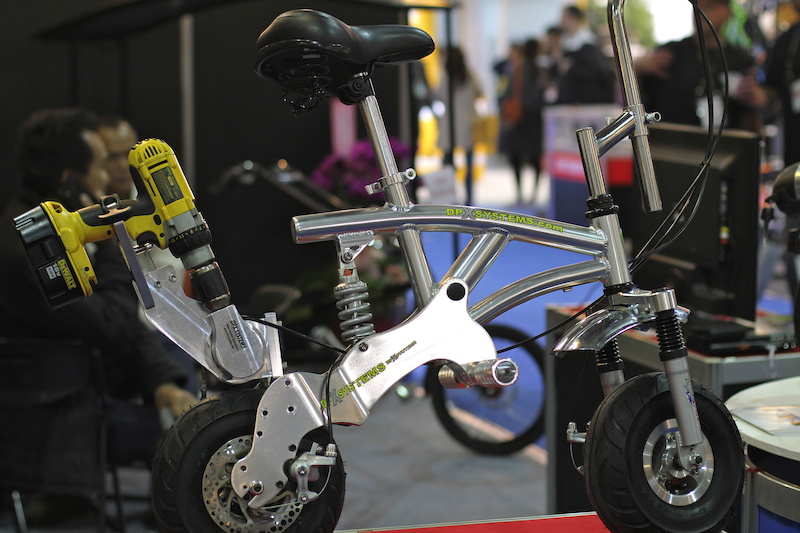 [/img]
Rapid rise front mechs have been done by sachs.
Integration.
Full internal hose & cable runs (or hose and electric wire). Run everything down the inside of the bars, stem and frame tubing. Integrated electronic controls for dropper post, suspension travel & lockout.
Well I want electronic gearing that is wireless....why isn't stuff like di2 on road bikes wireless? I've read an equivalent version is on the way for mtb (wired not wireless). Weight saving on cables, cleaner looking bikes. No faff with internal cabling, probably more aero, you could build the small shifter buttons into the bars or grips. Maybe the power draw means batteries need to be too big or heavy
Wont go into that. Lets just leave it at expense, nevermind the horrible horrible complications!

