UPDATE: CLASSIFIEDS section refreshed, redesigned, searchable: Go take a look
One thing that I am hearing a lot of here in Sweden is the talking of smaller, localised co-working spaces in the villages around where people have their second homes/cabins.
People have been working from them as the bigger offices have enabled remote working and realised, like me, that they miss people but not necessarily the larger office environments. We, generally, have very good internet in the villages around the bigger towns (I got 250Mb down into my house before I got running water), so there is no bar to me working from my house, apart from the insanity of the quiet and the total lack of people to talk to.
If someone has the money to invest in a small co-working space, I can see a lot of locals using it to either extend their weekend, cut out their commutes or go full time WFH. If it doesn't work out, the space could be sold on as a house.
It definitely couldn’t ‘…re-purpose into anything’ in a viable, economically meaningful way.
Would you prefer to live in purpose built resi or a converted office?
Modern, purpose built offices are absolutely dreadful to convert into houses. Usually designed around open-plan with glass-walled conference rooms, partition walls, floors and ceilings, floor-to-ceiling windows and stuff designed to be ripped out and moved around. I mean, you can re-model anything if money is no object but I'd bet it's cheaper to knock the whole lot down and build some proper apartments from scratch.
You'd have to built appropriate fire rating walls between the flats - not a simple task within an existing building I'm sure.
Cities need people, people don’t need cities. They made sense pre-internet, they make a lot less sense these days.
Correct. Without people then cities die, and as mentioned above, that may be positive long-term, but there's a hell of a lot of pain short to mid term pain before then.
That's why any government on a fixed term would want to get people back to work.
Without people then cities die, and as mentioned above, that may be positive long-term, but there’s a hell of a lot of pain short to mid term pain before then.
All very cyclical, City Centres have gone through boom and bust before..
eg https://www.bbc.co.uk/news/uk-44482291
Cities need people, people don’t need cities. They made sense pre-internet, they make a lot less sense these days.
I totally agree with this. The problem is that we’d need to rethink the way we live, how the economy works etc. I think it would be great to rid the world of cities, associated traffic and needlessly repeated retail outlets. Have no idea how that would work in the real world though.
My firm seemed to love the idea of people WFH initially. That seems to be changing quite quickly now though and traffic seems to be getting closer to pre-lockdown levels each day.
I think it would be great to rid the world of cities, associated traffic and needlessly repeated retail outlets. Have no idea how that would work in the real world though.
small question of seven and a half billion people though...
A certain number of them will have to voluntarily live in cramped, close quarters accomodation, that is eithre walking distance from everything they need, or with good public transport, or we aren't all going to fit.
It definitely couldn’t ‘…re-purpose into anything’ in a viable, economically meaningful way.
Would you prefer to live in purpose built resi or a converted office?
You want to see some of the barn conversions round my way.
Cities need people, people don’t need cities. They made sense pre-internet, they make a lot less sense these days.
You've just eloquently summarised something I've been trying to straighten in my head for weeks.
Villages, towns and cities exist out of necessity at the time. As industries change they must adapt or die. I live in a once-prosperous old cotton town in East Lancashire. When the mills closed it decimated the town's economy and it's never really recovered. Then supermarkets happened; the Internet Revolution happened; we had / are having a recession; austerity; brexit; and now this.
The world has changed. It's just that we've not really noticed yet. Cities exist because trade needed to be in one place. People needed to be in one place. To get your weekly shop you needed a butcher, a greengrocer, a baker, now you need a phone line. People like my mum who go into town to potter round M&S every Thursday are literally a dying breed.
Which rather begs the question, if you can work from home then social life aside why would you live in a shoebox in London when you can get a big house somewhere nice for the same price?
I think in the medium to long term we're going to see a massive shift towards decentralisation of power.
You want to see some of the barn conversions round my way.
Bit of pedantry there, mod.
I've both converted a barn and lived in it.
It's fundamentally different to converting an office into resi.
Currently business property costs are prohibitive for many little businesses and start ups. maybe a collapse in commercial property prices could be a boom for independent businesses. Maybe that local IT shop with the personal touch competing with the faceless megacorp can become a reality, if 3/4 of your turnover doesn't have to be handed over to a landlord.
If WFH takes off it is going to shift the cost of housing a workforce from the employer to the employee.
Will wages rise to accommodate the increase in house sizes needed?
Answer drowned out by the noise of the flapping wings of passing aerial porcines....
.
.
(Disgruntled spouse of a WFH solicitor who's pushed me out of my office... 🙂 )
Bit of pedantry there, mod.
It was supposed to be irreverent humour and I'm not sure what me being a moderator has to do with anything when I'm posting as a user.
Will wages rise to accommodate the increase in house sizes needed?
Did they rise to accommodate hours' commute plus parking? There's various posts on here saying how people are saving several hundred quid a month on travel, that's an extra room on a mortgage surely?
Will wages rise to accommodate the increase in house sizes needed
I think it is a lot cheaper to WFH than commute, unless you are a 5 minute walk from the office.
For a long time I worked from home in a fairly small house and I had a fold down desk in our bedroom. It wasn't ideal but the bedroom doesn't get used during the day and it meant I was out the way for my wife and kids during the day.
Did they rise to accommodate hours’ commute plus parking? There’s various posts on here saying how people are saving several hundred quid a month on travel, that’s an extra room on a mortgage surely?
Will house prices not rise accordingly due to demand? I think the biggest saving will be on not needing two vehicles-with all the associated costs. However if everyone does this I'm sure it will have a knock on effect somewhere else.
It was supposed to be irreverent humour and I’m not sure what me being a moderator has to do with anything when I’m posting as a user.
My comment was also an attempt at irreverent humour.
My comment was also an attempt at irreverent humour.
They obviously cancelled each other out 🙂
Haha!
Guardian editorial column:
Places like Canary Wharf are probably screwed for a fair while – the only realistic way there is via public transport (there’s extremely limited parking there)
I occasionally labour under the misapprehension that this is a cycling forum. Good to be reminded otherwise.
There wasn’t much bike parking at Canary Wharf when i was working there either if that helps you.
There wasn’t much bike parking at Canary Wharf when i was working there either if that helps you.
Good point. Installing some more bike racks probably would be a bit too much of a stretch.
Also, I cycled into London (albeit Westminster) for work for several years, I managed somehow...
I worked in one of the big towers at CW for a bit, no bike racks outside, bike parking on site only for a couple of bikes, no changing facilities about one shower for the whole place, just an area not geared for cycling. Iirc it was all technically private land and the landlords were very anti. May change now. And it was a really crappy place to cycle to in terms of roads and traffic.
Can you imagine turning one of the Canary Wharf towers into an indoor bike park?
Loads of space of different tracks, use the high ceiling areas for jumps obviously and just think about the 45 floor DH run!
Interesting trends from Morgan Stanley, the UK is lagging Europe in returning to the office..

barn conversions round my way
I've always thought of barn conversions as a bit of a "I live in ye olde countryside don't you know" well off middle class bling. Barns make good barns, presumably. But not measurably very good houses *.
Maybe one day some city centre office flats will be viewed the same way. "I like in this old antique office space which was turned into a flat
just last year don't you know".
* I fully expect someone to come along and tell me just how efficient an old drafty oak beam and brick barn for storing grain turned into a house can be.
I’m not sure what me being a moderator has to do with anything when I’m posting as a user.
That's exactly what the stasi would have said.... 😁
I like my barn conversion.
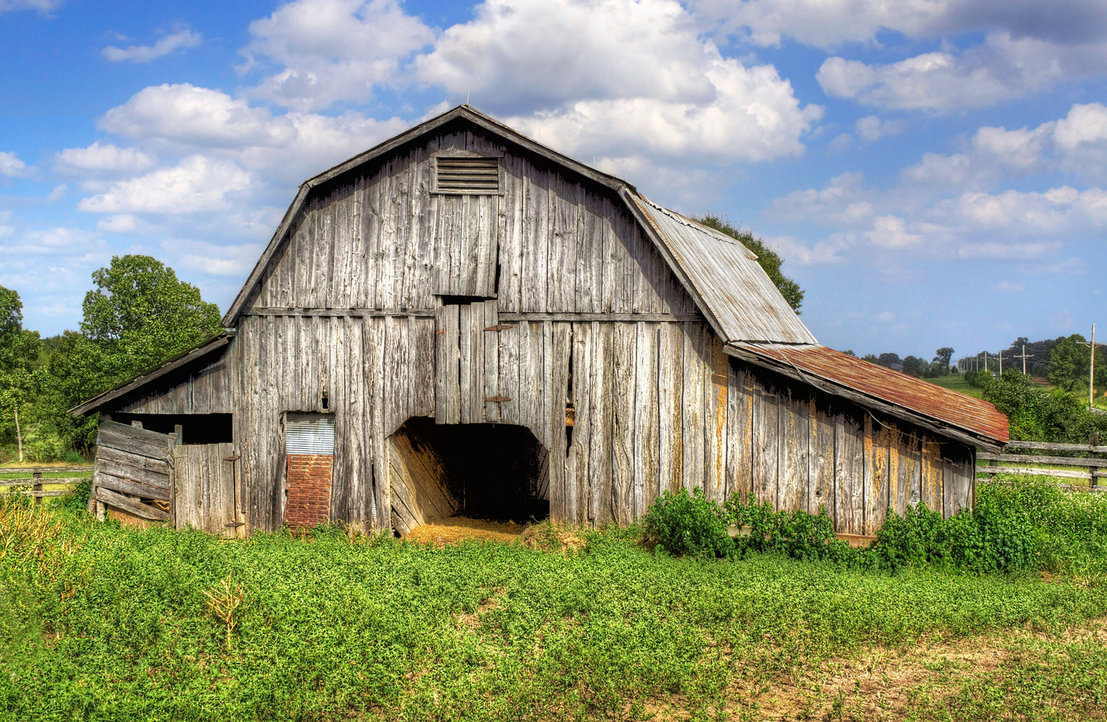
It used to be a three bedroom semi before I converted it
Maybe one day some city centre office flats will be viewed the same way. “I like in this old antique office space which was turned into a flat
just last year don’t you know”.
I thought it was already supposed to be very trendy to live in flats converted from 100 year old industrial buildings like warehouses etc. - all that exposed brickwork and canal side views don't come cheap.
Just give it a 100 years and the hipsters of 2120 will be living in ultra cool flats converted out of massive Tescos Distribution centres, B&Q warehouses or the HSBC call centre.
As long as they had tall ceilings, I would be down for that! The bane of my life is low ceilings... I want to be able to at the very least not have to duck through doorways and, ideally, be able to put weights above my head for training.
Also, barns can make for good places to live, but it's always a compromise and it costs a fortune.
He gets some of it, some of it is bobbins tho..
Rather than hiring the best person in a 30-mile radius of the office, they can hire the best person in the world for every role
No they can’t, they can hire the best person they CAN get, not THE best person.
The burnout thing is interesting, that’s something we are worried about imminently.
Not just those that slogged out long hours with poor productivity like we had prior to WFH either. Thanks for sharing that btw, shared at work too now.
This guy gets it
For a (presumably very small) subset of office workers that have roles where they effectively work alone with little to no interaction with colleagues, clients or customers.
Re company resorts
I wonder if the big companies will buy say a hotel resort in Tenerife, ie. somewhere with winter sun, convert to office working and send their workforce over for 7-10 day breaks – working in brightly lit workspaces near a sea view for 7 working hours then ‘team building/down time’ around that.
They could do a time share with another big company and then even buy the resort and rent it out to smaller companies over the course of the year.
The working holiday would be tied in with holiday entitlement so it uses up so every day uses up 0.5 of their holiday entitlement.
The company could pat itself on its back that its a great employer. Some employees would love a free holiday – albeit working.
This guy gets it
He sells remote working. So that's his pitch. I have been working from home for nearly a decade in an organisation which hasn't had an HQ building so I can see much of how it works, but he's over-egging quite a lot of it.
For a (presumably very small) subset of office workers that have roles where they effectively work alone with little to no interaction with colleagues, clients or customers.
I work in tech in a large organisation (~10,000 people in tech here). The measurable productivity has increased (slightly) since march last year. There's definitely downsides to the lack of facetime, but the overall net effect is not negative, and as none of us are client-facing I could easily see a future where we're only in a couple of days a month (which is then commutable from pretty much anywhere in the world)
He sells remote working. So that’s his pitch.
And his data comes mainly from self-selecting customers who want to talk to someone selling remote working solutions. That's not to say he doesn't raise some interesting points, but they're hidden amongst the waffle and oversell.
i went in for one day in January.
I've been in one day so far this month, I might do 2/3 total this month.
even when things are normal, I don't anticipate more than 1-2 days a week at most.
This guy gets it
I would say he really doesn't. Everything he talks about is the benefit to the business. while businesses (mine included) would save thousands on physical buildings will that be passed down to the staff who are now spending more running their homes... i very much doubt it. If you hate the office vibe such has chatting to colleagues / friends, don't enjoy your commute or have a very long one I can see the upside. For me, I enjoy cycling to work, I enjoy being in an office and the perks it has such as free coffee and that, and I like the physical and mental separation of work and my home. The office isn't dead it's just changing people like me will still be in 9-5 mon-fri some might not. Its not a binary decision it should be a choice.
We're going through this process at our organisation. Medium sized organisation with a handful of sites within the UK. Prior to COVID we were struggling for space and looking to increase office size. Now we're looking at downsizing office space after asking employees how they want to work. Most want 3-4 days at home and 1-2 days in the office.
Edit: We already had a number of remote workers but they were a tiny subset of the workforce. The only stipulation is that we must be UK based. But one of my colleagues has already moved from the Midlands down to Oxford as there were better job opportunities down there for her partner.
I went to the "office" (well actually a site visit), a few days at the start of January, and one day at the end of January. After the second visit, i had to spend 10 days isolating.
Its not a binary decision it should be a choice.
I'm not sure how that can work in practice, though. I work closely with the members of my team, depending on who you include there are about 10 of us. If I go in on Monday, and the other 9 head in on Tuesday, what's the point? Likewise if I decide I only want to WFH, and the rest decide to head into the office, what then?
I can see my office setting up spaces for teams to come in once or twice a week, but those days will be obligatory. I find it hard to imagine other places (with project teams) will be that different.
https://www.theguardian.com/business/2020/aug/04/uk-cities-suburban-covid-iwg-home-working/blockquote >
Interesting but ends up suiting the middle aged lives in suburbia doesn't want to change jobs. The trouble with suburban offices is they are easier to get to it you live in said suburbs but frequently worse to get to if you don't as transport links round a city are always harder to manage than into a city. Also you can bet these offices will be in the nice suburbs where the upper management live near but not where thoes in lower jobs live but instead of commuting into the city centre with good links they will be battling across town.
yup, perfectly illustrates the point about not taking anything you read on SM (or anywhere really) at face value, without checking up first. It's just an advert, basically!I would say he really doesn’t. Everything he talks about is the benefit to the business.

