UPDATE: Reviews section refreshed, redesigned, searchable: Go take a look
[url= http://www.bbc.co.uk/news/uk-england-37302722 ]100 years of tanks. [/url]
[img] 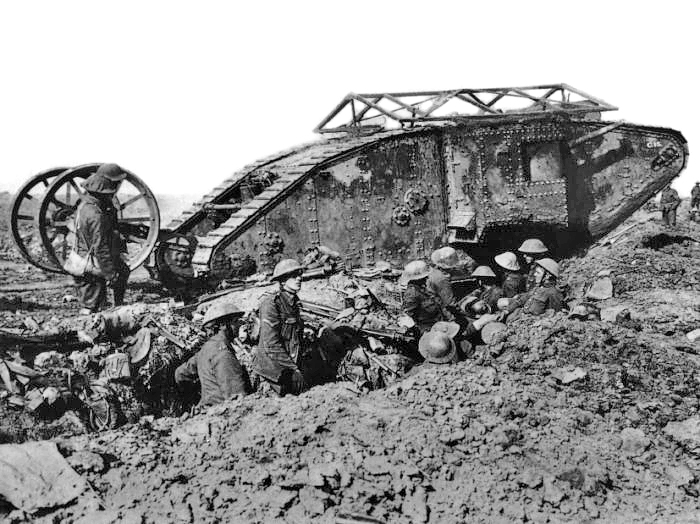 [/img]
[img]  [/img]
TANKS!
YOU WELCOME!
[quote=perchypanther ]
YOU WELCOME!RACIST!!!!TANKS!
RACIST!!!!
How very dare you! I've never competed in a race in my life.
Not with these knees.....
https://www.theguardian.com/world/from-the-archive-blog/2016/sep/15/first-world-war-tanks-1916
best tank aiming at a council office in London story
https://en.wikipedia.org/wiki/Mandela_Way_T-34_Tank
My great uncle was apparently one of the first British soldiers to come up against one of these in Italy in 1944. He and his mates ran back to report on the Germans having some sort of "battleship with tracks" up ahead, got arrested for leaving their post then promptly released when loads of other people started reporting more or less the same thing. He said from a hole in the ground it seemed impossibly big and sure to be certain death if they stayed where they were.
[img]  [/img]
[img]  [/img]
[img]  [/img]
My great uncle was apparently one of the first British soldiers to come up against one of these in Italy in 1944. He and his mates ran back to report on the Germans having some sort of "battleship with tracks"
Wut? They'd been around for nearly 30 years already and he didn't know it was a tank? Was he a bit special? 😯
I think the point he's making was was that the average tank in service at the outbreak of WW2 was pretty much a tin-can on tracks with a pea shooter stuck to the front compared to the monstrous German Tigers and Panthers the British found themselves up against.
I man just look at the gun on that thing compared to the British Crusader tanks of a similar time frame!
[img] 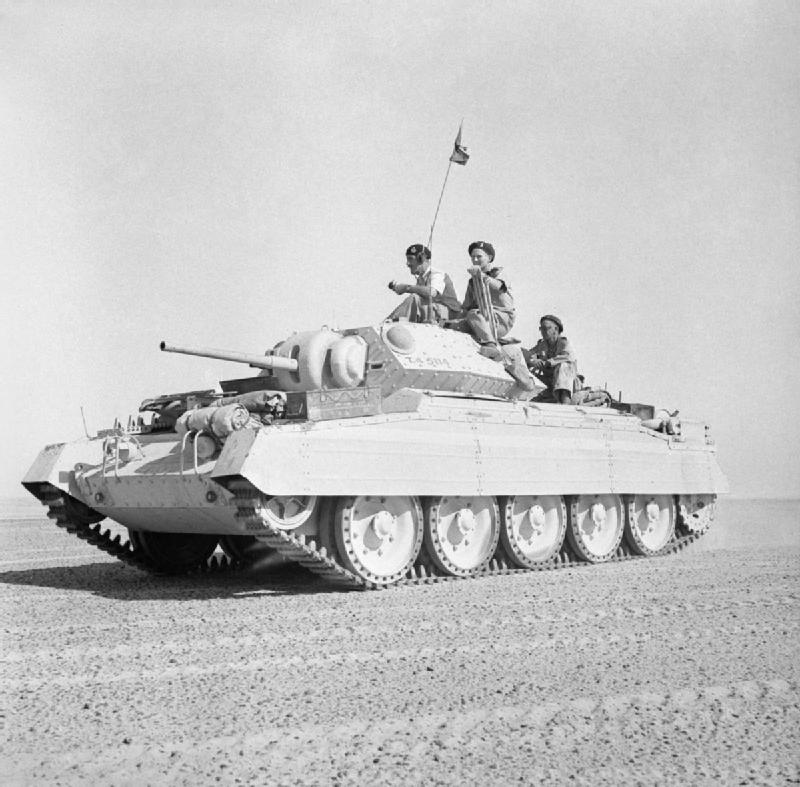 [/img]
Had quite good fun building one a while back
I man just look at the gun on that thing compared to the British Crusader tanks of a similar time frame!
And the obvious parallel for a military man at that time was, of course, with a battleship not say, a huge artillery cannon? "It's like a huge artillery cannon with tracks"
If some guys came running up to me gibbering on about a battleship with tracks that doesn't float but drives along, I'd probably not react well either 😀
[img] 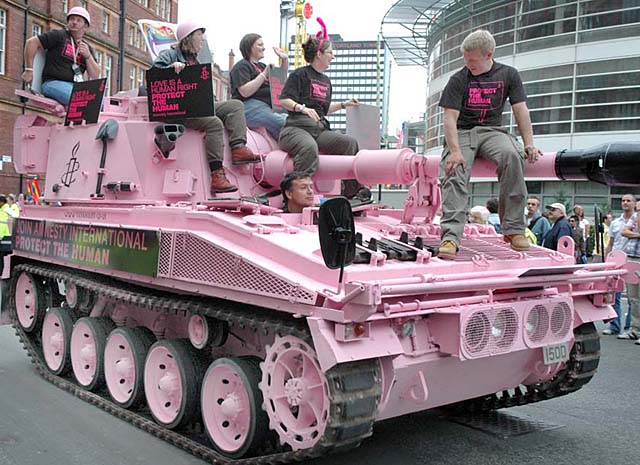 [/img]
[img] 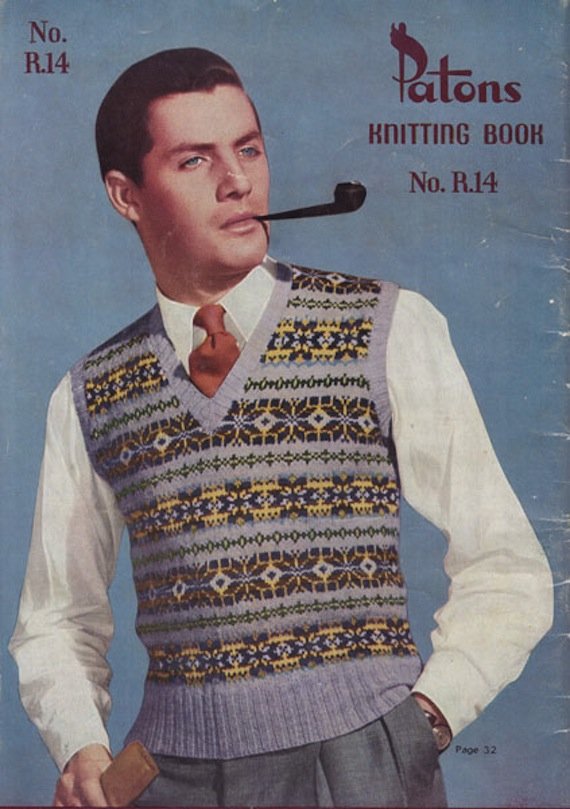 [/img]
Thats a fine licorice pipe!
😆 Nice.
[img]  [/img]
[i] average tank in service at the outbreak of WW2 was pretty much a tin-can on tracks with a pea shooter stuck to the front compared to the monstrous German Tigers and Panthers the British found themselves up against. [/i]
errm, you know German tanks at the start of the war looked like this?
[img] 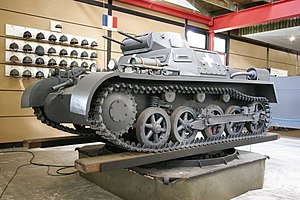 [/img]
The Tigers and Panthers were much later on.
What he said ^^^^
The German Tanks during the early war in France, were laughable - the British and French lost only because they were utterly outclassed by German strategy. The British Matilda was only outclassed in terms of armour much later on in the war.
Even later on in the war, the vast majority of Panzers that the allies met were Panzer III or IV's and the associated tank destroyer versions - Tigers and Panthers were harder to manufacture and were mechanically unreliable.
[img]  [/img]
I man just look at the gun on that thing compared to the British Crusader tanks of a similar time frame!
British tank design during early years of wwII was hamstrung by outdated armoured cavalry (fire on the move) doctrine and the "mobile" pillbox infantry tank and couple that with the woefully under powered engines they had available (liberty 12 for example an unreliable aero engine from 1917!). Lack of forward thinking on gun size and lack of engine power meant the turret rings were never large enough to fit anything bigger than the 6 lber. Once the meteor (600bhp) engine (merlin for tanks) arrived on the scene things changed considerably and by the wars end we produced the finest battle tank for the next 20 years.
[img]  [/img]
errm, you know German tanks at the start of the war looked like this?
The Tigers and Panthers were much later on.
in [b]1944[/b]
[URL= http://i1330.photobucket.com/albums/w563/stephenmerriman/Screen%20Shot%202016-04-08%20at%2013.16.25_zpspwtaazvy.pn g" target="_blank"> http://i1330.photobucket.com/albums/w563/stephenmerriman/Screen%20Shot%202016-04-08%20at%2013.16.25_zpspwtaazvy.pn g"/> [/IMG][/URL]
May be of interest:
[url= http://www.ibtimes.co.uk/sale-ww2-tanks-planes-may-have-been-used-d-day-landings-1578976 ]http://www.ibtimes.co.uk/sale-ww2-tanks-planes-may-have-been-used-d-day-landings-1578976[/url]
[img] 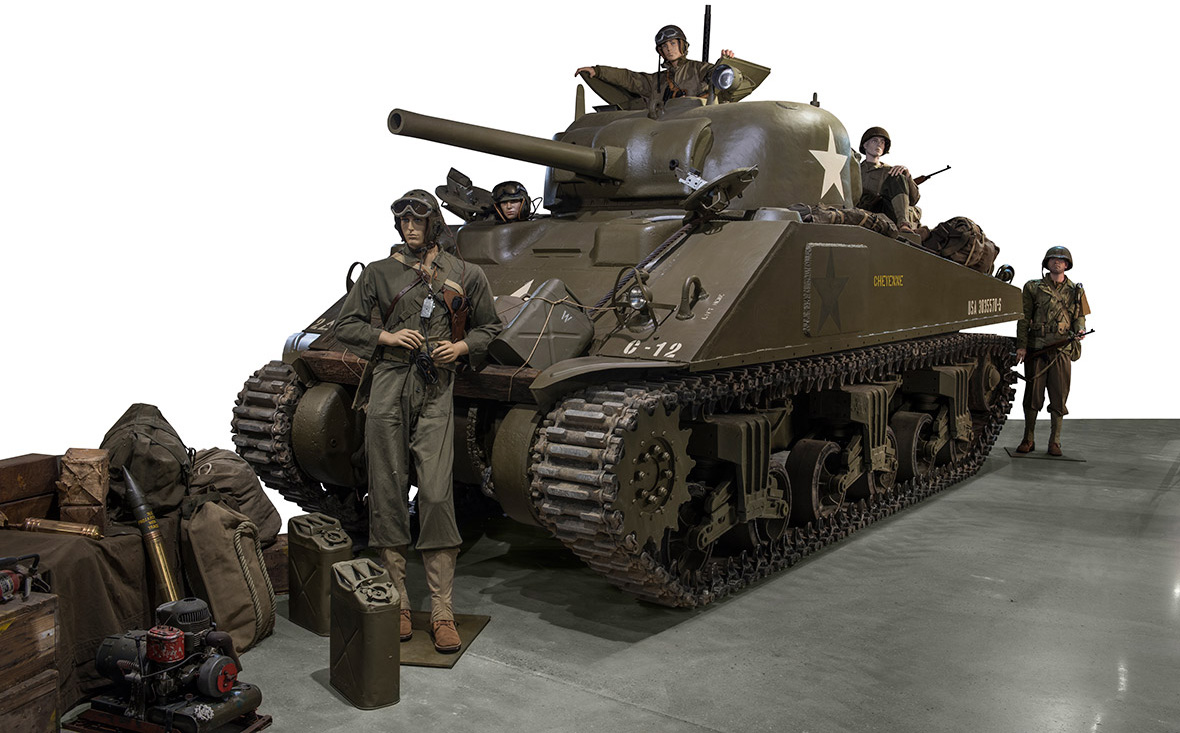 [/img]
Klunk - Member
British tank design during early years of wwII was hamstrung by outdated armoured cavalry (fire on the move) doctrine and the "mobile" pillbox infantry tank and couple that with the woefully under powered engines they had available (liberty 12 for example an unreliable aero engine from 1917!). Lack of forward thinking on gun size and lack of engine power meant the turret rings were never large enough to fit anything bigger than the 6 lber. Once the meteor (600bhp) engine (merlin for tanks) arrived on the scene things changed considerably and by the wars end we produced the finest battle tank for the next 20 years.
The Centurion was indeed a classic tank and pretty much created the concept of a Main Battle Tank as it is known today. It was however invented too late to be used in the Second World War.
I went to the Tank Museum at Bovington a few years ago. It was pretty fascinating for someone who grew up on war comics in the '80s. It did however emphasise that British tank development around the Second World War was mostly based on the parallel threads of trying to see past the ineffective infantry/cruiser tank split and trying to find a tank onto which they could effectively mount the 17 pounder gun.
About the best they could manage until the Centurion was developed was to stick it (mounted on its side) to the American Sherman tank, resulting in the Sherman Firefly. The worst attempt to mount the 17 pounder is a much more hotly fought contest, but I reckon the Black Prince is a strong contender. They scaled up the already underpowered Churchill infantry tank so it could take the gun but the only thing they didn't make bigger was its engine, so it ended up even slower.
Can I just be pedantic and say that Clodhoppers 'pink-thing' is actually a self-propelled gun and NOT a tank. 8)
natrix - Member
Can I just be pedantic and say that Clodhoppers 'pink-thing' is actually a self-propelled gun and NOT a tank.
You may. I'd managed to resist making that comment. 🙂
[url= http://singletrackworld.com/forum/topic/tanks ]Link to the last time we covered this ground...[/url]
bout the best they could manage until the Centurion was developed was to stick it (mounted on its side) to the American Sherman tank, resulting in the Sherman Firefly.
You're forgetting the Comet, which was better than the Firefly.
Tom_W1987 - Member
You're forgetting the Comet, which was better than the Firefly.
The Comet actually mounted a cut down version of the 17 pounder, known as the 77mm HV. The 17 pounder and the 77mm HV did not share ammunition due to requiring different shell casings (according to Wikipedia). So while it was an effective tank, the Comet didn't quite mount the 17 pounder.
[url= http://singletrackworld.com/forum/topic/tanks/page/2#post-7626037 ]In fact, to emphasise that I was aware of the Comet, here's my comment on the 17 pounder from that other thread I mentioned:[/url]
About half the history of British tanks in WWII is made up of the various attempts to get the 17 pounder to fit into one...[list][*]They attempted to fit it into a cruiser tank, called the Challenger, but that didn't work. The cruisers were just too small to fit it.[/*]
[*]They attempted to fit it into an infantry tank, called the Black Prince, but that didn't work. It was basically a scaled up Churchill, but the only thing they didn't make bigger was its engine and the Churchill was already a slow tank.[/*]
[*]They modified the Valentine into a tank destroyer called the Archer, but they had to fit it backwards to get it to fit! Though this made falling back from ambush positions really easy. [/*]
[*]The Sherman Firefly was pretty good but they had to fit the gun on its side, get rid of one crewman and add a big box to the back of the turret to get it to fit.[/*]
[*]It worked fairly well in the Achilles, but that was another tank destroyer (based on the Sherman) and had an open top turret.[/*]
[*]They accepted that the cruiser tanks needed to be bigger, while also cutting down the 17 pounder and came up with the Comet. At that point they were nearly there, but very few were in service before the war ended.[/*]
[*]By increasing the size of a cruiser tank giving it decent armour and working out how to arm it will a full fat 17 pounder, the Centurion tank was invented, and by accident the MBT. By that point the UK had the best tank in the world, but the war had ended. Oh well.[/*][/list]
Tanks are something that I can be geeky about.
Dads 'n Lads tank driving & shooting (air cannon fitted to the tank) for less than £100 sounds like a good deal, might have to get it for my sons birthday  https://www.armourgeddon.co.uk/dads-lads-tank-experience.html
Now natrix, how can you be pedantic about Clodhopper's pink Abbot then go around implying that an FV432 is a tank? 🙄
Tanks don't really do anything for me - mostly because they're armoured coffins - as claustrophobic as a sub and bullet/mine/ied magnets at that. It's more the strategy I'm interested in, so I didn't know that the Comet had a modified gun.
Belton Y Cooper was a Laiason Officer for the Maintenance Battalion of the 3rd Armored Division ("Spearhead"), US Army.He wrote a book: "Death Traps: The Survival of an American Armored Division in World War II". In it he details the horrific losses of Sherman tanks and the men that crewed them. Tellingly towards the end of the Battle of the Bulge there was a critical shortage of tank crews, because the crew of a knocked-out M4 Sherman tank mostly did not survive. As described in the excerpt below, during that battle the surviving personnel with any "tank experience" would be split up, each given a tank to drive and expected to lead two other crew members who were fresh off the boat with no tank experience at all. The survival time of these replacement crews was measured in hours.
He writes:
While the work was going full blast on recovered tanks, we secured a list of the “W”numbers as well as the extent of damage and map coordinates on all the tanks and other vehicles that had been damaged beyond repair and left on the battlefield. We turned this list over to Division Ordnance in order to secure replacements as quickly as possible. In the meantime, the mad rush was on to repair those vehicles we had in the best and most expeditious manner. If the tank had not been set on fire completely, we could usually repair it. When a projectile penetrated a tank, a series of incandescent particles usually showered the inside of the fighting compartment. Any crew member in the way would be killed instantly; if not, the ricochet effect inside the tank would utterly destroy him. In some cases, at close range, a projectile would strike the side of the tank and go all the way through, exiting on the other side. In this case the crew would be lucky because they would avoid the terrible ricocheting effect. The incandescent particles would also generate many small slivers, which embed themselves in the electrical cables, causing them to short out. Often the sparks from this would set the tank on fire. There were manual fire extinguishers inside the tank and also a master lever, which the crew could pull to engulf the fighting compartment with CO2. A penetration in this compartment would often kill or severely wound several crew members, and those abandoning the tank would not have time to set off the fire extinguishers. The oil and gasoline vapors inside the tank plus the paint, seats, insulation, and other flammable materials made any fire difficult to put out once it started. Penetration of the gas tanks or the engine would also cause fires. Once the gasoline and the ammunition went up, the tank would explode. The open cupola acted like a smoke stack, and the fire would generate such great heat it would anneal the hardness of the armor plate leaving the tank beyond repair. If the tank struck a mine, the bottom plate would sometimes be warped to the extent that the hull could not be repaired. In this case, if the turret was not severely damaged, it could be removed and replaced on a good hull. If the turret was struck in the trunnion mount, jamming the gun elevating mechanism, it could not be repaired but could be removed and replaced with a good turret. If the tank was penetrated in the ring mount (the junction between the turret and hull), it would warp and damage the ball bearing races on the bottom of the turret and the entire tank would have to be replaced. One of our maintenance welders found a spent projectile inside a hull. He took a carbon arc and cut the tip off, using this cone to make a plug to weld up the hole the projectile had made. After he ground the surfaces smooth on both sides and we painted the tank inside and outside, it was difficult to find the patch. I always thought this technique was one of the true ironies of warfare, that the projectile also served as the patch. It took considerable skill on the part of the welder to grind and thus camouflage these patches, because a tank crew did not like to get a replacement tank that had been penetrated, particularly if they felt there had been casualties in the tank. In spite of this, tank crews liked to get their old tank back because of sentimental attachments. After a reasonably short time, all the damaged vehicles had either been repaired or replaced, and C Company of the Maintenance Battalion headed south to join CCB near Gorron and Mayenne.
My idea of a nightmare is being a ****ing tank or a sub crewmember. I'd rather have been dropped on Arnhem, that's how much I hate the idea of trundelling along waiting to get blown into the the stratosphere or incinerated.
Now natrix, how can you be pedantic about Clodhopper's pink Abbot then go around implying that an FV432 is a tank?
Mea culpa 🙁
He wrote a book: "Death Traps: The Survival of an American Armored Division in World War II". In it he details the horrific losses of Sherman tanks and the men that crewed them.
There is a lot of debate about the Sherman and if it was as really as bad as some say.
When it was designed it was intended to go up against PvIII and PvIV, which it could do. Where it really struggled was against the PvV Panther's and PvVI Tiger's.
It did have the tendency to catch fire mind.
[url= https://tankandafvnews.com/2015/01/29/debunking-deathtraps-part-1/ ]https://tankandafvnews.com/2015/01/29/debunking-deathtraps-part-1/[/url]
I know it's not a tank, but it's still my favourite:
[img] 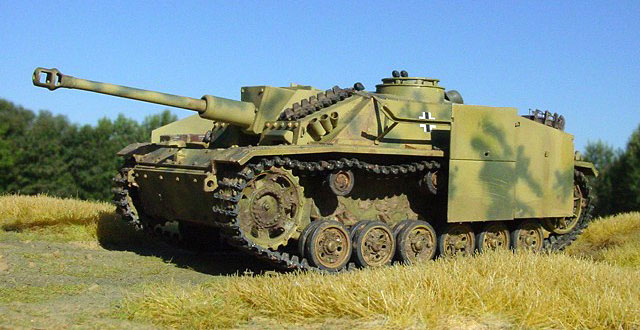 [/img]
BTW, any of you nerds playing Hearts of Iron IV?
I've managed to turn WW2 into WW1. Tried to follow a historicalish invasion timeline but pulled out of Russia in '43, laid down heavy and deep defensive lines across the middle of Poland, Belgium and Germanys borders with France and the Italian Alps. Pulled all but skeleton forces behind these lines, produced only one main fighter design - the FW190....modded as a multirole fighter-bomber..did away with all the other crap (dive bombers, ridiculous 109 version) to keep the production lines simple....later the ME262, built lots of Panzer IV's, some Panthers and no Tigers. Sent a few carriers to Japan in 41 after managing to break them out into the Atlantic and helped the Japanese total the yanks in the Pacific.
By '45 I've managed to keep air superiority over Belgium, the Netherlands, Poland, Hungary, Austria and Germany. Italy has fallen but the allies are bogged down on the border with Belgium and in the Italian Alps. Currently pushing into Sweden for more resources and to divert the Soviets a bit.
John Gladden R.I.P
[img] 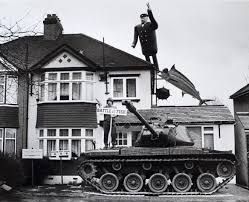 [/img]
This thread has really brought the nerd out it me.
This looks brilliant, wonder if the Mrs will play it with me?
[url= https://meeples.wordpress.com/2016/06/13/review-tanks-panther-vs-sherman-starter-set/ ]Tanks: Panther V Sherman[/url]
Even later on in the war, the vast majority of Panzers that the allies met were Panzer III or IV's and the associated tank destroyer versions - Tigers and Panthers were harder to manufacture and were mechanically unreliable.
Not just unreliable, but the tank destroyer versions, the Jagdpanzers, were very heavy as well, which made them succeptible to getting bogged down and having a fixed gun manoeuvrability was also an issue.
[IMG] 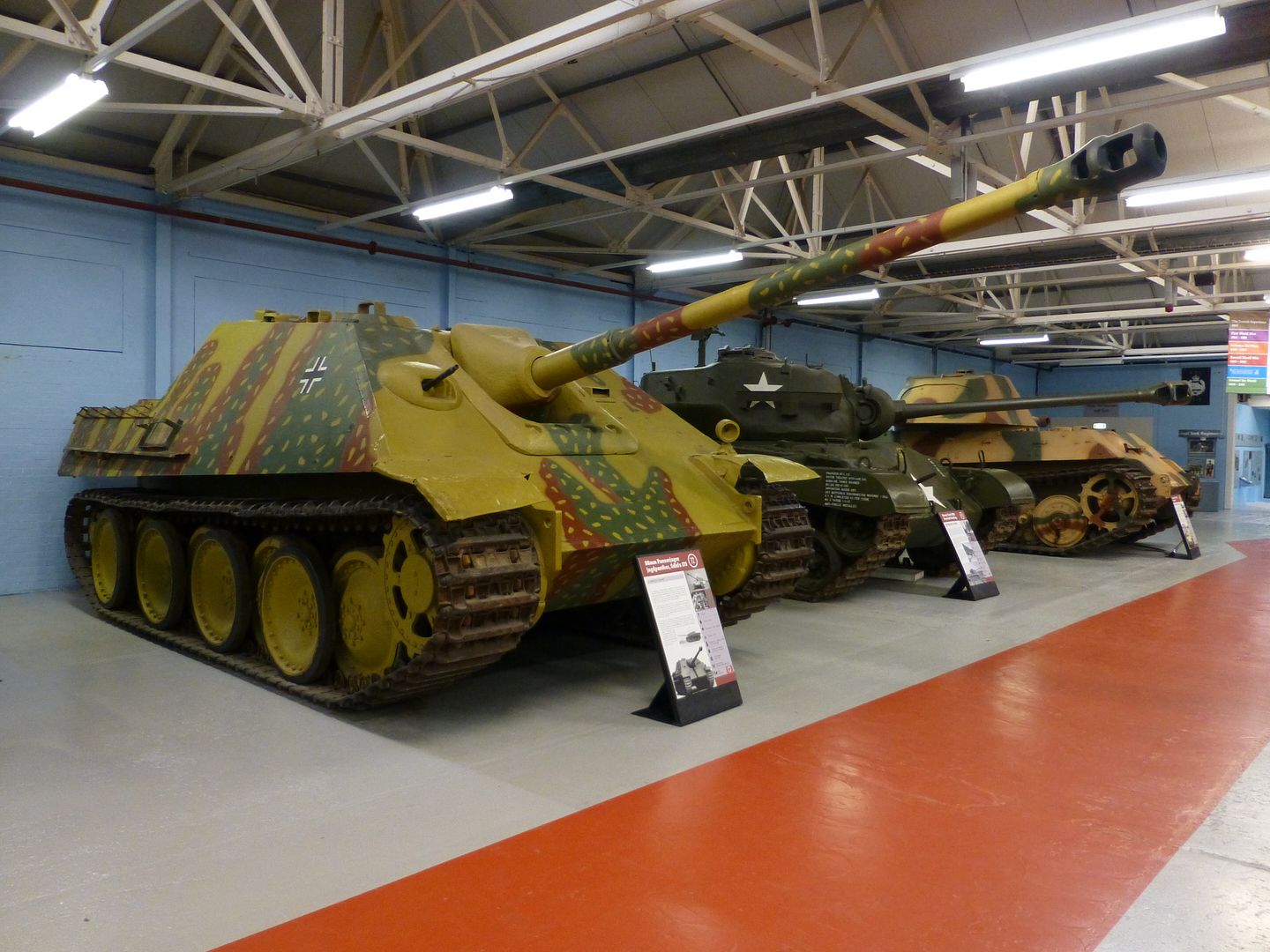 [/IMG]
Jagdpanzer
Which was why, when they needed a faster, more manoeuvrable tank killer they used Skodas!
[IMG] 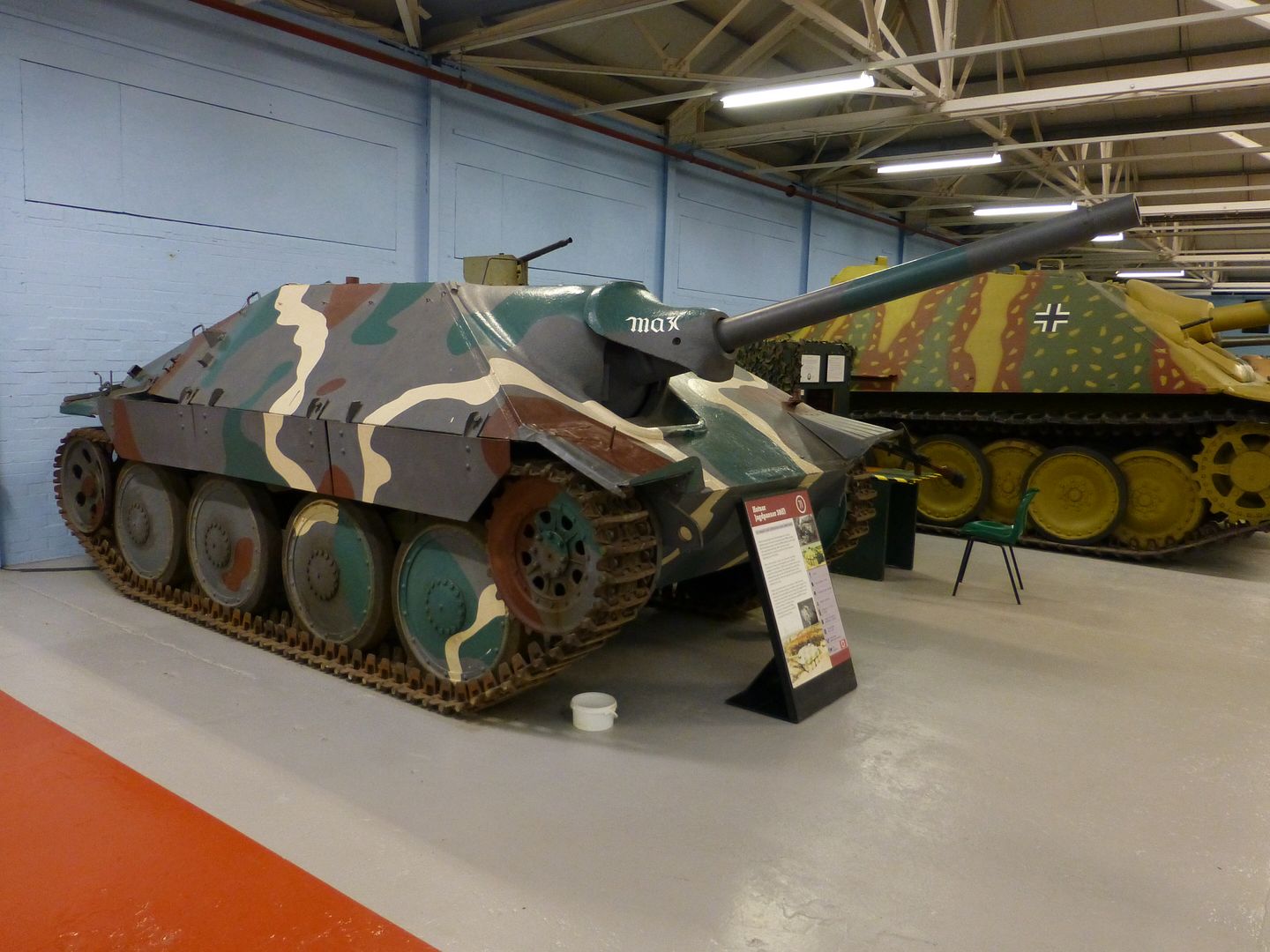 [/IMG]
Hetzer: made by Skoda, used by the German army, and the Swiss and a bunch of others after the war, up until the 1980's, IIRC.
Nice photos Count Zero, where were they taken, is it the AFV wing at the Defence Academy??
Bovington, I think.
I have really mixed feelings on tanks. Half of me is 'ooh, big, engineering, vrooom' and the other half 'they were designed to kill humans as efficiently as possible'.
I respect those who have fought and died in them but there's always that lingering feeling that they only exist because of the failures of politicians to not go to war in the first place.
T34 on the old Kent Road. Supposedly used against the czechs in the uprising in 1968 and brought here and used in the film Tricky dicky the third, then bought by some bloke and placed on the land he was going to build flats on.
The council refused planning permission. The turret is positioned so that the gun is pointing in the direction of the council offices apparently.
People come along and give it a new paint job every now and then.
[img]  [/img]
Germans were better at this because the 88mm sounds like an instrument of precision and deadliness where as a 17 pounder sounds like a lump of mutton. Obvious innit.
Bloke near here on one of my bike routes used to have a T34 in his garden but not anymore. Shame.
wwaswas - Member
Bovington, I think.
Definitely Bovington, I have a very similar shot of the Jagdpanther from my visit there. I've only uploaded some of my photos but those that are online are available [url= https://www.flickr.com/photos/thinkingengine/collections/72157645162524632/ ]here.[/url]
SHerman with a calliope fitted, coolest thing ever!
[img]  [/img]

