It's been a while since I posted some arachnid pics and I took some photos today during feeding time.
To narrow it down a bit all of these spiders and scorpions are from Africa.
If you don't like spiders look away now 🙂
[i]Ceratogyrus darlingi[/i] Adult female. She has just moulted and hopefully will be ready to mate. Normally found in Botswana. Fairly defensive and quite active.
[img] 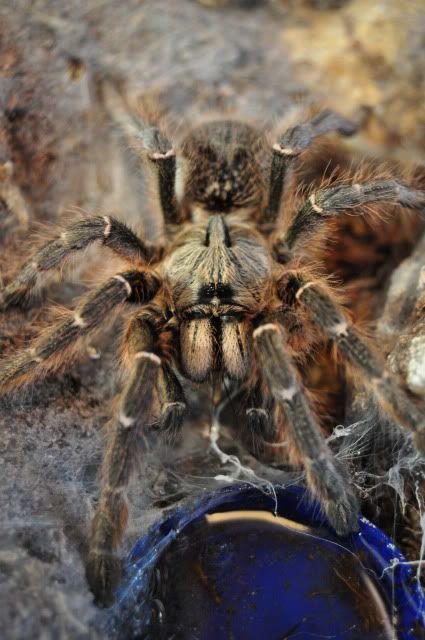 [/img]
[i]Ceratogyrus meridionalis[/i]. An unsexed juvenile. From the same family as the darlingi but without horn.
[img] 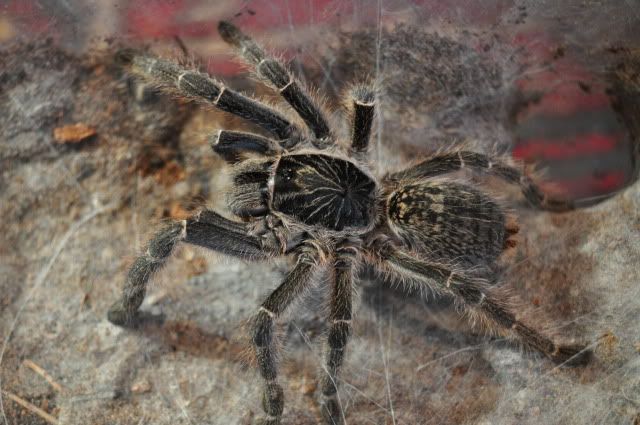 [/img]
[i]harpactira sp[/i] Robertson. A young juvenile, these are quite a small tarantula.
[img] 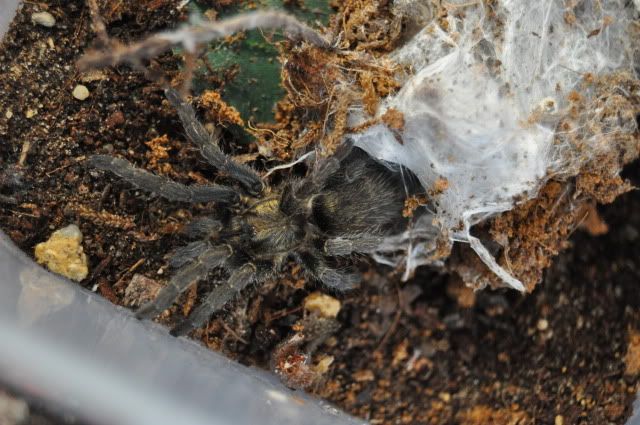 [/img]
[i]Pelinobius muticus[/i] (formally Citharischilus crawshayi) juvenile, probably male.
Africas biggest tarantula. A fossorial spider hardly ever seem.
[img] 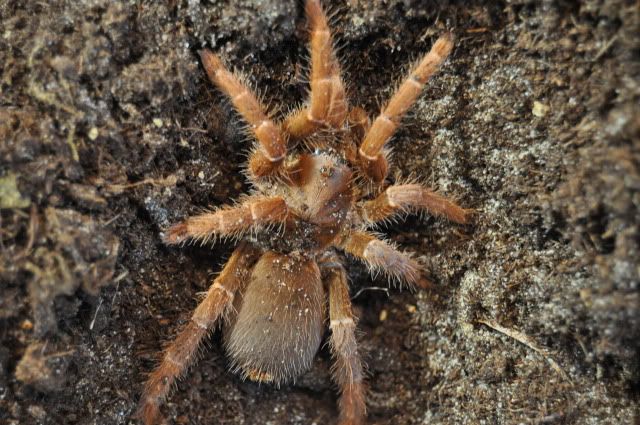 [/img]
[i]Pterinochilus lugardi[/i] unsexed. Very fast defensive spider. Very active and lively.
[img] 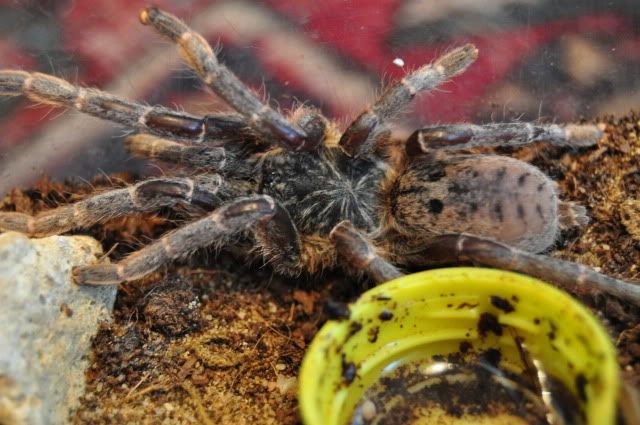 [/img]
in the threat pose
[img] 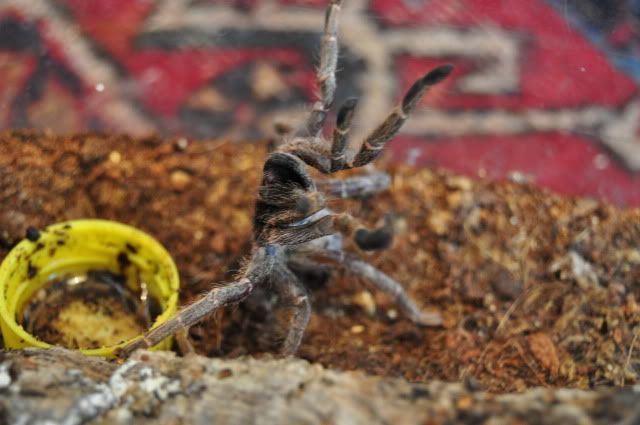 [/img]
[i]Pterinochilus murinus RCF[/i] Juvenile. Also known as the orange bitey thing. Again very fast and can jump.
[img] 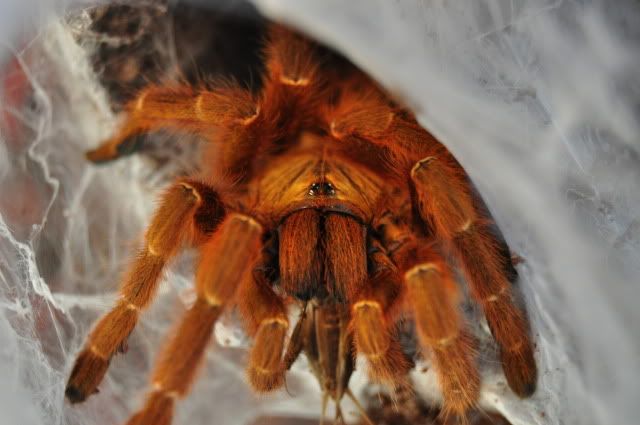 [/img]
[i]Androctonus bicolor[/i] North African. Very venomous but beautiful scorpion. One of my favourites.
Adult male and female.
[img] 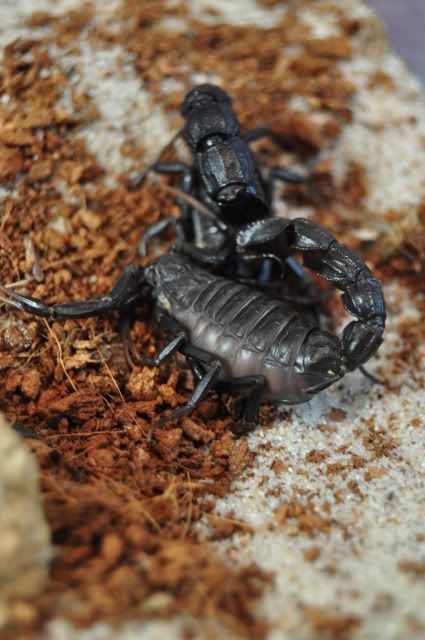 [/img]
Adult male
[img] 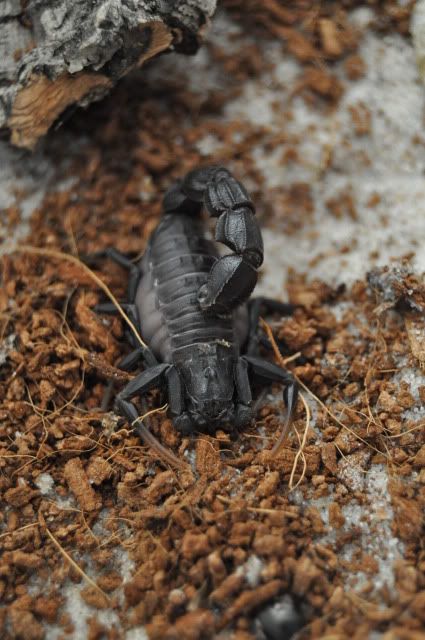 [/img]
[i]
Babycurus jacksoni[/i] Another beautiful scorp, this one is from Tanzania. These can live communally. They do have a habbit of playing dead so you have to be careful.
scorpling
[img] 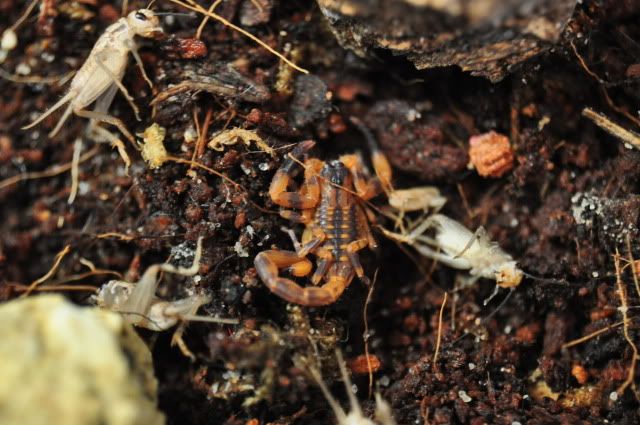 [/img]
Mum
[img] 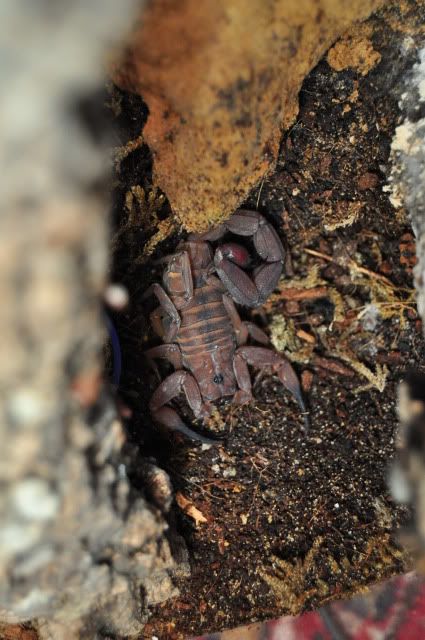 [/img]
[i]Hottentotta hottentotta[/i] ling. These are Parthenogenetic which means the females eggs can develope without fertilisation.
This one is very young and about 1cm long.
[img] 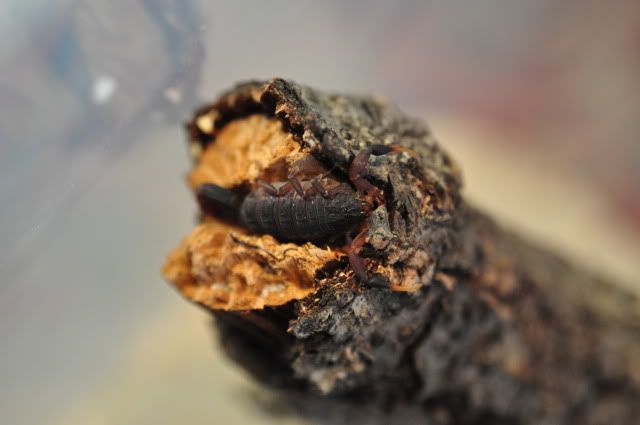 [/img]
Yay!
😀 love the Orange bitey thing.
Fast and can jump.
Bejeesus. 😯
Too long roper. Welcome back. 🙂
Any of those living in a box in a box in a box?
The OBTs are great spiders. There are different variations of colouring but they all have the same type of temperament.
The A.bicolour are also known as fat tail scorpions. They are related to some of the most venomous scorpions. Thier venom rating is 4 out 5 (5 being the strongest) and they can be quite aggressive when disturbed. They are NOT a beginner scorpion and they do have to be respected. They are in a locked box within a glass tank, they can't climb smooth surfaces.
The B.jacksoni are also known as bark scorpions. They have a venom rating of 3. They can climb but are not as defensive. They prefer to rely on camouflage or play dead.
The Hottentotta hottentotta when matured will have a venom rating of 3 to 4, but not a potent as the bicolor. They tend to be quite mild mannered too.
All of those scorpions are members of the Buthidae family and you would need a DWA (dangerous wild animal) licence to keep them in the UK.
Saying all of that, they will only attack if provoked and they have no other option. They do not prey on humans and so would rather get out of our way. If they are never handled, housed properly and care always taken when feeding, they are harmless enough.
Fascinating to watch too.
they can't climb smooth surfaces.
Ok, I'm feeling a little more comfortable now. 🙂
fantastic 😀 but aren't you ever just a bit wary of having something that can kill you (sorry if i got it wrong.) at your house. have always thought that scorpions with small pincers/big tail are lethal to humans 😯
The rule of thumb is the fatter the tail and smaller the pincers (pedipalp) the more potent the venom.
There are risks which I try to keep to the minimum. I never handle them, I have several pairs of rubber tipped 30 cm tweezers for feeding or tank maintenance. I never do anything with them when I'm tired or if it's very late and they are more active. I will always check where they are before opening the lid and keep disturbance to a minimum. I also never get close enough to them to be stung.
It is vital to do a lot of research about them including bite and sting reports, health concerns, behaviour and environment before you decide to keep them. I wouldn't advice anyone to keep those scorpions unless they have experience with safer scorpions and other venomous animals.
On the other hand, quite a few people are hospitalised by bee stings, dog bites, horse kicks etcetera. A lot of wild animals have the potential to cause harm or death if not respected enough.
I've been injured more by riding than any of my bugs 🙂
They are fascinating though, and to be able to keep them in a near natural environment and watch and learn about their behaviour, life is very special.
I've often wondered if in a moment of distraction you've ever been stung or bitten do you keep antivenin in the house for some of your more lively chums? Fascinating creatures is it difficult to breed them in captivity?
edit too slow you've answered above.
Get him to tell you about the spiders that team up to catch prey. 🙂
thanks roper 😀 tbh i felt a bit of an idiot asking the question (you are obviously very knowledgeable about them).i must admit to finding them very interesting,from what documentaries i have watched about spiders/scorpions e.t.c. am quite happy to watch them from a tv screen though 😉 i do enjoy reading your arachnid updates 😀
that orange bitey thing looks like it might be a distant cousin of an orangutan..
Hello Roper!
I'm going to bombard you with some questions, I would ask if you could answer them but my rep doesn't allow it 😀
How efficient are these little creatures in terms of hunting and attack capacity also how good are they at resource/environmental management ❓
Also again, what's the most aggressive / deadly bug in the world, anyone know?
Ladybirds are pretty savage
is it difficult to breed them in captivity?
With some scorpions breeding can be as easy as, just leave them to it. Make sure they are healthy and happy and they will get on with it. Others, especially some tarantulas, it can be a lot more difficult. Often recreating the seasonal changes they would experience in the wild, regulated feeding and timing the mating to take place. When most moult they moult their sex organs, as well as their eye stomachs and could lose any fertilised eggs. A freshly moult female would stand a better chance of getting an egg sack. sometimes these might have to be removed and put into an incubator, and then cared for.
I will be trying my C.darlingi again now she has moulted. The last few times I tried she was not interested in the male at all. All he was interested in was drinking her water and eating her food before hiding 🙂
i felt a bit of an idiot asking the question
It's not a stupid question. It is important for people not choose to keep them lightly. I'm pleased you enjoy them too. There are lots of arachnid clubs in the UK and I'm sure you would be welcome to go have a look if you ever fancied it? Though I should warn you, they can be addictive and you end up going on and on like I do 🙂
Obviously deferring to Roper's wisdom, I think the Brazilian wandering spider is the most dangerous arachnid while the Japanese giant hornet tops the annual human death toll for all animals/insects, venomous or not.
That is for individual critters, some of the ant swarms must be pretty intimidating, then there's insects that are disease vectors and those that lay eggs in you - all in all there's some dangerous bugs out there 😯
Very powerful little creatures for thier size, best to show some respect 😯
How efficient are these little creatures in terms of hunting and attack capacity also how good are they at resource/environmental management
It depends on where they are from really. How tough or diverse their environment is. Some spiders and scorpions will just wait for prey to come to them. I have read reports of some tarantulas like the B.smithi to go months or even a year without food. Though mine seems to eat weekly. Some of the desert scorpions never need water. They get all of their liquid through their food.
Some spiders spend most of their time rearranging their environment, moving soil, or even their water dish and re-webbing. Other just dig a hole. Overall, arachnids are very successful. Scorpions for example, have been arround for 430 million years. They live on almost all continents and have become very good at doing what they do.
Also again, what's the most aggressive / deadly bug in the world, anyone know?
Most bugs tend to be defensive rather than aggressive, to us anyway. Some will attack quicker and multiple times but it would depend on how threatened they felt. Some scorpions and tarantulas can eat small mammals like rats, birds or lizards.
The deadly level is a bit vague too. The species with the strongest or most complex venom, to us, are not always the biggest killers. They might live in isolated areas where not many humans go. On the other hand an arachnid with milder venom might prefer to live in houses, then the death rate can be quite high. I think the scorpion which kills the most people is the death stalker [i]Leiurus quinquestriatus[/i]. Not all stings are fatal and it can depend on how much venom has been injected, where and the general health of the person who has been stung.
on the plus side the venom of these scorpions is being used in cancer research and to aid the regulation of insulin.
What is a fossorial spider, please? Google has this thread second and number one didn't make things clearer!
Also again, what's the most aggressive / deadly bug in the world, anyone know?
The deadly level is a bit vague too.
Me 🙂
Bugs tend to be categorised depending on their prefered place to live.
Fossorial- underground
Terrestrial- on the ground
Arborial- climbing.
I think the I think the Brazilian wandering spider is up there as a big killer as it does wander about. I'm not sure on their defensiveness or how often they dry bite. Six eyed spiders, which have a very complex venom, are quite docile and would be hard pushed to bite. Some African and Asian tarantulas, like the photo of one of mine above, are quite moody and will go to the threat/attack pose quite quickly. I have very rarely had tarantulas run at me, though it has happened a few times, but I have found some wolf spiders to be very aggressive. Macrothele sp are pretty narky too.
I should point out, the vast majority of arachnids are pretty much harmless to humans. Most couldn't even pierce our skin, if they wanted too, and their venom is harmless to us. A very, very small amount can give us any problems.
Loving the thought of a "narky" spider.
It'd merely need to be the teeniest bit grumpy to have me running for the hills!
Great stuff, roper. Love the pics.
See you now how GW feels towards LT hard tails that's like me and keeping spiders.