Q: What is the result when you add the 31.8 handlebar standard to the 35 handlebar standard?
A: 6-7 Bar Technology (OK, technically it would be 66.80, but FAIR don’t want to split hairs apparently)
Press release in full:
Launching 67 bar technology
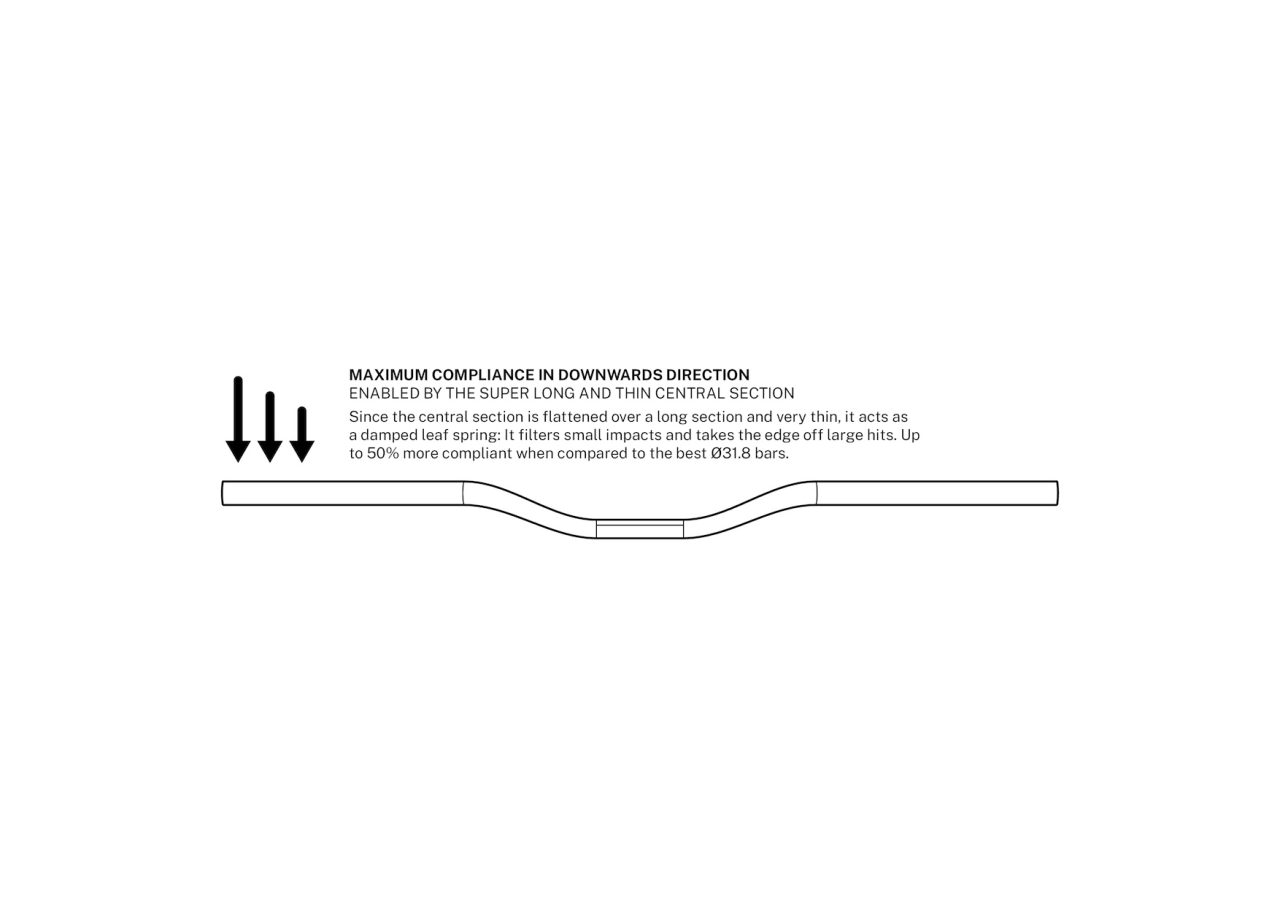
50% MORE COMPLIANT THAN Ø31.8
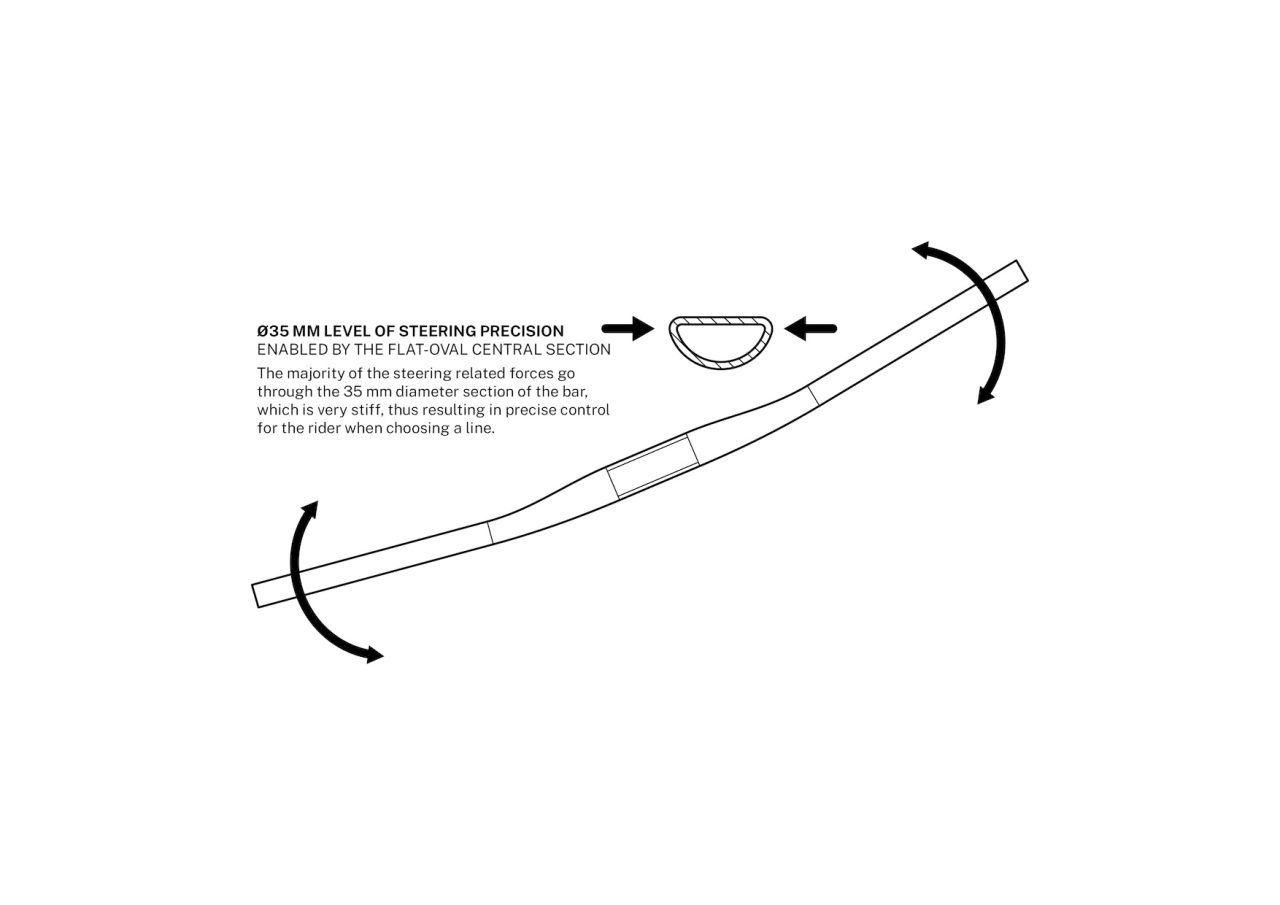
WITH THE STEERING PRECISION OF Ø35
NO NEW STANDARD, AND BEST OF ALL, IT’S OPEN TO BE LICENSED FOR FREE.
TOP LOADING, SPECIFIC STEM
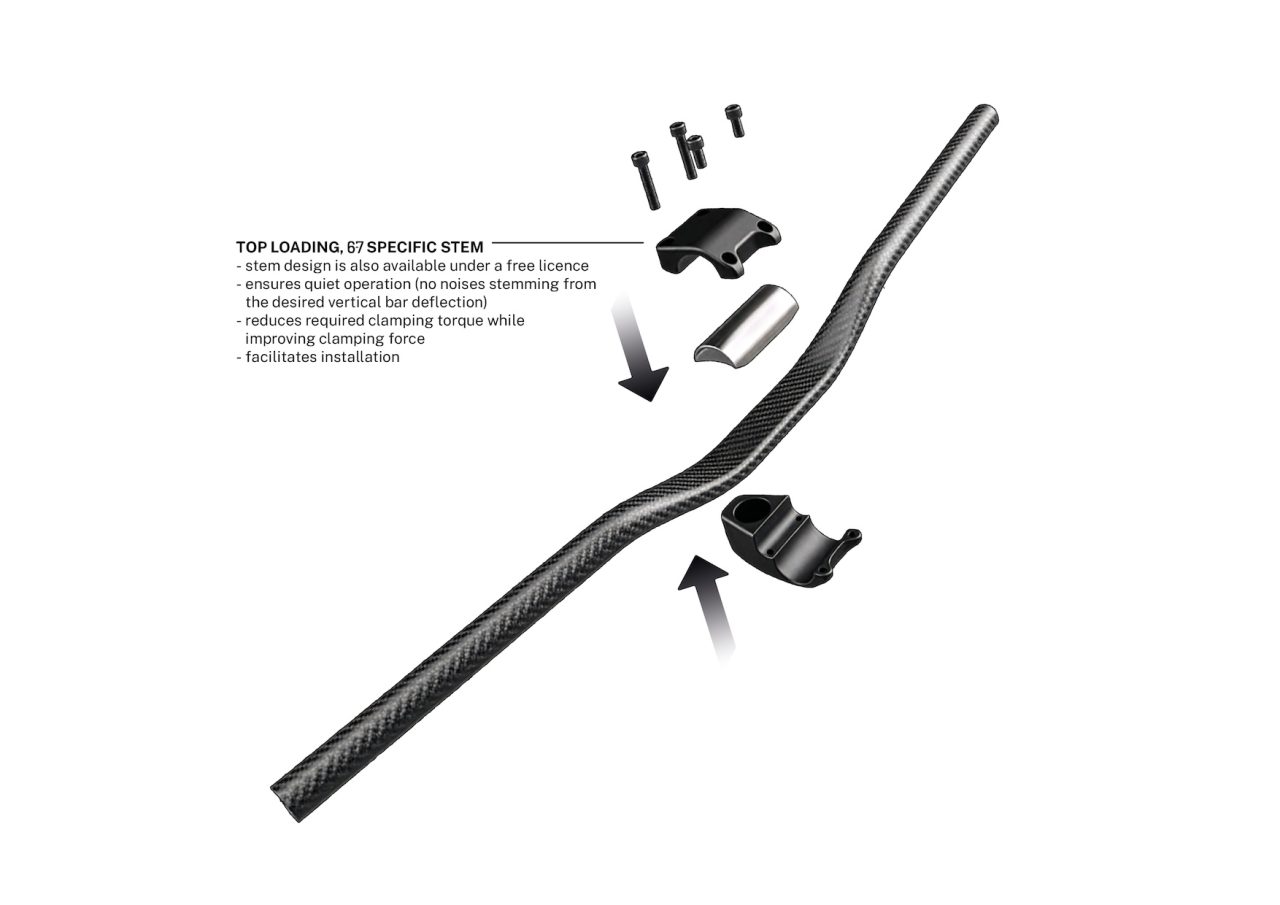
- stem design is also available under a free licence
- ensures quiet operation (no noises stemming from the desired vertical bar deflection)
- reduces required clamping torque while improving clamping force
- facilitates installation
6-7 THE HANDLEBAR: IDEAL COMPLIANCE
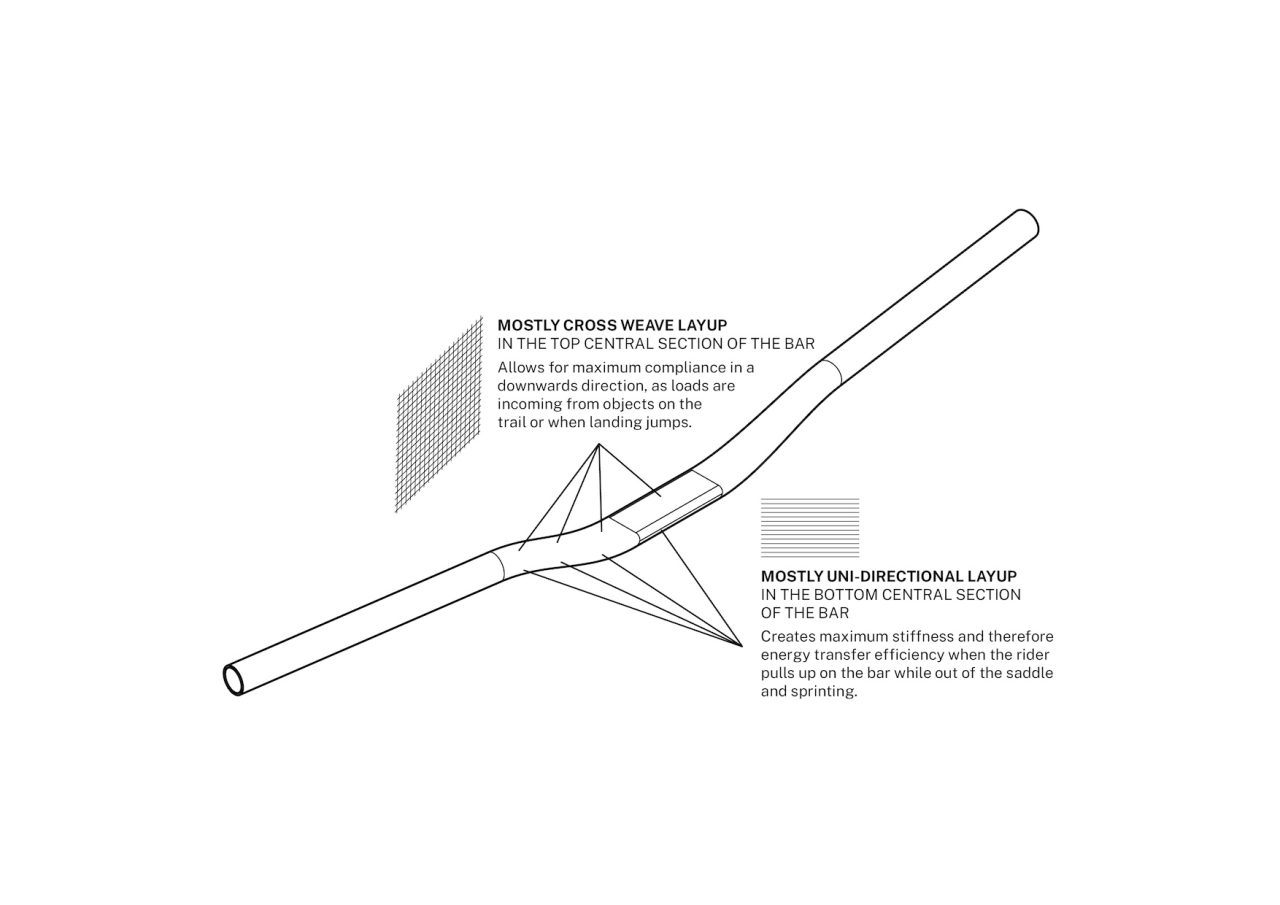
MOSTLY CROSS WEAVE LAYUP IN THE TOP CENTRAL SECTION OF THE BAR
Allows for maximum compliance in a downwards direction, as loads are incoming from objects on the trail or when landing jumps.
MOSTLY UNI-DIRECTIONAL LAYUP IN THE BOTTOM CENTRAL SECTION OF THE BAR
Creates maximum stiffness and therefore energy transfer efficiency when the rider pulls up on the bar while out of the saddle and sprinting.
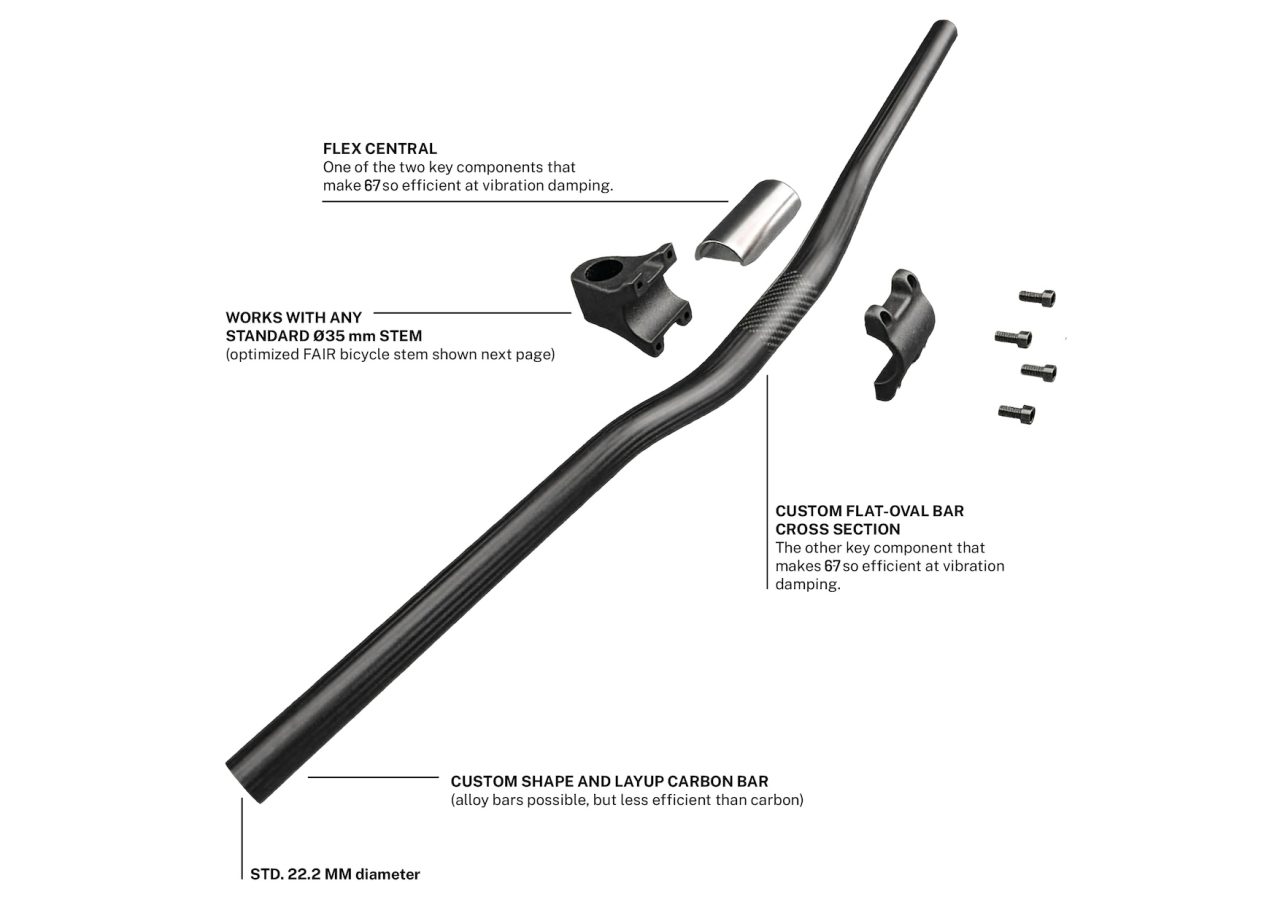
6-7 THE CENTER PIECE: FLEX CENTRAL
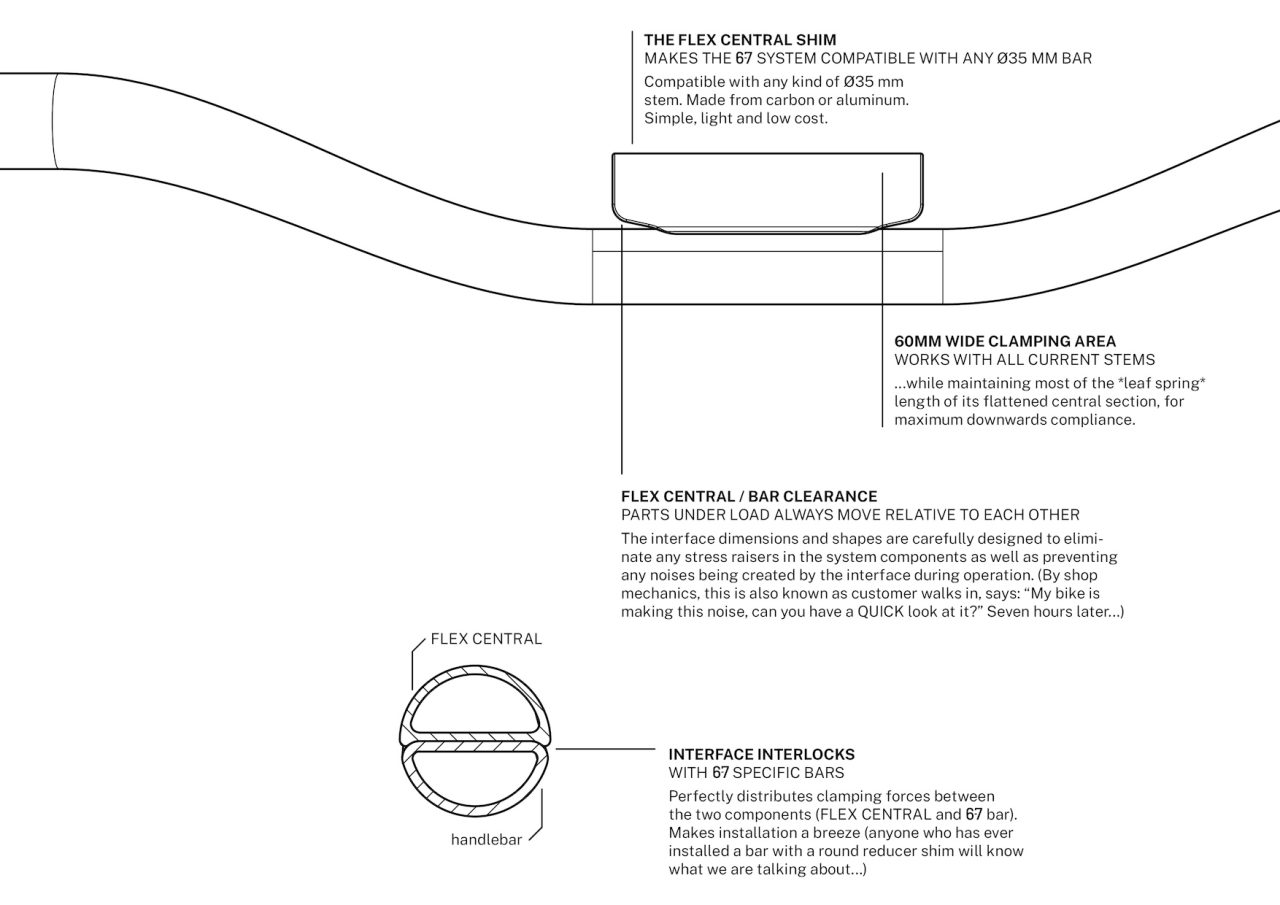
THE FLEX CENTRAL SHIM MAKES THE SYSTEM COMPATIBLE WITH ANY Ø35 MM BAR
Compatible with any kind of Ø35 mm stem. Made from carbon or aluminum. Simple, light and low cost.
60MM WIDE CLAMPING AREA WORKS WITH ALL CURRENT STEMS
…while maintaining most of the leaf spring length of its flattened central section, for maximum downwards compliance.
FLEX CENTRAL / BAR CLEARANCE PARTS UNDER LOAD ALWAYS MOVE RELATIVE TO EACH OTHER
The interface dimensions and shapes are carefully designed to eliminate any stress raisers in the system components as well as preventing any noises being created by the interface during operation. (By shop mechanics, this is also known as customer walks in, says: “My bike is making this noise, can you have a QUICK look at it?” Seven hours later…)
INTERFACE INTERLOCKS WITH SPECIFIC BARS
Perfectly distributes clamping forces between the two components (FLEX CENTRAL and bar). Makes installation a breeze (anyone who has ever installed a bar with a round reducer shim will know what we are talking about…)
Products categorized in rider weight ranges:
XS (up to 60kg)
S (60 to 75kg)
M (75 to 90kg)
L (90 to 105kg)
XL (105 to 120kg)
PRICING
Not defined yet, but for FAIR bicycle versions, it will be in the range of a high end carbon bar (150-200 CHF) and a nice CNC’d stem (target of 150 CHF).



Seems an absolutely mad idea.
Bring back 26.8mm for compliance 🙂
Fool-ish, even
Looking at the website I want the T-Shirt!!
Good work guys!
Can someone explain why that would actually be a bad idea though and why MTB bars are round?
It’s not that dissimilar to what roadies have had for a decade or more now.
All good jokes need an element of truth!
Assuming it’s not an April fools, I think that if the round parts of the handlebar were ovalised, this would stop bar accessories (lights, bells, grips, lights, phones), from slipping around.
likewise, you see risers (monkey) bars with an extra brace/ support.
But the brace is so spindly and narrow, that it’s effectively useless for mounting any extra accessories.
I’m fairy sure it is, I just can’t figure out why it’s not done.
From an engineering perspective, I think the half-circle shape would put too much stress in the corners, but you could have a round clamp and then blend it into a propper flattened oval, which is pretty much what drop bars do.
Sounds like a positive, but most things seem to mount above/below a garmin style out-front mount anyway these days so adapter compatibility isn’t critical either.
Maybe that just proves the point that actually we do like our bars vertically stiff and lateral compliance was never an issue after all, so a round bar is a perfectly good compromise.
Like a joke but…..isn’t it just a bad version of a OneUp bar?
6-7 format?