Markus Stitz takes a visit to the birthplace of the Delta Blues and comes away with a deep respect for the gravel ways and the people of the Deep South.
Words & photos | Markus Stitz
Hey, this feature looks even better when viewed via Pocketmags; you get the full graphic designed layout on your device FOR FREE! It’s not quite as beautiful as the paper magazine but it’s better than a basic webpage.
I guess you’ve heard of the Clintons and Walmart or listened to Johnny Cash. And maybe, if you’re really into your music, you’ve heard about Delta blues. One thing they all have in common? All have roots in Arkansas (say ‘arkensaw’), one of the southern states in the US, sandwiched between Missouri in the north, Oklahoma in the west, Tennessee and Mississippi in the east, and Louisiana and Texas in the south.
Nestled in the ‘natural state’ is a town called Bentonville, home to the heirs to the (massive) Walmart fortune. Tom and Steuart Walton are avid cyclists who have poured hundreds of millions of dollars of their private wealth into building trails around their hometown. The result? One of the best mountain bike destinations in the world, with hundreds of miles of singletrack, skills parks, and purpose-built trail networks right in town. Add more miles of hilly backroads in the Ozarks – and you have a playground for gravel bikes too.
You probably think this would be worth an article alone, and you are right. It would be the obvious thing to write about, but I am more intrigued by the stuff I experienced in the last three days of my trip. I think those memories are worth sharing, too. I have travelled extensively, written various guidebooks and made short documentaries. While I enjoyed a lot of the places I explored from my saddle, only a few have had a lasting impact on my life. And while every second journey on Instagram these days is epic, life-changing or mind-blowing, I reserve those attributes for the very few occasions that, for me, really deserve it.
When I handed back my car at Memphis airport and had time to reflect, it was the Delta, in the southeastern corner of the state, that was the biggest surprise for me. For the people I met along the way. For the cycling, but it’s also the birthplace of the Delta blues, and subsequently most modern music I enjoy. A wonderful combination of music history and endless opportunities to ride on lonely gravel roads did the trick for me.
Ride with me a while
For ten years, the US hasn’t been on my list of places to visit. As I’d cycled through Iran on my round the world trip, I had to get a visa to enter ‘the land of the free’, and I had other places to visit that were, quite frankly, easier to set foot in. Regardless of which administration is in charge, it took a good few months to get an interview at the embassy, and another week to get my visa granted.
Singletrack New Arrivals
-

Soup Cap
£20.00 -

NOPE Beanie
£22.80 -

Vague Bicycle Cap
£20.00 -
Issue 168
£15.00
The delay worked in my favour as I arrived on the back of a hot and humid summer to weather which was, especially for someone from Britain, much more enjoyable for cycling. Temperatures from the mid-teens to twenties during the day, with some chillier mornings. For the locals, it was the first cold snap of the season. For me, living in Scotland, it felt like the middle of summer.
I did the obvious first, visiting Bentonville and neighbouring Fayetteville. To my surprise, I didn’t need a car. There were bike lanes and cargo bikes everywhere. Out of my hotel window in Bentonville, I could see The Ledger– a building where you can ride to your top-floor office. And the whole ‘home office’ of Walmart, Bentonville’s biggest company and money resource, is littered with bike lanes.
The next two nights I spent in Hot Springs at the edge of the expansive Ouachita National Forest, with another amazing trail network and a brewery located in a national park. Next up was Little Rock, launch pad for Bill Clinton’s political career and now home to the only vegetarian restaurant in the state (tasty). The riding here is a fun mix of urban and forest trails, for both fat and not so fat tyres.
South of Little Rock, the state flattens out and farmland becomes the dominant feature – the mountain bike mecca yields to huge opportunities for gravel bikes with hundreds of farm tracks and dirt roads. I wasn’t sure how the rural and flat landscape would compare to the first part of the trip, but I was pleasantly surprised when I arrived in Helena, the southernmost point of my trip.
Strummin’ the Delta
The Delta stretches along the Mississippi River as a flat, fertile landscape shaped by cotton farming, river trade, and centuries of African American history. Towns grew around plantations and river ports, where music, storytelling and labour were tightly interwoven into everyday life. This was fertile ground for the development of the Delta blues, as musicians moved between farms, juke joints, and river towns, carrying songs and styles with them. Marked by both deep cultural creativity and legacies of exploitation and segregation, Arkansas’s Delta stands as a powerful cultural corridor whose influence reaches far beyond its quiet fields and levees.
And, yes, the Delta is fascinating for gravel riding. I only rode 60 miles in 3 days, but it was enough to be drawn into this place. For me, cycling is not just about the physical activity (hence, short mileage isn’t a problem), but more about all the stuff that happens around me. Stuff I can see when I stop – the smells and sounds. And this is exactly why the three days at the end of my trip were so special.
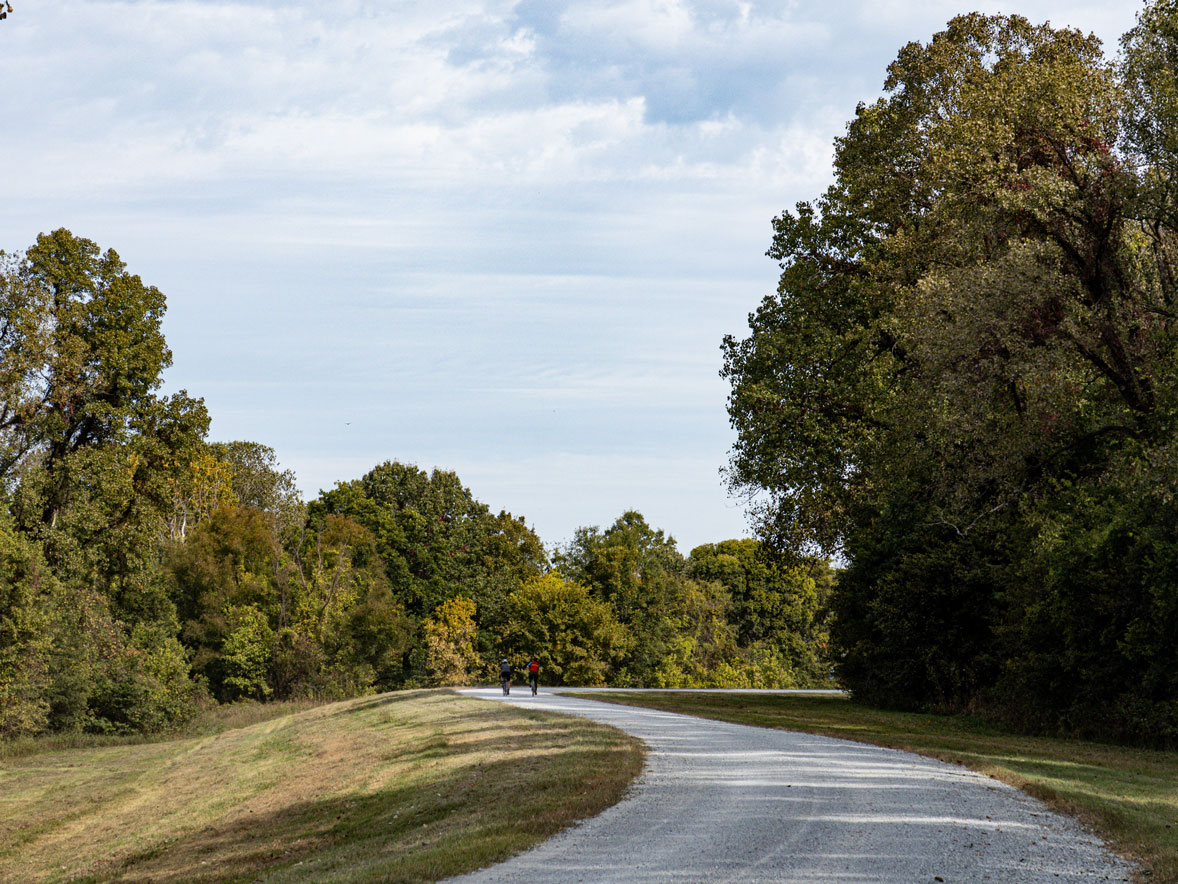
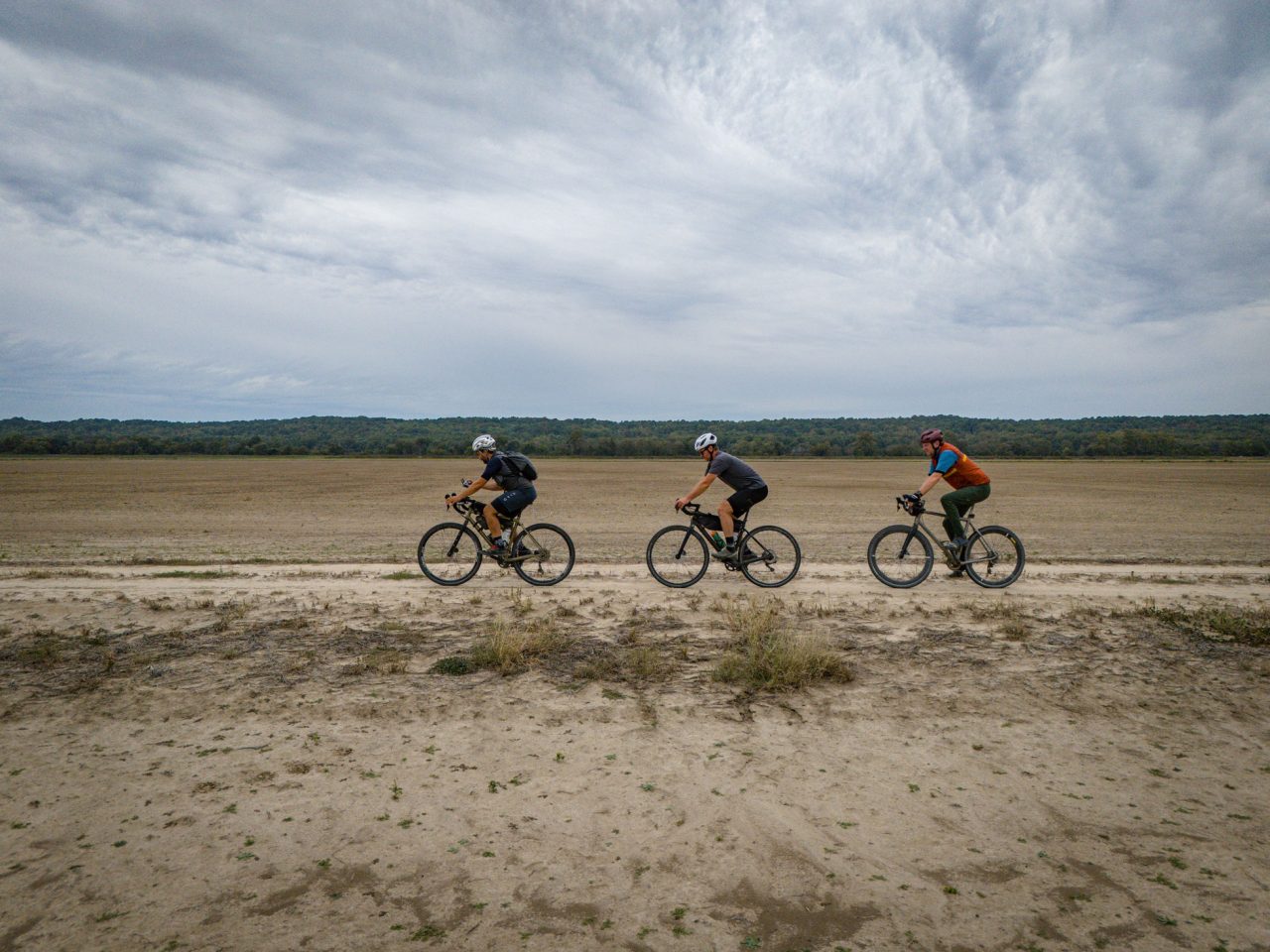
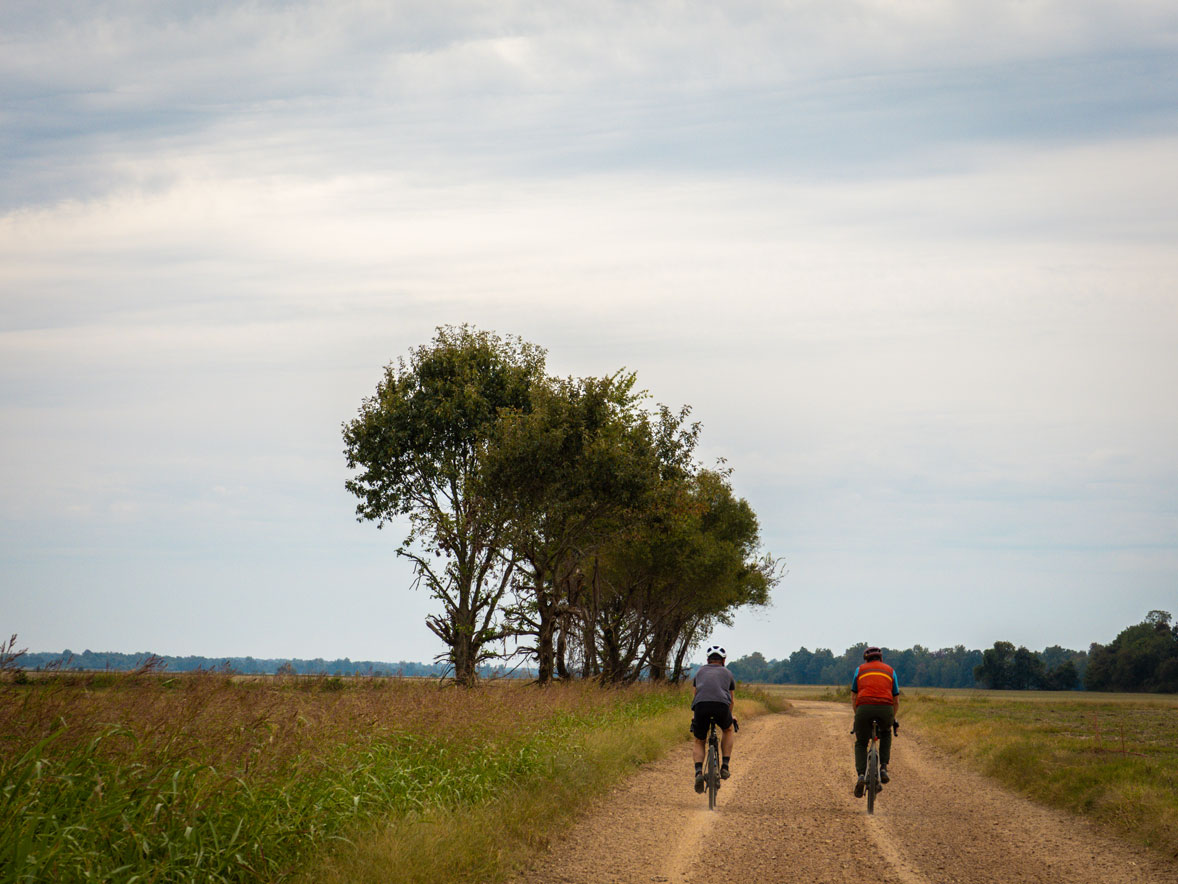
When I cycle through the rural cottonfields with my guide, Ammen, on the second day, I can imagine the sounds of the Delta blues and musicians carrying their songs to all the small towns. On the third day, Martin (more about him later) joined us to cycle through the wide-open landscape – miles of soy and cotton fields. Standing at the field-edge staring into the open can be inspiring and intimidating at the same time. I recall similar landscapes from earlier adventures, like Australia’s Nullarbor Plain and upland plains in Kyrgyzstan.
Cutting the sheer endless fields of the otherwise very flat Delta in half is Crowley’s Ridge. This is an ancient ‘island’ of sand, gravel, and clay, formed by shifting rivers – 150 miles long and between a half and 12 miles wide and covered by a dense woodland. Its unique soil supports forests unlike the typical Delta woods, with species like oak, hickory, pine and other hardwoods thriving there. It’s a layered woodland, with towering, centuries-old hardwoods alongside younger trees that have regrown after logging or fires.
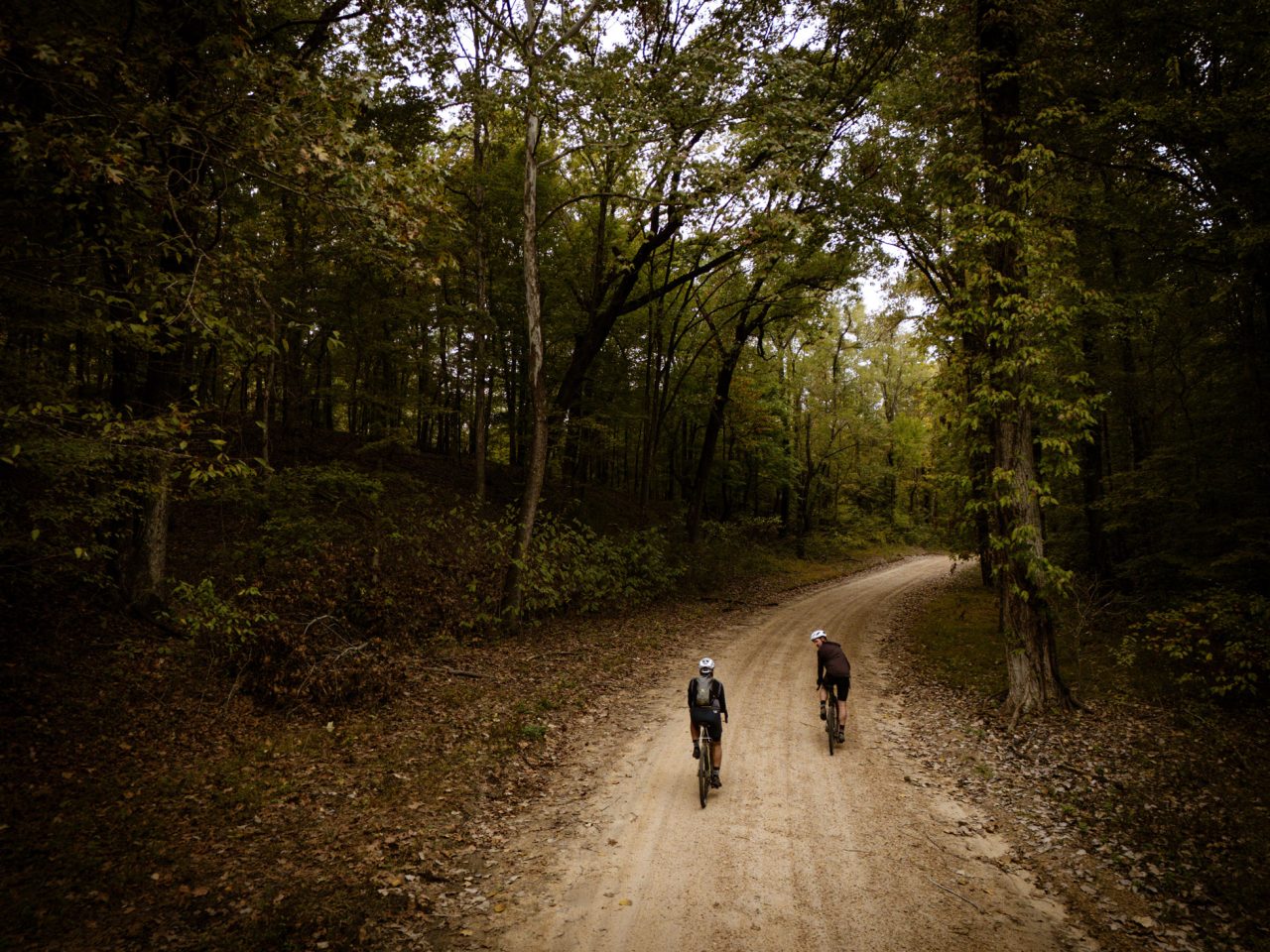
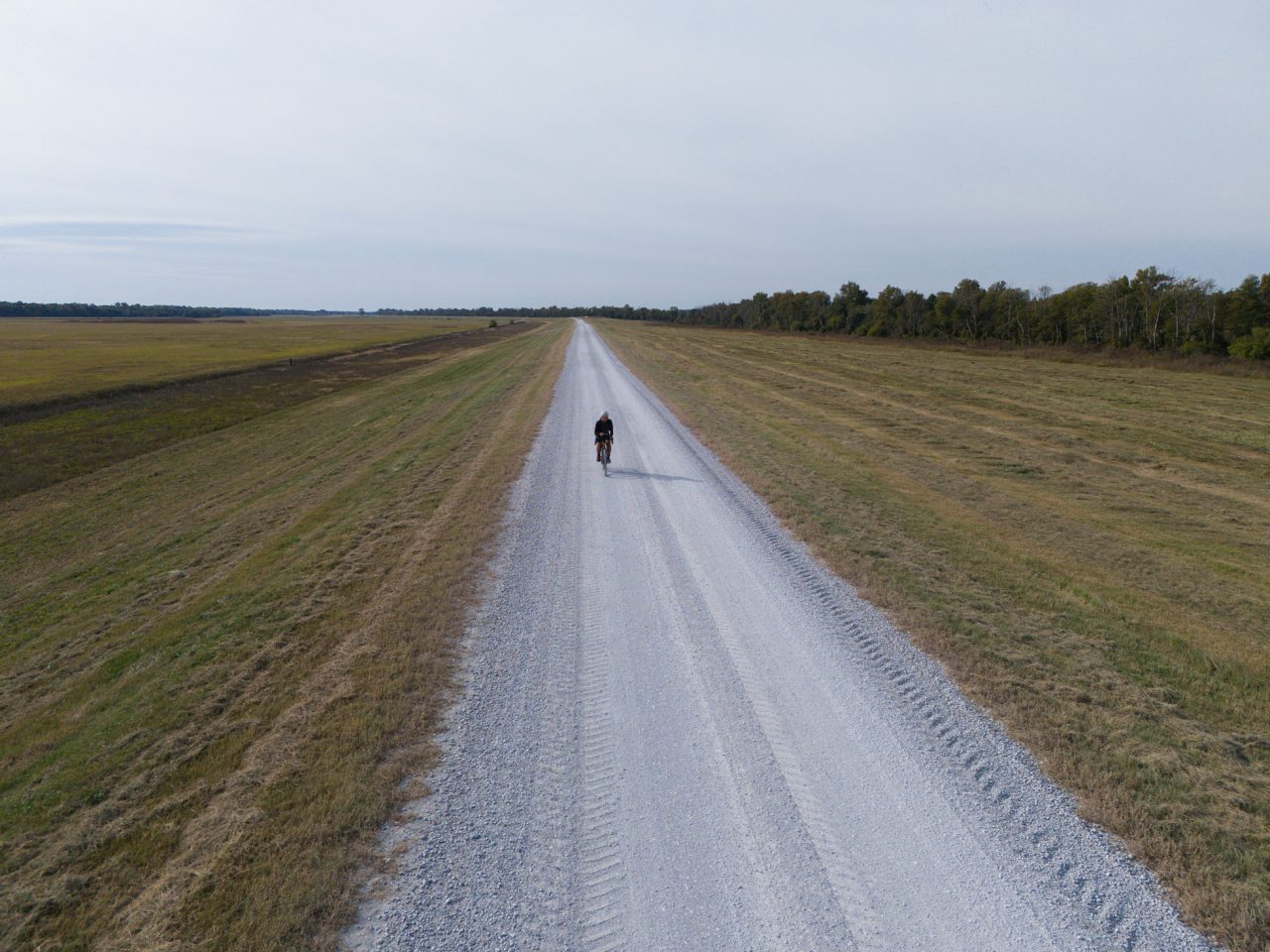
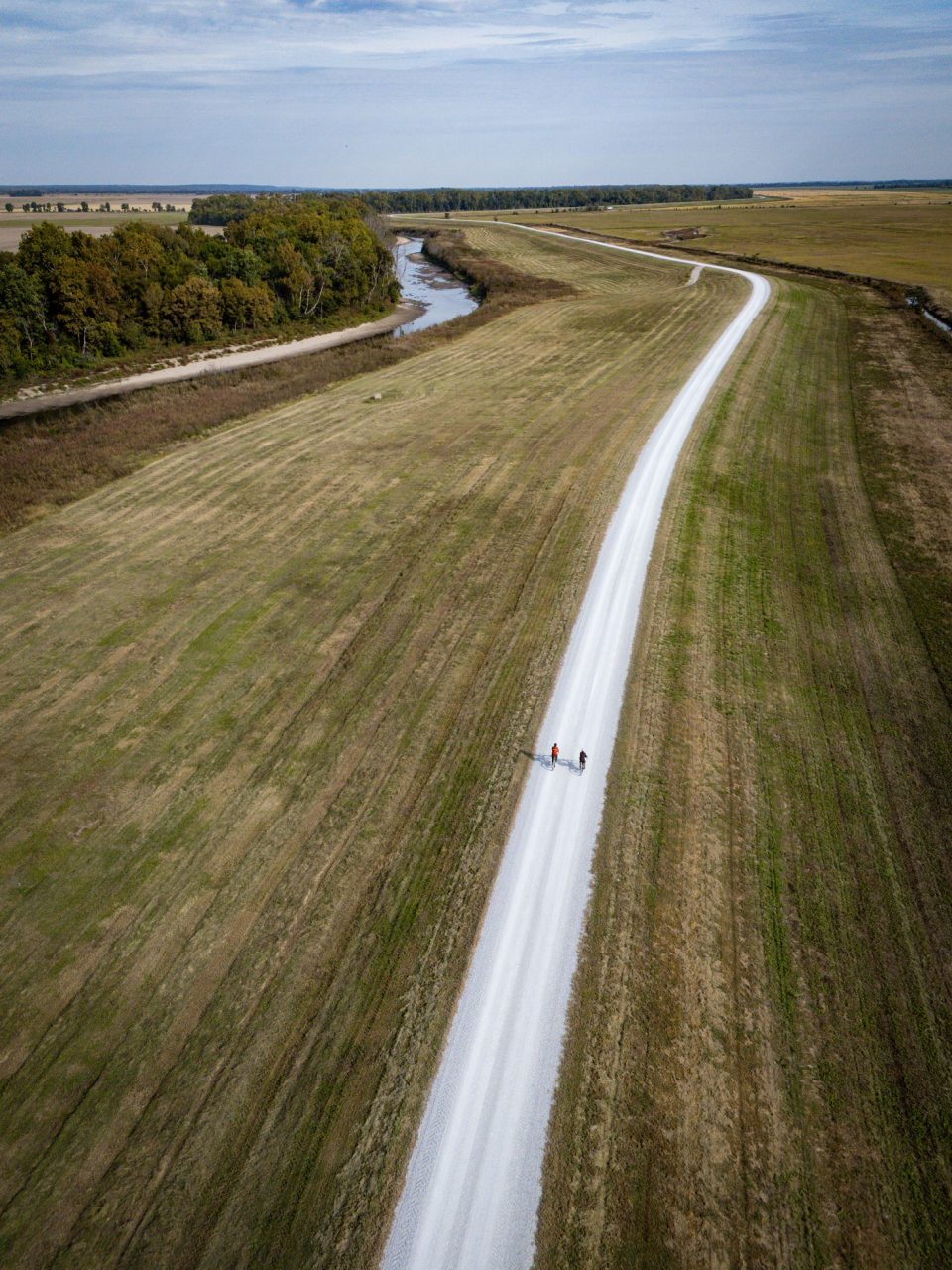
For gravel cycling, this is as good as it gets. Riding inside the woods means shelter from wind and rain and a nice mix of surfaces from smooth gravel to tarmac. But there are also ample opportunities to experience the edges on either side, travelling on marble-white gravel tracks through wide open fields. There are many short climbs, but no endless drags.
Mmm… floaty
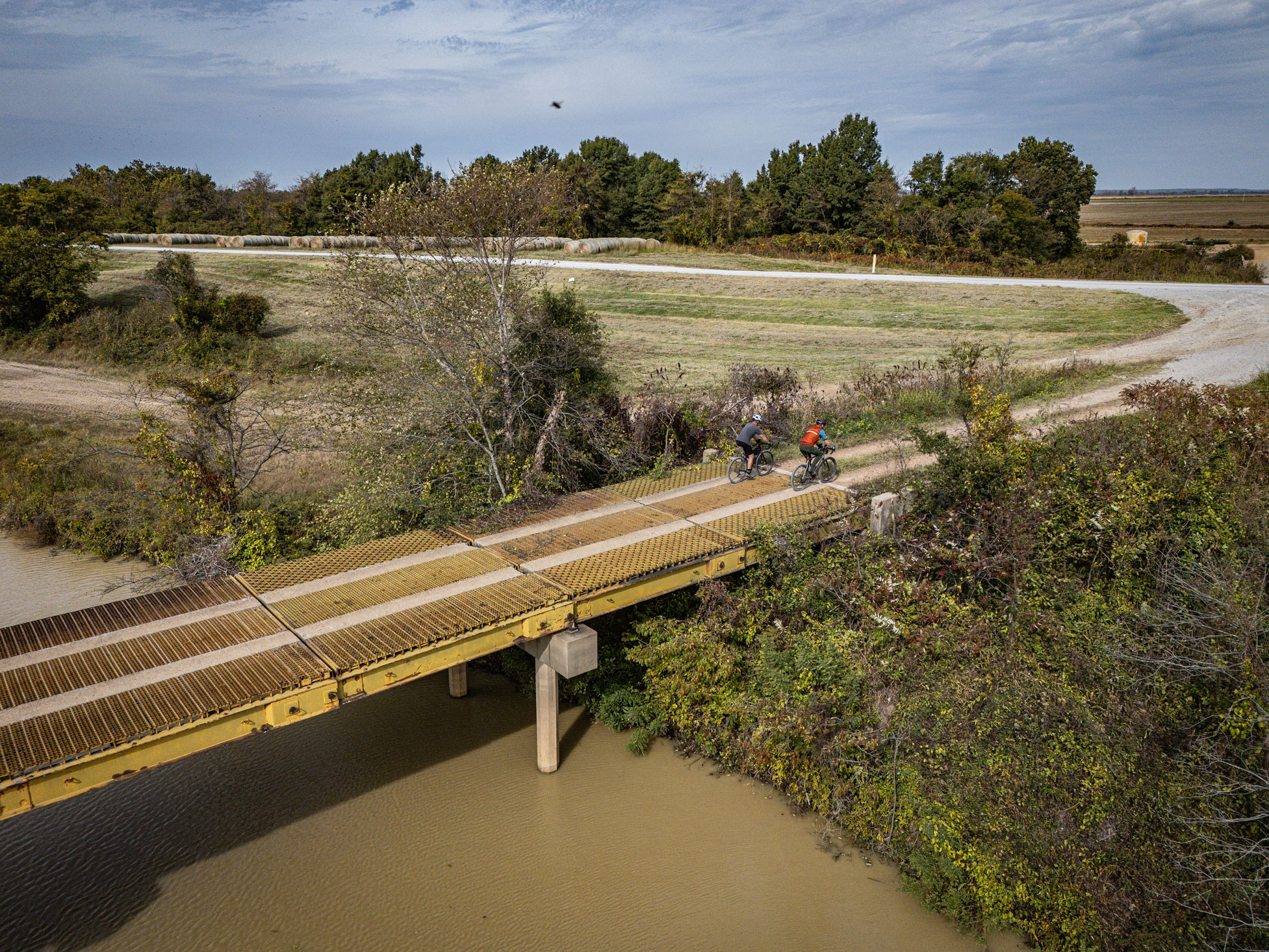
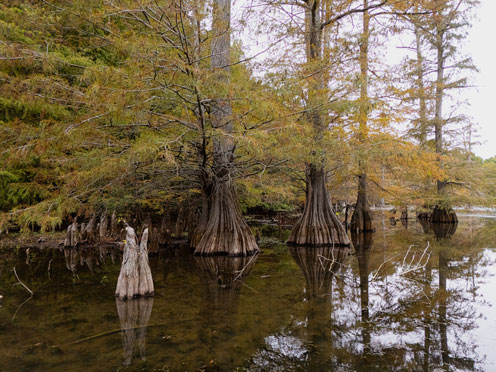
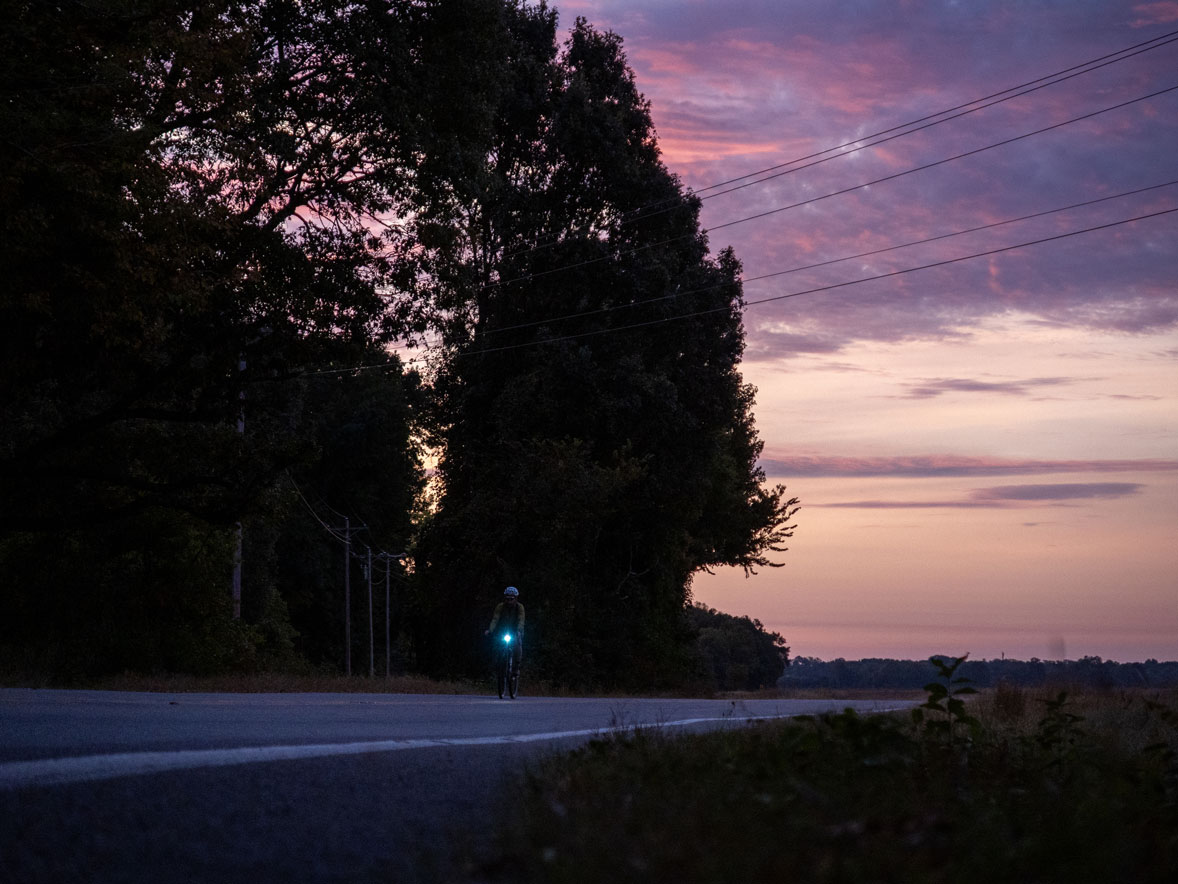
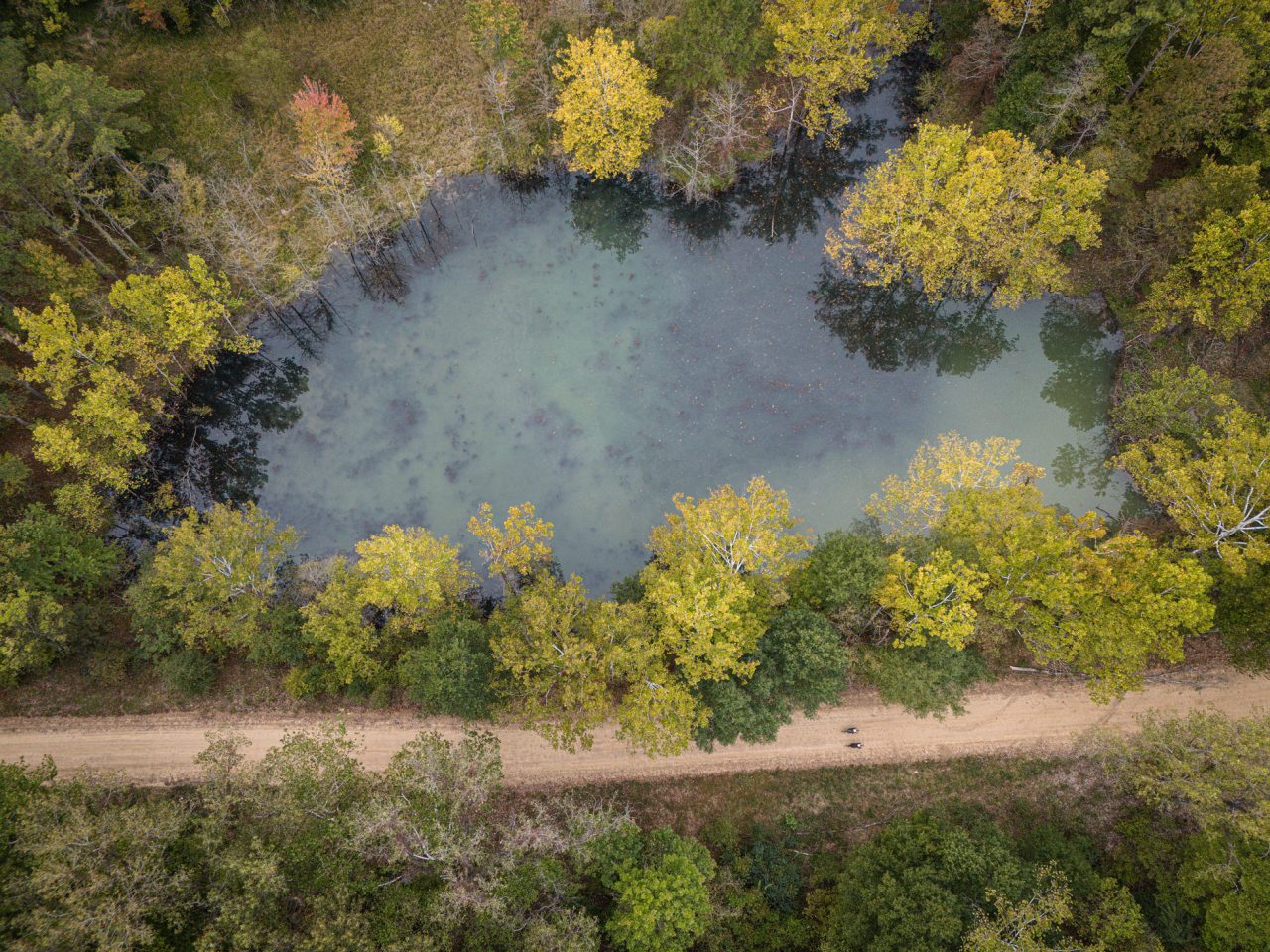
For a change of perspective, the Delta also offers excellent kayaking on the mighty Mississippi or the lesser-known St Francis River. This is why my first day visiting the region starts with paddling 12 miles, before my gravel ride takes me 9 miles down a dirt road back to where we launched the boats. In the fading daylight, I ride on superbly smooth gravel through the little stretch that is left of the swampy woodland that once covered the floodplains of the river. The flared trunks and distinctive ‘knees’ of bald cypress rise from the water under a canopy of black willow, various oak species, green ash, red maple, and sweetgum – trees that are well adapted to seasonal flooding.
I have the dirt road all to myself. The sounds and smells around me remind me of cycling through the Australian outback, but this is much more accessible. On the trail, it feels like I am hundreds of miles away from civilisation, but in reality, the two townships north and south are pretty close by. I know that someone will eventually pick me up should my tyre wall collapse (which never happened so far), and there are enough resupply points.
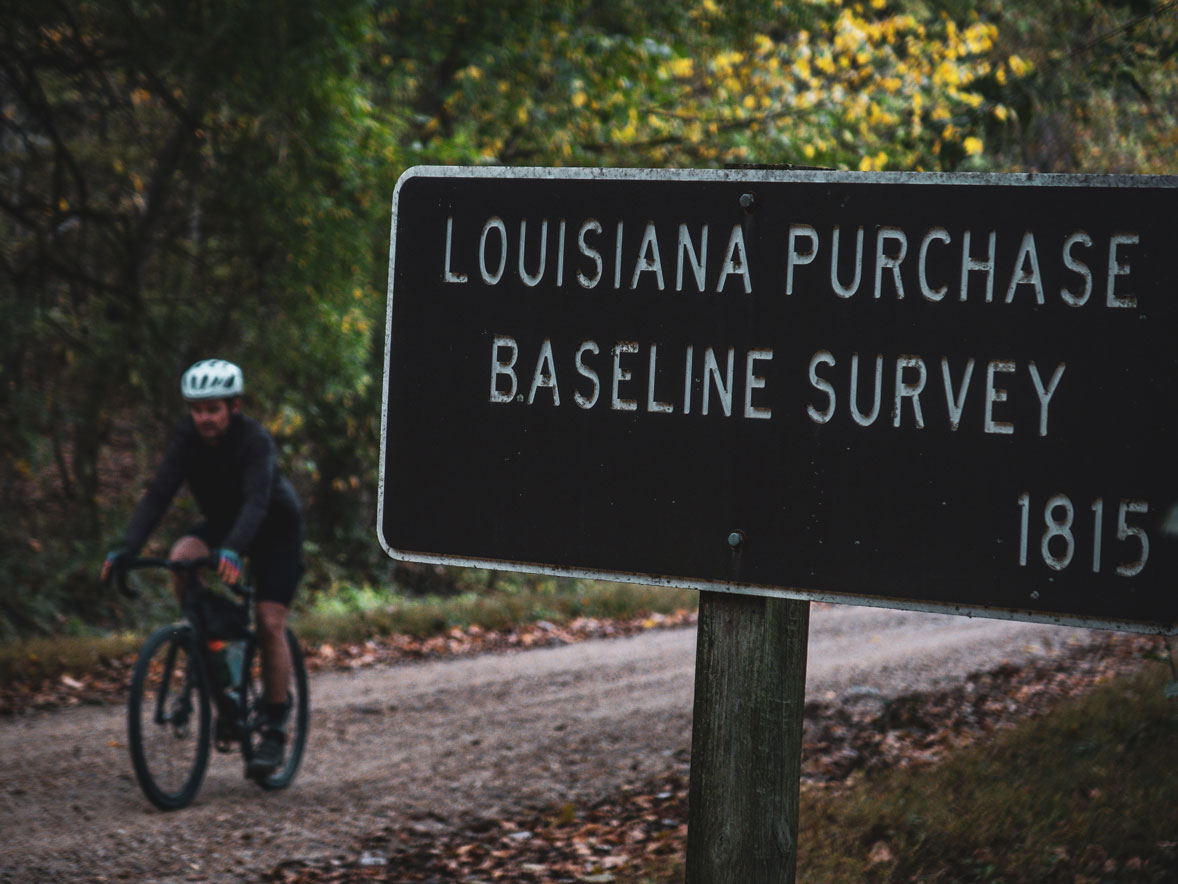
But the Delta isn’t just pretty. It’s gritty, filled with history, and at times also challenging. When I arrive in town in the morning, Ammen takes me into a big industrial building behind Helena’s High Street. As we drive there, I see two faces of the town – some beautiful old buildings neatly restored to their old glory, but also some that have seen much brighter days – closed shops and fallen-in roofs. Helena sits at the heart of Phillips County, among one of the most deprived counties in the US. But in my three days there, I never feel unsafe or have the urge to lock my bike – quite the opposite. I am welcome here; people are really friendly and love to see visitors.
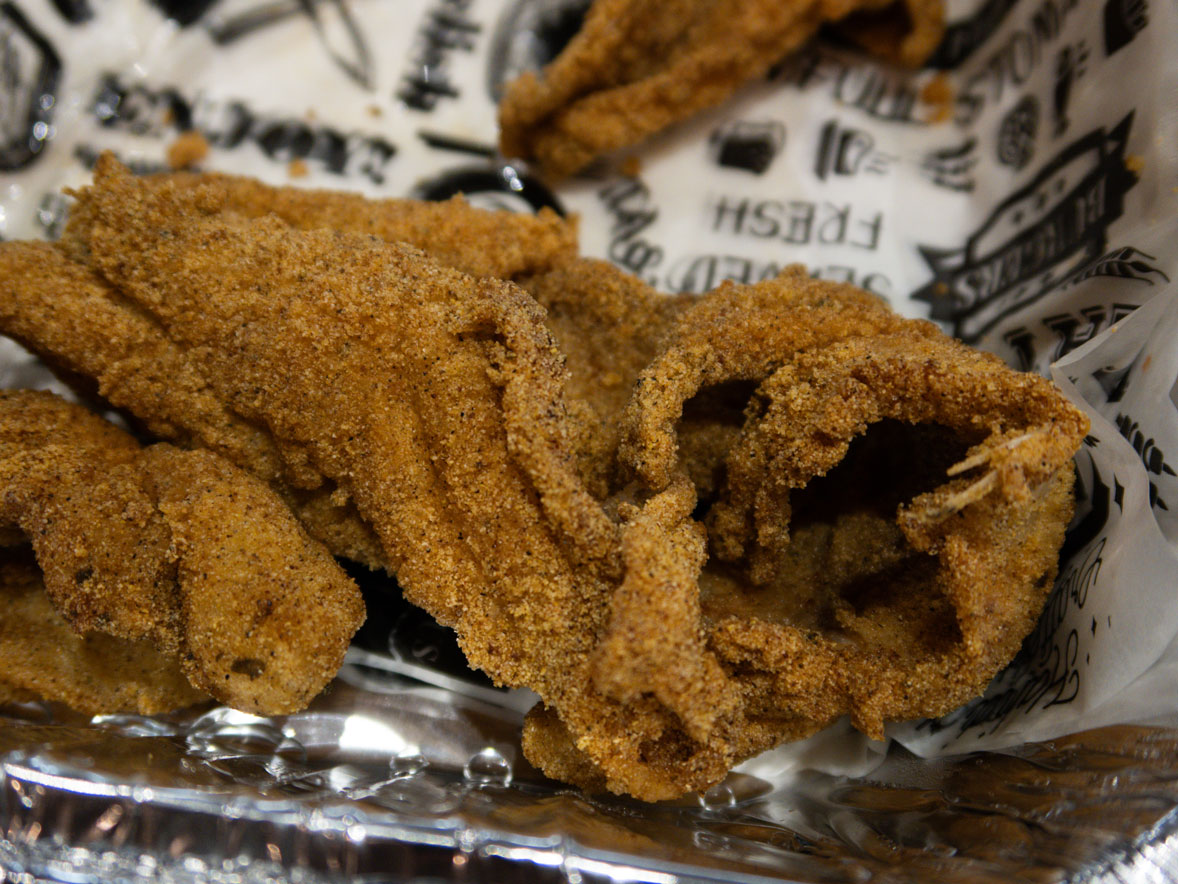
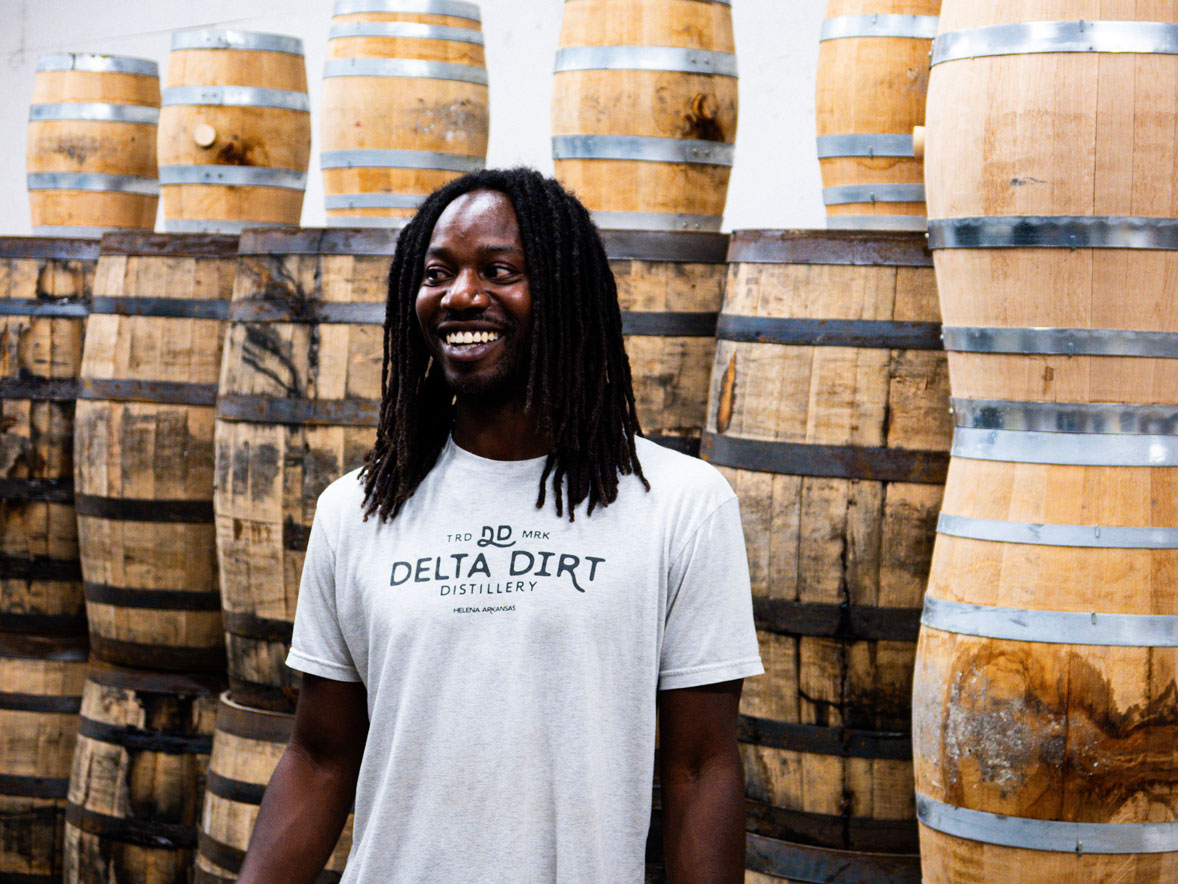
A proper welcome awaits me after the first ride. When I arrive back in Helena, I meet Ammen at Delta Dirt Distillery, the only Black-owned distillery in the whole of the US. Most food here is deep fried, and catfish is no different. As a pescetarian, I still prefer vegetables and fried green tomatoes – another typical southern dish – are amazing, especially when partnered with small sips of Sweet Roots Arkansas Brown. This family-owned craft distillery makes vodka and bourbon out of sweet potatoes grown on land the Williams family has owned for four generations. Harvey, his wife Donna and their son Thomas released their first vodka in 2017 after three years of trial and error, and Delta Dirt has become one of the recent success stories of Helena.
Sing along
For music buffs like me, Helena is full of Delta blues history. Its significance is tied to King Biscuit Time, a daily radio show launched in 1941, one of the first broadcast in the United States dedicated to blues music (and still running). The programme reached farm workers and listeners across the Delta and helped to standardise and spread the blues while giving local musicians a platform and steady income. This made Helena a powerful amplifier for the Delta blues, ensuring its sound travelled far beyond Arkansas to leave a lasting imprint on global music culture.
I often associate places with songs and while we cruise back to our place for the night, I listen to Walking in Memphis from Marc Cohn, telling of catfish and gospel music. This song has stayed with me since the day 25 years ago, when I was in Las Vegas waiting for a bus, listening to music playing in the background while trying not to fall asleep. Travelling in those days on Greyhound buses was a much rougher affair than this journey in Arkansas, travelling by car with a gravel bike in the back. Twenty-five years ago, I was scraping to get by with cash I earned from working as a receptionist and cleaner. When I travelled from the Grand Canyon to San Francisco, I overnighted on buses and in stations to save my hard-earned cash. On my first journey to the US, bikes didn’t play any role at all. Back then, I was in the early stages of my work in music, which culminated in running a music festival for 5 years and DJing for 12. Now, a quarter of a century later, music has become a soundtrack and inspiration for my cycling adventures.
Ammen and I spend the night in a cabin in the Mississippi River State Park, only a few miles from town. He pulls a few beers from the truck, a chance to find out more about his work. An Arkansas native, he is the director of studioDRIFT. This non-profit is the baby of landscape architect Martin Smith, who’s been working for 40 years to revitalise the Arkansas Delta. Much of his work reminds me of my mission with Bikepacking Scotland – to create cycling trails to support the local economy. Travelling by bike means less impact, and the Delta certainly has loads of capacity for more cycling.
Besides amazing landscapes, there is a cultural heritage connected with the Delta blues, which emerged from the Mississippi Delta as one of the most influential roots of modern popular music. The music that took shape here was raw and expressive, marked by slide guitar, driving rhythms, and lyrics that spoke of hardship, migration, faith, and resilience – elements that would later underpin genres from rock ’n’ roll to soul and hip-hop.
After Ammen goes off to bed, I sit outside and marvel at the stars that shine through the trees, while I sip my last beer. I’d had few expectations for the day, but the chats with Ammen, the people I met and the history I uncovered made it stand out. And though short, the time spent on my bike was the real highlight.
Land of the rising sun… and grumpy animals
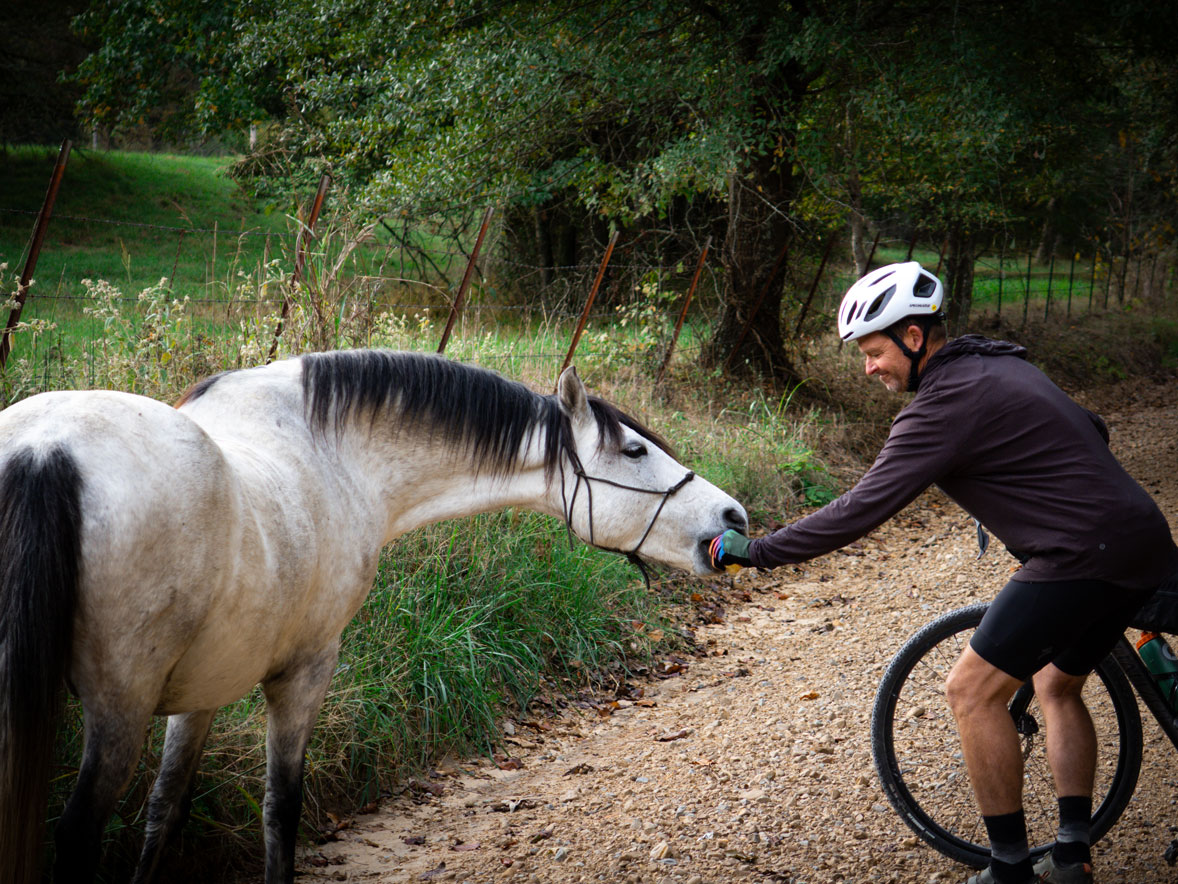
The next morning, we head out early to see the sun rise over the Mississippi River and drive further north. We start day two at the visitor centre for the Mississippi River State Park in Marianna and take the Crowley’s Ridge Trail to our southernmost point of the ride, the same location where I’d stopped cycling the previous day. From there, we loop back, mostly on tarmac, to the start. Altogether, the route is about 29 miles. The first part of the ride takes us on a sunken gravel road, flanked by huge rock walls on either side. It reminds me of the hollow ways of southern England, but much bigger in scale. A stray horse demands our attention, grazing lonely at the roadside. Puzzled by our presence, it acts strangely, but when Ammen pulls out an apple, the horse munches away happily.
We cycle at the edge of a freshly-harvested cotton field when we leave the shelter of Crowley’s Ridge. While the surface is still very smooth gravel, the surroundings are really different. Massive fluffy rolls of cotton line the field edges. In nearby fields, I witness the last stage in the growing cycle of cotton plants, which are dropping their leaves while the fluffy fibres grow out of cracked open bolls, ready for harvest.
Like anywhere in the US, an angry dog speeds us up, but this can’t take away the joy I experience when I cruise along the gravel roads. We stop often for pictures and listen to the sounds, while the rich woodland is broken by more open sections. The road back to the start is more undulating than the first section on gravel, but none of the climbs are long enough to be a real challenge. As on day one, I can’t help but smile when we drive to Marianna for a late lunch to meet Kim. Growing up in Marianna, she is passionate about her home and takes us to the best lunch place in town. Like the Delta Dirt Distillery the previous day, the walls are covered with gig posters of famous Delta blues names. I enjoy my second catfish and, once again, fried green tomatoes.
Digging deeper
But while I only get a glimpse, I do get to dig a bit deeper behind the scenes. Unlike cotton balls, life is far from fluffy in the communities we pass on our way. Crowley’s Ridge is the only piece of land that has survived in a landscape that is otherwise dominated by industrial-scale farming. While the gravel roads that span those farms provide endless opportunities to explore, the region’s problems run deep and are complex.
When we arrive at the small hamlet of Birdeye at the end of day two, I meet Martin Smith, co-founder of studioDRIFT, whose family home is our place for the night. He bought his grandfather’s house to return to his roots, and over the years, he’s skilfully restored it to its original beauty. He works as a landscape architect and designed the nearby Arkansas State Veterans Cemetery. He is well-connected, the sort of person who knows who to speak to, and believes in the potential of this region to become a thriving destination for adventurous travellers. His family home feels like a creative space and hostel and acts as a base for events as the Birdeye ’25, an annual gravel event in November, consisting of rides outs, good food, and, you might guess, blues.
Over an IPA and deliciously cooked food, we chat about his ambitions, which span much wider than just cycling. While farming has made a few people rich, Martin tells me about the suicides of farmers heavily in debt. And the fact that while we are in one of the most fertile regions in the world, locally grown food is almost impossible to buy locally. There are no sustainable systems in place for small farmers to take their produce to market.
The Delta blues developed in the farmland as a direct response to the harsh realities of agricultural labour and rural life in the late 19th and early 20th centuries. Music became a way to endure and interpret this world. But machines have removed most human labour. The people who inspired the Delta blues have been replaced by massive tractors, fine-tuned to make the land as profitable as possible. While tons of food are shipped abroad, some of the local population survive only on highly processed junk food and state subsidies.

Endgame in the end zone
We spent the rest of the evening watching an American football game, where Martin’s son kicks his team to victory. In the town of Wynne, a high school game gets everyone out on a Friday night, as there is little else to do. We barely watch the game, but talk. The more time I spend with Ammen, Martin and his family, the more I hope that their new vision for the region becomes a reality. They aspire to make gravel cycling the new Delta blues – a formative force to support the local community and strengthen the regional economy.
I leave the house early on my last morning and ride a short loop to marvel at the sunrise. The white and sheer endless gravel trails are lit up under a fiery morning sky. The otherwise pretty barren farm landscape glows in the richest of colours, and soon afterwards, the cloud patterns over Crowley’s Ridge are equally as stunning.
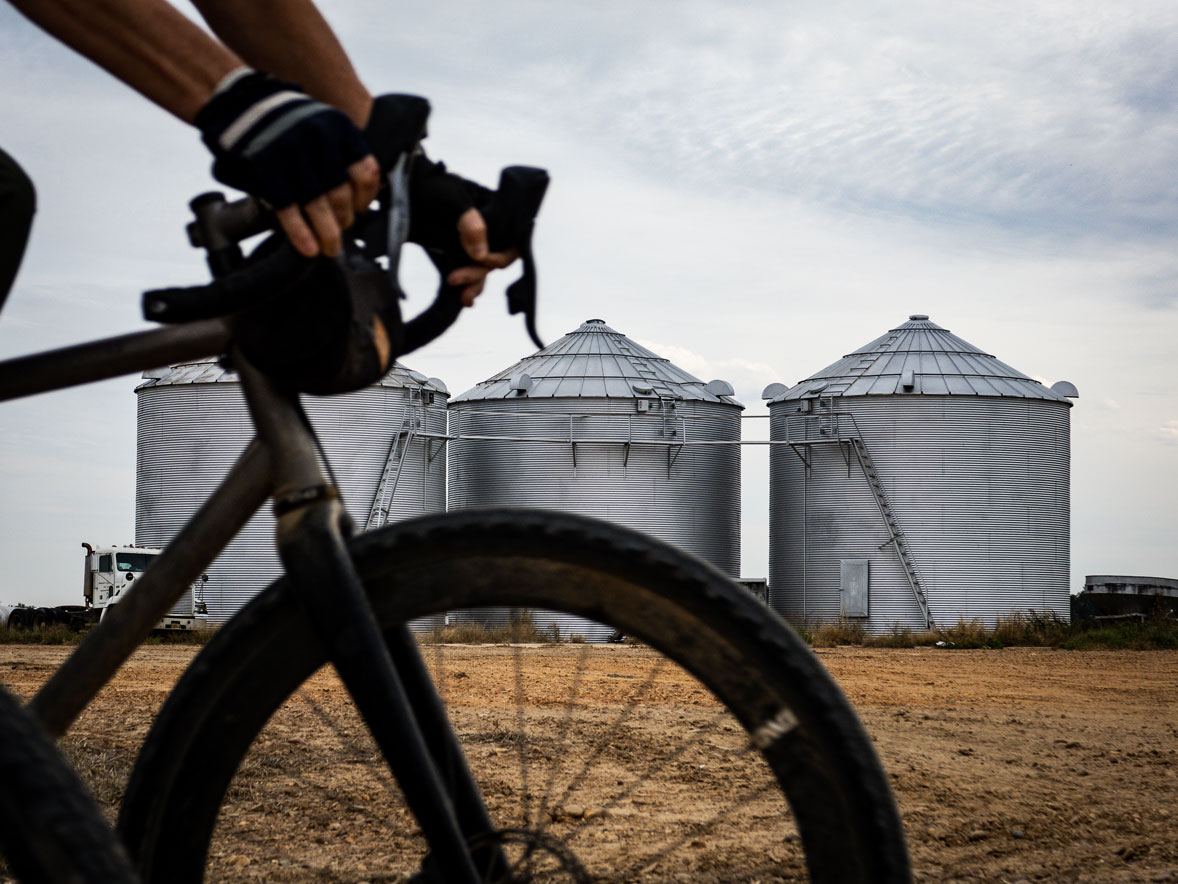
After breakfast, I take a final 25-mile ride with Martin and Ammen. At the start, we pass grain silos and a couple of abandoned buildings. The area was settled by Martin’s pioneering ancestors, who made their money with farming, livestock and merchandising. All that is now left is a bunch of abandoned buildings.
Unlike the rides on previous days, this ride takes us through sheer endless fields along the Straight Slough. Though not visible to the outside visitor, it’s an important habitat for freshwater mussels. While farming has shaped most of the land here, some natural habitats have survived. The dusty trails on which the early Delta blues musicians travelled provide the perfect surface for our tyres, before we loop back on the road to our base. Today, the wind has picked up a little, and for a short section, I enjoy sheltering in a dense woodland on the outcrops of Crowley’s Ridge, before I pack up the bike and head off, first to the airport, and then home.
Sixty miles in three days has inspired me more than much longer adventures. I aim to come back soon, but would replace hire car comfort with just a gravel bike and bags strapped to it. To travel the whole of Crowley’s Ridge while learning more from the people, like Martin, Ammen and Kim. Timing it right and finishing the trail with a visit to the King Biscuit Blues festival or stopping by at one of Martin’s events would be an extra incentive, but the Delta alone is worth many more visits.


