Huge carbon nanotube rope anchored to satellites at one end and dynamos at this end. that's as far as I've got tbh...
@Molgrips - I was thinking of this as a stopgap rather than an answer.
Whatever the answer/s I suspect we will be one of the last generations to enjoy cheap air travel and energy on demand. Which may not be a bad thing.
Does the molecule size rule out using the existing gas network, or could individual installations be rechecked for leaks?I think it's more a case of the gas diffusing out of containers and pipes, rather than leaking from cracks.
This is correct. The hydrogen molecules are smaller than the gaps between the metal atoms and so they can just flow through the metal. As far as the hydrogen is concerned the pipewall would be more like a filter than a solid.
Someone needs to figure out how to make metallic hydrogen on Earth.
As far as the hydrogen is concerned the pipewall would be more like a filter than a solid.
*looks nervously at H2 gas cylinders outside lab*
Fusion?
*looks nervously at H2 gas cylinders outside lab*
Specialist materials and linings are available but these are obviously expensive and not used in standard pipework.
So... what do you propose?
Something other than the Severn Barrage - almost anything other than that. Obviously.
Ok even if cycling were a feasible alternative for every journey, I reckon persuading everyone to get on their bike instead of into a car would be harder than developing fusion.
There has to be a way to capture the irate energy generated if just told everybody they had to abandon their cars.
Something other than the Severn Barrage - almost anything other than that. Obviously.
Such as? If we all want anything but [insert worthy on a national scale, yet contentious locally] generation, we'll end up with nothing.
No is just about as useful as "more coal please"
I agree that "more coal please" is a better solution than the Severn Barrage - thanks for that. The Severn Barrage is FAR from worthy on a national scale, or indeed a global scale.
Anyway you're using an argument fallacy there - can't be bothered working out the technical name for it, but the point is I'm not required to come up with an alternative in order to point out that one proposed "solution" would cause more harm than good.
I'd just like to know what your proposed solutions are. It's easy to sit there and say "no". Much more helpfull to the debateto offer up other ideas
I've not got anything new to add there - don't really see the point in proposing stuff which has already been mentioned on this thread. Are you expecting me to come up with some miracle technology which solves all our problems in order to criticise deeply flawed ideas? The fact we have a problem and no obvious single way of solving it doesn't make bad ideas any more attractive.
Is it not allowed to point out the flaws in potential "solutions".
aracer - MemberI agree that "more coal please" is a better solution than the Severn Barrage - thanks for that. The Severn Barrage is FAR from worthy on a national scale, or indeed a global scale.
As you were so keen to dismiss my thoughts as being from a "very trivial perspective", let's hear your great solution Mr Environmental Saviour, and let's not have any trivial nonsense, back it up with some hard thinking (showing your working our will earn extra marks :wink:)
Do you want me to repeat the post I've just made?
What about looking at houses deriving as much energy in situ - VAWT on chimneys, ground heat pumps, solar panels and then energy saving/reduction - obviously there is a cost but can that be balanced off against the £xBn required for a new Nuclear Powerstation?
Nope - reduce the requirement for energy. Cheaper and easier to get the fabric of the buildings sorted to reduce consumption. Unfortunately, the government stamped on much of that work with the Green Deal.
Small scale wind turbines, particularly urban, are mostly not worth it. Most of the population doesn't live in windy enough areas for it to be viable. Ridgeblades are a nice theory but far too specific to a location to be much use.
Do you want me to repeat the post I've just made?
Nope, just give us a few suggestions as to what your preferred ideas might be.
You say no to the Severn barrage, I say no to coal, doubtless someone will say no to nuclear, and there's always the chance that the Russians will ssay no more gas. Then what?
Nope - reduce the requirement for energy.
That's a seperate issue. We'll still need to generate energy unless we can reduce our consumption to zero, which is unlikely.
PS keep it civil people, no-one wants to read a slanging match.
To me it seems mad not to have something like the Severn barrage. It guaranteed pollution free energy with the tide never running out. I can see that it would have some environmental impacts but things like wading birds would just migrate elsewhere not necessarily die out. I guess fish flows and spawning and the biggest issues. I still find it nuts that new houses don't have to built with solar panels. As part of the cost of building a house the cost of fitting solar panels would be tiny. I just don't see why all new houses don't have to be the most efficient as technology will allow them.
@TooTall - ok get the issues re location etc, but would it be at all viable for those buildings/homes suitable for wind/solar/ground energy to be hooked into it, as part of an overall reduction plan?
Often wondered who determines the number and brightness of the street lighting we have, travelling home yesterday and some towns have almost daylight lighting levels on empty streets.
I understand that we will still need some form of large scale energy production if we are to continue to retain some semblance of today's lifestyle.
I can see that it would have some environmental impacts but things like wading birds would just migrate elsewhere not necessarily die out.
It's a pretty special ecosystem, not many like that in the world. Sad to see it go, no?
And most new housing developments near us have solar panels, but that's only been in the last couple of years so still not that many houses overall.
That's a seperate issue. We'll still need to generate energy unless we can reduce our consumption to zero, which is unlikely.
But we have means of generating energy which aren't about to disappear, it's a question of capacity, which reducing consumption helps with significantly. Spending the money you could have spent on solar panels in a new build on better insulation instead is almost certainly a better use of resources in terms of overall energy flow (and don't suggest doing both until we mandate far, far better house insulation - until then the answer is always forget the panels, spend more money on insulation).
To me it seems mad [s]not[/s] to have something like the Severn barrage. It [s]guaranteed [/s] a relatively small amount of pollution free energy with the tide never running out. I can see that it would have some environmental impacts but things [s]like wading birds[/s] affected by climate change would just migrate elsewhere not necessarily die out.
Is the Severn really that special as an ecosystem? I have lived near it all my life and apart from Slimbridge can't really say I have ever seen it as a wildlife hotspot. More a muddy river with lots of heavy industry on its banks for years.
30 new houses around the corner from us have just been built and not one has solar panels even though at least half have roofs that point directly south. I think at the moment it is at the discretion of the builder. Seems nuts that any large building project has to pay a levy for social housing and the such but no requirement by law to install solar panels, ground source pumps, etc
Its seems the government is hell bent on shale gas, so why not use a levy on that to pay for massive investment in local renewables. Wont cost the government anything and would reduce our need for fossil fuels
It is a pretty unique ecosystem, but it does have the capacity to produce a relatively large amount of electricity through a barrage system. It could produce a lesser amount of energy in a less environmentally damaging manner using tidal lagoons.
These things could be done as well as PV on roofs, and insulation.
Burning coal is not a better option
Weirdly enough, if you build houses with enough insulation and point them in the right direction to let all the sunlight in through windows, it almost doesn't need heating at all. Or cooling.
So, that's our heating energy requirement sorted then.
Now, just to sort out transport.
30 new houses around the corner from us have just been built and not one has solar panels even though at least half have roofs that point directly south.
The money would be better spent on reducing the energy needed than slapping some bling on the outside. 'Fabric First' every time.
The first thing you should do when working out what power generation you require is to properly understand the demand - THEN try to optimise that. The most sensible first stage of optimisation is to reduce the requirement, then to even it out over the 24 hrs.
So - reduce the energy consumption now, because the generation companies will be changing how you use energy to suit them in the near future.
30 new houses around the corner from us have just been built and not one has solar panels even though at least half have roofs that point directly south. I think at the moment it is at the discretion of the builder. Seems nuts that any large building project has to pay a levy for social housing and the such but no requirement by law to install solar panels, ground source pumps, etc
What you can't tell is how well they're insulated compared to older houses. It seems nuts to mandate solar panels or any of the other stuff until you've mandated measures to make significant reductions in consumption.
molgrips - Member
Someone needs to figure out how to make metallic hydrogen on Earth.
There's better ways
[img] 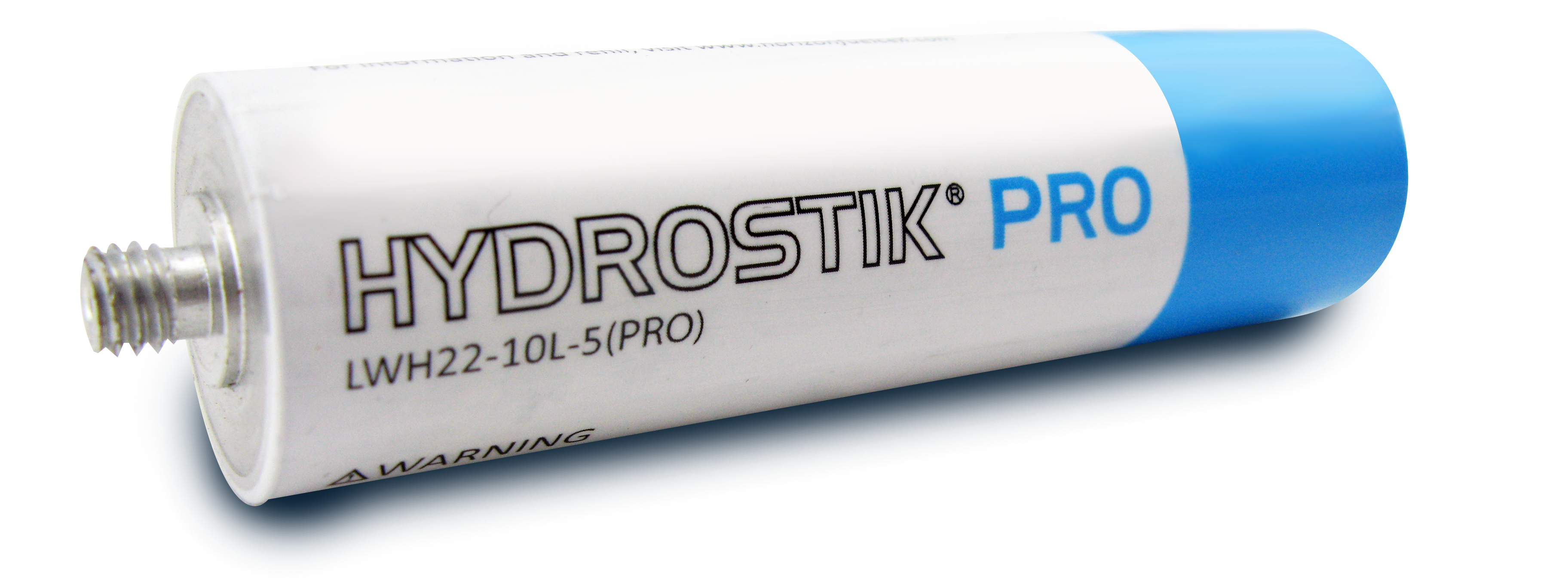 _srz_355_150_75_22_0.50_1.20_0.00_png_srz[/img]
[url= http://www.horizonfuelcell.com/#!home/mainPage ]These[/url] guys are the business.
I look forward to working with their gear quite soon.
WRT energy generation/renewables - As I see it, what we need [apart from people turning off lights etc] is large areas of desert covered with solar energy capture devices [Photovoltaics, reflector and molten salt/steam stations etc etc]. A concerted international effort to build these systems could transform our energy mix, provide a huge number of jobs and promote world peace and understanding. Unfortunately this requires altruistic international world co-operation, and no-one to ransom the really long extension leads we'd be running everywhere.
Ho-hum
[img]  [/img]
Tootall -
The most sensible first stage of optimisation is to reduce the requirement, then to even it out over the 24 hrs.
I agree with your comment on optimising demand (flattening the load curve as I would see it), however there are a couple points to note.
Firstly and this is a simple but interesting one, your 24 hours comment I quoted assumes generation capability is flat throughout the day. Nuclear, coal, gas and oil can be and preferably should be, but then it gets interesting. Photovoltaic clearly isn't, and nor is tidal flow (barrages and lagoons might well be though). CHP varies with the heat requirement. Wind varies overtime, but as I recall there is a statistical diurnal rhythm.
The second point leads on from that. Statistically there is more wind in the winter, and indeed traditional power stations have higher output at lower ambient temperatures. Biomass may well have an annual rhythm and who knows about hydro given recent rainfall patterns.
Finally, for now at least, the grid has a higher rating (and marginally lower losses) in the winter. It also has a higher rating on windy days, but that is more difficult to generalise about.
The first thing you should do when working out what power generation you require is to properly understand the demand - THEN try to optimise that. The most sensible first stage of optimisation is to reduce the requirement, then to even it out over the 24 hrs.
I was lucky enough to attend a training course for a previous employer related to installing the software to connect smart meters to the existing energy companies software.
The big cost to a power generation company is starting up another power station to cope with a sudden demand (i.e Eastenders finishing and the kettle goes on). IIRC the cost is ~10 times the norm.
They will start implementing tariffs that heavily charge for these times, thus reducing the sudden demand over time.
Smart meters will be used to profile everyone's usage throughout the day.
Smart meters are not there to save you money, they are for the energy companies to save money.
Rather than look at solar photovoltaic cells, we are considering solar water heating cells. They are much more efficient that their electric versions and are likely to have a larger impact on your energy usage.
Insulation is obviously the best first step for UK housing stock, but for large scale take up, the cost of exterior insulation will have to drop considerably.
Rather than look at solar photovoltaic cells, we are considering solar water heating cells.
Good. Those are a far better use of the available solar energy.
Current generation companies want to remove peaks in demand so they can run a constant base load. It is by far the most efficient way of doing business. I didn't mention renewables in this mix because they are not why this work is being undertaken - too small when compared to power stations. Reducing consumption is of interest to the consumer - flattening demand is of interest to those generating. The only way to get renewables really in the mix is to improve storage to de-couple consumption from generation.
Oh - rough figure to de-carbonize transport with electric vehicles would require 3x more electricity in the grid. Therefore, we still need base power.
mrmonkfinger - Memberif you build houses with enough insulation and point them in the right direction to let all the sunlight in through windows, it almost doesn't need heating at all. Or cooling.
So, that's our heating energy requirement sorted then.
except that there's roughly 30million houses that aren't built like this in the uk, we have to work with what we've got.
unless you're proposing knocking them all down, and starting again?
30,000,000 x £100,000 = £3,000,000,000,000 (3 thousand billion quid)
People were suggesting requiring solar panels on new builds though.
Spending the money you could have spent on solar panels in a new build on better insulation instead is almost certainly a better use of resources in terms of overall energy flow
You are quite correct, but the thread's about how to generate power, rather than how best to invest in carbon reduction...
but the thread's about how to generate power, rather than how best to invest in carbon reduction
But you don't have to generate as much if you need less, so demand is rather closely related to generation. Or can carbon reduction and energy reduction not be the same thing on your planet?
I'd say the thread started off as crap trolling anyway.
Tootall - I don't think I was disagreeing with your premise. Understanding load is great, and optimising is great. My point was that you also have to understand the nature of your generation (and given how long it takes to build generation, what will be happening in 10 plus years). I think you're actually in agreement with that reading across your last few posts.
I also agree that prices rocket around peaks, but there are mechanical commercial reasons for that as well as financial ones. Unfortunately smart meters may not help with this in the short to medium term at least - I may be wrong on that.
Renewables ain't that small any more, in terms of peak production at least, and they're going to get bigger. We have distributed generation (not all of which is renewable) of around 20-25% of our peak load commissioned on the system - the Scots have more as I recall.
Solar water is an excellent idea as you say, not least because you can store it.
And 3 times more electric for electric vehicles? Possibly an under estimate if you're talking about peaks, and I think they will be peaky, and more again (another 3 times?) if you want heat pumps.
Note the difference of course between energy and power.
Oh and the reason the smart meter work is being undertaken is because the government mandated it and the the EU backed them up.
Supposedly to help renewables to connect and assist people to reduce their consumption, but the emphasis has changed over the years.
Small, portable generators attatched to the wrists of teenage boys and bicycle company executives.
I agree that generation and construction take a lot of time, but reducing demand starts working now while the other stuff happens in parallel.
Smart meters will be used like a more refined Economy7 system. Behaviour will be changed because the consumer will be charged different rates for different times of the day. A smart meter gives that increased granularity of data.
Like paying more for your rail ticket during rush hour.
Prices will be higher at 7am and 7pm and that - the financial cost to the consumer - will drive changes in behaviour. The peaks will be lowered and the load evened out across the day.
I was using the rough figures from the ZeroCarbon work produced by CAT. They reckon 3x current electricity just to decarbonize transport in the UK.
But you don't have to generate as much if you need less, so demand is rather closely related to generation. Or can carbon reduction and energy reduction not be the same thing on your planet?
Well this is very obvious, but not the point of the thread. Very important for humanity but not this thread. You remind me of the old joke: "Doctor, it hurts when I do this." "Well don't do that then"
but not the point of the thread
Isn't it? Are you sure about that? I think the point has actually just overtaken you and the car you were sitting behind, which might be why you missed it 😉
Your argument is exactly the reason why we end up in the sort of mess where installing PV solar panels is seen as more important than installing insulation, or indeed more important than installing solar water heating. Well that and stupid feed-in tariffs (I have to admit if I had a bit of roof facing the right direction I'd probably have gone for it out of purely self interest).
What is my argument?
What is my argument?
I didn't think you knew. It isn't the first time either.
If you look up and listen for the whooshing, you might get my point sailing over your head.
If you don't reduce demand, demand will outstrip generation. There is no need for increased demand in the UK - if people would / could do what is currently possible to reduce consumption we could likely drive demand far lower than it is.
been busy so i missed the middle bit of this thread but its intelligent threads like this i come here for so im going to jump back in....
my dad worked in Libya, in the 70's, welding pipelines, and at that time, they flared off the gas because it was the oil they were after. now, that gas they burned into the night sky is compressed and shipped to the dock in milford havon at a massive profit, so much of a profit n fact that the british government is ranting about fuel security whist buying it at whatever it costs.
these frackers are going after 10% of what is there......that is their aim... their top goal. if there ever was an argument to not use this temperamental, experimental, unproven, infantile 'technology' it would be because these greedy idiots dont know how to get the other 90% yet! only a moron would go after 10% and waste the other 90% when we know that technology doubles in its capability every 2yrs. this alone would say to me that its not worth digging up shale gas yet.
now i know i was advocating technology such as solar earlier, but that is non extraction, we wont loose all the sunlight when we only collect 17% of it.
yes we are talking about renewable, but right now that is the alternative if we dont push away from fossil fuel
these frackers are going after 10% of what is there......that is their aim... their top goal. if there ever was an argument to not use this temperamental, experimental, unproven, infantile 'technology' it would be because these greedy idiots dont know how to get the other 90% yet! only a moron would go after 10% and waste the other 90% when we know that technology doubles in its capability every 2yrs. this alone would say to me that its not worth digging up shale gas yet.
That is a real gem of an argument - the sort of thing I really enjoy seeing on STW. I have to admit to being somewhat in favour of fracking, but I think you might have just changed my mind there - more research is needed (not that I'm in the mood for more research now - have just "won" at the planning meeting I've been devoting all my recent research towards - I'd like to thank all those on STW who've helped to hone my pedantic arguing skills to the point the councillors are quoting my research).
Tootall - I agree that the theory is that smart meters will work like an advanced economy 7, but with the competing peak reduction needs of the generation fleet and the electricity network (local and national peaks can be very different) and the functionality actually built in to the meters it's going to be interesting to see if it works.
I would never disagree with the need to minimise demand in so far as you can - that's just common sense.
Of course the cheapest thing you can do (as a start at least) is turn the heating down a bit and put on a jumper if you're cold. I grew up in a house where the central heating was at 14C - there is no need for it to be set at 25.
except that there's roughly 30million houses that aren't built like this in the uk, we have to work with what we've got.unless you're proposing knocking them all down, and starting again?
Not at all, my half joking post is an unworkable proposition.
However, there are easy wins to improve the worst bits of existing houses, some mentioned on this thread -
We already have grants for loft insulation. Cavity wall insulation, I'm less convinced its a good thing to do on some houses, but there it is.
Sticking solar water panels to help with hot water use during spring/summer/autumn on everybody's roof would be a fine thing to do.
Improving the insulation of everybodys existing house is a no brainer.
Encouraging (maybe even grants to assist) people to fit exterior window insulation (e.g. shutters) would help hugely but currently has planning restrictions.
Same with porches to provide extra insulation around doors.
I'm sure there's a load of other easy things you can do.
I think our house is probably a good example - half of it is very early 1800's and half is ten years old; guess which drafty half desperately needs better insulation? Plus our heating installation (aga + rads + immersion for summer HW) could really benefit from some solar panels to run hot water in the summer (thus cutting a huge chunk of our electric bill), and some way of running the aga more efficiently (thermal store).
...temperamental, experimental, unproven, infantile 'technology' ...
Sigh. Fracking is none of these things. It is actually being used today, albeit in the US, so to call it experimental or unproven is hysterical nonsense.
only a moron would go after 10% and waste the other 90% when we know that technology doubles in its capability every 2yrs.
Do you want to have a think about what you've just said there? It may well hold true in electronics where power roughly doubles every two years or so but is simply does not apply in the extraction of hydrocarbon. If it did we would be looking at extracting 100% of the oil recovery from fields in the North Sea (this is impossible by the way), given that it would have to have doubled twenty times since production started. Oh and you don't get better at extracting stuff by not extracting stuff.
Sigh. Fracking is none of these things. It is actually being used today, albeit in the US, so to call it experimental or unproven is hysterical nonsense.
My understanding is that the US is developing legislation to apply to fracking as its negative effects and the problems associated with fracking are being discovered, so to call it experimental is probably fairly accurate imo.
Just one example of possible unexpected consequences : [url= http://www.news.cornell.edu/stories/2012/03/reproductive-problems-death-animals-exposed-fracking ]Study suggests hydrofracking is killing farm animals, pets[/url]
I'm not suggesting that there aren't potential risks with this or frankly any other technology just that hysterical nonsense isn't helpful.
As for that link two of the three expamples listed are based on "A farmer reported" and so are questionable to say the least whilst the other seems to be some cows directly exposed to fracking liquid which shouldn't be a aurprise to anyone really. There are lots of neasty chemicals used in all sorts of industrial process and many of them have the potential to kill.
@Jonah Tonto - cracking point.
Agree with Ernie's point too (interesting link). If you retrace the development of nuclear it was not without its problems in the early days (and Japan is having some problems currently).
The most disturbing part of Ernie's link:
[i]A Journal of Environmental and Occupational Health Policy, making a direct link between death and illness is not possible due to incomplete testing, proprietary secrecy from gas drilling companies regarding the chemicals used in hydrofracking, and non-disclosure agreements that seal testimony and evidence when lawsuits are settled.
"We have a number of case studies -- they don't tell us about the prevalence of problems associated with hydraulic fracturing, but they do tell us how things can happen," said Oswald.[/i]
There will be an optimum percentage of gas we can recover, as there is with oil. Perhaps that would be the better target to aim for rather than scrambling for 10%.
@Jonah Tonto - got any links to more info on that?
you might get my point sailing over your head.If you don't reduce demand, demand will outstrip generation.
Yes, this is obvious, you are 100% correct, I said that about three times. You could also say the sky is blue, that is correct too. Your point is not missed, I fully agree with you. Absolutely no argument from me.
But we will still need some energy, so given that, how best to generate it?
The reason you aren't sure what my argument is by the way is that I have not been making one. I'm just here for the energy technology chat.
when we know that technology doubles in its capability every 2yrs
Yeah that's going to need backing up I think, in the field of oil/gas extraction.
I should also point out that in the UK it is pretty much unthinkable that the environmental agencies will not be told, and may well have to approve the use of, what chemicals will be used in teh fracking process. There are huge differences between the regulatory requirements in the UK and the US.
Sigh. Fracking is none of these things. It is actually being used today, albeit in the US, so to call it experimental or unproven is hysterical nonsense.
Would you like fire and toxic chemicals with your water sir?
No ta
Would you like fire and toxic chemicals with your water sir?
Are you referring to the film gasland where the director rigged up a gas supply to a water tap for "dramatic effect" or in other words lied?
But we will still need some energy, so given that, how best to generate it?
We already have a variety of ways of doing so, none of which are stopping any time soon. The issue is the quantity, hence why reducing demand is every bit as relevant.
I'd like to thank all those on STW who've helped to hone my pedantic arguing skills to the point the councillors are quoting my research).
Your welcome and your sentiment was right
it does lead to one being generally more informed on a wide breadth of issues
when we know that technology doubles in its capability every 2yrs.
Could you explain this with say reference to the land speed record, fastest aeroplane, train, highest flight etc
Its a rule of thumb applied to computing that should not be generalised or else we would get 160 % of the gas in only 8 years time.
gonefishin - Member
I should also point out that in the UK it is pretty much unthinkable that the environmental agencies will not be told, and may well have to approve the use of, what chemicals will be used in teh fracking process. There are huge differences between the regulatory requirements in the UK and the US.
gonefishin - Member
...temperamental, experimental, unproven, infantile 'technology' ...
Sigh. Fracking is none of these things. It is actually being used today, albeit in the US, so to call it experimental or unproven is hysterical nonsense.
so you freely admit that the place its been tried or 'proven' it has been woefully unregulated then?
i will concede my reference to moore's law....it was emotive rather than factual and that is the last thing this discussion needs. sorry.
so you freely admit that the place its been tried or 'proven' it has been woefully unregulated then?
Nope, that's not what I said and your use of the word woeful implies that you havent' stopped being emotive.
My point was that you cannot blindly compare what happens in the US, where the technique has been used and there is no real evidence of it being particularly harmful, to what would happen in the UK.
ok so lets put aside conjecture, and we wont speak about water contamination. can you accept that the water shortages in the states are because they have used so much water for fracking there isnt any left in the taps for drinking?
they are shipping it in in lorries so people can have something to drink and wash with. you cant expect me to be completely unemotional, i kinda like water and at present my water bill is more than my gas bill so i want to protect it.
can you accept that the water shortages in the states are because they have used so much water for fracking there isnt any left in the taps for drinking?
No idea, that's the first I've heard of that being a complaint but on the face of it it seems like a valid criticism, although I'd be surprised if that was the only reason. Problems such as this tend to be the result of a combination of factors. For example hasn't there been a heatwave across much of the US this year?
Just from a geological perspective if the fracking is designed to create fissures that will allow the injected liquids to force the gas to the surface, doesn't it have an effect on the water table, porosity of the ground at the level the fracking is taking place, and the possibility it may lower the water table beyond current extraction?
[img]  [/img]
Done.
look i understand that petrochemical companies have been fracturing rocks with pressurised water for a long time, but what they are doing now is a very different scale of operation. much much deeper, using much higher pressures and using hugely more significant volumes of water.
http://ecowatch.com/2013/fracking-water-scarcity-issues-imichigan/
-this isnt the best example of website (im not a fan of anything with 'eco' in the title any more than if it had exxon in the title) but im a bit pressed for time and you can find your own sources to confirm/ dispute my fears im sure
My point was that you cannot blindly compare what happens in the US, where the technique has been used and there is no real evidence of it being particularly harmful, to what would happen in the UK.
Well that's the point, the industry in the US deliberately keeps the public "blind" of any evidence which is available.
[b][i]“I still don’t understand why industry should be allowed to hide problems when public safety is at stake,” said Carla Greathouse, the author of the E.P.A. report that documents a case of drinking water contamination from fracking. “If it’s so safe, let the public review all the cases.” [/i][/b]
[url= http://www.nytimes.com/2011/08/04/us/04natgas.html?_r=1& ]A Tainted Water Well, and Concern There May Be More[/url]
And of course the industry has very powerful (well paid) allies in the legislative.
[b][i]It details how former Vice President Dick Cheney, in partnership with the energy industry and drilling companies such as his former employer, Halliburton Corp., successfully pressured Congress in 2005 to exempt fracking from the Safe Drinking Water Act, the Clean Air Act and other environmental laws.[/i][/b]
[url= http://latimesblogs.latimes.com/greenspace/2010/06/gulf-oil-spill-bp-hydraulic-fracturing-gas-fracking-.html ]Gulf oil spill worsens -- but what about the safety of gas fracking?[/url]
can you accept that the water shortages in the states are because they have used so much water for fracking there isnt any left in the taps for drinking?
Not strictly true or that simple. Aquifers have been plundered with no regard for the future for years across the USA. In particular, beef production takes a lot of water, as do mny other crops. Couple that with drought (80% of US farmers facing water shortage) and yes, in some areas fracking, and it is all the way up a brown creek without a paddle. The combination is what is doing the damage.
ok sorry its from the gardian 'n all but here - http://www.theguardian.com/environment/2013/jul/31/us-fracking-industry-gas-flaring
the americans, who have 'proven' this tech apparently, are burning off 29% of the gas produced. but that is down from 36% from last year. not quiet the moore's law i posted emotively but hey... you get my point, i like fossil fuel, its really really useful, lets not waste it for a quick (offshore) buck. why don't we wait for them to perfect it before we let them put flares right across the uk and waste so much of our precious fossil fuel?
indecently Afan valley has planning approved, i guess on the plus side, night riding will be a whole lot easier
In answer to the OP.
There isn't one. Mainly due to hypocrisy and nimbyism that nearly everyone in this country exhibits.
"Your area is a prime site for removal of shale gas"
"You can't do that here"
"Ok, then it'll have to be a wind farm, that's nice and green"
"But that'll spoil my view out over the fields"
"We'll it's just going to have to be nucl........."
"Oh my god, that means certain radioactive hell and destruction"
"As I was saying, that means it has to be nuclear, but as your area doesn't have a solid granite base rock, it'll have to go in someone else's backyard"
"We'll, I've always said nuclear energy had a part to play, and I know it's a lot safer these days"
The sad fact is that there are too many vested interests on one level, and a whole other level of people who actually enjoy the political instability that energy uncertainty brings.
The best solution is just to use less of what we've got now until someone comes up with either
A) something better
B) the will to make a decision and carry it through no matter what
Until somebody makes a machine that can turn CO2 + Water into Methane + Oxygen using sunlight we're pretty stumped.
What Still amazes me is you rarely hear anyone having a reasonable chat about slowing the rate of global population growth as a pre-emptive measure...
What Still amazes me is you rarely hear anyone having a reasonable chat about slowing the rate of global population growth as a pre-emptive measure...
You can't do that, where are all those future consumers gonna come from, economic growth, growth, growth darling...
On a slightly less cynical note, I've always been surprised by the lack of will to try to harness tidal power.
If you consider the wattage than surges up and down say, the Severn, estuary on a daily basis, it has to be worth a look.
Again, it will probably result in something bad. Possibly disruption of sand and mud flats for migratory wading birds, or migration of eels or fish.
What i am relatively certain about, though, is that if and when energy prices [u]really[/u] start to rise, some of our more fashionable 'right on' posturings will evaporate.
It is also arrogant to assume that anything we might do on our little island actually matters a damn from a global perspective.
This fracking doesn't seem very nice tbh...
[url= http://http://www.scientificamerican.com/article.cfm?id=high-levels-of-arsenic-found-in-ground-water-near-fracking-sites ]High levels of arsenic found in ground water near fracking sites[/url].
Meanwhile, in Germany, [url= http://http://www.reuters.com/article/2013/08/06/germany-utilities-idUSL6N0FV1FX20130806 ]Germany's installed capacity is 178 GW including 75 GW of renewables, data from industry group BDEW shows[/url].
I've always been surprised by the lack of will to try to harness tidal power.
the will is there but the money isn't as the industry is in the early stages of development. The UK is at the forefront and the big boys like Kawasaki are stepping in now so the next couple of decades will see commercial development. Fracking can develop more quickly as the gas infrastructure is already there to deal with the gas, tidal energy requires the technology to be developed and the infrastructure such as interconnectors to be built before it can be fully utilised.
Fracking in the Uk will be quite different from the US as there are much more stringent controls around all the processes involved. I think the biggest problems with fracking in the UK will be the quantities of water involved, both in supply and treatment of waste, the immense HGV traffic and the site specific impacts and remediation. The issue of injecting huge volumes of chemicals into the ground will still be there but here they'll have to say what they are injecting and it will be regulated, unlike the US. Still doesn't make it a good thing!
i hear your despair man 😐it will probably result in something bad. Possibly disruption of sand and mud flats for migratory wading birds, or migration of eels or fish.
ok lets use carmarthen bay in the Severn estuary as an example. i doubt you can find an area in the uk that has more protection acronyms associated with it.
and rightly so in a way,
but there are still planning applications being pushed through by national government (not local mind,-that was overridden) for unconventional gas extraction, covering the whole of the bay!
so that's ok, just not tidal energy?
now this whole area is in the highest risk category from sea level rise in the whole of the uk, so if your going to listen to scientists not journalists it's gone isn't it? ****ed. bye bye scoter ducks.
except tidal lagoons would act as a sea defence yeah? or not? tidal energy is very very predictable, low carbon, and even protects wildlife habitats if implemented properly.........oh but hang, on exxon hasn't got its greedy paws in it.
wake up and smell the dirty little fingers of the people with their fingers in pants of our politicians
im sick of this....
germany produced 6.5X more solar electricity than America in june. have you seen how much more solar gain america has then germany? FFS we are a nation of hi-tech engineers. why aren't we on this gravy train? what has america's oil companies got over our government that we cant go down that road?
i feel exasperated over this issue. the answers are obvious. sorry, rant over
sorry to contradict you bigjim, but the fracking 'recipe' is confidential here in the uk just as it is in the US, i would actually love to know what they are going to be pumping into the ground so i would love you to prove me wrong on this
[img]  [/img]