I've found it all a bit distasteful since I was a rebellious teenager and have dabbled with alternative lifestyles as result..
I should probably just grow up really.. no-one else is interested anyway.. are they just 'sheeple' and 'breadheads' or is there a more logical reason for not getting back to basics..?
any thoughts..?
A lot of people, I reckon, would approve of the theoretical principles of radical socialism (it is fairer, eh?), but the overwhelming majority would never deny themselves the possibility of attaining capitalist riches.
As the Lottery used to say: "It could be you", to which it should have added "It almost certainly won't be you, but the remotest possibility that it could be you is enough to keep you hooked."
Thing is whats the alternative.
Communism doesn't work either
EDIT: Communism would work if resources were less constrained. ie luxury items available to all those who wanted them etc (within reasonable limits obviously)
Think about the world presented by Star Trek, resources not contsrained, one government for the entire world, no money. They only got there through WWIII reducing the population and being visited by aliens though!
what about anarchy...?
what about anarchy...?
If anarchy ruled there'd be no manufacturers left to make the snazzy balaclavas.
[img]  [/img]
Can this wait till I've sold my house!
Social democracy - retain the capitalist means of production but all infrastructure managed by state.
Churchill said about democracy:
"Many forms of Government have been tried and will be tried in this world of sin and woe. No one pretends that democracy is perfect or all-wise. Indeed, it has been said that democracy is the worst form of government except all those other forms that have been tried from time to time."
I sort of feel the same way about capitalism. It sucks. But so do all the others.
Lend me a fiver for a pint, I'll give it you back...sometime, not too sure when, but you'll not mind eh...
Dont worry..its all in hand
what about anarchy
Not sure if anarchy would ever work. Humans tend to be self organising. Some form of goverment always shows up
Can this wait till I've sold my house!
If it's days or weeks, then yes, probably. If it's months, the news might not be so good...
Recommend me a good balaclava seller... camo16's feelin' angry!
what about anarchy...?
Too many dimwits and too much inequality for anarchy (absence of coercive government). Maybe in 200 years...
Capitalism could be excellent; a brilliant use of the simplest form of barter. Regulate it properly and it don't allow large businesses to extract money from communities (with over-margin profits being paid to local services, for example) and it starts to become less anti-social.
I am not a fan and one day it will collapse like all systems but it is very good at delivering the bare minimum to the many [ ie just above threshold at which they riot or have an "arab Spring"
Benign dictatorship, it's the only solution.
I'd suggest this bloke:
[img] 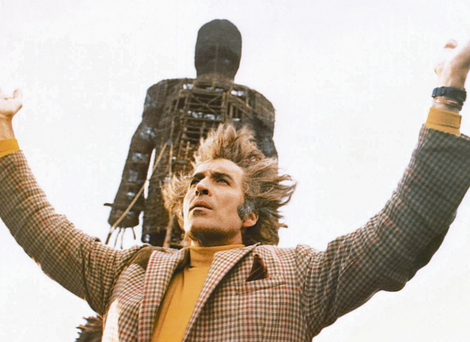 [/img]
Humans tend to be self organising.
Like fat lazy parasitic ants..?
When people have nothing they will accept nothing, in as much as Communism is a great idea when the majority have barely enough to eat, working for a central goal seems like a good idea. The problem with Britain at least is that all classes have the taste of luxury, and supply of food out strips demand. If suddenly there was no fuel and no supermarkets, I'd like to think socialist communities would sprout up, in reality I expect dictatorships will thrive.
not so much capitalism as the combatative/contradictory left/right carry on we've swung between for years. I think this prevents true long term planning/stategy and it seems to me that each side is deliberately and maliciously planting 'cost bombs' in any policies they manage to implement to prevent them being changed. I'm not entirely sure how this can be legitimately considered in the interests of the country, and sadly that is probably the crux, as I'm afraid that I think that there are lots of other interests being put before the greater good of UK plc.
The rich 1% of the worlds puopulation have a stranglehold on the power though, and they have a vested interest in maintaining a capitalist status quo. So for there to be any real change there would need to be a grassroots insurection on the scale not seen for centuries, if ever.
And there is little chance of that happening because, as far as I can see, because the masses have been indoctrinated into a capitalist and materialistic way of life, and starved of the real facts and denied an education that encourages them to think independently. I had kind of hoped the recent civil unrest might have been the start of things changing for the better, but it turned out to be for the worse - instead of protesting for a fairer and better society, they just went out and took all the materialistic things they've been told they want but can't afford. That might sound snobbish, but it's not my intention.
I still thing things might be coming to a crunch though. Growth can't be sustained once people either attain everything they desire, give up trying to attain it, or finally see through the capitalist charade for what it is and get bored of it. And if half of Europe goes bust, bringing donw several major banks in the process, a real revolution might just happen. Not sure it will be for the better though...
..the masses have been indoctrinated into a capitalist and materialistic way of life, and starved of the real facts and denied an education that encourages them to think independently..
So what else is there then?
Communism? Radical socialism? Anarchy?
Capitalism or some variant of it seems to be a pretty default state for humans. We naturally gravitate to towards hierarchical organisation, like any other social pack animal. And that hierarchy creates bosses and workers, rich and poor, haves and have nots.
that's a very lazy argument graham..
I consider it a realistic argument.
You can't expect people to give up capitalism if you can't offer a viable alternative.
A viable alternative? What about capitalism that works properly and benefits everyone rather than just a few? Whats that? I'm sure capitalism used to work, now it seems like its gone ****ing nuts. Too many greedy people?
What we have now isn't capitalism though.
Victorian Britain with its mills and factories (and owners and workers) and no welfare state is much closer to real capatalism. What we have now is weird hodge podge of capitalism, social protection and an increasingly regulatory government.
I'm not saying pure capitalism would necessarily be a good thing but its not what we currently have
Fair enough. Yeah I'm all for abandoning capitalism and replacing it with capitalism. 😉
What about capitalism that works properly and benefits everyone rather than just a few?
In the UK we mix capitalism with a healthy dose of socialism and state welfare. It's not perfect but we don't have many people starving to death so we're doing something right.
I wonder if capitalism would work better if it were illegal to charge interest? Make it impossible to charge money simply for lending money since money is just a means of exchanging goods and services without needing to directly exchange those goods and services. Owning shares and receiving profit based dividends I think is OK but charging money for money maybe causes some of the problems in capitalism?
I wonder if capitalism would work better if it were illegal to charge interest? Make it impossible to charge money simply for lending money since money is just a means of exchanging goods and services without needing to directly exchange those goods and services. Owning shares and receiving profit based dividends I think is OK but charging money for money maybe causes some of the problems in capitalism?
Not a bad idea. Certainly an interesting one. It would mean an end to banking as we know it. It would also mean an end to lending money in the traditional way. Business lending would probably still work. Instead of a loan you would need to attract investors (a global version of Dragon's Den if you like) but how would you buy a house?
Neither system is a complete solution IMHO.
However, the current system is unfairly weighted in favour of the 5% who earn a lot of money and who's real income is growing at a faster rate than anyone else's.
Normally, I'd be fine with that, however the rising cost of everything from transport to taxation means that the system is punative to anyone who isn't in that 5% bracket. This is wrong, especially in the light of Phil Hammond's comments about the HS2 high speed rail being priced out of the market for all but the very wealthy.
We need a rebalance somewhere. If you receive the average salary in Britain, you're amongst the top 1% of earners on the planet.
Capitalism is what fits into natural human tendencies I think.
My vote would be for social democracy as mentioned above. Let us get on with it as long as we don't take the pee too much.
Someone needs to be steering the ship otherwise it'll drift onto the rocks. Stop people being too greedy, and make sure we don't rape the environment.
I'd be quite happy with a socialist type government on two provisos; firstly that I still had enough cash to buy myself a decent bike every couple of years or so and secondly that I was the bloke in charge and decided where the money went.
Only one thing for it. Why not phone up Robin Hood and ask him for some wealth distribution 🙂
Feudal freemarket capitalism won't last much longer in the grand scheme of things... And personally I'd be amazed if the replacement whatever it may be works out worse. But at the same time, I accept it probably won't be an awful lot of fun to live through the migration period.
I wouldn't rule capitalism out entirely, it just gets a bad rap based on the current system which has run mad. (Which is a little like saying "Communism doesn't work, just look at Stalinist Russia") There are other ways, and evolution might be possible.
A rebalancing of reward is needed though, that's plain. And a sane and sustainable approach to growth and consumption- nobody can believe in expansion without end within a closed system.
And the freemarket ideology has proved itself as unsound as it is illogical, there is no invisible hand. And I expect that sooner or later the free market's inclination to self-destruct will outweigh nations' ability to shore things up, if we keep on as we're doing, and that won't be pretty.
It's been proved beyond any argument that the idea of the markets as a shepherd that would look after their own interests and in turn everyone else's was always delusional (and why did anyone ever buy it?) The free market unsurprisingly turns out to be a shepherd that kills the sheep in order to make it easier to shear them, then next year acts surprised when it's run out of wool. Then we give them more sheep because they can't be allowed to fall.
People say "What will replace it"- nobody knew what the effects stock trading and modern finance would have when they first emerged, and yet we ended up with the current world order as a result. None of the past systems of the world were planned in advance. Not knowing what happens next isn't a reason to tolerate what's wrong now and to commit such heroic efforts to supporting a system that isn't just unsustainable, but undesirable. There's no guarantee that we'll build something in its place- but there never was, and here we are.
All of history has been steps towards a better future... Sometimes faltering, sometimes backwards steps, but we can't just stop that process out of fear of what the next step might bring, because even if it proves a wrong one, another will follow it.
It doesn't really matter what colour manifesto you wrap it up in, any system that relies on constant economic growth is doomed to failure. So long as populations and expectations continue to grow faster than energy and resources, we're headed for a bust. This will happen no matter who we levargage the money from to pretend it's all okay.
Capitalism relies on the freedom to fail
The public are inherently greedy , but fear failure (naturally and perhaps rightly) and don't want to take personal responsibility for their decisions...
as an example, There's three banks I can put my money in - one pays better interest rates, twice that of the competition, natural greed indicates I'm going to choose that one, however "risk" tell me there must be a catch in the higher rate, and I know that if the bank goes bust, I'll lose my money, so I go for the safe bet and put my money in the boring low interest investment...
no, I don't do this, do I? - rather than accept this, I vote for a government that offers me the moon on a stick, says they'll regulate the banks, and if they fail, everyone else will underwrite my losses - now I've got no fear of failure, theres no "risk" so I invest my money with whoever offers me the best rate, and to give these rates, they lend money recklessly, without proper diligence, because if they go bust, there's no risk...
Capitalism does not work without risk - risk is the necessary counterbalance, remove it, and the "invisible hand" disappears, the system does not work. We have managed to combine the worst of capitalism and socialism into a hotch potch bastardised system that rewards recklessness.
Make no mistake, we do not live in a capitalist, free market system
Will I still be able to buy XTR gear cables and non-pariel capers in sea salt?
capitalist banks failed, bring back building societies
mature companies like supermarkets instead of always needing to expand and grow, exploiting farmers to reduce costs, low quality watery fruit and veg, could be cooperatives instead.
wetherspoons pub is destroying its brand by opening/buying more and more lowsy pubs in the need for greater and greater profits.
more Football teams owned by the fans.
yes TSY even under communism you would still be a tart 😀
We naturally gravitate to towards hierarchical organisation, like any other social pack animal. And that hierarchy creates bosses and workers, rich and poor, haves and have nots.
I think we may gravitate towards hierarchies but i am less sure we gravitate towards the inequities of capitalism the fact they have to onvest a great amount of resources into protecting their wealth [ police, armies, laws etc] would tend to suggest no one thinks this is the case
I think capitalism has some strengths but the iniquitous spread of resources and wealth in particular is not something that has any moral justification. We have individuals worth billions , we have companies with greater turnovers than many and yet millions/billions lack clean water , access to food never mind education or health - we in the west , even the poor ones, do well from this imbalance.
short answer, yes, defiantly.
I wonder if capitalism would work better if it were illegal to charge interest? Make it impossible to charge money simply for lending money since money is just a means of exchanging goods and services without needing to directly exchange those goods and services. Owning shares and receiving profit based dividends I think is OK but charging money for money maybe causes some of the problems in capitalism?[/quotespot on!
Capitalism does not work without risk - risk is the necessary counterbalance, remove it, and the "invisible hand" disappears, the system does not work. We have managed to combine the worst of capitalism and socialism into a hotch potch bastardised system that rewards recklessness.][/quote
Also agreed!
the problem is the greedy few, and the idea that you can make money from money. (what is known as "an economy"?)
for an economy to TRULY grow (ie: without printing money out of nowhere) another economy has to fail.
the rich get rich, the poor get poorer. It sounds like liberal/green waffle, but it is fundamentally true!
i really do honestly find it all very depressing 🙁
There was talk of making london a sovereign state a while back, which i thought was hilarious. Apparently london gives "so much" to the UK and the rest of us give nothing back.
would be amazing to see them fence themselves off, and then realise that while the rest of the UK provides nothing, all their products and services rocket in "price""a grand for a loaf of bread?! good job you have ALL that valuable money."
bring back building societies
Well, some of the mutuals never went away, but people chose to invest their money in other places paying higher interest rates - see my point above about lack of risk... put risk back in the equation, and the responsible mutual building societies were one of the safest investments out there!
yes TSY even under communism you would still be a tart
Well I'm in then!
Junky - apologies for not replying to your mail. I am still on for the 200 miler.
The problem with all human societies is neatly encompassed by Easter Island.
[url= http://en.wikipedia.org/wiki/History_of_Easter_Island ]History Easter Isalnd, [/url]
We are f***ed. We will destroy ourselves in the end.
Our races development and evolution under captialism is just far too stunted, war may have gotten us this far.
However humanity faces the choice of work together and create a set of circumstances with more potential than the useless idiocy that currently governs this world!
Or vanish from the face of creation like so many other complacent, delusional, visionless species!
A few thoughts:
1. No system is perfect, they all have their faults
2. Communism whenever it's been imposed on a country by a minority (China, Russia, Eastern Europe, Cuba) has eventually been rejected. I don't think you can describe China as a communist country. It's also involved the ruling powers murdering their citizens, sometimes in the millions let;s not forget. I don't think capitalism at it's worst can have that criticism levelled at it.
3. Capitalism reflects nature - so anything else is essentially forced
4. Communism seems to be able to work where like-minded people agree to it. No evidence of it working when imposed on a country AFAIK
5. Capitalism has periodic shocks built into it, usually by people forgetting the lessons of the past. The current situation and threads like this reflect a lack of confidence/unquestioning faith but IMO do not mean the system is unrecoverably bust. My Dad helpfully pointed out that we have some kind of crash every 20 years or so. Better we just remember this and live/plan accordingly IMO. Maybe go less nuts next time? We never abolished boom and bust. That was a scarily delusional thing for our PM to say esp one allegedly so well-educated on economic matters...
6. Just because the world power is moving from West to East doesn't mean capitalism is over. China, India, Brazil and the emerging economies aren't getting more power by adopting a new system, the global system will still be capitalism. It's just that we're not going to be top dog anymore. Which is ok in the grand scheme of things isn't it?
7. a good pt made ^^ IMO is that we don't live in the UK in a pure capitalist society so can;t say the system's bust when we've not properly tried it
8. Maybe this shock we're experiencing will encourage us to be a bit more thoughtful and less selfish/more co-operative? I swear London Village has become friendlier in the last few weeks. Kind of needing a big group hug 🙂
Capitalism reflects nature
Eh? Just because city types regularly appropriate the language of social Darwinism ("it's the survival of the fittest, the weak get eaten"), it doesn't necessarily make it so.
+1 the point above
Communism whenever it's been imposed on a country by a minority (China, Russia, Eastern Europe, Cuba) has eventually been rejected.
half your list still exist as communist countries - not sure that proves your point tbh.
No evidence of it working when imposed on a country AFAIK
nor of western liberal capitalist democracies - see iraq, afghanistan libya and parts of africa after the empires left and more recent attempts at the same.
we don't live in the UK in a pure capitalist society so can;t say the system's bust when we've not properly tried it
no one ever will as it is socially undesirable - dark satanic mills etc. Even the most avid capitalist wants a state to protect them from the masses and foreign enemies [ they have much to loose obviously] so we have taxation and the public sector. Eventually the poor force the state to do other stuff as we grumble about it and they expect us to go to war for them.
Social democracy - retain the capitalist means of production but all infrastructure managed by state.
One of the more sensible posts so far. Socialism / communism / collectivism / trade union type policies remove the rewards for hard work, taking risks and trying out new ideas. So no one does these things.
However, some things are a natural monopoly, like water, gas, electricity, broadband, trains. You can't have 20 lines going into every house. The current system is so full of regulations and rip-offs its almost comical. Who can make the cheapest TV, beer or cornflakes is different.
All of history has been steps towards a better future
no it hasn't,, as a species we can't even get past killing each other, although to be fair we have got much better at that, to the point where we can murder millions with the press of a button.
Humans are dumb Mofo's who will continue to muck it up until we wipe ourselves out through either over population or war.
It doesn't matter what happy shiny world we try to live in or what system we would love to run the world for the betterment of humanity, we are royally screwed until you can stop the human urge to behave like a hunter gather and fight over territory/resources rather than a become a mindless drone like hive animal
Zulu-Eleven - MemberCapitalism relies on the freedom to fail
<snip>
Capitalism does not work without risk - risk is the necessary counterbalance, remove it, and the "invisible hand" disappears, the system does not work. We have managed to combine the worst of capitalism and socialism into a hotch potch bastardised system that rewards recklessness.
It proves neccesary to state the bleeding obvious here... The groundwork for the banking crisis happened many years before it came to a head, and long before the idea of banking bailouts became a reality. Do you believe that financial institutions sat around making risky plans but "hey, it doesn't matter because the government will bail us out if we fail".
The idea that the risk was taken away and that they then failed just doesn't stand up to any examination. The reality is that they took enormous risks, and paid a price for them. The price wasn't total destruction, in most cases, but it still had a huge impact.
The bailouts have not been a get-out-of-jail-free card. The bailouts were a response to those risks and failures, not a contributing factor- cause traditionally comes before effect. They did not in any way contibute to the courses of action that led to them. Trying to blame the government response for the initial crisis is silly.
tazzymtb - Memberme: All of history has been steps towards a better future
no it hasn't,, as a species we can't even get past killing each other, although to be fair we have got much better at that, to the point where we can murder millions with the press of a button.
Steps towards, not steps to. We're not there yet. But would you rather be a medieval serf or a slave or a victorian servant than what we have now? In the west you almost certainly don't spend your days scrabbling to survive with every hour you have, before dying in your 40s. Is that not better?
Do you believe that financial institutions sat around making risky plans but "hey, it doesn't matter because the government will bail us out if we fail".
you're looking at completley the wrong end of the spectrum
I use the words personal reponsibility for a specific reason! its the people who put their money in those banks that were insulated from risk (and have been for many years now) - if they thought there was a risk, they would have been more careful about where they put their money, and the customer would therefore treasure the bank with the safest portfolio, not the highest return (which can only be founded on riskier investments)
People don't like taking personal responsibility - so vote in politicians that promise to insulate them from it... Economics is far too important to leave to the politicians.
"MORE people have climbed out of poverty in the past 50 years than did so in the 500 years before that. Life expectancies across the world have doubled in the last one hundred years. The global poverty rate has fallen from 25 per cent in 2005 to 12 per cent today. By 2015, it will have halved twice in twenty-five years. More women (and men) can read and write than ever before. Travel is cheap. Information is becoming free. And free market capitalism is the reason why.
But the Eurozone is collapsing and the Western economies are stagnating. Nearly every politician of every party believes that corporate bailouts, economic crises and long-term stagnation are inherent to our capitalist system, and that our future prosperity needs planned from above. But what caused the 2008 crisis, what is holding us back now and what is sowing the seeds of the next crash is not too much capitalism, it is too little of it.
Capitalism is change. At its core, it is every person trying to better their condition by engaging in exchanges with others.
Everybody has their own talents and ambitions, and only they know how to make the most of them. Top-down plans made by experts in government ignore this - they're about directing people towards the planner's goals, not their own ones. In economies that are planned by the state, to any degree, change is disruptive and bad. In capitalism, change is progress.
The free market provides a structure where experimentation is encouraged and rewarded, with all the failures and false starts that experimentation requires. To get the successes that capitalism has delivered so well, we need to endure the failures and adapt to changes.
Every successful change disrupts established practices and firms. Capitalism's great strength is that these disruptions give people better living standards and better hopes for their children. The benefits of economic change are enormous: the doubling of global food production in the last 50 years, mobile phones that now cost a day's wages instead of a month's, real wages in the UK tripling since 1945. But these can also be invisible and dispersed. The costs of disruption, meanwhile, are often visible and concentrated - easy to lobby against.
As a result, the biggest threat to free markets is no longer anti-capitalist ideology, but protection for special interests against competition - corporatism.
The struggle for free trade in the 19th century pitched a few believers in capitalism against the powerful landed interests of the time. The Corn Laws protected landowners against cheaper foreign imports, impoverishing the many but enriching the few. It took a broad social movement to overcome them and allow the forces of change to bring cheaper food to Britain.
Defenders of capitalism today face similar challenges. Across the economy, entrenched special interests use the state as a weapon to protect themselves from change and competition. Some banks have been given huge bailouts since 2008. Farmers are protected by tariffs and £3bn of subsidies every year. Planning laws protect property owners from developments that would increase the supply of houses. In countless other areas, established interests are protected by the state.
Like free trade, the controversial subject of free movement of people would disrupt the existing economic order and understandably meets fierce opposition from people at risk of change. But radical as the idea now seems, the productivity of a low-skilled service worker in London is around twenty times that of one in Lagos. A recent review of economic studies of open migration found that world GDP could increase by between 67 and 147 per cent if barriers to migration were lifted. The same spirit that possessed the free trade campaigners of the 19th century should invigorate open borders campaigners today. Capitalists have to be open to extraordinary changes to unlock the extraordinary power of humanity.
Corporatism in finance has brought ruin onto the world. Letting banks fail is messy, disruptive and ugly (though not as much as people think). But bailing them out creates moral hazard - it gives a blank cheque to reckless banks. Unless bad banks are allowed to fail, good ones cannot take their place. Preventing failure is good for established banks, but bad for everybody else.
Cheap credit created by central banks inflated the housing bubble that burst in 2008. The combination of artificially cheap credit and banks expecting a bailout led to the crisis. Money should emerge from markets, not be imposed by governments. Without radical changes to money and banking policy, we will sleepwalk into the next crisis, and it may be even bigger.
Somebody needs to speak up for the freedoms of the many against the protections of the few. Corporatism - not capitalism - was at the root of the last crisis and it will be at the root of the next one. Britain needs to reject protections for businesses. It needs a free market revolution."
Zulu-Eleven - MemberI use the words personal reponsibility for a specific reason! its the people who put their money in those banks that were insulated from risk (and have been for many years now) - if they thought there was a risk, they would have been more careful about where they put their money, and the customer would therefore treasure the bank with the safest portfolio, not the highest return (which can only be founded on riskier investments)
This doesn't make very much sense. The reason large banks are deemed "too large to fail" is has little to do with personal savers. And the reason that individual savers can't accurately assess a particular bank's security has nothing at all to do with government protections.
I'll tell you a little story that might illuminate this... My brother worked for a large bank, let's call them "RSB" to protect the innocent 😉 When the banking crisis began to arise, part of his job became "Finding out what happened to all that debt we packaged and sold".
As you might know, one of the contributing factors of the financial crisis was the "financial innovation" that led to debt being resold as investments- effectively rehoming and hiding financial obligations and risks. So Brother went off and started following deals and paper trails and discovered that a number of these packages had been sold and repackaged and resold and regraded so that, in the end, RBS had bought back their own debt. Yet when they sold the packages out, that was marked as a revenue and also a reduction in debt, whereas when they bought it back that was marked as an investment and a smaller increase in debt. In some cases, they'd bought back an old debt for more than they'd paid for it.
To put it simpler- the company had little idea of their own exposure. They'd joined in the system that enabled debt to be treated as an investment, thinking they were being clever, and they'd then bought the same debt back. They'd happilly said "We'll buy AAA rated packages, they're good investments" while the people selling them off were saying "Quick, get rid of this poisonous debt in a AAA rated package to some other mug"
Against this background you expect individual savers to make informed decisions about risk?
None of the major banks were considered risky investments 10 years ago.
The fact that the company had no idea of their own exposure is exactly why they should have been no protection for investors
That way, the situation would never have arisen, as the important selling factor for a bank to seek investment, was that they didn't partake in all sorts of nefarious activities like that - would you invest in a bank that didn't know its exposure?
The reason individual savers invested, is because they offered the highest rate (alarm bells!) but knew they were safe to do so... Instead they'd be putting their money in the sort of banks that didn't play around with 'financial innovation' - or for that matter, the type of banks that didn't offer people 125% mortgages at five times their income.
Zulu-Eleven - Memberwould you invest in a bank that didn't know its exposure?
How could you possibly know, when it came as a shock to the bank themselves.
Interest rates are not a good way to judge risk in a savings product, there are too many other factors involved (which is why a single bank would often have 2 equivalent products with different returns- no risk difference, just policy differences and setting rates partly based on the perceived market)
Here I'll do some wild supposition... I don't think you'd find any convincing correlation between savings interest rates and the financial security of the issueing bank, in the 5 years before and after the start of the financial crisis. I'm not going to even attempt to research it 😉 but I do know that RBS and HBOS didn't have the strongest savings offers running up to their collapses, nor did they have especially high-exposure mortgage packages