This is one of the great bits of correlation that STW provides with the number of people longing for the days where everyone had a job was well paid and had a great pension regardless of what they did vs. the Where The **** can I find XYZ 27p cheaper than somebody already making a loss on it.
should we pay them to keep going down a hole and scratch round at rocks all day long?
Of course not. But try putting yourself in the shoes of a highly skilled person of advancing age whose entire industry suddenly disappears.
Its easy to feel superior when you don't think it will happen to you.
Are you saying there is no demand for coal ?
Not at the prices we can extract and export it at!
Of course not. But try putting yourself in the shoes of a highly skilled person of advancing age whose entire industry suddenly disappears.Its easy to feel superior when you don't think it will happen to you.
I just had this conversation with a staff room full of postdocs. They all ascribed to the right wing, it's all their own fault viewpoint. No sympathy or critical thinking around the subject what so ever, which suprised me considering they're meant to be reasonably well educated.
Maybe I need to work at a better University.
Its easy to feel superior when you don't think it will happen to you.
Thankyou for your analysis of my superiority. In the last 15 years I have transitioned through 4 different industries to find employment. I know what it's like. I still couldn't justify funding uneconomic or pointless industry just to avoid telling somebody bad news. All it ends up with is more people doing it and more to upset. If you can't deal with it grow a pair.
I have not said that we should ignore it - refer to my first post, the answer is better education and training.
I HAVE said that there is nothing new about current levels - that is a value free observation supported by data. It's FACT.
Tom, I think we are saying the same thing, Within countries here have been pretty consistent recent trends towards higher levels of income inequality (one axis) but across the world (another axis) there has been a reduction in income inequality with low/middle income groups being the main beneficiary. The WB calls this trends "profound", so may I suggest reading it?
There is an on-going shift of economic power going on in which we are losing the battle for economic hegemony. If you are skilled you can still prosper, if you are not, you will suffer. Education, education, education as some bloke once said.
Tom, I think we are saying the same thing, Within countries here have been pretty consistent recent trends towards higher levels of income inequality (one axis) but across the works there has been a reduction in income inequality with low/middle income groups being the main beneficiary. The WB calls this trends "profound", so may I suggest reading it?
Two things
A) Different income inequality indicators can have different outcomes
B) The IMF data shows that within country inequality in almost all of the developing world is getting greater.
THM - If you were just making a technical point fair enough, but then your use of language and framing of the argument led us into this discussion somewhat - ie mid C20 lower levels of income inequality being an aberration - as I said there was lot of positive social reform at that time that is equally aberrant by your analysis.
On the technical issues, as you say, you need to be careful about how the analysis is constructed. There is much confusion post 2008 of how to interpret inequality and the damage it may have on growth - IMF in a major volte-face are now very big on the damaging impact of inequality - the paper by Ostry and Berg illustrates some of the developing thinking, but lots of talking and not much consensus is my analysis.
But all this seems of the original point.... I think it is beyond doubt that technological advance has been a good think for societies on average but can be damaging to industrial sectors, specific geographies and very much individuals. It is the role of governments to anticipate and manage that transition - but it is increasingly difficult in a globalised environment
(2) we have seen a reduction in inequality at the global level.
Globlal inequality is an entirely irrlevant statistic. What really maters to people is their income relative to their peers and their quality of life. A growing middle class in Asia may do wonders for global inequality stats but it does nothing for the quality of life in working class Britain or even working class Asia. It just means there are more Asian people who can afford to go on holiday.
jfletch - exactly, another example is Nigeria - just become the biggest economy in Africa, rapid growth in GDP through oil production. But wealth concentrated in an elite whilst most of country is still poor.
I still couldn't justify funding uneconomic or pointless industry just to avoid telling somebody bad news.
You said "pay them to keep going down a hole and scratch round at rocks all day long" there was no mention of "uneconomic" just the suggestion that they were not doing anything of any importance.
The economics behind the argument is very different, and all the consequences should be considered, including the long term effects of investment, the negative effects of importing coal, the increase costs associated with making people reliant on Job Seekers Allowance, subsidies such as Polish coal that we import receive, the lose of tax revenue, costs such as law enforcement, housing, etc, in deprived areas.
I have never heard a convincing argument in favour of dole not coal. The argument has always been political not economic.
J, go tell that to the team in the world bank focused on studying it!!!!
OD/Tom, it's not a technical issue it's just a fact. Easily observable. I make no comment on whether it is good or not. Of course the bottoming out in the UK occurred in late 79s early 80s, so people can draw their own conclusions there!!!
Tom, the OECD falls into the same trap of framing their analysis after 1980. It's still good stuff but misses the point entirely. Fortunately the WB does a better job. May be the authors there are of a certain age that allows them to look back far enough?
OD - true add Bz and SA to Nigeria.
But wealth concentrated in an elite whilst most of country is still poor.
But that elite is still less well of than the infamous western 1% so overall Nigeria's oil wealth might reduce global inequality. The poor people in Nigeria are screwed though as their relative purchasing power will go down.
Thankyou for your analysis of my superiority. In the last 15 years I have transitioned through 4 different industries to find employment. I know what it's like. I still couldn't justify funding uneconomic or pointless industry just to avoid telling somebody bad news. All it ends up with is more people doing it and more to upset. If you can't deal with it grow a pair.
Oh for heaven’s sake, I knew I shouldn’t have used the word “miner”. It still gets the Thatcherites frothing around the mouth and completely missing the point.
Yes I suppose I could “grow a pair”, but I prefer to feel some sympathy for people who “there but for the grace of God”.
The booming middle class in sub-Saharan Africa is one of the most powerful developments in global economics/finance. Ignore it at your peril.
Where do you think Bobbie Diamond has gone off to after canary wharf ?
Ernie, if you want to keep the industry going it takes more than a few more miners and brings heaps more into an industry that might not have much more of a future. I've just come back from somewhere that is pulling 60 million tonnes/year out of the ground and if aiming for 100 shortly. It makes digging round under bits of the UK uneconomic despite where you haul it from. The point is further reaching than a specific mining example, keeping an industry going to support a few jobs for those who are too old/stubborn to retrain is not a good idea. Especially if you end up sucking more people into that sector.
for those who are too old/stubborn to retrain is not a good idea.
I think they were neither. Abandoned would be a better description.
J, go tell that to the team in the world bank focused on studying it!!!!
OK, Maybe I was a bit flipant. It's relevant to understanding the global ecomony and how changes but it is entirely irelevant when discussing quality of life and purchasing power as we are now.
But again not of this is relevant to increased mechanisation. Income inequality is driven by the cumulation of capital and the income that can be generated from this capital outstripping that of making stuff. Mechanisation and automation increases the ammount of stuff that can be made for the same ammount of work, this reduces income inequality as seen during the industrial revolution.
The nigeiran working poor won't become more weathly by working in manual labour based factories. The might become more weathly if they can find work where mechanisation increases their productivity.
I think the boom time in the de-manualisation of British industries was in the 70's and 80's so the job losses are all comommonly blamed on Thatcher. Maybe she actually was a robot...
My bigger concern is what will happen when the computers figure out how to make people surplus to the needs of the economy...
I'd argue that the destruction of the mining industry was political rather then economic - to do with a wider reorientation of power between organised labour and government. That doesn't mean that change wouldn't have happened - but could have been handled differently
Well as the world progresses from a mine it burn it economy to something sustainable there will be a lot of people who risk being left behind, partly governments need to help them move forward but also they need to do the same. The old arguments of I was a ______ so I'm a _____ don't hold. We are heading for a change that will be huge in terms of how developed economies work. It will take a lot of political balls to deal with it rather than just prop up the current house price bubble that makes everyone think they are safe in retirement. for those of us with 30-40 years of work left it's going to be challenging and very different, so many of the old and wise benefited from huge growth and an economy based on manufacturing and natural resources with massive trade barriers and zero competition. Times have changed, not only are raw materials competed for but energy is expensive and intellectual property is global.
OK, Maybe I was a bit flipant. It's relevant to understanding the global ecomony and how changes but it is entirely irelevant when discussing quality of life and purchasing power as we are now.
Well we shall agree to disagree. 😉 understand these trends and new opportunities open up for us all, ignore them and.........
If they can make a Robot that can drive, test and commission power boats that's will be cool and then I can just test and commission them instead but probably get paid more. Win win
Well we shall agree to disagree. understand these trends and new opportunities open up for us all, ignore them and.........
OK. Maybe rather than saying it's irrelevant I should have said it's irrelevant in isolation. Increasing global inequality is neither a good thing nor a bad thing. But falling global inequality combined with rising national inequality is not a good thing.
[img]  [/img]
Chineese incomes may be rising faster than those in the west, reducing global inequality and the rise of the Asian middle clase is an economic effect that will impact the whole world, but it's not good if you live and work in rural China. Income inequality is rising in China.
This is an interesting ariticle regarding income inequality
http://www.washingtonpost.com/opinions/catherine-rampell-income-inequality-isnt-about-the-rich--its-about-the-rest-of-us/2014/03/20/0afe81ea-b040-11e3-a49e-76adc9210f19_story.html
Income inequality isn't about the rich. It matters not how much richer the rich get, but how many opertunities exist for the poor to get richer.
A name change is hardly going to affect behaviour of people who are holding the reins
Oh well, bloody revolution it is then.
The booming middle class in sub-Saharan Africa is one of the most powerful developments in global economics/finance. Ignore it at your peril.
Picking and choosing, again the global trend is that within country inequality is increasing. It doesn't matter if sub-saharan Africa or parts of Latin America are bucking that trend.
No one is disagreeing with that Tom, bury that bone!
Anyway plenty of money (income and wealth) to be made by focusing and addressing these trends rather than moaning about them. But then again, that's been part of my job for ages!!!! Happy to remain in isolation in that respect.
(Another small point, in the past few years income inequality has been falling again - another FACT - but let's not let that get in the way.)
I bet you robots won't be able to have an argument like an STW argument. Question is, how do we monetise this collective skill? 😀
Picking and choosing, again the global trend is that within country inequality is increasing. It doesn't matter if sub-saharan Africa or parts of Latin America are bucking that trend.
Working a lot on SSA the income is not trickling down, there's just a small niche uber class who are absolutely minted and then a mass lower class who still are only one case of malaria away from starvation...
Very similar to South Africa were very little has changed other than the ruling class is now all ANC rather than Boers. The poor still live in shanty towns swimming in their own shit when it rains...
[b] Working [/b] a lot on SSA the income is not trickling down, there's just a small niche uber class who are absolutely minted and then a mass lower class who still are only one case of malaria away from starvation...
Economist?
Anyway plenty of money (income and wealth) to be made by focusing and addressing these trends rather than moaning about them.
I agree, you're still not making your opinions as clear as you usually do though.
FF, we must work in different parts of SS Africa then!!! Sack your economists.......
Reminds me of a trip made in late 1990s with thick US investor to an African mortgage provider. Cue question from said investor, "why do these people need mortgage when they live in mud huts." Took me 12 months of apologising on HIS behalf before we could get another meeting with a better informed investor. And I was doing it as a favour - that was a lesson learned. Don't take other peoples clients to meet companies without checking that they are not pig-shit ignorant!!!
They're gonna want a union soon
Oil break that's dead on noon.
"why do these people need mortgage when they live in mud huts."
Is it to pay for the digital satellite TV ?
[img] 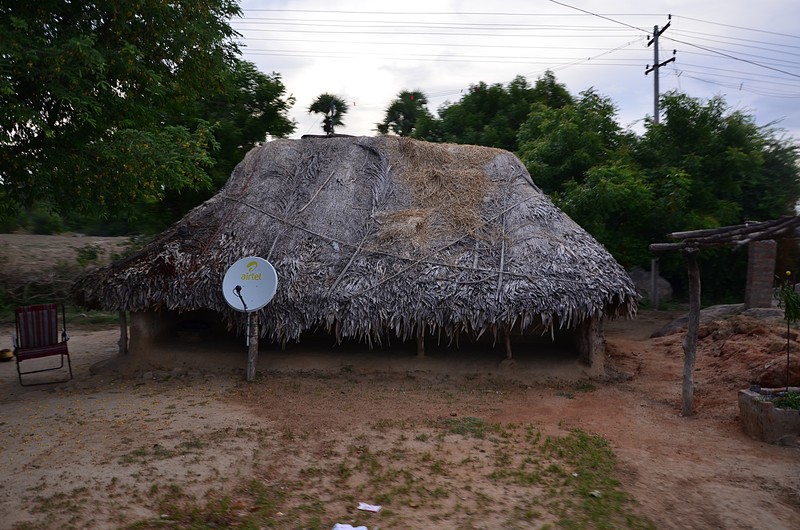 [/img]
I bet they have a huge flat screen TV in there. And that they spend all their cash on fags and cheap lager.
I bet you robots won't be able to have an argument like an STW argument. Question is, how do we monetise this collective skill?
I dunno, ask Mark 😉
I bet you robots won't be able to have an argument
Actually, argument theory and argument graphs are quite a useful part of AI/agent reason, some light reading on the matter:
Monetizing argumentation, well there are a few problems you can apply it to.. it's basically a way to structure and validate reasoning through simple logical rules. Effectively you can argue withyourself to decide how to do something...
Of course not. But try putting yourself in the shoes of a highly skilled person of advancing age whose entire industry suddenly disappears.
Sorry - I'm sympathetic to the 55 year old miner etc etc but surely the majority of them wasn't "highly skilled" in the sense that that term is used in the labour market? (And is 55 that old...?)
It's one thing to say "get another job" when there's a strong job market. But we're not seeing large scale job creation any more in the west, and so it's not as simple as moving to a different career path (as if that were ever very simple).
I don't know if that ^ is supposed to be a response to my post.
That's a response to everyone who says "just get another job".
Depends which sector though, engineering in the UK is crying out for people. I just had a quick look on a couple of companies websites one had around 100 vacancies across the UK and the other around 120. I bet we are short in other areas also, like science teachers. There are jobs out there but no one is going to gift them to you.
No it depends on priorities. There's always work to be done if the commitment is there. There aren't enough people in the world to do all the things which could be done and which could make the world a better place.
For example the skills shortage in construction despite what some would like us to believe is fairly minimal, it's certainly been far far higher in the past, and yet there is now a desperate shortage of housing quite simply because the commitment to build housing isn't there.
There could be a huge increase in employment in the construction industry if more homes were built, the fact there isn't is because our priority is not to build more homes, even though they are needed.
The same is true across a whole range of industries and professions - schools, the environment, energy, public transport, etc, could all employ vastly greater numbers of people if the priorities lay there.
Economics is always about choices and priorities, although we are told that it is about scientific fact and truths, by people with their own agendas of course.