Seen a few references to this recently and I can't remember what the definitive answer was, searched the forum with no luck.
So....will it or won't it?
You need to ask?
no it won't. End of thread.
It will, apart from on Tuesdays.
YES, for crying out loud, YES!
Pook, why not?
Ian, the sex of the plane is not an issue.
It's been done, with a model aircraft. Yes, it does take off. You've gotta be a bit retarded to think otherwise too, being as a plane isn't driven by it's wheels..... 🙂
Actually, the initial stipulations are hazy. Are the engines on but the conveyor belt is going in the opposite direction....someone fill me in.
no
Only if it has wings
Yes, the definitive answer is yes. Anyone who says no is WRONG!!
End of thread.
being as a plane isn't driven by it's wheels
That's the important factor!
Of course it would, it would need the conveyor belt to be the same length as the runway, it does not, as some seem to think, make it suddenly possible for planes to take off on the spot!
It depends on how you conceptualise the conveyor belt.
I can't find the original thread, but its a funny read!
[url= http://mythbustersresults.com/episode97 ]Plane & Conveyor Belt - Mythbusters, video included[/url]
[img]  [/img]
Ah wings hit the treadmill...
wind speed over the wings = 0 as it is stationary (im assuming its stationary otherwise whats the point of the q?)
0 wing speed = 0 lift.
if it isnt stationary then yes. but then its not really on a converyor belt is it? its 1000m meters away having hurled off into the distance...
The point is, with the engines running it doesn't make any difference... sod it. I can't be bothered.
Yeah... and then you turn the engines on and it moves forward!
The conveyor belt can continue to move backwards at the same rate the plane moves forward, all that happens is the speed the wheels are travelling at is double the groundspeed of the plane.
Am I missing an ironic in-joke?
Although groundspeed will be simulated by moving the wheels, this won't create any lift, as air won't be travelling over the wings.
Therefore it won't take off. Isn't it obvious?
Perhaps with a tiny model plane the surface of the conveyor belt will cause sufficient friction with the surrounding air to move a small body of air in close proximity, but this would be pretty limited.
Plane in a wind-tunnel would be a different matter.
Cheers, Rich
Put a model car on a treadmill and push if forward with your finger. Does it move forwards? Of course it does.
[url=
[/url]say YES!
Nurse, my pills...
What if the conveyor belt is moving backwards (relative to the plane) at the plane's take-off speed?
Rich, yes you are missing something.
The planes wheels aren't driven!!!
The engines move the [b]AIR[/b]
It's a classic misdirection in the question.
What it should really say is "If you put a plane on a very powerful, very long, very wide treadmill and fired up the engines, then would the treadmill operator be able to prevent the plane taking off by running the treadmill in the opposite direction?"
To which the answer is most definitely, NO, they can't. The plane will be able to take off as normal.
This was about a real plane on a hypothetical 10000ft conveyor, not model planes and treadmills!
And of course it will, I don't get why people can't understand that!
Although groundspeed will be simulated by moving the wheels, this won't create any lift, as air won't be travelling over the wings.
Why would you simulate movement with the wheels!? The thrust will push the plane forward, the wheels will be moving quicker than the plane.
The point you're all missing is that the little tug truck wouldn't be able to pull the plane onto the conveyor belt in the first place as its wheels would turn at the same speed as the belt and it wouldn't go anywhere.
The crucial point is whether you conceptualise a treadmill (moving under the plane and just spinning its wheels) or an actual conveyer belt which physically moves the whole plane.
More to the point if the plane falls off the conveyor belt, who should zaskar sue? 🙂
Ahhh, but if you put your luggage on a conveyor belt some of it will turn up in Alacante three weeks later, the rest well end up on the carousel, empty, with your pants snagged on everyone elses luggage
IanMunro - MemberMore to the point if the plane falls off the conveyor belt, who should zaskar sue?
LOL!
More to the point if the plane falls off the conveyor belt, who should zaskar sue?
😆
IanMunro - MemberMore to the point if the plane falls off the conveyor belt, who should zaskar sue?
LOL!
+1
The crucial point is whether you conceptualise a treadmill (moving under the plane and just spinning its wheels) or an actual conveyer belt which physically moves the whole plane.
Does it?
- Plane sits on the conveyor
- conveyor starts moving
- plane moves backwards
- plane power up engines
- plane stops moving, although wheels continue to rotate
- thrust exceeds treadmill speed, so plane moves forwards
- plane takes off
It's just incredible to me that people don;t get this 🙂
+1 for GrahamS rewording of the question to remove any ambiguity.
Now.. imagine you replace the wheels of the plane with little hovercrafts so the plane isn't rolling on wheels at all but is in fact floating an inch of the tarmac...
🙂
Will a plane take off in a windtunnel?
ie if the engines aren't on but you fire wind at it really fast, will it start to fly?
[i]Now.. imagine you replace the wheels of the plane with little hovercrafts so the plane isn't rolling on wheels at all but is in fact floating an inch of the tarmac..[/i]
What a bit like a Harrier?
Surely it's not time for this thread to happen AGAIN?!
ie if the engines aren't on but you fire wind at it really fast, will it start to fly?
Yes
Of course not because the wheels won't be going round 🙄
Although if it was 4x4 it might, with locked differentials'n'all.
The Southern Yeti - MemberWill a plane take off in a windtunnel?
ie if the engines aren't on but you fire wind at it really fast, will it start to fly?
if you could stop it moving backwards without restricting up and down movement...yes
( although i think planes rely on the thrust to help with lift though - maybe wrong here)
It's simple. The conveyor belt is irrelevant.
If its a very long treadmill then the aircraft will take off ie the treadmill would need to be the same length as a standard runway. However you would need pretty damn good tyres as the wheels would be turning at some speed by the time the aircraft took off.
"ie if the engines aren't on but you fire wind at it really fast, will it start to fly?" Yep that would be one of them glider things...
The engines on a plane create thrust, but dont actually make the aircraft take off its the air moving above and below the wing (as the thrust from the engines propells the aircraft forward) that causes the aircraft to take to the air. Engines are not needed to keep aircraft in the air, they just keep it moving forward enough to keep the air flowing around the wing.
It's simple, the conveyor belt is always irrelevant.
However you would need pretty damn good tyres as the wheels would be turning at some speed by the time the aircraft took off.
So if the friction in the wheel bearings led to the undercarriage catching on fire, and the whole plane going up in a massive fireball: in that case, only bits of the plane would fly. So the answer is a partial yes, not a full one?
Rotation speed of the wheels would be twice that of normal. Normal take-off speed is in the region of 160mph so the tyres and wheel bearings would need to be rated to 320mph.
So... can a sea plane take off from a fast flowing river? 🙂
[img] 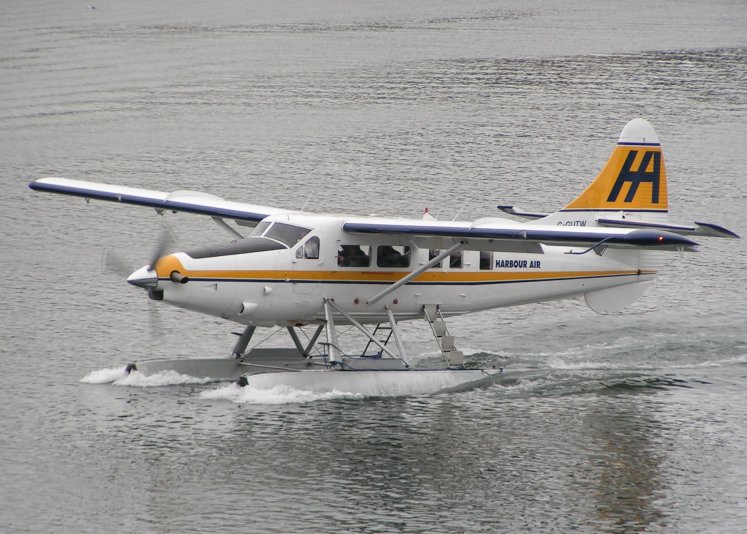 [/img]
Probably a little less for these beasts 🙂
[url]
More worryingly than this being debated on a bike forum...
This question caused a very long debate over on both Pprune and airliners.net with even professional pilots arguing that the plane wouldn't take off. I might ask the captain next time I board a Ryanair flight - if he says no I'll re-book!
You'll have to pay £20 to talk to him though, and another £30 to get an answer.
Flaperon - Member
YES, for crying out loud, YES!
With a name like Flaperon, if he says yes, then YES!
You'll have to pay £20 to talk to him though, and another £30 to get an answer.
Sadly, that's so very, very true.
when I read the question I assume that the plane is not moving in relation to the ground (as a person running on a treadmill is not moving in relation to the floor of the gym). Therefore there is no air moving over the wings, therefore no take-off.
eckinspain - a person requires their feet to be in contact with the ground to move - hence, if the ground is moving at the same speed but opposite direction to that which they are trying to run at, then they will remain stationary - same as a car on a rolling road.
Ask yourself whether the plane uses it's wheels to propel itself forward while attempting to take off or whether it uses the big spinny thing attached to the engine and whether that big spinny thing is concerned about what's happening to the wheels? 😀
No, the tyres would explode.
Edit: With LHS et al...
what if both plane and treadmill were inside a vacuum?
Terrible news, all you stats/offspring puzzle fans:
I think (allowing for bearing friction & safe tyres) the plane will take off, therefore clearly that is the wrong answer 😕
Now, if the pilot was a traveller and the passengers all bankers or MPs, would the weight of stw opprobrium allow it to take off ?
Stumpy - Ask yourself if the plane is flying from the moment it starts to move forwards or has to reach a certain speed before the effect of lift can overcome the force of gravity?
I find these threads immensely entertaining.
Ignoring peripheral silliness about wheel bearings and tyre ratings etc. I really can't understand how anyone would think the answer is no.
Stumpy - Ask yourself if the plane is flying from the moment it starts to move forwards or has to reach a certain speed before the effect of lift can overcome the force of gravity?
Eh?
The plane will not fly until the air moving over the wings reaches a certain speed. It is almost immaterial as to whether the plane is actually moving (e.g. stationary plane, very strong head wind).
Assuming this 'experiment' takes place on a totally still day, then the aircraft will have to obtain a ground speed high enough that the airflow over the wings creates enough lift to overcome gravity.
EDIT - should have said that the wing will start to overcome the force of gravity from the moment that the aircraft gains enough speed for it to generate 'some' lift. At this point, the plane will start to become 'lighter' (if we imagine a runway that not only has a conveyor attached but a giant set of scales under it). Eventually the plane will be going so fast that the lift=the weight of the aircraft and any further increase in speed will cause the plane to fly.....
So how does it reach that speed if the ground is always moving back at a speed greater than the speed at which it can propel itself forwards?
The Southern Yeti - MemberSo how does it reach that speed if the ground is always moving back at a speed greater than the speed at which it can propel itself forwards?
why does the speed at which the ground is moving backwards have any effect whatsoever on the speed at which the plane can propel itself forwards?
FFS, THE GROUND SPEED IS TOTALLY IRELAVANT!
A plane will only fly given sufficient AIRSPEED.
Gravity?
Why won't my jet propelled bike link work? Anyhow, will a jet propelled bike go forwards on a tread mill going backwards at the exact same speed or stay still?
Forward
(and if it doesn't then you really need to grease your hubs).
If you tie a bit of string to the front of the plane, then [b]pull it forward [/b]by that string (imagine God is pulling on the string...) - does it matter one bit which way the wheels are moving? Forwards/backwards - as long as the plane is moving forwards, the wheels don't matter (neither does the floor).
Now - imagine this - it's [b]NOT[/b] God pulling the string, but [b]propellers/jet[/b] pulling the plane.......
Geesh - how hard is it to get!
DrP
[i]Put a model car on a treadmill and push if forward with your finger. Does it move forwards? Of course it does.[/i]
That explains it perfectly IMO. Unless there enough friction in the bearings it doesnt take any more effort to push either. Put plane in place of model car, and plane engines in place of your hand. Or am I getting it wrong?
Edit: Dr P's explanation is good.
Oh no - I tried for so long not to post on this thread & now I can't stop.....
The Southern Yeti - Member
So how does it reach that speed if the ground is always moving back at a speed greater than the speed at which it can propel itself forwards?
You've kind of answered your own question there.....'propel itself forwards' is what you wrote....
How does it do this??
Does the plane rely on:
a) the wheels which are just fitted to free spinnig hubs so the plane has something to sit on & move around the ground on, or
b) the great big propeller/jet engine that has no contact with the ground and pushes heaps of air backwards
to propel itself along.....??
If your answer is a) you are wrong.
If your answer is b) you are correct.
Considering that you went for b), then the little wheels can be doing whatever they want against a conveyor/hundreds of marbles/zilions of ants running the wrong way but the propeller/jet engine is still gonna be pushing air backwards causing the plane to move forwards.........
HAHAHAHA, can I ask another question?
no.
Right people - stop being thick. Newton's 3rd Law explains it all.
.....?
Strain = (L'-L)/L
or am I looking in the wrong book? 😉
The every action having an equal and opposite reaction one... If people the people on here that say the plane wont take off are correct how are vertical take off and space travel possible?
The whole reason Hovercraft can't fly but can only get a little bit off the ground is because they don't have any wheels.
But would it make a sound?
Depends on the Doppler effect. How fast is it moving? And how fast are you moving?
Vertical take off and space travel do not rely on airspeed in the same way as an aircraft does. They basically use brute force from the engines to overcome the gravitational pull of the earth.
They use thrust from the engines to move the plane against the [b]AIR[/b]
Just for anyone who missed that
[b]ITS THE REACTION AGAINST THE AIR[/b]
for clarity
[b]THE WHEELS AREN'T POWERED[/b]
🙄
wait - so if the plane and conveyer belt was in a vacuum it wouldn't be able to take off? yeah, right!
What about if the plane is full of Americans on their way home from Disneyland?
The rocket itself is 'pushing' against the inertia of the propellent which is being ejected.