UPDATE: Reviews section refreshed, redesigned, searchable: Go take a look
Right next to the page where people claim there is no impact from mining for lithium
Dude, you’ve lost me with that comment. You’ll need to try harder than that to wind me up, have a great day 😉
What’s the 10 year cost of running your car?
I can tell you for 8 years and 80,000 miles.
2011 Toyota Aygo - £10,000
Servicing - 5 services at average of £150 (first 3 services free) - £750
Maintenance - Front discs, pad, rear silencer £250
Petrol - 60mpg for 80,000 miles at cost of £7,000
Total cost for 8 years motoring include purchase of car £18,000
Now show me where I can get an EV that is cheaper. Yes, you won't be able to which is the sole reason I don't have one. Just bought a new Aygo a few months back and if there was an EV option for same price I would have bought one. However even if they made one if would be £10,000 more which I would never get back.
What’s the 10 year cost of running your car?
I have a 2006 Honda Jazz with about 40k on the clock. I needed it for a previous job when I did about 10k per year, and just keep it because I already have it and it's convenient to have a car available. If I didn't already have it, I wouldn't bother owning a car at all. I currently do about 250 miles per year (literally). With such a low mileage, a hybrid or EV would have cost more over the life of the vehicle. An EV would be perfect for the tiny amount of city driving I do, but much cheaper to just use a taxi occasionally than to buy a new EV.
I think it's fair to see that's quite an extreme hols2.
At the current rate of wear on Zoé the rear drum brakes will last the life of the car and the front discs will rust away before the pads need changing. The regeneration provides all the braking I need above walking pace.
By the time a Prius or Zoe is on the showroom floor it’s as polluting as a small 16v ice car being built and run for around 8yrs.
Even with Germany's brown-coal-filthy energy mix the Fraunhofer institute found EVs have a lower CO2 and environment impact than ICEs and produced break-even comparisons with petrol/diesel/hybrid equivlants - all reported on German TV with journalists who were not sympathetic to EVs. The EVs always won in the end, and quite quickly in comparison with petrol on CO2. Compared with diesels, powerful EVs such as the Tesla S took over 100 000km to break even on CO2, but you don't buy a Tesla because you're worried about the planet you're leaving to your kids.
Don't forget that when you burn diesel/petrol the CO2 figure announced by the manufacturer does not include the CO2 released in extracting, transporting, refining, transporting and storing that fuel. Many comparisons conveniently forget invoncovenient truths about the oil industry.
I think it’s fair to see that’s quite an extreme hols2.
Different people have different circumstances so they will make different choices. EVs will be better for some circumstances, not better for others. As the technology improves, they will become more widely adopted, but assuming that they are better for everybody is silly.
assuming that they are better for everybody is silly
No one does assume that.
The average life of a UK car has only recently risen from 8 to 10 years
Exactly average. If you make 8 the effective max age the average becomes a lot less. 8 years comes from the the requirement life span of batteries of electric vehicles. The desegregation comment comes from practical experiments and observations. See my link in first page. Making cars (or a major component) more disposable is not a good thing. I agree with a move away from ICE but there are some very serious problems with battery technology currently. The industry of course need more people in electric vehicles to invest more in the research.
This is the most objective analysis I can find in English from surprisingly humble source.
https://www.autocar.co.uk/car-news/industry/not-so-green-truth-about-current-car-co2-legislation
This is very important to keep in mind when you are looking a the graphics:
Battery-electric cars still produce less CO2 during their lifetime than petrol and diesel cars, based on 500g/kWh of CO2 emitted during electricity generation. In fact, the UK National Grid is much cleaner today at around 300g/kWh, making battery EVs even cleaner too.
Anyone got the 8-10 year cost of oil, filters etc. for their car?
~ £1000.
Like Edukator says BEVs do reduce CO2 emissions regardless of what's generating the electricity. Its an expensive way to do it but it works and will lead to greater CO2 reductions in the future as power grids are decarbonised like what is happening in the UK. BEVs are the future its just a question of when. Personally I think it will come sooner rather than later. Electric drive trains will be cost equivalent to ICE around 2022. After that they will keep getting cheaper so why would you pay extra for an ICE vehicle? Also most new cars these days are bought on finance. There will come a point where it will be difficult to get finance on an ICE vehicle as there will be too much uncertainty regarding the residual value. Also there will be social pressure when your neighbours who are running BEVs ask you why you are poisoning their children and killing baby robins with your nasty ICE.
However even if they made one if would be £10,000 more which I would never get back.
😂 nice random figure.
Different people have different circumstances so they will make different choices.
Well I'm glad we have represented the 2 sectors of driving 700 miles non stop through rural alaska or Australia avoiding all petrol stations towing boats/caravan/children* and people retaining a car paying tax/insurance/servicing for 250 miles/year.
So apart from you 10 people......
Good comparison Kerley nice to see some people actually have the numbers!! the purchase price of something like the Zoe pushes it over the comparison there, it doesn't have to go down that much to get it closer, the very small petrol car is going to be the end of the market that is going to stay ahead on the comparison for the longest at this point.
*Delete as appropriate
edit - not wanting new?
https://www.autotrader.co.uk/classified/advert/201811232688063
https://www.autotrader.co.uk/classified/advert/201812223434393
Some used ones coming around, given the battery is lease and replaced as part of it not a bad deal for some people
We have a car, standard STW issue diesel Octavia. Generally do about 15k miles a year. This is a mixture of a 15 mile commute, when I'm not able to cycle; work travel which can be anywhere in the country and personal travel, up to Scotland, seeing relatives in the West country, trips to Wales that type of thing. I live pretty much slap bang in the middle of the country.
Would love to get an EV as the next car, instant heat on cold mornings, pre-heat all that kind of stuff. However there are a few hurdles for me.
1. Cost - I can't justify the cost of a brand new Tesla. Even a brand new car. Normally buy them at a year or two old.
2. Infrastructure - I live in a Victorian house. This means I don't have a drive. No lamp post near the house. Closest is over the road about 50 yards away. So to charge my EV I'd need to run a cable across the pavement to the car, or we'd have 8 houses sharing one lamp post charger. So ultimately I'd need good infrastructure to charge up whilst out visiting people, car parks, that kind of thing.
As far as range is concerned I'm not bothered. With things like the Tesla super charger I'd quite happily take a break, whilst charging.
Surely the future is self driving cars that you just hire on a per journey basis, rather than owning. This would suit us as some weeks the car will sit on the road for 3 or 4 days whilst it's not being used. Waste of money.
One of the biggest issues people have with getting their head around EV adoption is that they conflate battery capacity with petrol tank capacity. It’s not the same thing, unless you happen to have large fuel bunkers at home. We have had our Leaf for over a month now. It gets used every day, for school runs (16 miles each way twice a day) commutes (similar) and shopping and general S,D&P use. Not once has it been charged anywhere but at home. Unless you’re use involves driving further than 150ish miles before returning home (I’m sure some people do this, but I suspect it’s a vanishingly small percentage) then this car works well as a family motor. It’s lovely, quiet and relaxing to drive, too (I wish I got to drive it more; partners car). And the ability to preheat on a cold morning, that’s almost worth it on its own. Financially, it’s working out significantly cheaper than the car it replaces, a diesel Skoda Fabia estate. We have another car in the household that can do the longer journeys if need be, but I imagine this will be a couple of times a year or so only.
Petrol – 60mpg for 80,000 miles at cost of £7,000
you get 60mpg all the time? hmm, shame I would feel like I am about to get squashed in one.
No one does assume that.
So apart from you 10 people……
LOL you missed the joke there!! Seriously you are picking out the most extreme of examples there.
Seriously you are picking out the most extreme of examples there.
They aren't that extreme. Plenty of people keep a car for convenience but do a low mileage. In rural areas, plenty of people need a vehicle with a range of more than 200 miles and that can be filled with a can of fuel. Not everybody, but quite a few people. Besides those, there are all sorts of other circumstances that lead people to buy different kinds of cars, hence the enormous range of vehicles on the market. EVs make good sense in some circumstances, but just writing off the needs of anyone who disagrees with you is the kind of arrogant smugness that makes a lot of people loathe environmentalists.
Define plenty in ratio to the avarage and why people in rural areas need a 200 mile range and a can of fuel?
Battery-electric cars still produce less CO2 during their lifetime than petrol and diesel cars, based on 500g/kWh of CO2 emitted during electricity generation. In fact, the UK National Grid is much cleaner today at around 300g/kWh, making battery EVs even cleaner too.
Meanwhile, back at the ranch...
https://www.wired.co.uk/article/lithium-batteries-environment-impact
EVs make good sense in some circumstances, but just writing off the needs of anyone who disagrees with you is the kind of arrogant smugness that makes a lot of people loathe environmentalists.
Hence I'd like to see people being able to log their journeys and see what EV would have worked for them, what the alternatives are and what compromises they might need to make. I have to say I think it would surprise a lot of people.
https://www.renault.co.uk/vehicles/new-vehicles/zoe/motor.html
a 50% charge on the Zoe is 1hr, 75% 1hr 30, given 200 miles of motorway cruising will take you about 3 hrs is it an inconvenience to have a break if you need to go another 150? That 200 mile range would get me from Manchester to Glasgow - it's a fairly big range for the UK certainly. the bigger cars with 300 mile ranges get you a hell of a way.
Not that many people drive for that long without stopping for some reason.
For city dwellers (like me), an EV is fine, but people who live way out in the sticks
Or on the 20th floor !! In many cities most people live in apartments or housing with no offroad parking.
On the ranch of radical right-wing, let-the-oil-industry-get-on-with-polluting, damn those pesky environmentalists Wired magazine, Essel. Get a grip man you'll be falling for the lies and voting for Brexit next. 😉
But seriously, lithium like any natural resource makes a bit of a mess when you mine it. Oil on the other hand makes a hell of a mess extracting it trasporting it and refining and screws up the climate when you burn it.
There is an ad at the moment for the Corsa, playing on the perceptions of nothing being included on the base model of a car. Flip that around to ICE vs EV. Yep the battery could need replacing at 8 years.
Trouble is, EV’s haven’t been around for long enough to get any real data on battery life, but I did read something a while back about a Tesla used by a car hire company in LA going back to Tesla because the battery wasn’t holding a charge like it should. They discovered that the problem was down to a software issue, and an update sorted it. However, they swapped out the battery for a new one anyway, as the car was only about three years old.
It had done 300,000 miles! Now, extrapolate that out, and how many people own a car long enough to rack up that sort of extreme mileage? It could be argued that as battery tech improves, the battery pack could theoretically last the life of the car itself.
The economics of EV don't work for us despite the fact Mrs OD's car does mainly short suburban journeys with the odd 120 round trip to my folks so EV range is really not an issue. I have a van which does all the bike/surfing/climbing (longer) trip mileage
At 5/6000 a year on the car the saving on fuel/VED doesn't cover the extra up front cost of an EV. This will be the same for lots of people for whom EVs would work really well otherwise.
It's these sums that will determine how quickly EV sales grow.
I'd really like an EV as I'm a tech head generally and hopeless early adopter - but also too much of a tightwad!
why people in rural areas need a 200 mile range and a can of fuel?
Or on the 20th floor !! In many cities most people live in apartments or housing with no offroad parking.
Apartments tend to come with parking - in fact it's probably the easiest place to include charging points (if standardised) as each space gets allocated and billing will be easy. However they are mostly the people who don't actually need to own cars
http://www.co-wheels.org.uk/salford
We have these dotted around, enterprise do one too. just book it and go, they are increasing their electric fleet too as you can just put the charger in their reserved spaces.
You need a bit of a brain reset sometimes but that will come along soon.
Ah another extreme.
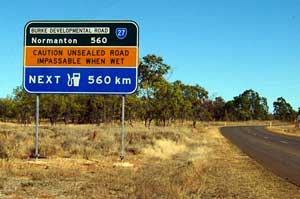
Thanks Hols, Normaton ****ing North Queensland, population 1,210 or 0.0048% of the Australian population, as previously "Rural Population" in Oz is 10% of the total or about 2.5 Million, the ones you are picking up there are the very extreme minority, do you know the driving habits of the people up there? How often they do the 6-8hr drive out down that road? keep going with the 1% examples from either end it's entertaining
Where can you go more than 200 miles in the UK without seeing stuff?
Ah another extreme.
So any real world example that doesn't match your imaginary world is dismissed as an extreme. Guess that's why you're always right, in your imaginary world.
top 10 environmental disasters:
Chernobyl
Bhopal
Kuwaiti Oil Fires
Love Canal
The Exxon Valdez
Tokaimura Nuclear Plant
The Aral Sea
Seveso Dioxin Cloud
Minamata Disease
Three Mile Island
No lithium mines in there, or wind parcs, or solar panels, or wave generators, or hydro dams or...
So any real world example that doesn’t match your imaginary world is dismissed as an extreme.
No it's just you keep posting extremes which we've not argued don't exist just that you know they are extreme.
So any real world example that doesn’t match your imaginary world is dismissed as an extreme. Guess that’s why you’re always right, in your imaginary world.
No we just don't base what works on the 0.1%, the technology is good enough for the majority of people, the tech is there to implement now to get people out of ICE vehicles in a vast majority of cases. There are things to sort around home charging for people and a bit of a modification of expectations for the small number of super long journeys - but hey we might see an improvement in road safety if people are forced to rest for a little longer when committing to 5-6hr journeys.
Of course the population of remote towns in the far north of queensland will not be the first to pick them up but for the driving a lot of those people do locally it might actually work for the majority of their driving, add in a great solar return and maybe they could be doing local driving for free, ironically these are areas with 100% electrical coverage and the space to park and charge at every house. The main power lines probably follow that road quite well too so to add some charging points along there wouldn't be that complex.
you keep extremes which we’ve not argued don’t exist that you know are extreme.
There are tens of millions of people who live in rural areas in places like Texas or Australia who would not find EVs suitable for their needs. To you, those are extremes. To them, it's normal. Living in a European city is different, but don't assume that EVs will meet the needs of everyone.
There are tens of millions of people who live in rural areas in places like Texas or Australia
And these billions who don't.
don’t assume that EVs will meet the needs of everyone.
I don't think I've said that.
There are tens of millions of people who live in rural areas in places like Texas or Australia who would not find EVs suitable for their needs.
There are actual stats on that. 2.5 million in rural Australia and the vast majority of those are nowhere like that example. As for Texas about 3 million in rural areas so we are up to 5 million there not 10s of millions.
Streuth!
For the entire United States:
“Rural areas cover 97 percent of the nation’s land area but contain 19.3 percent of the population (about 60 million people),”
https://www.census.gov/newsroom/press-releases/2016/cb16-210.html
That's tens of millions of people. Add Russia, Africa, etc, and you've got tens of millions more.
I think you're mistaking rural for remote.
I think you’re mistaking rural for remote.
As for Texas about 3 million in rural areas so we are up to 5 million there not 10s of millions.
How much is battery rental for EV’s? That ex demo Renault linked on the previous page mentions battery rental but no indicative costs. Just curious.
Tokaimura Nuclear Plant
An odd contender as no environmental release seems to have occurred.
Here's a quote from some more radical right-wing, let-the-oil-industry-get-on-with-polluting, damn those pesky environmentalists types:
Lithium is found in the brine of salt flats. Holes are drilled into the salt flats and the brine is pumped to the surface, leaving it to evaporate in ponds. This allows lithium carbonate to be extracted through a chemical process.
The extraction of lithium has significant environmental and social impacts, especially due to water pollution and depletion.
In addition, toxic chemicals are needed to process lithium. The release of such chemicals through leaching, spills or air emissions can harm communities, ecosystems and food production. Moreover, lithium extraction inevitably harms the soil and also causes air contamination.13
The salt flats where lithium is found are located in arid territories. In these places, access to water is key for the local communities and their livelihoods, as well as the local flora and fauna. In Chile’s Atacama salt flats, mining consumes, contaminates and diverts scarce water resources away from local communities.14 The extraction of lithium has caused water-related conflicts with different communities, such as the community of Toconao in the north of Chile15. In Argentina’s Salar de Hombre Muerto, local communities claim that lithium operations have contaminated streams used for humans, livestock and crop irrigation.16 There has been widespread speculation about whether Bolivia could become a lithium superpower, possibly overtaking Chile,
by unlocking its massive resources, which may exceed 100m tonnes in its salt flats.17 Lithium exploration and investment is also taking place outside the Andean region. The American Nova mining corporation, for example, is moving ahead with the purchase of licensing agreements for lithium mining properties in Mongolia, in response to the current boom in sales of electronic goods.18 Bolivia has, so far, resisted large-scale industrial mining of lithium, although it has plans to build a pilot project as a precursor to the possible development of a lithium mining industry in the future.19 However, the lithium-rich Salar de Uyuni is near to the San Cristóbal Mine, which, since it opened in 2007, has caused an “environmental and social disaster that affects all of Southwest Potosí” including through the use of 50,000 litres of water per day
Apartments tend to come with parking – in fact it’s probably the easiest place to include charging points (if standardised) as each space gets allocated and billing will be easy.
Hmm, nope, certainly not the tenements that make up the majority of flats up here. Modern builds perhaps but then legislation drives to reduce car use could cut those spaces drastically. I do agree though that city dwellers are amongst the least needful for private car ownership. In other areas there are plenty of measures available now that would overcome such issues but they would require a massive attitude change and modal shift over the span of a generation.
Just one final point about shipping, that oil is still needed elsewhere in the petrochemical industry, even by EV's.
I just copy pasted the first Google result, Squirrelking. If were having and oil versus lithium messiness battle try these:
https://www.marineinsight.com/environment/11-major-oil-spills-of-the-maritime-world/
you get 60mpg all the time? hmm, shame I would feel like I am about to get squashed in one.
Yep, I get 60mpg all the time. Actually lower than claimed MPG but happy with 60mpg. Why would you feel like you would get squashed, fairly safe car as it goes. Especially compared to the cars I grew up driving.

