I have just fixed our cooker hood after about a year of it not working. I am feeling very please with myself and my wife looks happier than on her wedding day!
When I say fixed I have just replaced the motor. It was a complete fluke it was the motor and would have been expensive gamble if it wasn't faulty and the supplier would not take it back. If I had a multi meter and knew how to use it I may have been able to diagnose properly. I often think this about broken things but I don't understand resistance, impedance, ohms, current and amps. I do get volts just not AC / DC. Can I overcome this lack of knowledge with an idiots guide or should I just get an expert in / throw away the broken item?
Can anyone recommend a suitable fisher price meter and associated idiots guide to its operation and how to use it to diagnose faults
thanks
Watching
GCSE Physics book?
There are lots of options for meters, but it is important to get one that is safe and rated for use with 240v , fused and insulated.
If you can afford it then a Fluke or similar , there are plenty of online comparison resources.
Do not buy the cheapest junk.
watch Big Clive for inspiration https://www.youtube.com/c/Bigclive/featured
possibly overkill but I reckon you couldn't go wrong with a well-regarded college textbook, will cover all basics & more if you're interested (not actually read this one though!)
If you just want an online resource then this website is pretty comprehensive
https://www.allaboutcircuits.com/textbook/alternating-current/
a cheap multimeter from somewhere legit (got mine from Maplin BITD, RS as mentioned above is a good shout, Screwfix would be fine too). Wouldn't just buy the cheapest no-brand on Amazon or eBay personally!
Mine just came with probes but I bought some croc leads separately which are really handy!
It was a complete fluke
Fluke are a bit spendy but they're very good 😉
Big Clive. or the shouty Aussie Dave Jones have done very good simple instructions vids
Dave sells or did sell his own brand that where very good but spendy.
It's all about the leads when doing electronic stuff. Normal electric 0:5to240v any good brand will do one with temp is idea too
A Fluke meter for someone who doesn't know what electricity is? Do you use Snap-On screwdrivers to stir paint?
Honestly, I'd hold off spending money at this point. Googling "learn electronics online free" produces a lot of hits including a free offering from the Open University. Kahn Academy is very good too, it looks like they've got an electrical engineering intro course.
Once you've got some basics under your belt you'll be better placed to make an informed decision as to what - and indeed, if - you want to purchase. I've got a mid-range meter with things like connectors for testing transistors, it's never seen a transistor in like 30 years of ownership. I've also got a bargain bin special from Maplin that I could throw in a laptop bag and wouldn't cry if it got lost / exploded, it's been absolutely fine aside from one of the probes eventually snapping.
Don't believe 'off' switches, don't trust wire colours, test your circuit breakers, don't work on AC in the house alone.
yeah all this, I found a cheap no-contact voltage detector very handy too, check everything before I touch it even if I think the breaker/switch is off - it's also great for figuring out what's going on with lighting circuits etc when they're mislabelled or complex!Don’t believe ‘off’ switches, don’t trust wire colours, test your circuit breakers, don’t work on AC in the house alone.
https://www.machinemart.co.uk/p/clarke-cdm10c-digital-multimeter-5-function/
All you need for about the house.
Do some reading about what you are measuring mind. Electricity doesn't always give a you second chance to get it right.
Also watching...
Electricity doesn’t always give a you second chance to get it right.
that
I’d hold off spending money at this point.
this
learn electronics online free
yes, that too
don’t work on AC in the house alone.
and very much this
Plenty of good advice above, especially about getting a decent inexpensive multimeter. I originally trained in electronics to HND level so always have a multimeter available, so handy for simple diagnostics at home or on the car etc. It's only a cheap Gunsons one that does transistors too but it's been great, think it was £12 from Halfords back in the late 90's!
The skill is in interpreting what it tells you. It nay say 12v when you test something but is that meant to be 12v there or is it meant to be more/less? A car battery is a good example. It may be rates as 12v but it should be 12.6v at rest to be able to power a starter motor. If you measure it and it says 11.8v most people would think it's close enough to be fine but at that level the battery is either knackered or needs a good charge.
Maybe try buying a few of the cheap electronics kits you can get for a few quid, aimed at GCSE level etc. They may be simple but you can easily learn from them what things should be like and they would be easy to learn how to problem solve too. Then when you gain confidence you can move up to bigger things as you feel like. The added bonus is when you make a mistake the voltages will be much lower and less likely to kill you!
I served my time as an electrician, my mantra is treat every cable as if it was live.
Not had any major belts in the 34 years I've been working.
Volt pens are really dangerous and are prone to giving false readings!
Should always be backed up with a test from a meter.
false positive (which I can handle!) or false negative (not good!!)? I have got a proper one/two pole tester as well although the pen is a bit quicker to grab!!Volt pens are really dangerous and are prone to giving false readings!
Giant scum nails it, even when you think its dead... use insulated tools.
On the other hand just lick it...
I served my time as an electrician, my mantra is treat every cable as if it was live.
That times 1000000. In our house I had switched off the isolation switch so I could change a light socket but as always checked first and one of the wires was still live. We have 3 ph in the house and the electrician (and the person who signed it off) had missed that he had only put one of the phases through the isolator switch. Always check and always check your meter works on something live before you check if something is dead
Other than that the quality of the meter isn't too important as long as it is safe. Fluke is lovely but I'm an electronics engineer and I use a Maplin one at home, why not. You do need to work out the AC/DC stuff first though as 240V AC is 0V DC. That could be a bad mistake to make 🙁
Mines was less than a tenner from screwfix, only bought it to find which cable was the reverse light live to fit a reversing camera to the van.
Youtube fir teaching!.
I bought one the other day to test a switch on a bit of equipment. Now I’ve done it I own a multi meter!
I wouldn’t use it on live electrics as I've no idea what I’m doing.
I have had a couple of belts of 240. The first one was from a washing machine I’d unplugged. The second was thirty seconds later on the same machine after I’d double checked it was unplugged. After the second one, I realised I’d unplugged the tumble dryer.
I found a cheap no-contact voltage detector very handy too
I had a Spark out the other day who had one of those, I didn't know such a thing existed. Gotta get me one of them.
Something auto ranging, i.e choose AC and it auto ranges, similarly ohms or DC. Proper shrouded plugs. GS38 compliant is a general sign of a half way decent meter. Nice long leads, silicone so nice and flexible.
Magnetic clip or similar is worth while to at least a little prop stand.
You can learn the basics - but diagnosing motor faults or complex electronics stuff is tricky. Fault finding for anything other than a dodgy connection is not gcse level...
Using the multimeter is the easy bit. Knowing what to do with the results is a bit more complex.
Learning resources:
Electrical:
Brian Scaddan electrical installation.
Electronic:
Theory:
http://hyperphysics.phy-astr.gsu.edu/hbase/hframe.html
An electronics dictionary is useful.
Application and forum:
Eev blog you tube and forum. Brilliant place full of knolageble people.
Reference:
The art of electronics. Quite heavy but really good. I have only read bits and not an expert by still ocationally useful even to me.
With 240V, apart from checking it's unplugged, and checking with a meter, the first time you touch it, use the back of your hand/finger. If it's live, your muscle contracts and pulls the finger away (which is obviously better than the muscle contracting and gripping hold of the live bit).
With tumble dryers and washing machines, leave them a few minutes after unplugging, as they often have big capacitors that store charge.
£10 will get you a basic meter for testing components e.g. capacitors, diodes, resistors etc. It may not be 100% accurate but will tell you if they are working.
Main things you want are:
Impedance
Diode tester
AC amps
DC voltage
More expensive meters are just more accurate and have a greater range/functions.
Dr Carlsons lab on Youtube is very good, you can subscribe to his tutorials for $2 /month.
I find it helps to have something interactive, learning theory from a book is fine for the principles.
Basically, electronic stuff gets harder the smaller/more complicated you go. More parts mean several options and smaller parts are harder to test. So swopping a motor is straightforward but identifying why that motor failed, is more difficult.
It's also complicated by the fact that manufacturers don't always give out a fixit guide.
I got one of these earlier this year.
https://www.planetx.co.uk/c/q/components/finishing-kit/stems?sort=price-asc
My Wife works in the test/repair department of a large electronics manufacturing firm so is used to using high end kit.
She was pleasantly surprised by how good quality this seems to be.
https://www.machinemart.co.uk/p/clarke-cdm10c-digital-multimeter-5-function/ < All you need for about the house. Do some reading about what you are measuring mind. Electricity doesn’t always give a you second chance to get it right.
+1
Does what it needs to
I bought this off the back of an STW thread... I’m a complete electrical ignoramus and most of the time use my £10 jobbie, but this is a wonderful thing when I do use it..
[url= https://i.postimg.cc/6pRSwQ5B/E0-E20-F2-C-5315-4-EBE-8-E67-C895-CB653676.jp g" target="_blank">https://i.postimg.cc/6pRSwQ5B/E0-E20-F2-C-5315-4-EBE-8-E67-C895-CB653676.jp g"/> [/img][/url]
With 240V, apart from checking it’s unplugged, and checking with a meter, the first time you touch it, use the back of your hand/finger. If it’s live, your muscle contracts and pulls the finger away (which is obviously better than the muscle contracting and gripping hold of the live
Or short it to earth with conductor rather than your body. A bit safer
Agree with the comments above regarding not taking on AC voltage stuff on your own and without good knowledge. Sure test fuses and or conitinty between points when the device is switched off and unplugged but don't go poking the meter leads somewhere where it might be 240v.
For general debugging stuff around the home any inexpensive thing from a decent retailer will do. I'm sure the super cheap stuff on eBay will be fine too but just incase get basic one from someone reputable.
You're unlikely to start debugging an audio amplifier so having something super accurate that does capacitance or other fancy features is maybe not needed. volts, current and resistance or continuity I think is all you really need.
lots of videos on you tube about electronics and electrical devices so have a poke around and start watching some videos to help teach you the basics.
Thanks all - great advice as always. I especially liked the Fluke distraction - after I had looked up Fluke meters!
Something auto ranging, i.e choose AC and it auto ranges, similarly ohms or DC. Proper shrouded plugs. GS38 compliant is a general sign of a half way decent meter. Nice long leads, silicone so nice and flexible.
Best advice on this thread. Don't buy a multimeter if you don't know what you are doing with it. Buy a GS38 tester instead.
https://www.screwfix.com/p/fluke-t90-voltage-tester/7027j
Or in STW time honoured tradition recommend what you have - a well travelled Fluke79 and a Fluke123 'scope. Bit overkill for finding blown fuses but has really pulled me out of the proverbial on some big variable speed drive/PLC jobs.
https://uk.rs-online.com/web/p/oscilloscopes/9195043/
Best advice on this thread. Don’t but a multimeter if you don’t know what you are doing with it. Buy a GS38 tester instead.
I echo this. The line between dangerous and actually finding a multimeter useful on mains voltage is pretty thin, and if you're unfamiliar with how the stuff works 240V is not the way to start (sure, there's a big ceramic fuse in theory but it only takes a forgetful moment and you'll dump anywhere between 16A and 100A into your cheapo meter).
When using any voltage detector (contactless or not) can I implore you to test it on a known source every time you use it? You can buy proving units to go with them.
If you want to test components then IMHO a much more useful tool is the cheap and cheerful TC1 component tester (available for less than twenty quid on Amazon, Banggood etc etc).
Don't start with a general multi-meter for the the AC mains. I'd recommend one of these (or similar) :
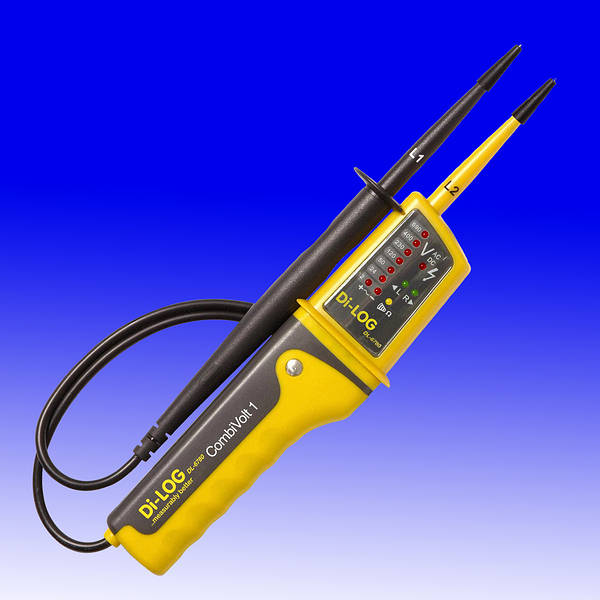
Less chance of slipping or getting close to a live wire.
Educational resource (contains graphical imagery of actual pain):
The Pain of electricity (AC Vs DC)
Much more along the same lines:
Electroboom
If you must insist on using a non contact voltage indicator then test it on something you know is live every time before you use it to check a circuit is dead.
correct, if obvious, advice 🙂If you must insist on using a non contact voltage indicator then test it on something you know is live every time before you use it to check a circuit is dead.
Before you touch 240 mains ensure youve set the dial to 240 ac as a loud bang and a flash and and a destroyed multimeter arent good, i know i did it.
Much more along the same lines:
Electroboom
For the avoidance of doubt, Electroboom knows exactly what he's doing. His accidents aren't.
Great viewing though.
On a side note my work colleague broad his Granda's multimeter to work last year.
Turns out his Grandad was the guy who invented it and held the patent on them.
It was a thing of beauty and still worked, icing on the cake was the hand written instructions though!
Thoughts on auto power off....
Mine doesn't, but on one hand i wish it did,
But on te other hand potential for a misread
Although if tge screen is blank, not 0.00 and you think a circuit is dead, maybe electrics are best avoided
The battery in my Rapid test is a small 12v thing that is also pretty hard to find
I've a follow on multimeter question. I've a reasonable multimeter and a variety of probe leads, and I have a need to test some car multipin connectors (or the circuits behind them), both male and female. Often the ends of the connections aren't immediately next to each other, and I don't have 4 hands, so I'd like to be able to "connect" the multimeter to a pin (2mm from another pin, and in a shroud) or push into a pin hole (maybe 1mm diameter) without having to hold it there myself.
All my probes are too fat (crocodile clip will only fit if there's 5mm clearance on all sides, and the spikey probe is way too fat to fit in the female multipin connector), what I really need is a "male pin" connector and a "female pin" connector, but my GoogleFu is failing me. What do I need to look for?
5lab, could one of these or something similar work?
https://www.switchelectronics.co.uk/red-hook-test-clip-probe?gclid=Cj0KCQiA2sqOBhCGARIsAPuPK0hmPGx9ptIPq1kWLLf3Fmu6oOBdt_0Cx2Js3fxM0SMNvMGjuHQCjfgaAjbyEALw_wcB
often what I do in this sort of case is just buy a matching 'pin' for the connector in somewhere like Halfords and hold it with the croc clip
There are lots of options for meters, but it is important to get one that is safe and rated for use with 240v , fused and insulated.
I just wanted to reiterate this. Goo multi metere have double insulated plugs and leads plugs, are fused, have a arc gap in the circuit board fuse. All of these things are designed in so if A fail we have B we have C .
I personally have an extech multi meter and have used it on all sorts of low voltage circuits / installations (N.B. low voltage actually defined as anything under 1000v ).
Something with true RMS is useful and a sign of a decent meter.
As for knowledge it depends where you are starting from. What's your maths like are you a technical guy already? Understanding impeadence I personally think is easier if you have a solid understanding of basic maths, by which I mean Lowe aleverl upper GCSE.
Impeadence then leads on to phase shift for which an initiative understanding can also be developed but again personally I find the road is another by good basic maths. I.e. really understanding trig and also trig functions as in their graphs and shifting them around.
Sources of information. I can only speak from my own pov as I am not a teacher but for me I already had a good science / maths knowledge but I did
1. Watched a lot of YouTube,
2. Bought an electronics dictionary,
3. "how to repair just about anything electronic" book
4. Read some of (but only bits it massive) of "The Art of Electronics".
5. I bought / was give
broken stuff and repaired (and failed to repair).
I also ended up in a job in industrial automation for about 5 years that helped and did level 2 electric installation and wiring regs. However the knowledge from this is fairly basic from a technical pov but good for best practices how installations should be done etc but not that relevant to fixii general aplicences. I only have very narrow knowledge and have forgotten most of it but you are correct fixing things is very satisfying and always worth a go.
P.s. never overlook a dodgy connection.
I’ve a follow on multimeter question. I’ve a reasonable multimeter and a variety of probe leads, and I have a need to test some car multipin connectors
Do you have any back probes?
These can help on auto electrical systems but not always.
Once the smoke has come out, you can't put it back i again 😉
I had a multimeter with a push button on switch. Which meant it was always flat, it would turn itself on in the toolbox, in the car if it rolled over, and even closing the tool chest drawer.
Dial on is much better. One thing I would like is an audible indicator built in.
If you want something for use on car or trailers a probe like this is great, you give it a 12v power source and you can test components and wiring, apply voltage etc, it's also got a scope function for signals.
[img]  [/img]
All my probes are too fat (crocodile clip will only fit if there’s 5mm clearance on all sides, and the spikey probe is way too fat to fit in the female multipin connector), what I really need is a “male pin” connector and a “female pin” connector, but my GoogleFu is failing me. What do I need to look for?
Get down to the local old school scrapyard and just chop off a pile of connectors. You can 'de-pin' them with special tools or just destroy them to recover the pins. Another trick is to use sewing machine needles in a choc block with a bit of wire in the other end. These also work as cheap wire piercing probes as well. Seal the holes afterwards with liquid tape.
NB: This is for 12 volt car stuff only. DON'T use it on the mains.
Search for a test probe kit