UPDATE: CLASSIFIEDS section refreshed, redesigned, searchable: Go take a look
For a room 101 entry I suggested that bikes with say 130mm of rear travel with 160mm travel don't really make much sense as a bike with equal amounts of front and rear travel or more rear travel would make more sense. The response I got was something smart arsed from Mark about riding hardtails. I also stated that most people have bikes with more travel than needed and Mark again stated this was nonsense. I refer people to the following from GMBN
Not that I really care that much, after all the more people out riding bikes the better. E-Bikes might weigh a ton (50kg or there about) but they are good fun up hill. I just think that bigger isn't always better and a 140 travel bike will always be more trail friendly than a 170mm travel bike. For most people 140 should be more than enough. Obviously though people buy into the marketing hype.
For those thinking what an arse, get a grip and stop being so serious, seriously it will give you a hernia!
I have an old 80 mm travel Anthem frame with a 130 mm Revelation fork. I know it's wrong, but that's me, breaking all the rules.
Bikes with more front travel than rear make absolutely no sense, let's get rid of all hardtails.
I think I'm more or less matched now actually- but I spent years on a 160mm coil Lyrik front, 120mm air rear Hemlock and it was bloody brilliant tbh. Pedalled better than it would have with more travel, felt tighter etc but had a bit of extra might at the business end. Makes total sense to me, there's nothing magic about equal travel that means it makes sense. I did have a long rocker so I could run it 150mm rear but it wasn't as good.
And yeah loads of people do ride bikes with more travel than needed, or at least a lot of the time- I ride a long travel 29er, it's a bloody monster truck and most of the time I'd be fine with less but those times when I use it all, I'm glad I've got it. And these days there's no major downside, if I had a 130mm bike I'd still want big tyres, 34s or 36s, a sturdy frame, a big dropper so it'd weigh about the same and probably pedal about the same too so where's the disadvantage?
But then I own 2 rigid bikes so maybe that balances it out.
My arms have a different amount of travel to my legs, but I'm speaking to my doctor about equalising them. Painful, but I think it will be worth it.
Rules are for fools.
What we need is a Team out at trail centres around the land , checking people’s bikes for amount of travel and type of bike compared to the terrain.
They they would need a name, something along the lines of Travel Inspection Team Specialists or TITS.
My arms have a different amount of travel to my legs, but I’m speaking to my doctor about equalising them. Painful, but I think it will be worth it.
Presumabley you don't walk around on all fours?
Presumabley you don’t walk around on all fours?
I guess however he/she has hold of the handlebars whilst having feet on the pedals.
Had a reverse mullet (serious out the back party out the front) Orange blood . It was 160/125, utterly brilliant, as the hemlock above it felt taught yet could pummel through stuff. Bit heavy but otherwise fantastic. I think nobody understood it so it didn't sell well but I felt it was better in every way than a 'balanced' five at the time.
Weirdly more front than rear travel makes total sense to me...
But I have also had the opposite, a DH bike with 9" rear travel and 7" at the front, at no point when riding it did I worry about having equal travel...
These aren't the sort of things that should trouble a healthy mind.
I always thought there was a preference for more inches in the front than the rear
that is your opinion - there are many like it but this one is yours.
quite happy with the front end being lifted on downhills - with the 140 f+r and the same fork and the front end was pitching my weight forward and i found the bb a bit lower .
Seems im not alone in preferring 160 on the front of ibis mojos with the 140 at the rear.
I couldn't even tell you what travel my bike has front and rear. My old one, I know the rear was 5 and 3quarter inches, cos it was called a 575. I think that's around 146 in new money. I think the forks were 140 cos you can't get 146mm forks. Never felt like too much, cos it was a very good bike. (Still is)
140 front, 120 rear. My previous was was 160/150, and that's not to mention my hardtails. Depends on the bike, the design, the rider, etc. Dismissing such as 'not making sense' is just a weird view of what 'making sense' means.
The thing with too much travel I can sort of agree with, but don't really care about it enough to write about it on the internets. I like shorter travel where others ride longer. Some people like longer where others ride shorter. We all live happily ever after.
Not that I really care that much, after all the more people out riding bikes the better. E-Bikes might weigh a ton (50kg or there about) but they are good fun up hill. I just think that bigger isn’t always better and a 140 travel bike will always be more trail friendly than a 170mm travel bike. For most people 140 should be more than enough. Obviously though people buy into the marketing hype.
I love that doddy equates shorter travel bikes with being a better rider - or at least states they are more fun for better riders. I can say with a relative degree of certainty that my brother rides faster and sends it bigger than doddy and he has gone to his only bike being a 200mm dh sled - which he finds more fun than any short travel trail bike. He's cracked a lot of frames in his time as well, so I'm not sure that a 140mm bike would even be suited to how he rides. My fun to grip balance is between 150/160 rear and 160/170 front - and a hardtail for swoopy flowy trails.
I am inclined to agree with Mark.
I guess however he/she has hold of the handlebars whilst having feet on the pedals.
And usually the pedals are a bit lower than the bars?
Weirdly more front than rear travel makes total sense to me…
It doesn't to me unless we are talking about sustained climbing, you can absorb more high frequency impacts with your nice and relaxed arms, where as you are holding most of your body weight in your legs - especially on flats - meaning your rear shock has to do more of the work. More travel is going increase the ability of the rear to cope with high frequency repeated impacts. A longer travel fork and short rear end also means that the dynamic head angle is going to be steeper.
Weirdly more front than rear travel makes total sense to me…
But I have also had the opposite, a DH bike with 9″ rear travel and 7″ at the front, at no point when riding it did I worry about having equal travel…
Yeah that's true, in almost all cases if it's got dissimilar travel, it's more at the front - apart from DH bikes which are the other way. I guess it's just because forks top out at 200mm these days.
Anyway as for the OP - I've checked with my governing authority, AKA me - I have the EXACT amount of travel I want, so I'm all good thanks.
Dirtbikes have more at the rear than the front as well, it's for a reason other than only shorter forks being available.
I think these video tie in nicely with my thoughts - particularly the second video.
https://www.pinkbike.com/news/the-tuesday-tune-ep-24-frequency-vibration-and-harshness-part-2.html
Friends of mine bike the Hornet HT with 180 mm fork.
I love old HT bikes which got upgraded to 130 mm ... 160 mm forks. It's a blast to bike such a HT with lots of sag.
Full suspension and trails: have the impression that bikes in the 170/170 range are getting better for trail riding as well. Better forks?
If you have an older 130/130 trail bike it's so easy to upgrade after a couple years to a 140 mm fork or so. For me: such bikes produce more fun then. Guess part of it: the forks are getting better. Also the "cheap" ones. Bit of stem tuning and climbing is no issue either.
Greg Callaghan:
https://www.vitalmtb.com/features/Pro-Bike-Check-Greg-Callaghans-Cube-Stereo-140-29,1513
He bikes 160 mm front and 140 mm back.
And makes it onto the podium in Enduro racing.
But he violates the rules anyway. Still using Shimano 2 x 11 ...
Haha
Dirtbikes have more at the rear than the front as well
Dirtbikes and mountain bikes are not the same thing. What works for one does not necessarily work for the other. Same goes for DH bikes and XC bikes.
Which is exactly why I said that shorter travel at the rear is probably better suited for climbing applications, however - rear suspension has to work harder than the front and I would argue that longer travel or at least equal travel on the rear makes more sense for descending and speed through rough terrain.
I would argue that longer travel or at least equal travel on the rear makes more sense for descending and speed through rough terrain.
The overwhelming consensus is that most riders find longer travel at the front to be better.
Failed design.
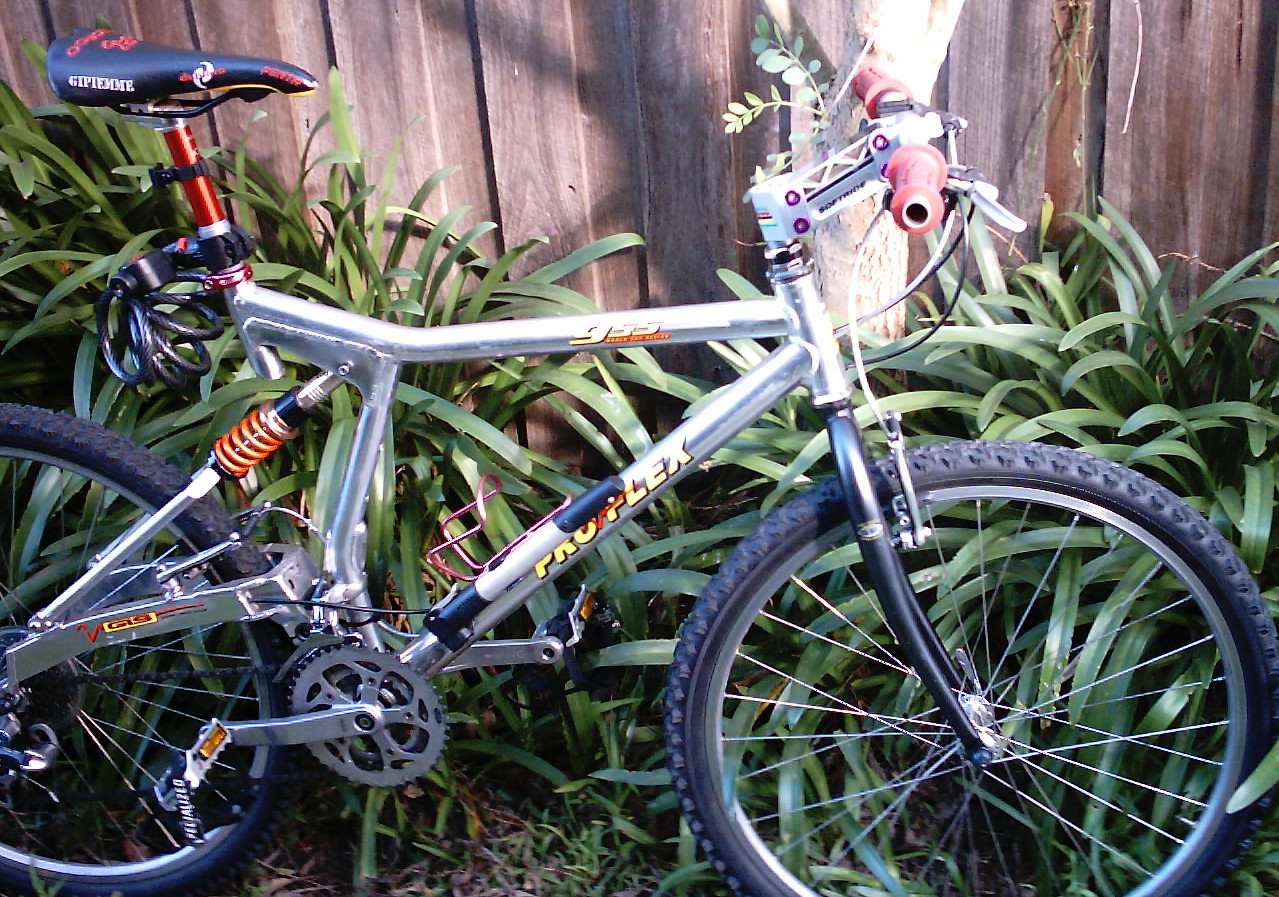
Successful design.
The overwhelming consensus is that most riders find longer travel at the front to be better.
Which is why there are still plenty of 220mm travel DH frames on the market - and exactly no 220mm forks currently available.
Most riders are trail riders, quite a few of whom value climbing capability as well - or are stuck in the early 2000s mentality of favouring the reductions of "pedal bob".
The pro flex example is stupid, it's about chassis balance at the end of the day and I'm saying that in a full suspension setting - more travel on the rear makes sense due to the 60/40 weight distribution. Hardtails just about work because front suspension gains all important grip, however its the rear suspension that contributes most to stability when you have a 60/40 weight distribution going on. - with the main mass of the rider hovering above the BB and therefore slower to react.
you can absorb more high frequency impacts with your nice and relaxed arms, where as you are holding most of your body weight in your legs
Your positioning on the bike is wrong.
Most riders are trail riders
Exactly.
Your positioning on the bike is wrong.
It is if you are a hardtail rider. You look at a rider like Sam Hill though - and even though he has an open chest - most of his weight is centred right over the BB and he's driving the bike with his legs.
Most riders are trail riders
I thought it was all XC?
It is if you are a hardtail rider. You look at a rider like Sam Hill though – and even though he has an open chest – most of his weight is centred right over the BB and he’s driving the bike with his legs
So different people ride different bikes differently?
end of thread, surely?
Obviously not. here's another bike with more rear travel than front
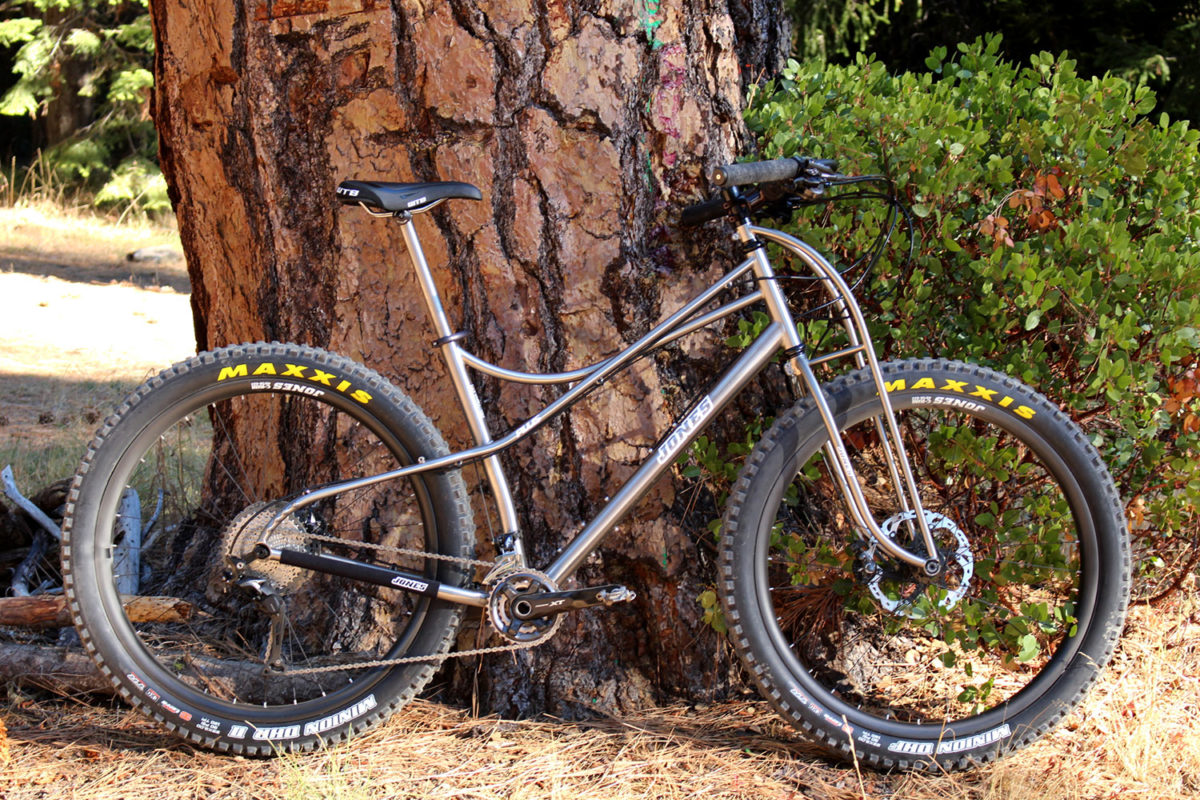
XC requires a stem of 80 mm or longer. If your stem is 70 mm or shorter and bars more than 700 mm wide, it's definitely trail riding, unless it's All Mountain or Enduro.
Travel is so well controlled these days, i just don't think it actually matters!
My Brompton is rigid at the front but has suspension at the back. Whaaaaaaat?!?!
Haha. Fun.
One small, additional detail, lets say for trail riding:
Our hands and wrists, arms and arm joints are much more sensitive than our legs.
High g acceleration isn't nice on the arms...
So lets say stability and traction might be totally fine with a 130/130 bike - our riding still might be better with more travel in the front. Reduces the g loads on the front and the fatigue.
More Fun. Better biking?
And - as mentioned, HT with 160 mm front: yes - the weight will be more "on the front" to be really fast (and sometimes faster than a full susser). But this not "wrong" - if it's still fast and fun. And in deep mud sometimes even the only way to bike...
"rear suspension has to work harder than the front and I would argue that longer travel or at least equal travel on the rear makes more sense for descending and speed through rough terrain."
But that fails to account for the way bumps generate pitching torque on a bike due to the very high centre of mass of a bike and rider. Front wheels naturally get stuck, rear wheels naturally pull themselves out of trouble. That's why long-fork hardtails work!
But that fails to account for the way bumps generate pitching torque on a bike due to the very high centre of mass of a bike and rider. Front wheels naturally get stuck, rear wheels naturally pull themselves out of trouble. That’s why long-fork hardtails work!
Which is why less dynamic travel (ie stiffer springs) work on the front - as it allows the front to resist the pitching movement. A good starting point for any gravity orientated bike is 30 percent sag on the rear and 20 percent on the front. It's probably the same with less travel for a given axle to crown height as well - but of course - these things are always a balance.
The rear shock and wheel is still the part of the suspension that is dealing with a relatively less dynamic mass that is unable to get out of the way and absorb multiple impacts compared to the the riders arms. And yet for reasons of chassis balance, the rear shock has to cope with us running more sag and rebound damping than the front (to reduce forward pitching in the air) - all of which are conducive to the shock packing down in it's travel.
I tend to agree to the BTR bikes philosophy that a very slack head angle, short travel hard tail is a better ride than a long travel HT because of the sudden geo changes in braking and cornering. Ie the slacker and shorter travel will fair better. Why there aren't many 69er HTs is a quandary for this reason, or even in the FS world. Lightville Bikes is the only one I can think off hand.
I put a shorter shock on my Patriot cos I could, adjusting the shock mount to keep the geo similar. It felt really weird, behaved quite differently. I'd got used to pumping the bike through things but having much shorter travel at the back wrecked the concept. Put it back straight away.
Presumabley you don’t walk around on all fours
I see how you've taken that but I didn't mean to compare a bike with the body. I mean that if you look at the whole system, your range of motion will be different whether it's stem to chest or saddle to gooch. There is usually an uneven ratio of weight on bars vs pedals. The front wheel gets pushed into objects, the back wheel pulled over. Front suspension is linear, rear typically an arc. My point is there are multiple differences in the way each end of the bike is working, so insiting on having identical travel at each end seems nonsensical IMO.
The reasons I would suggest having them in the same ballpark is the norm are firstly to avoid big changes in geometry (see long travel hardtail as an example), and so that one end isn't at odds with the intentions of the bike (like riding a DH bike fitted with a 100m XC fork). But thats not say there's a rule they have to be the same to the mm!

