An interesting canter through some of the key developments over the years...
[url= http://road.cc/content/feature/185561-retro-real-cycling-revolutions-%E2%80%94-10-inventions-changed-bicycle ]10 inventions that changed the bicycle[/url]
canter
Arf arf
No mention of strava and the GoPro
I love this bike.
[img]  ?itok=It7Sr4oM[/img]
tmb467 - Member
No mention of strava and the GoPro
Neither have changed the bicycle
honourablegeorge - Member
tmb467 - Member
No mention of strava and the GoPro
Neither have changed the bicycle
No - just the rider.
Neither have changed the bicycle
No mention of spokey dokies or handlebar tassels.
Mountain bikes set cycling back 20 years IMO, by being both ubiquitous and utterly crap as transport.
But I would add square taper bottom brackets and threadless headsets to the list of improvements.
What??!!! They were never designed as an efficient manner of transport, they were about getting out on the beaten track.
If people chose to use them for a different purpose (for which they were not primarily designed) thats hardly the bikes fault.
Mountain bikes set cycling back 20 years IMO, by being both ubiquitous and utterly crap as transport.
Transport? What's that got to do with sporting equipment?
I would remove the derailleur from that list and replace it with the freewheel.
The Moulton, while worthy, is an eccentric dead end (I do have one, and a very nice bike it is too, but it's failed to influence the mass market).
Agree with mountainbikes, but on the other hand if WW1 hadn't come along and restricted tyre supply, the 2" tyre on colonial bikes would have persisted (ie SS 29ers!), and indeed nearly got traction for offroad bikes prior to WW2 with a 26" wheel.
No disk brakes? (goes to put kettle on)
thepurist - Member
No disk brakes? (goes to put kettle on)
No. Apparently they maim roadies.
I would have put cable operated brakes, s massive game changer for safety and functioning and also gave rise to the derailleur and shifter system.
Anyone who has used rod brakes will know what I mean 🙂
Interesting that pretty much all of those, bar the Campagnolo derailleur, are well over 100 years old. I'd exclude the Moulton as it simply used existing technology rather than being an 'invention', and that Breezer was based on existing designs that had been around for ages. And again, isn't an 'invention', simply a 'refinement'. Why they've excluded the freewheel in the top 10, I don't know; one of the most important developments in cycling ever!
Stuff like suspension, disc brakes etc are simply adaptations of existing technology. Good call re cable operated brake systems though; anyone know about their origin? Were such systems first used on bikes?
Bike technology really hasn't fundamentally changed in recent years; the basics were sussed over a century ago.
No ball bearings or seamless tubing?
Bike evolution is very iterative, so it's hard to pin point any key innovations.. Bit like the history of the guitar, stringed instruments have been around for quite some time, with many branches of evolution, a bit like how bikes are becoming.
Quite interesting :
[img] 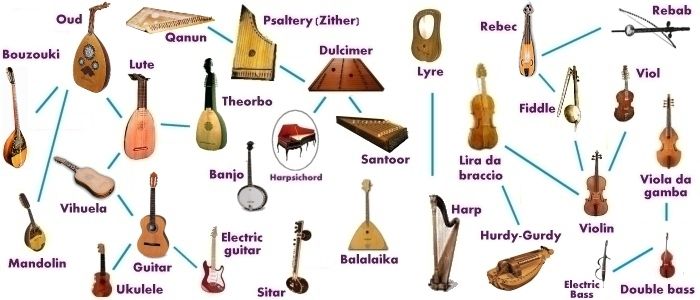 [/img]
They are not designed as transport, correct but have been sold to people who use them as transport meaning a couple of generations of kids have grown up peddling knobbly tyre'd full sussed bso's to school and concluding bicycles are shit, better get a car.
Without the mountain bike they would have been on a road bike or a hybrid and may have come to different conclusions.
"They are not designed as transport"
What on earth are they designed as then?
The wheel?
wilburt - Member
They are not designed as transport, correct but have been sold to people who use them as transport meaning a couple of generations of kids have grown up peddling knobbly tyre'd full sussed bso's to school and concluding bicycles are shit, better get a car.
Without the mountain bike they would have been on a road bike or a hybrid and may have come to different conclusions.
They weren't 'sold to people' - people chose to buy em cos they were different from the drop-barred uncomfortable cheap road bikes with shifters on the down-tube. I always wanted a BMX but me dad bought me a road-bike instead. If I'd had a BMX I'd probably be a better mountain biker today
edhornby - Member
I would have put cable operated brakes, s massive game changer for safety and functioning and also gave rise to the derailleur and shifter system.Anyone who has used rod brakes will know what I mean
I have a few rod braked bikes. It takes quite a bit of fettling to get them to be adequate - forget powerful. 🙂
But the limitation wasn't the rod part of the system, but the flexy lever made from small diameter rod and the stamped steel pivots introduced lost movement.
As an experiment I replaced that lever with a cable lever and attached the other end of the cable to the rod brake system. It made an appreciable difference. (Using brake blocks which aren't about 60 years old would also help 🙂 )
[url= https://farm6.staticflickr.com/5495/10695300813_d09805f55b_b.jp g" target="_blank">https://farm6.staticflickr.com/5495/10695300813_d09805f55b_b.jp g"/> [/img][/url]
Perhaps if a more rigid lever had been used we could have avoided cables. Rod actuation with drum brakes would have given very modern braking IMO.
Ten inventions that changed the [b]ROAD[/b] bicycle
FIFY, typical introverted roadie look at things
Add in one thing that stopped most changes in road bikes? The UCI.
For mountain bikes
Tubeless
1x
Hydraulic Discs
Dropper posts
Carbon
Pedal Platform Shocks
A set of balls to do things differently
None of those things ^ 'changed' cycling in the same way many of those in the original link did. The things you mention were already invented, and simply adapted for use on a bike. And it could be argued that none of them are actually necessary to be able to enjoy riding a bike off-road. I have bikes that have none of those things you mention, and I still enjoy riding them off-road.
"FIFY, typical introverted roadie look at things"
Without those things, you wouldn't have a bike to ride.
What I did find interesting, is that the first 'shock absorber' system, ie a 'damped' spring, was invented for use on a bicycle, before being adapted for motor vehicle use.
http://theoldmotor.com/?tag=j-m-m-truffault
My first bike had rod brakes.
Nice of Mr. Stevenson to mention [url= https://fattireflyer.com/ ]my book[/url], in the Breezer item on that list.
Here is an article about my bike, [url= http://www.bikerumor.com/2014/09/24/ib14-breezer-2-we-interview-joe-breeze-about-the-second-mountain-bike-ever-made/ ]Breezer #2[/url], which you can see in the back of the blue 1954 Dodge pickup truck that [url=http://]Chipps Chippendale noticed[/url] at Sea Otter.
that Breezer was based on existing designs that had been around for ages.
Not exactly. Joe had to design the bike from scratch, because previous bikes that used wide tyres were not built from straight tubes, or equipped with derailleurs or threaded bottom brackets.
There were probably any number of people who COULD HAVE made that design, but Joe was the one who did. When he built that bike, he was a great downhill racer, just the kind of person you want doing it. A road frame builder would not have understood how I planned to use it.
The [url= http://www.skiisandbiikes.com/blog/breezer-the-1st-mountain-bike/ ]Series I Breezer[/url] was the first original bicycle design in a 40-year career that has made Joe Breeze one of the most respected bicycle designers in the world. It was the first real "mountain bike." If it were easy, anyone could have done it, but for some reason they didn't.
bar your last one* I'm tempted to disagree. All those are great things that I use but I'd have other suff ahead of them.For mountain bikes
Tubeless
1x
Hydraulic Discs
Dropper posts
Carbon
Pedal Platform Shocks
A set of balls to do things differently
Clipless pedals (I know flatty users will violently disagree)
Seat clamp QRs
Suspension
[b]Good[/b] (grippy, comfy, reasonable weight) tyres
bar mount shifters (iirc roadies were still on downtube mounts when thumbies were out)
*doing/looking at things differently, certainly at line choice, is a Big Thing
the bike that changed it all?
following a surprising numbers of deaths from these "skull crackers"
[img] 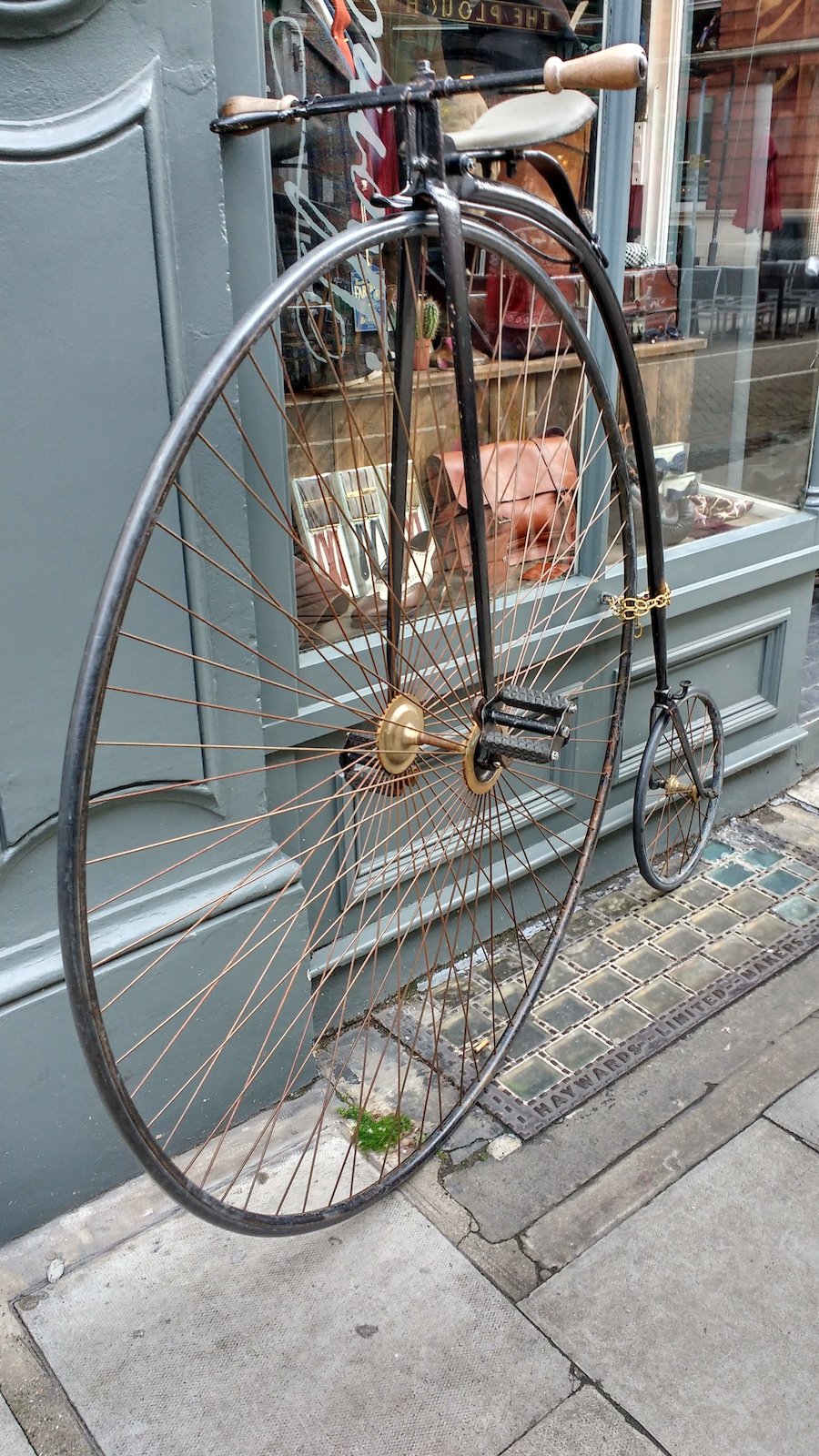 [/img]
the Rover Safety Bicycle
[img] 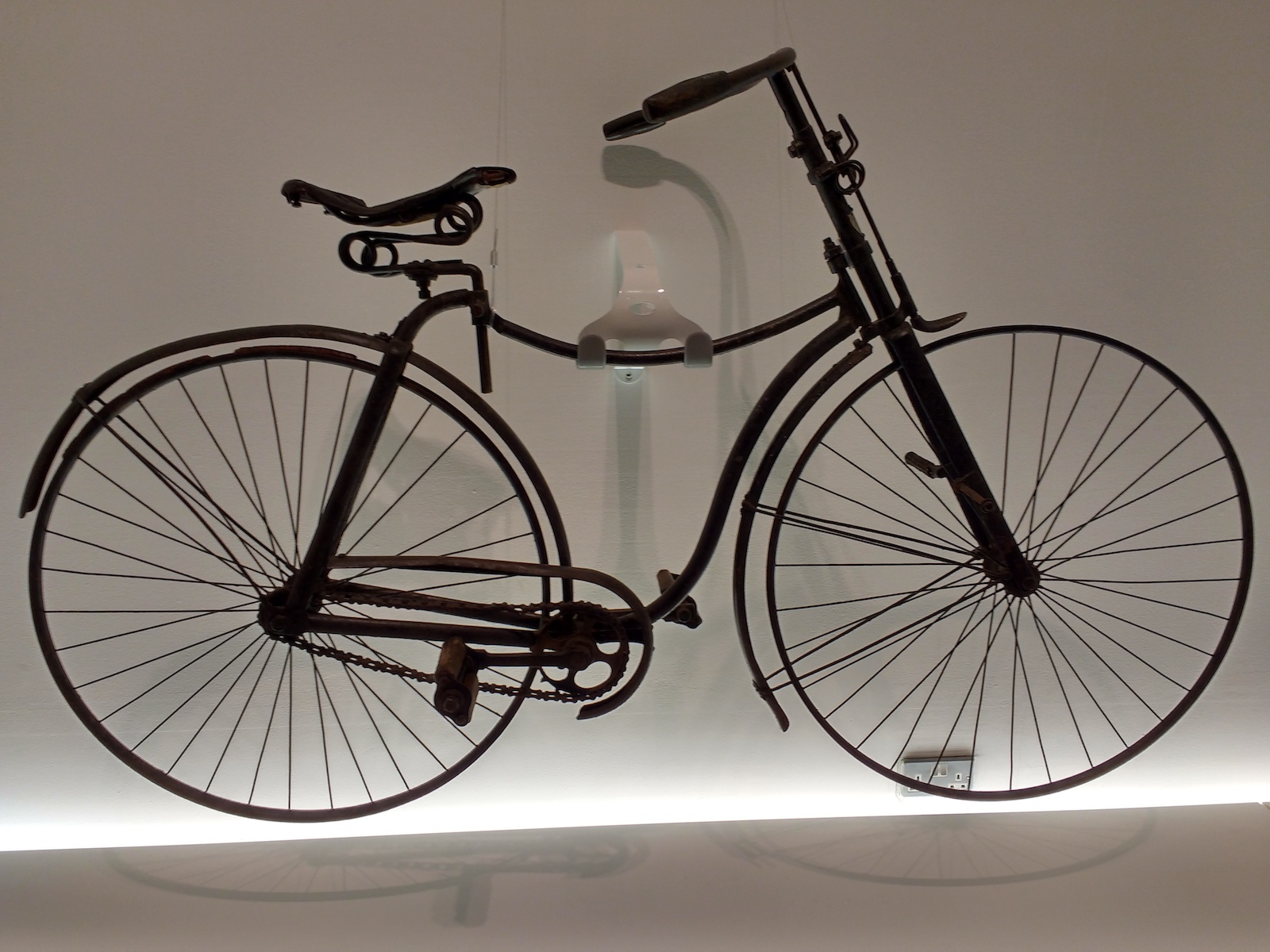 [/img]
Asthma inhalers?
The MAMIL.
The myth a helmet will save your life.
Both set cycling back 20 years and had a massive effect on the bicycle
The MAMIL.
😯
The MAMIL is making up the vast majority of the increase in cycling participation, which is taking it out of a minority activity into a mass, population-wide activity.
A MAMIL may not be a 'pure' cyclist and I'll frequently raise my eyebrows at some of the excessively posh kit and Strava-obsession prevalent in some people but it's all cycling, it's all about taking it mainstream - so MAMILs are making a massively positive contribution whether we like it or not...
"Both set cycling back 20 years and had a massive effect on the bicycle"
What a strange comment. 😕
"The MAMIL is making up the vast majority of the increase in cycling participation"
I'd say young people who are increasingly financially stretched are making up the vast majority of the increase in cycling participation, in urban areas at least. MAMILs may well be driving the cycling industry forward in the UK, as they spend proportionately increasing amount of money on cycling. The average spent per bike is rising.
philxx1975 - Member
...The myth a helmet will save your life.... set cycling back 20 years and had a massive effect on the bicycle
It certainly did in Australia when they introduced compulsory helmet laws.
Almost overnight the casual users disappeared, and then the kids. The lbs that survived were those that catered for sport riders.
The introduction of mtbs got Australians riding again IMO.