UPDATE: CLASSIFIEDS section refreshed, redesigned, searchable: Go take a look
Surely the advantage of bigger is better would be more noticable on the road, than it is on a mtb?
I thought it was to do with rolling over obstacles/stones and that? Not much of that on't road..
Should make them smaller then.
No. The advantage of big wheels is that they don't fall so far into a hole. On the road (hopefully) there are no holes, so wheel size doesn't matter.
In fact, as Moultons have shown for years, on roads small wheels are faster - they're lighter, stiffer and more aerodynamic. Assuming tyres are the same, wheel size doesn't matter.
They did didn't they?
[IMG]  :original[/IMG]
That was before someone invented gearing 😉
I thought it was to do with rolling over obstacles/stones and that? Not much of that on't road..
You should try riding down my way...
😀
They would if they could but there comes a point where you just can't package a larger wheel under the rider without compromising geometry and other aspects of the machine.
In fact, as Moultons have shown for years, on roads small wheels are faster - they're lighter, stiffer and more aerodynamic.
Is that why Wiggins did so well on his Brompton?
Is that why Wiggins did so well on his Brompton?
He was constrianed by the UCI's daft rules - on a Moulton, he'd have been faster. Not a Brompton - that's a city bike.
there comes a point where you just can't package a larger wheel under the rider without compromising geometry and other aspects of the machine.
[img]
 [/img]
They used to.
My pub bike has 27" wheels, which are bigger than 700c.
Even though 700c road tyres are nominally 28" and as any fule kno 700c MTB tyres are 29"
[i]on a Moulton, he'd have been faster[/i]
Seriously? Why/how?
i thought it was something like small wheels accelerate faster large wheels maintain speed better
then theres strength to weight, big wheel needs stronger components thus lightweight = more expensive...
its all a comprimise
Moultons [i]were [/i]raced, back in the day, but never caught on for some reasonHe was constrianed by the UCI's daft rules - on a Moulton, he'd have been faster
[img]
 [/img]
They would if they could but there comes a point where you just can't package a larger wheel under the rider without compromising geometry and other aspects of the machine.
Toe overlap anyone? Try riding a bike that's a size or two too small for you (hence inevitably designed for people with smaller feet too) and you'll see what I mean. Had to ride a friends 50cm ladies road bike the other day up and down the road to diagnose a problem. Firstly, I couldn't pedal anything but a complete straight line with clipping my toes on the front wheel!
Moultons were raced, back in the day, but never caught on for some reason
Still are, as are recumbents. All banned by the UCI, even though they're faster and safer. The road bike shape is based on a rose-tinted view of bicycles perpetrated by a bunch of suits who are more happy to see riders take drugs than allow any technological advance.
Really, it's only a small step away from making Wiggo ride a penny farthing.
Is that "larger wheels maintain momentum better" true but a bit of a red herring, as the extra momentum has come from the additional energy the rider has to input to get them to the same speed as a smaller lighter wheel?
Yes, the momentum is negligible, and not really a benefit - it makes the steering sluggish. The momentum it maintains is the momentum of the entire bike/rider system offroad, over rough terrain.
I still don't understand why 26" wheels are no good all of a sudden...
I still don't understand why 26" wheels are no good all of a sudden...
They never were, they were just what was available with ~2" tyres 30 years ago.
They've not gotten worse, someone just figured out that 29" was better.
Bit like suspension forks are better than rigid forks, but rigid forks haven't gotten any worse (plenty of people still use them). The difference is there aren't the same maintenance and cost issues with 29ers as suspension.
Smaller wheels are better on the road as they're more aerodynamic IIRC.
and they figured that out about 30 years ago, but couldn't get the tyres.
it's not that 26" wheels are suddenly 'no good', they're as good as they ever were.
but, lots of people are finding that they like 29" wheels more, without any significant disadvantages.
Seriously? Why/how?
smaller wheels are lighter, and more aerodynamic, and at tdf speeds that's hugely important.
and they figured that out about 30 years ago, but couldn't get the tyres.
I find that amazing that "they" whoever they were couldn't develop or fund the construction a larger carcass building drum and curing mold for a larger bike tyre. Wow
We have had on occasion private individuals with their own molds approaching us to build small production runs. I find it utterly unbelievable that this couldnt have been done 30 years ago. The fundamental construction process is very much the same as it was back then.
They've not gotten worse, someone just figured out that 29" was [s]better[/s]different.
FTFY
or, it was just much, much easier to go with 26" wheels, as the rims and tyres were (relatively) easily available, and there's not really all that much difference if we're being honest.
really, the difference between 26" and 29" is quite small, it feels like a few psi difference in the tyres.
it's not enough to justify making your own tyres, but is enough to justify trying to see if you like it/or not, or can even notice the difference/or not.
They've not gotten worse, someone just figured out that 29" was [s]betterdifferent[/s]lucrative.
Double edit 🙂
Moultons are not faster than 700C road bikes. Thats a nonsence. The faster a wheel rotates the more resistance you have to fight against - windage of the spokes, friction of the bearings. The fact is that for a given gearing a larger wheel will be faster. Forget inertia's and accelaration - we're talking road bikes here not motorbikes, so it is negligable.
Recumbants are faster due to them being more aerodynamic and aerodynamic drag is by far the overriding thing you're fighting against.
Well, yes, and that too. Obviously.
+1 stu1972
Oh, back to the OT - wouldn't there be a fair amount of wasted energy with the Moulton flexing with the long unsupported seat-post?
Moultons are not faster than 700C road bikes. Thats a nonsence. The faster a wheel rotates the more resistance you have to fight against - windage of the spokes, friction of the bearings. The fact is that for a given gearing a larger wheel will be faster. Forget inertia's and accelaration - we're talking road bikes here not motorbikes, so it is negligable.
Nope, sorry.
Wind resistance from the spokes is less with small wheels. The top speed of a spoke is at the top of the wheel, where it's going twice as fast as the bike. Smaller spokes have a smaller cross-section, so lower air resistance.
Bearing friction isn't purely a function of speed, it's also a function of loading and other factors, so wheel size isn't a big issue - and bearing resistance is such a tiny component of drag anyway.
However, with a large wheel the cross-section of the tyre is quite a bit bigger - up to twice as big. Same with the trailing rim. Same with the fork blades.
So, all in all, small wheels on their own even if you keep the rest of the geometry unchanged are quite a bit more aerodynamic.
Moultons were deemed to give an advantage in road racing because the rider could get a better draft from the rider in front therefore giving an advantage over standard wheel bikes.
Oh, back to the OT - wouldn't there be a fair amount of wasted energy with the Moulton flexing with the long unsupported seat-post?
Might be unsupported, but it's pretty beefy. There's also energy being absorbed by the full suspension, but that's more than made up for by the reduction in rolling resistance suspension gives.
Moultons were deemed to give an advantage in road racing because the rider could get a better draft from the rider in front therefore giving an advantage over standard wheel bikes.
That too, but it's far from the only reason.
My "That too, obviously" is in reference to stu1972.
Not wobbliscott, who is, I'm afraid, incorrect- Moltons are commonly known to be faster than traditional road bikes.
Can you substantiate the moultons are faster?
My 36" unicycle hums along like a massive flywheel and feels effortless to keep going but it lacks gears (not gone for a geared hub) off road it is even better over the bumps.
Bikes with 36" wheels exist but they are more for fun, a wheel that big is heavy and not very nimble as it wants to run straight so having a lighter geared wheel is far more efficient than going bigger which has far more drawbacks
Can you substantiate the moultons are faster?
Bicycling Science has quite a bit of detail, as do some other technical books, or the RAAM results are quite interesting as well I think.
Ah, Bicycling Science; a fascinating book, remember reading that years ago.
Interesting that though Moultons may have been 'scientifically' faster they were never taken up by those really interested in going fast.
They were legal for time trials in Britain in the days when their popularity was at its height, but weren't commonly used, and certainly not by the fastest guys. And you couldn't accuse people like Alf Engers of being hidebound by convention 😀
One reason could be that testers at that time were obsessed with weight (with Engers setting the trend for 'drillium') rather than aerodynamics, and I don't recall Moultons as being notably light.
The early developers of MTB didn't need to invent 29 inch wheels as they weren't yet bored of 26 inch wheels
Time trailing and road racing are both dominated by aerodynamics. Add in inertia for road racing as well. Rolling resistance barely figures for fit cyclists. I'll look up a great fact about this in bicycle science about this if anyone cares
I find that amazing that "they" whoever they were couldn't develop or fund the construction a larger carcass building drum and curing mold for a larger bike tyre. Wow
really?
[img] 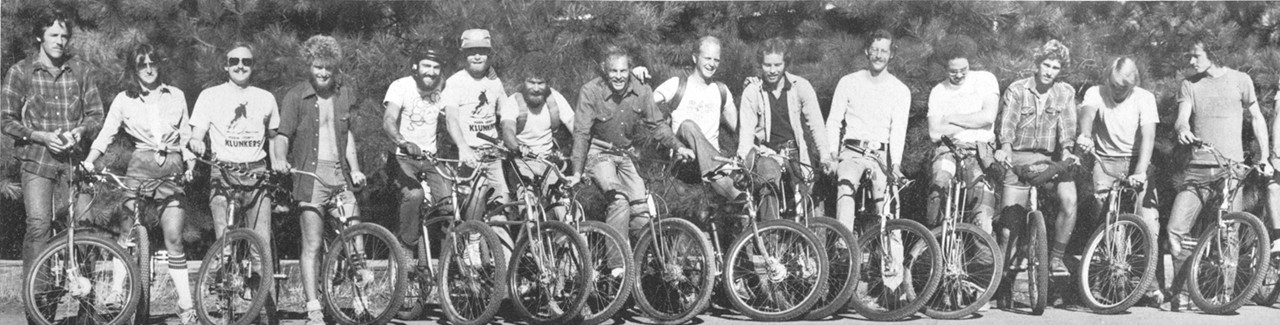 [/img]
[url= http://sonic.net/~ckelly/Seekay/mtbwelcome.htm ]pinched from here[/url]
not sure they were 'investment' type guys. (no offence intended repack 😀 )
not sure they were 'investment' type guys.
Tom Ritchey and Gary Fisher certainly did have the manufacturing capacity by the mid 90s.
Tom Ritchey and Gary Fisher certainly did have the manufacturing capacity by the mid 90s.
GF came out with the first almost-successful 29ers around 2000. They're definatley the first I remember seeing and thinking they were actual serious bikes not some bizzare prototype idea. Bianchi and Klein made 29er XC race bikes as far back as '91, so it's not like it's a new and untried idea.
Personally I think the reason it took so long was suspension forks. All the development through the 90's was on forks, which would have made any development of 29er forks doubly expensive given the small market for them at the time.
Yeah, that's right about Fisher, but that's a full 20 years after Ritchey was advertising his frames and rigid forks in the early 80s. What stopped them putting out 29ers in the mid 80s? Nothing, as far as I can see, other than that they didn't see an overriding benefit to the type of riding being done.
More seriously on the why 29 er now
I think that there is a law that a mountain bike intended for pedalling (a trail bike) can weigh upto 30lbs. This has been quite consistently the weight of my bikes since the 1980s. As the technology improves we get more for the 30lbs. Front suspension, then rear suspension and disc brakes and now we can do bigger wheels as well.
A 1980 FS with disc and 29 ers would have been a heavy horrible monster

