UPDATE: CLASSIFIEDS section refreshed, redesigned, searchable: Go take a look
I've never owned a bike that wasn't steel - so perhaps the "compliance" often attributed to Cro Mo is lost on me - Often see some really good second-hand deals on Aluminium frames but always think - will my butt hurt after a ride! - What are folks' real life experiences comparatively? Who's done long distances off road on an ally frame and found it comfortable?
Done 35 miles in the Cairgorms on aluminum no worries. Also had an aluminium standard road frame that was fine over long distances. Geometry, tyres and contact points make a bigger difference than frame material.
The most comfy bike Ive ever had was alu. But then again, it did have 8" of rear travel.
Depends on the bike as a whole rather than just the material IMO.
The few I've had have been pretty rough. I've never owned an xc frame though, only hardcore hardtails and jump frames.
Personally I wouldn't have another, but then again, I have a glass back and am giving up riding hardtails.
so perhaps the "compliance" often attributed to Cro Mo
I'm not sure compliance [i]is[/i] attributed to standard CroMo. It's usually attributed to the more expensive Reynolds steels which are rolled thinner and have more flex. And based on that I don't think I can answer your question, as I'm a cheapskate who has only ever ridden either cheap aluminium, or 4130 Steel. The latter of which is completely dead and flat on my MTB. Nicer on the road bike.
My road bikes are alu, done a few 100 mile+ days and comfort hasn't been an issue, I do keep an eye on tyre pressure though.. 90psi seems to work best for me. Sorry..missed the offroad bit 😳
It depends entirely on the bike tbh. I had a (I think) 1st generation scandal, which was surprisingly "soft", really nice. Ironically I found it more comfortable than the (identical geometry) Inbred, which is steel but kind of a solid lump.
I think in general alu will tend more towards stiffness, just because it's not the material people tend to choose when they want to make a softer ride.
no, it's total bollocks. a succession of steel frames, inbred, 853 inbred, P7 ( 635 ), alpitude ( 853 ), and now a chameleon. big tyres have much more give than CEN tested steel frames, and are lighter.
also, anecdote alert, my ally langster was far more comfy than my gas pipe pompino. skinnier tyres on the langster, but longer seatpost.
HTH.
Old On One Scandal - awesome.
Like carbon all depends on the bike. Back in the day ali used to be tough as hell but now it's much better. I have an ali cannon dale road bike and it is super smooth. All depends on the frame design.
My scandal is comfy done some big off road rides on it. My inbred is stiffer.
It really depends what you're doing with said frame...
The Boarman Pro hardtail is really really flexy at the back end but is designed as such...plus I'm heavy and combined with a carbon post is actually very comfortable for mile munching, my Cove Stiffee with a Thomson Elite post is really comfortable and not as harsh as I was lead to believe.....stick a gravity dropper in and it's a much different story.
My 456 on one is okay, not as forgiving as the boardman but not as much fun as the stiffee and about on par with the stiffee for comfort.
So in short for me frame design has a hell of a lot to do with it as does the seatpin and the tyre volume.......
Yes, no, depends
www.singletrackworld.com/forum/topic/recommend-me-a-new-hard-tail-frame-that-is-not-so-harsh
I think a 27.2 seat post is important than the material
I've just made the move from a pre CEN testing Cove Handjob, to an Orange Clockwork 120S, and had similar concerns. Two rides in on the new Clockwork, and tbh with 2.2" Trail Kings I can't really say it's any stiffer. As above, the sum of all contact points, tyres, seatpost, geometry will have a bigger impact than frame material alone.
Frame material has a minuscule impact on bicycle comfort( other than heavy bikes are pain). I challenge anyone to show theres any significant deflection in a rear triangle on a frame of any material.
Forks are different because there not fixed at both ends so bend, but frames, nah it's a load of ollocks.
The longest ride I've done on my 10yr old Alu bike is 170 miles no comfort problem I wouldn't have had on any other bike.
Seat post length and tyre width/pressure are bigger factors.
In isolation of other factors any material can be designed to be compliant, but whether ultimate strength, stiffness, fatique resistant and weight are present in the right proportions to make a frame viable is another factor.
I think the main difference between frame material types (after weight), is how the frame absorbs vibration. Apart from the comfort bikes being produced now there's almost no difference in how much the frames deflect in use.
Tyres, seat post and saddle have fat more influence on a comfy ride feel.
That said, my old niner emd was rather stiff - you could feel it through your ferry on rocky descents. But not uncomfortable.
My current Sanderson should be called the sproing, because as a big lad I can feel the flex on rocky bits. However, it still is rigid seated pedaling.
I would buy the best handling/built/value/nicest graphics frame, rather than on materials.
wilburt - MemberI challenge anyone to show theres any significant deflection in a rear triangle on a frame of any material.
Who says it has to be the rear triangle? (though specifically, if I had an Orange frame in the garage just now, it'd be Challenge Accepted, you could twist my 224 by hand)
Simple test- lean bike over, apply foot to side of crank, push. You might be surprised. Or you might have a stiff bike, and not be surprised.
Or, you know, just ride 2 different bikes- if you can't tell the difference in stiffness between a Ragley Ti and an Mmmbop frinstance with the exact same build kit, then I would be astonished.
So if there are no discernable differences between steel and aluminium - does this mean Alu is ultimately better as it's lighter ?
That is side to side flex and nothing to do with comfort, for one frame to be different from another the rear wheel would need to be able to move up and down independent of the seatpost and they don't not on any frame of any material that doesnt have some kind of decoupler.
One your bikes may feel dead because it's heavy and flexy and another may feel sharp because it's light and stiff but neither of those things affect comfort other than the heavy flexy bike will make you tired sooner.
IMO when choosing a frame, it should be stiff, light, look good and have the right fixings or clearances for whatever you need, that's it.
wilburt - MemberThat is side to side flex and nothing to do with comfort,
Er, seatposts have little or no vertical flex but nobody denies that they make a difference to comfort. Same with rigid forks.
You seem to be thinking of comfort as coming entirely from a sort of vertical spring in the bike- ie only thinking about how bumps are passed vertically through the bike to the rider. You need to also consider how the bumps happen in the first place.
Getting lost in pseudo engineering and forgetting the real world is always a mistake- if your theory gets wiped out by a 7 hour bike ride, move on.
I had a 2013 Sunn Tzar (ally frame) for a while then built the parts from the ally frame onto a 2011 cromo Tzar frame. I can't feel any difference at all, other than the smug internal glow that I'm riding a belting cromo frame instead of a hydroformed ally one 😆
Simple test- lean bike over, apply foot to side of crank, push. You might be surprised. Or you might have a stiff bike, and not be surprised.
And how does that make any difference to a vertical load for a seated rider
Er, seatposts have little or no vertical flex but nobody denies that they make a difference to comfort. Same with rigid forks.
Forks and seat posts bend visibly in use.
had this in aluminium alloy
[img] 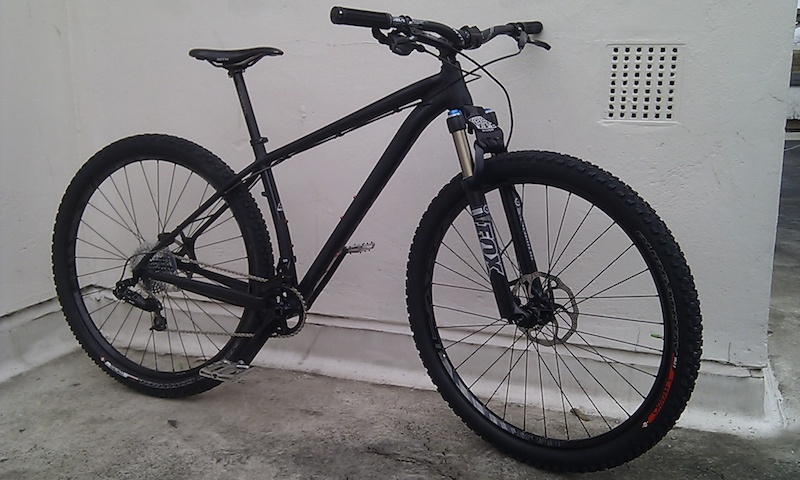 [/img]
problem with the machining of the BB shell, it kept chewing PF30 bearings, so Specialized warrantied it and gave me this:
[img] 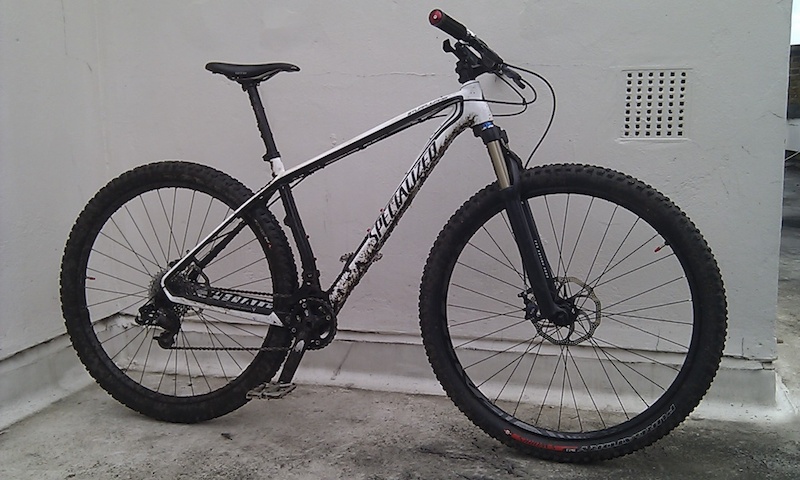 [/img]
rebuilt with exactly the same components, riding the same trails.
Night and day difference, the carbon fibre frame was stiffer under power, yet strangely more comfortable. This was my first CF frame, and I've had a number of CF frames ever since.
your point about seatpost flexure (compliance) is very true.
I'm currently riding this on the road
[img] 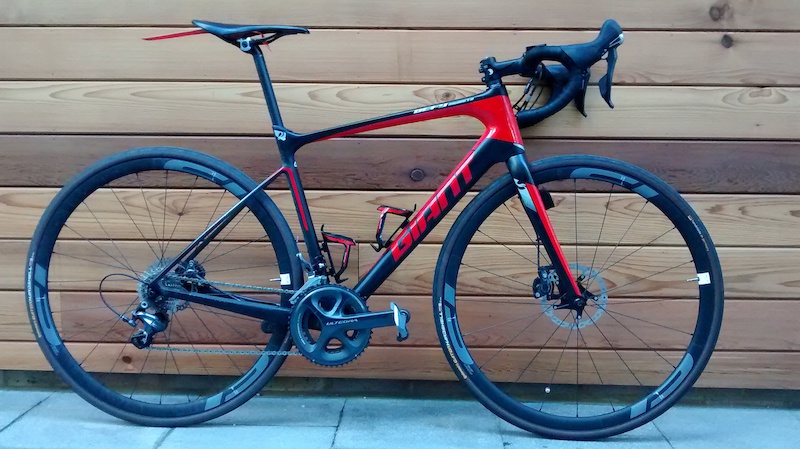 [/img]
The 'D-Fuse' seatpost has a reported 11mm of fore/aft movement, its extremely comfortable in real world use on rough roads, and actually makes the front of the bike feel slightly harsh in comparison.
[img] 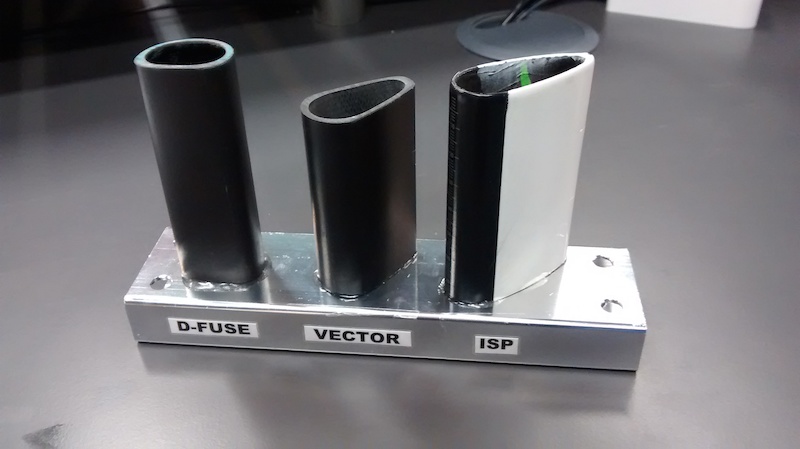 [/img]
You can feel the post moving in use, and if you "grab" the saddle you can easily move the seatpost.
I also test rode the Specialized CG-R seatpost when I worked in a concept store, and it had a similar effect, but to less of a degree
I have an on-one inbred and a parkwood. There is little difference in comfort. I also have a racy aluminium cross bike which again feels fine (Kinesis pro6).
Carbon does seem to reduce buzz but I think it is more about how the frame is designed and put together rather than the material. Would the difference between an aluminium and steel frame be greater than changing from 2.1" tyres at high pressure to lower 2.4" tyres?
Carbon is supposed to be more heavily damped that metal. Which apparently brings comfort
I have an alu Santa Cruz Highball with Niner RDO rigid carbon forks, to keep it slightly flexy I have carbon bars & seatpost. Works a treat. Oh it's also single speed.
So that's a no then ..
Aluminium frames are not relatively uncomfortable .. ?
ampthill - MemberForks and seat posts bend visibly in use.
And? Not being funny but you do realise you're simultaneously arguing that horizontal movement does and doesn't make a difference to comfort?
Other factors are more important than the material itself. I have a Yeti Arc., I have used in in xc races, 100 miles in one day and the dyfi. It's the best bike I have owned, including carbon, spec fs etc. Imho the most important factor on comfort and performance is bike fit. Oh and clothes are important too...
You get use to most frames. I have had full suss, hard tails, all carbon. But with a little tweaking the alu can be just as comfy. Low tyre pressures are a good call as well.
Er, seatposts have little or no vertical flex but nobody denies that they make a difference to comfort. Same with rigid forks.
This weeks prize for the wrongest forum comment.
Funny enough a few years ago I was saying I would never ride a hardtail again.
Not long after bought a XTC alloy 29 hardtail and find it great.
Carbon bars and syntace Hi-flex seatpost (30.9 as well) mite help.
Also running tubeless.
Also a move to 29 made this bike more comfortable over some 26" steel hatdtails (Dekerf 853,Bontrager Race).
Even fit some Niner rigid forks in winter and am still enjoying it!
Wanting to try a Kinesis Sync to see if there is any difference but I am not to sure these bolt through axles on hardtails make them ride harsh?
Thanx,
Max
So why is steel so "real" ?
wilburt - MemberThis weeks prize for the wrongest forum comment.
What do you imagine is wrong with it? I suppose it's possible that some idiots do deny that seatposts can make a difference to comfort, so in that regard it could be wrong...
And? Not being funny but you do realise you're simultaneously arguing that horizontal movement does and doesn't make a difference to comfort?
I my not be explaining myself but that doesn't make it wrong
The pushing on a pedal thing isn't wrong as its horizontal its wrong as its not a load that a frame experiences going over a bump with a seated rider, or even a rider stood up in a straight line.
The seat post is not vertical is it?
So when it bend it flexes horizontally and vertically
I bought a Scandal Mk1 and stripped my steel Pipedream to go back to, if I felt that the Scandal was the 'typical stuff I read about stiff and uncomfortable ali frame, does your back in hardtail' and after one ride, I sold the Pipedream to a friend. The ride was lovely and still is on the Scandal. Used a Thomson post, sdg saddle, 2.1 tyres and I could ride all day, or until the legs gave in. Just bought a Flash 9 er dale hardtail in lovely aluminium and happy with that too.
ampthill - MemberThe seat post is not vertical is it?
So when it bend it flexes horizontally and vertically
You think the comfort difference from a seatpost's flex comes from the tiny vertical vector? (which is about 1/6th of the total movement).
You think the comfort difference from a seatpost's flex comes from the tiny vertical vector? (which is about 1/6th of the total movement).
No, it's the fact that your saddle is extending behind the centreline of the post so as the post flexes back, the rear of the saddle drops. An imaginary line from the the top of the seat tube where the post emerges to the back edge of the saddle is at quite a shallow angle, the bit of the seat your weight is on is moving down for the backward flex at way more than 1:6.
You are still talking about tiny amounts of movement. (and it seems just ignoring forks? Which do have a miniscule vertical movement but nothing of relevance)

