A bike of extremes that somehow turns out to be supremely… calm.
- Brand: Auckland Cycle Works
- Product: Marra V2.4*
- Price: £7,100 frame inc. Fox Float X2 shock
- From: Auckland Cycle Works
- Tested by: Benji for 2 months
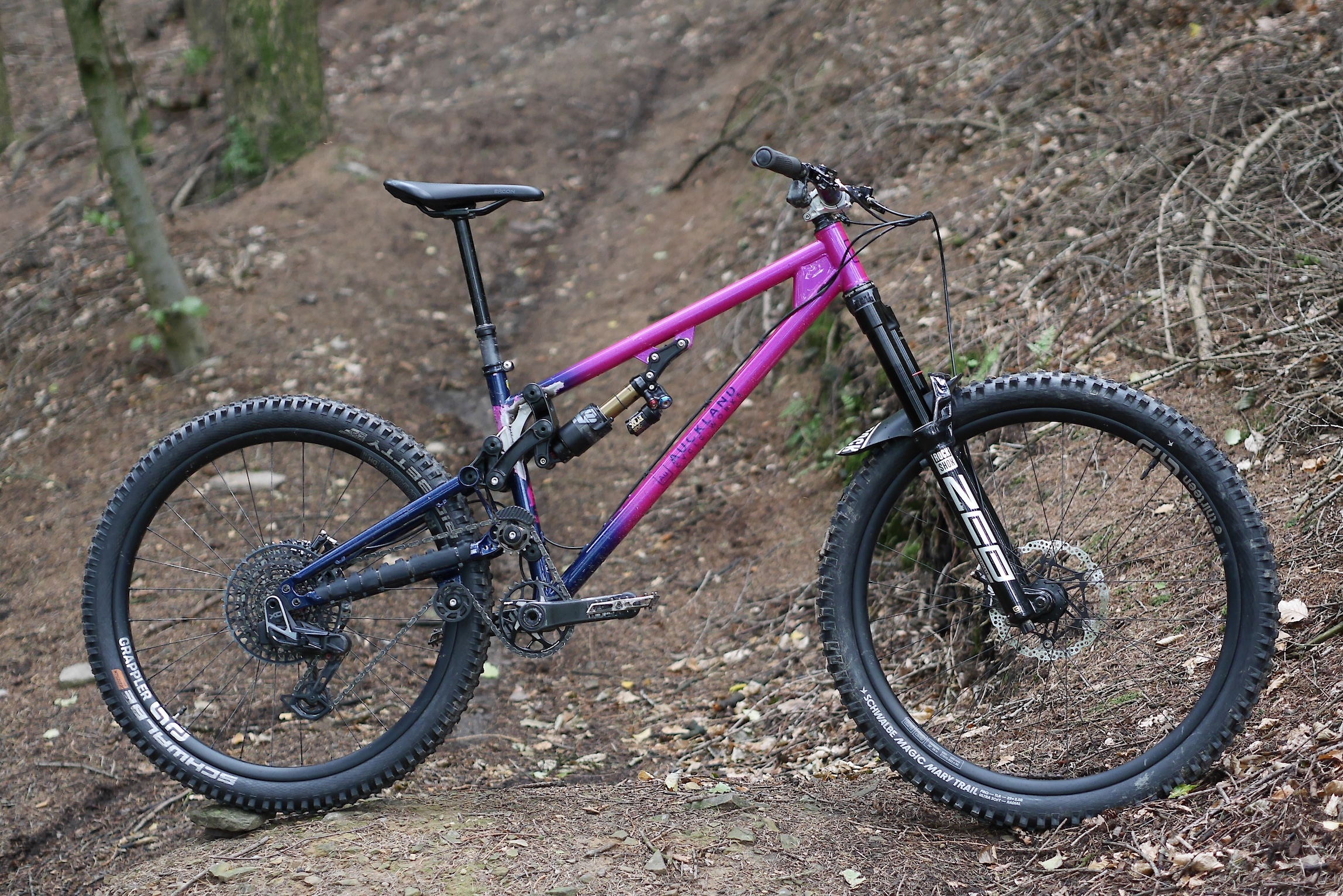
*V2.4 is identical to this test bike apart from two things: a sleeker head tube gusset and an improved forward shock mount (NB: the stripped paint and welded gusset are because this model is a re-worked prototype of V2.3)
Pros
- Supremely composed
- Impressive traction grabber
- All-day rideable
Cons
- Very expensive
- Requires fairly careful setup
Our rating
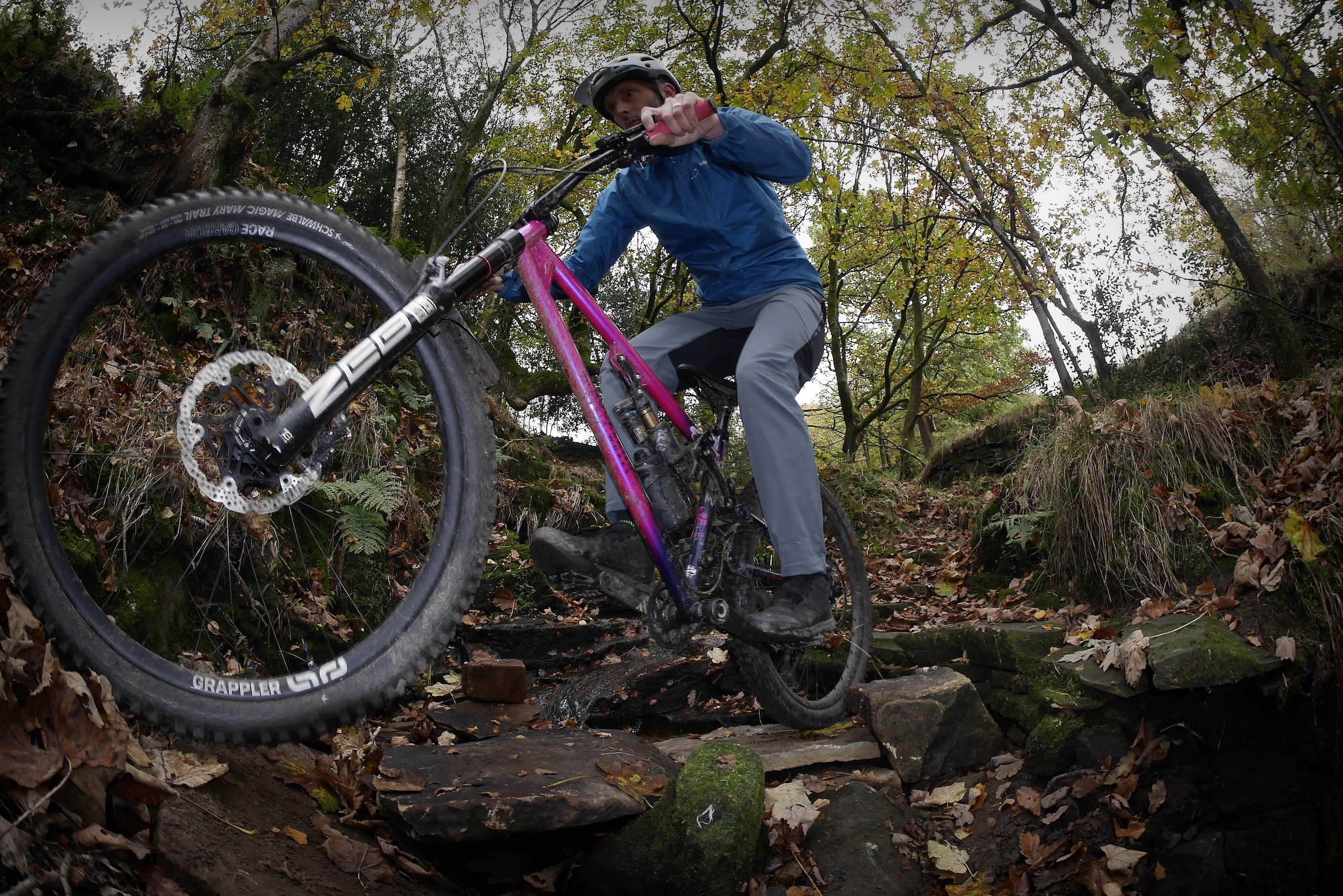
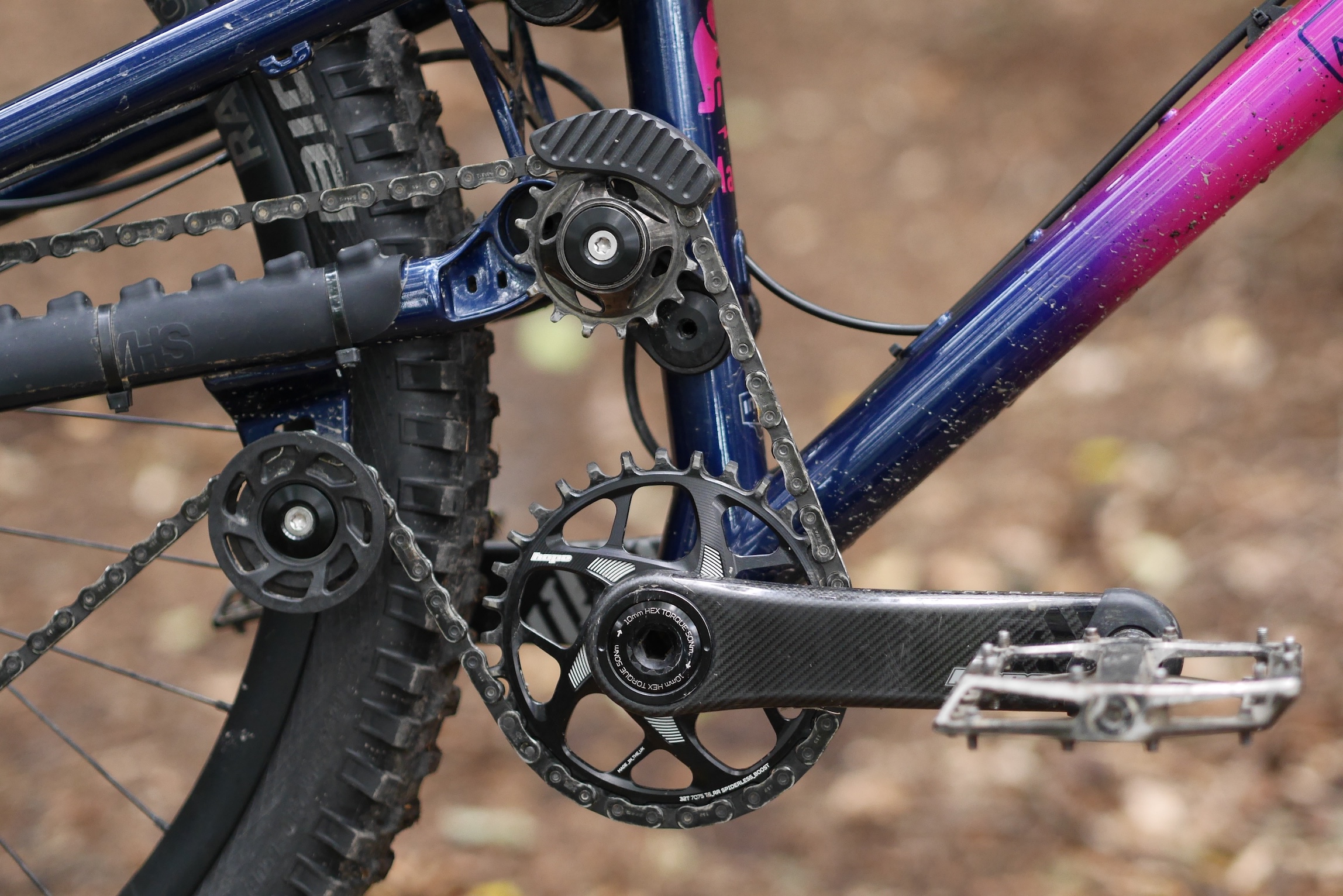
Well, this is a very interesting bicycle isn’t it? Loads of links. High pivot. Idlers. Made in the UK. Made of steel. Custom geometry and paintjob. And stunningly expensive. But is it any good?
Yes, it’s very good.
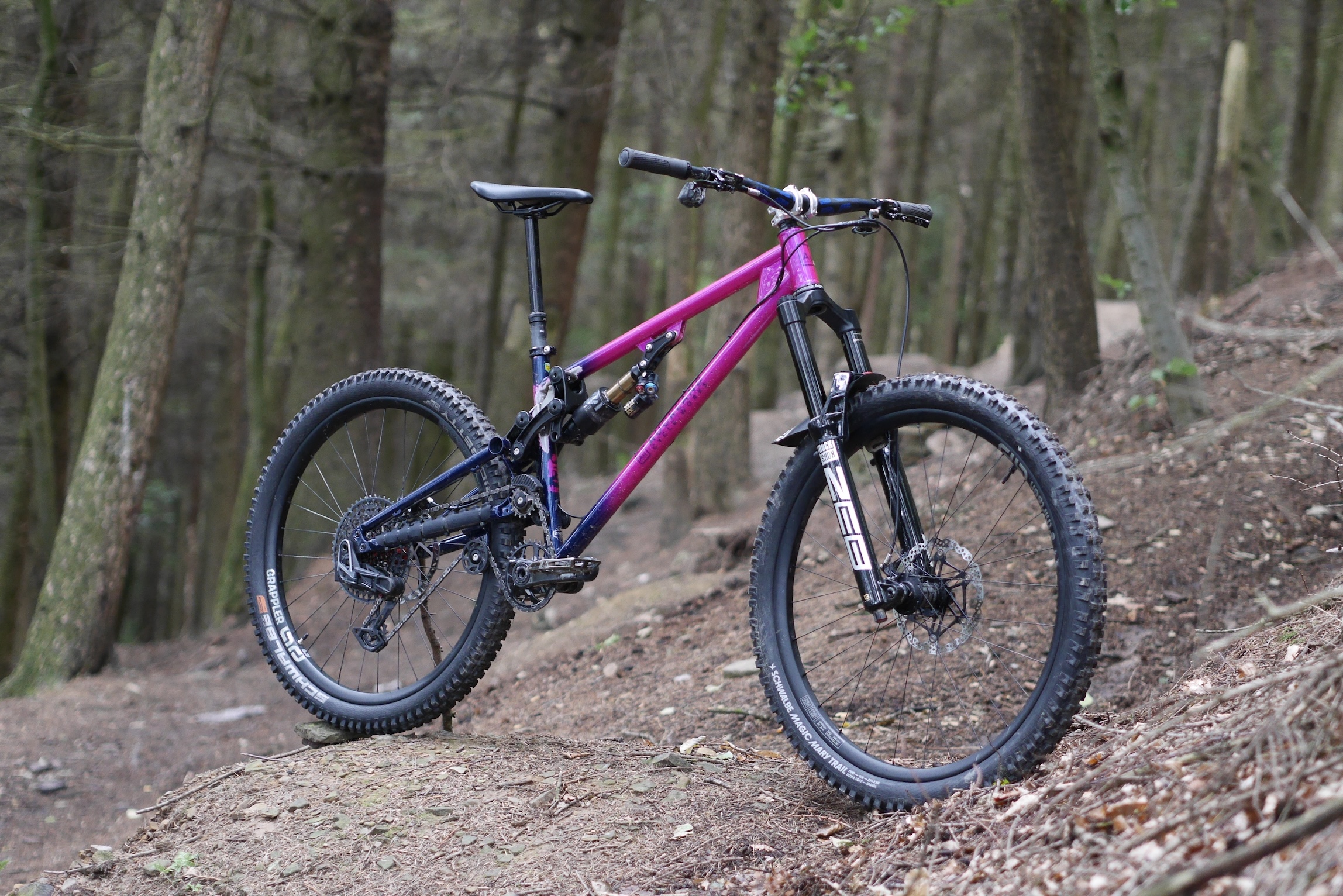
Is it worth £7,000 for the frame – and something like £13,000 for this build? All I can say is that personally I wouldn’t pay more than £3k for a UK-made frame. But loads of people would. So who knows? I guess at least exclusivity is something you’ll be guaranteed with the Marra.
I have actually found this bike to be very hard to review. Because despite it being clearly very different from any mountain bike design I’ve ever seen, it doesn’t handle unusually. Or, more accurately, it doesn’t feel like it’s doing anything weird or different.
This is the curse of a well designed product. It’s easy to find and describe problems with bicycles. It isn’t easy to tell when a bicycle is doing something well, because it just feels like it’s you being an amazing bicycle rider. You don’t think of crediting the bike when things go well. Even though you probably will think of blaming the bike when things don’t go so well.
Riding the Auckland Cycle Works Marra a lot – and especially riding it back-to-back with other bikes – was my test bench. If I had to sum up the Marra in one word, the first word that comes to mind is ‘calm’. Which may not be the raddest marketing term in the world but calm is good. Calm is control. You can be going stupidly fast and still be calm. You can be riding all sorts of gnarly jank and still be calm. Colin McRae was calm (well, most of the time).
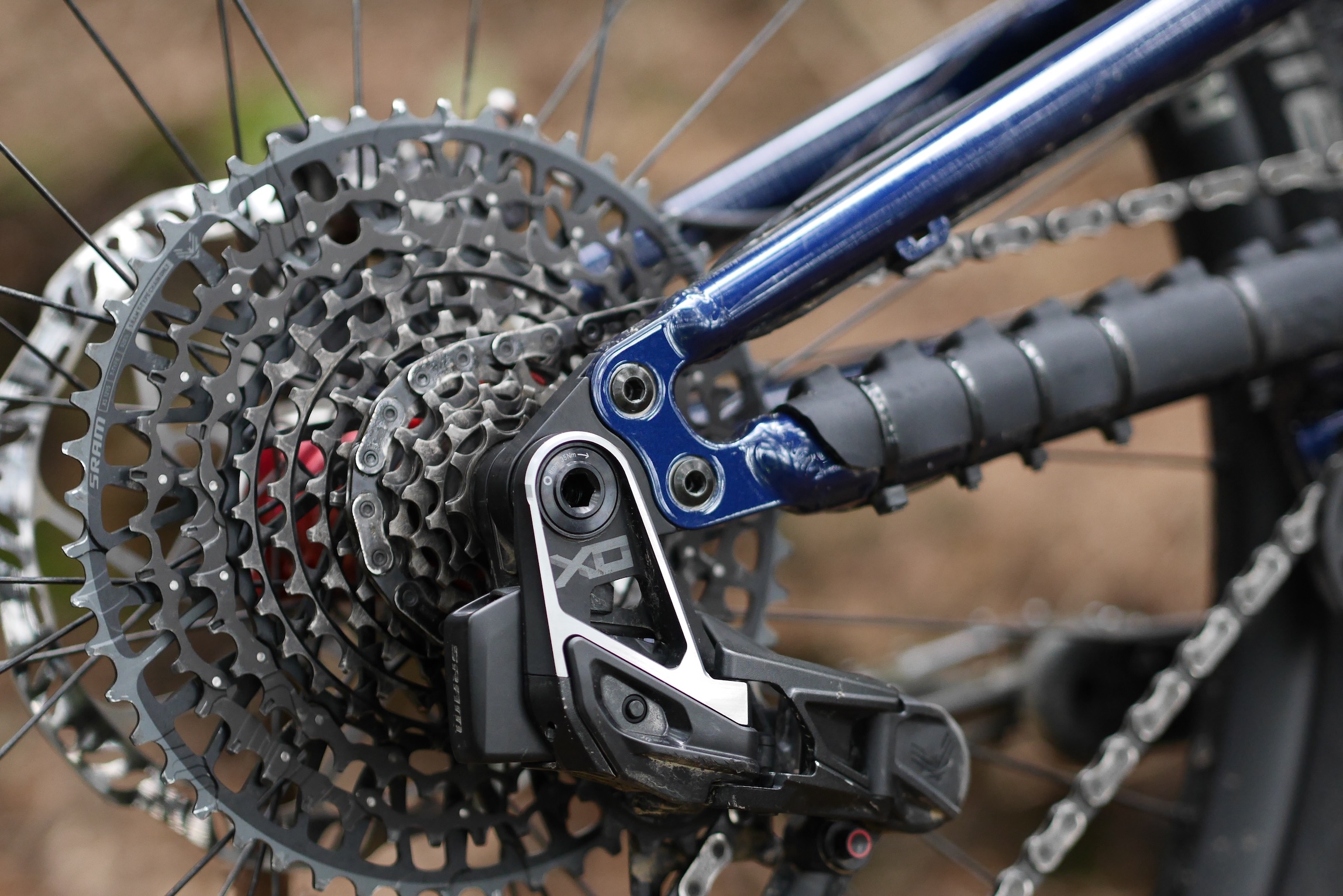
The other aspect of calmness, is that it is not tiring. I rode the Marra much more than I thought I would. In terms of frequency and sheer ride duration. You may look at a 17kg multi-link 180mm forked steel bike and assume it will be hard work to pedal around. It really isn’t. Whilst it won’t do any stomp-and-go acceleration from 0mph-to-10mph that XC bikes do, in reality there isn’t much of that in a lot of people’s trail riding. The majority of mountain biking is mid-paced and momentum. This is where inertia is less of a concern and a bike with effective geometry and suspension comes to the fore. Poor geometry and scrappy suspension are far more tiring than bike weight.
But what about those idlers? They must eat some leg watts? Physics says yes but I can confirm that a bike with a knackered and/or filthy drivetrain (ie. my bike) will drag much more. With a decently cared for drivetrain I didn’t have cause to think about the Marra’s potential idler drag at all.
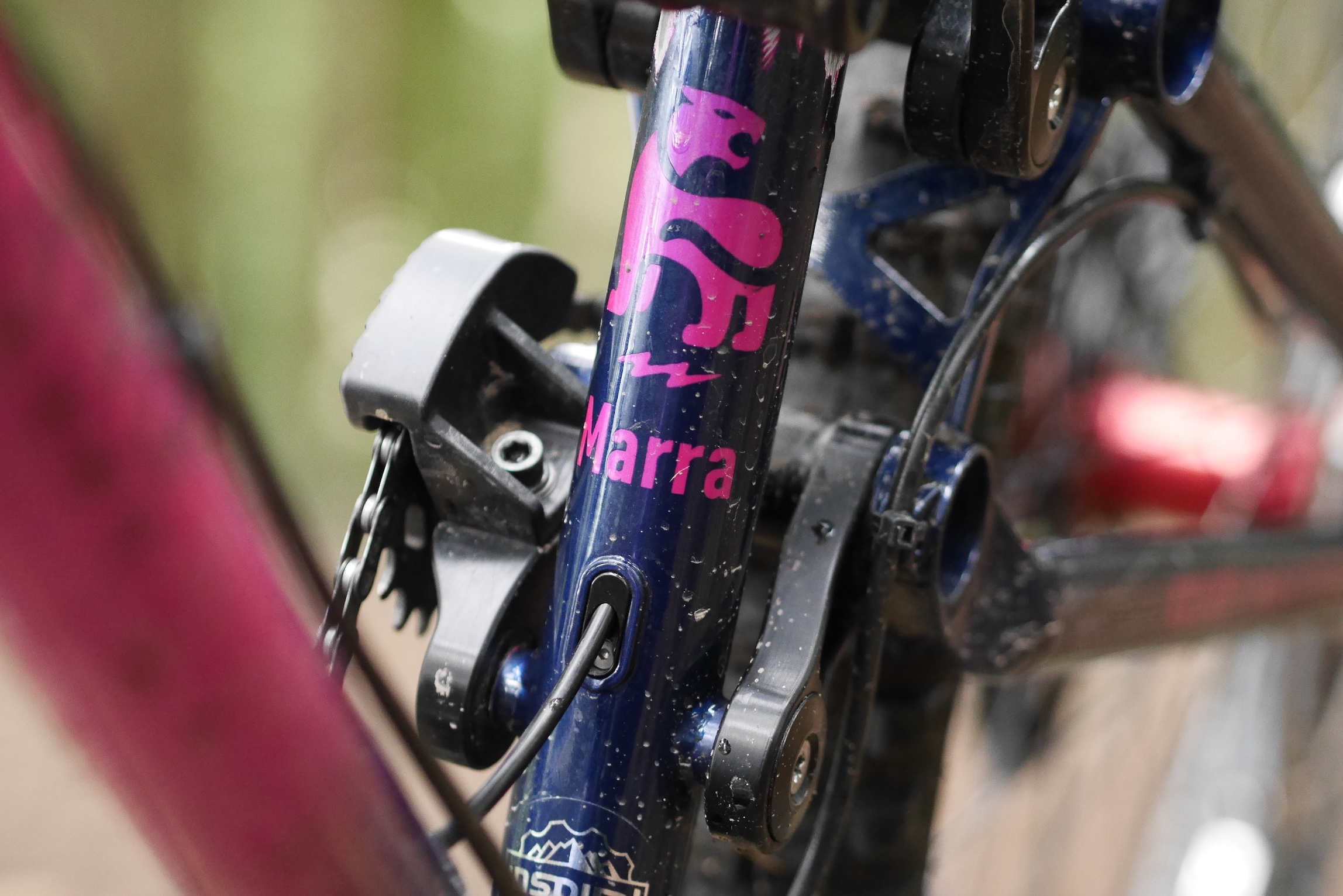
The Marra was a fine place to be for multiple hours, multiple ups, just as many downs, and for day after day. It’s amazing how much you can ride when you’re not white-knuckle fighting and constant-correcting the bike under you.
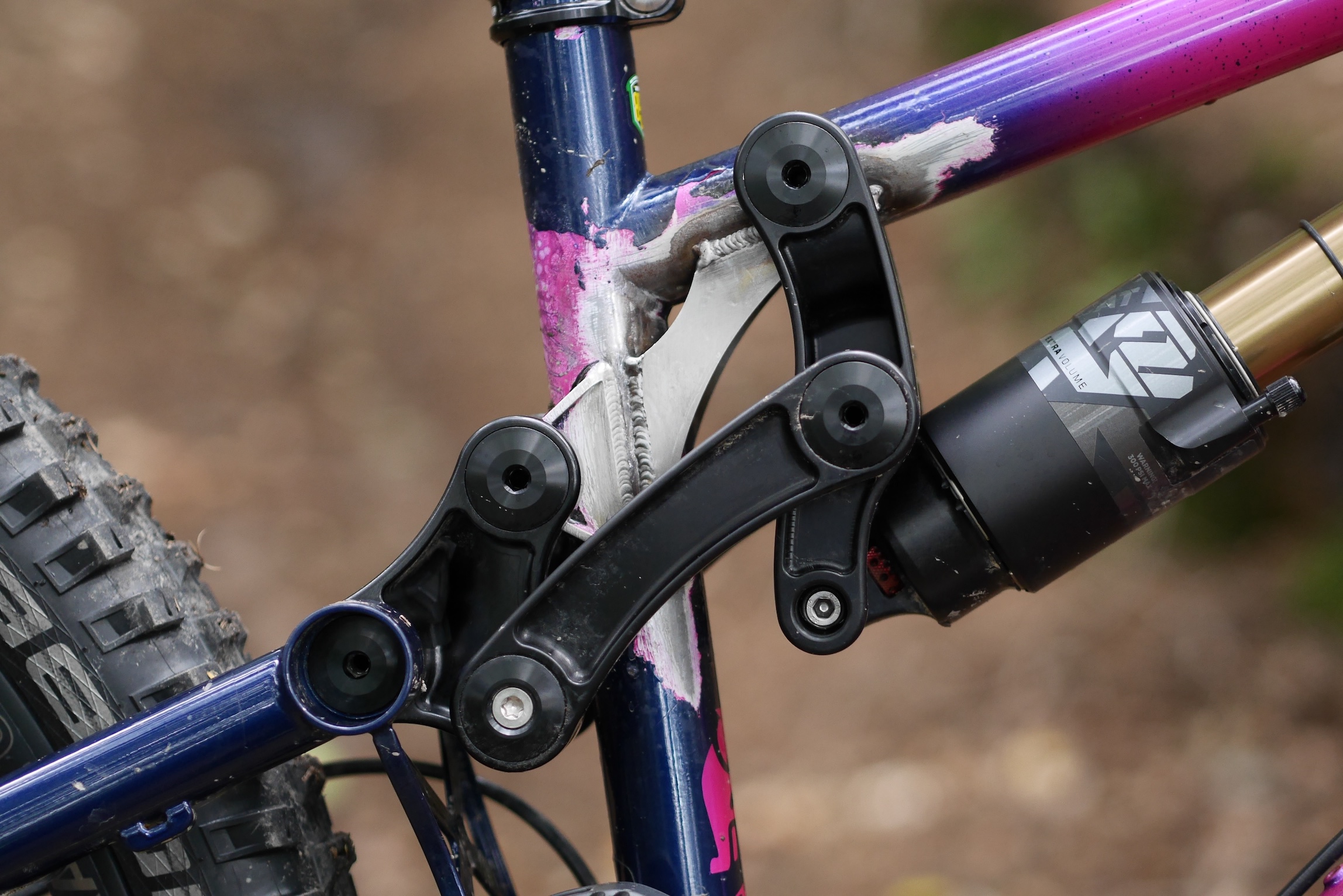
The all-day ability is partly due to the rear suspension design. The Marra uses a bespoke suspension design called KOLARP (Kind Of Like A Rearward Pivot). Of which you can read a lot about on Auckland Cycle Works’ website. I’m not going to go into loads of nerdtastic theory here. I’m going to concentrate on how the bike rides. To use a baking analogy, I’m going to tell you how the pudding tastes rather than tell you the ingredients and how they were cooked.
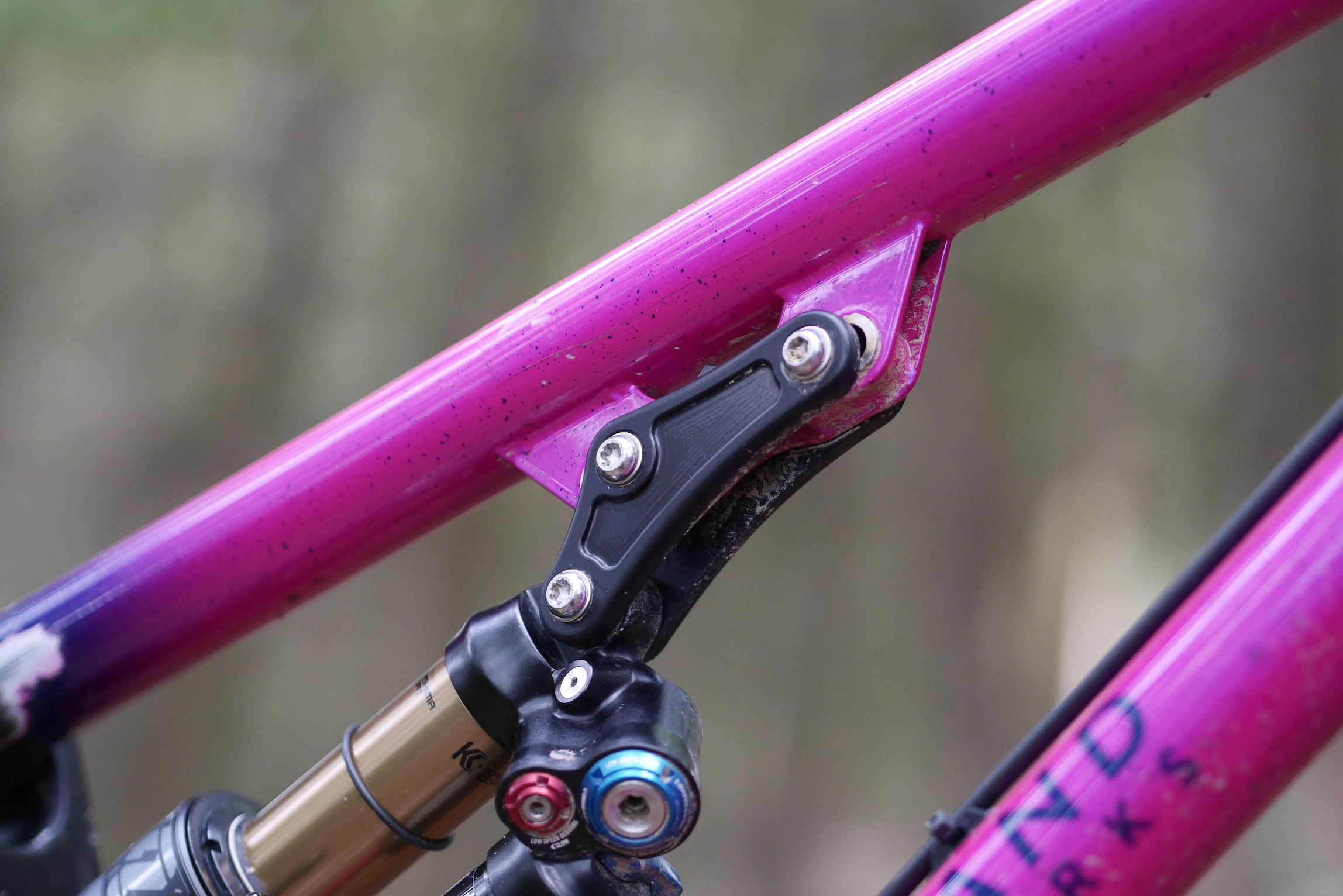
The Marra has a very slight bob to it, which I will ascribe to the very high leverage ratio in the first bit of shock travel. It’s effectively almost undamped. In this regard it rode like some bikes do with coil shocks, or some bikes with similarly high initial leverage (the Saracen Ariel 60 comes to mind).
As with both of those types of bikes, this minimal bob is the price you pay for excellent support and overall suspension performance once you get beyond the sag zone. And really, the amount of bob is arguably the same as the squidge/bounce you experience in tyres.
Speaking of which, I upped the tyre pressures from my usual go-to numbers on the Marra which reduced the tyre bounce, because I didn’t need to run low pressures to achieve desired traction levels. On the KOLARP-ed Marra – and I must point out, running Radial Schwalbe tyres – you can run significantly higher tyre pressures with no ill-effects and greatly improved rolling resistance.
Whilst we’re talking about PSI, setting sag is a bit different with the Marra. Kind of. Basically, you need to be ideally aiming for 26% sag (17mm on the 65mm stroke shock), which is a lot less than is typical, especially for a longer travel bike.
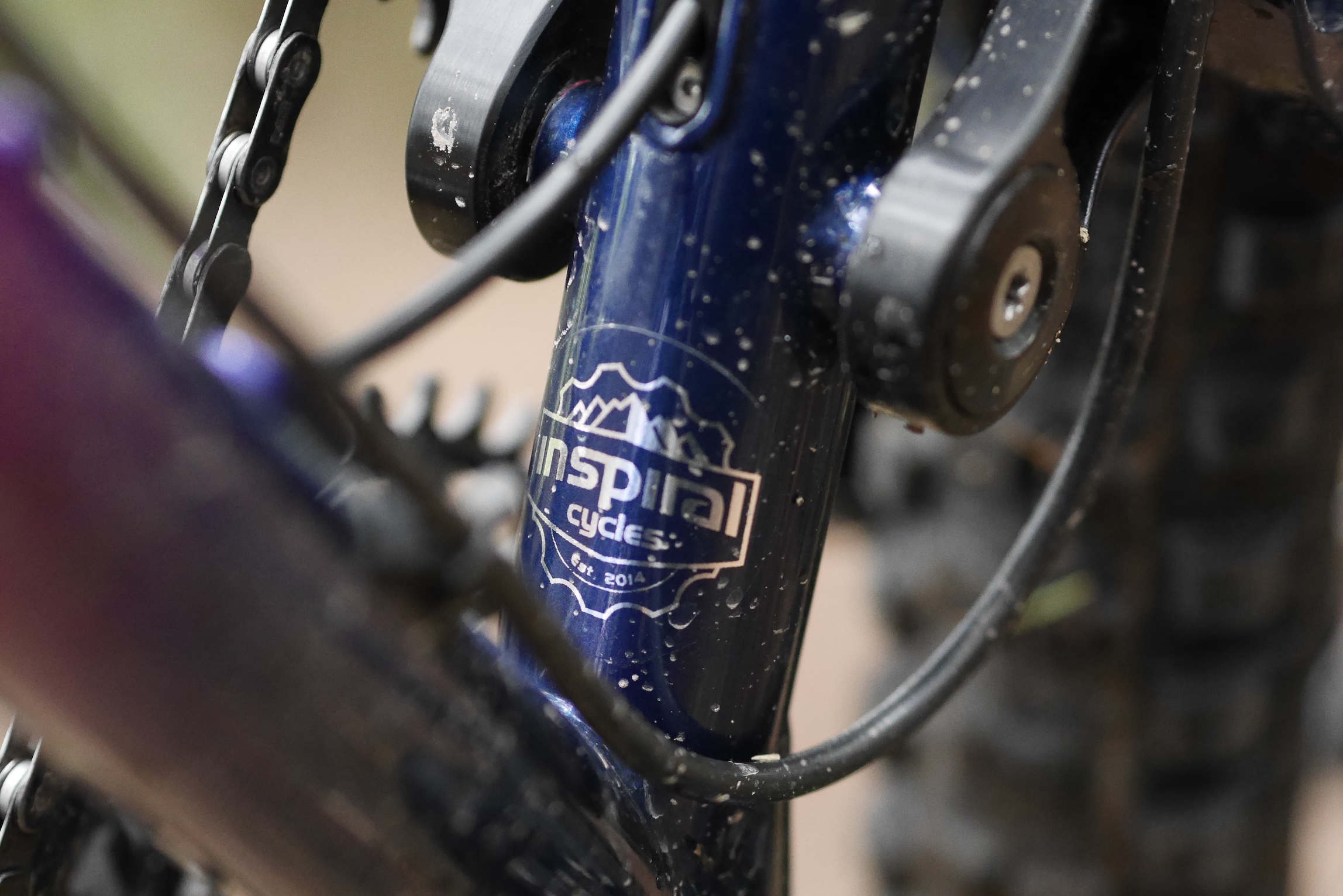
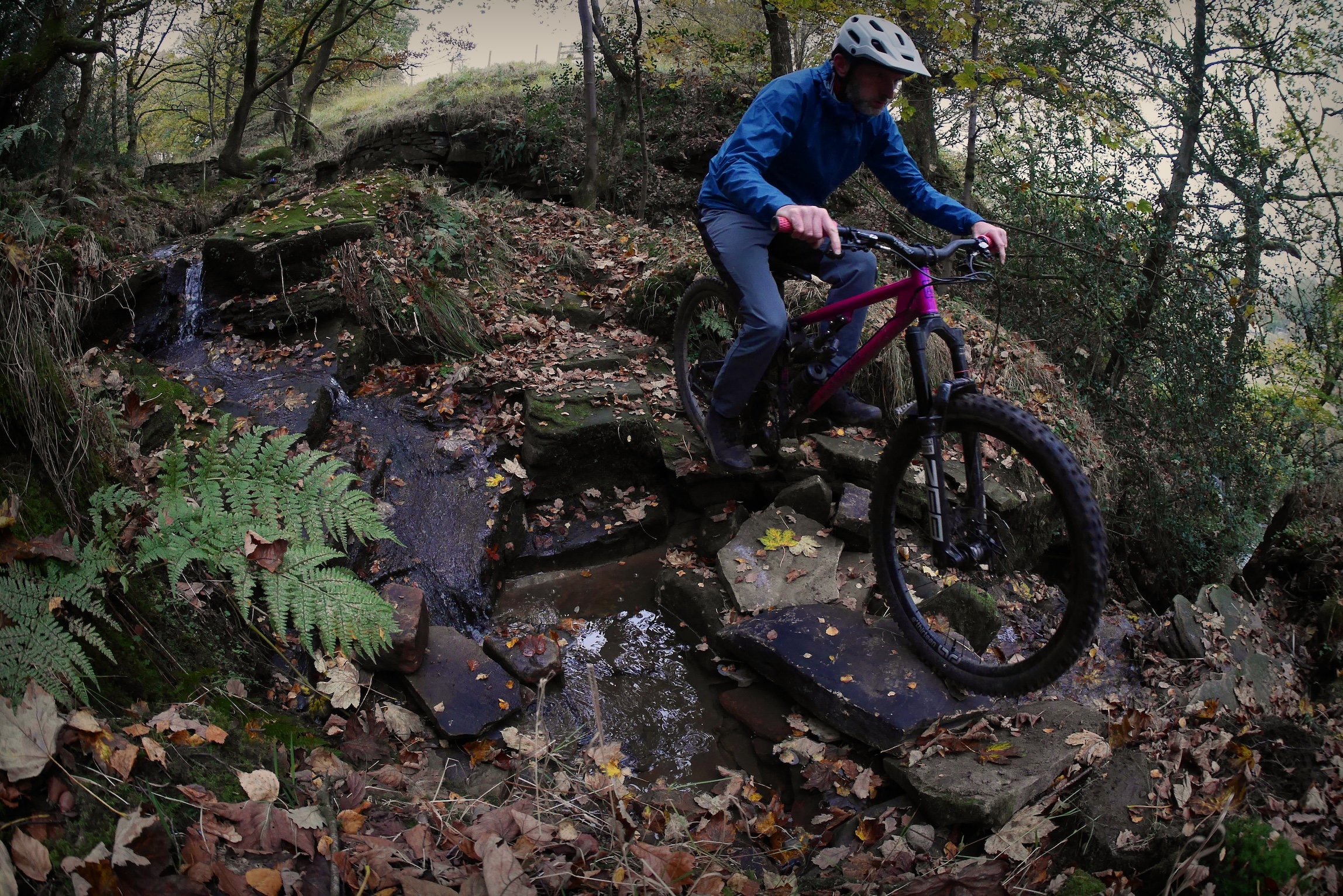
What this translates to on the trail is two-fold. Maybe three-fold. Firstly, the bike can do the pitter-patter traction hoovering stuff. Secondly, you have a lot more shock travel remaining to deal with the serious amplitude bumps. And thirdly, the bike sits dynamically higher than most, which is especially noticeable – and useful – when ascending. The Marra is a superb climber, especially with the longer dropouts fitted. No front wander. No handlebar heaving. No saddle shuffling. Just gets on with it. My lungs/legs gave out before the bike did.
Axle path. As with all high pivot designs, the Marra’s axle path is rearward. It’s not linearly rearward. Most of the rearward travel happens in the first half of the travel, it goes more vertical for the latter half.
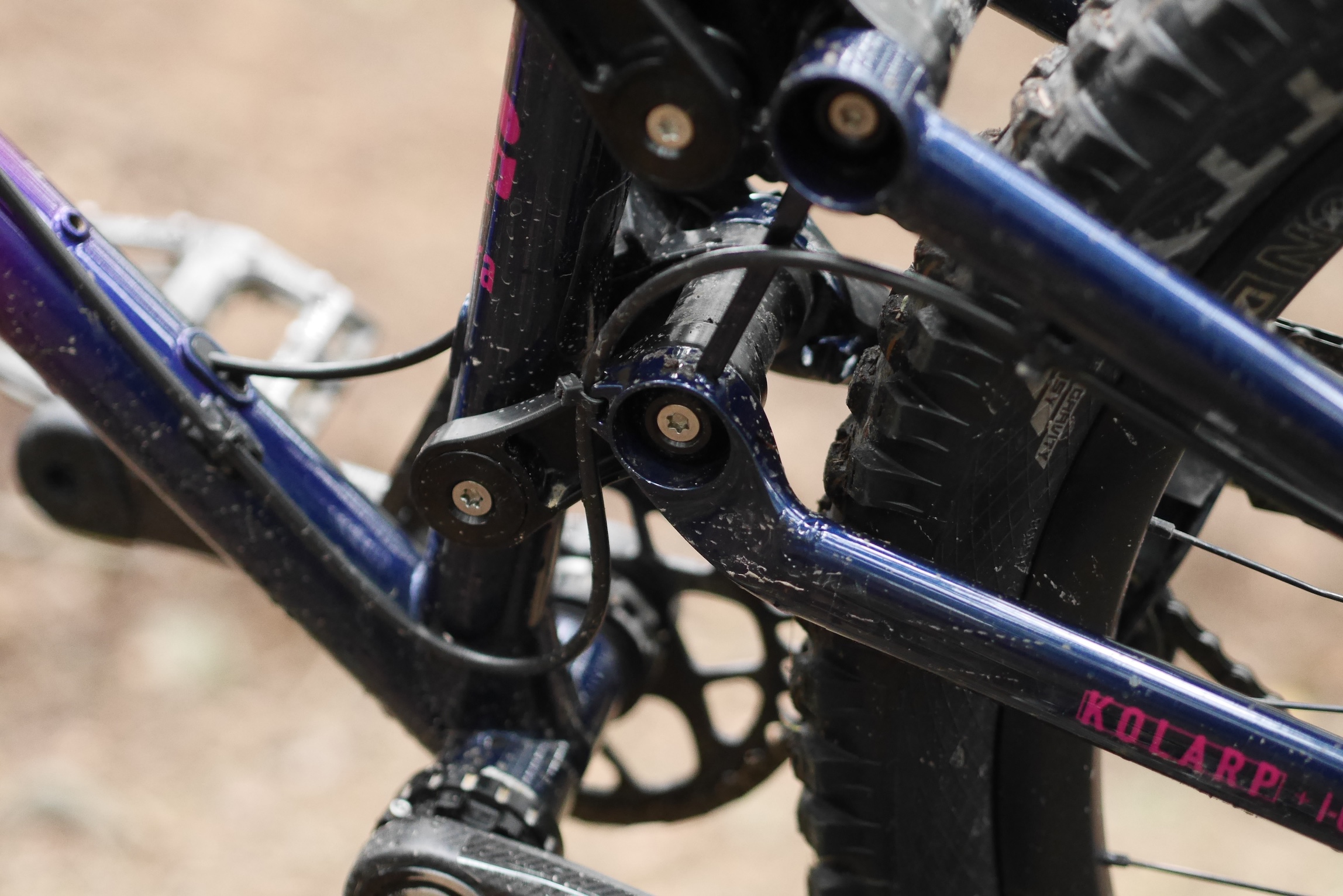
Interestingly, if measured vertically the rear travel is 166.4mm but for the travel of the actual axle path it’s closer to 180mm. Certainly in terms of on-trail feel, both ends of the bike feel similarly ‘180mm’ flavoured (if anything the Zeb felt slightly less than its stated travel due to its too-progressive-for-me air spring).
Regardless, the KOLARP suspension was extremely adept at dealing with bumps and impacts. Getting back on another bike with a ‘normal’ axle path was striking just how much more chatter and line-wrestling there was. The Marra does not get slowed down or chivvied off-line anywhere near as much.
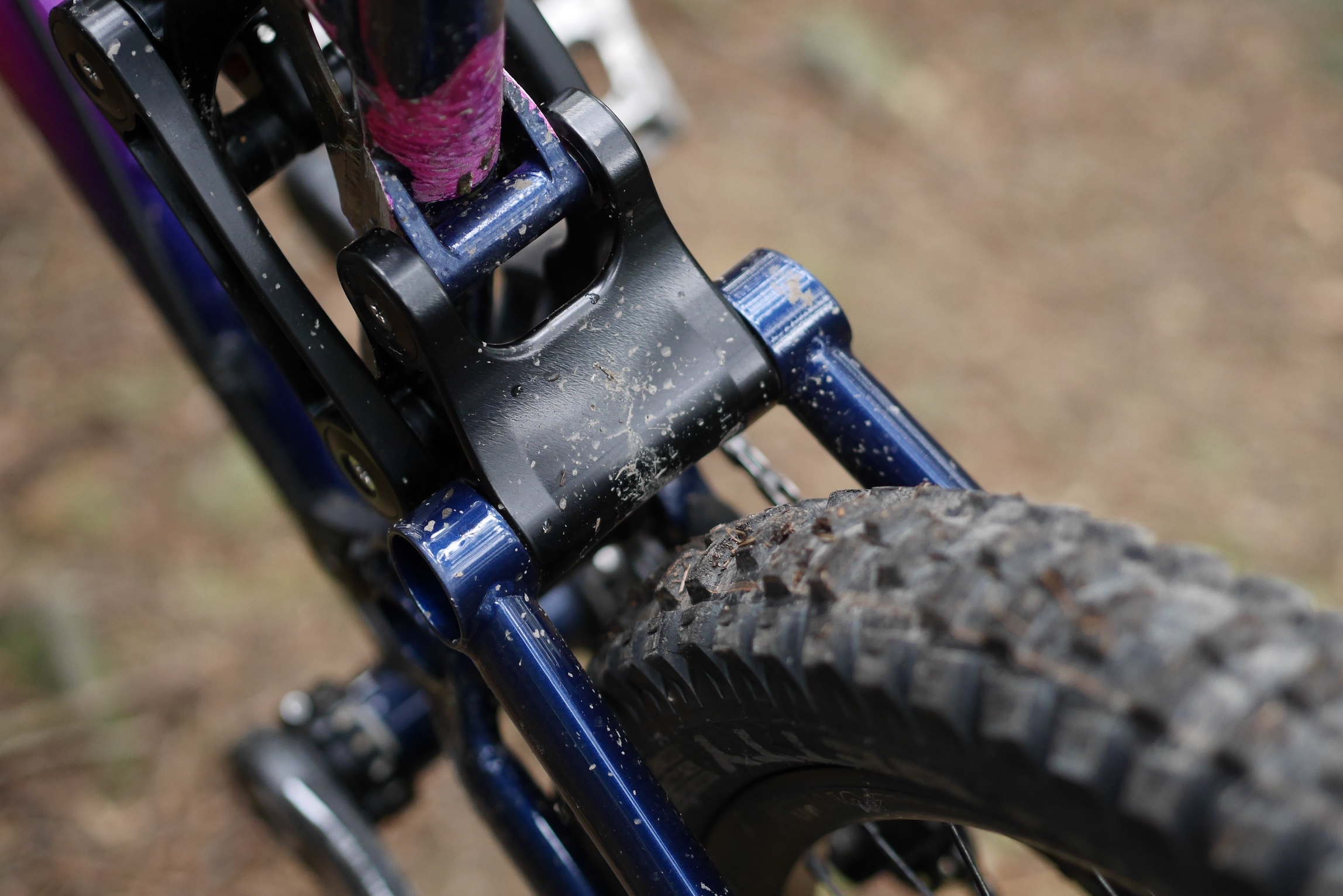
I didn’t notice any undue variance in cornering steer either. I suspect this is due to the fact that the chainstay length doesn’t extend massively from where you already are in the travel when riding berms or other higher speed corners.
Perhaps it’s when braking that the Marra is most immediately different from more traditional designs. Whereas I’m not overly fussed about anti-rise in terms of any supposed geometry-altering ill-effects (fork dive is the overriding issue there in my opinion), the lack of stuttering or skipping about from the rear tyre contact patch is very impressive. The rear suspension doesn’t pack down, it stays neutral and still does suspensiony stuff. It means you can brake less and brake later. Front-brake avoiding rear brake draggers (like me) will find this very useful.
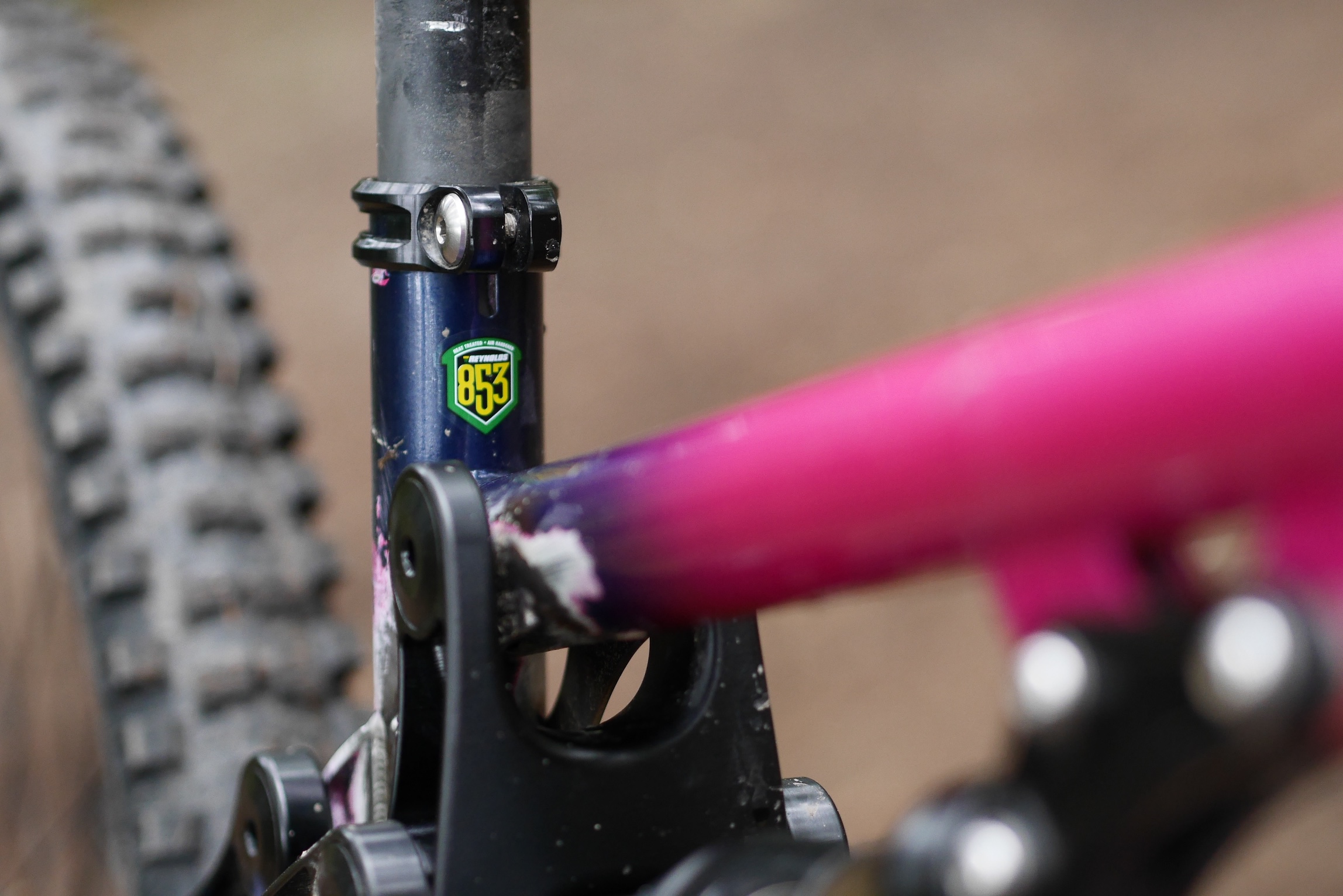
In terms of ‘steel feel’, yes, despite all the linkages and bracings the frame still has some nice give to it. Those main tubes are lengthy. As well as being suitably ‘UK’ and on-trend, the steel tubing undoubtedly helps in terms of tracking and traction when hurtling along looser, rooty or cambered sections.
So yeah, all in all I think the Auckland Cycle Works is a pretty exceptional mountain bike. Is there anything else I can mention to help explain/excuse its price tag?
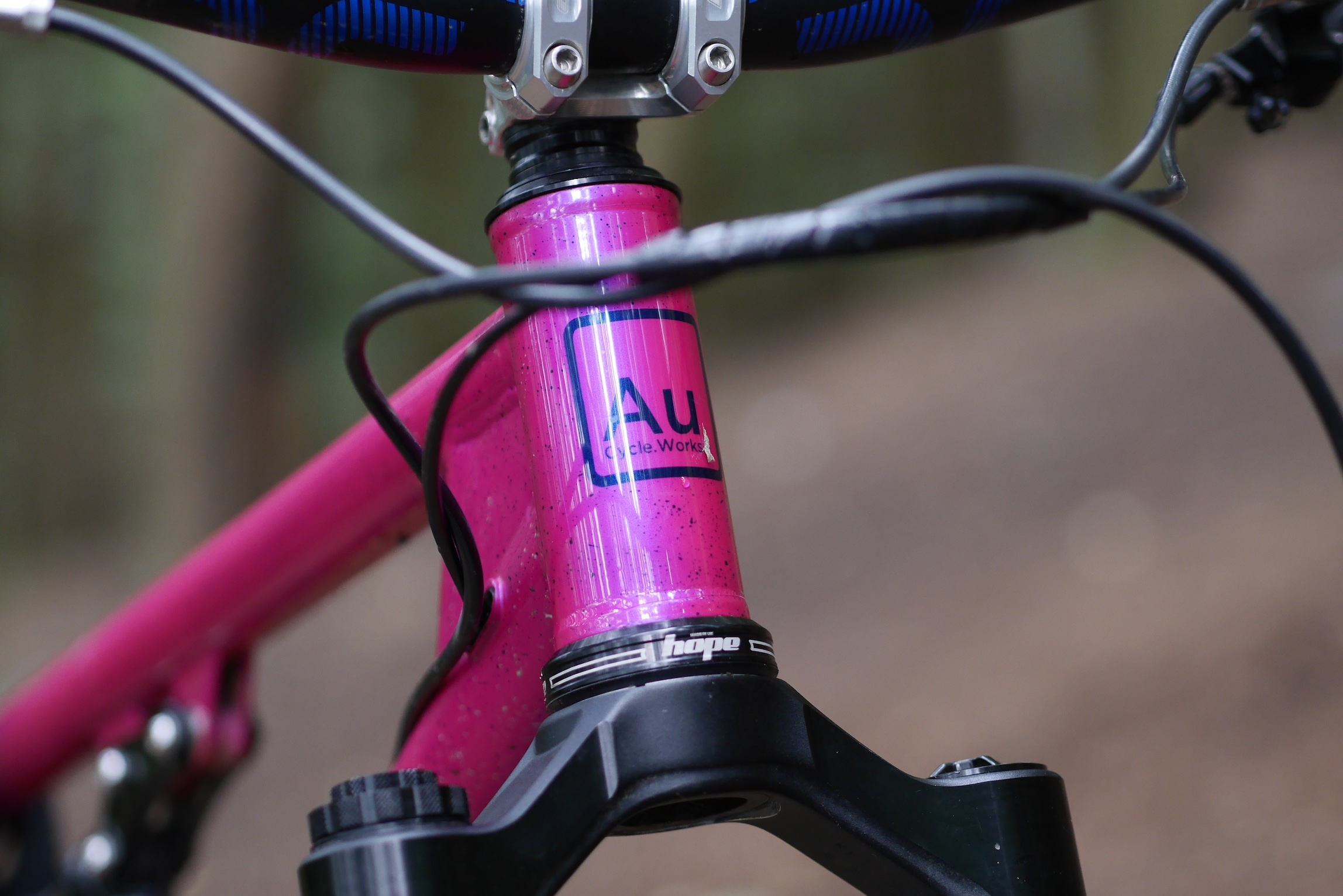
12 of the linkage bearings are chunky 6001 bearings (the two on the top tube are 6902). All bearings rotate through a healthy number of degrees, which helps to prolong life. None of the linkages have daft sloping surfaces that cause a problem with bearing press tools. The linkage array protects the shock from excessive sideloads. Linkage and pivot bolts use longer-than-average T30 bolts. Longer means that the threadlock can do its job. T30 countersunk bolts mean 10nm is easily achievable without rounding them out.
The dropouts are UDH/T-Type compatible (and there’s three lengths to choose from. Forward shock mount is adjustable in 2mm increments. You can choose your cable routing (so long as it isn’t through-the-headset madness). Colour? Your choice.
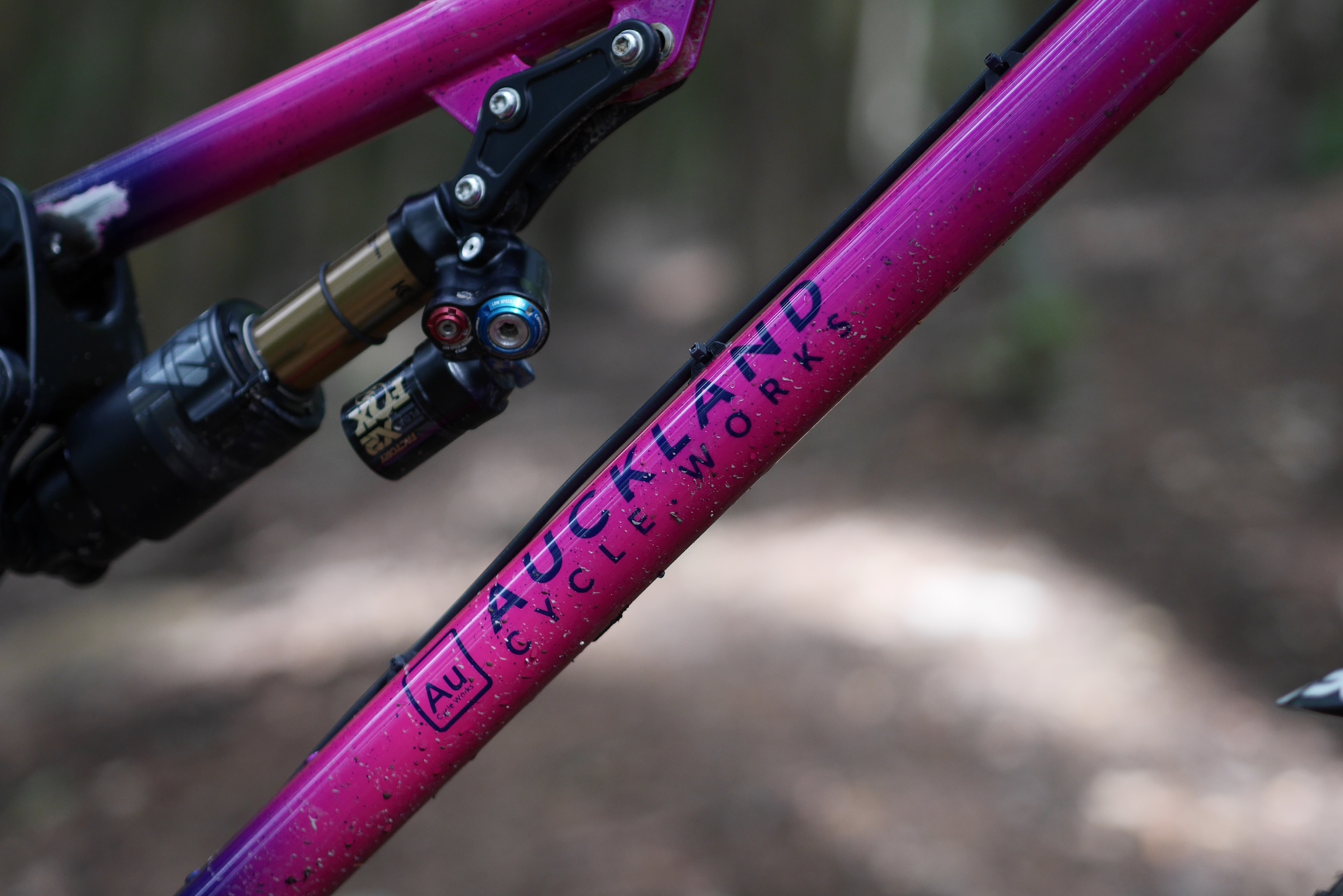
I did ask Auckland Cycle Works (well, it’s essentially one person) about how short the seat tube could go, with a view to smaller riders and keeping the KOLARP pivot points where they need to be. The reply: “As things stand we can easily just cut the tube 35mm shorter to make a 395mm seat tube without any other modifications. Smaller seat tube lengths are possible, we’d need to lower the top tube, which lowers the shock lever linkage pivot, so we’d need to make a minor redesign to the shock lever linkage to keep everything equal. This is something we can do if there’s demand. Super small riders may also be lighter, so we’d make this work with a 230x60mm shock to improve damping feel. Going for a seat tube shorter than 370mm would start to get awkward.”
Overall
An extremely interesting bike that also happens to be extremely good for an extremely high price. Does it do anything above and beyond any existing offerings from the mainstream bike world? Yes, I think it does. Does it do enough to warrant the £7k price tag? I’ve already stated my personal fiscal limit above, so it’s over to you to answer that question for yourself. There are certainly plenty of similarly costly flagship models out there from the big brands, it has to be said.
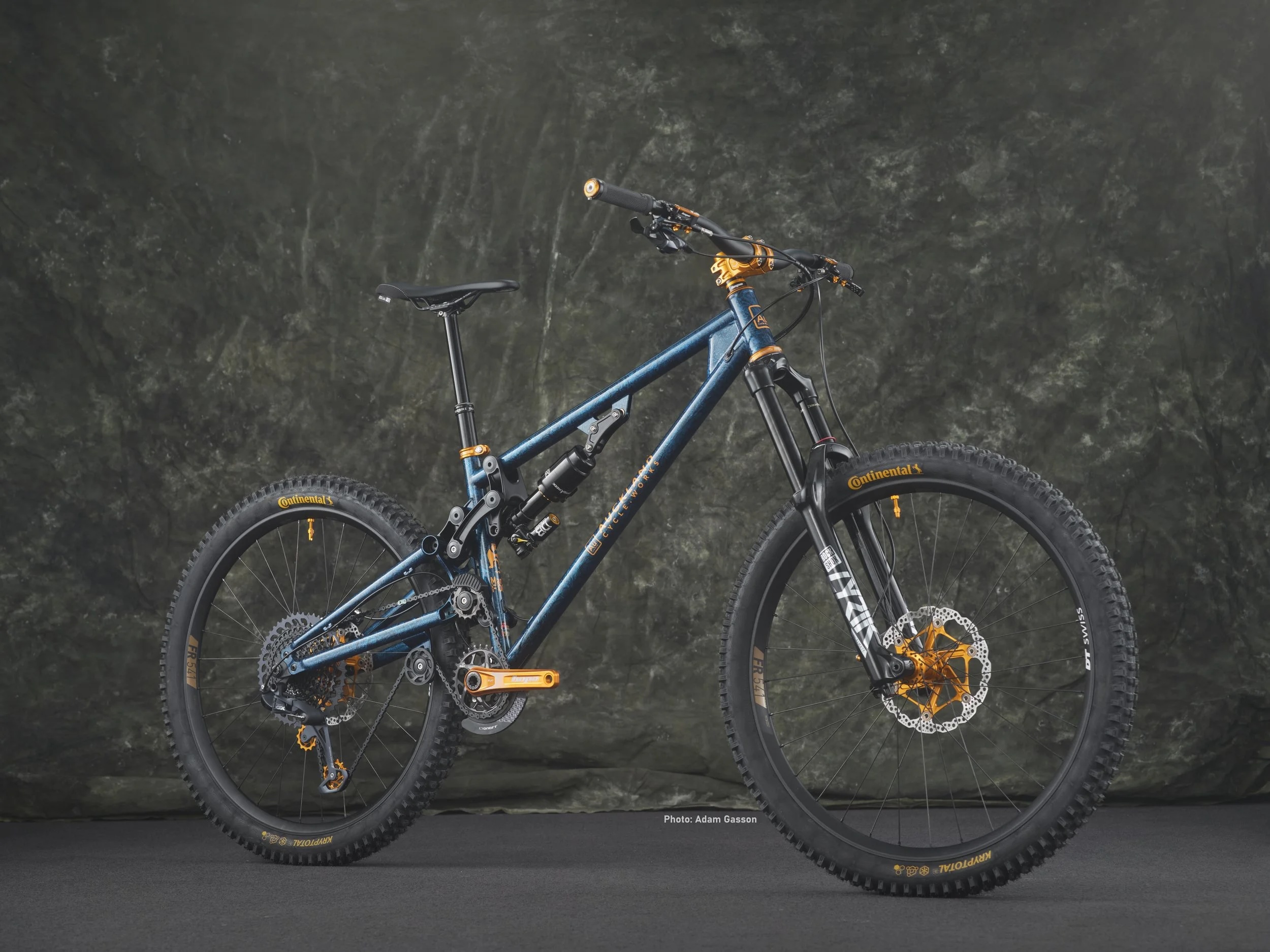
Auckland Cycle Works Marra V.24 specification
- Frame // Auckland Reynolds 853, 166.4mm vertical travel
- Shock // Fox Float X2, 230x65mm
- Fork // RockShox Zeb Ultimate, 180mm
- Wheels // e*thirteen Grappler Carbon w/ KOM rear hub
- Front Tyre // Schwalbe Magic Mary Radial Ultra Soft 29 x 2.4in
- Rear Tyre // Schwalbe Big Betty Soft 27.5 x 2.4in
- Chainset // Hope Carbon
- Brakes // Hope Tech 4 Evo
- Drivetrain // SRAM Eagle XO AXS Transmission
- Stem // Race Face 32mm*
- Handlebars // Thomson 35, 800 x 35mm*
- Grips // Bikeyoke Grippy*
- Seat Post // PRO Koryak 200mm*
- Saddle // WTB Solano*
- Sizes Available // Custom
- Size Tested // L
- Weight // 17kg
*tester’s own items
Geometry* of our size Large
- Head angle // 63.25°
- Effective seat angle // 76.5°
- Seat tube length // 430mm
- Head tube length // 110mm
- Chainstay // 429mm (NB: stay length grows as suspension compresses)
- Wheelbase // 1,272mm
- Effective top tube // 615mm
- BB height // 344.5mm
- Reach // 485mm
*with the forward shock mount forward by one notch (2mm)

Fresh Goods Friday is sponsored by Yellow Jersey

Price: £7,100 frame inc. Fox Float X2 shock
🤣 🤣 🤣 🤣 🤣 **** off!