That's a good question - and I am genuinely amazed that shareholders have not been more vocal in addressing this. But it should be their responsibility not government's to regulate.
Two possible reasons - shareholders are increasingly passive (possibly more ST too) and linked to that they have been content with the returns from capital appreciation - hence why instead of paying dividends as suggested earlier they preferred to buy-back shares and "repay" shareholders that way.
Hv, governments are poorly placed to determine the level of CEO pay and its likely to be very different depending on the context.
That's a good question - and I am genuinely amazed that shareholders have not been more vocal in addressing this.Two possible reasons
Nah... you forgot the third....
Despite Fatcha's professed vision of a share owning democracy, it never happened. Shares owned by private citizens have never been lower. They're all owned by the same institutions. As with most of the financial sector, its a boys club, a closed shop. They all sit on the remuneration committees and just sign each others obscene pay deals off, on a reciprocal 'you scratch my back..' principle.
Hence wage stagnation, at best, for everyone except those in the boardroom, who's remuneration has continued to accelerate into the stratosphere, whatever their performance. You can bankrupt a company (or maybe an entire financial system) and still walk away a squillionaire, laughing your tits off.
For as the banking crisis so depressingly demonstrated - those on the banks trading floors, or in corporate boardrooms are now officially a law unto themselves, accountable to no-one, who can do as they like with complete impunity, and absolutely no consequences
hurray for capitalism!!!
Governments are poorly placed to determine the level of CEO pay
And yet apparently perfectly placed to set what is effectively 'The Wage' for a huge chunk of the countries workforce, at £6.70 an hour?
No inherent contradiction there then eh?
CEO pay could be set at a multiple of the lowest paid worker in the company. If you want to earn obscene amounts of money form your own private company.
As an employee of a large publicly listed company no one is entitled to a huge pay packet, the money belongs to the shareholders / pension funds.
(15 times minimum wage should do it).
Tax Credits were indeed bonkers.
Yes, absolutely, they are bonkers, but unfortunately they are here at the moment. The way we transfer the proper pay of someone to an employee now has to be done in a way which is fair and proper.
I don't think Tax Credits should exist, but the level of the minimum wage should also be higher than it is, and planned to be.
Directors pay is too high, but they can get away with it at the moment because of the government subsidy to their lowest paid workers.
I'm as right wing as they come, eg small government, lower tax. However, this actually means that I think the lowest paid workers should be given even more.
The economy and society is moving to being more service and leisure based. With this a lot of the jobs are not skilled in the same way as they have been previously. Barista vs machine shop worker. We need to make sure that people at the lower end are paid correctly. If it means that a tin of beans is going to be more expensive because we have to pay shelf stackers a reasonable wage, then it means that this is the actual cost of said product. The cost will then be taken out of the top level of salaries. The recent increases in personal allowance are also very welcome.
Governments are poorly placed to determine the level of CEO pay
They are, and the small government part of me doesn't like to see businesses regulated, and think unions are destructive. Unfortunately, where they simply fail to do the right thing in regards to pay at the bottom end, then a proper min level needs to be set. Nothing complicated, just a proper wage.
Stuff doesn't become more expensive, it becomes properly priced. Lower paid workers can afford more anyway, and the money goes from the richer to poorer for a change.
Bit rambling, sorry!
There is an obvious contradiction binners, true. So if Governments "are" poorly placed, they should be doing neither 😉
edit: reread your post hugo
Yes, absolutely, they are bonkers
Not necessarily - they can simply reflect that there is a value to the wider society in a person being employed, or living at a reasonable standard, or giving a safe and healthy home to their kids, that is not recognised by their employer.
It's a complicated picture for sure but dividends are in decline not least due to the fact they are taxed and these days it's inefficient to shelter profits offshore (Mr Junker has helped a lot with this whilst turning Luxemborg into one of Europes most wealthy counties). Dividends will also tend to mirror interest rates, and those are historically low
Very very roughly for every £ less in profits a companies shares will go down 5-8 times (lots of assumptions here of course including whether the investors think the decline is temporary but reducing profits to pay wages sounds permanent to me).
We had/have a supermarket that didn't make profits, it was called the Co-op. Do we shop there ? Is it the most successful business model ? Is it even viable ?
I don't know if they stats quoted here where correct (£30bn now vs £3bn originally) but Tax Credits have gone bonkers in terms of costs (as has "disability benefit" which I calculated the other day must be paid to somewhere between 5 and 10% of our working age population)
We on here are all willing to buy bike bits off the internet most likely from an offshore business, with very limited uk workers and in the case of the German companies a swerve on VAT but we are complaining about cutting tax credits when our behaviour is what is driving down employment and wages ?
I appreciate this is off topic (so feel free to ignore) but who saw the news prices on the Romanian fruit farm workers in Kent who are being exploited by agencies and employers all due to good old EU freedom of movement rules being too easy for companies to abuse ? I'd imagine they'd be entitled to tax credits too.
So who is the enemy here then jambalaya, ninfan, thm etc?
Who should we be chasing to address the problem of inequality?
I think we've firmly established that it's not the poor, the ill or the workers.. We can't touch profit, so it's not corporations..
Is it the stock market that's messing things up and putting all the money in the wrong hands?
In your opinion, who is causing the problem?
Leaving aside the fact that income inequality is neither high by historic standards nor rising, the main blame lies with those responsible for education and training.
The biggest factor is clear in the developed markets - financial returns to education. The wage premium of skilled over non skilled workers.
Then you have changing patterns In employment: (1) increase in families with no working adults and (2) increased female participation meaning increased number of dual income families. Households are now more like to,have either no earners or two earners than before. Harder to point to whose directly responsible there.
jambalaya - Member - Block User
We had/have a supermarket that didn't make profits, it was called the Co-op. Do we shop there ? Is it the most successful business model ? Is it even viable ?
The royal 'we'?
I shop there a few times a week. The one in my village is always busy (and is still called Co-op). Don't know what that proves though?
jambalaya - MemberWe had/have a supermarket that didn't make profits, it was called the Co-op. Do we shop there ? Is it the most successful business model ? Is it even viable ?
It's still the 5th largest UK food retailer, growing, and very influential- led the way on fairtrade, cruelty free, responsible fishing, locally and ethically sourced foods, excess food donations...
Is it the most succesful? Obviously they're not the biggest, but that's not the standard by which they should be judged. Is it viable? Obviously. Do we shop there? Yes, sales increased 7% last year in their key markets. (they were stagnant in the big box-shifter stores because that's a market they're gradually exiting)
@Lifer, I haven't seen one in the longest time I did wonder if they'd gone bust. The fact they are so rare suggests the business model isn't effective whereas the (German coincidently) budget supermarkets are thriving
@Yunki I think it's a collective problem, it is an example of how a government policy can result in a change of behaviour. If a business realises it can pay less and the government will make up the difference it's inevitable wages will decline or at least not rise.
jambalaya - MemberThe fact they are so rare suggests the business model isn't effective whereas the (German coincidently) budget supermarkets are thriving
There's almost 4 times as many co-operative outlets as there are lidls and aldis combined 😆 What they wouldn't give to be so rare.
There are loads round here too! Apart from the one in my village I pass two on the way to work. Confirmation bias again, you do have a problem with that.
Nuh uh, he says it's a "fact that they are so rare", therefore, they are now rare 😉
Jambalaya, what retail glapagos island do you live on? We have a full-on co-op supermarket near us with trolleys and everything. You can also buy a telly, fridge, laptop, and laydeez clothes etc there. Oh until recently a tax disc- there is a main post office inside it too. I have no idea how many smaller ones there are in our city of 270000, i can think of fifteen or so right off the top of my head and i don't even get out or around much.
In my opinion in this country this all comes back to housing + accommodation this is the main expenditure for almost all workers.
For a totally free market to work you'd need to be totally free to build as many houses as needed.
Workers would be free to build house, landlords, developers everyone, this would reduce the cost of accommodation considerably and therefore the wages would be appropriate.
The problem at the moment is there seems to be an inexhaustible supply of cheap labour with a very limited supply of housing.
Therefore for people to live a reasonable life the system needs to be managed some how.
Whether this is "tax credits" or a "minimum wage" is kinda besides the point.
The money either needs to be taken out of the company via tax and returned to the workers from the state or the government forces the companies to pay a reasonable amount in the first place.
This leads to much the same outcome and much the same results in terms of costs for the company.
Therefore which solution you support at the time needs to be ideological and this can change.
In the 80's the Right were dead against the minimum wage and noncompetitive nationalised companies and the power of unions, who helped keep workers wages high. So they were keen to privatise the companies and leave people on the dole.
Unfortunately they then realised that the large number's of unemployed or partly-employed people were dependent on the state for welfare + later tax credits. They felt like these people would naturally vote for a welfare government ie left wing.
So now the right wing are arguably even more in favour of a minimum wage than the left wing as they think people will see they wages coming from private enterprise rather than the government.
Its all about trying to control peoples attitudes really rather than anything else.
Hopefully in future the size of the Economy will continue to grow but the number of available workers will fall (which is what happened from about 1900 - 1970) this will give power back to the workers again.
Leaving aside the fact that income inequality is neither high by historic standards nor rising
You keep saying that, but the OECD statistics don't agree with you.
the main blame lies with those responsible for education and training.
This. Plus the lack of housing and transport infrastructure.
@Lifer, I haven't seen one in the longest time I did wonder if they'd gone bust. The fact they are so rare suggests the business model isn't effective whereas the (German coincidently) budget supermarkets are thriving
Never been to the North West of England then Jammers?
Round here, they're quite literally everywhere. There's about ten times, at least, as many as Aldi's or Lidl's. It surprises me really you hadn't noticed. From your posts, I'd presumed you lived in Rochdale. Which as we all know, is the birthplace of the co-operative movement. It says so on the big bridge
sorry Dco, but the stats do and have been linked on many occasions.
Old story "inequality" - the 80s revival! But makes good headlines....bit like "austerity" (sic)
Oh come on THM... even you've got to admit that it feels like we're having a proper 80's revival this week.
With the news showing all those frightful, mucky northerners, with their overalls and beer bellies, looks of weary resignation on their faces, being interviewed inside their grubby Labour Clubs, or standing in front of their newly closed plants, about how they won't be able to afford Christmas presents for their kids.....
While a bored Tory minister shrugs disinterestedly, stifles a yawn, wonders for a fleeting second where Redcar or S****horpe actually are, and totally unconvincingly says they'll support those workers made redundant, knowing full well that absolutely no-one believes that. What they are certain of is that those communities will be abandoned to their grim fate just the same as the miners in 84, by a government that genuinely [url= http://www.thedailymash.co.uk/news/business/government-powerless-to-intervene-in-non-banking-industry-20151020103119 ]couldn't give a shit[/url].
Its positively retro-tastic!!!!!
jambalaya - Member@Lifer, I haven't seen one in the longest time I did wonder if they'd gone bust. The fact they are so rare...
co-op, rare?
are you on crack?
'fact'?
FWIW, their salt and vinegar crisps are mind-blowing.
in some cases a 70s revival!!
or in the topic's case, the same issues were being discussed in the 18C with their version of taxt credits being described as a "universal system of pauperism"
History repeats itself again!
GO is treading on thin ice - whatever the facts over tax credits the Tories are losing the narrative here in the same way lost it over economic competency. It will be interesting to see if/how he responds. Tough enough externally but this is an internal Tory battleground too!!
Politics is entertaining if depressing at times!
I'd like to see a progression of the total tax credit bill since its introduction, to see where and when it started to explode.
Co-op. Clearly my food shopping isnt reflective of the national norm . I agent seen a co-op in SW London, Surrey or Hampshire for as long as I can remember. Plenty of Lidl and Aldi. I do visit the North Binners as I had 2 daughters living in Leeds over a 7 year period but most of the time I'm biking/hiking in the countryside and not doing too much shopping so must have missed the co-op. @awhile, it's a fact I haven't seen one for ages yes.
DrJ I must spend some time looking at the income inequality stats - I am very much of the view that the less well off are much better off on an absolutel and relative basis than they where 100 and 50 years ago. Rich people these days own a flat in central London whereas 50 years ago they'd have the whole house and staff. When I grew up having one family car was the norm now out of the middle class have two, foreign holidays etc. Everyone in the UK benefits from our welfare state provisions and our healthcare, I wonder how that's included (I expect it's not) We have he super rich now not least as a result of the tech boom, I imagine that skews the stats a lot. When it comes to global calculations we have countries like India who in 50 years hav added a billion people to their populations mostly very very poor.
Via full fact.
[img] 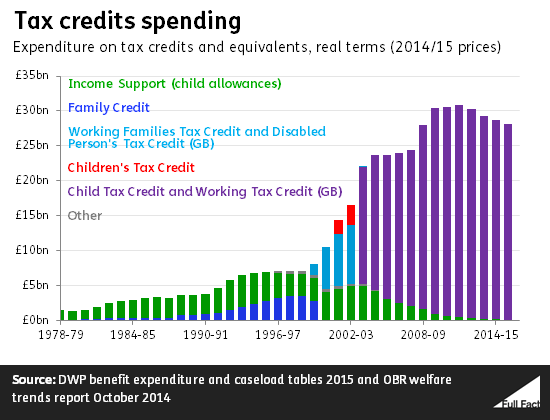 [/img]
I am very much of the view that the less well off are much better off on an absolutel and relative basis than they where 100 and 50 years ago.
Of course we are. Going back 80 years or more you can ask the people that were there. My father, still going strong at 87 grew up in a working class area of Glasgow (Maryhill). In the 1930s nobody in his street had a car. They didn't have a washing machine or even a fridge. The toilet was shared with other families.
Going back 35 yrs I worked in an area in Glasgow where there were whole streets with virtually no cars. Nowadays the streets look like anywhere else. Cars everywhere. Just less shiny than wealthier areas.
In the 70s many Glasgow streets were nearly car free.
[img]  [/img]
@ninfan, thanks that's perfect.
Totally forgot about Co-op convenience stores/corner shops, plenty of those inc one 200m away 😳 Not sure where the nearest large store is
The Ocado delivery driver probably notices it as he drives past with your Waitrose delivery 😆
😀
We don't do food delivery as they tend to give you stuff closer to the sell by date and we like to pick our fresh food ourselves anyway. Actually now you've jogged my memory the new Waitrose we just found nearby used to be a Co-op (so my local friend told me as I'd never been to that area before in 15 years) - just reinforcing the stereo types 😉
You can tell they're struggling though Jammers. Their new custom built corporate offices in Manchester city centre are a very modest understated affair...
[img]  [/img]
[url= https://en.wikipedia.org/wiki/One_Angel_Square ]Its a really interesting building[/url]. It runs on bio fuel/cooking oil. Handy when you own half the agricultural land in the north of England, growing the stuff