UPDATE: CLASSIFIEDS section refreshed, redesigned, searchable: Go take a look
Cough ** Compound Helicopter ***
Very fast, no silly gearboxes
[img] 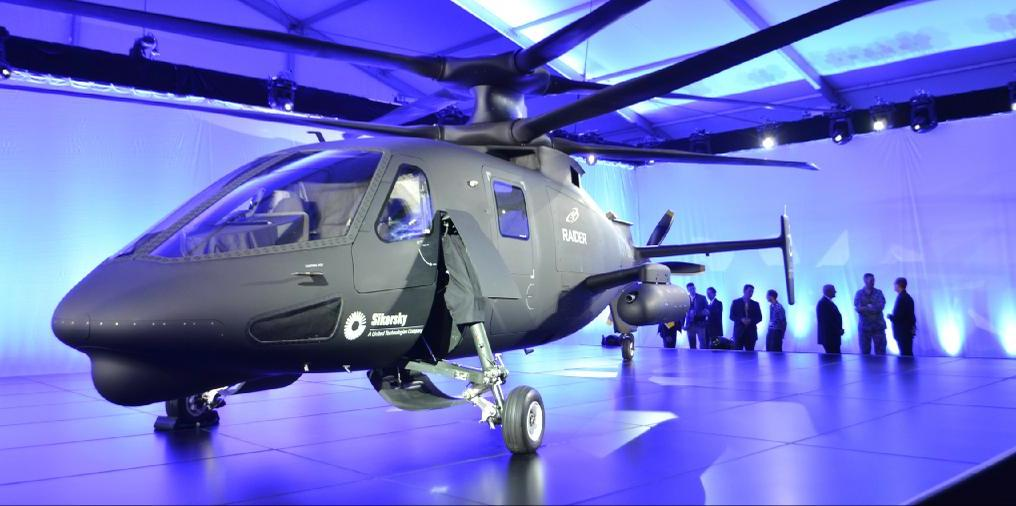 [/img]
[img]  [/img]
Looks very nice.
Saw that brace of Ospreys fairly low over Kew Bridge mid-morning, first time I've seen one in the flesh/metal. Awesome sight and they were certainly getting everyone's attention, understandable considering the racket they were generating - hardly a stealth airframe 🙄
But the A10 is 30 years old and the airframes are coming to the end of their life. There is no doubt that it's an excellent CAS aircraft and has been superb in Iraq and Afghanistan against an enemy with no real integrated air defence system. Against a peer/near peer adversary with reasonable (read soviet double digit SAMs) I think the A10 would struggle. Your equipment should be ready for the next war and not the last one.
Close air support aircraft don't need stealth, supersonic speeds and BVR anti-air missiles.
What they need is -
1) Armoured Engines and Cockpit Area and redundant hydraulics (because a rifle calibre machine gun can knock a low flying aircraft out the sky)
2) Low thermal signature
3) Good Visibility
4) Low wing loading
5) A big **** off gun, because guided munitions cost a fortune.
6) Long loiter time
Most of which the F-35 lacks. An A-10 doesn't need anything the F-35 offers when fighting more capable adversaries because they would be supported by F-22s and Wild Weasels.
The F-35 program has been a complete **** up, congress want to restart F-22 production - they should have just cancelled the F-35 and plowed money into developing the F-22 further. It could have done all the land base roles the F-35 could, meanwhile the F-18 would have tied us over until the Navys F-X program came to fruition. Who's emphasis will be less on stealth and more on a massive weapons load out and the ability to suppress enemy air defence.
An actual replacement for the A-10 would look remarkably similar (a cross between a Reaper and the A-10) and would be optionally manned.
The reason A-10's keep getting threatened with retirement is because the top brass are obsessed with showy fast jets, and keep looking at ways to compromise their performance by using them for unsuitable rôles, very much like Hitler did with the Me-262, by insisting against all advice to the contrary that it was fitted with a pair of 500lb bombs, which reduced its performance to the point piston-engined fighters could catch it.
Using F-16's and the like for CAS for troops on the ground is utterly ludicrous, but it still gets put forward.
So what if the basic airframe is 30 years old, it's a very basic and easy plane to replace bits on, it was designed so that many parts are interchangeable from one side of the plane to the other, like control surfaces, flaps, ailerons, rudders, tail surfaces, etc, for quick battle damage repair, the pilot sits in a titanium tub, the engines are mounted in such a way to mask hot exhaust from heat-seeking missiles, and it's a highly manoeuvrable jet; I read somewhere about an exercise where a fast jet, possibly an F-16, came up behind an A-10 which flew down into a long valley, the fighter dropping in behind.
The fast jet pilot was a bit vexed when he realised that the jet he thought he was following had turned and was coming back head-on, with that sodding great rotary cannon pointed straight at him.
He had to concede the fact that he was screwed at that point.
What they need is -
however what they don't need is to be slow...and the A-10 is woeful.
remember, the A-10 has been starved of upgrades since the Cold War
Hardly, it's had wing updates, avionics updates, ECM, smart weapons delivery systems, all the analogue controls have been replaced with multifunction displays.
To be honest, the USAF never wanted the A10 (which is why every time cutbacks loom they stick it up on the block). The USAF only decided to launch the A-X Program (that led to the A-9/A-10 competition) because the US Army was increasing pressing Congress to let it provide it's own CAS, which would have put a large dent in USAF budgets.
however what they don't need is to be slow...and the A-10 is woeful.
Actually, they do. Because lower speeds coupled with a low wing loading give longer "guns on target" time at low altitude. High speeds at low altitude reduce your ability to perform CAS and high speeds at higher altitudes open you up to even the most basic anti-aircraft artillery.
Fast movers have less time on target and tend to make more mistakes in who they target. Time on target is needed because ground troops have been finding that guided missiles that rely on a HEAT warheads to do the job, don't always do the job properly in comparison to a gun that throws hundreds of high kinetic projectiles that can cut through dense cover, down range in a short time. Missiles also cost serious money.
High speed isn't needed if you can rotate aircraft in and out of the battle space, if they have a half decent loiter time.
All of which is great if the Enemy is armed with little more than a sharpened mango - as soon as the enemy turns up with manpads then A10 starts falling out of the sky at an alarming rate.
And manpads will knock out an F-35 quite easily as well, as you can't get rid of that massive hot engine at the back. Except one aircraft has two engines and two tail planes and has been known to return to base after having half a wing shot off. There's an old saying, the only way to bring down an A-10 is to put a suicidal pilot in the cockpit.
CAS isn't CAS if you're doing it from 30,000 feet with 500lb JDAMs.
And for your scenario where we are fighting a modern integrated air defense, that is what wild weasels are for.
Besides, the A-10s survivability could be improved even further with a towed decoy and active IR defences.
Remember how many fast movers the yanks lost to AAA in Vietnam?
Let's all remember that the A-10 was designed and built to survive a battlefield full of mobile AA and MANPADs. That's seen in every part of its design. In a COIN battlespace or something similar (like we are seeing in AFG) the risk posed by 'modern' AA is greatly reduced and the benefits of low and slow outweigh fast and high tech.
Vietnam demonstarted this to the Americans; the A-1 Skyraider was its premier CAS plane despite the layered defences that the NVA had up.
Let's all remember that the A-10 was designed and built to survive a battlefield full of mobile AA and MANPADs
Yeah, it was designed to...Only in practice it was found that it really wouldn't...There were NATO exercises where Rapier Batteries were getting 100% kills on A10s Every A10 they saw, they killed. Mostly that was because it moved so slowly, the reason they moved it (hurriedly) to the FAC role in the first place.
And in an actual war, Rapier batteries would have been smoking holes in the ground before A-10s were ever deployed in the area.
The army feels there is a need for the A-10 for the same reason that there is a need for massive, slow, lumbering AC-130 gunships. Both are incredibly useful for blunting the spear of advances into your positions - you're not going to find Rapier batteries that close to fighting near the front. And if they do light you up from long range, you have buddies giving top cover with ALAARM missiles.
But hey, what do squaddies know.
And in an actual war, Rapier batteries would have been smoking holes in the ground before A-10s were ever deployed in the region.
Why is the UK at war with the US?
Rapier has been sold all over the world. IIRC, Iraq had them prior to Gulf War 1.
It was Iran, and the Shah fell before the systems were delivered. Other countries my have bought Rapier/Jernas but that's very different to having the skills, training, spares, support contracts etc. to effectively operate the system. So the example of UK Rapiers being able to achieve 100% kills on A-10 in a NATO exercise is not representative.
And what got swatted like flies in Iraq?
Tornadoes.
Granted they were shooting up airfields.
Anyway, the whole expensive bit of a mess that is the F-35 is down to a few things (roughly paraphrasing a GE engineer):
1) Congress and the airforce being obsessed with a multi-role wonder weapon that has proven more costly than producing different aircraft for different jobs.
2) The infighting that goes along with having a four service military. The US airfoce is obsessed with shiny fast jets that allow them to do everyone elses job. The US Army just want as many munitions thrown down range as possible. The US Marines still think that they're on Henderson Airfield, Guadalcanal circa 1942 and so want a jumpjet. Whilst the Navy never really actually wanted stealth in the first place and have stopped caring about what they're given as long as it actually flies.
The last time the US military collaborated on a multi-role jet to fit the requirements of the US Air Force, US Navy and Royal Air Force, the end result was the F-111. Today, no F-111s remain in service anywhere, yet the F-4 Phantom - the jet it was supposed to replace - is still in use all over the world.
The F-111B naval version was a disaster, it was quickly buried and Grumman were given the contract to design a jet that fulfilled the US Navy's requirements. Within five years, the F-14A was born.
The British requirement was for a jet to replace the venerable Canberra and the troubled project had already seen the TSR 2 cancelled in 1965 in favour of the supposedly cheaper F-111K. The MoD and Treasury grew concerned that the unit cost of the F-111K exceeded that of the vastly expensive TSR 2 and promptly cancelled orders for the American jet in favour of more Phantoms for the RAF and surplus Royal Navy buccaneers.
And now the F-35 project is being touted as being too big to fail. What an awesome advert for a weapons platform that doesn't work.
It may be capable, I really hope it will be when we [eventually] take delivery of it, but right I think it is safe to say that its procurement has had a significant impact on our military capability.
Anyway, back to helicopters...
... helicopters are amazing. You don't need an A-10 just Apache with Brimstone 2 🙂
See above, Apaches can't drop 500lb bombs on things.
But yes, helicopters are amazing.
i have such a max kill zone hard-on for this thread.
[img]  [/img]
Tom_W1987 - Member
And what got swatted like flies in Iraq?
Tornadoes.
Granted they were shooting up airfields.
Your almost throw-away last line doesn't really have the weight it deserves.
They weren't just "shooting up airfields", they were carrying out the Interdictor/Strike mission they were designed for and which their crews had spent years training specifically for.
The entire training ethos of the Tornado force pre-Iraq had been, stay low, use terrain to mask your approach, get in and out quick. The weapon system they used (the JP233) was specifically designed for this purpose.
Unfortunately the heavily defended airfields they were attacking in Iraq, whilst being of similar design and protected to a similar level as those they'd been training to attack in East Europe, were both vast in size and situated on the billiard table flat Iraqi terrain.
Little terrain to mask the approach and large and/or multiple runways/hard standings to attack. There was nothing inherently wrong with the aircraft, just their application was inappropriate. This can be bourne out by their increased success and the reduction of losses when the Tornado fleet was switched to medium level operations alongside the Buccaneer.
If Wikipedia is to be believed then in Iraq the Tornados got in and delivered the JP233 as planned, but then were vulnerable while exiting the airfield they'd attacked.
If Wikipedia is to be believed then in Iraq the Tornados got in and delivered the JP233 as planned, but then were vulnerable while exiting the airfield they'd attacked.
This is correct. The use of JP233 required the carrying aircraft to stay straight and level at around 500kts for about 15 seconds. Flying through some of the most heavily defended airspace in the Middle East, those 15 seconds were a lifetime!
This said only one Tornado was actually lost carrying out a JP233 attack (after the bomb run), most other Tornado loses occurred during loft attacks, when the aircraft were high and slow at, or shortly after, the release point.
Ah yes, John Peter and John Nichols. I have an autographed copy of their book Tornado Down somewhere at home.
Peters and Nichols were actually at extremely low level (about 30 feet) when they were hit by what was believed to be a SA-16.
beaker - MemberYour equipment should be ready for the next war and not the last one.
Some day, when we manage to get our equipment ready for the current war, we can start planning some more.
All this talk about A-10 being slow and wanting fast planes and arguments for the opposite etc
Have you lot seen they are actually using OV-10 Broncos in Syria ?
Pulled them out of mothball becausr they wanted something slow.
Bloody awesome plane as well, fantastic viewing angle from cockpit, my favourite plane to zoom around in at low level in Prepare3D flight sim 🙂
[img] 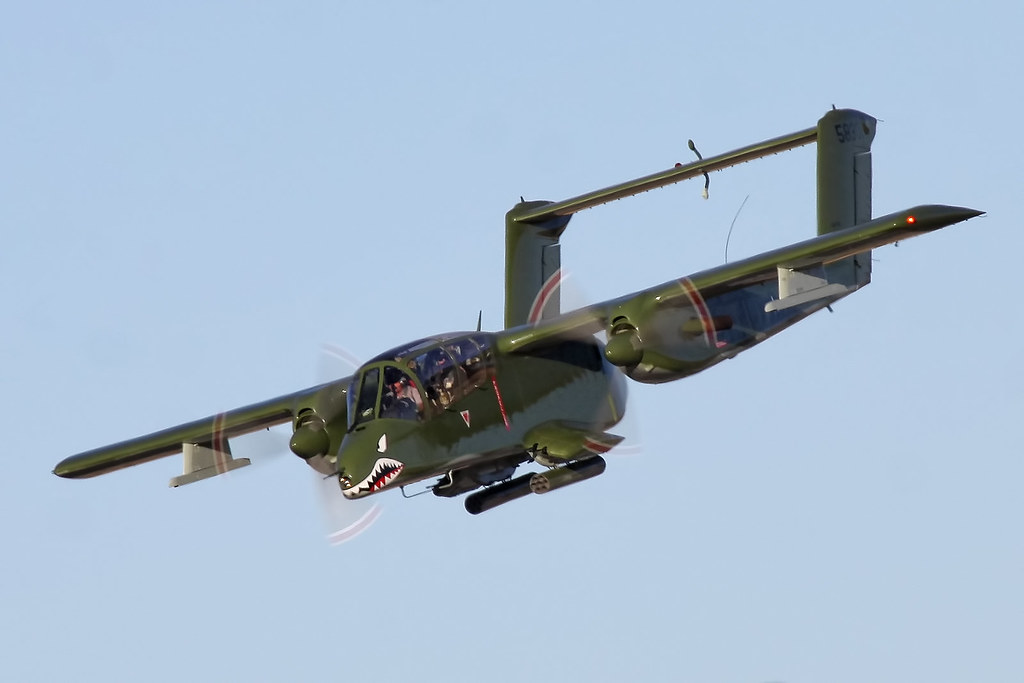 [/img]
Today, no F-111s remain in service anywhere, yet the F-4 Phantom - the jet it was supposed to replace - is still in use all over the world.
It's not even like the F-4 was a multi-service programme; it was designed for the USN and then adopted by the USAF.
I thought that Peter's and Nicholls' tornado was brought down on their second pass of the airfield as they failed to launch the ordinance on the first pass (not read the bio, based on comments from aircrew during a tour of a tornado in the 90's).

