UPDATE: Reviews section refreshed, redesigned, searchable: Go take a look
I have made a couple of wooden bases for table lamps. The electrical bits are just old leads I had, which I basically pushed into the wooden base. If I want to sell these, are there any rules or regs about selling electrical equipment? Do they need special electrical regulations, certificates, or something like that?
Normally I sell paintings, which don't really need anything like this, so I was wondering if electrical equipment was any different?
I seem to remember something about needing electrical certification. If it does need that, does anyone know how I get it?
I expect the product needs to be CE / UKCA marked as an electrical item. There’s no way it would be economic to do that on a one off basis, but you MIGHT be able to leverage the CE mark of the bulb holder etc if you use new ones. You should probably still do some digging as if your varnish or wood turn a safe product into a fire hazard you will be sure to hear about it!
Not for commercial / public but some experience of making 'apparatus' at work and I believe the regs are similar (edit, note they are now linked although I have not read them specifically)
So: IANAL but I believe that you can do this without extensive testing of the finished articles, because you're not really making the lamp, you are assembling from parts.
But, you need to make sure the parts being used are all appropriately CE/UKCA marked, that it's properly earthed, has appropriately sized bulb, fuse in the plug is the right size, etc. And then I also think there's something to do with stability (how easy to fall over, etc.)
I'd be keeping very careful records of where all the parts come from, keeping any Cert of Conformity for the parts which do need to be CE/UKCA, etc. and careful note / 'Quality checking' docs to show it has been put together properly. Maybe if possible to use a prebuilt kit might be better.
I certainly wouldn't be using "old leads I had, which I basically pushed into the wooden base"... not worth the risk.
I also have a nagging idea in my mind these can't be for children, I think there are addition regs similar to toy regs if there's a potential they may be 'played with'
The electrical bits are just old leads I had,
Not if you are going to sell anything commercially. Even if its just a couple on your stand, they are going to real people, and those people dont know the state of the leads internally. They'd be expecting on a new lamp new leads/wires,and all other fittings,lamp holder etc
I dont know if you need to go to the lengths of having an electrician certify it. Possibly not for a few table lights.
How about some deep bowls, platters type of thing. The latter as a 'cheese board' could sell well.
It's been a few years since I did this so worth checking!
Basically, you need to comply with the appropriate directives for your product. These could be, for example, safety, EMC and environmental.
Once you have the relevant directives, you can find what standards (BS or EN) you need to meet. These are the detailed requirements you must comply with.
For many products, you can self-certify, for others you will need an external test house to do this.
It's all a bit more complex since we left the EU (assuming you're in the UK). Some products have common requirements with the EU so you don't need a UKCA mark, just CE. If you're selling into Europe as well, you need a representative in the EU to act for you. The details of this company need to be on the product.
For all products, you need to maintain a technical file containing details of the design, testing etc, and write a Declaration of Conformity which says who made the product, what standards it meets, plus other stuff!
Expect to spend several weeks researching this, there's a lot of reading to be done. Or just sell them at a car boot sale!
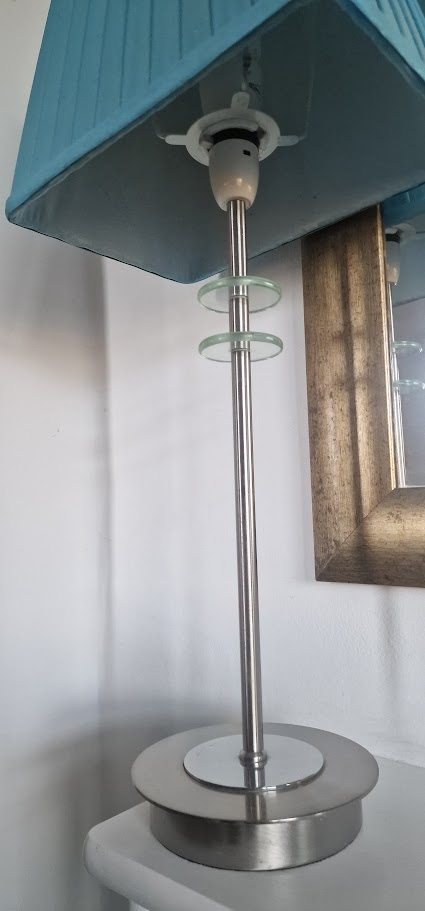
So what I've basically done is taking a ramp like this removes the casing:
Turned a bit of wood, put a hole down the middle, and put the electrical wiring from the original light into that :
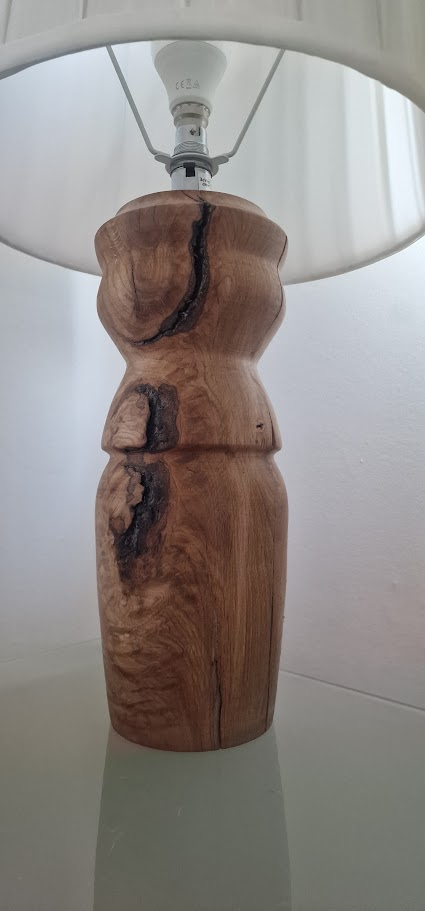
I didn't do it to plan to sell them, it was for use in my own house. MrsWCA liked the first one, so I did a second one. Now she doesn't like the first one because the second one is nicer. My thought was, rather than bonfire it, I could sell it, but it sounds like it's not worth the hassle.
I wonder if I could sell it to a second-hand lamp, which it is now?
I've been refreshing my mind on this. As I said, bear in mind that my knowledge is for work stuff, where we 'make' equipment by bolting other bits of equipment together. Ours are usually sophisticated science kit, to make instrumentation for making measurements, and the basic is that 'CE + CE = CE' ie if you use marked equipment for the intended purpose and join various parts together, eg a probe to an amplifier to an oscilloscope to a computer, then the overall instrument doesn't need further testing.
If we modified anything in that chain, for example changed a PSU in the amp for a low noise one, then you can't rely on the CE (or UKCA) mark for the amp any longer. If the PSU is also CE marked then you can make a further judgement that it's still OK (if appropriately qualified which for us means doing the course that told us all this stuff, and bearing in mind I'm the accountable manager for H&S for the work done in my Group), or if unsure then we have an ENG compliance group that assists.
There's pragmatism over doing experimental science to try stuff out which you might consider a bit 'sketchy' - no sense doing a big compliance assessment if 5 mins of lab time shows it doesn't work anyway, but we then risk assess appropriately to know what we're doing is off spec for routine use, etc.
Then when we've worked out what works, mods and all, we'll do a further proper assessment with the ENGCOMPL folk, to sign it off as a piece of kit - PUWER and all that, plus all the quality docs that do the equivalent to safety because in our business, how do you know that the answer it is giving is correct / traceable, etc. is almost as important. It might just be a paperwork exercise, reviewing CoC for the parts, but for other stuff particularly if eg: you then go to a conference and talk about it and one of our partner metrology institutes asks if we can build them one too, then we'd have to do more including sending off to a test house, because we are now bringing a thing (made of other things) onto the market.
So how does it translate - pretty much I think as I said previously, that if you are just putting quality and marked pieces together, as long as you can document and justify what and why these pieces specifically then you should be OK without having to seek compliance for the finished item itself, but that's not entirely clear because what does bringing it to the market mean? (I clearly don't mean S'oton Farmers Market when I say market).
If it was me - I'd either just make the bases and include a leaflet directing folks to where they need to get the plug, flex, lampholder from, or a quick google suggests you might be able to buy that as a whole and sell alongside the base but the buyer has to wire it up. Maybe a local electrical wholesaler might have something or be willing to put a kit together for you, and you can then check the details with them too.
Probably over cautious, but I'd be nervous about selling the finished article.
but I'd be nervous about selling the finished article.
My thoughts exactly.
The idea of selling the kits for them to make themselves is a quite good one, though. If I make any more, I might do that, but at the moment I'm going to have to do other stuff. There's plenty of wood to be turned and sawdust to be made, without worrying about lamps

