UPDATE: Reviews section refreshed, redesigned, searchable: Go take a look
Geert Mak In Europe is brilliant. Easy to read on a commute etc as is a collection of articles.
.
If you’re interested in strategy as opposed to action, then Alanbrookes war diaries are very good indeed. They also make an interesting counter to the traditional deferential view of Churchill...
1914 by Lyn McDonald. The first few months of WW1 in the words of the participants.
Battalion by Alistair Borthwick. An account of everyday life and the fighting for one Scottish Battalion from North Africa to northwest Europe after D Day. He was the battalion intelligence officer so in an ideal position to be aware of events. An easy to read style by the same guy who wrote the outdoors classic of 1930s Scotland camping and rock climbing - Always A Little Further.
Most Secret War by by Jones. A fascinating book about developing technology in WW2 and the battle of the beams.
Most Secret War by by Jones. A fascinating book about developing technology in WW2 and the battle of the beams.
+1
Forgot to add that one to my list!
Some great suggestions so far, thank you everyone. I have to say that I am really enjoying my current read (11th Hour, 11th Day, 11th Month by Joseph E Persico) - about 50 pages in and already quite engrossed - and as I hadn't read that much about the run up to The Great War I am finding lots of interesting things out (even down to the manner of dress of soldiers at the start of the war, still dressed in bright regimental clothing) and the fact that France lost almost a third of the UK's total casualties throughout the war in the first month with entire battalions wiped out completely simply because they were approaching battle in a traditional way although Germany were using the new 'Schlieffen plan'. And had they not diverted from that in the first month, the eventual outcome could have been very different.
Some of these coal miners volunteered because they were promised a good rate of pay. But they didn't get, so they tried to go on strike.
Interesting how those negotiations went.
http://www.bbc.co.uk/guides/zggykqt
^^^ Birdsong (the novel) recounts the story of the miners very well (that was the book that lit the flame of interest in reading about the wars because it described so much that went on that I had no idea about - I have barely read a novel since - it's all historical accounts).
Sea Wolves by Tim Clayton. Submarines in WWII.
Wings on my Sleeve by Eric "Winkle" Brown (one of those lives where the author was at everything important and flew just about every plane made)
<div class="kno-ecr-pt kno-fb-ctx gsmt hNKfZe" data-local-attribute="d3bn" data-ved="2ahUKEwiOp-zRxcrhAhX4VRUIHSh3A0sQ3B0oATAUegQICxAK">The Flowers of the Forest: Scotland and the First World War by Trevor Royale.</div>
<div data-local-attribute="d3bn" data-ved="2ahUKEwiOp-zRxcrhAhX4VRUIHSh3A0sQ3B0oATAUegQICxAK"></div>
Currently reading The Shetland Bus by David Howarth. SOE supplies by fishing boat to Norway.
Sea Wolves by Tim Clayton. Submarines in WWII.
The Silent Deep is a good read on the The Royal Navy Submarine Service Since 1945...
If you liked First Light, "War in a stringbag" by Charles Lamb and "6weeks of Blenheim Summer" by Alastair Panton make good comparison in my view.
From WW1, +1 for Winged Victory, also Aces Falling and Somme Success by Peter Hart
From the other side, Duel Under the Stars by Willhelm Johen is an account of a german night fighter, and I have just read Rocket Fighter by Mano Ziegler about the development of the Me 163 which is facinating
Somme Mud by E Lynch is very good and a remarkable story of WW1
For whom the bell tolls - Hemingway, Spanish civil war not the world wars, but will finish for ever any thought that war is anything but vile.
Goodbye to all that - Robert Graves. Again WW1 and after classic
To be honest there are loads of interesting books about the wars but these are the ones that have stood out for me.
If you want to extend the brief a bit to Vietnam, then this is an absolute corker, and sums up the utter bonkersness of it all. Christ only knows how he survived it!

As said the Ben Macintyre books are great, 'They gave me a Seafire'-Mike Crosley and if you can find it 'Achtung Swordfish!'-Stanley Brand, is also a good read. I have a copy signed by the author and the artist (Terry Lee) who painted the cover art (he used to be my boss).
Some of my favourites have already been mentioned.
Quartered Safe Out Here by George McDonald Fraser - a superb writer (creator of the Flashman series) writing about his experiences as an infantryman during the tail end of the Burma campaign.
War in a Stringbag by Charles Lamb - enthralling tales of his exploits flying a Fairy Swordfish biplane and the Axis and Vichy French.
One that has not yet been mentioned yet is Currahee by Donald R Burgett - a memo of an American paratrooper covering his training and drop into Normandy. As a kid I borrowed it several times from the local library and it had a powerful effect on me. I read it again 20 years later and it was as powerful as I remembered.
The above are all personal accounts of war. If you are looking for wider historical accounts then you could look at some stuff by James Holland. He has written several WW2 books and is an easier (IMO) writer than Beevor to read. I have his "Big Week" on my to read.
Sniping In France 1914-18: With Notes on the Scientific Training of Scouts,Observers,and Snipers
Major H. Hesketh-Prichard DSO MC
A fascinating account on the evolution of trench warfare and lessons learned from the perspective of a big game hunter brought in to improve our sniper & scout training as well as combat the German equivalents.
Fiction but Bomber by Len Deighton is well worth reading. Don't be put off by what feels like a boys own opening. It tells the story of one raid from many perspectives including those on the ground with the bombs falling on them.
Tommy by Richard Holmes - made him cry writing it - and did the same to me - lots of personal accounts included from the brotherton library in leeds
Lyn Macdonald - 1915 death of Innocence - made me cry again....
One to avoid - Mud blood and poppycock - that was crap and badly written and poorly support by decent historical research
I`ve just ordered To Hell and Back, the story of Audie Murphy.
If you haven't already I'd read The Cruel Sea and Das Boot back to back. Two sides of the same battle.
Lots of good recommendations there. For WW2 flying reminiscences I think The Big Show by Pierre Clostermann is my favourite. Flames in the Sky by him is also excellent although the authenticity of some of the accounts has been questioned. Fighter Pilot by Paul Richey is superb. The Last Enemy by Richard Hilary is a classic. Sigh for a Merlin by Alex Henshaw is a great account of the behind the scenes test pilot role churning out Spitfires at Castle Bromwich. The War Diaries of Neville Duke is an excellent read and if you want a German perspective, I Flew for the Fuhrer by Heinz Knoke is good.
Liddle-Hart. Proper oldschool.
Catch 22 gets to the heart of it too.
The Giro - admittedly its mostly about the Giro/ Italian cycling but there’s a couple of paragraphs covering Italian imperial ambitions and the role these played in initiating WW1. Something I’d not come across previously.
Finished Rogue Heroes, was a very interesting read, some amazing survival stories in there.
Now half way through Sea Wolves after seeing it on this thread.....
If you haven’t already I’d read The Cruel Sea and Das Boot back to back. Two sides of the same battle.
I love Cruel Sea but "Three Covettes" by the same author is brilliant. He wrote it during the convoys which he served on. Written and published largely in note form because he didn't think he'd live long enough to get it out otherwise. It's basically Cruel Sea but for real. Superb.
I'm not a huge fan of war novels, I prefer non fiction, but I've read and absolutely love The Cruel Sea, so it gets a plug off me.
As someone else said, give Beevor another go. The First World War and The Second World War are excellent, and Stalingrad and Berlin are required reading for me. The events described in Berlin read like old testament, wrath of god type of stuff. Eye opening.
I read Bloodlands and Black Earth by Timothy Snyder in the last year. Both excellent, dealing with the twin effects of Soviet and then Nazi occupation and atrocities on the unfortunate people of central and eastern Europe. Very well done, but be warned, grim and depressing.
Chickenhawk, as already mentioned by Binners, is just insane. It makes the helicopter attack in Apocalypse Now seem like an everyday occurrence. Well worth a read.
Would also recommend First Light by Geoff Whellum, Wings on my Sleeve by Eric Brown and Fly For Your Life about Robert Stanford Tuck.
Vader
If you haven’t already I’d read The Cruel Sea and Das Boot back to back. Two sides of the same battle.
For the third side, that of the merchant seamen:
Martin Middlebrook's "Convoy"
and for more detail
Clay Blair's "Hitler's U-Boat War" in 2 volumes.
Merchant seamen had a death rate over 30% in WW2.
The Atlantic convoys were a bloodbath.
My father was a deck officer and was sunk twice, including on Convoy HX229 in foul conditions. He was then called up and commissioned in the RNVR but refused a posting into submarines - which he loathed, even our own. He got put on the tugs instead - towing the Mulberry Harbour units in for the Normandy Landings on D-Day after which he was invalided out.
My uncle, also a deck officer saw his father in law's ship vaporised in front of him on a convoy. With that and other incidents he suffered badly from what we were told was "shell-shock" and retreated into alcoholism. A lovely witty man who could turn into a raging arsehole in seconds.
Almost all the ships my father had served on at some time were later sunk during WW2 (I researched them), but it's unfortunate he was no longer alive when I discovered the actual U-Boat that had sunk him was itself sunk a week later.
these
[img] 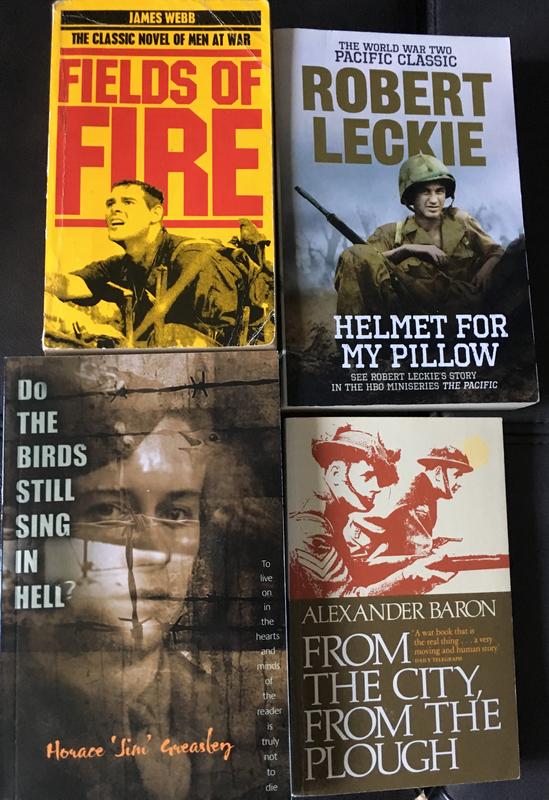 [/img]
Alert In The West is a great account of a FW190D pilot in the latter stages of WW2.
Combat Crew by John Comer is a harrowing account of the US bomber offensive, he was a flight engineer in B17. A fantastic book!
Merchant seamen had a death rate over 30% in WW2.
Just reading Sea Wolves and British submariners (and boats) had a life expectancy of 3 months! They had 86 U boats in construction at one time as half of the fleet was lost each year! Most U boat captions sailed on the first mission on a brand new boat and some had to dive in anger for the first time before the sub had even been for test dives to test for leaks etc!
Sea Wolves by Tim Clayton. Submarines in WWII.
he used to be my brother in law, Finest Hour by him is worth a read too.
"Bomber Stream Broken" by James "Chips" Campbell. Friend of my father's.
A novel, but written by an ex-bomber crewman.
Origins of the second world war
AJP Taylor
Have a look at Lyn Macdonald very good all based around the 1st W.W.
Sea Wolves by Tim Clayton. Submarines in WWII.
he used to be my brother in law, Finest Hour by him is worth a read too.
Not a fan of his writing style, I much prefer Ben Macintyre for example. Interesting subject matter, but poorly written IMO, he can mention 15 different boats in one paragraph and you have no idea which is whose and who sunk who, endlessly re-reading bits to try and figure out what he actually meant.

