Hey, I need to get my house re-rendered in the new year/ spring as its blown and water is getting in behind it. A few questions realy:
1. When they come round is there any particular methods/ coatings/ products I should be making sure they are using (afraid I'll get some cowboy in who'll only make issues worse!)
2. Any ideas on the rough costs, am tempted to strip the old stuff off myself if it'll save some cash!
3. Anyone reomend some buildings in the area who I could get round to quote so I know how much cash I need to save up!
[IMG] 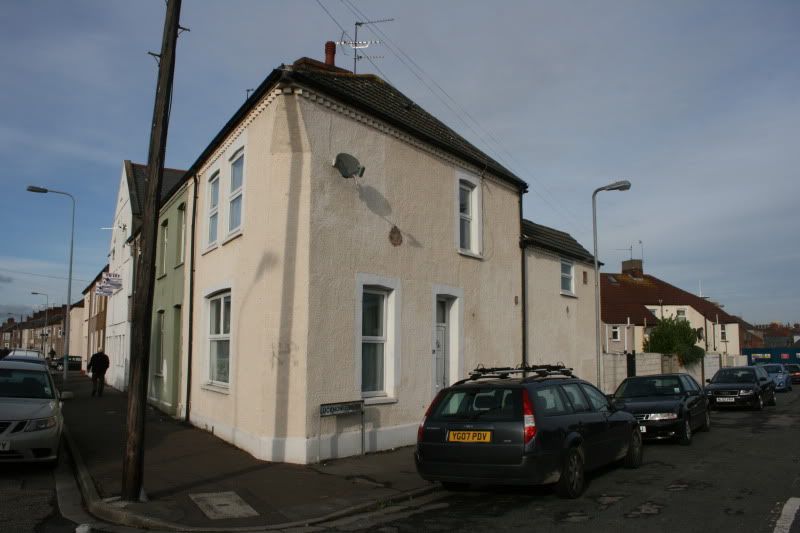 [/IMG]
Cheers in advance!
It's not really my subject, but have you looked into the following? Hard render (cement) doesn't 'breathe', traps water, tends to damage the brick/stone beneath. Soft render (lime mortar) avoids this. SPAB do a book, Old House Handbook, Hunt R and Suhr M, which will tell you more.
I'm sure a professional will be along later.
We had ours Terylened (sp) looks ace. K-render looked nice, but quite modern for our 1930's bungalow.
Only problem if you fetch it off yourself will be access, can be done off a tower easily enough. However it's not a pleasant job and can take a lot longer than you think, done a fair few in my time! As for recoating, webber monocouche products are very nice and give a nice flat finish. You can go from anything to basic sand and cement render, to wetdash, spardash, tyrolean. All have varying costs and performance abilities.
Speak to a local plasterer and also try some builders. Don't go to the yellow book and get any of these apparent "life long finish" companies they will cause you chest pains when they deliver the price!
Cheers for the replys!
Yeah understand with regards to the hard/ soft renders and the breathability! Think soft may be the way forward as I'm pretty sure the bricks are damp, so something that would let the moisture out may be the way forward!
Tyrolean (think thats how its spelt!) render looks good, think theres a couple round here that have been done in this way adn look very smart!
Understand what you mean about removal, and its a big area what with it being an end terrace. Plan is to get a quote with and without then I can see if I think its worthwhile attmepting on my own!
I will have a look around for some local builders/ plasterers but any suggestions will be much appreciated!
Just one point to remember check theyre quoting for access as well and don't expect you to provide scaffold. Most plasteres would want a proper Scaff erecting so as to get one side on fully without pissing around on a tower! Oh and one other major factor, frost in any of these applications is not your friend and don't accept a builder/plasterer saying yeah it'll be alright!
Hth
If re-rendering the whole lot will probably need Building regulations approval. There are currently grants available for external wall insulation in some areas. It's a great (if expensive) way to improve the insulation of the house.
No it won't ^^
Hi Cardiff, I work for an external render manufacturer and I'm happy to give you any advice you need. Have a look at our website:
http://www.k-rend.co.uk/products.aspx
We make both cement and lime based render products in a range of colours and finishes. The most important factor in choosing a finish is the substrate that it will be applied onto. If your property has lime mortar joints then you should use a hydraulic lime render over them. If you use a cement render over a lime mortar jointed house it will crack and eventually fail.
If your house has cement mortar joints then you can put a cement render over them. There are a few textures from scraped texture (sandpaper type texture, flat render), roughcast or wet dash (looks lumpy on the wall), dry dash or tyrolean effect (stippled). These products are through coloured and don't require painting.
If you can remove the existing render then it will save you money, however this can take longer than you would expect. A plasterer will want you to arrange access and you should budget for around £35 per sqm supplied and fitted.
We have a list of recommended installers if you want me to send you that. Any questions let me know.
Sorry to drift a bit OT, and with due respect to BM's professional knowledge above, but I have a question. If I understand this, there's lots of old buildings with original lime mortar. Over the years this has been repointed with cement mortar. With relatively harder mortar and softer bricks, this can spall out, taking the edges of the bricks with it.
Now add to this the way brickies like to add a good squirt of washing up liquid to their mix, to increase plasticity. Do they still do this? This detergent is going to stay in the mortar as it dries out. It's a surfactent, ie it helps water to stick to things. So it's going to help rain soak into the mortar.
And does the OP have original lime mortar repointed with cement mix? What's to do then? Is there an architect about?
Slow, you are quite right many older properties have had lime mortar joints replaced with cement and if not done correctly this can cause problems. As a rule of thumb if the property is over 100 years old then you need to check if lime mortar has been used, even though portland cement has been around for 200 years.
Many brickies and plasterers will still use fairy liquid but there are much better additives around these days. If the property has been repointed with cement then a breathable cement render could generally go over it. However I would assume this is unlikely due to the failure as the OP describes