UPDATE: CLASSIFIEDS section refreshed, redesigned, searchable: Go take a look
Your post is not specific to sales reps, despite my response focusing on that.
More ground clearance = less chance of aquaplaning. Simple physics based on the amount of force water can impose on the floor of your car when displaced by your tyres. If the water has a greater distance to travel before it interacts with the floor of your car, the force it imposes is less. Unless you put ridiculously wide tyres on of course (BMW X5 anyone?).
I just want to go forth and rule the roads, who cares about anyone else.
Simple physics based on the amount of force water can impose on the floor of your car when displaced by your tyres.
If the water you are driving in is deep enough to apply any force to the floor of your car then its a boat you need not a car. Lewis Hamilton at a wet Silverstone excepted
Apart from some people having had their sense of humour amputated there seem to be a couple of problems with understanding.
https://www.ecenglish.com/learnenglish/lessons/phrasal-verb-put-ones-foot-down/
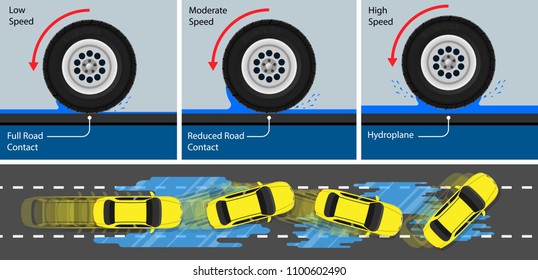
Aqua planing is nothing to do with water hitting the underside of your car, and everything to do with tyres, speed, ground pressure, and water.
Their E-Pace SUV is roughly the same weight as their XE saloon.
Their F-Pace SUV is roughly the same weight as their XF saloon.
You are partially right there, I was equating SUVs as 4x4 as most are, generally when 2WD drive they get called cross overs.
The average SUV is heavier than the average non-SUV, which was the point I am trying to make. heavier saloons would be less likely to aquaplane than lighter saloons, so yes, if your figures are correct, going on weight alone the aquaplaning resistance will be same however I would expect a saloon to be easier to control if any problems arise due to a lower centre of gravity.
Or even the tyres ability to "shed" water, If the tyre can't get rid of it the tyre loses contact with the road. 🙂
Aygo, Jazz, Yaris in my house. Dull as dull but who really cares.
SUVs are less likely to aqua plane because of the weight
Lolz!
The variables in aquaplaning speed are tyre pressure and tread pattern. Weight not a factor other than when fully loaded it's a little higher tyre pressure than empty.
If it's deep enough to touch the floor then:
a) it's not safe as you don't know what drain covers have been dislodged and
b) the safe speed to transit flood water is walking pace (to avoid hydraulic shock) not anything like aquaplaning speed!
I often see SUVs (and sometimes normal cars) ploughing thru water-makes me wince as the driver is clearly lacking knowledge of how to drive and consideration as to the effects of the wash on the verges and other peoples property, plus throwing bow wash down the engine of the oncoming traffic.
That's why if I have to pass a flooded section, I'll do it on the white line, so oncoming traffic has to stop.
I just can't see the point of an SUV. If you need 4x4, buy a 4x4. If you need a high driving position, get a van. If you need room, get an estate. If you want looks, get something nice looking. The SUV has none of the attributes that people seem to think they represent.
Lolz!
https://www.uniroyal.co.uk/car/knowledge/driving-tips/what-is-aquaplaning
People seem to have missed entirely my meaning. I will take the blame there as it seems to be more than one. There are lots of variables, a car with more tread on its tyres is less likely to aquaplane than one with less etc....
As you say, you wince at the speed SUV drivers enter standing water. That is entirely my point, because their vehicle seems to be 'immune' from aquiplaning (amonst all the other things, snow, kerbs, head on crashes, blah blah etc...) just like in snow they drive faster and faster and when it all goes belly up they are travelling very fast and crash going faster.
A lot of the blame is the marketing which people believe. This morning I heard an ad for a Hilux saying it was the only thing that would save you from the zombie appocalyse. All very funny but some people will think that means it will protect them no mater what, so stuff everyone else because they can do what they like. Did I go off at a tangent there? Sorry. It must have been that Discovery Sport driver last week.
Given 2 identical tyres, the only variable in determining aquaplaning speed is tyre pressure.
Vehicle weight is only a factor if the tyre pressure changes.
Tread and condition will be affect when comparing two non identical tyres.
Edit: failed on formatting!
I agree and a heavier car is less likely to aqua plane than a lighter one. SUVs are on average heavier therefore less likely to aqua plane.
A 2008 Tiguan based on the golf with 1.4 TSi engine has a kerb weight of 1546 kg
A 2008 golf TdI 170 has a kerb weight of 1328kg.
One of the heaviest non SUV on that chassis is around 200kg lighter than the SUV version of that chassis. Specific SUV chassis will be even more so.
Edit: I’ll add for correctly inflated tyres and correct tyre pressures vary for different vehicles
a heavier car is less likely to aqua plane than a lighter one
Depending on tyre pressure. Weight isn't a factor on it's own. An increase in 10psi will increase aquaplaning speed by about 4mph.
Now how much wider are the tyres on the SUV and how do the water clearing abilities of the tyres compare? I suggest a 2CV on new Michelin X is less likely to aquaplane than an X5 on its huge rollers with 3mm.
215-255 for a Tiguan
195-265 for a Golf
If you are worried about aquaplaning buy the cheapest Golf not the most expensive Tiguan.
Now how much wider are the tyres on the SUV and how do the water clearing abilities of the tyres compare? I suggest a 2CV on new Michelin X is less likely to aquaplane than an X5 on its huge rollers with 3mm.
Depends on the tyre pressure.....
Crikey this thread has descended into some prime internet nonsense such as "SUVs are less likely to aqua plane because of the weight."
Factors affecting aquaplaning could be velocity, tyre tread depth, tyre tread design, tyre profile/contact patch area to contact patch boundary ratio, tyre pressure, depth of standing water.
I'm sure its not simple. I think we need a filter on the internet where only qualified professionals can profess.
Yes, yes, yes wade rider, are you saying ground pressure has no bearing on this? The width of SUV tyres does not increase enough to compensate for the extra weight on many SUVs (X5s aside).
Educator, the 2cv the thiner tyres increase the ground pressure, no?
Yes. The 2CV's contact patch is small so the weight/cm2 is high despite the low weight of the car. The tyre is really narrow at 125 and has lots of grooves and sipes to clear water:
Compare that with what you typicaly see on an X5:
https://www.michelin.co.uk/auto/browse-tyres/by-vehicle/bmw/x5/e70-x5-m/2013/4.4%20V8%20bi-turbo%20555/285---35%20R21%20105%20Y%3B325---30%20R21%20108%20Y
I know from experience a 2cv is brilliant in snow because the narrrow tyres cut thru better than wide tyres on normal cars
tj - people in the mountains of Europe of have Fiat pandas and Subaru justys for the same reason.
Educator - maybe there was a lot less problem with aqua planing when all cars had skinnier tyres.
Waderider - I did not have time to finish this morning. I tried to quote but I keep getting logged out.
More weight will provide more force to push the tyre through the water, not hydroplane over it. Therefore weight is an important factor and taken in isolation it can be said heavier cars are less susceptible to to aqua planing. Furthermore as a generalisation heavier cars are less likely to aquaplane. Therefore as the average SUV is heavier than an average saloon etc they are also less likely to aquaplane.
Hello bsim. yes I agree ground pressure has a bearing. I my previous post I mention tyre pressure which is the same factor. You are betraying either a lack of time and patience to digest my post, or a basic misunderstanding of the laws of physics.
I refer you back to my comment regarding a need for a filter on the internet. It is only fair though to say free speech means all should be able to come up with their own hypothesises on the factors affecting aquaplaning; but reasoned discussion falls apart when a correspondent either has no capacity to learn or no capacity to alter position.
Which may be why you repeat yourself.
Waderider
No. More weight means more force so in the context I have put I am correct. I have not said anywhere that no other variables apply.

