
Blue algae, cramp, cold water shock, deep currents, giant squid, mermaids,
apart from that it's pretty safe right?
Water authorities get well pissed off at anything other than fishing and those silly little sail boats on their reservoirs. We asked about kayaking and were met with a no
Don't forget the hover-fly larvae burrowing into your anus.
junk on the bottom which could trap you causing drowning
tetanus
diving in and getting a spinal injury
hypothermia
leeches
needles
feces
adders
broken glass
and irritating shrubbery and bugs
Imagine getting sucked into the foel tower intake, or the turbine race? You'd be dead. Scary just thinking about it. Is it the Ladybower res where the water just disappears down a round hole? Eeeeeek!
weils disease (sp?)
Squid?
There's those little worms that swim up your knob.. or is that Africa?
Seriously though, there's some kind of pathogen (can't remember if it's a parasite or bacterium or something) that is transmitted in rats' pee, and if you have any kind of cut or nick on your skin that's not scabbed over it gets into you and does bad stuff.
freshwater octopron snuff-movie 😯
Yeah, joking aside a mate had bad deal with Wiels desease after a triatherlon once. OK maybe not resevoirs, large upland lakes?
I'm kind of thinking mid-north wales, not to many needles around the teifi pools, could be a fair amount of irritating shubbery though!
Watch Lake Placid and then decide 🙂
The biggest danger is you might have a poo and it would block my tap.
And going down the sluices/over the dam.
As a windsurfer I spend lots of time in reservoirs and they're nice.
PS - how can it be proved that anybody drowned from cramp? They're not really able to tell you, are they? I've been in cold water loads and I've never had it (except when arching my feet to place them on top of the board in winter when my waterstarting skills were at an embryonic stage and even then, it soon went away.)
Wiels diesese. But you can get that in canals and rivers as well.Seriously though, there's some kind of pathogen (can't remember if it's a parasite or bacterium or something) that is transmitted in rats' pee, and if you have any kind of cut or nick on your skin that's not scabbed over it gets into you and does bad stuff.
and if someone does die in one, the res is potentially out of action while they do the investigation....
and yes they are very cold due to the depth, usually have extremely steep sides so once you get in they are very tricky to get out of, no life rings, no ambulance access, no phones (often in the middle of nowhere so mobile signal issues) and big so you risk exhaustion from swimming and not realising how far it is from one side to the other
just dangerous all round. if you want water, go to the beach or the swimming pool
I have swam in dovestones res. Its quite eerie cos you can't see your hand just under the water its that brown! reasonably warm for a res!
drink a can of coke afterwards and you'll be fine - though that won't stop you from drowning
Jeez, what's wrong with your local pool?
its safe until you DROWN ! people drown in resovoirs every year...it looks safe from the shore then they swim to the middle and the current drags them under they get into difficulty and gulp.......
Local pools full of old dears doing widths, just woundered is all, I'm usually riding or walking close to a lake or res, dip my toe in occasionally but don't usually go much further out than wading distance.
Probably dont want you weeing in the water supply
* Cold
* Deep
* Big sucky things that the water goes down. You won't go through a pipe or a turbine, but when your body is pressed against an intake grate by tons of water pressure there's not really much point in hurrying for an ambulance.
I'd stick to rivers and lakes, they're usually fine if you're an okay swimmer, reservoirs tend to kill stupid people...
We used to swim a lot in the lake at Trawsfynnydd which was lovely and warm from cooling the nuclear power station there. That's been decommissioned now so I expect it's a bit cooler.
[url= http://www.nationalarchives.gov.uk/films/1964to1979/filmpage_lonely.htm ]This short film should answer your questions[/url] 🙂
[img]  [/img]
Its the cold that gets you because reservoirs are deep still water, so although they might feel nice and warm as you paddle in they are cold the deeper you go. Unlike the sea which warms up as it passes back over the warmed sand, or rivers which are are running and pass through shallow (warmer) areas, reservoirs stay reasonably constant year round (apart from the top inch or two which will go up or down through the seasons). As told to me from a water board ops bloke.
Oh and mentioned above, if they are drawing down water your ****ed because of the strong undercurrent. Similar principle if it freezes over, when they draw down there will be an air gap between ice and water.
A teenager drowned recently up our way so all the reservoirs now have massive signs for stupid people who cant read the big signs.
Stay out and swim in rivers or lakes, get the wild swimming book its a great read.
Here endeth the lesson
>Water authorities get well pissed off at anything other than fishing and those silly little sail boats on their reservoirs. We asked about kayaking and were met with a no <
That would be in England then...
Like one of the posters above, I've windsurfed in dozens of reservoirs over the years and not suffered any ill effects. Used to dog off school and go swimming in them too 😉
Assuming you stay well away from inlets / outlets etc it doesnt carry any more risk than swimming in a Loch / Lake and we've all done that haven't we?
A mate of mine drowned in the local reser when we were 17 so I avoid them.
Having said that, I have done a bit of dinghy stuff on resers which involves some (unplanned) swimming.
I was swimming in one last week. Quite a bit of swimming when sailing these :
[img]  [/img]
It was colder than I expected.
I used to do a lot of wandering around in ponds in my old line of work.
The big problem is silt. You can look at the bank, look at the pond / lake bed and it'll appear to be fine. Take a few steps in and you surprisingly often drop straight in up to your waist or chest as the ground underneath you gives way.
Every time you drop into cold water, you involuntarily take a BFO breath, and so it wouldn't be too difficult to envisage a situation where one might drown.
There are clubs that run outdoor swimming sessions. Even if you don't join one, find out where they go and use that location as it's more likely to be safe.
Reservoirs are generally very dodgy for all of the reasons above. But I have swum, kayaked, sailed etc. etc. in many that are perfectly fine. The cost of picking the wrong one is high!
Google wild swimming, there's a whole heap of people that do it. Like mtbing though it's got an associated risk that you need to be aware of.
Where do all these "strong currents" and "undercurrents" in the "deep still water" come from?
Reservoirs tend to start out as small lakes, in valleys, which are fed by a river system and have a dam at one end. They're lakes, and behave as such.
The reason we're kept out of them is usually due to over-cautious landowners and operators with over inflated health & safety concerns and (more likely) angling clubs which have paid extortionate fees to secure the trout fishing rights.
Yeah, but dams drain from the bottom, like a bath - hence Whirlpools Of Doom.
This short film should answer your questions
mental!
Check out this film: http://www.nationalarchives.gov.uk/films/1964to1979/filmpage_vandalism.htm
"Britain's Crap and We're All Doomed" (working title)
I swam across Lake Vyrnwy last year, and it was a lovely swim. We swam across about 80 m back from the dam, it was relatively warm and still and it was great to just swim without turning or worrying about bumping into people.
www.outdoorswimmingsociety.com
I've been expecting open water swimming to be the next big thing.
Public information films - I've just been inspired to see if I could find one I remember vividly from my childhood and it's on youtube!
I give you [url=
I've swim in a few man made lakes, and a few natural lakes in alps, Scotland etc. I don't think there's much difference except that reservoirs are more likely to have signs saying no swimming. having said that, several of the big reservoir lakes in Wales, they let swimming happen, and there are also a few in England.
obviously don't swim right near water intakes, or jump in before checking the depth, or go in too quick when the water is cold, same as any other outdoor water you might swim in. be aware of hypothermia, wind, and be realistic about how.far you can swim if you're heading across a lake.
if there really were strong dangerous currents (in flat water lakes?) they wouldn't let people boat on them, and they'd be a whole lot more exciting to boat on.
Wherever you swim outdoors, people will tell you it is too cold, too strong currents, too wide, too deep, too shallow, too narrow or generally too dangerous in some way or other. mostly, people saying this are idiots with no knowledge of swimming, or the water concerned, you can spot these cos they'll warn you about dangerous currents in lakes, or about the water in rivers in summer never getting above 5 degrees c and other bollocks. if you're not sure about a piece of water, find someone who actually swims and ask them.
Joe
Loads of reservoirs around where I live and only a couple allow any sort of sailing etc exactly because they're not safe. Of course the pool is between me and the first reservoir so I've never bothered to work out if that's true (and also I'm not going to gamble as the stake is a bit over the top).
My local reservoir has signs everywhere warning of the dangers, still doesn't stop the local ****s from doing as described above when the weather gets hot.
Many trees and buildings etc that were in place when it was flooded are still there. Strangely, they get to be nearer the surface the warmer the weather gets.
There is an underground connection to a local river where they draw water from in times of drought. There are currents and suctions created by that process, which strangely tends to happen most the warmer the weather gets.
As the water level drops the various pollutants and bio hazards become concentrated into much smaller areas, which strangely tends to happen most the warmer the weather gets.
Recently there was talk of closing all leisure activities there due to a couple of deaths of numbskulls who ignored all the warnings.
Why?
It worked on the basis that they figured that because certain sports are allowed in a restricted cleared area, people presume that the signs are to stop them entering the water in places where access is free, rather than for genuine safety reasons. i.e. they're doing it over there, so it must be safe…..
People die in reservoirs. Same as in the sea, and in other places people swim.
When they die or get injured, it is usually because:
a)people swim in deep water, and run out of energy
b)people jump or dive into shallow water and hurt themselves
c)people go into cold water in winter
d)people go into strong currents in rivers or the sea and end up swimming in deep water, running out of energy
all the other stuff, whilst in theory it might be dangerous, in practice is not something to worry too much about, it just clouds people's understanding of what the real dangers of swimming are, and how to swim safely. It is worth worrying about whether you are too cold, and whether you have the energy to swim where you're trying to go - those are the really relevant dangers, and why so often it is teenagers that get into trouble in water - as they have an over inflated idea of how far and well they can swim.
Many of them are pretty boring places to swim mind - there are almost certainly more interesting places near you to swim.
Joe
joemarshall - Member
People die
there, i fixed it for you.
there, i fixed it for you.
Yeah.
Actually I believe that more people die in supervised swimming pools than die swimming in open water too. So be careful down the local pool people.
Joe
Actually I believe that more people die in supervised swimming pools than die swimming in open water too
Is that pro rata, or just a meaningless statement you made up?
Does it have to be a random reservoir, can't you just choose one that's close to you.
Bizzarely in Germany where they love a bit of legislation gravel pits are often open for swiming , they even have changeing rooms, ice cream shops etc etc.
Had a great swim in one, probably a mile accross tot he far side and a mile back again. Lovely and warm, no idea how deep it was but was easily 10m+ (had a nice long dive down to have a look, figured as long as you keep you eyes open and don't breath out and don't panic you'll always bob back upto the surface even if you get diorientated.
Plenty of old cranes to climb up and jump off as well.
Gravel pits and reservoirs are two weeery different sings.
Berm Bandits School Days
[img]  [/img]
Is that pro rata, or just a meaningless statement you made up?
No it's absolute numbers. No one has an accurate count of how many times people go swimming outside for obvious reasons - although some estimates are surprisingly high.
Blimey you lot* are a bunch of paranoid scaredy-cats!!
Chuck a wetsuit on (ideally a tri/swim specific one) and get in there! If its safe to sail or windsurf on then its safe to swim in [b]as long as you wear a wetsuit[/b]. The temperature of the water changes very little from winter to summer.
*except those who agree with me
chatting to a roady the other day on club ride who trains for his ultra triathlons and whatnot in the peak district resevoirs.
pretty sure he said he swims in all of them i.e. damflask, ladybower, stines etc.etc... a nice bit of variation. swims all year round too. even during all the snow we had.
scares me. tough as **** eh? and he was late 50's early 60's too.
badass! wouldnt catch me doing it.
From this it seems that the sea would be dangerous beyond belief for any kind of swimming? Waves, rips etc.
Think most of the signs are just because the water authorities don't want to be responsible for 2 many drownings.
Yes I know swimming in the sea can be dangerous but so is riding to work, or crossing the street, we just need to be aware of the real risks not the made up ones.
If you're interested in natural swimming, there's an interesting book by Roger Deakin "Waterlog".
Basically he set out to swim through the British Isles.
Looks like swimming is divided into 2 camps like mtb - trailcentre v natural trails
Well the sea is pretty dangerous if you are in the wrong place. I suppose reservoirs would only be safe if you knew it was ok.
The thing is with the sea though is that one tends not to set out for the other side very often.
[img] 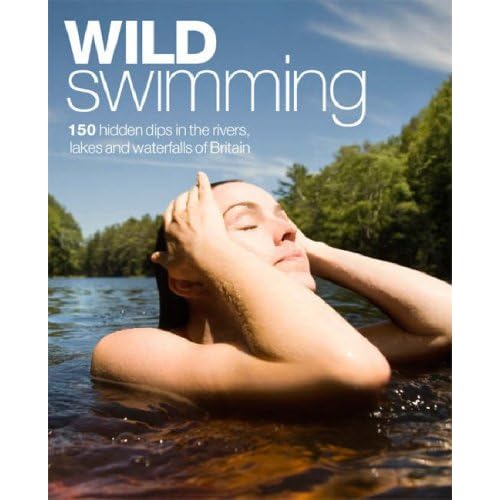 [/img]
[url= http://www.amazon.co.uk/Wild-Swimming-Hidden-Waterfalls-Britain/dp/0955203678 ]Wild Swimming: 150 Hidden Dips in the Rivers, Lakes and Waterfalls of Britain[/url]
Mate of mine has this book which he dips into now and again.
Lost a mate to this in a rervoir we had all swimmed in as kids ...who knows why or exact cause but i dont swim in them anymore.
It sounds like most of you guys are dripping wet without even getting into the water.
I will pass that on to his family 🙄
Note that I have swum in rivers and lakes many times.
I have a phobia about swimming in water where I cant see what is underneath me 😥 just think it could be down there waiting for you and the big pike could come up and take a chunk outta you.
God knows how dangerous it is, but I've got a fair few hours reservoire swimming under my belt, I'd say that it's pretty safe if you're careful.
Just watch out for these
[img]  [/img]
CK is that real?
EDIT: surely not, that close to the bank.
That wasn't directed at you Junkyard you posted while I was typing. It is tragic when people are hurt doing stuff like that but to try and wrap everyone up in cotton wool is a far worse fate for us all, a few people getting hurt doing daft things is a small price to pay. People need to be left to their own devices and not scaremongered by the H&S crowd.
Is it really wrapping us in cotton wool? Do you really KNOW if it's dangerous or not? Just because people THINK it's fine, doesn't mean it is. Take driving without seatbelts for instance, or having a few pints and driving home.
molgrips - yup, it's real, it's in ladybower res (2 of them). They're the overflow ducts that dump some mental quantity of water if it starts to rain heavily. Don't fall down them, they don't have a safety mesh as far as I know (to prevent blockages that could breach the dam) and they drop out at the bottom of the dam!
[url= http://tinyurl.com/33mdo7s ]There they are at lower water levels[/url]
Drac - Member
Berm Bandits School Days
LOL you could well be right Drac, but its that long ago I can't remember 😉
However, I suspect you would be surprised about how wrong you can be all in one post, and I think you may also have misunderstood where I'm coming from. My issue is with thoughtless and selfish stupidity ****ing up the use of a resource for everyone else, regretably it happens all too often, and the people least effected are the weekend heroes who go there just once or very occasionally, ignore the warnings, create an issue and then leave the aftermath for everyone else.
Most recent in my experience being the example given above, when my local reservoir came close to a total shut down to leisure users, and Thetford Forest where stupid and similar ignorance has led to some of the best trails in the forest being permanently closed (i.e. a harvester run along the entire length of trails). So it would be true to say that the "I can do whatever I like whenever I like on other peoples property" kind of attitude does indeed boil my piss...... for purely selfish reasons of course
joemarshall - MemberIs that pro rata, or just a meaningless statement you made up?
No it's absolute numbers. No one has an accurate count of how many times people go swimming outside for obvious reasons - although some estimates are surprisingly high
[url= http://www.rospa.com/leisuresafety/statistics/accidental-drownings-2005.aspx ]Absolute Numbers ?[/url]
That wasn't directed at you Junkyard
Ok point taken
The best advice would be don't swim alone.
Is that pro rata, or just a meaningless statement you made up?No it's absolute numbers. No one has an accurate count of how many times people go swimming outside for obvious reasons - although some estimates are surprisingly high
Absolute Numbers ?
That's interesting - if you look at the stats breakdown and just take the drownings of people intentionally swimming as opposed to getting drunk and falling in, or falling in for other reasons (from the ROSPA 2002 figures) you get:
Rivers (freshwater) 4
Lakes, reservoirs & canal 3
The sea 7
Estuaries & tidal rivers 4
Swimming pools 7
http://www.river-swimming.co.uk/stats.htm
which isn't that bad really.
Joe
I knew somebody whose mom wrapped him up in cotton wool, and it killed him.
Who'd a thunk it, huh?
That's interesting
Yep I noticed that too, if you take the figures, ignore the obvious facts, change them, interprete them to suit your own argument they then actually fit with that argument. Amazing really who would have thought it? 😯
Yep I noticed that too, if you take the figures, ignore the obvious facts, change them, interprete them to suit your own argument they then actually fit with that argument. Amazing really who would have thought it?
Well, they certainly don't suggest that people who choose to go swimming in reservoirs whilst not drunk, and don't dive in are in any particular risk. Which if reservoirs were as dangerous as several people above are suggesting, would surely be the case no?
Even in the original figures you posted, without the breakdown relating to what people were doing to get there (i.e. did they go swimming, or fall in or whatever), 10 people died in reservoirs, against 7 in swimming pools.
It doesn't mean that you shouldn't treat water with respect, but idiots saying that anyone swimming in basically any open water is in serious danger of their life (or even in much more danger than someone going in a boat on open water) don't help anyone. It's just the same as the idiots who say that people shouldn't cycle on the road.
Joe
Around five people a year suffer death by lightening strike and I dare say there are a few more people wondering around in storms than there are swimming in reservoirs.
but idiots saying that anyone swimming in basically any open water is in serious danger of their life
Which is very specifically [u][b]not[/b][/u] what I said, Joe.
I also think what you and the website you are quoting are very conveniently overlooking is the overall numbers of people swimming in reservoirs as opposed to the sea, or swimming pools. Not 100% certain, and can't be arsed to look but quietly confident that you will find that the vast majority of swimmers do the latter, whilst very few by comparision do the former. That alone makes the stats very different. It would also be wrong to presume that people who ignore saftey warnings do not also drink to excess. In my experience at my local reservoir leaping in and swimming is almost always related to being pished.
PS: An apology to joe marshall
Yep I noticed that too, if you take the figures, ignore the obvious facts, change them, interprete them to suit your own argument they then actually fit with that argument. Amazing really who would have thought it?
In retrospect that sounded very snotty to you personally, and I didn't mean it that way. What I meant was that the website is an interest group who are trying to prove that the ROSPA stats are wrong, so you have to take that into account when using that info. Sorry 😳
So in summary then, reservoirs are the safest inland waters to go swimming in, including swimming pools?
It's simple. Swimming is safe.
Panicking kills you. Hypothermia kills you. Alcohol and water do not mix.
It helps if you teach your kids to swim properly. If they know they can swim a kilometre nonstop, they can swim even more, and are unlikely to panic. Naturally you should be able to do the same 🙂
The sea is a good place to swim, especially in biggish waves. The Oz beach lifesaving culture creates some very strong and confident swimmers. We could have the same here now wetsuits are readily available and cheap.
We used to go out to the Barrier reef in small boats without life jackets - instead we took snorkels and flippers - you can't swim home in a life jacket, but you can, and it has been done, with a snorkel and flippers. We figured sharks and salt water crocs were more of a risk than drowning, and we weren't greatly concerned about them.
Swimming is all well and good as long as you don't get cramp or hypothermia, or have a heart attack or something. I believe that's where most of the problems occur in still inland water.
molgrips - Member
Swimming is all well and good as long as you don't get cramp...
So long as you don't panic, you can usually handle cramp.
Alcohol and water do not mix.
I think my old chemistry teacher would disagree....
zokes - Member
Alcohol and water do not mix.
I think my old chemistry teacher would disagree....
Probably should have said that having an alcohol content of 50% is ok 🙂
Swimming is all well and good as long as you don't get cramp or hypothermia, or have a heart attack or something. I believe that's where most of the problems occur in still inland water.
I think part of why I'm very confident in flat water, is that I know that I can swim a km with legs or arms only, so even with cramp, I'd get out.
Hypothermia is a pain, and you do have to avoid it, but to be honest you'd be surprised at how long you can swim in pretty cold water without getting it, as long as you keep swimming. You do have to be slightly careful, and pay attention to your body. And also be aware that the really high risk point is when you get out into the cold and wind and stop swimming, at which point it is a good idea to get into any dry clothes you have handy and do a little dance until you're warm again!
The only time I've had any cold water worries, was filming [url=
youtube vid[/url] - because it was white water, there were a fair few pauses to stand on rocks and check the line on the next section, or just to get my breath back, so I did end up getting a bit chilly, and having to get out on a little beach and jog on the spot for 30 seconds, half way along. That river was dam release coming from the bottom of a big lake in the mountains, so it was jolly cold, although the weather outside was 25-30 degrees so it didn't matter much.
Joe