
MegaSack DRAW - This year's winner is user - rgwb
We will be in touch
Today's DIY question - has anyone got any idea what I can do with these wires at all? The old socket on the left is going of course, and a couple of the wires head up to some old wall lights that I'll also want rid of, but what about the wires to the socket? Can I bury them under plaster? Fit them into a little conduit that runs along the bottom of the skirting? Chase the brickwork and pin them into there?
I'm not worried about building industry standards... this is DIY!
Thanks
[URL= http://img.photobucket.com/albums/v242/glasgowdan/14231841_10153686978035706_2504708385851263756_o_zpsh61md5bc.jp g" target="_blank"> http://img.photobucket.com/albums/v242/glasgowdan/14231841_10153686978035706_2504708385851263756_o_zpsh61md5bc.jp g"/> [/IMG][/URL]
You should take a bit of notice. Most of the standards are there for the homeowners safety. Either you or the next owner. You can bury the cable in plaster or chase into the brick but it needs to be in a safe zone. Google it but it's basically a horizontal or vertical line from the socket. No dog legs or angles. It will also need rcd protection. Hardly onerous and good practice.I'm not worried about building industry standards... this is DIY!
Most of the bulk of those wires is insulation. The actual copper conductors are only about 1.6mm thick. If you strip off the insulation you should be able to hide them easily under textured wallpaper.
Are any of them floorboards coming up as part of the renovation, or able to get them up easily? I'd run them under the floor if so.
I am not an electrician.
(and neither is midlifecrashes)
remove the socket and chuck it away - once you fit the obligatory stw issue woodburner into the bricked up fireplace you wont be allowed your socket there anyway 😉
We all know there's safe then there's officially safe.
Just hoping to get some tips on what I can actually do here. They won't reach a space under the floorboards
Wood stove is being fitted in the other room next week!
Angle grinder and chase into brick work and put the wire in plastic 1 inch conduit. Does not need RCD protection!
If you chase it more than 50mm deep. That's a lot more work for a less good solution. I'd hope the whole house is RCD protected anyway so its not any extra. If it isn't then it's time for a new consumer unit.Angle grinder and chase into brick work. Does not need RCD protection!
Ok, I'll go for that thanks. 50mm sounds quite deep into the depth of a brick, I hope my diy work doesn't crumble at the task!
Thanks
If that's the only reason, put a small junction box under the floor and lengthen the cable.They won't reach a space under the floorboards
Though if you're having to ask this level of question, probably best get a professional in.
or Nick's solution where you get a brand new RCD mother board and eletrical certificate and end up around £500 out of pocket... 🙄
Yes. There's a pretty good chance you'll weaken the wall (and fall foul of another building reg regarding depth of cuts). That's why you don't tend to do it but ensure circuits are RCD protected instead. Pretty much all houses have RCD protection now anyway and if you don't then you probably have bigger issues.50mm sounds quite deep into the depth of a brick
Surely the simplest solution would be to move the double socket over to the position of the old single socket. That way you could properly route the cables in a more sensible manner.
Thats what I would do and I am an electrician!
We all know there's safe then there's officially safe.
They really aren't particularly onerous. Run wires vertical from sockets or in other safe zones, put them in metal trunking, etc etc. If it's just one socket then it's probably only £100 or so to get a pro in to do it properly.
To explain why, meet Bob. Bob has just moved into his new flat with his new wife and newborn baby. He decides to fit some new skirting board accross a bit of slightly ropey looking plaster. Puts a nail in where he knows there won't be a wire, gets electrocuted and leaves his baby and widow to clean up the mess.
Baby grows up and vows revenge on Dan after watching Oldboy.
The good thing about rules like this is lots of people have died doing what seemed sensible at the time then someone wrote it down so that people didn't do it again. Like chasing wires diagonally into plaster because they were too short.
If you see how easily an SDS drill goes through old school tubular steel conduit then you'll see what a waste of time any kind of shield over a cable is. Just pull the skirting board off and run the cable in the plaster at floor level; at least it is somewhere one might expect it to be.
nickjb - Member
50mm sounds quite deep into the depth of a brick
Yes. There's a pretty good chance you'll weaken the wall (and fall foul of another building reg regarding depth of cuts). That's why you don't tend to do it but ensure circuits are RCD protected instead. Pretty much all houses have RCD protection now anyway and if you don't then you probably have bigger issues
So what is the less severe option for concealing wiring like this when rcds are present?
You'd have to be very, very unlucky to die putting a nail through a 2.5mm cable.
Start with how you best want things set out when everything is finished. Where do you want your sockets, do you want to mount a TV somewhere, do you want to keep the fireplace bricked off or do you want to put some shelves there, what do you want the wall to be covered with.
Then you can work out how to best get to the finished product. E.g. spending a whole weekend putting up timber studding and cladding with taper edge boards may seem a lot of effort, but it makes putting sockets and cables where you want then childsplay and may actually take less time than doing the job in little bits and fiddling with stripping off wallpaper/filling the wall, etc. plus you end up with a nice straight wall, noise insulation from neighbours, all the stuff set out the way you want it, etc.
In the long term you won't regret spending a bit more effort doing it properly first time.
The bodge i've seen done (improperly) is to wedge the cable between the floor boards and the new skirting board.
chickenman - Member
You'd have to be very, very unlucky to die putting a nail through a 2.5mm cable.
It did take a while to find the hammer last time...
My dad ended up putting a new curtain rail up forgetting that the socket he installed ended up with the cable on a dog leg to avoid something. cue darkenss.
Short cuts are not the right way of doing things for good reasons.
Ideally I want a smooth wall. This wiring was simply tucked behind some wooden mantelpiece and cupboard unit structure! We've got decorators coming in a couple of weeks so I need to deal with it before then. Happy with the socket where it is, there won't be any TVs or anything going in as it's the baby's room.
Am i still back to chasing the brickwork? Or less desirably behind the skirting in the plaster?
Would making the socket on the left into a double socket and disposing of the socket on the right be an option?
^^ twisty's option sounds good.
seems silly to bodge something for those frankly strangely placed sockets..
is there some reason you are avoiding the only electro's opinion?? ie move the sockets?
easy job..
May be the guy putting the nail in the wall should have used a cable avoidance tool and not bannged a nail in level with a socket !! Clearly did not follow the STW health & safety plan. Majority of electricians will just chase that into the brick work.
We all know there's safe then there's officially safe.
http://singletrackworld.com/forum/topic/realising-you-arent-actually-very-intelligent
Cool story. Enjoying life as the book tells it?
[img] 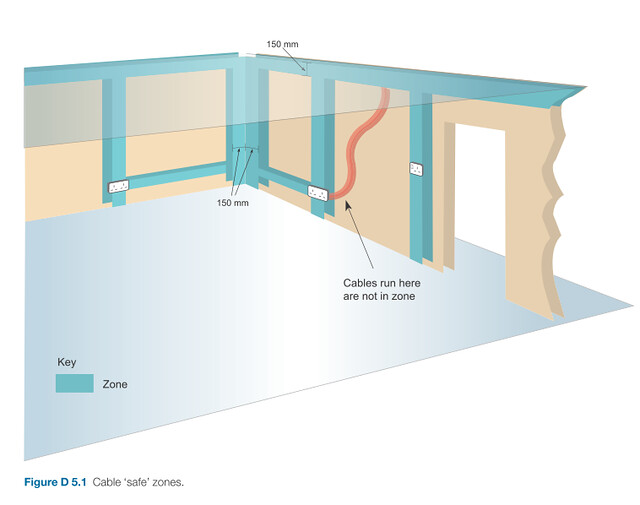 [/img]
useful info .
If you think this lot are harsh go to DIYNOt with your proposal.
the best suggestion here imo is under the floor into a junction box and onwards to your double socket.
Just remove one of the sockets.
Main thing is (Sorry if I missed it) but have you checked the wiring layout of the room, ie is the 'old' socket really the original? Turn off power, look under faceplates of everything in the room and figure it all out... IF the right one is just a spur form the left then easy answer is (as stated a couple of times) get rid and put a nice new socket on the left.
If you're not comfortable / can't / don't want to do that then pay someone who will.
If that fireplace is staying bricked up/unused, just relocate the double socket on the left rather than the right. If you must have the socket on the right, do it properly with a junction box and conduit under the floorboards.
To echo the above though, if you're finding potentially dangerous wiring bodges (wires run behind mantlepiece etc) you may want to get an electrician to make sure the rest of the wiring is safe for you and your family.
Moving the socket sounds good cheers. I'll proceed with that as plan A.