UPDATE: CLASSIFIEDS section refreshed, redesigned, searchable: Go take a look
Batteries and charging them is scrambling to use old tech to find a modern day solution.
Current batteries are old tech, but we will always need batteries so there will be new batteries. There are loads of ways to store electrical charge known to science, many have far better theoretical characteristics than what we currently use, but there are engineering challenges with putting them in cars. In a decade we will probably see solid state batteries offering twice the capacity for the same volume for lower cost than an ICE.
Don't forget that ICEs, even hydrogen or synthetic fuel ones are massively complicated, pretty inefficient and full of compromises, and are the result of nearly 150 years of development. The only reason we use them is because we were able to roll them out with fewer compromises - they are far from ideal. EVs are better in so many ways mechanically. There are so many things to go wrong with ICEs that just don't exist on EVs. Yes, people will complain about batteries, but I don't think that's going to be anywhere near as bad as people think.
Re the original question though - we want to have one car when the lease goes back, and I think that will probably be the diesel unless I get promoted at work or something.
PS there's an e-UP on Autotrader for as little as £223/mo if anyone's interested.
I'd love be an electric car for our family but it doesn't seem possible.
The £20k – £30k ish figures mentioned are more than the total I’ve spent on every car I’ve ever owned in 30+ years of motoring
This is me as well. Most expensive car was 4k about 4 years ago. It's still going strong. An electric would be ideal for my wife's 15mile each was commute. Can't afford it though 😟
Everyone’s calculation so far seems to be almost entirely economic. Is there nothing that says I’m willing to suffer a little inconvenience and cost to potentially make a small difference?
As others have pointed out, it is a bit naive to suggest the cost difference is "little"
For me there would be no inconvenience but I also don't really think the difference they make in the big scheme of things actually matters either. Environmentally and financially it would still be far better for me to just keep my 4 year old car until it can function no longer which could be 10 years or more.
Environmentally and financially it would still be far better for me to just keep my 4 year old car until it can function no longer which could be 10 years or more.
Study posted up there suggests that's not the case.
In a decade we will probably see solid state batteries offering twice the capacity for the same volume for lower cost than an ICE.
I predict your prediction is wrong...
Yes, people will complain about batteries, but I don’t think that’s going to be anywhere near as bad as people think
But absolutely this. Cost will reduce. A body of evidence will build up showing how reliable batteries are (which is very reliable) and how long they last (which is improving, battery lifespan is an active development thing).
The biggest issue preventing widespread adoption is still, and will be for a long time, the range anxiety thing.
PS there’s an e-UP on Autotrader for as little as £223/mo if anyone’s interested
Delivery when ? VW wouldn't even quote a time frame in February when I was in seeing them....and were pushing an up gti as a suitable test comparison to an e up
Point is, no one knows what’s on the horizon, (not even you), but there will be something. Batteries and charging them is scrambling to use old tech to find a modern day solution. I’m pretty sure, by the time I am ready and capable to move away from petrol there will be better alternatives emerging.
The Li-ion battery as we know it today was invented in the mid-80s and commercialised in the 1990 so not exactly old tech and there is plenty of development potential left in the technology. Just compare a modern ICE engine to one from the 1930's (which was about 30 years after 4-stroke petrol engine was commercialised). Next significant step will probably be solid electrolyte with twice the charge density and high speed charging from 0-100%.
God knows what you think the "better alternatives" will be. Maybe something like this?
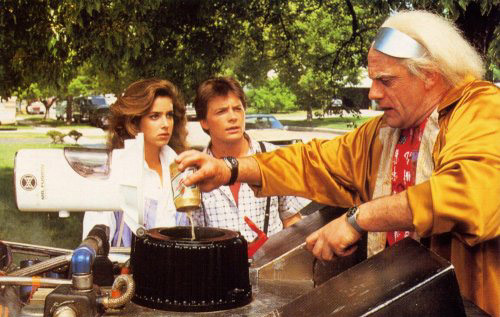
Delivery when ?
I clicked on the 'in stock and avaialble now' box and the search returned three cars!
I think in the future we will see BEVs for most personal and light transport, and machinery etc; and for other usages we will see synthetic fuels generated with renewable energy. I think hydrogen will always be too difficult to handle and too expensive to compress.
Study posted up there suggests that’s not the case.
And given that there have been two large grassfires this week within "worrying" distance of my house. How long until statements like:
Drive over 20k miles a year
Become socially unacceptable EV or not?
I think in the future we will see BEVs for most personal and light transport, and machinery etc; and for other usages we will see synthetic fuels generated with renewable energy.
TBH the answer to all these problems is pretty obvious. Massive investment in public transport and bringing down the price of it to make it effectively free. Do that and most of the problems with cars of any type disappear. Making public transport desirable is the only thing that will get people to stop using petrol cars.
I think there’s massive benefit to urban infrastructure vehicles like taxis, buses, bin lorries, delivery trucks, construction vehicles etc going electric, as well as private cars.
This...
TBH the answer to all these problems is pretty obvious. Massive investment in public transport and bringing down the price of it to make it effectively free. Do that and most of the problems with cars of any type disappear. Making public transport desirable is the only thing that will get people to stop using petrol cars.
Alongside this.
EVs are better in so many ways mechanically. There are so many things to go wrong with ICEs that just don’t exist on EVs.
Like what? The only things I can think of that actually manifest as issues are starter motors, pumps, headgasket and belts/chains. Everything else is either an irrelevance outside of performance engines or else shared by both platforms. And for that matter, I can think of more than a few things that can go wrong with electric motors and battery packs, if you think they are fit and forget you really need to educate yourself (standing next to a motor when it bursts into flames due to years of misoperation and a fault that can only be diagnosed on a very specialised rig tends to focus your mind somewhat). From my experience of working in an industrial environment they can be just as unreliable as engines even with ongoing maintenance and condition monitoring.
Point is, no one knows what’s on the horizon, (not even you), but there will be something. Batteries and charging them is scrambling to use old tech to find a modern day solution.
No one knows, but many have insight. I do this as part of my day job - alternative energy transport and can tell you for a fact that nothing comes close to Sustainable efficiency for passenger road vehicles than an EV. Nothing. Hydrogen, Synthetic fuels, etc are all just greenwashing once the full energy cycle is taken into account. So much is lost in generation, storage, transportation, water and resource use that it’s incredibly wasteful. EVs by contrast can be charged almost directly from anything, almost anywhere.
Batteries will get more energy dense, charging will be faster but the fundamentals of an EV can’t really be bettered.
As for squirrelking and charging - most people don’t have a petrol station on their house/street either. Charging an EV to 80% on a rapid charger takes 15>50 mins once per week. That’s a short term solution. Long term - all that’s required is for local councils to place 1 or 2 street chargers in place which can be used for an hour and are then automatically fined if blocked. You have an RFID card linked to your house and your usage is charged as part of something like council tax.
Like what?
Everything to do with the combustion system and it’s monitoring.
Air flow meters and sensors, EGR valves and sensors, camshaft position sensors, injectors, coils, high pressure lines, head gaskets, oil seals, fuel senders. All of these things MUST be monitored and when the thing (or more likely the sensor) goes wrong, it’s a right PITA.
Contrast that with my now 6y old EV which has needed tyres a cabin filter and brake fluid change (absolutely nothing else) in 70k miles and it’s battery efficiency is still at 98%.
Everyone’s calculation so far seems to be almost entirely economic. Is there nothing that says I’m willing to suffer a little inconvenience and cost to potentially make a small difference?
...
Replacing my 19y old Touring is another matter
Sorry, but that's classic 😆
a little inconvenience and cost
"Little" being subjective of course.
Like what?
Things I've had to deal with in my time owning ICEs that aren't on an EV (off the top of my head):
Turbo hoses, turbo, MAF sensor, MAP sensor, injector seals, injector bodies (that was a recall), flywheel, inlet manifold, timing chain, cambelt, oil pump (another recall), EGR pipe and valve, intake flap, alternator pulley, drive belt, rocker cover gasket, CCV hose, vacuum timing advance, HT leads, exhaust (many times), camshaft position sensor, crankshaft position sensor, transmission hydraulic valves, exhaust mounts..
Then there's (to name a few):
Fuel pump, bad fuel, lambda sensor, clutch, clutch cylinders, alternator, oil return hoses, head gaskets, coked up turbo vanes, coked up inlets on direct injection cars, transmission bearings and all sorts of gubbins in there, oh, how could I forget DPFs, also high pressure injector pumps (ouch), engine mounts, swirl flaps
And the maintenance - spent £500 on servicing the Merc a few months back at an indy, that was a £250 service and a £250 transmission fluid change, whereas the annual main dealer service on the EV was £73 and I only did that to keep the lease company happy:
Engine oil, trans oil, spark plugs, injectors, belts, cambelt changes, air filters, oil filters, fuel filters...
The list is massive, I haven't even gone into stuff like crankshaft bearing seals leaking, timing chain guides breaking, big ends, valve clearances etc because they aren't that common.
And if you don't look after all that, the car gets progressively crappier and crappier to the point where no-one wants to buy it so it becomes valueless even though it COULD be fixed fairly easily. An expensive item with a lot of embedded manufacturing cost and carbon becomes worthless because of any or all of the above need looking after.
I'd also speculate that a lot of electronic items will last longer and be far less likely to fail on an EV because they're not subject to heat and vibration. I think one of our automotive engineering contributors said this some time back on the EV thread.
What do you think will happen to the 'what's wrong with my car?' threads when everyone's driving EVs?
electric cars are a lot more money to buy, but with fuel at high prices, the break even is pretty fast. at 10,000 miles per year and 45mpg average (probably about right for a newish car - sure they can do more on a run, but a lot of driving isn't on a run), you're using pretty much bang on 1,000 litres of fuel per year. lets say that costs you £1800, and tax is another £175, additional servicing costs are maybe £100 per year (probably more) - so your total running cost is £2k per year. An electric car is maybe £6k more than the equivilent petrol, would (if charged solely at home) costs around £700 in electricity, £0 tax. lets say you paid to charge once a month out-and-about, so another £150 - you're at £850 all in (this is also assuming no charging at work or at supermarkets etc - a "worst case" scenario if you have at-home charging).
£6k/£1150 is pretty much bang on a 5 year break-even, ignoring the increase in value at the end of the 5 years. Sure, you need access to that money up-front, but its definitely cheaper for some people in the long run
yeah these are springing up in/near residential areas here now. EVs only, 2 hour stay max. Some kind of membership scheme. Handy as right in town, very few houses have driveways.Long term – all that’s required is for local councils to place 1 or 2 street chargers in place which can be used for an hour and are then automatically fined if blocked.
re. maintenance, a chap I know who owns a big independent garage cries slightly when he thinks about EVs taking over, although they still need brakes/tyres etc, there's just so much less to go wrong! As said, that's got to be worth something, surely.
Sorry, but that’s classic 😆
How so?
I can think of more than a few things that can go wrong with electric motors and battery packs, if you think they are fit and forget you really need to educate yourself
It's an interesting point, I do wonder what issues will arise. But consider the number of moving parts in an EV compared to an ICE...
This is a great example of biased journalism:
It has 'EVs are less reliable' splashed all over it, but only half way down does it acknowledge that it's nothing to do with the fact they are electric.
yeah these are springing up in/near residential areas here now.
Where's that?
Contrast that with my now 6y old EV which has needed tyres a cabin filter and brake fluid change (absolutely nothing else) in 70k miles and it’s battery efficiency is still at 98%.
That's genuinely quite impressive. What EV is that? (no ICE would need that little maintenance)
I'd much rather have an EV drivetrain in my van in place of the clattery 4-pot diesel. I like a nice-sounding ICE but this definitely ain't one, so bring on the simplicity/refinement of an EV if it replaces that. Not to mention the potential ICE-related items that can go wrong already mentioned by more than one poster above - I'll add to that AdBlue systems, oil dilution and 'wet belt degradation' for my euro6 Transit Custom.
Contrast that with my now 6y old EV which has needed tyres a cabin filter and brake fluid change (absolutely nothing else) in 70k miles and it’s battery efficiency is still at 98%.
What car is that ? Everyone I know has had massive depletion of battery.
Do you just drive 2 miles a day on the flat?
I had a chat with VW’s chief technologist a few years ago and he mentioned that, on average, there were around 1800-2000 LESS parts on an EV than on an ICE car, assuming that the battery wasn’t assembled in house and the motor and electronics were. To him, at that time, this was both a positive and a negative. On the plus side, less parts in the BoM, less assembly operations and easier maintenance and less spares stock. But on the flip side, he would have significant troubles with the German Works Councils in that there is less man hours in assembly, thus leas time and less workers required.
Both are good from a profitability POV, but he predicted it would take over 5 years to get it past the Councils.
Which meant that Tesla would steal a march.
Not sure if this has been answered or asked. How much more metal is used to manufacture a typical EV vs its ICE equivalent? Batteries are pretty big, but the motors are quite compact. Are we using more materials overall? They also weigh a great deal more, so are people getting through tyres quicker? My Octavia still has the original rears after almost 30k. I know most people look at the CO2 during manufacture and during use, but if we are extracting more materials from the earth then that would be counter productive.
What car is that ? Everyone I know has had massive depletion of battery.
What cars are depleting their batteries?
The battery management strategies in different cars vary a lot, or they used to. 1st gen Leafs had rubbish battery cooling, and these are the ones that are on 50% capacity some years later. I think they are all much better now though.
How so?
You've hedged your electric car usage with an old ICE. the current solution is not yet an EV for all. Range, Load carrying capacity (dog cage in an i3?), Cost. Pick two.
@molgripsWhere’s that?
https://www.google.com/maps/ @51.3560989,1.0229272,3a,75y,283.67h,65.48t/data=!3m6!1e1!3m4!1sDTuSnFMfPO2tY-RT0BLgzg!2e0!7i13312!8i6656
https://www.google.com/maps/ @51.3619195,1.0251893,3a,75y,339.49h,57.96t/data=!3m6!1e1!3m4!1spnvjlGXkSm3QWGmMfOucsw!2e0!7i13312!8i6656
What do you think will happen to the ‘what’s wrong with my car?’ threads when everyone’s driving EVs?
Dunno, but one thing I am 100% certain of is that you'll be starting one, @molgrips 😀
Great, hope to see more of those everywhere.
They will have to line those streets with those street-side chargers, but I don't see why they couldn't.
Dunno, but one thing I am 100% certain of is that you’ll be starting one, @molgrips
I admire your work!
It’s an i3. When we first got it, it would do 155-160miles, in summer on a full charge in eco mode. Now, 6 years later it will do 150-155miles on the same journey, the difference being the kids are bigger, but I can possibly drive it better.
The max capacity indicator is showing 31.6kWh (33 when new) but it’s been measured at 32.1kWh (based on 7% remaining and what it put in from the Zappi) so 2-3% degradation. We charge maybe once per week always on 7kw and have only charged from 3 pin maybe 3 times. We rarely charge to full.
The i3 also has a much bigger battery than you’re allowed to use. Ours is a 33kWh REX and so I think has a capacity of 37-39kWh, but you can’t use the extra.
Another advantage of the REX is that you rarely ever deplete the battery beyond 7%, so no deep discharge. Perhaps this also helps
I
The i3 also has a much bigger battery than you’re allowed to use.
Most manufacturers do that except Tesla who let you use it all so they can claim higher range, but then tell you not to.
I think newer cars will have better battery management. They are making adjustments to software and also hardware as they continue to make them, AFAIK.
You’ve hedged your electric car usage with an old ICE. the current solution is not yet an EV for all. Range, Load carrying capacity (dog cage in an i3?), Cost. Pick two.
Sort of. We need two cars, we live where there are no shops, busses or trains. We replaced the Panda with the i3. The i3 now does 90% of our journeys. This isn’t that the Touring is needed for the other 10 due to its range or size, it’s just sometimes both cars are in use.
I could and would happily replace the Touring with a large EV IF the environmental economics of doing so made sense…they don’t. A plug in hybrid like a 3 series might be best for us. Small battery, less embedded material cost and 80% of its 10% total household car journeys are on solar powered battery.
We do (as a household) between 10 and 12k miles a year.
Sorry, but that’s classic 😆
How so?
TBH I'm pretty much on your side. I'd love an EV (but as my only car is also an ageing 3k/year jobby, I don't see much benefit to anyone of chopping it in, especially as I couldn't charge at home and it works fine anyway). So I broadly agree with your position on both points - I really doubt (most) people with 2 cars need them both to be ICE.
But you do have to admit that the combination of your slightly sanctimonious opening salvo in that post, when combined with the admission that you've kept a large ICE car so that you don't REALLY have to suffer any inconvenience, is quite amusing...
I like to think of EV being the MiniDisc to the ICE CDs
This is what I'm afraid of. I bought a MiniDisc when they came out and recorded maybe 2 discs. I still needed my CDs for the car anyway, and then iPods came along.
On the subject of cars, I rode around Italy in a friend's second hand Tesla S. He had driven it from Denmark to Rome with no infrastructure issues - got charged at Tesla points and hotels no problem. He mentioned that he'd had no service issues at all except for cleaning the brake pads. I was won over to the joys of EV and when I got home I looked around. Couldn't afford a Tesla and couldn't buy an EV now anyway. Bought a 2nd hand Polo from Cazoo, intended as a stop gap but may replace it with a fossil Golf if things don't change.
you don’t REALLY have to suffer any inconvenience, is quite amusing…
Okay, I can see that it looks like that, but that’s not why it was kept.
It’s only marginally bigger than the i3 and we’ve used the i3 more than the Touring over the past years for long journeys due to cost and sustainability.
The reason it’s been kept is that I’ve had it since it was a year old, it’s been very well maintained and is worth nothing to anyone else. It only does 35mpg on a run and 29th pootling around, but at 3000miles per year, it makes little difference. It costs more in MOT and road tax than it does in fuel.
We used to do around 18k miles/y as a family, but at the same time as we got the i3, I made the choice to cycle to work, so eliminated 7k of my annual mileage.
I went the other way. I had a petrol Golf written off and fancied an EV as a replacement. We are a 2 car household with the other car being a big diesel for longer journeys so this car was really for commuting and local (sub 60 mile) trips. However the cost of a used EV was much more than I was hoping to pay. I posted a thread on here and really went back and forth in my mind. In the end I bought a used Nissan Leaf for more than I wanted to pay initially. I also had to spend a few £hundred to get a charging point installed. For my use case though, having an EV has been brilliant. I charge exclusively on the driveway on an EV overnight tariff so charging costs are minimal. I have already seen savings with £0 road tax and much lower fuel costs. In addition, living in London and with EVs being exempt from the congestion charge for now, my partner has been taking a small detour on her way to work to drop me to and collect me from central London on the days when I have to be in the office, with the result that that the savings made from not using public transport more than cover the cost of charging the car.
I do realise that my circumstances are quite specific but it has worked out very well for us. I can easily see us moving to EV only in the future if we can get a reasonably priced car that will do about 300 miles on a charge. I don’t think that will happen for a few years but I have no doubt that it will, and by that time I would expect huge improvements to the charging infrastructure too.
most people don’t have a petrol station on their house/street either
Oh my god, how many times are you going to trot out that crappy argument? No, of course I don't because guess what? It takes 5 minutes to fill up and it makes sense to have a centralised filling point. If you apply the same model to charging you are relying on being able to get a slot when you NEED it. I worked out the logistics of EV ownership and no home charging when I was seriously looking at them, it was a non starter if not for me then certainly for my wife who I sure as hell wouldn't be sending to sit in a deserted car park at christ knows what time.
Short term or not that ain't happening.
It's easy to suggest all these great ideas when it's not you that has to live with them.
Long term – all that’s required is for local councils to place 1 or 2 street chargers in place which can be used for an hour and are then automatically fined if blocked. You have an RFID card linked to your house and your usage is charged as part of something like council tax.
That's a good idea and I'd be all for it. Let me know how it pans out, do you honestly think it would happen like that in real life? Our local authority can't even get parking decriminalised so they can start fining folk that use double yellows or install a paid car park properly, what hope do they have with a metered charging system? I really hope I'm wrong though because that's actually a really good idea.
yeah these are springing up in/near residential areas here now. EVs only, 2 hour stay max. Some kind of membership scheme. Handy as right in town, very few houses have driveways.
Oh, seems so. Here's hoping.
Like what?
Everything to do with the combustion system and it’s monitoring.
Air flow meters and sensors, EGR valves and sensors, camshaft position sensors, injectors, coils, high pressure lines, head gaskets, oil seals, fuel senders. All of these things MUST be monitored and when the thing (or more likely the sensor) goes wrong, it’s a right PITA.
And you think your motor, batteries and power management don't?
I’d also speculate that a lot of electronic items will last longer and be far less likely to fail on an EV because they’re not subject to heat and vibration
Wait, wut?
All motors vibrate, especially ones attached to a moving vehicle. They are subject to wear and tear and imbalancing as a result. The windings can fret, insulation degrade, stators delaminate, rotor bars crack and the bearings wear. Cables aren't immune to damage or loosening either. That's before you start getting into the deep stuff involving flux that I don't understand (I'm a mechie, not a spark). I've been on shift when 3 motors have gone on fire in just the last year alone so I'm not just making this stuff up in my head.
What do you think will happen to the ‘what’s wrong with my car?’ threads when everyone’s driving EVs?
They'll still exist because the rest of the suspension, braking and drivetrain systems will still be there, not to mention the "engine" that really has become a sealed black box.
with the result that that the savings made from not using public transport more than cover the cost of charging the car.
Well that's not exactly eco is it 🤣
I work for a global manufacturer of engines - we install them both with alternators for power generation (gensets), mechanical drive stuff and electric drive applications - I.e. an alternator attached to the engine and the vehicle driven by electric motors. Right the way up to the enormous mining equipment you see on the discovery channel.
The electrical machines (alternators, motors) are an order of magnitude or greater more reliable and need massively less (close to none) maintainance.
You’re comparing a complex reciprocating machine with a simple rotating one.
There simply no comparison.
Well that’s not exactly eco is it 🤣
Where did I claim it was? Even so, a 10 minute each way detour on an EV is hardly an eco crime.
@whatgoesup
I work in a power station with everything from small 415V motors to 11kV giants that move the cooling water pumps and gas circulators.
I've seen plenty of failures in my time there, 99% of the time it's either bearings or terminal boxes that blow up but occasionally you get a spectacular winding failure. Motors need maintaining. Full stop. I'm honestly not prepared to entertain the ridiculous notion that they are some sort of sealed for life magic widget that will never fail. They might not require as much manintenance but if they're not getting checked based oh running time then it's going to be fun when they do eventually start routinely failing. Which they will.
I don't think EV's have come to anything like sufficient numbers or age to comment on reliability, wait until they have fallen to "white goods" status with all the care and preventive maintainence you would associate then we'll see.
@squirrelking I'm genuinely curious about the duty cycles involved.
In a car that does 200k miles, that's 5,700 ish hours of operation or about 8 months. Presumably there are many motors in industrial applications that are on 24/7 and 8 months doesn't represent a very long time in that context? What would the mean time between failure be in an industrial aplication?
Of course EVs will go wrong, but I think with far fewer moving parts and sensors in the drivetrain, they are bound to be significantly more reliable and cheaper to maintain, surely?
I can't find any details online of EV motor servicing. The motor/generators in my old Prius were considered part of the transaxle and that was a sealed unit that some said was sealed for life and some said needed an oil change at something like 70k. There were some failures supposedly especially on gen1 cars.
@squirrelking Yes, of course motors can and do fail. If you work with a lot of them, with high duty cycles then you'll see failures.
My point is that they fail a lot LESS than the equivalent reciprocating machine when in a comparable environment. If your pumps were driven by IC engines rather than electric motors you would be seeing an order of magnitude more failures and more maintenance (which is one of the reasons why rotating machinery is preferred over reciprocating in industrial uses).
The good news with a motor in an automotive application is that it's not different to the motors that are used in other applications, so all of the improvements that have been made over the last 100+ years will apply. Improvements sourced from really harsh use cases like your industrial pump motors. Cars are a really mild duty cycle compared to this and I'd expect the motors to easily outlive the rest of the mechanical parts of the car if designed correctly. (200,000 miles @ average 30mph = 6,670 hours use in a vehicle lifetime, most of which will be at light load. I would expect an automotive motor to be designed with this in mind, and hence be a sealed unit with no maintenance needs in its expected lifetime.
An industrial pump motor by comparison will often run 24/7 = 8,760 hrs per year typically at high load and lasts for several years. That's often too harsh a use case for an economic sealed-for life design so things like bearing grease ports can be applies and periodic bearing replacements become an option.
The rest of the car (wiring, suspension etc) is the same as an IC car so the same logic applies if it's a competent company that's designed it, except that a lot of the parts that commonly fail are longer subject to vibrations from the IC engine, just from the road etc, so will perform slightly better than the IC engine version would.
The ABS pump control module failed in my Passat. It was in the engine bay, so I'm guessing it spent a fair bit of its working life at fairly high temperatures for electronics. It's well known that high temperatures shorten the lifespan of electronic components. That said, probably not quite as much as the stuff in the interior of the car sat baking in the sun all day for however many months it's sunny.
It'll be interesting to find out how EVs age and how that affects resale values and consequently car lifetime. Once you get a battery replaced or refurbished, it should in theory be as good as new, whereas with an ICE the expensive engine/transmission parts are queueing up to fail one by one as it ages. Ask me about it...
I imagine that battery degradation and general wear & tear over the whole vehicle will define end of life.
My 17yr old diesel for example is running excellently, engine fine, but it’s now old, tatty, nothing quite as “tight” as it used to be and is pretty outdated in many ways. I think this will be similar to EVs, they’ll still “work” but just get old and less desirable over time and of course the regular stuff will still fail over time - e.g. air con packing up etc.

