Forum menu
I am about to exchange contracts on a solid brick built Terrace - 100 years old.
The survey picked up rising damp on the whole internal party wall and another internal wall
Will a chemical DPC work and resolve this?
Just that I have been googling and keep reading that rising damp is a myth and a chemical DPC will not fix it!
IMO it won't work, a friend had similar problem in similar age single-skin house & it's just moved the damp around the walls.
The ground needs to breathe via a combination of good ventilation & flooring that permits this. Injecting the resin in just locks the damp in place & doesn't let it evaporate.
IMO, of course & i'm not an expert...
Thanks Dave - Im thinking along these lines as too !
This is such a hard decision to make - when I viewed the house it had just been vacated - however that was 3 months ago and it has been stood empty with no windows opened, when I viewed it i couldn't smell any damp but I went back today and can smell damp.
I hace had ! person round, who said his meter suggests rising damp and suggests a chemical DPC
Think I might move in then leave it for a bit and see if it sorts itself out!
Caveat - not an expert but have renovated a stone house in Pembrokeshire using traditional materials - so a little knowledge could be dangerous......
Don't think chemical DPCs work on stone/rubble houses but might be better suited on brick+mortar.
The moisture needs to evaporate away through the walls so any impermeable surface such as gypsum plaster, wallpaper, vinyl paint etc will cause problems. Plastering inside should be lime as should any render outside with limewash as a decorative covering. This will allow moisture to move through the walls.
As dave_rudabar says, evaporation will be helped by ensuring the ground around the outside of the building is clear (no concrete; ground level below inside floor level). Also ensure gutters etc. are functioning correctly.
Does the party wall have a chimney? Maybe there is a water penetration issue that's causing it.
Another issue may be the flooring. Water will migrate to the walls if a solid floor has been installed. The original floor would either be suspended or packed earth with a permeable floor covering.
Old houses and modern materials don't really mix. A lot of surveyors and builders don't really understand the way they work in comparison to a cavity built building.
Rich.
rising damp is a myth and a chemical DPC will not fix it!
This.
Find the real cause and fix that. A leak, lack of drainage, ventilation, etc.
I'm with you on this one op. Rising damp is a myth, although Leonard Rossiter is a legend. My view, is not to let it sway your decision too much, if you like the house, go for it. If this is you rationalising a gut feel that it isn't for you, then trust your gut.
Live in it for a bit, put the heating on, open the windows, if it's still a problem later then look at it.
Whatever you do don't tell the bank!
Does the other side of the party wall have 'damp'?
Rising damp does happen and is often accompanied by mineral deposits and salt peter. I had it in one wall and cured it by drilling out a layer of mortar and replacing it with waterproof mortar.
All the other damp in the house was condensation. I calculated the block + hollow brick construction at R = 0.5 and less at the thermal bridges around windows/doors. Insulating on the inside to at least R = 3 and eliminating thermal bridges stopped the condensation. I removed some of the insulation for a look after a year and the wall behind it was dry.
Edit: for the party wall the first thing I'd look at would be the chimney as previously mentioned - especially the waterproofing at the junction of the stack and the tiles/slates.
thanks guys
i am completing on friday, so gonna go with my gut and live in it for a bit, open windows etc - take up carpets downstairs etc etc
Cool, if you are redecorating anyway, just do that bit last.
Hope the move goes well.
Anyone who says rising damp doesn't exist doesn't really know what they're on with. Some of the remedies suggested to treat "rising damp" are however spurious.
It's no myth twicewithchips just try putting a piece of stone in a puddle and see what happens!!!
^^ that's how all science should be explained ^^
Laymens terms!
Fair point ptrockymountain, but if you put another stone on top of that, what happens? No argument that things get damp - just the whole rising damp industry seems to have grown out of scare stories. Isn't the important thing to find out what is causing the problem and deal with that, and provide means for it to dry out a bit?
The guy at RICS [url= http://www.architectsjournal.co.uk/news/daily-news/-rising-damp-is-a-myth-says-former-rics-chief/5204095.article ]link[/url] seems clear in his mind.
[edit: that link worked when I tried it, but now seems to be paywalled - maybe its my cookies]
If you put anything in a puddle it'll get wet! I don't think anyone is claiming stone is incapable of getting wet. Put a stone partly submerged in a puddle the bottom will get wet the top will stay dry (unless it is raining)try putting a piece of stone in a puddle and see what happens!!!
[img] 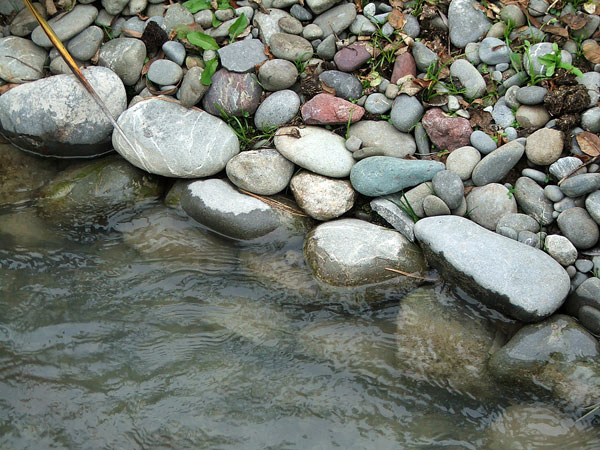 [/img]
Rising damp is not 100% myth, but it mostly is. Our first house was diagnosed with this, and some ineffectual money-wasting later, we eventually got the roof fixed 🙂 It's still an old single-skin building with the plaster just slaistered over the inside, so prone to a bit of dampness, but it's not "rising", and certainly not in the area where we were originally told it was.
My parents' house also predates DPCs (by about a century) and was fine for most of that, however damp is now getting in at ground level at one corner, and spreading/rising. But the obvious solution is to re-do the external render, drainpipe, and cracked concrete parking area, not inject a dubious chemical into a building that was fine for over 100y...
We had damp walls in our house when we bought it (late Victorian terrace). It was on the internal party walls. I am pretty sure it was caused by a combination of...
No dpc
No ventilation through floor (modern laminate placed onto floorboards) and floor very close to the ground beneath
Previous owner insisting on having thick lining paper everywhere
At the time our mortgage company required us to have it sorted within 6 months with guarantees etc
What we ended up doing was...
Ripping off render and plaster up to waist height (which we did ourselves)
Paying a damp proof 'specialist' to squirt some stuff into the walls. Cost about £500 for an hour's work, including the certificate.
Recovering with a lime render and plaster, no lining paper!
Binning the cheap laminate and going for stripped floorboards to get a bit more ventilation.
I actually found the same dpc cream available cheaply online which I have used since elsewhere. ventilation and letting the walls breathe are the main thing though I think.
http://www.permagard.co.uk/aida-dpc-injection-cream-310ml-cartridge.html
5 years later, no more damp
We had damp walls in our house when we bought it (late Victorian terrace). It was on the internal party walls. I am pretty sure it was caused by a combination of...
No dpc
No ventilation through floor (modern laminate placed onto floorboards) and floor very close to the ground beneath
Previous owner insisting on having thick lining paper everywhereAt the time our mortgage company required us to have it sorted within 6 months with guarantees etc
What we ended up doing was...
Ripping off render and plaster up to waist height (which we did ourselves)
Paying a damp proof 'specialist' to squirt some stuff into the walls. Cost about £500 for an hour's work, including the certificate.
Recovering with a lime render and plaster, no lining paper!
Binning the cheap laminate and going for stripped floorboards to get a bit more ventilation.I actually found the same dpc cream available cheaply online which I have used since elsewhere. ventilation and letting the walls breathe are the main thing though I think.
http://www.permagard.co.uk/aida-dpc-injection-cream-310ml-cartridge.html
5 years later, no more damp
This will be my likely course of action!
We lived in a 175 year old house for 25 years and it had solid walls with degrees of damp. All the cures have been discussed above pretty well.
But living experiences are a different matter. Basically, it's not a problem, so if you like the house, go ahead. Just keep an eye on where you put things as you might get a bit of mildew.
The only myth in Rising Damp was Myth Joneth.
thanks guys, glad I asked the question and did some googling!
was worried that I was buying a money pit