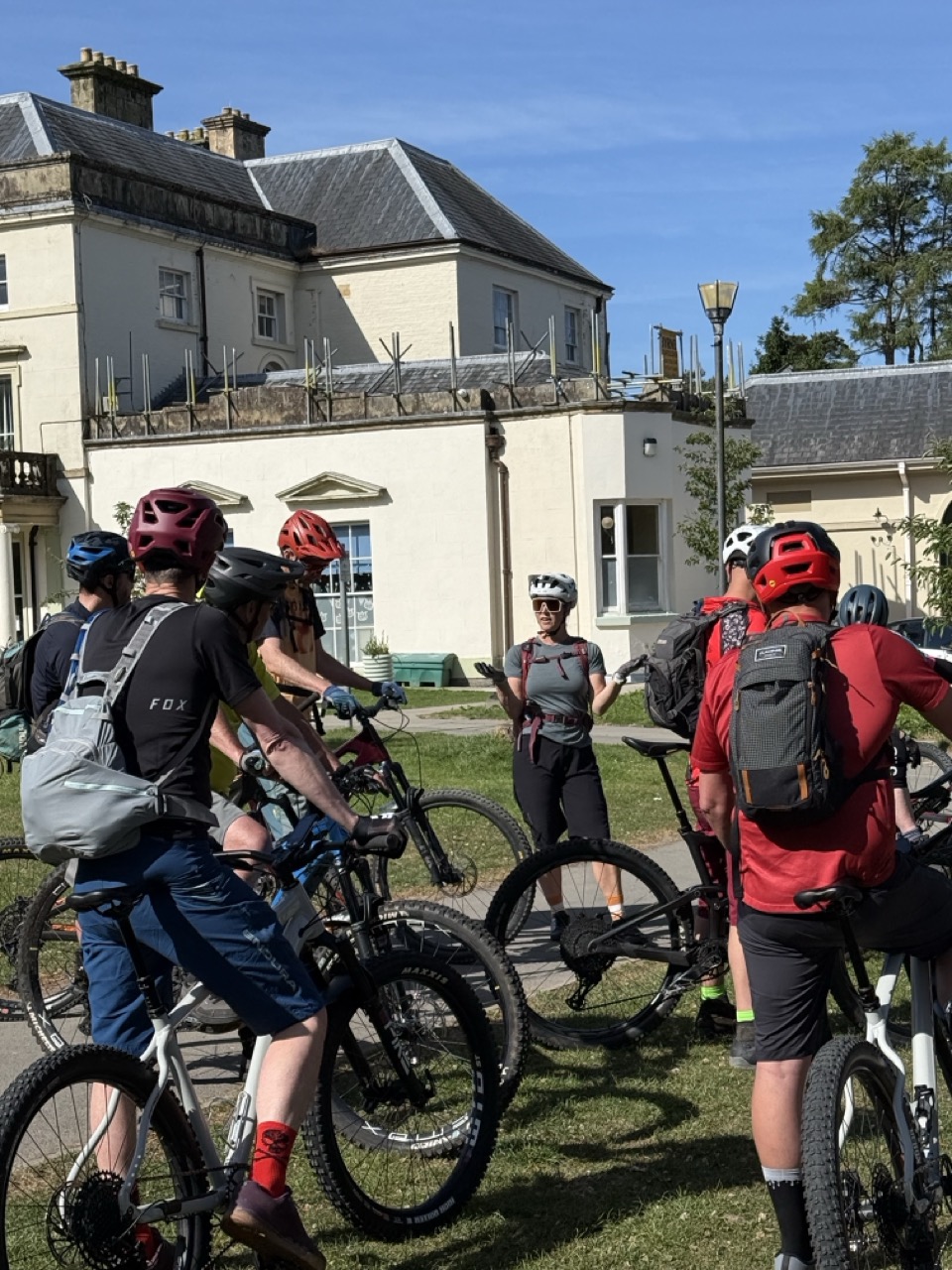
In a world with few remaining secrets, why are mountain bike guides still in demand? Chipps investigates.
Hey, this feature looks even better when viewed via Pocketmags; you get the full graphic designed layout on your device FOR FREE! It’s not quite as beautiful as the paper magazine.
Words Chipps | Photos MTB Wales and Cyclewise
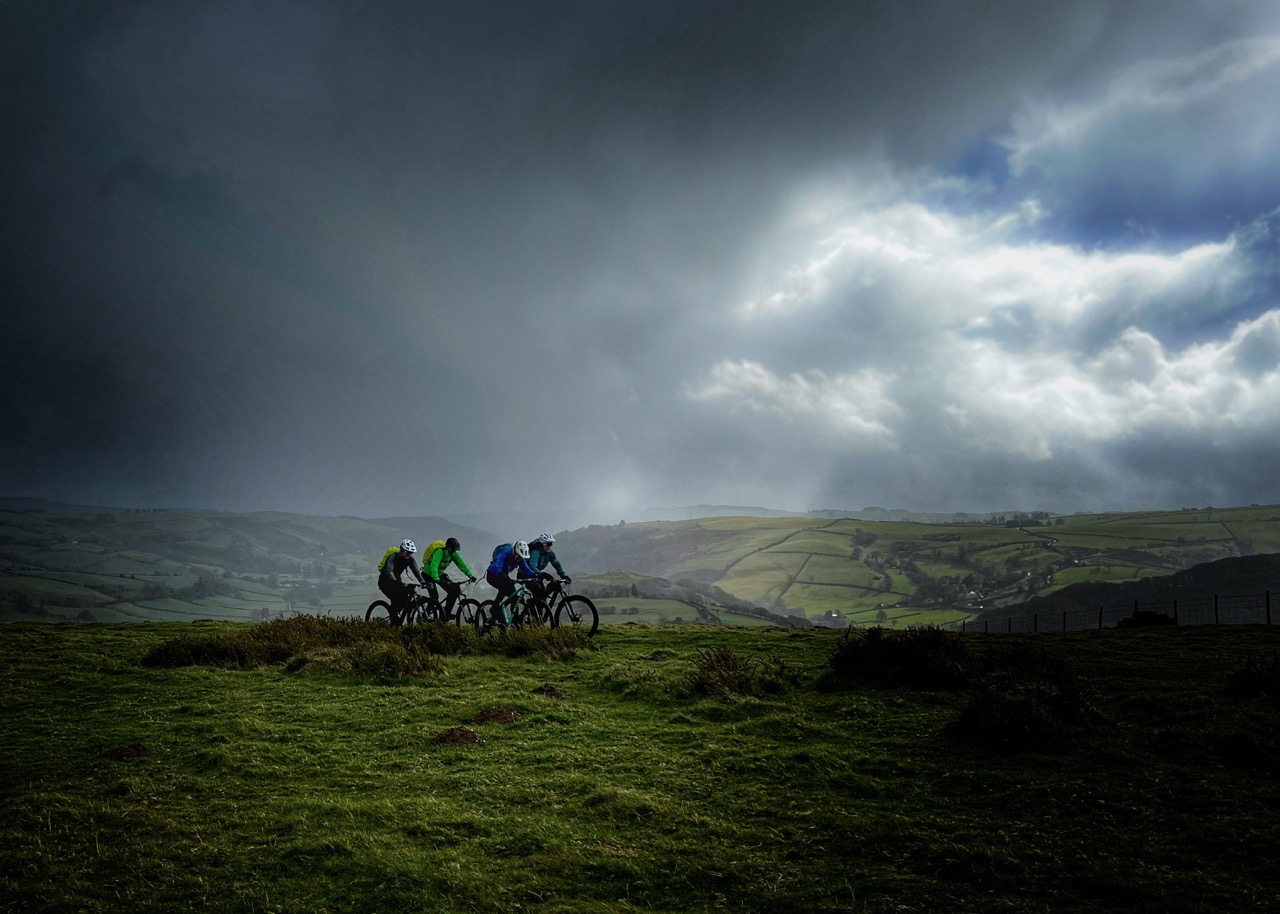
There are no more secrets left to explore in the world. Anywhere you might want to ride your mountain bike has probably been mapped at several different scales and resolutions; the trails recorded, rated and shared online. New to an area? All you need to do is scour Strava Heatmaps, Trailforks, or ask on a friendly mountain bike forum, and you’ll probably get a .gpx file within the hour.
And yet, guided mountain bike trips seem numerous; as do the riders signing up to train to be guides. Or at least that has been my impression, both as a punter and as a British Cycling-qualified guide myself. In order to test out my theories, I quizzed two well-regarded British mountain bike guides: Phill Stasiw of MTB Wales and Rich Martin of Cyclewise in the Lake District. They both have extensive experience as mountain bike guides and as tutors for the next generation of guides. Was it really as I thought?
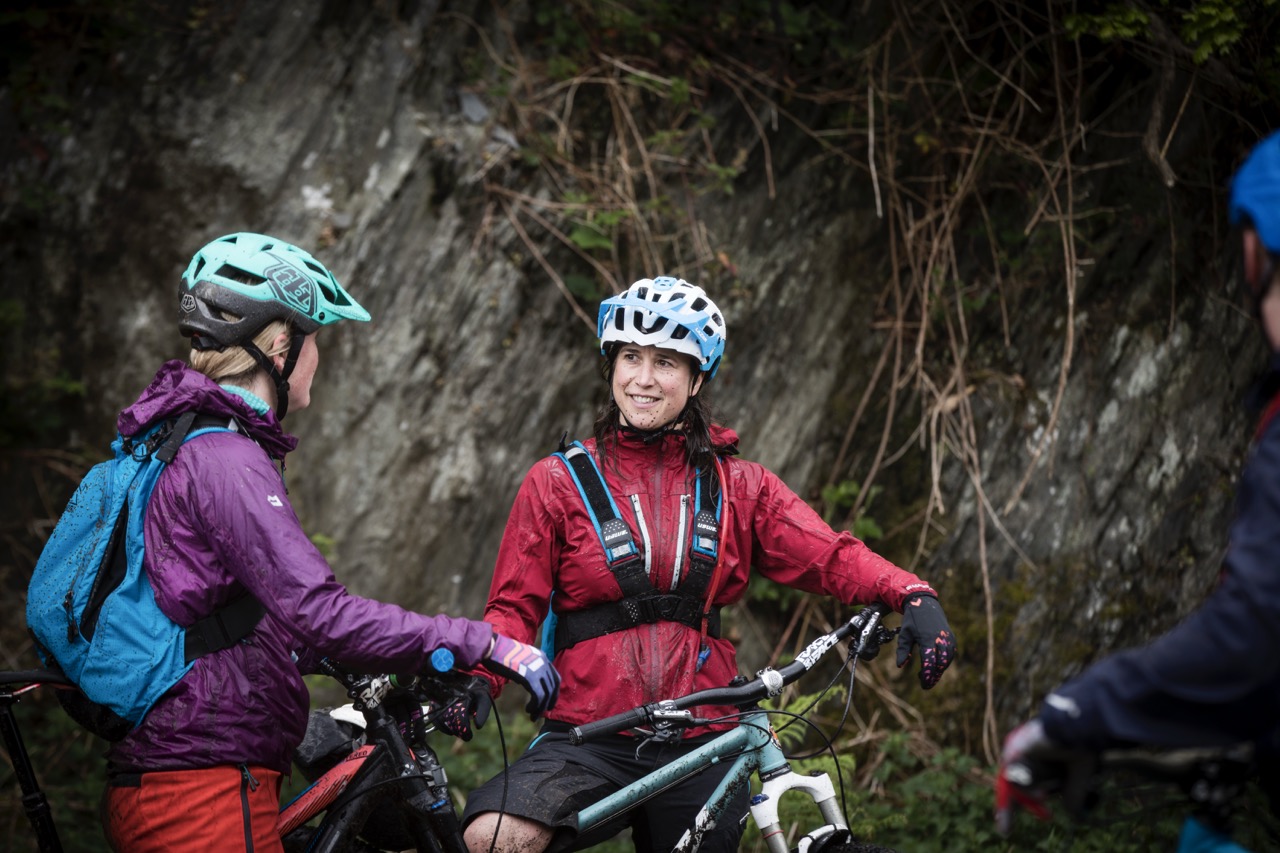
Rich Martin is a trainer for British Cycling’s (recently revamped) guiding programme, and he also helps run Cyclewise, which is a couple of bike shops, as well as the hub of Whinlatter Forest in the Lake District. In the decade since I got my guide qualification with him, he’s seen a dramatic shift in both the folks looking to qualify as a guide as well as the riders looking to hire a Lake District guide.
Taking guiding qualifications first, there are two major external influences that have massively affected the riders coming to train and qualify as a mountain bike guide. Compared to a half dozen years ago, when Cyclewise would run four Trail Leader courses a year with six people on each, they’re now lucky to do one a year. Why so few? Two reasons – and both have to do with the limited scope that newly qualified guides have to work with.
Poachers and gamekeepers
One modern obstacle to a dream job as a guide is the fallout from Brexit. You can no longer qualify as a guide in the UK and expect to be able to work freely as a guide in Europe as you could do pre-Brexit. There’s no longer an obligation for European countries to recognise a UK guiding qualification as being equivalent to their own. While British Cycling will insure UK guides accompanying UK residents abroad, whether the local authorities will recognise the legality of that arrangement is another matter. In addition, you have the whole ‘working in Europe’ thing, which demands a visa if you’re not to fall foul of European labour law and the 90/180-day Schengen limits.

Someone like Julia Hobson, a British mountain bike guide (with a French bike guiding licence) who guides trips for Endless Trails MTB in Europe, has to get a work visa for France, even if she’s there for fewer than 90 days, as she’s working in Europe. For a Brit looking to work for an Alpine company, however well qualified you are, the opportunities are very slim, and the paperwork obligation is big.
You want to ride where?
The other hurdle, that both Rich and Phill point out, is that mountain bike guides in England and Wales can only guide on trails that are legal to ride. This means that they need to stick to bridleways, byways and forest tracks, as well as marked mountain bike trails. That cheeky trail down there? That tasty footpath that cuts out the final climb, or that is simply fun to ride? They just can’t show you it. Sorry. And with something like only 6% of UK mountain bikers stating that they only ride legal trails (in a recent MBR poll), it can be hard to persuade riders to keep it on the straight and (not usually as) narrow.
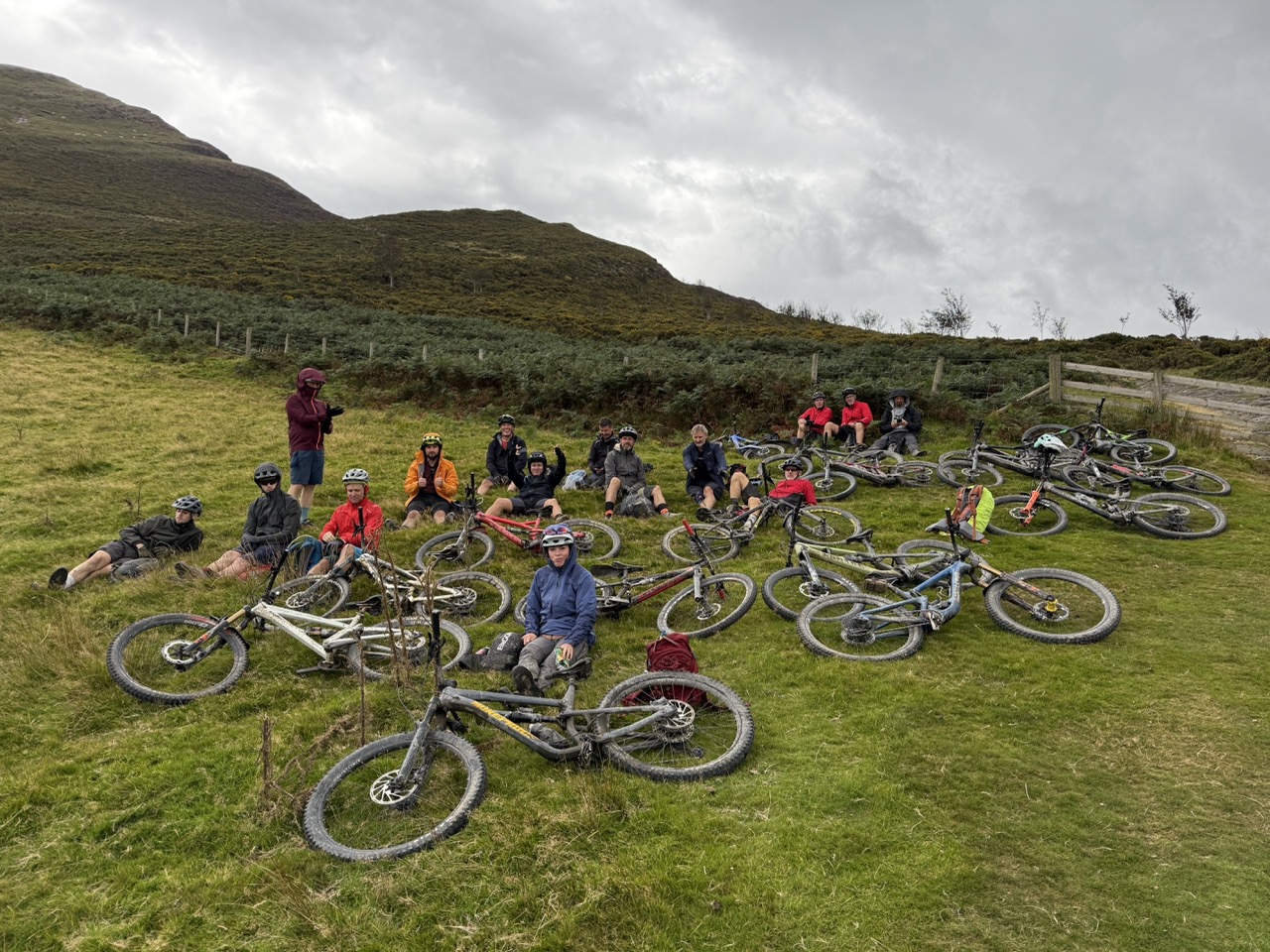
Obviously, this is different in Scotland (go Scotland!), but Scotland is often further away than many riders are looking to travel, so the work opportunities are slimmer. And, as Phill from MTB Wales says: “We get people saying ‘You do a really good job of guiding in Wales, do you want to come and guide in Torridon?’, and my response is ‘No. Why would I guide in Torridon? There are really good guides in Torridon who know the mountains and the lochs, they know the terrain and the farmers…’. I might know the route, but… just get a guide who lives there. That’s the key bit, you’re getting that local knowledge.”
Along with the ‘legal rights of way’ rules that keep guides in check, there is another rule that relates to ebikes. The ebikes that clients ride have to be legal – as in, unchipped and in factory motor spec – for the guide’s insurance to be valid. And short of testing every bike they take out, this can leave them in an awkward position.
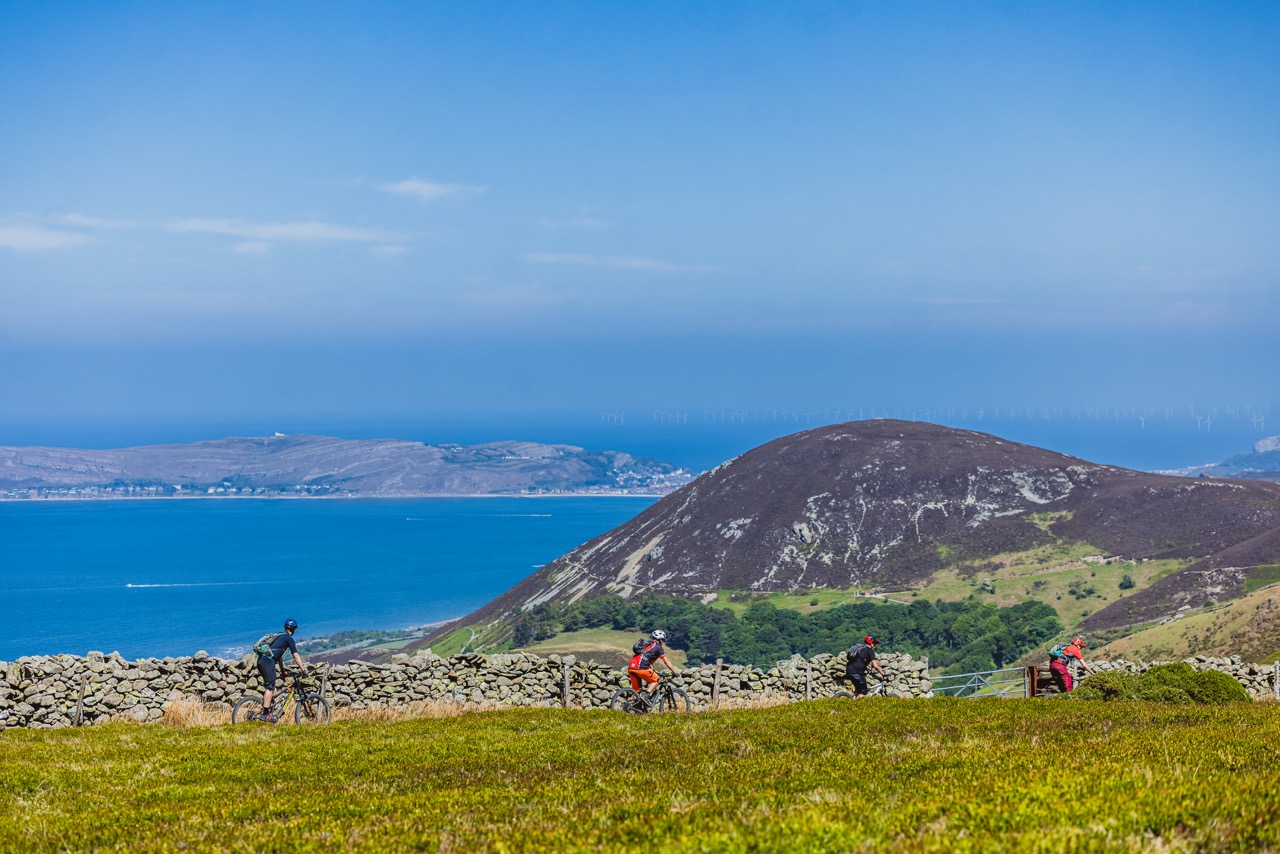
With a BC Trail Leader Award costing between £900–1,200 for training and exams, it’s hard to see how a carefree guiding life would pay for itself if you were self-funding. Many of the guides Rich instructs and examines are taking the qualification for CPD reasons, usually funded by their outdoor-based employers.
Why bother?
All this sounds pretty depressing for anyone looking to hire a guide or to get into guiding, but Rich at Cyclewise has some happier words. Whereas he’d previously been training guides interested in working with other adults, usually abroad, there’s been a shift to working more with youth riders. Some of the new clients they guide are relatively experienced with the outdoors, like the groups of army and air force cadets who are being shown mountain biking as part of their general outdoor education, but other riders Rich sees for guiding sessions in the Lakes have far less experience. “We’ve been seeing a load of groups who’ve never seen green, never seen water, and they were blown away by where a bike can take you in the outdoors. We often talk about ‘Who got you into the outdoors?’ and in some respects, we’re able to be those people.
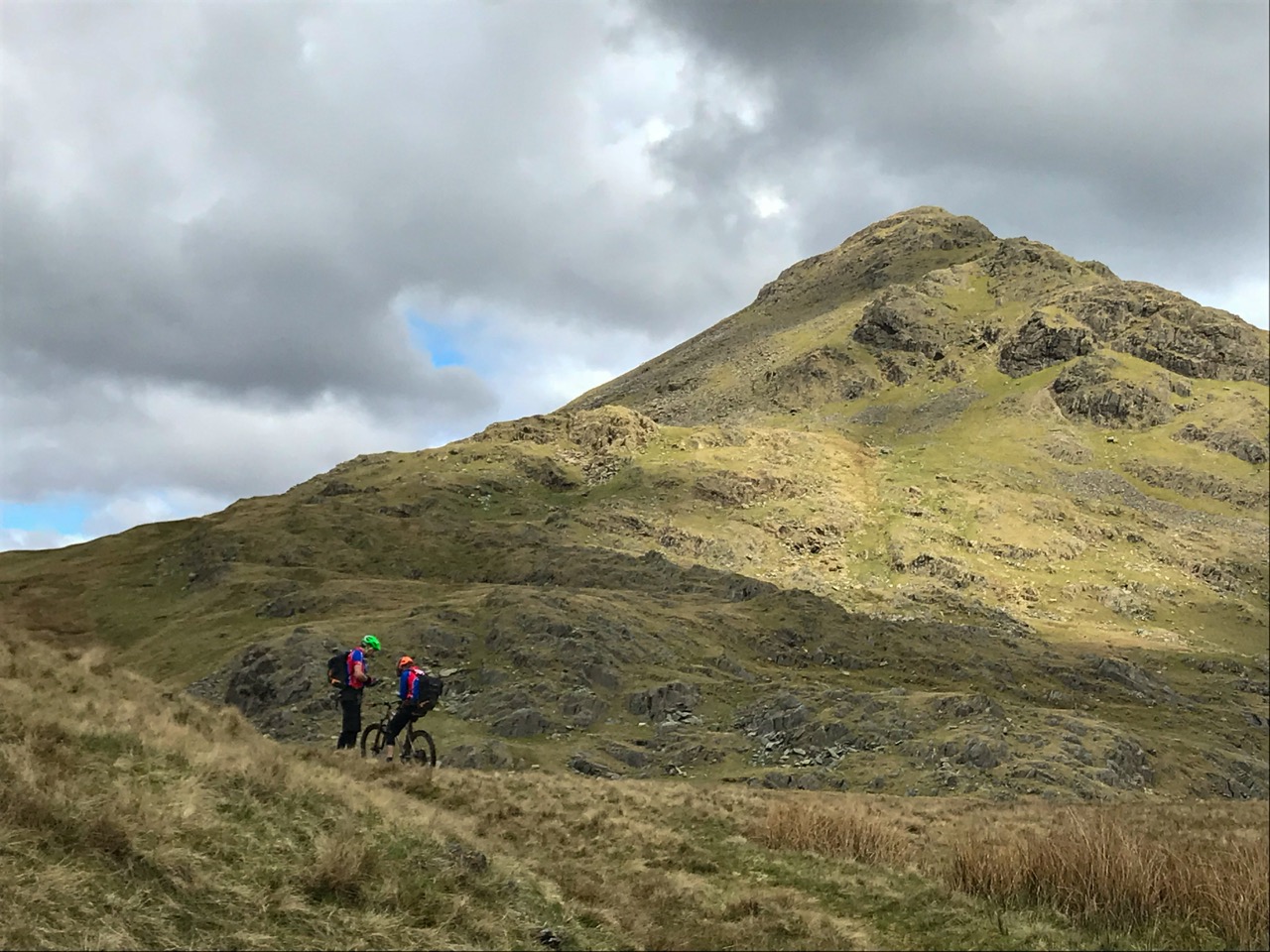
Closer to home, there’s the Cyclewise Academy, which welcomes riders from 8 to 18. “It’s like a club you would have wanted to join when you were that age. There are 150 kids in different groups, with 25 qualified leaders – qualified not because they need to be but because they want to be. I have to doff my cap to Emma and Tracy at The Hub, who started the Peebles children’s club. We started the Cyclewise Academy, having learned lessons from Emma and Tracy.
“We teach them about self-reliance, being able to change punctures, about bike set-up, about first aid, teach them everything they need to know for the mums and dads to be happy to let them go out on their own. They’re getting taught a good apprenticeship, but there are still riders after instant rewards.
“A lot of kids these days want instant gratification. They don’t want to put in the effort to go up to go down. Craig [from Cyclewise] has had to push bikes up to the top of Helvellyn with the kids bitching and moaning, but when they get back to the bottom, eyes on stalks, and they’ve smoked it on the way down, they realise what it is we’ve been trying to teach them about putting the effort in. Whereas normally they just like to do hot laps up and down, up and down, get a Red Bull or a Monster. They’re so used to instant rewards, not doing a three-hour ride to get a half-hour reward.
“It’s hard work getting them motivated – but when they’ve done it, they understand. A bigger reward for a harder effort.”

Greatest hits please
While Rich’s experience at Whinlatter trail centre, so close to the ‘real’ outdoors of the Lakes, can show how younger riders are after that ‘greatest hits’ experience, with everything boiled down to a couple of intense hours, over in Wales, Phill of MTB Wales has somehow built a loyal following of riders coming (and coming back) to be led on all-day and multi-day rides on bridleways.
Phill Stasiw (say ‘stashoo’) and his partner Polly run Mountain Bike Wales from their converted ex-outdoor centre in Staylittle, just up the mountain road from Machynlleth. With an early career in cartography and decades of guiding, both as an outdoor instructor, guide trainer and, latterly, as a guide for MTB Wales, Phill has experienced many aspects of the guiding business over the years.
Despite the modern love of quick thrills and a lack of unknowns, MTB Wales runs a full programme of guided trips throughout the year, with many of them being multi-day trips on established routes, like the Trans Cambrian or the new Traws Eryri. In most cases, the routes aren’t secret and are reasonably easy to follow, yet the demand for fully guided and supported versions of the trips seems to be at an all-time high.

I had to ask: So, Phill, in these days when there are no more secrets, why do riders pay to be guided on trails in the UK?
“We first got involved in 2012 because Liz at the Bluebell Inn in Llangurig [on the route of the Trans Cambrian Way] was asking, ‘Why are mountain bikers coming in at 9pm, demanding food?’ We were guiding a lot in the Elan Valley and Brecon Beacons and it took a while to work out that if we got the logistics right, with the hotels and so on that people would be quite attracted to that, plus not having to look at a map (because it does get a bit bleak on Day 2) and because nobody was doing it. Liz is at the end of Day 2, so that’s where people were going wrong. They were also turning up late on Day 1 in Rhayader. Back in 2012, they might have been using an early Garmin eTrex unit, or maybe still going on paper maps, going the wrong way, starting too late from Knighton – all these things [that result in a long day on the hills].
“And we thought that if we can get the bags moved, book these hotels, maybe we could put this on as a tour. We did a couple in 2012, and it became clear that it was all about timing and making sure people got to their food in time. We realised there was an opening for long-distance, multi-day guiding where people want to be shown, not just the way, but where to stay and where to eat.
“And people like that. They have busy days, working lives, family lives, and they just don’t have that time to pore over maps and work it all out – not least how to get their bags from Knighton to Rhayader, Rhayader to Llangurig – and it gets even more complex if you’re doing the Wales coast-to-coast. Unless you’re a millennial bikepacker who wants to bang out 100km a day in the same pair of shorts and sleep in a bus shelter… all very cool, but our clients aren’t like that.”
Legit fun
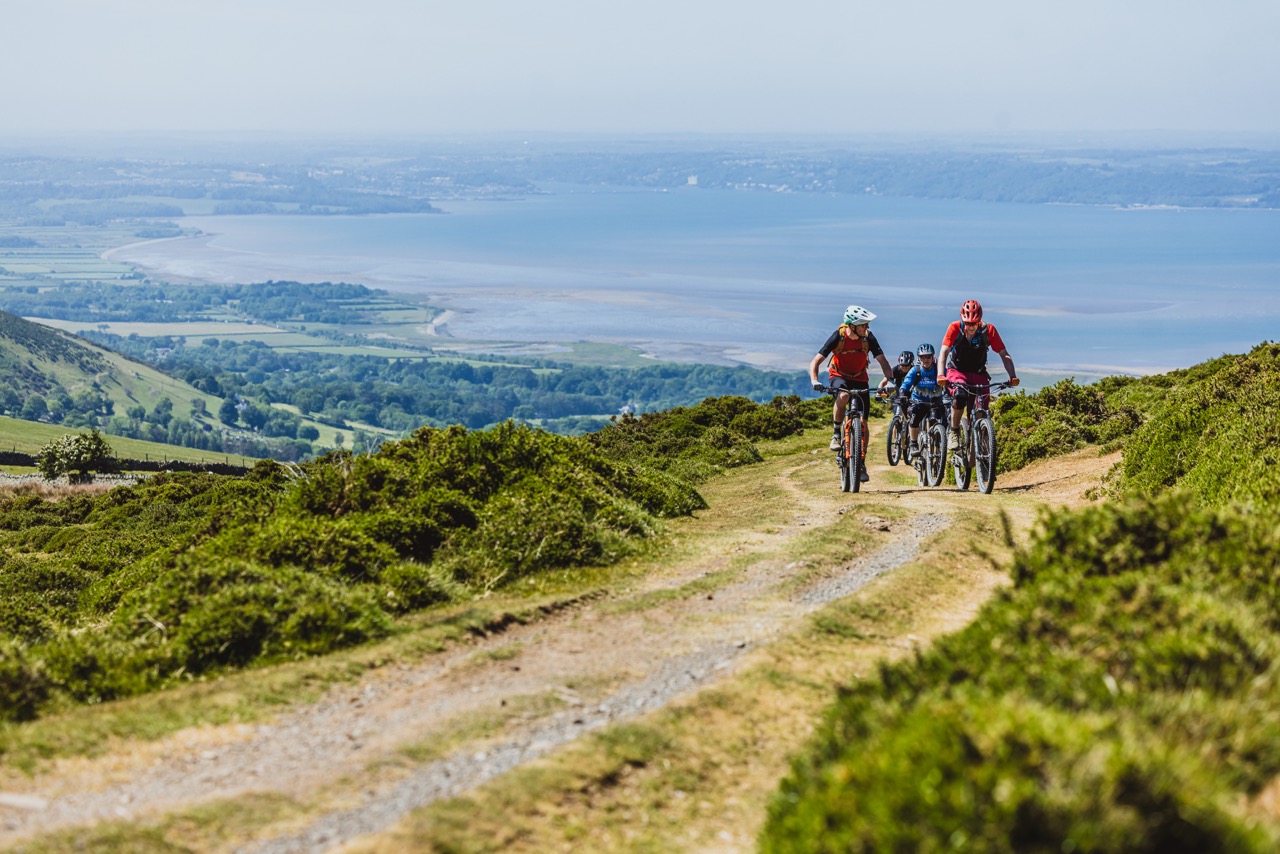
An established long-distance trail like the Trans Cambrian isn’t a secret. It’s all on legal bridleways, so there’s nothing stopping riders from doing it themselves. And many still do, but the appeal of carrying your evening pub-wear or your camping gear over 100 miles of pretty out-there Wales can quickly wear thin. Modern guides have had to look beyond the simple ‘Follow me and watch out for that root’ style of guides of old, as many of the clients probably have the route on their Garmin. They’re now logistics experts, moving bags, calculating that you need to be over hill X in order to get to pub Y for dinner before it all shuts down for the night. And in places like mid-Wales, where houses are far and few between, regular guiding outfits probably do know the farmers and have previously knocked on doors to ask for water, or help fix a broken bike or broken rider, and know where rescue can be found. In places where mobile signals are scarce, some good old analogue local knowledge can make the difference between an abandoned day and a saved one.
Hardships to enjoy
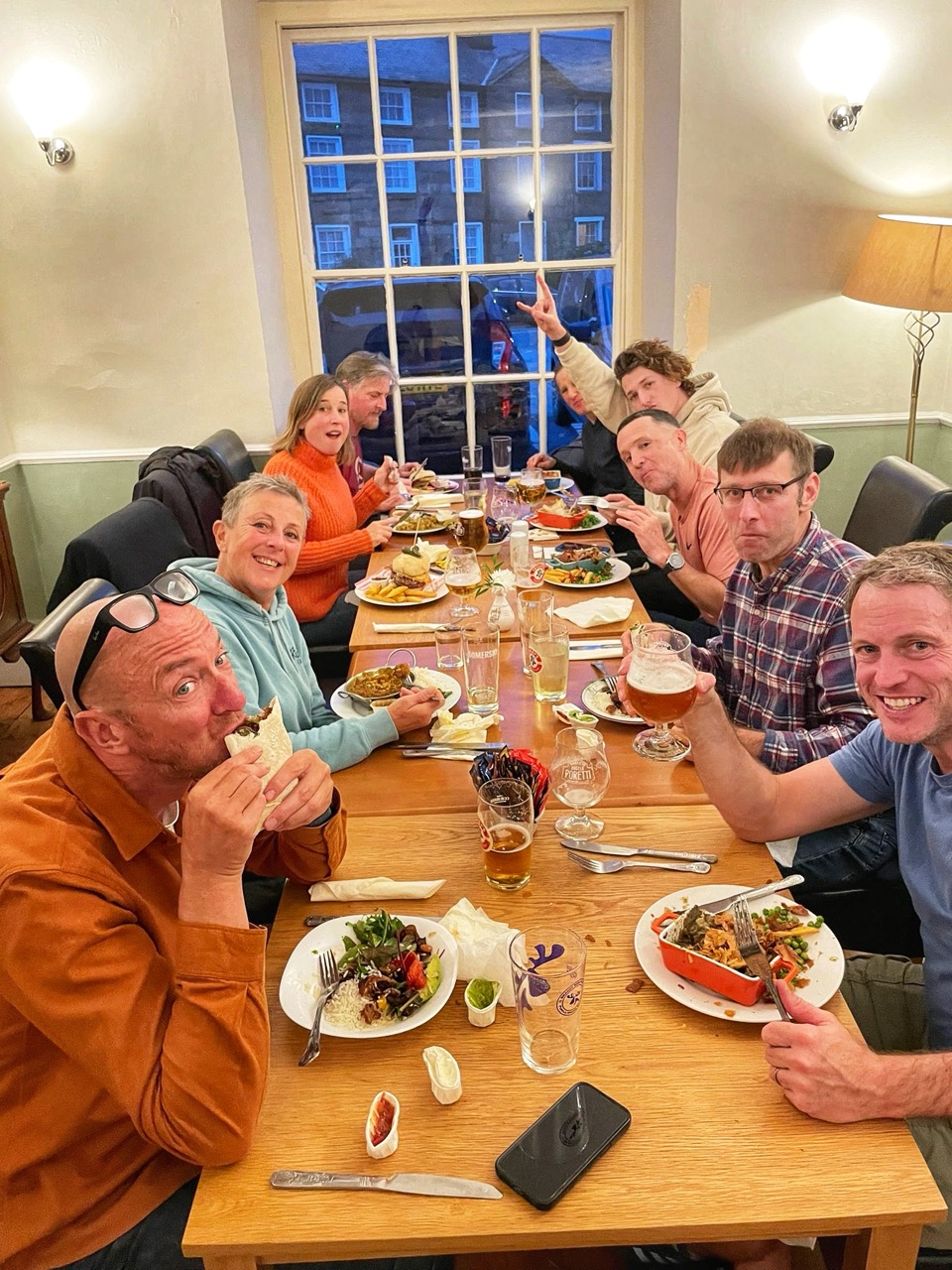
Sometimes, that mid-ride disaster, unintentional dunking or creative use of a zip tie can even be the moment that riders look back on with fondness over dinner in the evening. Adversity is often something that riders are even expecting; it’s what they signed up for. For many, this is the longest ride they’ll have ever done, and some will have been training for months. Even for experienced riders, the sight of sideways rain out of the hotel window in the morning can fill them with dread. Yet on a day that would normally have you playing Scrabble by a roaring fire, you’re out on top of a remote hill, being laundered by the wind and rain. That commitment: to the trip, to yourself and to your (sometimes completely new) ride buddies will make you head out, knowing that you’re sharing the awful weather, usually with good cheer. And it’ll make for some great stories when you get to dinner that evening.
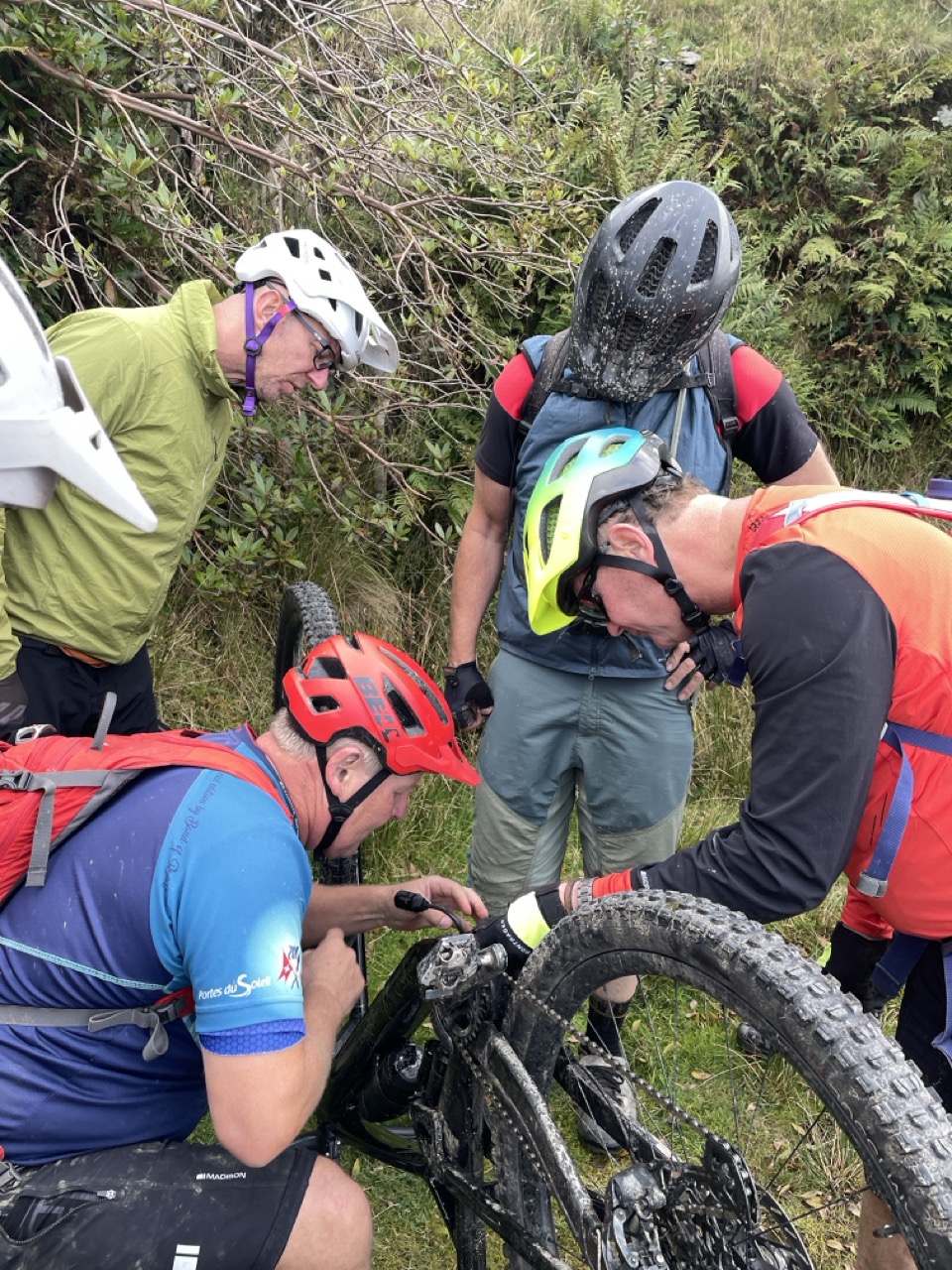

Phill again: “I’ve seen other trips, even walking trips, where they let people do their own thing in the evenings. ‘We’ll be in the Crown this evening, join us if you want.’ I don’t like that, I like to say ‘We’re eating together’. We’ve had a shared experience on the trail, we get together and break bread – and share the stories of our tumbles, slips and slides.”
Those moments are hard to script, and for many riders, signing on to a trip, even as a solo rider, gives them a new group of riding buddies to grumble about the rain with, or to share a snack or a pint with. Seemingly every long-distance trip I’ve been on or guided has grown a WhatsApp group of photo sharing and banter that often lasts much, much longer than the trip itself and soon morphs into the ‘Where shall we go next?’ chat of old riding pals.
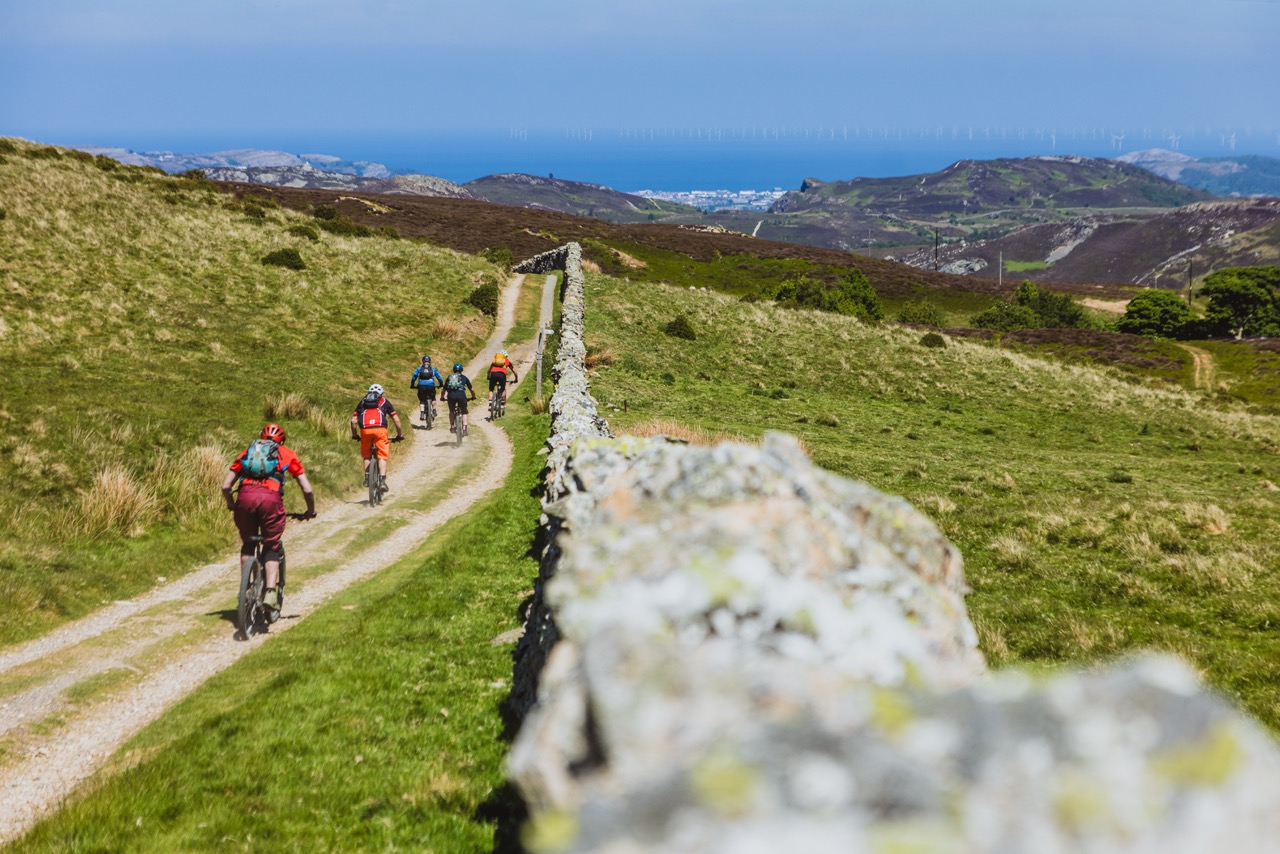
So, yes, there are few secrets left in the world. Nearly every trail has been ridden, but it’s rarely about the trail, is it? It’s about who we experience it with, the views we share, what’s in your packed lunch, who saw that great save or comedy plunge. And the modern guide isn’t really a guide anymore, they’re a facilitator of good times, fixer of problems and finder of remote water taps and early morning disc rotor-swaps.
It’s certainly a quirky and sometimes uncertain job, but it’s one of the few things that’ll be hard to replace with AI.