Although it’s a weird inversion that the two biggest self-proclaimed greens on the thread are both firmly in the “resigned to it” category, while more or less everybody else is in the “lets do everything we still can” category.
The two are not mutually exclusive. However I have not advocated doing nothing - I have advocated a realistic assessment of the situation. I have done my best for 30 years and have had a much smaller impact on the planet than most in the west. I welcome any steps taken by anyone.
I'm just being realistic.
Right - so you're talking about DACC, not about capture at source? Yes, DACC is highly inefficient, it actually takes more energy to remove than it does to create from burning, but If you were to apply ASCC onto current power infrastructure, a significant proportion of that energy is provided by waste heat. This would significantly reduce the amount of extra CO2 we emit. Running DACC during leaner times would then allow us to more rapidly move toward neutrality. As for turning it back...we'd need SBSP or fusion to make that work.
The national grid is currently 30-35Gw, but there's usually around 10gW of free capacity in teh early house of the morning and this will rise as Dogger bank expands. But like I said, it's a start and it's doable - what should we be doing (as a nation) instead?
Reduce Reuse and Recycle are key, but there's more than can and should be done.
Currently - only around $4-6bn has been invested in research into CO2 capture. In context Microsoft will buy Activision Blizzard for $69bn.
Daffy, you need to link your sources because the numbers in you last post don't correspond with anything I can find on the Net.
"If we presume that... " is not helpful.
The first Google result I clincked says that in miles flown half are short haul, a quarter medium haul and a Quarter long haul.
In terms of flight bumbers the first Google result says 86% are short haul, 10% medium haul and 4% long haul.
I find it disappointing that in a thread on which you've got three geologists telling you what happens next you can attempt to greenwash flying with numbers that you provide no links to and fly in the face of anything in the public domaine.
I you think the difference between business class and economy is the problem you've failed to comprehend what's coming.
Just stop flying.
dazh maybe my friend would see your kids as a pointless burden to the planet to satisfy your own desires same as flying to New York to buy a shirt.
This is a pertinent point – individuals doing all they can to minimise their impact on the planet is a very honourable thing but we know that it is going to take much, much more than that.
For centuries in other part of the world the culture is to have large families (slight shift to having less recently due to economy pressure) as safety net for old age. Having large a family means that the chances of someone being looked after in their old age is much higher than those with small family. This trend is not going to reverse anytime soon. The more they are imposed on the more they will oppose.
Adversity has caused massive changes in human responses throughout our history, I refuse to believe that there is no hope and fully believe that solutions both known and unknown will be found and implemented.
It is part of the cycle as nature will deal with mankind accordingly.
A convenient combination which doesn’t require anyone to change anything. Resignation is no different to denial, actually IMO it’s worse because people who are now resigned to catastrophe are essentially abandoning their/other people’s kids to a life of misery so that they can continue with their noses in the trough safe in the knowledge that they won’t be around to experience it. It’s f***** pathetic quite frankly.
Resignation or denial etc makes no difference to me. People just have to adjust their lifestyle as they see fit.
However, I do oppose to over fishing or destroying the fish stock all over the world.
As for leaving the mess to the kids, once you have educated them the way of life (whatever that is), the rest is up to them. You don't live their lives for them and they cannot blame you for the world. Everyone walks their own path.
Shell and National Grid have both recently quit carbon capture North Sea projects, Daffy.
Putting my geologist hat on again there just aren't number of suitable wells available, it's energy intensive and technically challenging. BP gave up on a projest in the North Sean a few years back. They failed. Wells often leak, a lot of North sea wells are currently leaking methane, a major greenhouse gas contributor. If you think that trying to store CO2 under pressure in those wells will improve matters think again.
Carbon capture on a large scale = unrealistic greewashing
Fusion = pie in the sky, the scientists are less confident now than 40 years back because each bigger better accelerator takes them further from an energy positive power station than their previous knowledge. The Cern website recently had to dramatically change the wording on its web site.
Really interesting this, and some very interesting comments so far. Some real insights from industry experts and others that think everything is everyone else’s fault.
My viewpoint is I work in oil and gas. Not one of the big players at all. We are seeing this industry decline. A few years to go yet but its future is certainly mapped out. Im currently investigating a move into hydrogen and CCS (carbon capture and storage). Heres my opinion.
This technology exists. Its proven and we are currently seeing companies roll it out. Especially in the UK. There are already companies using this tech to produce aviation fuels and we will shortly (few years yet) see the hydrogen economy take off. This will (imo) be the next industrial revolution.
Could this all be produced by renewables? Yes is it cheap to do so? No. So while its proven and possible the real issue is funding. And this is where it all stops. The government / treasury will let the world burn before having to spend their (our) hard earned. I envisage a future where by the countries all look to develop as much “in country” resources as possible now. Especially after the Ukraine debacle. i know that at least 50% of spend for the uk infrastructure now must be UK supply, which means we wont be cost competitive so we either have to come up with some other ideas or end up with nothing.
dazh maybe my friend would see your kids as a pointless burden to the planet to satisfy your own desires same as flying to New York to buy a shirt.
This is the other side of the denial/resignation position. The nihilistic 'we all need to die' argument. Anything to prevent reasonable constraints on the behaviour and consumption of those who have enough money to do whatever the f*** they want. It's very revealing that those who aren't willing to change their lifestyles are the ones who think billions of people dying is a price worth paying. 🙄
dazh maybe my friend would see your kids as a pointless burden to the planet to satisfy your own desires same as flying to New York to buy a shirt
Hopefully not. I mean that would be weird, wouldn't it? Prioritising flying to buy shirts over having another generations of humans to carry on after us (with what little we leave them).
If we all stopped having kids it's not going to be happy existence for those that are left either unless they are all planning to work until they drop dead. Feel sorry for whoever would be last!
People have all but said this but a key issue here is rebound effects.
Daffy, you clearly know your stuff here. I'm all for getting big of business class. What happens then though? Airlines convert that space to economy. Price per seat drops, more people fly.
Rebound effects are pretty limited with something like food (you can only eat so much, even after a long ride), but with flying, driving, computing, etc. they are huge
Similarly, a sobering fact about aviation I've read is that the efficiency of the (propeller-driven) planes of the 1950s was only matched by jet-planes in the early 2000s
Buildings are not dissimilar -- I think commercial buildings of the 1970s were about as efficient as those of the 2000s (took 30 years to offset the extra energy of AC)
So, what will follow the next efficiency improvements for planes? The return of supersonic flights? Commercial space tourism?
The government / treasury will let the world burn before having to spend their (our) hard earned.
@rone to the thread please 😂
Seriously, the idea that we don't have the money to do this, whilst at the same time possessing the means to create that money is nonsensical.
No - business class pays for almost 70% of the cost with less than 20% of the seats. Get rid of business class and seat prices RISE. Less people on fewer planes, but you still have the air freight network for perishables and a moving economy.
So airlines would need more flights to achieve the same profit? Or would they just absorb the losses?
Daffy, you need to link your sources because the numbers in you last post don’t correspond with anything I can find on the Net.
“If we presume that… ” is not helpful.
The first Google result I clincked says that in miles flown half are short haul, a quarter medium haul and a Quarter long haul.
In terms of flight bumbers the first Google result says 86% are short haul, 10% medium haul and 4% long haul.
The latter is Wilkerson's paper and is utterly irrelevant. it's the flight miles that's important as it dramatically scales the weight if the aircraft. MTOW of an A320 is 78t and an A350 is 320t+ Which means that over the first 3000 miles of a journey the A350 will use almost 4* the fuel. This is why long haul matters and why business class matters more. It's highly wasteful. An A320 burns less fuel than a very efficient car. 0.69.0.81l/100km. An A330 (the only data I have to hand) is closer to 2.7l/100km. That's a medium sized aircraft.
I find it disappointing that in a thread on which you’ve got three geologists telling you what happens next you can attempt to greenwash flying with numbers that you provide no links to and fly in the face of anything in the public domaine.
What exactly have you told me? All the reasons it won't work? All the things I'm doing wrong? You've provided no links. In each case it goes something like "a quick Google search suggests", "a tour of an aircraft factory suggests"
you think the difference between business class and economy is the problem you’ve failed to comprehend what’s coming.
No - I'm trying to suggest a better means of getting people to REDUCE the impact of aviation. Your suggestion is to aviation what Leave was to Brexit. Simple, stupid and ill thought out.
What about driving? More emissions - should we all just stop that? What about shipping? Faaaar more emissions - stop that too? Why aviation? Why the smallest contributing global transport sector?Just stop flying.-
Now you mention it, I think I even looked this up before (price per m2 of plane for different tickets) and have the numbers hidden in some spreadsheet
So airlines would need more flights to achieve the same profit? Or would they just absorb the losses?
They'd have to raise prices, which would further reduce demand until a more stable aviation level was achieved.
"Price per seat drops, more people fly."
" Get rid of business class and seat prices RISE."
Both can be true depending on route, aircraft type and client profile. Budget airlines rely on high load factors and premium on people paying for a higher level of service. Airlines very often have both, for example Air France KLM with Transavia.
France has recently introduced a law banning short haul internal flights where there are TGV alternatives. It doesn't go far enough IMO.
The aviation industry benefits from very low fuel cost because there are no internationally agreed taxes. On a 2000km journey (Pau Berlin) junior does regularly the cheapest is nearly always the plane, then the bus, then the train. The train is about 14 hours and 150e (360e for departure tomorrow), the bus about 30 hours and 150e (300e for departure tomorrow) and the planeabout 2h from 10-50e (273e dparture tomorrow)
The CO2 impact in the inverse of the price you pay and time time taken. That's bad news for climatic change.
We desperately need an international air fuel and air miles tax to discourage the use of the most polluting means of transport.
That paper on engine/aircraft efficiency is a little bit misleading as it focuses primarily on the engines and their efficiency, less on the aircraft/engine/mission package. Overall, it's not wrong, but in terms of overall efficiency, last gen piston aircraft were non-pressurised, low altitude, aircraft, comparing them to a 707 is a little unfair.
I'd have said it wasn't until we go mid bypass fans in the 80s that efficiency was similar, but that it wasn't until the 90s that the fleet replacement caught up and it was better. Today, in the 2020s, aircraft emissions are almost 50% less than they were in the 50s despite flying 3* higher and almost twice as fast.
I used to take the ferry back home to NI. It's now too expensive. As in, more than twice the cost of flying and renting a car for a few days. It also takes up a lot more time (that doesn't bother me that much).
I've looked at travelling as a foot passenger. Train to either Holyhead or Liverpool, ferry across, and then bus to home (multiple buses). A brief look says that is slightly cheaper than flying an getting a car. The reality is that it hinders my short trips home by taking up an entire day of travelling and relying on everything being on time.
“Price per seat drops, more people fly.”
” Get rid of business class and seat prices RISE.”
Both can be true depending on route, aircraft type and client profile. Budget airlines rely on high load factors and premium on people paying for a higher level of service. Airlines very often have both, for example Air France KLM with Transavia.
France has recently introduced a law banning short haul internal flights where there are TGV alternatives. It doesn’t go far enough IMO.
The aviation industry benefits from very low fuel cost because there are no internationally agreed taxes. On a 2000km journey (Pau Berlin) junior does regularly the cheapest is nearly always the plane, then the bus, then the train. The train is about 14 hours and 150e (360e for departure tomorrow), the bus about 30 hours and 150e (300e for departure tomorrow) and the planeabout 2h from 10-50e (273e dparture tomorrow)
The CO2 impact in the inverse of the price you pay and time time taken. That’s bad news for climatic change.
We desperately need an international air fuel and air miles tax to discourage
I agree with all of that.
the most polluting means of transport.
But this is just untrue. It's worse than rail and bus so long as time is removed from the equation. It's not worse than cars and cars consume far more and are used more recklessly.
And even with all that being said, it's still a tiny fraction of home energy use. My argument isn't that aviaiton shouldn't have to reduce or eliminate its emissions, just that there are better more immediate targets that have a much higher impact and that give aviation time to develop safe, reliable technology to do what you demand. In the mean time, either tax emissions or disincentivise flight by cost.
Overall emissions from aviation would have reduced by 20+% in recent years had aviation not grown as a sector.
@daffy I'm big into aviation, so find your comments very interesting. These 'new' high bypass engines, are there more developments to be made here? Airlines often quote 15-20% fuel saving, is that an assumed 90%+ LF or more? What about improving taxiing and time on the ground? I know it is common to taxi on one engine, but that's been common place for a while. It only takes a few hours at somewhere like LHR to see how much time is spent on the ground engines running.
Operations (in cruise, while descending on the ground) are the biggest easy win for reducing emissions. Airbus has had eTaxi (motorised front landing gear for taxi) ready to go for some time, but Airlines don't want it.
A320neo is around 22% more efficient on an average mission than the CEO that came before it. The 737 max is 15-17% better than the NG it replaced which itself is better than the classics or so I'm told (Jet 2).
Truthfully, we're reacing the limit of turbofan development - the next stages will need to be open rotor unless some wizzardry can happen with the cowling materials. The weight of the cowling is now starting to constrain further development. the new GE Engine for the 777 is actually bigger in diameter than the 320Neo's fuselage.
The next evolution will be very high aspect ratio wings with UHBR open rotors, then multiprop fuel cells for regional, then...maybe LH2 in some form, perhaps hybrid cycle.
They’d have to raise prices, which would further reduce demand until a more stable aviation level was achieved.
That would be interesting. I wonder if there are other case studies with anything like that as an outcome. I study this stuff too (not aviation specifically, bigger picture energy, climate change stuff) and rebound is the norm -- certainly economy wide
@thisisnotaspoon - have you looked at combined cycle reactors and seawater CO2 extraction rather than DACC? What pressure are you considering for C02 movement/storage?
That would be interesting. I wonder if there are other case studies with anything like that as an outcome. I study this stuff too (not aviation specifically, bigger picture energy, climate change stuff) and rebound is the norm — certainly economy wide
This is part of what we're studying using systems engineering techniques supported by machine reinforcement learning at the moment.
A Clio is almost identical to an Airbus in terms of CO2 with one person in the car and a 60% load factor in the airbus at 115gm/100km per passenger.
With two people in the Clio it's better than the plane and with four much better. I run an EV, a Zoé, so with the electricity generation mix of the areas I drive it beats both plane and bus and gets close to the train. And even the Zoé is bad news given the embedded CO2.
We had a chance a couple of years ago to eliminate a couple of percentage points of the global population. We (quite understandably) didn't take it.
We could acheive similar, but slower, by slightly restricting global birth rates. That creates problems both economically and socially down the line that are solvable, but sadly make it politically unviable.
If "just stop flying" is an answer - 1.9% of emissions - neglecting that much of those people and goods would still need transporting somehow; then both of the answers above are also possible solutions.
I dont think any of them, alone, are.
On a different matter - anyone know how much potential there is for UK offshore wind? could we become self sufficient (cost and NIMBYs not withstanding)
This reminded me of a comedy's show by Robert Newman A history of oil. I have no idea how accurate it was but was entering.
No way out
Can't believe it was so long ago
@daffy Sorry, thought you were referring to DACC in you post.
have you looked at combined cycle reactors and seawater CO2 extraction rather than DACC? What pressure are you considering for C02 movement/storage?
In this particular case it's an amine solvent, the acid gas then goes for Sulphur recovery and then goes for compression.
The amine unit like most extraction systems works on pressure so the absorption column is at a nominal high pressure, and the regeneration is <1.5bar. After that it's compressed to the dense phase which is <200bar as that's the only practical option, lower pressure (gas phase) means higher volumetric flows and more pressure drop which means booster stations to move it long distances. You then put it through several stages of wet gas compression, aftercooling and coalescing/knock out drums before removing the residual moisture in a molecular sieve, then it needs filtering down to 1um to remove any dust and black powder residue.
I presume by combined cycle reactor you mean post combustion capture on CCGT? If so, then yes it's been done, but also has technological issues. All the downstream issues are still there, but you also have issues with the solvent as amine systems are sensitive to any residual oxygen.
Sea water has been proposed in a few different ways, if you produce H2 by electrolysis you're left with an alkaline solution which can be used to make carbonates. Which makes it sound great, CO2 extraction as a byproduct. Until you remember that the main process is only about 20% efficient, so it takes 5kWh of electricity to produce 1kWh equivalent of Hydrogen.
Currently – only around $4-6bn has been invested in research into CO2 capture. In context Microsoft will buy Activision Blizzard for $69bn.
Which really tells you all you need to know about the economic and practical realities of it.
For example Aramco committed to it in a big way a COP in Egypt, they'll sequester huge amounts of CO2, and to their credit have followed through with it. But it won't do anything to solve the fact that an order of magnitude more CO2 is released by the consumer than by Aramco's processing. And Aramco's stated aim in all this is to get in before the market goes crazy, there's not the capacity to implement all these projects at once, and they want to be ahead of the rush.
I'm not being defeatist when I say the easiest option to stop climate change are to convince 7 billion people not to drive, eat meat, fly, over consume, or heat/cool their houses. The science/technology isn't going to save us. To draw an a analogy, that's like drowning, and believing that someone will setup a rescue organization, build and commission a boat, train it's operators and rescue you. When the reality is it's already a bit late, you should have learnt to swim a decade ago and you really should at least attempt some doggy paddle to stave off the worst affects.
Thanks being so engaged here @daffy and sorry for all the gloomy reponses (including the below...)
No – business class pays for almost 70% of the cost with less than 20% of the seats.
20% of seats, or of cabin space? If 20% of seats I'd have thought that'd be a lot of cabin space?
Do you know the CO2/£ for different flight classes?
To be honest though, if scrapping business and/or first class would cut airlines revenues so much and increase the price of standard tickets, that's no more realistic that drastic social change
I’d have said it wasn’t until we go mid bypass fans in the 80s that efficiency was similar, but that it wasn’t until the 90s that the fleet replacement caught up and it was better. Today, in the 2020s, aircraft emissions are almost 50% less than they were in the 50s despite flying 3* higher and almost twice as fast.
OK, but this is what rebound is, right? Better, more efficient tech, but at a larger scale such that overall impacts grow
All that said, I do agree with you that flights sometimes become too central a focus. I also can't imagine a world with much less flying, now everything is so socially churned up (globally). And if planes could be electrified, at least the network infrastructure is free (i.e. air)
OK, but this is what rebound is, right? Better, more efficient tech, but at a larger scale such that overall impacts grow
Yep. See https://en.m.wikipedia.org/wiki/Jevons_paradox
Lovelock said that humanity was in the last 1% of it's lifespan just before his death.
But I always liked this interview with him:
https://www.theguardian.com/theguardian/2008/mar/01/scienceofclimatechange.climatechange
We is f00ked. And the only meaningful actions we must to take to avoid catastrophe are "never going to happen" - as some on this forum have already said.
Hey ho.
Overall emissions from aviation would have reduced by 20+% in recent years had aviation not grown as a sector.
Which does kinda back up the don't fly argument....
Also, we could stop building so much with concrete and then ripping the structures down after 30-40 years.
Oddly, even though I don't have kids, it is usually those with kids that seem to carry on as if everything was fine. Usually down to the convenience of carrying on with their lives.
And controversially I’m not sold on electric cars yet, personally I think its much more environmental to stop keep creating yet more vehicles and run the ones we have until no longer viable.
This used to be pretty widely accepted didn't it? I wonder what changed. Probably (tinfoil hat on) car companies getting control of the narrative.
But I suppose you do still hear it said that electric cars better at saving car companies than saving the planet.
Thank you to everyone who has been contributing to this thread. I have been active in climate action for a few years now and despite the general gloomy feeling in the thread it still feels positive to me that there is debate and thinking alive.
One of the real things that I think we need are more stories of positive change. As humans our ways of life have always changed with time and that is OK. What we need to figure out is a different way of living that as a society we are happy and believe in, but which has less impact on the planet and the nature we share it with. This does have to be different to what we know now, but this doesn't need to be worse. Even better would be to find a way of living which works with the natural systems that we are part of rather than simply using them as commodities. Perhaps, finding positive things to do which help our natural environment can provide a positive feeling alongside the reductions in emissions which can sometimes still feel disheartening.
For anyone keen to think about how they can meaningfully contribute to climate action, I have find this web page and video really helpful - https://www.ayanaelizabeth.com/climatevenn
I also enjoyed this podcast recently which isn't directly targeted at climate action, but does explore some of the way our current society works and impact on climate change - https://fromwhatiftowhatnext.libsyn.com/episode-49 .
I'm another who made a conscious decision many years ago to not have children, for environmental reasons. That's not to try to be holier than thou, it's to demonstrate that we as a society knew 30+ years ago that we were spiralling into trouble. And it is definitely a steepening descent.
I really am frightened for what may face our friends' kids in 40-50 years. Please, don't argue over the details, do as much as you can. For those in relevant fields, please keep working and advising, shout from some rooftops...
As I always say on these threads - international governmental action is all that will work, through direct investment, grants, regulation and taxation. What we can do as individuals is campaign for those policies and vote for political parties that will delivery them.
No harm in eating less meat/dairy, consuming less, driving less, flying much less - all of which I do - but societal change will not happen without governmental intervention
+1 olddog
I suspect it will be like covid, where warnings are ignored until it's basically too late and they have to take much more severe action. Most people just don't understand risk, uncertainty, probability and I think it makes them less trusting of predictions.
My guess is it will take some a prolonged drought, flooding, large disruption to food chain due to extreme weather or something else that basically stops the economy functioning properly. It's already happening, but not enough.
It doesn't help that this is a long term problem, and governments are only elected for 4-5 year stints.
As olddog says the biggest impact an individual can make is campaigning for system change, all other actions help but for a long way behind in terms of impact.
a sentence with the UK reducing CO2 over any period is false unless you ignore the CO2 associated with imports. The UK now emits more CO2 abroad than ever with its food and goods imports
This is simply not true, even taking in to account offshoring manufacturing and food production the UK has still delivered significant reductions
https://ourworldindata.org/grapher/consumption-co2-per-capita?tab=chart&country=~GB R"> https://ourworldindata.org/grapher/consumption-co2-per-capita?tab=chart&country=~GBRhttps://ourworldindata.org/grapher/consumption-co2-per-capita?tab=chart&country=~GBR
We are however stalling, we have the proven solutions to keep us on a 1.5C pathway for at least the next decade of required reductions but currently they are stalling due to government indifference despite environment ranking third in polling for people's priorities after cost of living and the NHS. Look at what is happening in the US and EU and they are unleashing massive levels of state intervention in the markets and its working, huge investment is pooring in.
This is simply not true, even taking in to account offshoring manufacturing and food production the UK has still delivered significant reductions
Even if the UK got to net zero if would make little difference to the impact that has already started and in 50 years will be chaos. The human race simply doesn't care enough about this and always has more pressing immediate issues to deal with.
The future is a long way away and humans are not good at picturing themselves in the future or thinking it is really them so the climate change issues will be dealt with when they are the most important issues to the masses and governments, i.e. when the impact to them is greater than say interest rates increasing.
To add to greentricky, there are actually quite a few rich countries that have been reducing not only their territorial emissions, but also their 'consumption-based' emissions (or carbon footprint) that account for imported goods
https://www.tandfonline.com/doi/full/10.1080/14693062.2021.1990831
I was surprised to see this and I've been an academic in this field for 15 years
Two problems -- the reductions aren't happening fast enough, and they have been achieved through access the lowest hanging fruit (e.g., high but not high enough renewables penetration)
That's a fascinating report, and you can clearly see the consumption based CO2 taking a steep dive in 2008 in nearly all the countries shown.
As I read this, REM are belting out ‘It’s The End Of The World As We Know It’ on Radio 6…
@thisisnotaspoon - No combined cycle seawater reactors, not gas turbines (though CC at source using waste heat is a better idea than DACC as the waster turbine heat is a substantial energy source for destablisiing the symmetry in CO2 bond. CO2 is more easily freed from seawater with electricity than it is extracted from the air, so the research shows that it's actually easier to extract CO2 from seawater and then just leave the seawater ionised to allow it to naturally absorb more CO2.
It's research from UCLA [url] https://pubs.acs.org/doi/full/10.1021/acssuschemeng.0c08561 [/url] It was initially trialed in 2018, but has gained much more momentum in recent years. It's due to be spun out.
For balance, are alternative opinions on all this climate scaremongering allowed? If so, it might be worth stating that the 'science' (TM) is far from settled on this issue and there is certainly no consensus on the doom and gloom spun out by the media with ever increasing hysteria.
Plenty more scientists saying this too although they never seem to get airtime on the mainstream news.
So it would seem that as ever, despite what we are told regarding 98% of scientists etc, etc. blah, blah, blah, that the science is not settled on this, the climate on our planet has been fluctuating naturally for millions of years.
There is no compelling evidence that human produced CO2 is the driver of any of the climate fluctuations we are currently seeing. There is no compelling evidence that an increase in CO2 in the atmosphere will lead to the doom and gloom type predictions we are told will happen. There is no compelling evidence that a reduction in human produced CO2 will lead to a cooler planet. There is no compelling evidence that a cooler planet is actually better. A multitude of climate predictions and supposed end of the world type events and deadlines have come and gone over the last few decades, and yet here we all still are. And so far as I can tell in my 50 years on the planet, the weather is very similar now to when I was a child.
Oh and theres a very good thread running on Pistonheads for anyone who likes a good debate on this:
Pistonheads: Climate change - the political debate
Fusion = pie in the sky, the scientists are less confident now than 40 years back because each bigger better accelerator takes them further from an energy positive power station than their previous knowledge. The Cern website recently had to dramatically change the wording on its web site.
CERN? You mean ITER? CERN is fundamental science, particle physics, specifically around the LHC and its descendants. ITER is the follow-on to JET at CCFE in Oxford.
This is/maybe true for ITER and other large scale Tokamaks, but not true for other types of Fusion. CCFE have quite literally stated this.
More private money has been invested in fusion in the last 4 years ($11bn) than has been invested in somethingion by governments around the world ($10.9bn) upto 2020.
Commonwealth Fusion, Helion, General Fusion, Zap - all with substantially different approaches to fusion generation and crucially, all looking at smaller scale. Due to the magnetic forces involved, fusion actually scales down incredibly well.
Is it viable in 10 years (the old joke) probably not, but in 20? Maybe, but only if energy generation is still a needed issue. SBSP could derail it, new 40_60% efficient solar, could also.
And so far as I can tell in my 50 years on the planet, the weather is very similar now to when I was a child.
Cool story, bro.
https://www.bbc.co.uk/news/science-environment-66104822
A multitude of climate predictions and supposed end of the world type events and deadlines have come and gone over the last few decades, and yet here we all still are.
Such as... ??
Ian Plimer is an idiot. He's talked nonsense on some other subjects he should know more about as well
signed.
Another geologist. From a geologic point of view it's absolutely true that the earth has been much hotter and colder i nthe past, and it doesn't kill all life, but what that doesn't tell you is that you won't like the process of getting there much
Commonwealth Fusion, Helion, General Fusion, Zap – all with substantially different approaches to fusion generation and crucially, all looking at smaller scale. Due to the magnetic forces involved, fusion actually scales down incredibly well.
Helion have actually committed to supplying Microsoft with nuclear fusion supplied electricity by 2028 ( https://www.theverge.com/2023/5/10/23717332/microsoft-nuclear-fusion-power-plant-helion-purchase-agreement). On the podcast I was listening to about it they were very sceptical it'll actually happen mind...
For balance, are alternative opinions on all this climate scaremongering allowed?
Sure although you sound like you simply don't believe in man made climate change and you also don't seem to understand climate change with comments like "There is no compelling evidence that a cooler planet is actually better. "
You also only seem to have joined the forum yesterday, trollolol.
The one thing above all else that really gives me hope is the young people I meet, sponsor and recruit. The passion they have for sustainability is remarkable, the lengths they're willing to go to are impressive and the opportunities they pass up to work on these issues would put many of us to shame.
As the disinterested, entitled and resigned die off or move out of industry/society and are replaced by these new scientists and engineers, I can see turning point coming. I just hope the same is happening in politics and around the world - it certainly is in Europe and a little later to the game, the US.
I currently sponsor 9 PhD students, all of them are in some way linked to sustainability. Five years ago it was one. Previously I've struggled to recruit people for high speed aerodynamic research or REALLY complex multiphysics problems. Now and in context, it's easy to do so. Young graduates are (in my experience) trying harder and are being more selective in what they undertake.
When asked why aviation and sustainability? They want to travel, but they also don't want to damage. They're looking for balance. I'm not sure many of us made the same decision when we were choosing degrees, doctorates and jobs.
If so, it might be worth stating that the ‘science’ (TM) is far from settled on this issue and there is certainly no consensus on the doom and gloom spun out by the media with ever increasing hysteria.
Oh just f*** off!
although you sound like you simply don’t believe in man made climate change
Nope, and why would I when all the reliable evidence from history (not modelling) points to climate change being driven by natural phenomena. Man thinking that they can change the climate by reducing CO2 production (CO2 that makes up just 0.04% of our atmosphere) is a bit like King Canute thinking he can turn back the tide. Very much a case of 'God complex'.
As I said, you don't understand it. I am not going to be spending any time explaining it to an obvious troll.
Oh just f*** off!
I am sorry you feel like that. You don't like your opinions being challenged then?
Nope, and why would I when all the reliable evidence from history (not modelling) points to climate change being driven by natural phenomena.
Let me repeat, just f*** off. Please.
@maxcorkhill - What do you believe is causing global temperatures to rise and to do so quite so rapidly?
You don’t like your opinions being challenged then?
Not by idiots, no.
What do you believe is causing global temperatures to rise and to do so quite so rapidly?
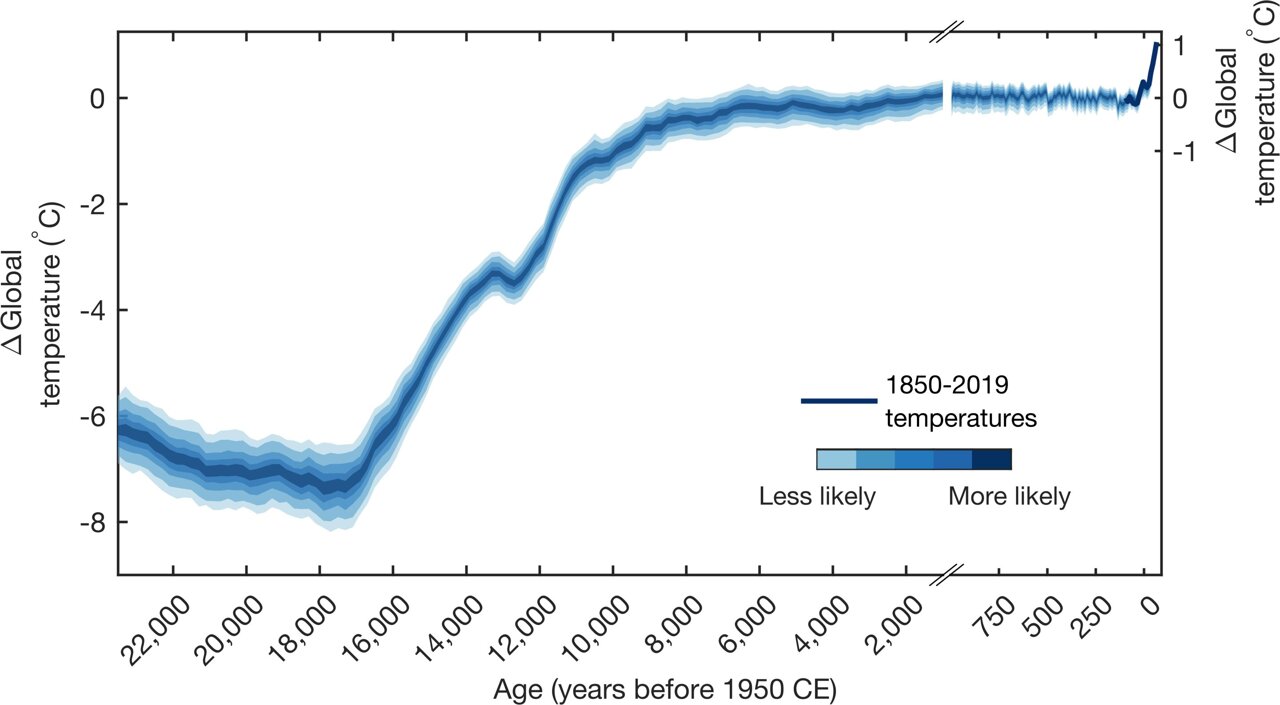
You are aware are you not that the last mini ice age occurred between 1645 and 1715 and caused temperatures in northern Europe to fall dramatically, with London's River Thames freezing over during winter and sea ice extending for miles around the UK.
So what do you think will happen to the earths temperature after an ice age? Will it rise or will it fall?
What do you believe caused the mini ice age? Was it a reduction in manmade CO2 in the atmosphere?
@dazh, probably best that we just ignore the member that joined yesterday just to spam this thread with generic cherry picked nonesense. It'll risk derailling what has been a fascinating thread
Well now that I know who Ian Plimer is and he's told me everything is going to be totally fine I feel much better.
Now I'm off to see Jordan Peterson for some careers advice, then ask Andrew Tate how I can pick up some chicks. Then I'll order some of Alex Jones' brain-enhancement pills and head over to Pistonheads for some advice on a mid-engined supercar for making progress in the countryside.
https://iopscience.iop.org/article/10.1088/1748-9326/ac2966
It won't change your mind but, to put it in your words-
One man thinking that they can show that human induced climate change doesn't exist relying on peer reviewed science that proves their case (peer reviewed science that makes up just 1% of our published literature) is a bit like King Canute thinking he can turn back the tide. Very much a case of ‘God complex’.
You're wrong, and I'm sure you know this, but I suspect it will be a waste of everyone's time engaging with you.
How do these people find threads on a bike forum to come and do wind ups in? How does a troll even Google us?
@dazh, probably best that we just ignore the member that joined yesterday just to spam this thread with generic cherry picked nonesense. It’ll risk derailling what has been a fascinating thread
Don't you mean it will risk ruining your Guardian fuelled echo chamber?
Oh and can you believe that the Just Stop Oil campaigner who threw orange confetti over George Osbourne at this wedding has been caught jetting off to Thailand for her holidays. Like most climate campaigners, full of hot air, double standards and hypocrisy. Do as I say but not as I do.
COP24 by private jet anyone?
COP24 by private jet anyone?
He does have a point there though.
troll, troll, troll, troll
Don’t you mean it will risk ruining your Guardian fuelled echo chamber?
F*** off. (I can keep this up all day but I won't as it'll stop others posting more interesting stuff)
@thisisnotaspoon – No combined cycle seawater reactors, not gas turbines (though CC at source using waste heat is a better idea than DACC as the waster turbine heat is a substantial energy source for destablisiing the symmetry in CO2 bond. CO2 is more easily freed from seawater with electricity than it is extracted from the air, so the research shows that it’s actually easier to extract CO2 from seawater and then just leave the seawater ionised to allow it to naturally absorb more CO2.
I dunno, my gut response on reading about it was that filtering the sea is going to take a f***ing long time even if it is more energy efficient than trying to filter the atmosphere, it's a relative 'more'.
Someone still has to fund and build these humongous industrial complexes, and build the power sources to run them.
Maybe in another millennium when all else has failed but we have some unlimited green power source. In the meantime I'm worried that this stuff is at best a distraction to con people into believing that they can keep on as they are because somewhere down the road there's a technological solution.
Another "idiot"with an open mind here...
"Nope, and why would I when all the reliable evidence from history (not modelling) points to climate change being driven by natural phenomena. Man thinking that they can change the climate by reducing CO2 production (CO2 that makes up just 0.04% of our atmosphere) is a bit like King Canute thinking he can turn back the tide. Very much a case of ‘God complex’."
The 20th century was a cold century. Growth rings on trees show this. It stopped short of matching the 17th century, when the Thames regularly froze over and cloggies skated around Amsterdam for fun, but was, apparently pretty damn parky. It was also when reliable meteorological records were begun.
It is interesting to note the formation of "group think" on this forum , as elsewhere, where any dissenting voices are swiftly shouted down, as during COVID. Dissent can not be tolerated. We may decide to party into oblivion...
However, the belief that "nothing can be done" , is no reason not to try and do something.
F*** off. (I can keep this up all day but I won’t as it’ll stop others posting more interesting stuff)
Hit a nerve have we?
I see that this proves the old adage, the truth does not mind being questioned, but a lie does not like to be challenged.
Nope, and why would I when all the reliable evidence from history (not modelling) points to climate change being driven by natural phenomena.
Oh and can you believe that the Just Stop Oil campaigner who threw orange confetti over George Osbourne at this wedding has been caught jetting off to Thailand for her holidays.
Nowt to do with JSO.
You are aware are you not that the last mini ice age occurred between 1645 and 1715 and caused temperatures in northern Europe to fall dramatically, with London’s River Thames freezing over during winter and sea ice extending for miles around the UK.
So what do you think will happen to the earths temperature after an ice age? Will it rise or will it fall?
What do you believe caused the mini ice age? Was it a reduction in manmade CO2 in the atmosphere?
I was aware. The most likely cause was either a reduction in solar radiation or an asteroid impact, but we'll never know as in the 17th century, we didn't have the ability to monitor such things. We now do. Solar activity (the biggest warming effect on the planet) is and has been largely constant (trend wise) over the last 80 years. Distance to the sun is (as far as we know) also stable and so intensity is also relatively constant and cyclical. But Co2 levels, atmospheric particulates, atmospheric disruption, air and sea temperature and acidity has seen continual rise inline with population size increase and human activity. How can you explain this?
maxcorkill
Man made climate change is proven. simple as that. If you don't believe in science its your call but the actual data is clear.
It is interesting to note the formation of “group think” on this forum , as elsewhere, where any dissenting voices are swiftly shouted down, as during COVID. Dissent can not be tolerated. We may decide to party into oblivion…
I think dissent can be tolerated, and is even welcomed, as illustrated by the UCI transgender thread until an onslaught of close-minded nonsense. But it needs to be informed - "climate change does not exist because my experience of the weather has been the same for 50 years/I've seen a YouTube vid/I think a JSO supporter has gone on a plane"" is just unengagable nonsense.
It is interesting to note the formation of “group think” on this forum , as elsewhere, where any dissenting voices are swiftly shouted down
It is not group think, it is very well acknowledged worldwide think. Those who try and put together an 'argument' such as the one above are pretty much like conspiracy theorists as their arguments are baseless and just putting a lot of things together to really miss the point.
Also, the fact that the person joined yesterday and links to pistonheads is a red flag is it not.