
MegaSack DRAW - This year's winner is user - rgwb
We will be in touch
I know there are a few technologist/Architects on here so how are you proposing to deal with the proposed changes to Part L coming this year and then again in 2025?
We are really struggling to nail down what’s going to be required to meet the regs, especially with regard to cavity width and insulation.
Is this only in England and Wales ? 50 mm cavity and 145mm timber frame in Scotland
Why does timber frame not get used more down South or am I mistaken?
Building companies won’t build timber framed buildings.....certainly around where I live in Surrey. Nicknamed’Chicken Sheds’, they are poor quality compared to traditional brick construction and move a lot internally.
Just don't use cavities.
Like the majority of the world.
Building companies won’t build timber framed buildings…..certainly around where I live in Surrey. Nicknamed’Chicken Sheds’, they are poor quality compared to traditional brick construction and move a lot internally
Oh my sides.
I think they must be still thinking Barratt with the white helicopter that puts them off, a bit of expansion and contraction you can hear it when the sun gets up. Maybe the standard of carpentry thats at fault
Nicknamed’Chicken Sheds’, they are poor quality compared to traditional brick construction and move a lot internally.
Yes, they only get away with using them in Scotland because the weather is much dryer and less windy than Surrey.
Bikini Atholl
Timber framed houses became unpopular following the fire of London in 1666.
Which is a shame, because they are quicker and cheaper to build than bricks and mortar.
As for “moving a lot internally”... say what???!
I think a large number of new builds are timber frame, with the bricks being purely aesthetic.
Which is pointless but such is the public perception. Timber frame allows for more insulation etc, less cement hopefully and maybe less concrete as lighter so less foundation needed.
We could build houses with no heating now for not a huge amount more than a current new build, we don't because it affects the bottom line of the house builders, so less bonuses..... And because the general public thinks brick equals strong, they are being lied to by the big house builders.
I’ll ask the housing kids.
For what I do insulation is used for acoustic reasons not thermal. In fact we can’t get rid of the heat fast enough.
I really fancy hempcrete which I guess is kind of timber frame (holding the roof up) in the middle of a 400mm solid wall. Hoping to go on a 1 day course this year to have a go with it.
poor quality compared to traditional brick construction
I think a large number of new builds are timber frame, with the bricks being purely aesthetic.
Not the ones I see. Most seem to be block internal, brick external, with the minimum of insulation poorly installed in the cavity.
There's nothing wrong with timber frame, quick to build, lighter on resources. If you want to clad it externally in brick you can do so. Our building standards are so poor the occupants don't even get the benefits of solid walls to mount things to as the internal faces of the external walls are usually dot and dab plasterboarded as it's quicker and cheaper than plastering properly.
As of 2025 there will be no new gas connections allowed to new builds, there is a slight possibility they will allow gas hobs but not gas boilers. We are Looking at 350mm fully filled cavities, waste water heat recovery, ground and air source heat pumps, MHR, PV etc etc.
There is loads of uncertainty at the moment, but the general thinking is that by 2025 we’ll be at passive house standards for new builds and not far off it by the end of 2020.
No dot and dab with timber frame, i bet if you could look down your brick to block cavity the insulation meant to be fixed tight to internal skin not how it should be, your wall ties dangling with snotters creating a bridge for damp and probably cold spots due to missing insulation altogether. Thats a myth that foundations will be any less due to weight, it seems to be a minimum 200mm deep x 600 wide and the mesh a252 sometimes top and bottom here in Scotland
Seem to be loads of timber framed houses, hotel and detention centres burning down in last few years compared to b and b, buildings.
Seem to be loads of timber framed houses, hotel and detention centres burning down in last few years compared to b and b, buildings.
That link is specifically about a) LARGE timber framed buildings (rather than individual houses) b)about the risk *while they are under construction.
Thats a myth that foundations will be any less due to weight,
Yes - foundations are dependent mostly on ground conditions, not what's going on top.
As of 2025 there will be no new gas connections allowed to new builds, there is a slight possibility they will allow gas hobs but not gas boilers. We are Looking at 350mm fully filled cavities, waste water heat recovery, ground and air source heat pumps, MHR, PV etc etc.
There is loads of uncertainty at the moment, but the general thinking is that by 2025 we’ll be at passive house standards for new builds and not far off it by the end of 2020.
That's encouraging but I'll believe it when I see it, particularly with our new Government. Remember, the Conservatives scrapped the Code for Sustainable Homes (which had many issues but did demand high standards at Code 4 and 5) in 2015. Building regs were supposedly going to be standardised at Code4 but as far as I'm aware that was never implemented.
Many local authorities were mandating high standards 5 years ago than they are now. Stuff I'm seeing being built on my street for completion in 2020 is nowhere near passive. Looks like 70mm celotex in a brick cavity and the same on big developments I've glanced at. My guess is that the mass building industry will lobby hard and change will be slow.
a slight possibility they will allow gas hobs but not gas boilers
That's mental. a gas connection just for a hob? no need for gas hobs - if Michelin starred restaurants in high rise buildings can manage with induction so can the general public.
My 2p. Its a tricky one isnt it. I read somehwere that you can achieve the targets through just installing an ASHP, I have my reservations. Im an architectural designer and about to build a new house for my family, we are very likely to opt for the MBC timber frame passivhaus envelope. We wont be seeking Passivhaus certification due to the sites orientation and setting within a valley. I have considered traditonal masonry builds and increasing the cavity width, Denby Dale passivhaus (Green building Store) shows the potential of cavity wall systems that could be adopted by traditonal builders in the future. The attention to detail required to ensure airtightness of the envelope will be the biggest hurdle for builders, this is probably more important than the thermal resistance of the insulation. MBC guarantee the airtightness to passivhaus standard which is one of the biggest benefits. Just need to make sure the builders that will finish it dont puncture the airtight barrier.
The costs of using the passiv system is maybe 8 to 10% above traditional masonry. Our budget is very tight so simplifying the internal fit out to invest money in a low energy envelope.
In my opinion a highly insulated prefabricated timber frame will be the future. The costs should reduce as they become more popular and the general awareness of the benefit of building with airtight buildings with controlled ventilation shows reduced energy consumption and more importantly running costs.
That’s mental. a gas connection just for a hob?
Maybe they mean bottle gas and not mains fed. We used bottled gas on our range for 16 years and it was cheap to run - I think we used about 5, maybe 6, 45KG tanks in that time.
Although storage may be an issue.
if Michelin starred restaurants in high rise buildings can manage with induction so can the general public.
Having changed to an induction hob last year I'd say that it's far superior to gas for cooking ... especially in the domestic setting.
Having changed to an induction hob last year I’d say that it’s far superior to gas for cooking … especially in the domestic setting.
Having recently bought a new build I'd love to know what the Barratt Homes marketing strategy for induction hobs would be - market them as a fancy new upgrade, or completely avoid mentioning them so that new buyers don't realise they'll have to add the cost of a whole new set of pots and pans to their budget... Amazing how many little things like that our salesperson 'forgot' to mention to us.
How do these incredibly well sealed buildings work re health and smells? Do they not suffer from needing a bit of an open window now and again?
How do these incredibly well sealed buildings work re health and smells? Do they not suffer from needing a bit of an open window now and again?
I can't sleep in our master bedroom with windows and trickle vents closed without getting 'puffy eye'*
I have a pet theory that some mornings when our two year old wakes up cranky it's because wife has closed trickle vents in his room too.
She doesn't notice it either way.
* same effect as sleeping in a small tent which hasn't been pitched well, think it's due to CO2 build up.
How do these incredibly well sealed buildings work re health and smells? Do they not suffer from needing a bit of an open window now and again?
Whilst the building fabric is airtight, the building will be well ventilated through the use of mechanical ventilation with heat recovery (mvhr). So you achieve adequate fresh air, but you don't lose heat.
so that new buyers don’t realise they’ll have to add the cost of a whole new set of pots and pans to their budget
What did you have before? We got an induction hob a few years back and I think the *only* thing that didn't work was a cheap aluminium frying pan. 20+ year old stainless steel pans were fine. Le Cruset style stuff fine.
regardless, it's hardly the end of the world if you do need new pans - £90 / £45 Buy them in bulk for less than that and throw them in with the house.
I can’t sleep in our master bedroom with windows and trickle vents closed without getting ‘puffy eye’*
Controlled ventilation with heat recovery. Usually requires a fan unit but there are passive versions (eg https://ventive.co.uk/products/home/).
Air quality in our house with MVHR is very good - much better than a house with trickle vents. There are no draughts, humidity is well controlled - no condensation on windows, bathrooms dry quickly and towels dry without heated rails.
MVHR draws fresh air in which is then preheated with the stale air exiting the building. The building envelope needs to be airtight otherwise the MVHR would draw from trickle vents, gaps around windows etc making it very inefficent. You can open windows in a passivhaus the MVHR just wont run as efficently. As it provides a fesher environment to traditionally vented houses there is less inclination to want to open windows as the temperature is generally stable. Less chance of mould, dust mites etc too. Its likely to become the norm. We all just need to get our heads around being more sealed in.
You can open windows in a passivhaus the MVHR just wont run as efficently
We open our window occasionally in winter - you can do a 'purge' of the house by boosting the ventilation system but opening a couple of windows for a few minutes is quick and easy. The house structure is warm so it takes no time to reheat the air.
In summer the MVHR switches to 'bypass' mode automatically and has a small cooling effect but you do open windows in summer (when you're not worried about heat recovery)
MVHR also needs to be properly designed and integrated into the fabric of the building (ideally have a plant room for the unit inside the house and run pipework through internal walls etc with lots of thought about acoustics and thermal insulation). Getting it wrong (i.e. dumping it in the cold loft of a standard house) can result in condensation in the pipework, mould growing inside the heat exchanger, frozen condensate drain and a noisy system that sounds like living in a spaceship....
My worry is 2025 will just see the same crappy houses with air source heat pumps nailed to the outside.
I think a large number of new builds are timber frame, with the bricks being purely aesthetic.
Yep, see a lot like that going up in Cambridge.
dumping it in the cold loft of a standard house
though uninsulated loft spaces are another sign of the low standards of UK building. We should be building into the loft as standard
another sign of the low standards of UK building.
That added to a lack of building control officers, shoddy work and lack of inspection is going to leave problems for years to come 😕
I've lived in a passive house and watched the rest of the development being constructed. There were no timber frames, or cavities.
The experts need to head over to see how they're constructed and legislate the building industry to transform their standards. Will it happen,.... I doubt it, we'll just get the same old cr@p buildings that the UK has produced since the dawn of time.
Please stop calling a house or dwelling a ****ing “envelope”.
Next you’ll be telling us how your envelope will have a conversation with it’s environs and the dialogue will be expansive, or something like that.
Just stop it. ****ing poncey architects.
Edit:
The building envelope needs to be airtight otherwise the MVHR would draw from trickle vents, gaps around windows etc making it very inefficent.
No it won’t! If the MVHR is installed correctly, the intake is sealed and draws from outside the “house”
I don’t mean to have a go particularly at you, I think it’s the continued architect babble that’s just pressing all my **** off buttons. 😁
Timber frame - what happens when inevitably the timber frame gets wet and rots? am I just being paranoid?
Whats the lifespan of a timber frame building ( almost everything I have ever lived in is well over 100yrs old)
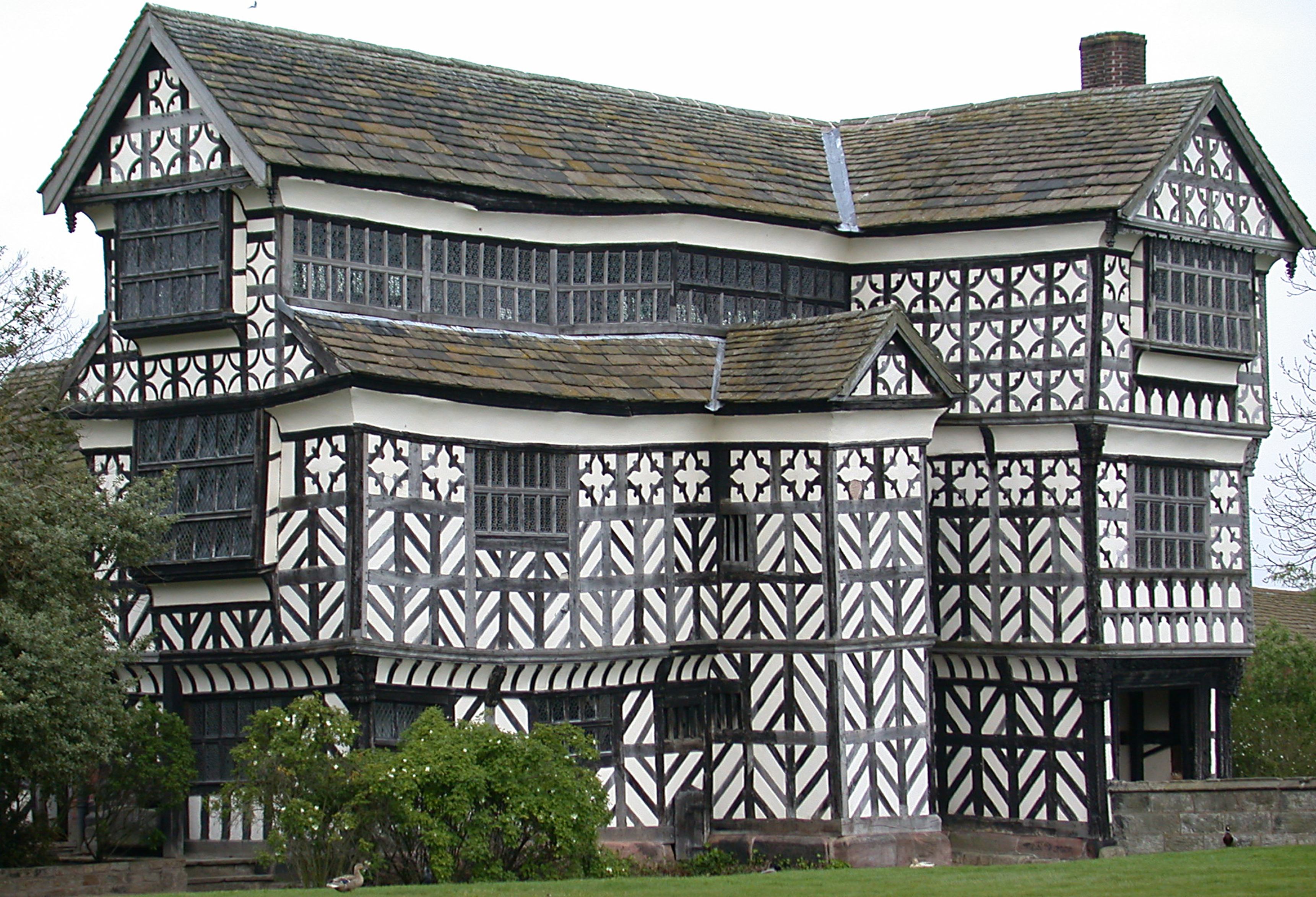
This one dates to 1570....
Slackalice - I cant stand ‘poncy architects’ either especially the roll neck wearing type. You do understand envelope is just a quick way of saying external walls, floor and roof? It’s basic building terminology not fluff. MVHR pulls stale damp air out the wet rooms, blows fresh air from outside into the habitable rooms. If the ENVELOPE isn’t airtight it will pull air in from gaps and unbalance the system. It’s ok I know your not having a go, your just having your own babble about stuff you know only a little bit about. Now where’s my circular framed glasses...
Indeed, I know very little about timber framed buildings 😉
good call jca
That not made of rubbish softwood tho and it can dry out.