UPDATE: Reviews section refreshed, redesigned, searchable: Go take a look
So - when to B&W your photos and when not?
Pre-1960's - yes
Otherwise, no
When it looks good, do it. When not, don't. 😉
Black and white when you have good textures, rust can be good
Whenever you want to - there are no rules, why limit yourself?
if yr pics are shit, try black & white, if still shit then sepia, then wastebasket
Whenever you want to - there are no rules, why limit yourself?
I'm not asking for rules, I'm asking for tips and suggestions..
Rules.. lol!
suck it & see
suck it & see
Just watching Swordfish now, and seems kind of appropriate. 😯
I'm not asking for rules, I'm asking for tips and suggestions..Rules.. lol!
But you're the one asking 'when and when not' to use black and white. 🙂
Unless the answer is 'when I think it looks better' or 'when I feel like it' it would suggest that you do believe that certain images are more appropriate in b & w than others.
Which logically leads to the conclusion that you believe there must be certain criteria or rules to determine the outcome, or your initial post would be irrelevant. 😀
[img]  [/img]
But you're the one asking 'when and when not' to use black and white
Alright, given that you don't know me and hence the question has to be phrased explicitly, I shall try again.
"When do YOU use B&W?"
Which logically leads to the conclusion that you believe there must be certain criteria or rules to determine the outcome
OR that each person may have their own set of criteria, and I'd be interested to hear what they are...
When I think it looks better or when I feel like it. 😀
Since going digital I don't have to make the choice before I shoot any more, so just go with my gut feeling in photoshop.
Honestly, that's it. I don't try to over analyse it.
When using film.
I have a hard time deciding if it looks better or not, to be honest.
I have a hard time deciding if it looks better or not, to be honest.
Assuming you're using a photochop type program, what are you doing to the photos?
Ok, (and yes, I know the framing is awful) but I prefer this:
[img] 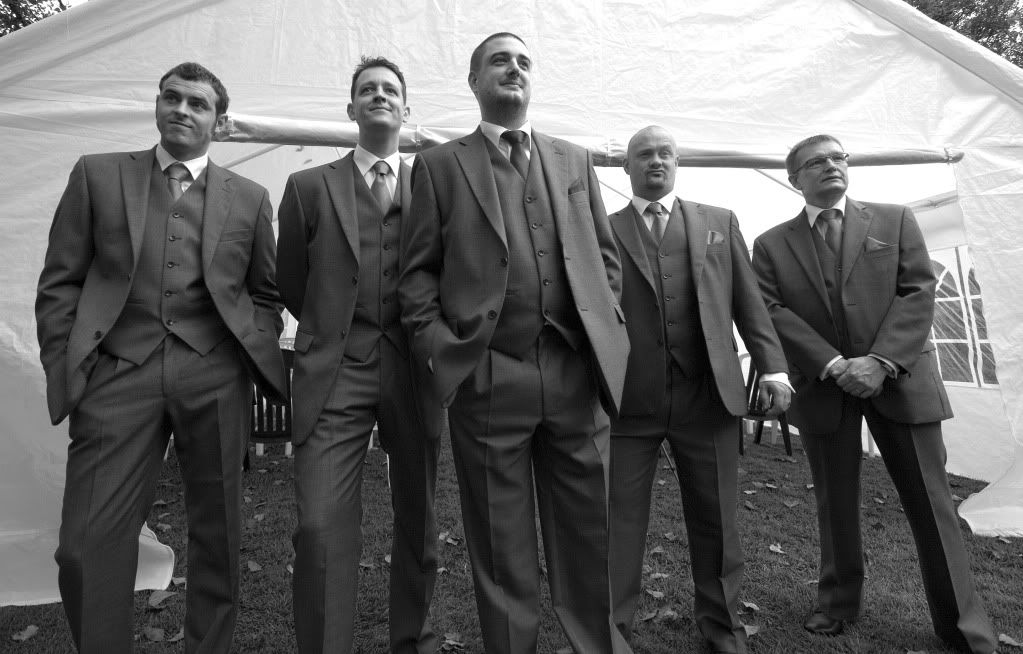 [/img]
to this:
[img] 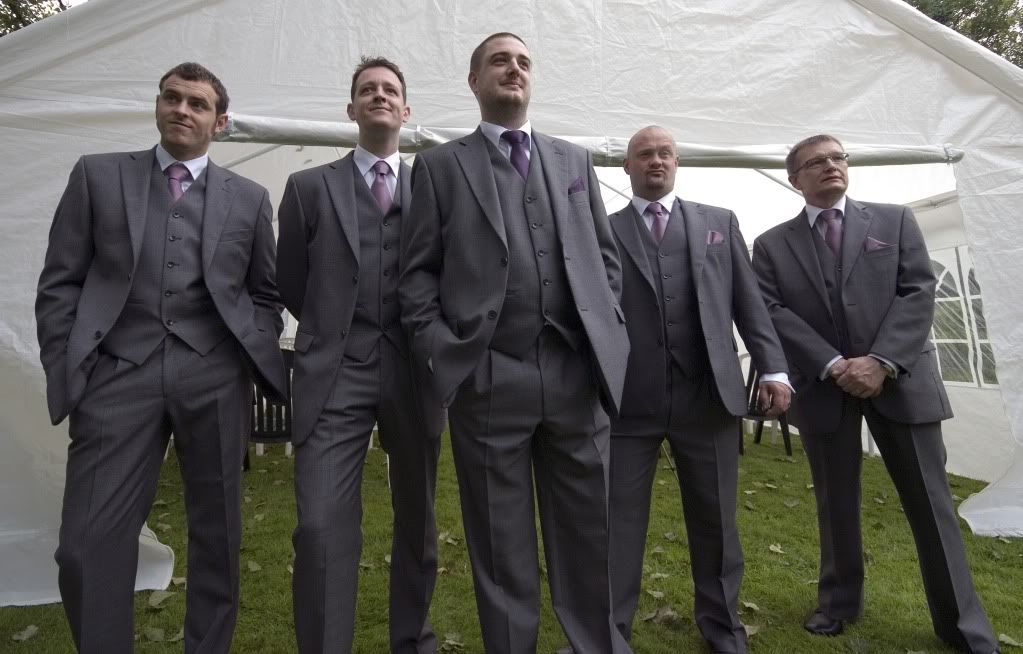 [/img]
but I've no idea why. 🙂
I dunno if I do, really. I think I like the colour but somehow it brings out the leaves on the floor.. and seeing the grass inside the tent makes it look a bit less posh than the gents' clothes would suggest.. they are different but I can't say, somehow.
Assuming you're using a photochop type program, what are you doing to the photos?
Currently, nothing 🙂
and seeing the grass inside the tent makes it look a bit less posh than the gents' clothes would suggest..
It was in Blackley (not posh!) & the suits were hired!
Cake was quite nice - bit modern for my taste:
[img] 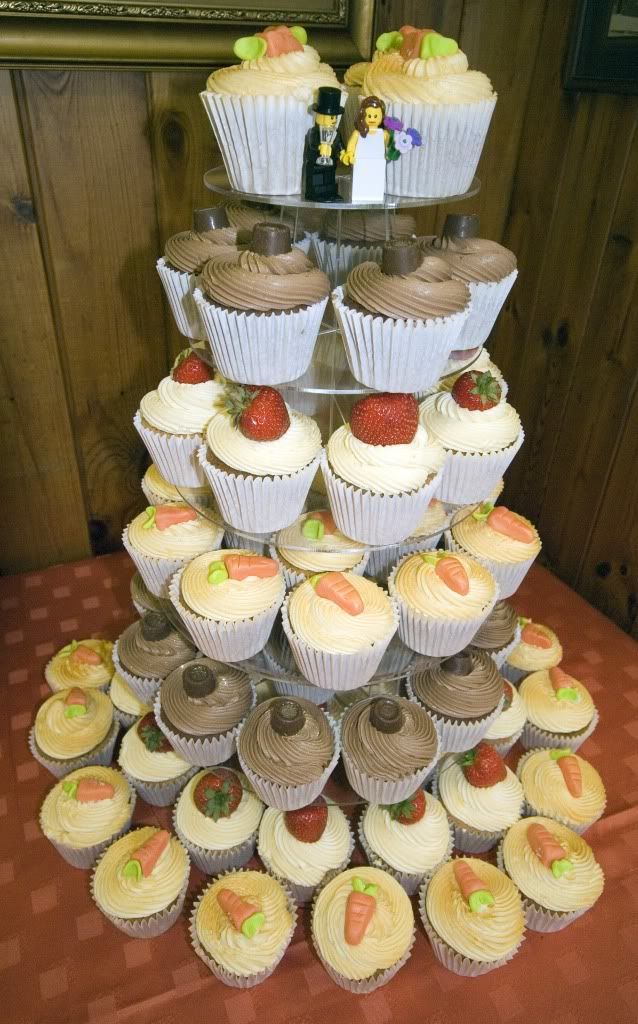 [/img]
But the bride (my stepdaughter) looked lovely:
[img] 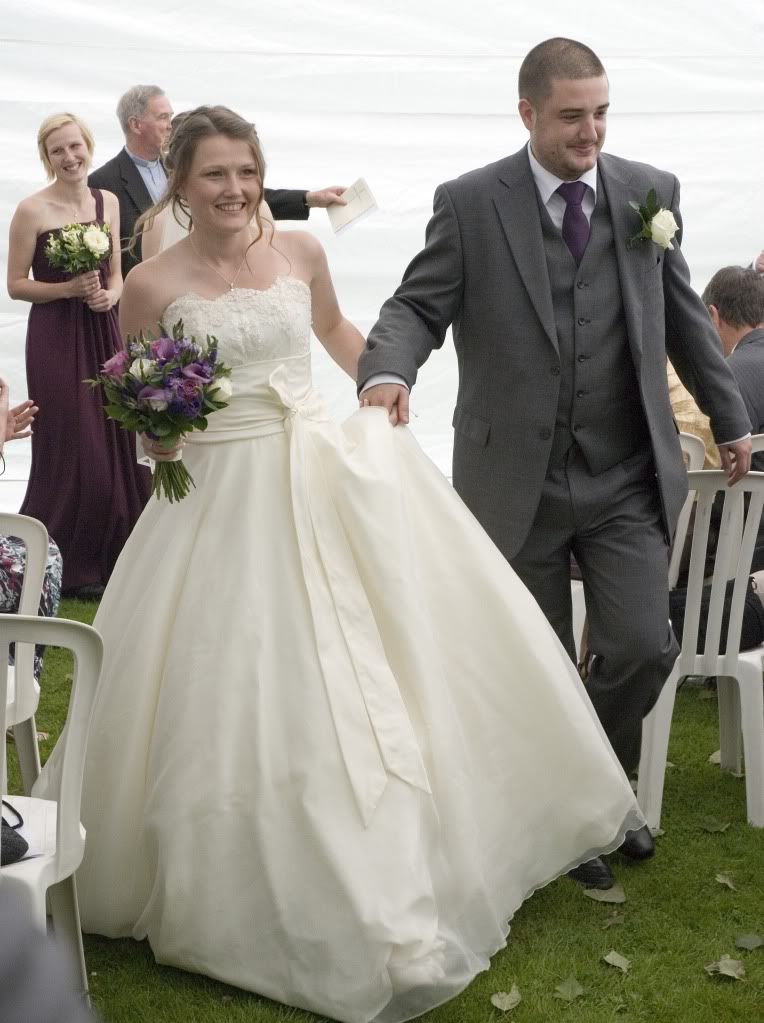 [/img]
Why did you have bouncers guarding your tent? Why did you take a pic of them?
Rusty Spanner - MemberOk, (and yes, I know the framing is awful) but I prefer this:
[img]
That's grey and white.
when you start thinking and seeing in black and white.
That's grey and white.
😛
when you start thinking and seeing in black and white.
Is there a plugin for that?
That's grey and white.
I know - much more work required yet. 🙂
CharlieMungus - MemberWhy did you have bouncers guarding your tent?
As I said, it was Blackley 😀
[img]  [/img]
I tend to use black and white for low light shots at gigs for instance .
When I was studying photography, my rule was that I only used colour fillum if colour was a principle important element in the image I wanted to take. With a roll of colour slide costing several times what a roll of B+W cost me, and being a propperly skint student, this rule served me well. Early work was all about light and dark, so B+W was perfect. Colour is another addition to the whole process.
A red London bus, a beautiful sunset, Liverpool V Everton; these are the kind of subjects where colour is essential.
Make sense?
Well it does to me so I don't care really.
[img] [/img]
I tend to use black and white for low light shots , at gigs for instance.
[url= http://pjkimages.tumblr.com/ ]more pics here[/url]
I tend to use black and white for low light shots
I just tried a few sample shots at high ISO. Noise still just as much in evidence in monotone, but somehow it doesn't seem as bad on the eye. Good idea that.
Elf - good point, but you've got the option of either in the wonderful world of didge...
See, today's tographers are overspoilt, Mol. Everything's too easy. Just change things with the press of a button. If it ain't quite right, fix it in Photoshop.
Takes away the real thinking about stuff, imo. Too much to detract from just taking photos.
The greats I admired whilst learning, yer Ansel Adams, Henri Cartier-Bresson, Man Ray an ting, they din't have al the options available to people today, yet still produced stunning images.
Less is more.
If it ain't quite right, fix it in Photoshop.
Isn't that type of fighting talk best left for another thread? 😛
The retina contains two types of photoreceptors, rods and cones. The rods are more numerous, some 120 million, and are more sensitive than the cones. However, they are not sensitive to color. The 6 to 7 million cones provide the eye's color sensitivity
See, today's tographers are overspoilt, Mol. Everything's too easy. Just change things with the press of a button
I disagree. Pressing buttons doesn't take a great photo for you. You just have more options, which provides you with more creative opportunities.
Last time I went to an aquarium I spent a while with long exposures trying to get the fish to make swirly swoopy shapes in bluey grey. There's no way I'd have done that with film, I'd have wasted a whole roll of film.
It worked quite nicely btw but the details of the far wall of the tank ended up being picked out better than the fishy swirls.. 🙂
It worked quite nicely btw but the details of the far wall of the tank ended up being picked out better than the fishy swirls..
If you'd learnt how to set the camera correctly............? 😉
I knew how to set it correctly, which is why it worked 🙂 I also knew that to get a better picture I just had to move the camera to point at a bit of the tank without anything in the background...
I tend to use black and white for low light shots , at gigs for instance.
Noise still just as much in evidence in monotone, but somehow it doesn't seem as bad on the eye.
Too bloody right. Can even be enhanced for further effect:
Tony the soundman at the Academy in Manchester:
[img]  [/img]
The Uzual Suspectz: Right bunch of scumbags, honestly 😉
[img]  [/img]
[img]  [/img]
I disagree. Pressing buttons doesn't take a great photo for you. You just have more options, which provides you with more creative opportunities.
You can disagree all you want, Mol. Fact is, someone with an eye for a picture can take better photos with more limited equipment than someone with all the gear and no idea. Granted, today's technology, in the hands of someone with talent, is awesome, but in the hands of someone without decent technique, is little more than distractive confuddlement.
Anyway; Henri disagrees with you:
[img]  [/img]
Leica, Manual everything, no internal light meter. Nineteen thirty two.
someone with an eye for a picture can take better photos with more limited equipment than someone with all the gear and no idea
That's quite obvious, and not even close to my point:
It's perfectly possible to take great photos with limited kit.
If you are rubbish you'll be rubbish no matter what camera you have.
However, if you are the same person (me, for instance) then certain extra features or bits of kit allow more creative options AND allow you to capture more different shots. That's hard to argue against, isn't it?
I refuse to comment on threads where adults use baby words in a vain attempt to be interesting or individual.
Pity, as it's a subject that is dear to me.
Pity, as it's a subject that is dear to me.
Who the hell cares how he spells his words? If it's really a pity then get over yourself and comment!
http://singletrackworld.com/forum/topic/bw-photography-on-film-who-else-enjoys-it
There you go molgrips. 🙂
Let' not forget araki and some of his great b/w stuff
However, if you are the same person (me, for instance) then certain extra features or bits of kit allow more creative options AND allow you to capture more different shots. That's hard to argue against, isn't it?
I'd say that all the crap preloaded onto a modern DSLR and the last of the older film SLR's may allow to capture more shots, as they can save time, but in no way do they give you more creative options.
How can they?
A fully manual camera has all the creative options possible, it's knowing how to achieve those options that counts.
That's why I think it's far better for people to start using an SLR in manual mode, so they can understand the basics and how those parameters interact with each other.
Start simple, then add complication. It's much easier that way round.
Just my opinion, obviously.
Mols, have a look at the Dx0 film pack (either standalone or plug in) Think there is a 30 day trial option as well. its a quick way to test film effects on images,
I've always advised to rotate the image 180 degrees when deciding on final composition / colour balance / choice. If the eye is still drawn to interest (contrast being more important for B&W) then correct choice. Like anything its subjective.
The snapseed app is also fun to play around with for similar results.
We're talking at crossed purposes here. Personally, I feel many people get too bogged down with the myriad options their cams offer, and get too caught up with the tech, rather than learning good technique. Then, too often, they resort to Photoshop to correct their bad technique, and try to save otherwise crap photos.
Using film trained me to be able to get the image right in camera, not have to faff about afterwards making a silk purse out of a sow's ear.
Recently in North Wales, I was using a crappy cheap digital compact, just for snaps, but in spite of it having loads of fancy options, it's still not a very good cam, and frustrating to use. Far more sophisticated technologically than my lovely old FM2, but not as good at the purpose it was designed for.
The fact that it takes ages before each shot to work out what the flip it's actually doing made me want to lob the thing at a cah. My FM2, I cooduv got the pics I wanted rather than suffering what the dijicam struggled to produce.
Less is more....
but in no way do they give you more creative options.
I was talking about having a variety of lenses or zoom lenses, not especially metering. That is neither here nor there since it can be switched off. If you only have one focal length then there's nothing that can be done about that when you are out and about.
However I also disagree with you about beginners learning in manual mode. The important things about good photos are subject and composition. This is what you need to be thinking about. The camera will do the metering for you and do a good job in most cases. Faffing about with full manual mode as a beginner will take ages and completely eliminate any chance of spontaneous shooting. Whereas in P mode you could be merrily snapping away and learning about metering as you go.
If a shot requires say 1/200 at f8 for a middling exposure it really makes no difference if you've set it yourself or the camera did it for you. If it's over-exposed, you use compensation, if you need a faster shutter or smaller aperture, you use A or S mode.
The only time you need full manual is when doing something different like taking shots of lightening. And yes, it's good to know how it all works.
Take this shot for instance:
[img]  [/img]
Seriously - is anyone looking at this and thinking about the exposure?
It all boils down to what photography is all about, doesn't it? Looking at a scene and being able to tell exactly what exposure is needed is all very lovely and craftsmanlike, but the suggestion that that's how you become a great photographer is bolleaux in my opinion. It's about subject and composition. Getting worked up about the exposure is a diversion for geeks I reckon. This is an art not a craft.

