UPDATE: CLASSIFIEDS section refreshed, redesigned, searchable: Go take a look
G - there is one argument against helmets across populations in that it gives the impression that cycling is dangerous so discourages people from cycling thus not taking the opportunity to improve the health of the population by cycling.
The other arguments tend to get muddled.
Helmets on the whole do reduce injuries to individuals but in some circumstances may make them worse.
Helmets wearing may increase accident rates thru risk compensation - common [i]IMO[/i] amongst mtbers.
Current helmet design has serious flaws from rotational impacts to poor retention systems and poor fit from single shell sizes.
I am not against helmets but against compulsion. I want to be able to ride without one when the risks are low.
I would also like to see better designed and tested helmets that offer as much protection as a helemts for other sports.
TJ - in regards to helmets 'failing'... do you think Giro will accept my split E2 back under warranty? I hit a tree headfirst going at a fair lick on a downhill section at CyB. The helmet cracked pretty much straight through down the middle (I was was fine though). Is it worth a punt?
I doubt it alb - altho it would be very interesting to see what they say. Is the shell compressed? Thats what dissipates the energy
Ah, I've got you now.
I believe thats the same argument as used by Edward Debono that making cars less safe means that people will drive more safely to compensate. I'm not sure thats true though.
I also disagree about the "makes cycling seem more dangerous" thing. I reckon people getting killed by pratish motorists does that perfectly well regardless of the helmets issue. I also think that the fact that so few people get killed riding MTB and the fact that it such a collosal growth area tends to take the argument in the other direction. i.e. People see it as being safe, (perhaps in part due to the part helemts play), and therefore aren't put off from doing it. Surely thats a more logical viewpoint?
Mmm...to conclude then. I hope dennis makes a speedy recovery, and gets back on two wheels soon.
I also disagree about the "makes cycling seem more dangerous" thing.
You're disagreeing with the experts then (I'm not meaning TJ there - sorry!) Regarding compulsion, or even general use of helmets, we're really talking about road, towpath or flat easy trail use, such as most of the general public might do, not hardcore MTBing where many people are surely attracted by the danger element rather than put off. Much as we might complain about motorists killing cyclists, such incidents are actually mercifully rare, hence general leisure and transport cycling is far safer than generally perceived. The idea that you need a helmet to protect yourself from pratish (sic) motorists is exactly what we're referring to here.
This is not directly related but might be considered interesting. I am currently living in Vietnam, the roads here are dominated by scooters and small motorbikes (below 125cc) and the city roads are slow, generally below 30-40km, lots of high way speed limits are 50-60km. In Dec 2007 a law was passed making helmets compulsory (a large fine if you did not), before this most people did not wear helmets except on journeys on high ways (law passed in 2005 for wearing helmets on inter city roads). Children under 16 still do not need to wear helmets, not entirely sure why, if you were cynical you might think it was because children would not have the money to pay the fine. The reason this law was brought in was due to a massive number of traffic/road head injures, thousands annually, and deaths, 10000-13000 annually. These numbers has been reduced significantly, despite most helmets being only slightly more substantial than construction hard hats, badly fitting and no standard level of manufacture etc. This suggest to me that anything is better than nothing!
Breakneckspeed - if you had no injury with a helmet then you would have only had a minor injury without one.
Yes so wear a helmet then? Prevent you from having a minor injury and pass the cost onto the society. Or am I being daft to think that?
I am arguing for my right not to wear one when I don't want to as cycling as a whole is not a dangerous pursuit.
So you campaign for the right not to wear a crash helmet on the motorcycle? After all it's no more dangerous for bike.
Chipping in here...... this argument that a split helmet has failed is simply flawed and wrong!
TJ - you KNOW that helmets work by dissipating the kinetic energy of a head flying towards tree/rock/duck, and transferring this energy into the helmet. Ergo, energy into the helmet ISN'T energy passing into the head. I agree that one way of a helmet 'working' is for the polystyrene to crush, as this takes a lot of energy.
However, helmets that crack have also dissipated A LOT of energy too! You try pulling apart a helmet with your bare hands - it basically can't be done! That means that when a helmet hits the dirt and cracks, it has taken an awful lot of energy to break the polystyrene bonds, and (to repeat myself) this is energy that hasn't passed into the brain/skull etc.
It all about transferring energy. I agree that not all the energy could ever be transferred, hence people (myself included, twice, both time helmets from different brands cracked), get concussed, but the shear fact that a helmet has deformed in some way means some energy, often a vital, lifesaving value, has been transferred into the polystyrene of the helmet.
Another point on [i]Countries with high rates of helmet wear have high rates of head injuries[/i] - do you not think the high rates of helmet wear relate to high numbers of cyclists, thus more cyclists is bound to mean more crashes? ( i do not know the answer to this).
I'm not sure where I stand on compulsory helmet wearing, and I'm sure there are some cyclists who have never worn helmets and never fallen off. However, like the few of my patients who smoke 30 a day and live to see 95 (!), it's not odds i'd mess about with, and myself and others I ride with all wear helmets.......
DrP
[i]Another point on Countries with high rates of helmet wear have high rates of head injuries - do you not think the high rates of helmet wear relate to high numbers of cyclists, thus more cyclists is bound to mean more crashes? ( i do not know the answer to this).[/i]
It appears to be the opposite. Countries* with the highest numbers of cyclists tend to have the lowest level of helmet wearing and the lowest level of deaths/injuries.
*I'm thinking of western counties. I've no idea how well this translates to India/China
I think most statistics are misleading as to be fairly useless. For example: lying in bed is the most dangerous activity as this is when most people die :lol:.
I rely on my experience; having has mild concussion from 2 head impacts due to cycling, I'm very glad to be wearing a lid. I accept that they are not perfect protection - nothing is.
I full respect the right of an indavidual to wear or not wear a helmet but as i regulary commute by bike as well as ride off road there is no way i could look my children or wife in the eyes and not wear my helmet. it may not stop that car from hitting me but it might help reduce the damage to my head and for that reason i will wear one.
The above about high levels of helmet wearing and high levels of accidents etc it strikes me that those with the low level of usage have the highest level of bikes and therefore the bikes get much better respect/treatment on the roads which will lower the level of risk anyway.
Dr P - the thing about a cracked or split helmet having failed comes from the literature about how helmets work. Actually it should read if the helmet has split before the foam has compressed it has failed. It takes a lot less energy to split a helmet than to crush the polystyrene.
Iam Munro is right - it tends to be the countries with the highest number of cyclists that have the lowest number of head injuries and the lowest number of helmet wearers. I put that in to show that a lot of the evidence is not common sense.
Here is a bunch of references and links to abstracts of research papers which are totally contradictory. enough from me. http://www.cyclecraft.co.uk/digest/helmet_research.html For example:
Reducing bicycle accidents: a re-evaluation of the impacts of the CPSC bicycle standard and helmet use *
Rodgers. Journal of Product Liability 11 pp307-17, 1988
To examine claims that growth in the use of hard shell cycle helmets had been successful in reducing cycle-related injuries and death, Rodgers studied over 8 million cases of injury and death to cyclists in the USA over 15 years. He concluded: [b]"There is no evidence that hard shell helmets have reduced the head injury and fatality rates. The most surprising finding is that the bicycle-related fatality rate is positively and significantly correlated with increased helmet use".[/b]
Cycle helmets: the case for and against
Hillman. Policy Studies Institute ISBN 0 85374 602 8, 1993
Contents and short summary available on-line
32-page analysis of pros and cons of cycle helmets with extensive references. [b]Wearing a helmet only marginally reduces the extent of head injury[/b] following collision with a motor vehicle, but can affect behaviour so that wearers cycle less cautiously. Mandatory helmets would reinforce public perceptions that cycling is dangerous and encourage the view that cyclists are responsible for their own injury. Life years gained through cycling outweigh life years lost in cycling fatalities by a factor of 20:1. Encouraging helmets leads to fewer people cycling and a net health loss. [j511]
The effectiveness of bicyclist helmets: a study of 1,710 casualties *
McDermott et al. Journal of Trauma Vol 11:6 pp834-45, 1993.
Study copying techniques of Thompson 1989 research but yielding less favourable results. [b]Own data suggests helmets give 25% reduction in risk of head injury for adults, but no reduction for serious injuries.[/b] Adjusting Thompson results to eliminate forehead lacerations, re-calculated benefit is 61% (instead of 85%). Also noted small sample size in Thompson data.
Etc etc
TJ – Looking at those reference it strikes me that its old fairly old stuff – certainly if I’m conducting a literature review or systematic review I only consider papers for the last 5 years – I’m sure that helmet technology has improved over the last ten years or so and much of that will have trickled down to the more ‘budget’ end of the market.
Also the use of anecdotal evidence is important and in research term the subjective view provides valuable data (this is not the time or place to get in debates about qualitative vs. quantitative research and the intellectual snobbery that surrounds that particular debate) - I think the themes arising from this thread point very strongly to where further research need to be focused, as do the attitudes and feelings of ‘sports’ cyclists who are using helmets in the ‘real world’
Fair point. I have to say I don't like anecdotal or qualitative research. Too true about the lack of research in some areas for sure. Personally I don't believe helmets have improved - if anything the reverse as now the EC testing standards are lower than the old BSI ones IIRC
my tuppence's worth............ (fek all since the recession, IGMC)
I'm in the "i wouldnt be here if it wasnt for my giros/bells" camp, I'll see if i can dig out th e-mail from madison which broadly said, "how the flippin hek did you manage that and walk away?"
TJ, as others pointed out, you seem to have researched the negatives of helmets in accidents quite thoroughly, but still chose to wear one on anything more seriosus than a towpath amble. Could it be that on ballance you are in favour of wearing a helmet for the majority of riding the members of this forum engage in?
FWIW I realised i wasnt wearing a hemet on my comute, probably because it wasnt in my routine to put one on, (no nice bike to prepare, no cycling clothes etc). Spent the day bricking myself about the ride home.
Risk compensation, I ride like and idiot possessed whith or without a helmet.
The mandatory wearing helmets put people off cycling is a dissproven argument Sweeden (IIRC, i cant remember the country, but sweeden rings a bell) has mandatory helmet laws, it experienced a level of cycling below that of pre compulsion, for 3 years, then a surge in popularity and rate of growth not seen pre their compulsory use.
Also the use of anecdotal evidence is important
The problem with anecdotal evidence in this debate is that it tends to be very unreliable and inaccurate as people seem to be convinced that helmets do a lot more than they actually do. I'm always very dubious about "helmet saved my life" claims - from all the stories I've heard I'd suggest that the majority of such claims are untrue. BTW that's based on personal experience of crashing both with and without helmets - I survived the helmetless incident with no permanent damage, yet destroyed the helmet in what was probably a lower impact incident (also got permanent damage from that one in the form of facial scarring where the helmet didn't protect).
The mandatory wearing of helmets is another example of counterintuative and contradictory evidence. Some studies show one result some another. neither proven or disproven.
As for researching the anti helmet side. - I am broadly in favour of using helmets for "real mountainbiking". I have presented the arguments that are not against helmets but show the limitations to counter the fallacies put about by others and to show that there are many aspects to the debate.
I’ve just done a quick search on Google Scholar (search string Cycle+helemet+safety) and I am struck by how little resent research has been done on the actual effectiveness of helmets in crashes – most research seems to have stopped in the early to mid nineties, more current stuff been systematic reviews of the older research and focused on usage pre & post legislation changes
Just a thought is there anywhere this thread (and the plethora of other on the subject) could be sent to try and get some good quality research done – it’s got to be good for somebody’s PhD at least
How about the mag doing some articles on the topic too
There is something that strikes me in most of the studies.
None actually takes into account the typical 'helmet save my life' case like plenty mention above.
I think t would be interested to have figures from bell/met/giro in how many crash replacement per year they cover, and how many off them end up in the hospital.
None actually takes into account the typical 'helmet save my life' case like plenty mention above.
How exactly do you propose any worthwhile results could be obtained from such anecdotal stories where there is no firm evidence of the veracity?
If you are leading a group or running an event then I think it's fair to stipulate that a helmet is required. It's not just their risk, if someone gets injured then the whole group becomes at risk.
If the group leader needs to stay with the injured (due to being the first aider etc...) then (depending on the group) it may not be safe for the group to continue (think leading a group of kids, or even adults who don't know the area in bad conditions).
So I don't think it's so much ultimatums, but more it's personal choice if you wear a helmet, and also personal choice if you would ride with someone who doesn't. It can be pro choice in more than one way.
P.s. Get well soon!
How exactly do you propose any worthwhile results could be obtained from such anecdotal stories where there is no firm evidence of the veracity?
Well helmet manufacturers probably can relate the force of the impact to the state of the helmet.
Mark,
give Dennis my best, hows Adele, must be shaken up herself?
Catch up later
i wear a helmet.
ohh, and can people please look up definiitions for force, impulse, energy and momentum and how they are related.
A pisspot and a XC lid even if they did absorb the same ammount of energy, the XC lid will do more to prevent injuries as the acceleration will be lower (speed doesn't kill, its slowing down quickly that gets you).
Pisspots are fine for skateparks and the like where speeds are generaly low and they will prevent you knocking into things but they'r not realy intended to absorb the energy of impacts at speed (the thick plastic shell and minimal EPS should give you the clue).
This is not a spoon - but smooth shell and greater coverage with a pisspot. Any evidence for your assertions?
Also no helmet is designed for forces more than that which is created by a drop with a headform in the helmet from 4 feet. 12 mph with 7 kgs IIRC
A pisspot and a XC lid even if they did absorb the same ammount of energy, the XC lid will do more to prevent injuries as the acceleration will be lower
Being only a lowly engineer, I'm struggling to see how that one works. Could you explain the relationship (or lack of one) between energy and acceleration to help me out? How can greater acceleration (and hence presumably less linear deformation of the helmet, unless you have some other means of making the acceleration bigger) result in the same amount of energy being absorbed?
I think he is referring to the fact that the liner in the xc helmet is thicker so the deceleration happens over a longer distance. However I think it is bogus as the total volume of poly is the same as the pisspot has less holes in it. To many different factors to be certain about this at all IMO.
TJ, how would you change helmet design to overcome these deficiencies you keep banging on about? It's obvious that cycle helmets aren't perfect, but by changing one characteristic you adversely affect another.
Softer shell = more vulnerable to penetration
Harder shell = less impact absorption
Thinner liner = ditto
Thicker liner = heavier and more likely (by your reasoning) to cause rotational injuries
Fewer vents = more uncomfortable to wear
More vents = more likely to catch on stuff, higher liner density needed
No chinbar = facial injuries
Chinbar = makes you look like a goon
Lower friction coating = not really an issue for anyone except the anti-lid scaremongers.
So, do you have anything constructive to suggest?
Mr agreeable - I did exactly that earlier on the thread.
All helmets make you look like a goon BTW.
The low friction outer coating is of interest given that there is a proven risk of rotational injuries ( but unquantified) Some estimates give up to a 30% chance of rotational forces generated by helmets cuasing more injuries than the helmet prevented.
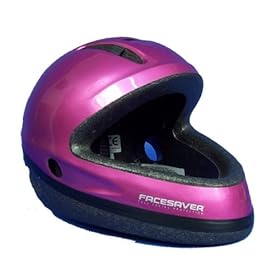
more extensive cover coming below the ears and onto the nape of the neck and possibly onto the cheekbones. Full face should have the chinbar in contact with the chin and should be made of polystyreneSmooth outer shell without projections and with a low friction coating but no plastic shell.
Multiple sized shells - the better a shell fits the better it works. TRL state that the use of one size fits all shells with those adjustable bands is a contributory factor in poor performance due to the gap at the back of the head.
There is a chap out there looking at low friction coatings for helmets and snowboard helmets perform better in rotational testing than cycle ones - as do ice hockey helmets.
It is no coincidence that motorcycle helmet design has evolved to a smooth shell with a chinbar that sits next to the chin.
Testing standards should be tested with whole body dummys not just headforms, should involve rotational forces and should be generally more realistic
David Coulthard designed one attempt at redressing the faults
[img]
 [/img]
[i]All helmets make you look like a goon BTW[/i]
So that's why you don't like them.
I have written off 3 helmets. Won't ride without one. Just like I won't drive without a seatbelt. Or rockclimb without a rope. Or sea-kayak without a PVD.
If people don't want to wear one then that's their choice. Makes the gene pool that little bit more sensible.
Or rockclimb without a rope. Or sea-kayak without a PVD.
Since you don't mention it, do you rock-climb or sea-kayak without a helmet?
I rock climb with a helmet (falling rocks - ouchy) and I generally only sea kayak on low swell days. Water (generally) doesn't cause head injuries.
I generally only sea kayak on low swell days.
Presumably you consider the odds are very low of hitting your head on something more solid on such days and it's more pleasant not to wear one?
Oaky, from the other side of the "discussing" does anyone think they would suffer more significant injuries if they DID wear a helmet?
Well my helmet cut my nose off! 5 operations later and I look OK again. I wouldn't want anyone to go through what I went through, but I understand that what happened to me was a freak faceplant accident (actually more of the blame is in the design of the peak as it was this that sliced it off). I do wonder whether the helmet did help to save my skull as it was a bit squashed at the front but, guess I'll never know?
Do I wear a helmet now? Yes, I wear a helmet with a removable chin guard, although I'll never wear a peak as I think they are really badly designed (Hard plastic, sharp and clipped-on, make one from rubber and maybe).
Chuffnuts, I wear a racing cap under a peakless helmet. I assumed this was because I was a ponce, but I now realise it has important safety benefits. 🙂
[i]more extensive cover coming below the ears and onto the nape of the neck and possibly onto the cheekbones.[/i]
Yes, because why would you need to be able to hear or have peripheral vision while out cycling? Perhaps I ought to just stick my head in a coal scuttle. It sounds a lot like what you're suggesting.
[i]Full face should have the chinbar in contact with the chin and should be made of polystyrene[/i]
That would be brilliant if you wanted to talk or breathe while wearing one. And of course, helmet fit would be even easier for manufacturers to get right if they had to account for different sizes of chin bar too.
[i]Smooth outer shell without projections and with a low friction coating but no plastic shell.[/i]
If you're getting rid of projections you need to get rid of vents too, as according to that Cyclehelmets.org website any vents in your lid will interface with the nearest kerbstone or rock and snap your neck like a dry twig.
[i]Multiple sized shells - the better a shell fits the better it works. TRL state that the use of one size fits all shells with those adjustable bands is a contributory factor in poor performance due to the gap at the back of the head.[/i]
Believe it or not, most helmets are already available in different sizes.
[i]There is a chap out there looking at low friction coatings for helmets and snowboard helmets perform better in rotational testing than cycle ones - as do ice hockey helmets.[/i]
Again, if you're considering low friction coatings you'd better get rid of any ventilation too. And that strap that holds it on, if it caught on something you could be in real trouble.
[i]It is no coincidence that motorcycle helmet design has evolved to a smooth shell with a chinbar that sits next to the chin.[/i]
So basically every time you go riding you should wear a motorcycle helmet? Thanks for clearing that up for me.
[i]Testing standards should be tested with whole body dummys not just headforms, should involve rotational forces and should be generally more realistic[/i]
Yes, because helmets should protect your entire body. In every conceivable accident. Anything less and you might as well cut out the middleman and squash your head in a vice.
Interesting comment chuffnuts - I'm suddenly feeling so glad I don't use a peak, given a similar faceplant (which only resulted in one operation and 2 nights in hospital due to ground interaction). Given similar squashed damage to the front of my helmet, and experience of other accidents I reckon the helmet helped a bit, but not a lot.
TJ - Snell B90A impact tests
[b][i]E4.3 Test Impacts
Each sample will be subjected to no more than four test impacts. Test impact sites shall be on or above the test line. Rivets, vents and any other helmet feature within this region shall be valid test sites. Similarly, no allowance shall be made for the cut of the helmet either between the fore and rear planes or at the rear centerline; no matter how closely the edge of the helmet encroaches on the test line. However, if a test impact is centered closer than 120 mm to any previous test impact site on that sample, that impact shall be declared invalid.
There is no restriction regarding test anvil selection except that each anvil shall be used at least once for each helmet sample tested. The impact energies for each test impact are as follows:
a. For each impact against the flat anvil, the impact energy shall be 100 J for all testing regardless of headform size or weight. Given an ideal frictionless mechanical test facility, this impact energy represents a 2.2+ meter drop of a 5 kg headform and supporting assembly.
b. For each impact against the hemispherical anvil, the impact energy shall be 65 J for all testing regardless of headform size or weight. Given an ideal frictionless mechanical test facility, this impact energy represents a 1.3+ meter drop of a 5 kg headform and supporting assembly.
c. For each impact against the kerbstone anvil, the impact energy shall be 58 J for all testing regardless of headform size or weight. Given an ideal frictionless mechanical test facility, this impact energy represents a 1.2 meter drop of a 5 kg headform and supporting assembly.
d. If the impact energy for any test impact exceeds the energy specified by more than 3%, that impact shall be declared invalid. [/i][/b]
Believe it or not, most helmets are already available in different sizes.
Not necessarily enough of them - many models only come in 2, and for instance with one I'd have liked to get recently, my head was too big for medium, yet slopping around in large.
So basically every time you go riding you should wear a motorcycle helmet?
If you want something that's going to give you real protection to the level many people seem to think bike helmets do, yes.
helmet which is one of the best, that is now in bits,
Nasty.
I never ride with my knob out.
[url= http://www.lcc.org.uk/index.asp?PageID=1294 ]High court helmet ruling[/url] Perhaps not of interest to those who do wear helmets... but would for those of you who would rather not wear a helmet are you prepared to run risk of reduced compensation if you were unlucky enough to have an accident?
We already discussed that one a couple of times. My take on it is still that as the words of the judge had no affect on the settlement, and hence were not appealable, it in no way sets a precedent. If you read that article you linked to you'll note that no cyclists has ever had compensation reduced due to not wearing a helmet.
[i]If you want something that's going to give you real protection [/i]
So bike helmets only offer "fake" protection then? Isn't that just as misleading and emotive as all the "helmets saved my life" stories that have been rubbished on here?
For what it's worth, I agree completely with you about compulsory helmets being a Bad Thing. And about the effect of that court judgement.
But I'm seeing so many people out on my local trails (which are pretty knobbly in places) with no lid, and probably a slew of home-spun justifications for not wearing one, that I don't think systematically rubbishing them for off-road use is a worthwhile exercise at all.

