UPDATE: CLASSIFIEDS section refreshed, redesigned, searchable: Go take a look
I really cannot understand anyone of TJ's obvious wit and intellect arguing against wearing a helmet. If buts and maybes apart, dangerous sport = minimise the risks whenever you can. Personally I've properly bust 3 helmets now, and theres not once where I thought "I wish I hadn't been wearing that", I've also got past numerous other incidents unscathed where the lid has deflected or absorbed an impact without the impact doing me any harm.
The only exception being a night ride where a low hanging branch caught my head light, and being attached to the hat I was whipped off the bike backwards. Spose that'll have you arguing via the self same logic that you should night ride both helmet and lights free?
Can I be added to the list of people who won't ride with non helmet wearers please? Quite simply I do not want the responsiblity for them or for their stupidity.
G - I am not arguing against wearing helmets - people keep saying I am but I am not.
I am arguing for my right not to wear one when I don't want to as cycling as a whole is not a dangerous pursuit. I am also trying to show folk the flaws in modern cycle helmets hopefully to help build pressure for better designs.
Remember folks - cycling is a very safe pursuit [i]as a whole[/i] Some disciplines can be dangerous - wear as much armour as you think needed. When I am doing a 40 mile loop all traffic free all on easy flat trails ( diusused railways and canal towpaths) then the risk of any accident is very low, the risk of a serious head injury is infinitesimally low. I am prepared to accept that risk. Some of the riding I do you are more likely to drown in a bog than crack your bonce. Should I take a snorkel?
Bollacks. TJ.
I came off almost stopped and got clobbered on the head by the cassette.
Wear a helmet FFS. What have you got to loose ?..............
Your life or your ability to type shit on this forum.
Tandem Jeremy
No problem with discussing this issue with you. You've done well to keep the debate so rational even with so many points of view flying around
Finally it would be very interesting to get some real data on this but I really can't think how it would be done. I was wondering if the hospitals near trail centres record admissions from Mountsin Bikers. I know Milton Keynes general logs "Snow Dome" admissions. But even if you had the data people with out helmets would almost certainly be a non representive group
Ta ampthill
Issues with using hospital admission stats are many fold. Firstly you only see part of the story, secondly serious head injuries are categorised in many ways thus leading to difficulties with comparisons and also there is no way of knowing whether helmets reduced or exacerbated injuries.
I would like to see much more experimental work and much tougher testing standards that reflect real life as far as can be done.
Right – I’m pro choice – its up to the individual whether or not they were a helmet – I have no issue riding with people who choose not to – its there responsibility – I personally think that is fool hardy and irresponsible as the consequence will impact on other people but that my personal view.
I have not always worn a helmet – and did have a similar attitude to TJ but became increasingly nervous about the consequence of coming of on any type of surface – I don’t believe that my helmet gives me magical powers of protection and appreciate that it will only provide a level of protection in certain circumstances – much as the rest of my cycling kit does.
I fully understand TJs argument that the evidence base is deficient and I recognise that the competing force of safety, styling, pricing etc determine that the function of helmets
Finally TJ thanks for your reply – however, certainly in the first crash several injures were sustained, not least a compound fracture of my C3 vertebra (fortunately a stable fracture, and I would censed that this may have been a result of wearing a helmet) – but strongly believe that a side impact to the rear of the skull on to concrete would not cause significant, if not fatal indury
TJ how should a helmet be different then and how would you achieve this?
Al - from what I know and have read-
more extensive cover coming below the ears and onto the nape of the neck and possibly onto the cheekbones. Full face should have the chinbar in contact with the chin and should be made of polystyrene
Smooth outer shell without projections and with a low friction coating but no plastic shell.
Multiple sized shells - the better a shell fits the better it works. TRL state that the use of one size fits all shells with those adjustable bands is a contributory factor in poor performance due to the gap at the back of the head.
There is a chap out there looking at low friction coatings for helmets and snowboard helmets perform better in rotational testing than cycle ones - as do ice hockey helmets.
It is no coincidence that motorcycle helmet design has evolved to a smooth shell with a chinbar that sits next to the chin.
Testing standards should be tested with whole body dummys not just headforms, should involve rotational forces and should be generally more realistic
David Coulthard designed one attempt at redressing the faults
[img] 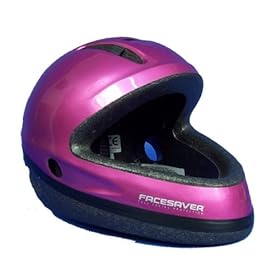 [/img]
I have never read such a load of ridiculous rubbish from one man...TJ you really are a prize idiot. I am certainly pleased that I never have to ride with you, as I refuse to ride with anybody who does not wear a helmet. You may well call this bigoted of me, but having made full use of a helmet on three separate occasions I can certainly vouch for their effectiveness. Each time the helmet sustained considerable damage - flattening out and absorbing the impact. Head injuries are terrible things, as has been seen very recently in the news. We should certainly all assess risk, and analyse the potential for various injuries undertaking the sport that we all love. I would posit, as doctors said to me, that I am only able to carry on doing this sport because I was wearing a helmet.
Swiss tim - and you talk tripe as well 🙂
I have worked on head injury units and know a bit about them, Doctors may have said that to you but they have no way of knowing - read the BMJ debate on helmets for the range of medical opinion and the many consultant neurosurgeons who will state clearly in court that helmets are not proven to reduce injury and no one can ever say that in any one accident a helmet would have or would not have reduced injury
Everything I have posted is back by extensive reading and research. I lke evidence based practice not old wives tales
How, pray tell, is personal experience an..."old wives tale"?
Because it is anecdotal and therefore proves nothing. You simply do not know what could have happened without the helmet. Wheras everything I have posted is backed by real, peer reviewed replicable research
ohh crossing posts...fine, I will accept that my personal experience is for you anecdotal...and have no doubt that inspite of wanting to help improve helmet manufacturers research I have no desire to try and recreate each accident with and without a helmet...I wouldn't fancy my chances...
In fact...I tell you what, why don't you give us the benefit of some of your knowledge about head injuries then...Aside from the helmet debate, let's leave that alone for a second. What we could talk about is how you can hit your head, appear to be fine and then suffer a huge swelling within your skull which causes a pressure on your brain and then.....why don't you explain how that works so we can all understand it from your medical standpoint?
egg, drop it, smashed egg.
egg in polystyrene box, drop egg, egg still an egg.
brainiac science in action it may be but it tells me something about the the properties of polystyrene that might be useful in saving my noggin.
TJ, I admire your persistence in the face of overwhelming opinion, and it does you credit.
Unfortunately, the debate is similar to debates about religion, and is equally unwinnable.
They believe, and will not look at the evidence.
Swiss tim - you talking about coning? I have seen it - very nasty. Or a subdural heamatoma or a diffuse axon injury? How about focal injuries? Sub arachnoid heamatomas? What do you want to know?
Plop pants - that aspect I do not deny in anyway.
Ta crikey!
Thompson DC, Rivara, Thompson RS. 1996
Full paper available on-line mate 😀
Summary report of the Harborview Helmet Studies.
Study at 7 Seattle hospitals involving 3,390 cyclists who were injured or died 1992-4. Individuals with head or brain injuries compared to those involved in crashes but who did not suffere such injuries. 50.6% had worn helmets at time of crash. Concluded that helmets decrease risk of head injury by 69%, brain injury by 65% and severe brain injury by 74%. Helmets work equally well for all age groups, and in crashes with and without motor vehicles (which are most important risk factor for serious injury). Substantial protection provided against lacerations and fractures to upper and mid-face, but not to lower face. Hard shell helmets may offer greatest protection against severe brain injury
To be honest I dont think wearing a lid makes me super man but I think I am better off with one than with out, if you dont want to then dont will happily ride with you and go for a pint afterward (would think your daft though!!! 😈 !!!)
Wookster - that type of study is useful but always overstates the case as they don't see all cases ie those not wearing helmets that don't get a head injury. Neither do they generally differentiate between skills and type of activity. So its a pointer but a flawed one. Self selecting sample IIRC in the jargon which always accentuates positives
All of them please TJ, it would be good to become as educated as you in these matters.
Not sure which way crikey was aiming that actually
Mate agree to disagree but I hope neither of us ever need the use of our lid or skull when out for a ride!! Take care mate!! (still think your daft!) 😀 am off to bed have a 5am (lidded) ride to look forward too!
One question ( not a troll) though mate what lid do you wear when you do bet its not a face saver is it!?!
[url] http://en.wikipedia.org/wiki/Head_injury [/url]
Swisstim, read through that, then I'm sure either me or TJ could try to answer any other questions that you may have about head injuries.
I'm firmly with TJ; like him, I've worked with head injured patients in critical care, and I agree with his interpretation of the risks and of the limited value of helmets in the prevention of serious head injuries and deaths.
There is a large amount of evidence out there, and much of it is contradictory. I don't understand the apparently overwhelming desire to see everyone wearing a helmet all the time, and I think, for urban cycling, we are in danger of concentrating on the wrong approach to improve safety.
As above, i'm also sure that no one will change their view regarding helmets; it's an almost religious debate; you believe it or you don't, and too few people are prepared to enter the debate with an open mind.
Appreciate that crikey, been there before to read up a little on what happen to me.
Wookster - aimed at me?
I'd have a facesaver but they are only in kids sizes
I have a bell vented XC helmet for all day use - last used at Blairadam woods as I knew I would be wearing it most of the day.
For jumping and stuff a 661 pisspot lid - more protective but less comfy so can't be worn all day unless its cold. Tends to be worn at glentress - off for the climbs and on for the descents.
Last ride helmetless - 40 mile loop on disused railway lines and canal towpaths.
I do think that compulsion will come; the views on here suggest that the majority of those commenting would like it.
I also think that once we have compulsion, the number of serious head injuries and deaths will not go down, so we will have a restrictive law for little actual benefit.
So...selective helmet use then. Why use one when out jumping?
Crikey, funnily enough, whilst I am 'for' helmets in this debate, I am against being made to wear one by law...it isn't good idea when we are trying to increase the number of cyclists on our roads....and that is a fact. As apposed to being a controversal topic of debate among the medical proffession.
Arrghghhh - swisstim have you actually read my posts?
I wear a helmet when appropriate. I do a bit of ambient jeycore lite riding - helmets are not allowed in that niche of the sport
I do a bit of freefallriding ( bad jumping) - to look hardcore I wear a pisspot and for the bit inbetween a vented xc lid.
Its all about being rational and making rational risk assessments. low risk - no helmet, moderate risk either the vented xc lid or the pisspot(depending whether it would be reasonable to keep taking it off ie short or long climbs), high risk the pisspot.
TJ - I would never deny your right to ride w or w/o a helmet but when you dismiss evidence that other people provide as "anecdotal" or "overstating" yet hold yours up to be infallible it should come as no surprise that people find discussion with you frustrating.
I agree that there is evidence for helmets not being as good as they could be BUT I also realise that they DO prevent a lot of injuries, thats fact. To argue "but how do you know it prevented damage etc.." is rather futile as its just your opinion & by your definition - anecdotal.
Likewise to claim that a helmet failed (although possibly true) & ergo provided no benefit to the wearer is wrong. If SOME benefit was gained thats a positive. I think its good that someone does highlight the weaknesses in helmet design but your stance against helmet wearing is uh odd for someone with so much experience.
At the end of the day its your choice, others should respect that but you also shouldnt be surprised when your strong opinions on the fact rub folk up the wrong way. Especially when its a subject so emotive & one where common sense would seem to decree that helmet-wearing is the smart thing to do.
It is an emotive subject, and made all the more so when friends or ourselves are involved, but TJ has done his best to present the other side of the debate, and I admire his tenacity and refusal to descend to insult.
It's a worthy thing to examine, but we can't seem to do it without resorting to abuse and ultimatums.
I did, but as your answer just then, and indeed previous posts, seem to demonstrate that you are wearing one out of some desire to fit in with which ever niche you are riding with...I am confused. No helmet - jey core, pisspot - jumping but only to LOOK hardcore - not save your head, and the inbetween time you wear a vented xc lid - why? When you have done some complex risk analysis about the type of trail, and the probility of having an accident...explain...I'm just confused..seriously.
ultimatums?
Fair enough repack. The point about saying you simply do not know what would have happened if you hadn't had a helmet on is correct tho - you simply do not know for sure hence all the "helmet saved my life" stories annoy.
Common sense might decree that wearing a helmet is always the smart thing to do but the evidence does not actually support that without doubts. A couple of well proven things that go against "common sense"
Countries with high rates of helmet wear have high rates of head injuries. Across whole populations helmet compulsion reduces the health of the whole population by reducing the number of folk who cycle - so you save one cyclist head injury but get 3 more diabetics with heart attacks ( to oversimplify)
As someone stated above it sa bit of a faith based argument
Im with you on this Crikey its a shame this cant be discussed without it getting juvenile. Helmet design isnt perfect but its better then nothing IMO. I would love to know more about the standards involved in helmet design.
TJ - any idea where I can find out more on helmet design?
Swisstim - I was trying to lighten the argument with the niche thing. It was a joke at my expense.
Risk assessment there are many ways of doing this but there are two ways I do it.
Firstly look at level of risk and severity of risk. The level of risk rises with the difficulty of the terrain and the severity with speed.
So riding a canal towpath which is flat - speed is low, terrain is easy, so risk is low.
Riding a red route at a trail centre risk is higher as there is more to hit ( trees, rocks etc) and the terrain is more difficult and also the severity of injury is greater - higher speeds and pointy rocks to hit.
Or the other way to look at it is activity, location and person. Dicvide each into low, medium and high risk. Assess all three.
So the canal towpath - , location easy riding - low risk, activity (just riding along) low risk, person me (experienced rider) low risk so total risk low.
With this second approach the overall risk is the highest component - so a red grade at a trail centre being ridden by me would be location medium, activity high, person low thus overall risk high
Nice edit TJ,
You can't get away with the fact that you do wear a helmet sometimes...why do you wear one? Not just for fashion, but the fact that there is an element of risk in the activity that you are undertaking - you are chosing to protect your head....
We are in agreement about compulsion though...more cyclists on the street = safer streets for cyclists. Compulsory helmet wear reduces the number of people who want to cycle, increases the danger on our streets, and has a knock on health affect.
Repack - cyclehelmets.org has some info - pinch of salt required for the editorial content but the articles are good. otherwise get googling
Ultimatums.. I mean the kind of 'I'll never ride with anyone who doesn't wear a helmet' kind of thing.
Interesting thought for the day No.1; the Netherlands has one of the lowest helmet use rates, one of the lowest cycle death rates and one of the highest rates of cycle usage.
Interesing thought for the day No.2; the US has one of the highest helmet use rates, the highest cycling death rate and one of the lowest rates of cycle usage.
It's not black and white.
Edit; I agree about compulsion, it would be a shame.
TJ - cheers buddy, I will have a look at that.
I do think that compulsion will come; the views on here suggest that the majority of those commenting would like it.
I do so hope you're wrong. The benefits of compulsion will be far outweighed by the negatives. A point the fundamentalists fail to recognize. Not only that, but the campaign (and the attitudes shown by many on here) is a bad thing in itself, by portraying cycling as a dangerous sport or a dangerous form of transport when it's anything but. The point being that the benefits of helmets such as they are (FWIW I do believe they are useful, just not as magical as many people make out), aren't sufficient to outweigh the social downside.
Well said aracer! If only I could be so succinct
+1 Aracer, well said.
Still don't see the argument against helmets.
I can see an argument that there is no evidence of substance that supports the anecdotal facts that are at my disposal that wearing one is a good idea (because it has saved me from injury several times and never once caused me one), but surely that argument is that one that wins the day. If wearing a lid was a negative or bad thing, surely there would be empirical evidence to support that? Which if I understand TJ correctly there isn't. Besides it is self evident that people don't go rushing off to their local A & E to report the fact that they haven't hurt themselves now do they so there is hardly likely to be any evidence on that side of the argument is there?
Having said that I like TJ would not wish for compulsion, I'd much prefer people to choose to do the sensible thing, through the example set them. I fear however that by the same token that Jade Goody is newsworthy in any way other than as a statistic, common sense will continue to be an oxymoron

