I drill all my rims for Schrader valves because feeble roadie Prestas can get in the ****ing sea. I usually use a split BMX tube for tubeless but slightly longer threaded Schraders with a domed rubber washer/seal to sit in the rim well would be nice.
ndthornton - exactly what happened to me, also with a lezyne pump.
Honestly wouldn't make the top 50 of things that could be better designed on a bike
I disagree and would be interesed to see the list of the 50 things more important that realiably maintaining air pressure in tyres - it's definitely worthy of design effort
I hate the stupid little Presta valves and did think about designing an alloy Schraeder valve like [url= https://www.notubes.com/valve-stem-pair-universal-schrader-32mm-10mm-base ]THESE[/url] (I'm assuming they're not alloy) so there was no significant weight disadvantage but tooling up and production minimums would be significant and most people don't have a real problem with the Prestas so wouldn't see the need to move over and it'd be a long hard slog to sell them
Having said that people do love new standards.*
*lol
A ghetto fix for gunked-up vale cores is to file the top of the screw thread off (the bit on the left of this pic).
[img]  [/img]
You can then (carefully) undo the tiny nut and take the rod and O-ring out of the middle of the valve to de-gunk it completely. Carrying a spare valve core works too, obvs.
I do think, rereading the above, that this is a problem that needs a more elegant solution. The e-13 ones look interesting - anyone used them?
[img] 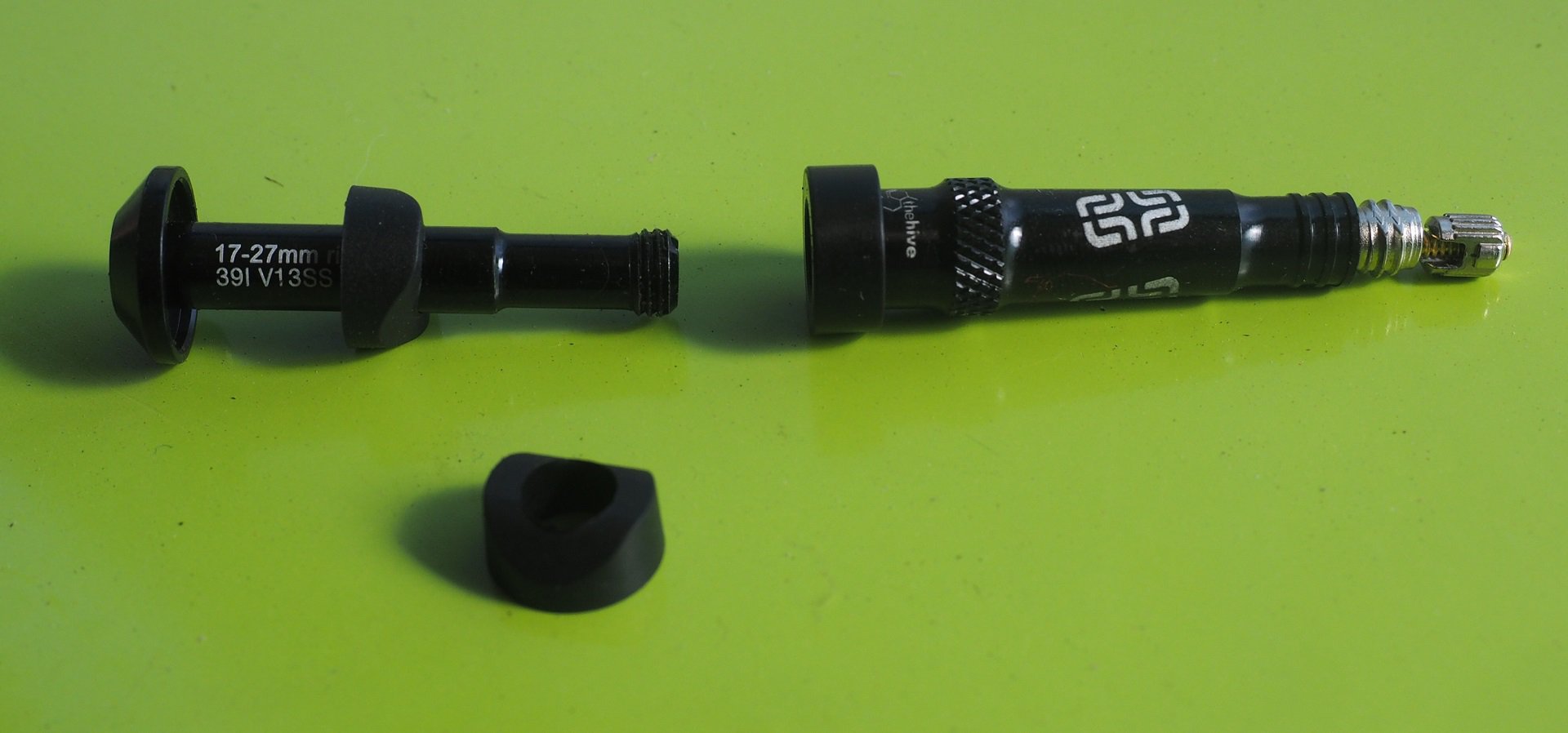 [/img]
Gravity must work differently in your world .simons_nicolai-uk - MemberWhen not in use keep the valves at the top of the wheels this should keep them away from sealant.
Surely the opposite. With the valve at the bottom any sealant will fall away from the valve to the tyre.POSTED 3 HOURS AGO #
Depends how much sealant is in the wheel, surely? I'm not convinced that any orientation would solve the issue though as the sealant will tend to sit in the mechanism once it's there if left static due to surface tension. Overall, spinning the wheels regularly is probably the 'fix' that doesn't involve a redesign IMO.
"Someone Will Invent A new Tubeless Valve standard that is incompatible with all existing designs, massively boosting sales of pumps and pressure gauges that work with the new valve"
[i]Gravity must work differently in your world [/i]
Works the same for me. Unless your sealant is a very deep pool!
Most reliable for me were the Mavic UST that came with the rims. The rubber bit sat inside the rim and didn't rotate, there was a rubber seal on the outside then the lockring. 100% reliable - although difficult to get off if you had a puncture and the rubber ring split easily.
Like this
[img] 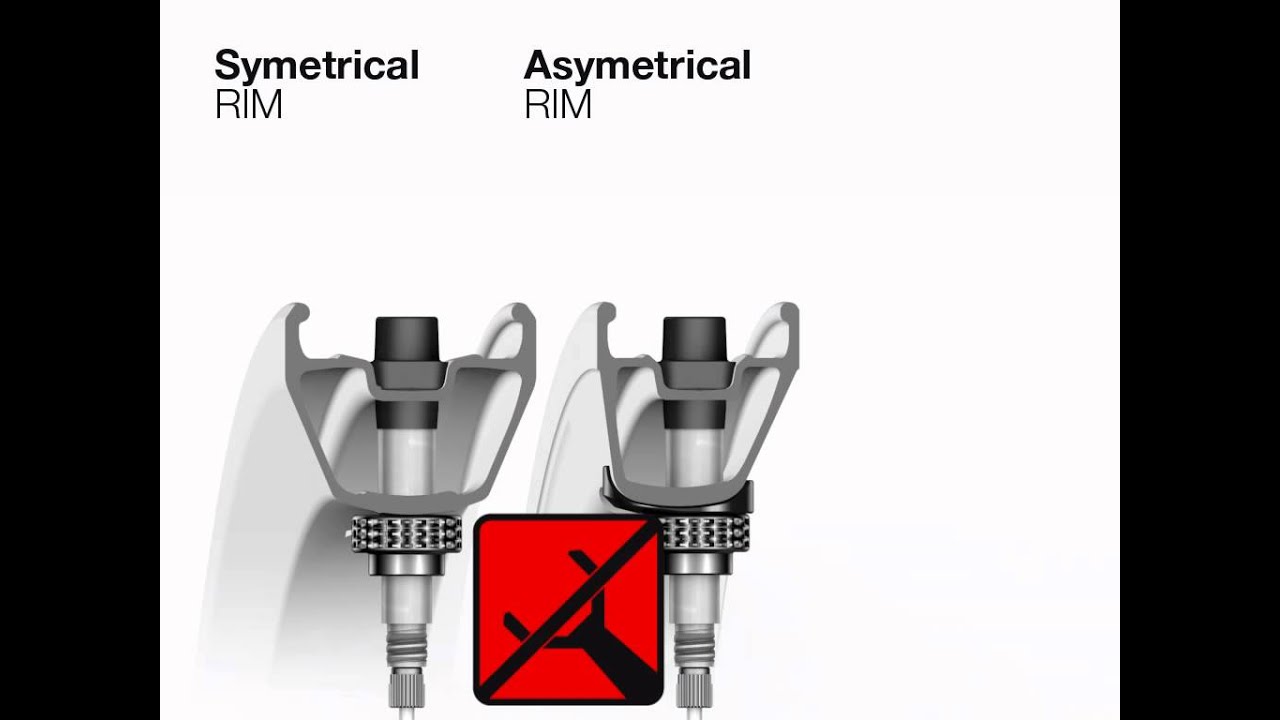 [/img]
[img]  [/img]
Removable core is ok, but can come undone with the pump (if screw on head, of course). The tool for removing cores is rubbish too, so I liked to add sealant via the tyre and use non-removable cores.
That said, I've used Caffelatex ones on my road/cross wheels and they've been fine.
"Someone Will Invent A new Tubeless Valve standard that is incompatible with all existing designs, massively boosting sales of pumps and pressure gauges that work with the new valve"
Sounds like everything ever made by specialized so I reckon they would have a go at making a tubeless valve to suit your requirements !
I have the e-13 valves, they haven't gunked up yet (though thats not to say they wont) and they are just about big enough to clean with a cotton bud when you have the core out.
you can use a spoke key to remove your valve core... (one of the round multi slot keys i have)
Thanks all, quite a popular topic!
I would also be interested in hear the 50 more pressing issues but an appeal of this little part is that its a turned metal thing so requires now mould tooling etc. I.E. I can have a dabble.
I'll design a Schrader and go from there...
mlbaker - Member
Thanks all, quite a popular topic!I would also be interested in hear the 50 more pressing issues but an appeal of this little part is that its a turned metal thing so requires now mould tooling etc. I.E. I can have a dabble.
I'll design a Schrader and go from there...
The tube doesn't need moulding but the rubber bung to seal the inside of the rim does. Unless you can find an off the shelf rubber cone of the right size for the job. I wouldn't even know where to start looking for such a thing.
No one here is looking at this properly, all you're doing is tweaking an existing design.
If you want to "Invent A Tubeless Valve That Isn’t Stupid" then you need to start from scratch.
No one here is looking at this properly, all you're doing is tweaking an existing design.
If you want to "Invent A Tubeless Valve That Isn’t Stupid" then you need to start from scratch.
Maybe. There's nothing intrinsically wrong with the Presta valve - excluding tubless they're a good solution. So the issues become
- how do you stop the valve gubbins getting gummed up with tubeless sealant
- how do you get tubeless sealant into the tyre
Milkit seems to address both of those without losing compatibility with existing pumps. (my concern would whether the small pipe works with lumpy sealant)
I've used milKit for over a year now, the only sealant I've found so far that doesn't go through the syringe is a the extra chunky Stans race stuff.
Standard Stans, Cafe Effreto, Joes, Conti Revoseal, Orange Seal OKO/Nutrak and Peaty's have all gone through no problem on mine and mates' bikes.
[i]you need to start from scratch.[/i]
But invent something with the same valve head to fit existing pumps...
There's nothing intrinsically wrong with the Presta valve - excluding tubless they're a good solution.
but they are less robust than schrader, without a single benefit
and as I understand it schrader is older than presta
its VHS, vs Betamax
Jobst Brandt said:
[i]In the past, sports and racing bicycles used Presta valves because they are slender and enabled racers to inflate tires with a simple pump with attached chuck (pump head) and no hose. Presta valves are easier to pump than Schrader, because they have no valve spring to overcome.
The small diameter of the Presta valve requires a smaller hole in the rim, whose size is important for narrow rims where cross sectional strength of is significantly reduced by a stem hole. In narrow rims, clincher tires also leave insufficient space between tire beads for larger Schrader valves.[/i]
So it's mtb inheriting roadie stuff again.
Hm, and where did mtb get it all from in the first place?
Up until really very recently, rims were quite narrow for mtb’s also. A couple of years ago 21mm was super wide.
Presta did also have advantages for higher pressures I believe, but that’s not really a mtb selling point.
[i]Hm, and where did mtb get it all from in the first place?[/i]
I think that's what I said?
Gradually mtb has moved away from the roadie stuff, narrow bars, wheels, tyres, long stems, caliper brakes, so maybe this thread is the epiphany about valves!
How about two "valves"? One for air and one for gloop. With the gloop valve also usable as a big(ger) port for easy bead-setting inflation.
How about two "valves"? One for air and one for gloop. With the gloop valve also usable as a big(ger) port for easy bead-setting inflation.
and then just have a milkit style 'alien mouth' to stop gunk getting into the valve. How do you let air out of milkit - why doesn't the internal cover on the valve stop the air coming out?
The milKit valves have a long hollow tube running from the valve core.
When the valve core is screwed shut this tube is drawn up into the valve stem away from the petal valve allowing it to close, preventing sealant from getting in.
When the valve core is opened and pressed the hollow tube is pushed through the petal valve allowing air to escape as per a normal presta valve.
Because the tube breaks through the valve when opened even if a skin of sealant had formed over the petal valve, opening the valve stem will clear and break through it.
[img] 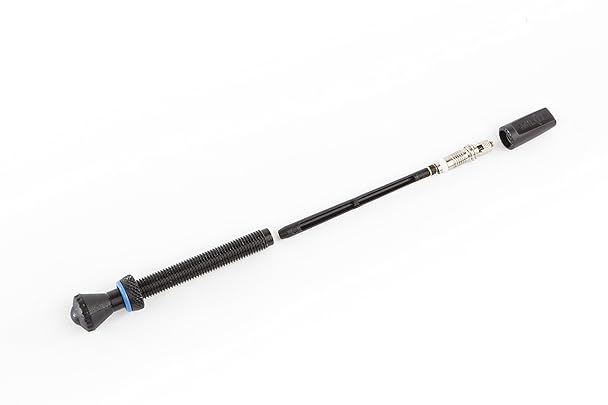 [/img]
I’ve also had that infuriating thing where a screw-on Lezyne pump snaps your valve core in half.