
MegaSack DRAW - This year's winner is user - rgwb
We will be in touch
So I’ve been a fair weather rider till now, but I need to keep riding all winter and some if my favourite tracks are under water in places. I’m talking almost bottom bracket deep. It’s on heathland, so probably a good amount if sand in it too. Should I be concerned, what’s the deal with winter riding? Thanks
Do it.
If something wears out, replace it.
You should have seen the conditions I have been riding my ebike in lately. Albeit I try not to go bottom bracket/motor deep.
I accidentally jumped into a river the other week. Both me and the bike went under. I'll replace whatever bits need replacing when the time comes to it.
This is the reason why you need to buy a rigid single speed
I do sometimes on my rigid bike.
Put it in a high gear, ratchet the pedals to keep your feet out of the water. Also it pulls the derailleur up so raising the chain out of the water.
Yep it's been a necessary evil recently. This is the bottom of a trail. It is a bridleway and is normally a meer trickle.
https://photos.app.goo.gl/1mqK43oydB4QJF6R6
The 2 foot deep (I kid you not) gashes about 4 inches wide that the run off has created further up the trail were fun to avoid. Proper wheel swallowers!
Should I be concerned, what’s the deal with winter riding? Thanks
Depends on whether you are riding a purpose built mountain bike trail or just a regular public right of way.
If the former, the trail builders may not appreciate you trashing the trails....so yes, you should be "concerned"
But, as others have said, if the concern is premature wear on your bike, well, that can be mitigated...
Puddles and streams are there to be ridden through.
One local ride is hub deep in low water. The bothy at the end has a great stove.
My only concern in such wet conditions is the environmental impact / damage of riding the trails in such conditions. There's a strong argument around Rule No.1 here.
I actively 'help' trail drainage where I can, kicking or using a trowel to clear drains and encourage puddles to form off the trails.
My bike and kit can be washed and replaced as it wears out.
Without going full beard and fully rigid, this is a good reason to have a hardtail, and <shudder> fit it with mudguards.
On my old commute I pedalled through a flood that came halfway up the head tube. Nothing bad happened.
Sorry I should add, its not an e-bike and I generally only ride bridleways, so already trashed by horses!
But thanks everyone. It sounds like I cant do too much damage and I guess all easily replaced if I do.
I'll be starting another topic about water proof boots next 😉
I'd agree on trying to minimise trail damage, but on some bridleways it's not possible or being on a bike is less intrusive than hooves! Also think about riding different trails that hold up better over winter. Otherwise just maintain your bike and replace worn out bits.
My only concern in such wet conditions is the environmental impact / damage of riding the trails in such conditions.
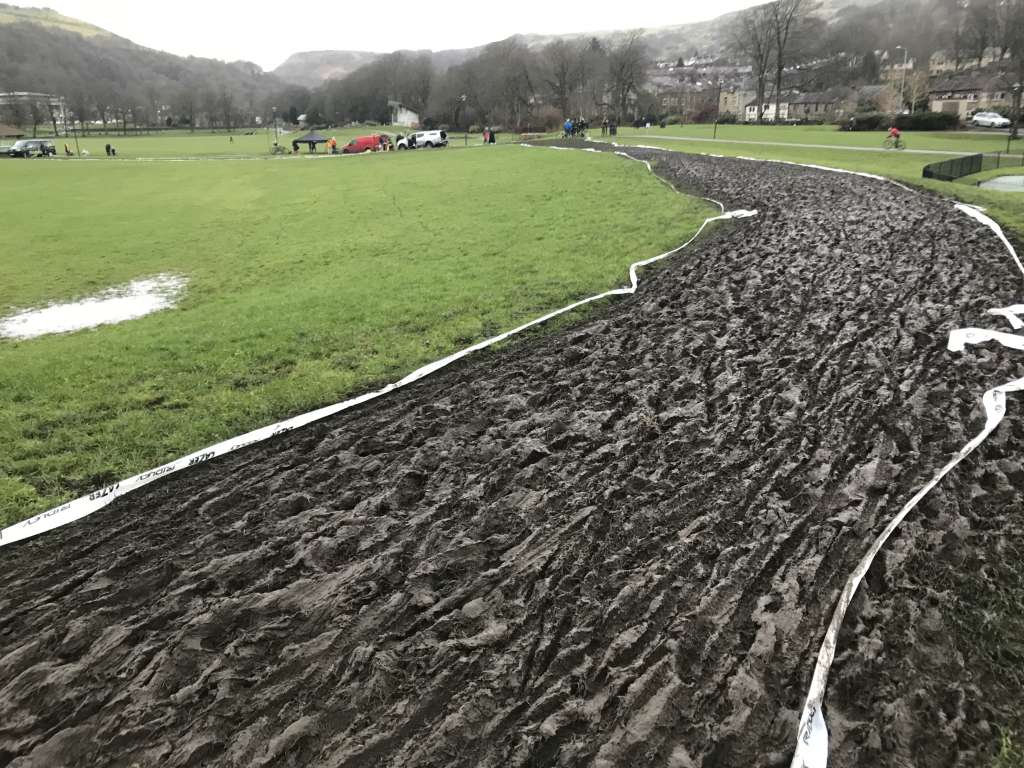
You know, I've been riding for nearly 30 years now, I hear this one every year, and I've yet to see anything really seriously detrimental that you could single out as being caused by mountain bikes alone, in all those years. Yes, you can see tyre marks, and sometimes puddles get widened, but that happens regardless, folks walk around big puddles just as often as bikers ride around them. @Chipps used to organise a cyclocross in Tod park in the winter and would get criticised every year about the unsightly muddy track the race churned up; it was always fresh grass every spring...
As @nickc says... we would make a right mess of the park and it would be fine by the time most people started using the park again.
I've got some better pics somewhere, but this was the day of the race...
And this was one month later at the same spot...
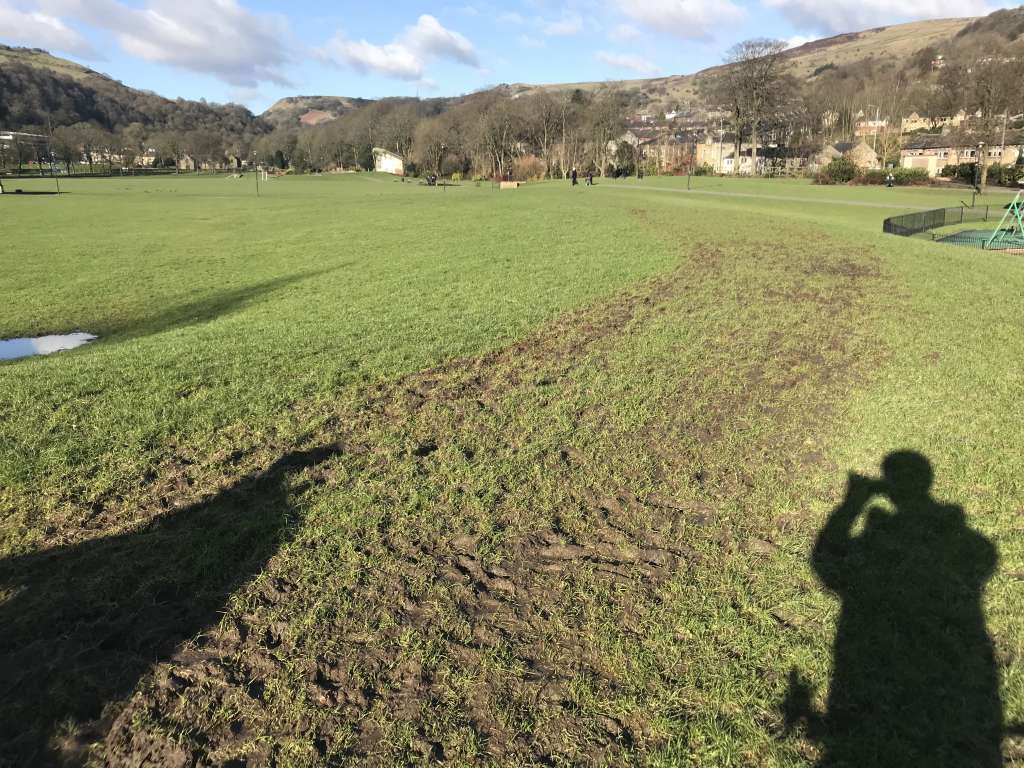
Grass is pretty resilient. On steeper trails, the erosion is generally caused by running water rather than boots or tyres, but bike tyres are good at making channels for water to run down. On a well-designed trail, there should be places for the water to run off sideways - I always make sure that I try to kick or dig out those spots so that the water drains away rather than running down the trail.
I’ll be starting another topic about water proof boots next 😉
An excellent topic!
I rode through a flooded bridleway once. I could see water for about 30yards in front that had run over the river bank, across the fields and covered the bridleway. I really didn't want to have to turn back and change my route so I went for it. Got about a third of the way through and the top of my 26in tyre was just under the water. It was quite hard work and I'd gone down to granny ring and was working my way up the cassette but I there was no way I was going to stop! The water was rushing through the wheels trying to pull me off line to the side, the gravel underneath my tyres was washing away making it feel like I was riding in sand. I wouldn't do it again tbh, but riding through large puddles or a small stream crossing is fine. Just have to be careful of what is underneath if you can't see through the water as you don't really know where your front wheel is going.
I've ridden my Gravel/Winter road bike through water up to hub/BB level - wasn't really intentional - just that the road was flooded and turning back meant a big detour.
I'd not go looking for it, but would do it again if needed - components get changed when they wear out, and i'm not sure a 30 second dunking in rainwater is going to instantly kill a BB..
Think it was two years ago I was riding home from work, using the SUSTRANS boardwalk between Horseshoe and Northam bridges in Southampton, when I saw the river had risen to put the tarmac path by the industrial estate under water. Carried on, thinking it would be maybe a couple of inches, next thing it was half way up my shins! Dismounted and walked to end of flooded bit before jumpin back on the bike, never seen it like that before or since.
The brackish/saline water did the rear wheel of my Voodoo Marasa commuter no favours, semi-seized up over time (rideable but draggy), after losing a spoke somehow a few months later and developing a significant wobble I ended up getting a new wheel from Merlin.
Nothing worse than water up to your double chins
Flooding, yes. A ford? No chance! Anything with continuous water will be a hard and slippery surface underneath. I might look at the bearings if it's been serious.
Son1's first Specialized mountain bike (since stolen) was sourced from the River Thames by a bike shop who gave it to me for free. Bearings were fine, but they didn't want hassle of warrantying it if sold.
Nothing worse than water up to your double chins
🤣😂🤣
No concerns for me. Full pelt, feet in the air out of pedals and shout weeeee as you go through.
I've done it a few times - through a flooded bridge on a cycleway - fortunately nothing underneath and it was over shoe height.
Hit a massive puddle at Penmachno two years ago - just thought it was a puddle, but then it was over my knees and it literally stopped me dead. Bike came out looking like a swamp monster.
I gave the bike a good service after that - BB, jockey wheels and rear wheel.
Well assuming no open drains under it 🙂
(or an area alongside water where the path could have collapsed in)
I think continually soaking the bb just wears a consumable out a bit quicker TBH.
Its very draggy cycling thru water thou.
I don't miss the wet winter commutes tbh.
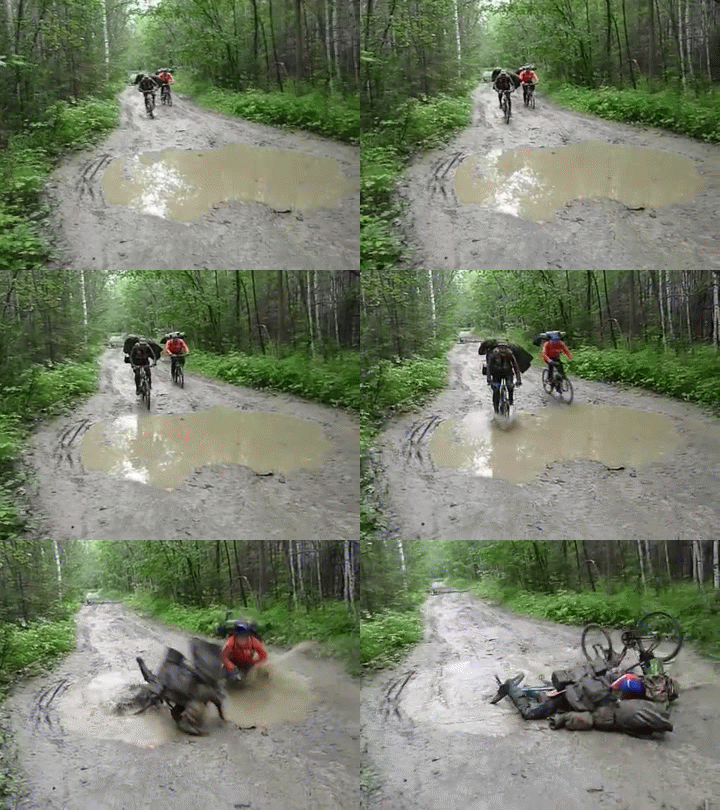
Beware of 'special' puddles, especially on farm doubletrack.

Go for it! What's the worst that could happen?
A bit of mud never hurt anyone.
On steeper trails, the erosion is generally caused by running water rather than boots or tyres, but bike tyres are good at making channels for water to run down. On a well-designed trail, there should be places for the water to run off sideways
This is the key insight into trail design and maintenance. The water is what causes erosion so you have to get it off the trail. A trail running straight downhill will erode into a gully because the water will follow the skidmarks down the hill.
To address the OP's question, water and mud will always be bad for machinery. Riding through a puddle is fine, riding through sloppy mud up to your hubs will destroy your drivetrain. Whether it's a good or bad idea just depends on how often you can afford to replace stuff.
Beware of ‘special’ puddles, especially on farm doubletrack.
In case anyone else was wondering -
https://www.redbull.com/gb-en/behind-the-scenes-of-wee-day-out-the-puddle