UPDATE: Reviews section refreshed, redesigned, searchable: Go take a look
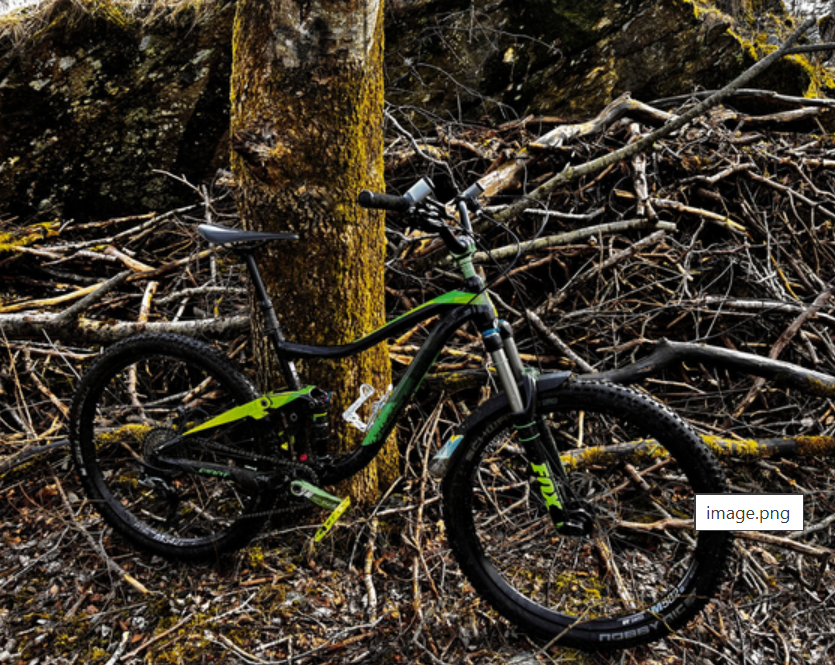
I had a look at the Pinkbike DH Tech randoms article and saw Reece Wilson's Aon team are all running raised reversed stems and short cranks. Just to prove I was doing it before it went all mainstream, here's what I've been riding lately:
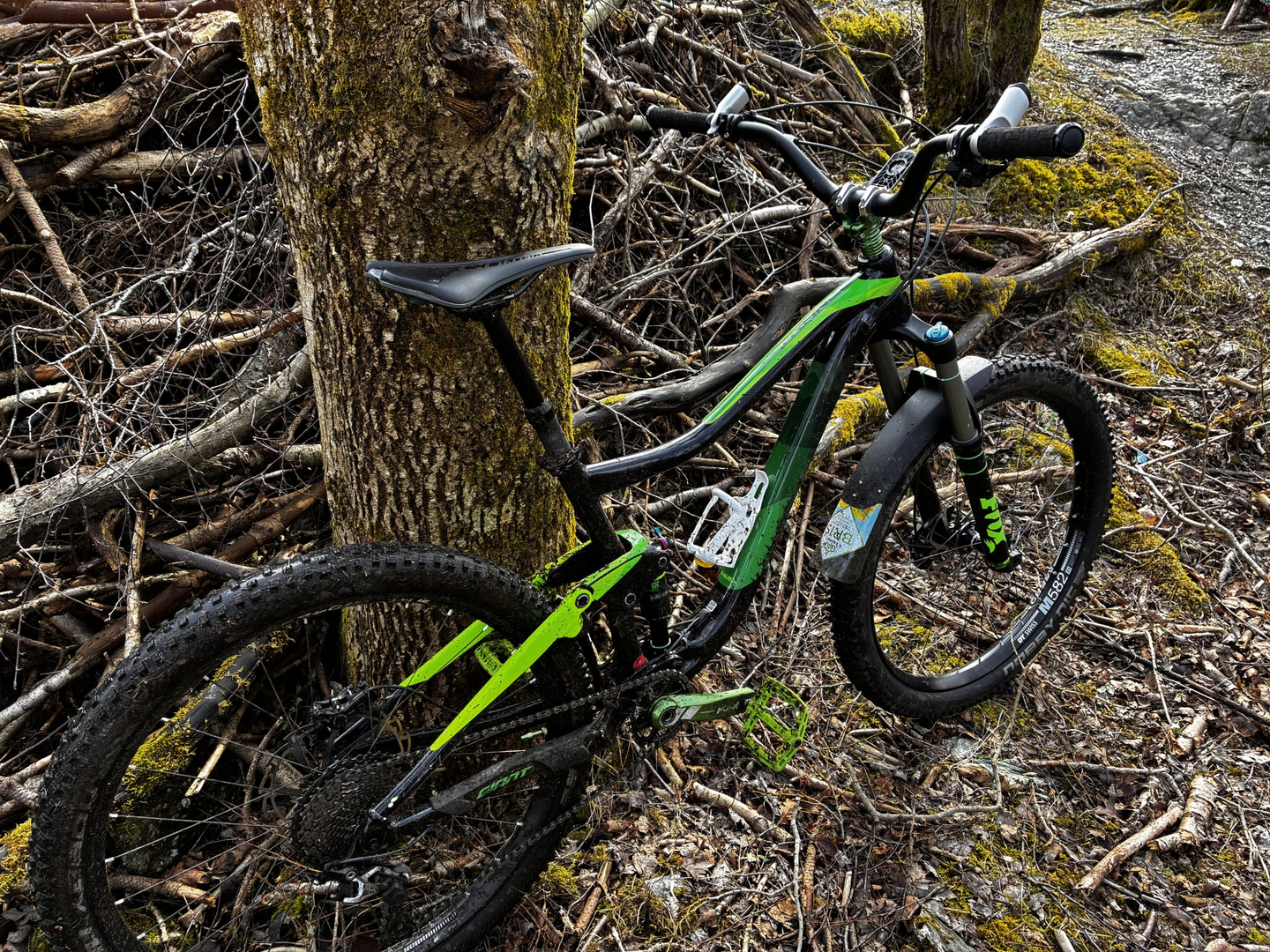
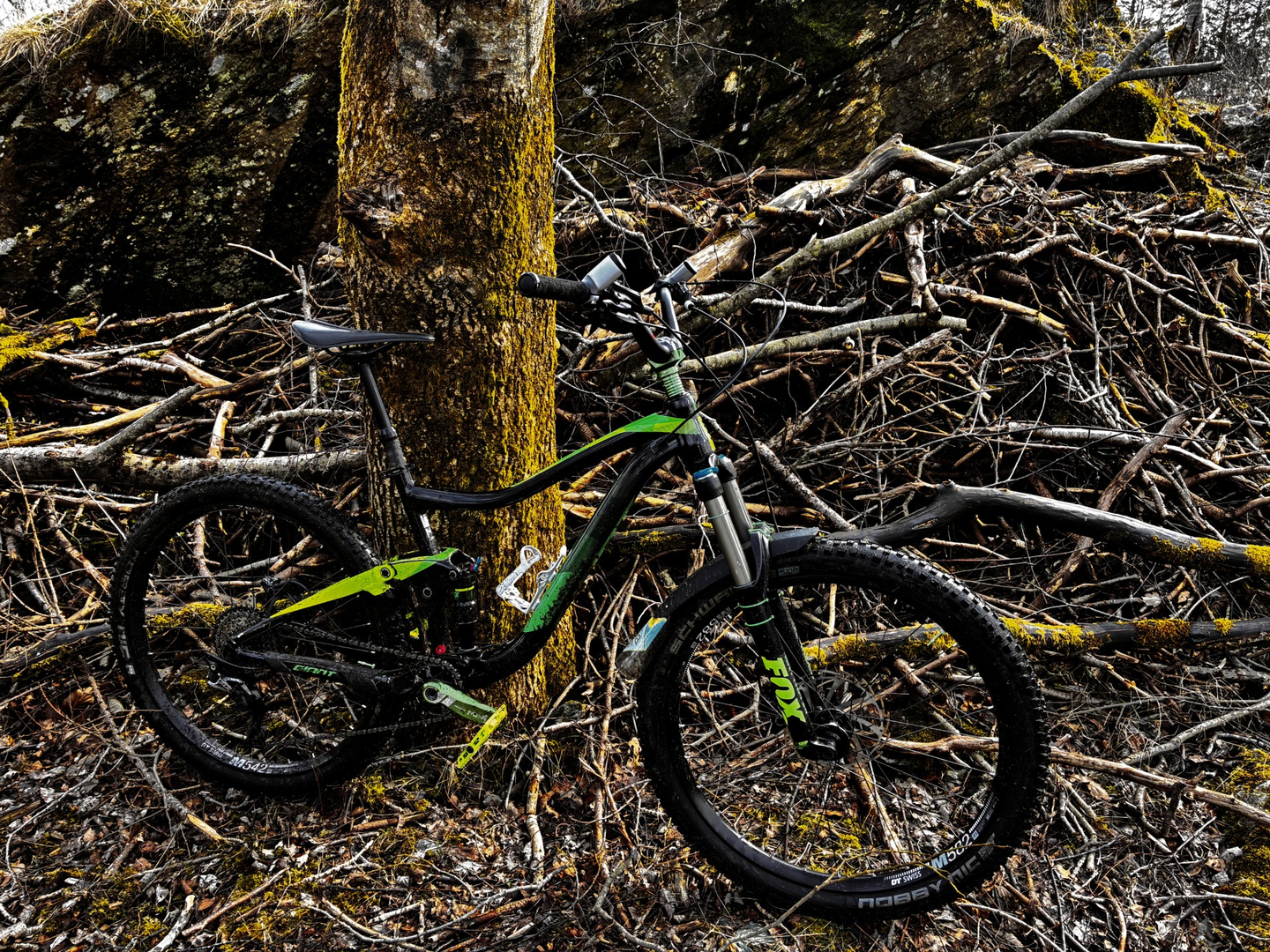
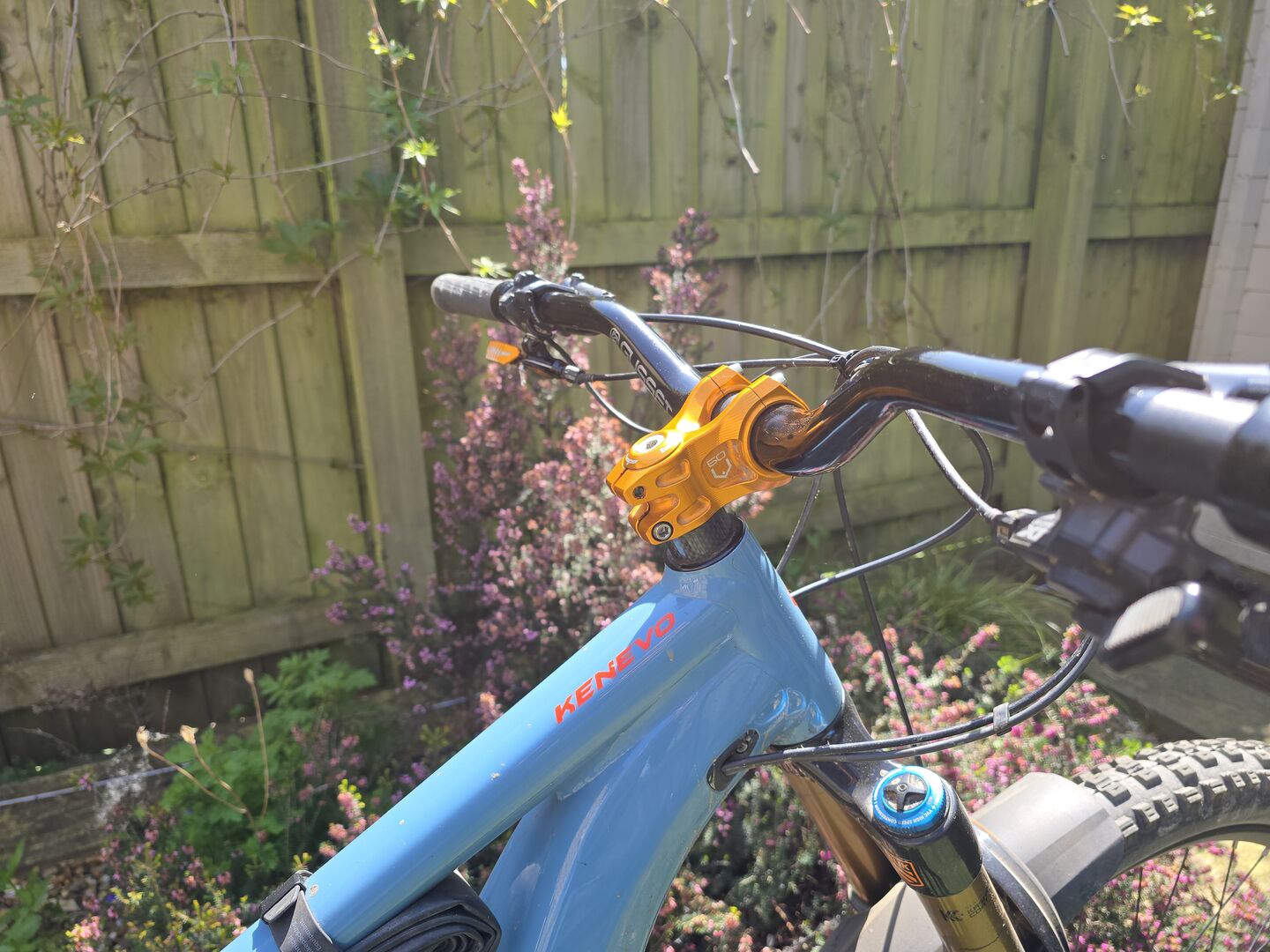
So that's a set of Ergotec 100mm riser bars with a 15mm Aerozine stem. The bars have 12 degrees sweep and are 780mm wide so the centre of the grips end up about 25mm behind the steering axis.
The cranks are also Aerozine Xeon 140mm.
I increased rear tyre and shock pressures and decreased front tyre and fork pressures (around 10% change for everything).
After about half a dozen rides, I'm really wishing I'd done this years ago. Confidence in all types of terrain is much higher. Losing traction feels much more predictable. Which could just be down to a more relaxed position.
I spent years trying to get an aggressive attack position with low bars, thinking this would improve front end grip. I always felt like I was having to throw myself forward in corners to avoid losing the front end. With this new position it feels more like pressure control rather than dramatic weight shifting.
In terms of pedaling, I've found I've changed up my pedaling technique since listening to a guy called Jim Martin and the 'floppy elbows' pedaling technique where you focus on not pushing or pulling on the bars and instead keep your core engaged. This means I don't feel like I'm cramped up and trying to pull in the bars as I pedal. Instead I just use my glutes and hamstrings to maintain my body position. This seems to work well with the short cranks and high bars.
I'm not super-confident in the quality of the Aerozine cranks. They've developed an alarming creak that seems to be the left crank arm shifting on the axle. Which is perhaps not surprising for an alloy axle.
I've now bit the bullet and ordered a set of 135mm Hope cranks.
If anyone wants to try similar, I'd recommend the Ergotec bars. With a short stem it's easy to roll the bars back to get the grips behind the steering axis.
Cranks are a bit more tricky. I don't think I'd recommend the Aerozone ones and the Hopes are a hell of a commitment. I bought a couple of sets of Goldix kids cranks from Aliexpress to just see how it felt. I'm not sure how much of a hammering they would take though. The two sets I ordered, I hammered them as much as I was comfortable with and now they are on the kids' bikes.
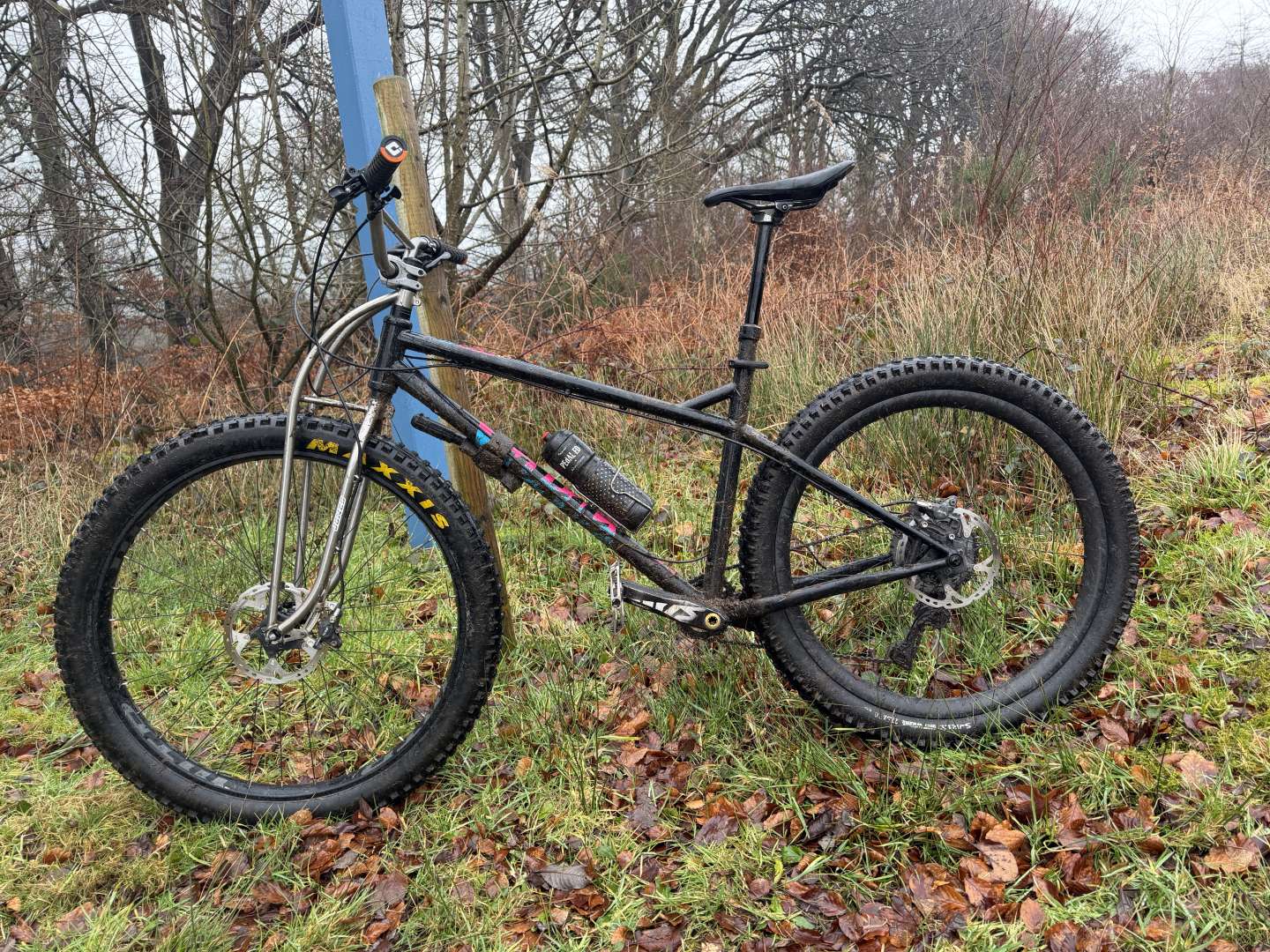
Oh, and I just ordered a custom Marino frame to really take advantage of a high rise short crank set up...
I love reading this sort of thing. It's a bit like Dario's intrusive thoughts on Pinkbike.
What is the reasoning behind the bars being behind the steering axis?
I think high bars can bring your weight forward because the upright body position brings your hips forward. Dropping your hands lower pushes the hips back, so the weight shifts back. Credit to Cotic where I heard that first.
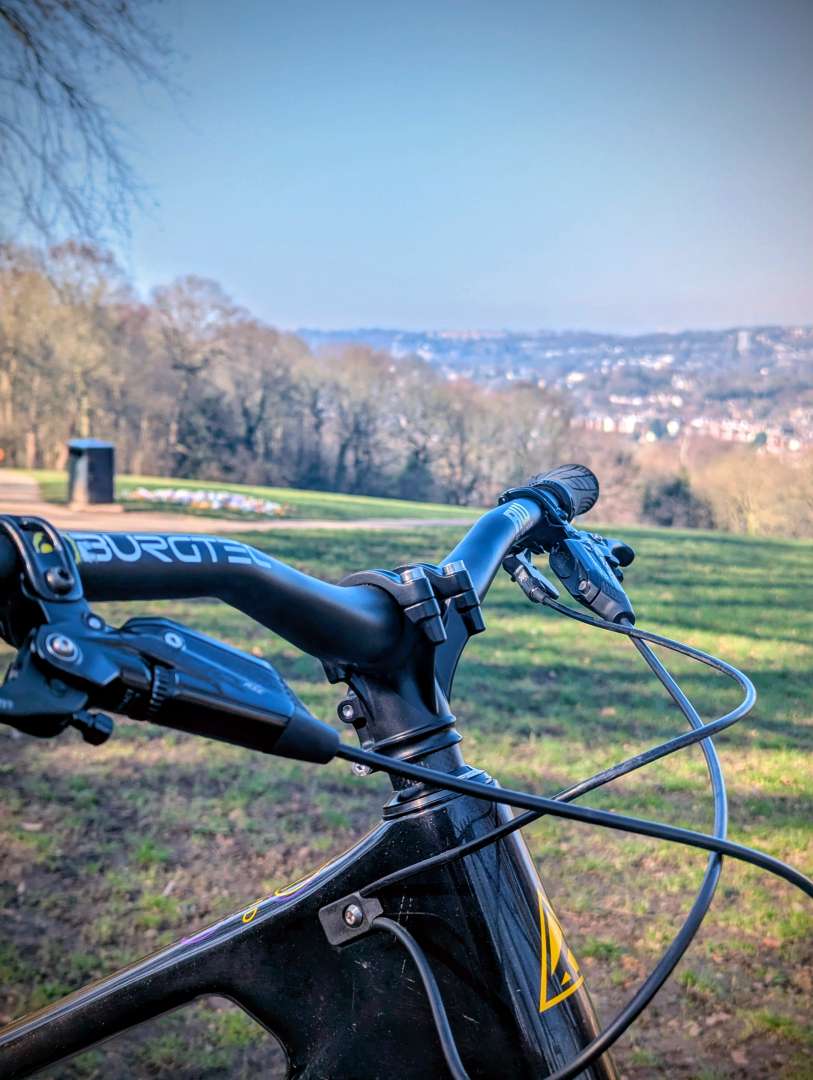
I had this stem for a while and was really enjoying it. Unfortunately it was cut short by a product recall that advised me to stop using it immediately. I switched back to a normal stem just before a weekend in Wales so never thrashed it on technical trails.
I was planning to test it backwards just because but I didn't get a chance.
I'd buy the Aerozine stem if I could find one in stock.
155mm cranks are the shortest I've used and I really like them. They make the 175 on my BMX feel like a joke.
Unfortunately it was cut short by a product recall that advised me to stop using it immediately.
What stem is it? It does look good - fair play to them for recalling.
Seth from Berm Peak did a piece on this a while ago on one of his YouTube vids, mainly on the high rise stem/bar idea. I also think GMBN did a vid also.
Azonic Ground Zero anyone?
Azonic Ground Zero anyone?
Weren't they 25.4mm only? Proper old skool.
On Reece Wilsons LLS bike the setup looks kinda cool and obviously works for him. Sorry OP, yours looks like a shopper bike.
EDIT: just noticed the inboard bar ends. Jesus wept. This is a wind up surely?
Don't these things just come around in circles - we go super long, we go super low, super high, bring the bars back - then eventually end up back somewhere in the middle with small adjustments either way?
Other than liking a reasonably high stack, I feel bike geometry has come far enough, that we are pretty much at a sweet spot with most modern bikes that just needs personal small adjustments to get right - this is certainly the case for most of my bikes.
That said, no harm in trying radical stuff
Sorry OP, yours looks like a shopper bike.
Don't worry, the pictures don't do it justice. It looks even worse in real life.
Inner bar ends look stupid too but having spent years holding onto my brake reservoirs when pedaling uphill I eventually cracked when I saw those stubbies in a clearance bin...
Don't these things just come around in circles - we go super long, we go super low, super high, bring the bars back - then eventually end up back somewhere in the middle with small adjustments either way?
Kind of, although in this case it's more or less putting the bars in the same position as they'd be on a downhill bike, so it's not really a 'new' thing, more just taking something from another type of bike.
What is the reasoning behind the bars being behind the steering axis?
Reece Wilson was describing it as almost having magical stability properties. I'm not sure I agree with that but one obvious change is that if the grips are ahead of the steering axis then your hands go down when you corner whereas with the grips behind then they go up (how much depends on how much you lean the bike).
Whether it's enough to make any difference I couldn't say for sure. I like the feel but I'm not sure if my hands going higher instead of lower in corners is the reason.
if the grips are ahead of the steering axis then your hands go down when you corner whereas with the grips behind then they go up
Wherever the hands are, in relation to the steering axis, one hand goes UP and one hand goes DOWN. It just changes which hand does what!
I think this is the key to this conversation...
Don't these things just come around in circles
But whatever works for you is the best way forward 😎
What stem is it? It does look good - fair play to them for recalling.
Creature De-reacher. They had one fail. Something to do with lack of heat treating on a certain batch. I might buy another one when they've figured it all out.
Azonic Ground Zero anyone?
The problem with extremely short stems from the 90's is that people were fitting them to bikes with geometry that would now only be seen in the kids section of Halfords.
It's definitely time for a rethink of hand position on LLS bikes. I've know that since 2017 when I went from a 26" hardtail to a Geometron and couldn't find bars high enough.
It's fun to go way outside of acceptable norms just out of curiosity but unless you can make your own parts you're mostly out of luck.
Wherever the hands are, in relation to the steering axis, one hand goes UP and one hand goes DOWN. It just changes which hand does what!
I'd say, if the hands are in line with the steering axis then one hand goes up a distance and the other goes down an equal distance.
If the hands are ahead of the steering axis then the hand that goes down goes down further and the hand that goes up goes up less.
If the hands are behind the steering axis then the hand that goes down goes down less and the hand that goes up goes up more.
Sorry, that is some horrible sentence construction but the upshot is your both your hands will be higher if your hands are behind the steering axis compared to if they are ahead of the steering axis.
The position relative of the hands to the contact patch also change. The hands will be closer to directly above the contact patch if they are behind the steering axis.
You can see it yourself if you find something T shaped and see what happens if the top bar of the T is ahead of the pivot point or behind it.
I should also say, this set up almost caused me to crash first time out.
I popped a manual to go through a puddle and the front end came up so fast I almost looped out in the middle of the water.
The Marino frame I've got coming has 485mm chainstays but I'm wondering if I should have gone longer...
Good stuff . Ive got 50mm rise bars on one of my bikes and I've found its helped confidence on steep stuff . The higher front end has also helped me get my body in the position recommended from a recent coaching session .
Do you find the feeling of being more behind the front wheel is similar to having a slacker head angle ? I fitted a minus 2 Angleset to my flare max and the feeling of the front wheel being that much further forward was definitely confidence inspiring on the steeps but I wasn't sure it worked for everywhere else . Infact it definitely made the steering worse on flatter stuff .
Just looking closer at your photos and it reminded me of something. A while ago singletrack did a documentary on the history of uk mtbing and there was an old guy on that who made his own bikes i and they were very high front end with a relatively low back end , its been a while so I can't quite remember properly but the image I have is the guy almost sitting upright when riding 😀
Don't these things just come around in circles - we go super long, we go super low, super high, bring the bars back - then eventually end up back somewhere in the middle with small adjustments either way?
its good to see some people not resting on the laurels of "bikes are pretty good now".
of course, I'm happy with my bike so I'll let others use up their time and money researching this 😉
everything is interlinked. so the last time people tried this - was that the mondrakers of 2013ish? - other aspects of geometry was not the same as it is now.
just like the low front ends of long modern DH and enduro bikes in the past few years is a whole different kettle of fish compared to the low front ends of the 90s.
Just looking closer at your photos and it reminded me of something. A while ago singletrack did a documentary on the history of uk mtbing and there was an old guy on that who made his own bikes i and they were very high front end with a relatively low back end , its been a while so I can't quite remember properly but the image I have is the guy almost sitting upright when riding

Geoff Apps I think (not too long decesased), one of the early pioneers of off road riding in the UK, went down an avenue of bike design that not many people (and pretty much no manufacturer) followed.
He liked low speed tech climbs and pick your line descents, as well as actually riding where no trail existed (perhaps truly "off piste").
He took things to extremes, but perhaps he had some valuable insight that we could have learnt from.
Just looking closer at your photos and it reminded me of something. A while ago singletrack did a documentary on the history of uk mtbing and there was an old guy on that who made his own bikes i and they were very high front end with a relatively low back end , its been a while so I can't quite remember properly but the image I have is the guy almost sitting upright when riding 😀
Geoff Apps
Just looking closer at your photos and it reminded me of something. A while ago singletrack did a documentary on the history of uk mtbing and there was an old guy on that who made his own bikes i and they were very high front end with a relatively low back end , its been a while so I can't quite remember properly but the image I have is the guy almost sitting upright when riding
Geoff Apps.
https://en.wikipedia.org/wiki/Geoff_Apps
Everyone typing the same thing at the same time.
His bikes were short, steep and high. Not dissimilar to the original Jones bikes. In interviews, he said he designed bikes for entirely the opposite type of riding the Americans were doing at the time. Slower speed technical trails rather than wide fire roads.
I definitely got what Geoff Apps was on about after the first couple of rides. As well as the high front he was also a fan of high bottom brackets which is kind of what you recreate with short cranks (I actually think short cranks is a better solution than a high bottom bracket since you get all the clearance benefits but with the cranks level you are still quite low).
Like Geoff, I also appreciate a good mud flap on the end of my mudguards so if you look closely at the photos you'll also see my homemade mudguard extension 🙂
Geoff was definitely onto something that would be great for some people.
I wouldn't want to take his bike down Pleney though.
A good few years ago I rode an early Cleland Adventura(?) (may have been a Highpath) that had both a reversed BMX style stem, high rise bars and short cranks.
It looked like a fairground fodder bike but it was lovely to ride in a way that I have never managed to replicate.
I love reading this sort of thing. It's a bit like Dario's intrusive thoughts on Pinkbike.
What is the reasoning behind the bars being behind the steering axis?
I had a wee conversation with Reece Wilson about this, he said he basically did it just to see what'd happen, and has no idea why it's good, but that it works. It seemed like there was no actual reasoning, just curiosity and experimentation. It was like Homer Simpson, "I don't know the scientific explanation, but fire made it good"
I think no matter how good it is, it won't catch on because it looks stupid. This has got to be at least the 3rd time it's been the coming thing.
Good stuff..
Grips behind the steerer (and inboard barends) is Peter Verdone's thing, he's posted some good stuff about hand position, bar shape and the effects. His website is a rabbit hole and worth the time even if it's just for exposure to other ideas (and ideas that are far better justified than a lot of bike industry tech reasoning). https://www.peterverdone.com/category/bicycle/
My Jones H bars used to put my hands inline with or just behind the steerer in the rearmost position, I added 10mm to the stem about a year ago but that was more about overall seated reach comfort. I remember riding a real Indian roadster bike on a dirt track and liking the bars / hand position and the steering feel a lot - Jeff Jones wrote about bikes like this once and I wanted to try one when the opportunity came up. They're great and make you realise how the conventional MTB isn't the only way to do things.
I think it makes sense to be behind the steerer for some riding situations and opposite-lock or counter-steering.
trying to get an aggressive attack position with low bars, thinking this would improve front end grip.
I think there's been a lot of bollocks written over the years about getting low at the front and cornering so we all tried it. Being low and well over the front might make us feel more in contact or give better feedback. But it's a low percentage of our weight going through the grips, or if it's high you're committed with little to no return if things slide. Most of our weight most of the time is through our feet and our CoM is closer to that end of the bike. Front-rear bias from the wheelbase and BB location is towards the rear wheel too. So bar position doesn't make as much difference as some suggest. I think a lot of the 'low front' or leaning fwd idea is about compensating for bikes (of all types) that have too-short stays for no real reason but 'geometry numbers'.
Interesting you mention 485mm stays. I have a 32" bike at the moment with 500mm stays and it's a revelation. Like the Jones Plus with 490mm stays, that was also a great bike to ride but I put a lot of it down to the other things in the geometry. In fact longer stays are just a good thing for more riding situations than we realise and most of the expected downsides are either unfounded or minimal.
A good few years ago I rode an early Cleland Adventura(?) (may have been a Highpath) that had both a reversed BMX style stem, high rise bars and short cranks.
It looked like a fairground fodder bike but it was lovely to ride in a way that I have never managed to replicate.
They're amazing bikes at lower speeds in the woods.
His bikes were short, steep and high. Not dissimilar to the original Jones bikes.
I took my Jones to a couple of Geoff's Wendover rides. The Jones has a high bar but is much lower at the BB and relatively long reach (laughably bc the Jones has pretty much road bike reach vs a modern MTB) compared to the high and very short Apps bikes. The Apps bike was far more agile at low speed over lumpy stuff and I really liked it, but the Jones was more fun on singletrack.
When I put Geoff bars on my rigid bike I thought I'd have to get a longer stem, I was rather surprised to find that I didn't and it felt great with my hands so far back
I'm just looking at this bike and imagining how horrific it would be to ride with a slammed stem and low rise bars - I'm not surprised you've experimented tbf
Totally get it. I’ve always run high front ends with as short a stem as I can get away with, even on older geo bikes.
I just like the way they ride.
I tried to find a zero reach Stem, gave up and settled for 32-35mm over various bikes.
I need to fit some higher rise bars on the e-bike. It’s my first complete new bike for over 10 years, so I’m riding it and replacing stuff as I find its weaknesses. So far, tyres, shorter stem (32mm), shorter cranks Hope 155mm (the 160mm e13 cranks bent very easily). Bars next as my wallet recovers for sure.
The most 'extreme' set up I have is 50mm bars on both ebikes - but the older, shorter one I've gone the other way with the stem at 50mm. 35mm felt too close. I haven't registered a noticeably negative effect on steering
Geoff was definitely onto something that would be great for some people.
I wouldn't want to take his bike down Pleney though.
You would be shocked at what you can ride down slowly with complete control on Geoff Apps bike. This is due to the combination of powerful yet easy to modulate moped drum brakes, and the high short reach handlebars that allows the rider to hang off the back of the bike.<a title="1983 Cleland Aventura" href=" removed link "> removed link
You also hang off the back when descending quickly.
Though not designed for racing a team of Geoff Apps' bikes achieved the fastest times in a downhill slalom race in 1984. They also won some hill climb competitions.
Running this on the DH sled, 18mm offset. Means I can run relatively long reach, for a DH bike, at 510mm, prefer shorter chainstays though, 445mm (27.5 rim). Super stable at high speed, but still turns quickly. Bars are 30mm rise.
next (trail FS) bike will have similar numbers, but a slightly shorter stem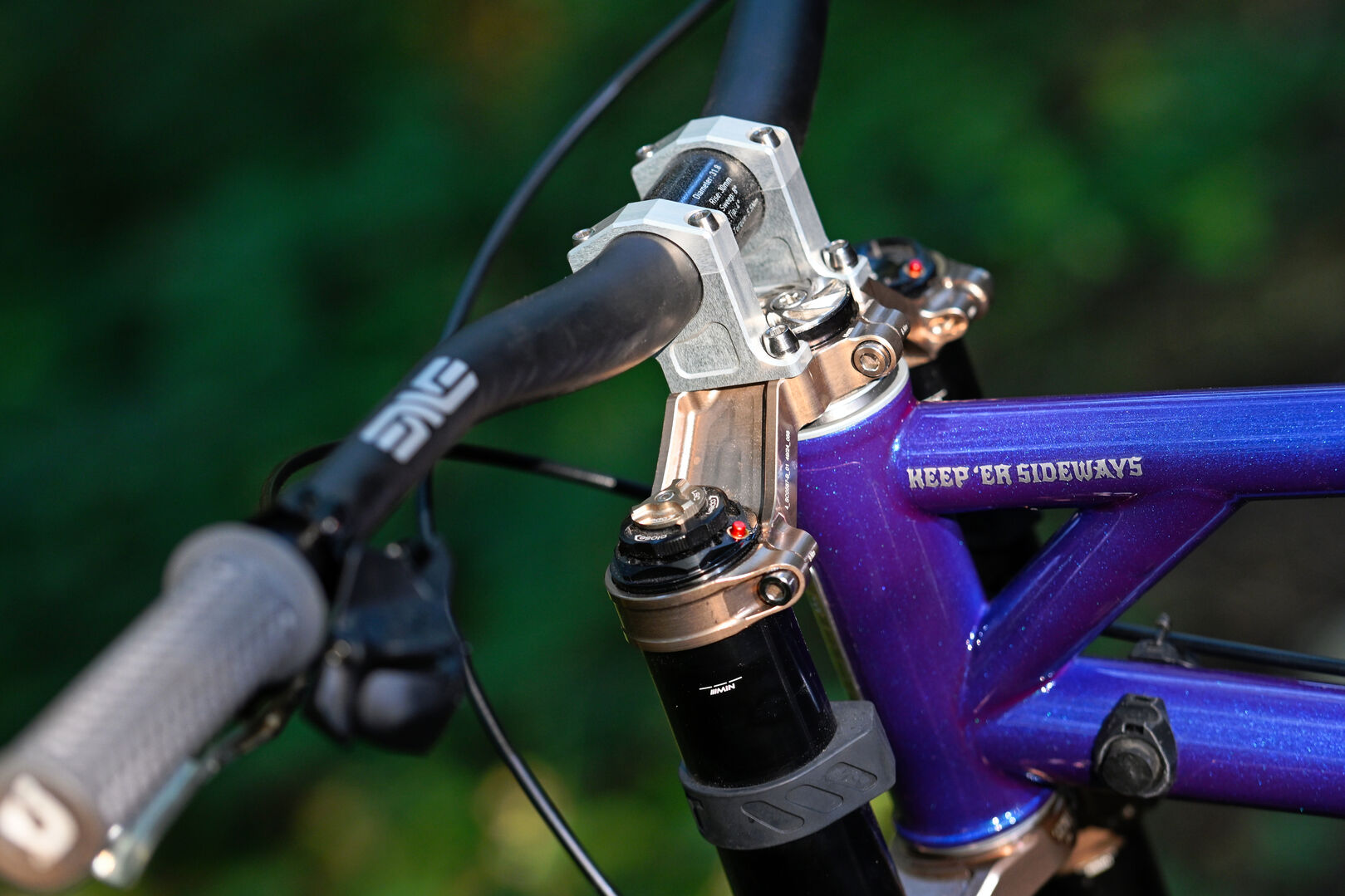
There's some interesting thoughts related to this over here:
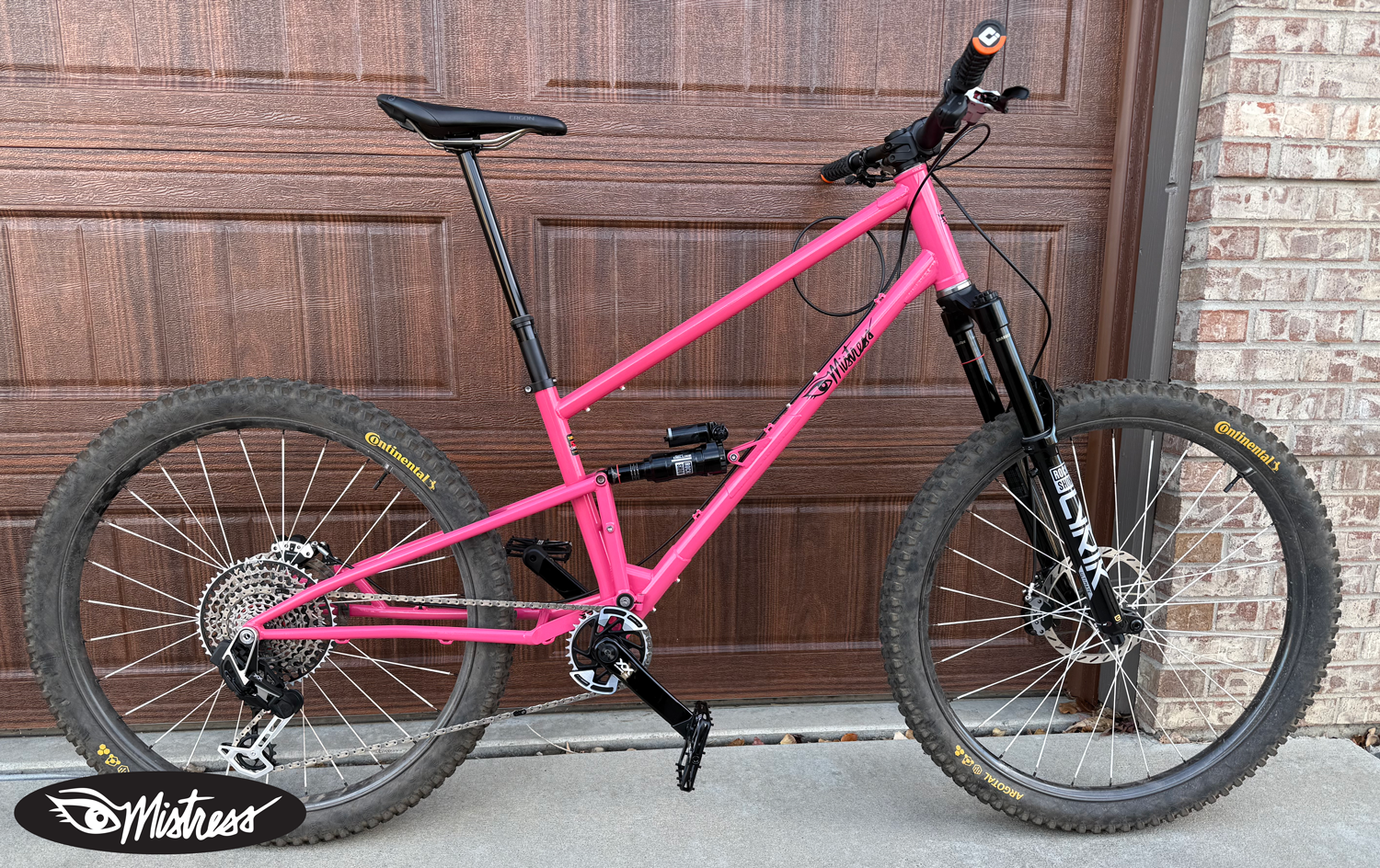
I'm into that longer rear / shorter front thing (vs where LLS bikes tend to end up). I think he's right that CS length is little to do with how pumpy/jumpy a bike feels and more bikes would benefit from longer stays (450-480, even 500 range, dep on bike size). FC:RC ratio balance is so undervalued. He writes well about the levers involved too. At times I've wondered if the bar to rear axle length is also more relevant to the bike's feel when hopping or lifting the front wheel than the CS length (hard to say though as jumps aren't my thing, haven't done much of that in a long time).
https://mistresscycles.com/whats-it-like-to-ride-in-the-middle-of-your-bike/
Oops, wrong thread.
Rotational inertia and bike handling:
An ice skater controls their spin speed by manipulating their rotational inertia (or moment of inertia), which is the resistance to changes in rotation speed, dependent on mass distribution around the body's axis. Drawing arms inward reduces the average radius, decreasing rotational inertia and increasing spin velocity due to conservation of angular momentum.
But what does this tell us about bike handling?
Both a raised reversed stem and shorter cranks allow a rider to increase the overall rotational inertia of the bicycle/rider system.
The shorter cranks will require a rider to raise their saddle height and centre of gravity, therefore increasing rotational inertia.
The raised reversed stem will allow a rider to sit or stand more upright, which will also raise their centre of gravity and so further increase the rotational inertia.
Raising the centre of gravity and increasing rotational inertia will also cause a bicycle to lose its balance more slowly, giving the rider more time to react to losses of lateral stability.
Being able to move the riders centre of mass further rearwards relative to the front wheel contact patch will increase longitudinal stability and make it less likely that the rider is thrown over the handle bars. This is because it increases the bikes rotational inertia relative to the front wheel contact patch.

