Inexpensive 3D printed frames that are fully customised to you!
free frame patterns each month with your E magazine? 😉
[quote=CaptainFlashheart]
It seems like that in the future the faff:km ridden ratio will be off the scale!
Not sure about that. To tie in with the camera analogy above (A good one, BTW!) there are many who would just ride on "auto", but there are, I suspect, equal numbers of people who would set up different 'profiles', for want of a better word. A bit like my Garmin, I have different profiles set up for different bikes/usage. The idea of an "integrated" bike should allow the user to set up custom auto modes to suit them. So, there might be one that was set as "Trail centre gnarpoon" and another set as "Local bimblecore". Angles, suspension, gearing etc could then all be set in the required mode for that use case. It's not out of the realms of possibility, with GPS, motion and vibration sensors etc. Hell, one of my cameras can already sense a whole load of that stuff for me, so why not a bike?
It takes long enough to go riding at the best of times witout all that gubbins. Imagine the size of the forum posts? The "what tyre" threads already occupy hundreds of acres of the internet without throwing electronic suspension modification into the mix too!
I'm sure people will by this sort of thing but it seems a bit OTT given that a ride out for a lot of people usually consists of a few km loop of the red route and a drive back home
Oh and wasn't the Cannondale Simon supposed to take the world by storm by now?
From my perspective, everything has got to a point that it's genuinely difficult to see much innovation in the bikes adding real value: we're a very long way into diminishing returns.
I can't help thinking that clothing, armour, footwear and bag systems are going to be more interesting for a while.
CaptainFlashheart - Member
However, if it was made a whole lot easier to set up, via teh interwebz or something, I reckon more people would do so.
Not sure.
How could it be easier to set up?
You need to adjust spring rate & sag for the rider.
You could electronically adjust a spring for preload, but without a compressor on board, I don't think you can automatically change the spring rate.
As for damping, how much easier can adjustment be than a small dial?You could even put little symbols of fat and thin people on them as an aide memoire.
🙂
Unless it's fully automatic, all you're doing is creating an unnecessary method of adjustment.
You still rely on the user to understand how the adjustments they make affects the ride.
And no amount of the inevitable marketing toss can make people do that.
Well, the concept already exists/works in cars, so why not?
[img] 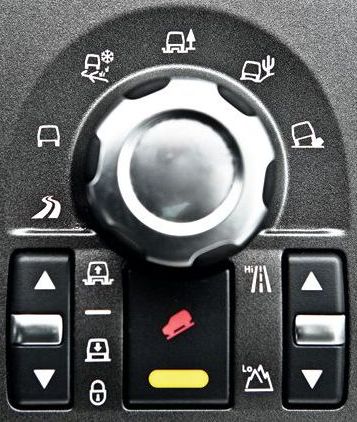 [/img]
*Disclaimer - I am neither an engineer nor a bike designer, so don't have a clue how/if you could make any of this work, but it just seems like a logical progression of existing technologies and a good idea, too!
klumpy - Member
More realistically, I noticed on my crosser that the big steerer bearing is the one on top, so expected tapered steerers to turn the other way up sometime soon.
would that not cause some problems with fitting the forks?
You just weld the frame up around the steerer! 🙂
Or, like the crosser, you have a straight steerer with the top bearing having a bigger external diameter. Which could have been done for the lower bearing on modern MTB's, with the added advantage of not rendering everyone's forks obsolete.
How did they not realise that at the time, the fools!!?
(And how did they not notice that they made the wrong bearing bigger..?)
CaptainFlashheart - Member
Well, the concept already exists/works in cars, so why not?
All they are doing with cars (assuming passive suspension) is giving the driver the option to do what cyclists can do already.
Paint the symbols on the fork top dials, if you like.
It might help the terminally unarsed to feel like they've had some input.
But changing to electronic adjustment only adds cost, complication and weight.
An automatic/fully active system would be amazing, but I'm not sure where we are in terms of packaging and technology for bicycles.
I'm quite happy with the way bikes have developed in the last 10 years. When I bought my last full suss trail bike in 2004 most of the bikes were either heavy and piss poor pedalling or too light and noodly with sketchy geometry and handling. There was also still a lot of compromise from long standing historic standards like QR s and weedy headsets etc. The market was a bit disappointing to be honest if you wanted a mid/long travel trail bike that could both climb and DH effectively and without falling to bits. Whyte 46 springs to mind as an example of a bike of that era that was a good idea but badly implemented. I remember all the positive reviews so I had a test ride. What a shockingly creaky, noodly piece of crap it turned out to be! You really had to look at some of the more forward thinking boutique brands of the time to find something half decent.
10 years on and I've just gone through the process of buying a new trail bike (after a couple of years off riding) and I was pleasantly surprised. Lots of choice of really well designed bikes from mainstream manufacturers. Not a spindly QR in sight and proper headset sizes. Not to mention decently stiff/light frames, sorted geometry and even wheel rim widths to actually match off-road tyres. Only slight disappointment was the familiar drivetrains, although I do quite like the 1x11 idea and chain slap is finally a thing of the past. So I think the development curve has been very positive, at least as far as full-suss trail bikes goes.
The future?
I'd like to see something new to replace the age-old rear cassette/mech/chain setup. It's always been a compromise for hard off-road use. Maybe enclosed belt drive with an effective gearbox, basically something very low maintenance that can deal with mud and still provide a decent range of ratios. I guess a Rohloff hub is about the nearest we have currently, but haven't tried one personally. Not bothered about electronic shift to be honest as I don't see shifting as the problem - more reliability in adverse conditions.
I think we'll be slipping into our brightly coloured spacesuits and peddling our space bikes out and landing on a passing comet where anyone will be able to clear a 2 mile gap jump no problem!!
Thing about chains is that they're efficient. Will take a pretty awesome gearbox to supercede them - will need to be al sorts of carbony stiffness and tech - and I wouldn't want to be an early adopter of that, either from a reliability or cost point of view.
The adjustbale tyre pressure thing that came out a while back fascinated me. A refined version of that - a bar mounted electronic dial to increase/decrease pressure/grip/traction) is the kind of thing that will sell.
More realistically, I think that Schwalbe's Procore is the development that makes carbon rims workable for harder riding - removing that risk of rim impacts/cracks, coupled with the price coming down with time.
With time, stuff like fork lowers and hub shells will go carbon too. Lighter and lighter, diminishing returns.
Direct drive
Maintenance free suspension
Puncture proof
Niche wheel sizes
[img]  [/img]
teamslug - MemberI think we'll be slipping into our brightly coloured spacesuits and peddling our space bikes out and landing on a passing comet where anyone will be able to clear a 2 mile gap jump no problem!!
First rocket uplift service on olympus mons, 14 miles of vertical descent. STW declares it too easy before it opens.
Regenerative rear hubs. Single battery charged off this for lights , gears , droppers ( standardised, yeah right. ) plugs for all you leccy goodies.
Meantime all the most fun will be on 120 / 140mm trail bikes , full suss or hard tail, 2x10 on dusty trails in the summer. Frames and forks from 2008 to 2014 will be well sought after.
Obesity will hit 80% nationally and 50% of ebikers will fall into this category.
Herts, Northants, Warwickshire, Staffs and Cheshire will have been ruined by HS2 and the old railway will be surfaced for riding with Boris bikes available at all former stations.
EDIT. Hang on, that's the alarm going off.
They will be less and less about perfect suspension performance and outright speed, and more about style and taste, like fatbikes/steel/retro/fully rigid etc etc are now.
I think we'll be slipping into our brightly coloured spacesuits and peddling our space bikes out
Space? Fair old climb that*
* Mint Sauce quote opportunity
Personally, what I really want is a fully mud-proof bike. And don't say singlespeed - that doesn't count.
How is the mud upsetting you, oh poorly Passatted one?
Surely a hub geared, Lefty and disc equipped machine isn't beyond your ken?
🙂
What we need:
-Get rid of all the flappy bit; derailleurs, cables, hose;
-Puncture proof tyres;
-Reduced maintenance;
-Less things to buy!!!
What we'll get:
-New 'standards' for increased stiffness,
-Bollox pseudo science;
-More gears;
-Less resistant materials;
-Electronics;
-Geometry shifting suspension;
-More things to go wrong;
-More things to buy!!!
Erm audiBike....got to be a fair few on here loving that. Surprised they haven't managed to stick some led's on it 🙂
[img]  [/img]
Here's my predictions for 2024:
SRAM will release another new groupset to "sit above X0" called SRAM -99. The cassette will be cost a grand and will be 1.3g lighter than X11. There will be 137 groupsets that sit above X0 and only two that sit below X0. X0 will continue to mirror XTR rrp.
Fox will decide that their damping system needs to be inverted again. The price of a fork will now roughly equate to a small hatchback and it'll still die as a result of one British winter.
Giant will suddenly announce a radical new head tube standard which will be stiffer and offer 325% increased gnar. It'll be the same 1.5" diameter that we all asked for in 2006, but with a proprietary headset that'll ensure no legacy forks, stems or frames will fit.
Specialized will roll out a new BB standard, this time with a 40mm axle. The bearings will be supplied by SRAM and will still die after one slightly damp weekend.
Shimano will persist with their 24mm external BB standard, but will grudgingly offer chainring sizes that most people can actually use.
In a shock announcement, Rochshox will adopt Plain English in their marketing literature, eschewing phrases like "colorway" and "murdered out" for something considerably less annoying. Rockshox sales will improve as a result.
Saracen will finally unveil a bike that someone actually wants to buy.
Hope's new cranks will be available to buy "next month".
What we'll get:
-New 'standards' for increased stiffness,
-Bollox pseudo science;
Have a look at the 1993 DH crash reel film if you want to be reminded of how far all this 'bollox' has brought us!
Surely a hub geared, Lefty and disc equipped machine isn't beyond your ken?
Beyond my current budget though 🙂 Mud upsets me by griding components down - my mechanical sympathies hate this. Give me a couple of grand and I'll build a Salsa El Mariachi with Rohloff and one of those plastic floating chain guards.
1. Electronic suspension
2. Electronic gearbox transmission
3. Advanced materials leading to lighter bikes
4. Improvements in rapid prototyping to allow customisation of components
Give me a couple of grand and I'll build a Salsa El Mariachi with Rohloff and one of those plastic floating chain guards.
Shan't.
🙂
Have you tried walking?
It's much cheaper and very therapeutic.
I'm a bit more relaxed about the gloop after embracing Deore.
It almost makes winter MTBing affordable again.
Hub gear next time though.
phutphutendWhat we'll get:
-New 'standards' for increased stiffness,
-Bollox pseudo science;
-More gears;
-Less resistant materials;
-Electronics;
-Geometry shifting suspension;
-More things to go wrong;
-More things to buy!!!
Look at what we've come from though, bikes are better in every way.
PJM1974
Here's my predictions for 2024:SRAM will release another new groupset to "sit above X0" called SRAM -99. The cassette will be cost a grand and will be 1.3g lighter than X11. There will be 137 groupsets that sit above X0 and only two that sit below X0. X0 will continue to mirror XTR rrp.
If you adjust for inflation my old Scott would cost about £550 quid today, so still little more than an entry level hardtail. So prices haven't gone crazy by any stretch, as much as we all might imagine they have. A super expensive Sram cassette might cost you £650 rrp in 20 years time.
With all talk of electronic thisandthat how would such projected gubbins fare in UK weather? We're hardly awash with belt drives and hub gears even at this stage of evolution?
Unless, of course, we don't buy to ride but buy to 'upgrade' - then design for obsolescence is the desirable outcome.
Have you tried walking?
It's what I do with my family 🙂
With drivetrains, it's not so much the cost, more the principle.
Malvern Rider - MemberWith all talk of electronic thisandthat how would such projected gubbins fare in UK weather?
If it doesn't work perfectly it'll be because of incompetent designers or manufacturers, not because of any inherent issue- waterproof electrical parts are pretty simple. Electronic mechs should be more powerful than cable ones, and there's no cables to fill with crap...
I think the only real issue with this stuff is expense. Mechs are disposable items and will always have to be, and making a £30 electronic mech won't be so easy.
making a £30 electronic mech won't be so easy.
Airlines for the win then.
As above, waterproof electronics aren't exactly a new idea and actually if you look at the way mobile phones for example are going, it's becoming easier and cheaper.
Besides Di2 has been around for some time and despite mtbers liking to think they're particularly rufty tuffty, road bikes get horribly abused through winter and in this country most of the summer. Road Di2 has managed absolutely fine with water and constant spray from tyres with no guards.
The trouble with all those future bikes is I want to ride my bike, not operate it or continually fettle it.
Basically all the technology is doing is making the bike a lot faster downhill with marginal improvements uphill.
Seeing as humans are not evolving exoskeletons, the greater speed means wearing more and more protective gear like a hurtling Manga warrior.
All that armour is going to suck on climbs.
Fatbikes are the current rebellion against increasing complication but will soon be recognised for the heavy and clumpy things they are and lighter 3 inch 'plus' sizes will be widely adopted for trail use.
Quite a few of these things will be automated. I'm sure there will always be a singlespeed techno backlash but the tech is giving a wide range of riding options to a wide range of people. Kind of how dSLRs let beginners take pretty decent pics.The trouble with all those future bikes is I want to ride my bike, not operate it or continually fettle it
Not really. A lot if is to make bikes that are better at all things. Downhill bikes that climb well. XC bikes that you can blast down on.Basically all the technology is doing is making the bike a lot faster downhill with marginal improvements uphill.
The trouble with all those future bikes is I want to ride my bike, not operate it
You will still have the choice then, as you do now.
epicycloSeeing as humans are not evolving exoskeletons, the greater speed means wearing more and more protective gear like a hurtling Manga warrior.
Or not. How long do you think it will take bikes to the point where weekend warriors will be as quick as World Cup DH pros? Simple answer is, never. Reflexes and bravery will be a requirement. Even if it was technologically possible it doesn't mean riders will suddenly disengage their brain, they'll have to use their discretion and moderate their own risk.
Guys (wearing a helmet and knee pads) on dh bikes at MSA and Windham are hitting 60mph so the bikes are already capable of potentially deadly speed. And you can walk into a shop tomorrow and buy one.
Having said that there'll probably be advances in armour, lighter, stronger, more reactive. Look at d30. How about a visco elastic polymer shorts, jersey, gloves etc etc
Mostly Balanced - Member
Fatbikes are the current rebellion against increasing complication but will soon be recognised for the heavy and clumpy things they are and lighter 3 inch 'plus' sizes will be widely adopted for trail use.
I'd agree with that, but push the tyre size out to 3.5" which would still allow a symmetrical 135mm rear build with a 68/73mm BB, ie allow use of normal components as much as possible. (Fat-lite?)
Advances in tyres such as tubeless and more TPI would improve rolling resistance and overcome any extra width penalty.
Mostly BalancedFatbikes are the current rebellion against increasing complication but will soon be recognised for the heavy and clumpy things they are and lighter 3 inch 'plus' sizes will be widely adopted for trail use.
I always thought that's what they were, and why they were popular, but full sus fat bikes kind of make a nonsense of that.
What future? If sea levels keep rising then mountains will become islands and bikes become pedal boats 🙁
For me instead of lots of electronic thingamys I'd be happier if they made components that lasted longer but then people wouldn't buy things so often so that's not good commercial sense.
Just keep an eye on what Surly are doing, they were first (or thereabouts) with production fatbikes and 29ers, and now they're pushing the 'plus' sizes in both 26 and 29inch variants.
The partnership between Surly and Salsa is both interesting and effective. Surly create the niche and a once it's established Salsa provide the bling for those who want a little bit more without Surly having to alienate it's core customers by moving away from it's 'steel is real' and 'bikes just for riding' corporate philosophy.

