UPDATE: Reviews section refreshed, redesigned, searchable: Go take a look
Perhaps we're better off not saying what MTB is and isn't because no-one should care what you or I might think it should be or what an accepted definition of this thing is.
For access reasons, and shared path use, you still need to define what is and what isn't a bike legally though. If you want cycling access/facilities to be greater/different to motorbike access. Which brings us back to how the lack of a limit on ebike power, and the ability to change the max assist speed limit on ebikes, are a threat to access and facilities for all ebike users, and potentially non-ebike users as well.
Sure, I didn't mean the legislative definition. We already have e-bikes that are 'mountain bikes' as far as the law goes, and I'm with you in favour of the way their output is used or measured being reviewed to curb what happens to MTB in general. My earlier points were about how limiting all e-bike motors (via test/legislation across the whole EPAC category) in order to limit e-MTB motors isn't a simple argument - limit e-bikes and perhaps you reduce cargo bike scope. In that respect a separate definition and test class for e-MTBs beyond the current EN test splits may be needed, plus cargo bike testing (I don't have the recent German cargo bike standard to hand which may already provide or support the separation - afaia the motor output aspect in that standard is all EPAC norms).
Edit to add, there's also the use classes that could be used to combine motor limits with intended use. That might be much simpler as you couldn't then make a bike that's tested and marked for genuine MTB use with excess power (i.e. peak power appropriate for a cargo bike but over sensible MTB use on ROWs) and sell it, at least not under GPSR.
OK, here is an alternative suggestion (yes, I'm still banging on about continuous power).
Let's change the regulations so that the maximum continuous power is actually maximum continuous power.
In order to do this the continuous power test from the electrical machinery regulation would be removed. There would then be a continuous power test included in the Bicycle regulation that was the same as the one currently used. The only difference would be that in order to pass the test the temperature would NOT be stable after 30 minutes, as opposed to the the temperature MUST be stable after 30 minutes.
This is a test of the motor only and the way it's designed means that you can't put clever electronics in place to game the system (I don't think). If you limit the continuous power it inherently limits the peak power that can be safely delivered (safely from the point of view of not damaging the motor). It would be up to motor manufacturers to figure out what compromises they wanted to accept.
As it stands at the moment there is NO limit on motor power. Lets try putting a limit in place (and I suspect this might have been the intention when the regulations were first written but something got lost in translation somewhere along the way) that still allows manufacturers to innovate and then we can see what happens.
If it then turns out we need new regulations to govern e-cargo bikes that can haul rider, bike, and 300kg of cargo then making separate regulations for this particular class of vehicle doesn't sound like the worst idea in the world to me.
one of the joys of mountain biking is the feeling of your body working hard, being pushed, having a limit that you can nudge at which is non negotiable. You can either hit that short, hard, technical climb/step fast enough to get over it or not. Which doesn't mean I don't enjoy descending, I do. Just that for me, the two come as a package. And I appreciate that other people would happily materialise at the top of a descent with minimal effort and roll down it.
Not too dissimilar - for me historically it was me and my bike getting out there and seeing what could be achieved - whether it was distance, speed, technical challenge or pure fun with my riding buddies.
I’m just glad that for now - I can still get out there and feel the joy of being with supportive friends. Whatever, we individually choose to call it - it’s given me another 6 years on the trail. I’ve not been mountain biking since the start of it all - but at 39 years of riding off-road, its been the vast majority of my 51 year life.
And I appreciate that other people would happily materialise at the top of a descent with minimal effort and roll down it.
I do see young, sometime teenagers, fit people riding them and think they are lazy bastards! I had to enjoy it the hard way until I got to 60! And I did bloody enjoy it.
“I guess for me, one of the joys of mountain biking is the feeling of your body working hard, being pushed, having a limit that you can nudge at which is non negotiable. You can either hit that short, hard, technical climb/step fast enough to get over it or not. Which doesn't mean I don't enjoy descending, I do. Just that for me, the two come as a package.”
Yes, I agree - apart from the non-negotiable bit. The equipment we use changes what it’s possible to ride up - I ran 1x10 11-36 for years and when I went to 1x12 with that big 50 tooth sprocket it made a particular climb possible. Likewise a full-sus can clamber up something that’s much harder on a hardtail, due to grip etc.
Nowadays I split my riding between my singlespeed and my ebike. I don’t get much time to go to other places where there’s lot of interesting climbs to challenge myself, so locally I’ve basically done every climb I can do on a geared MTB.
But there’s a whole load of climbs that are a serious challenge or that I have yet to do on the singlespeed.
Likewise, the ebike opens up a whole load of climbs that are impossible for me on an unpowered bike but are also really hard or as yet done on the ebike - the juggling of power from me, traction, steering and not wheelieing, getting over lumpy bits without being bounced off, etc.
If you’ve only ever ridden an ebike because of a health problem which meant you couldn’t ride it like you’d ride a normal MTB then I see why you don’t understand this and keep going on and on and on and on and on and on about how e-bikes aren’t real MTBs.
Well, at least we’re not at this point yet unless the madness of Stanton Bikes spreads!
https://www.bbc.co.uk/news/articles/cy8l1d221evo
Personally I can’t help thinking this is part of a much wider societal problem around behaviour, responsibility and how we interact with the world and each other. This ranges from problems like litter and dog waste to the frankly ridiculous 1700 or so people who die on UK roads each year, the vast majority preventable. The latter destroys a lot more lives than the 1700 too and it’s insane it still happens given the seriousness.
E-bikes fall in there somewhere and are just another part of modern life that are subject to humans, and the whims and selfishness that goes with them. We need to be better humans.
Just my thoughts, the 15 mph limit and the power of Bosch / Shimano motors is more than enough to add a lot of positives to mountain biking. Beyond that and people just can’t appear to be trusted not to affect other people and our environment negatively. Not surprising really, but a bit sad.
I agree. The current system provides bikes that are plenty powerful enough. Faster and more powerful e-bikes would cause more problems than it would solve (I get the idea of a higher power limit for bigger cargo bikes - but think that they should be in a different category).
I also think that speed and power restrictions should be applied to cars…
I’m more than happy with the current UK/EU speeds and restrictions in place. Any faster and I think you’d start getting the problems the yanks currently have with ebike hate. In the UK and Europe they’re widely accepted as just bikes because 15.5mph isn’t really that fast.
Yeah happy with current limits. Getting more concerned that sensible (and totally legal) e-bike owners will get impacted by the behaviour of the forever increasing number of derestricted (illegal) e-bikes and thoughtless users.
I think some people might be missing that there is no "current limit" for maximum power on an e-bikes. The DJI motor already delivers 1000w, and that follows the letter of the law... does a motor delivering 1200W? 2000W? 3000W?
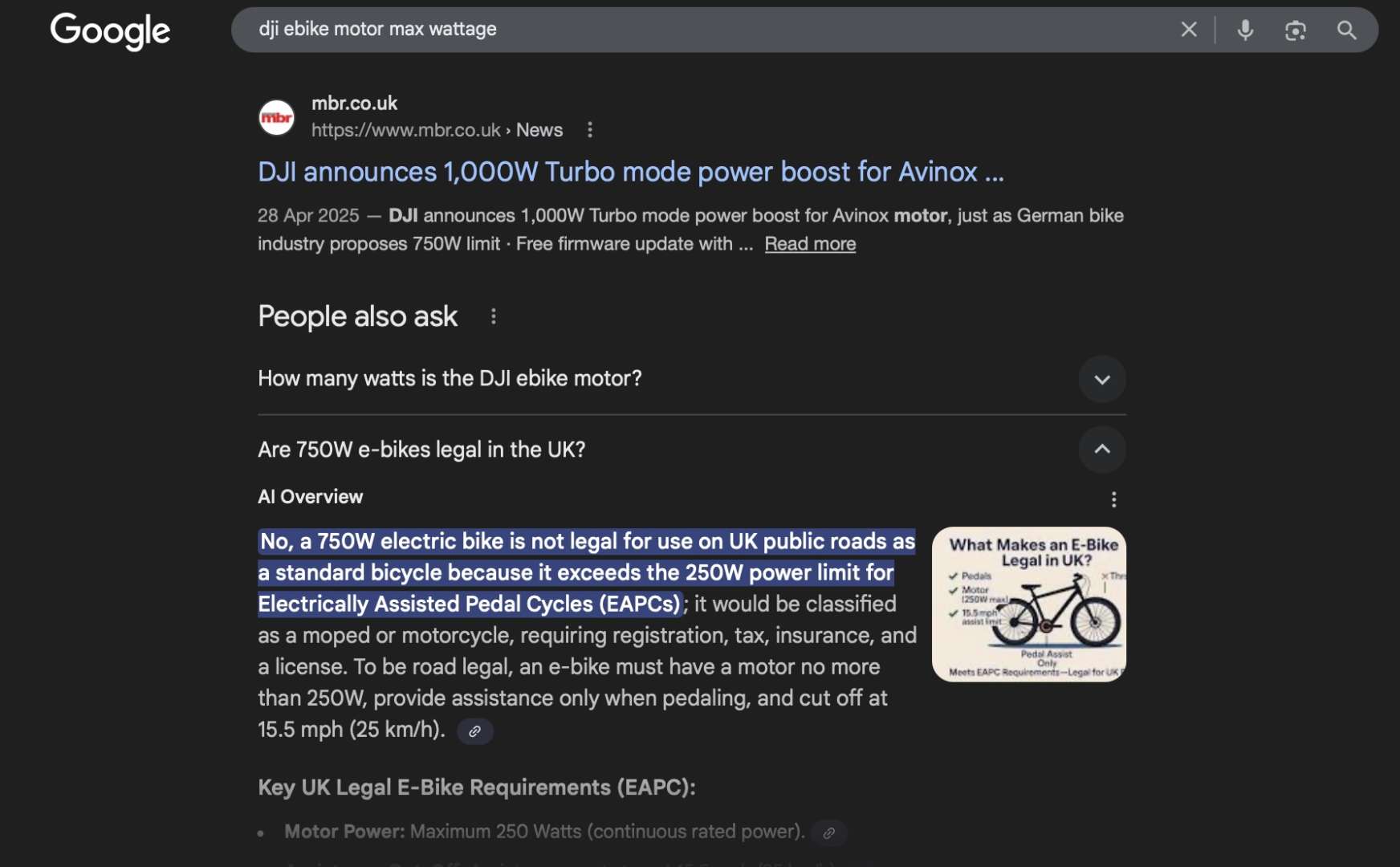
To be classified as an EAPC under the EAPC regulations[footnote 1], the cycle must:
- be fitted with pedals that can propel it
- have an electric motor with a maximum continuous rated power not exceeding 250 watts
- cut off electrical assistance when it reaches 15.5 miles per hour (mph)
EAPCs that comply with the regulations do not need to be registered, insured or taxed (Vehicle Excise Duty).
If an EAPC does not comply with the regulations, it is treated as a motor vehicle under the Road Traffic Regulation Act 1984 and the Road Traffic Act 1988.
a speed limit might be best, presumably a loaded cargo bike pulling a trailer will need more power to hold 15.5mph but only if the limiter can’t be chipped/beaten
- have an electric motor with a maximum continuous rated power not exceeding 250 watts
Yes, yes, but what about actual power delivery? You get that 600-700W is pretty normal, yes? And now we have motors that can deliver 1000W. Does the legislation prevent motors that deliver more? How much more? Where is the current limit set out? If there is no limit, what are the possible downsides of not having a limit?
This is just repeating everything already set out above... give it all a read.
Thing that confuses me about this 1000W power - surely most users will be chipping them to assist over the 15mph? Otherwise, apart from huge assistance up steep climbs, all you're really gaining is very fast acceleration up to the pedal assist limit? Just seems a bit pointless. Plus they are no more dangerous on the roads just because they accelerate quicker are they?! Or am I bring dopey as per?!
Having ridden with a DJI one and compared to a Bosch CX (600w) its a LOT faster up climbs. Its like the difference between a normal bike and an ebike.
But also, I think DJI have made it suspiciously easy to derestrict by using a VPN app on your phone. Its very hard to derestrict modern Shimano and Bosch systems by comparison.
Surely the power limit doesn’t actually matter that much if the bike is limited to 15.5mph and still needs to be pedalled to get the power (as in no throttle)?
Put it this way... if you could turn on a 15mph climb limiter on an motorbike, to be able to use it on cycle paths and trails with public access... how well would that be received by other path/trail users? What if everyone knew that for that motorbike switching off the climb limiter was a trivial job you could do from your phone?
Ignoring the 1000W of the DJI for a minute... what if someone brings a EPAC to market that delivers 8000W, but the assist cuts off at 15mph, and you have to turn the pedals to get the assist... clearly that would be making a nonsense of the category, wouldn't it?
It takes some seriously hard pedalling to get my Gen 2 Levo close to 15mph once you're heading up a reasonable hill and as it gets steeper there's no hope. So more power will make a difference off-road even with a legal cut-off. There's also the matter of acceleration - electric vehicles go from zero to fast very quickly and quietly, the more power, the more they surprise you. And off-road, the more power, the more trail damage. And if you can bypass the cut-out then that's an even bigger problem.
Considering how much faster that old Levo is uphill vs the same reasonably fit rider on a normal bike, I think this escalation in power levels not needed - and if no-one rode a bike with more than my Levo's power (which I think is about 600W - it's definitely a lot more than 250W) then I can't see anyone who's an actual MTBer wanting more. If you're an ex-MXer then you may have different wants, but wants that I don't think are compatible with the shared spaces and cheeky trails that is so much UK MTBing.
Someone pointed out how much more polarised the US ebike situation is and suggested that it's because their 20mph cut-out is so much quicker (in the real world in terms of relative speeds) than the European 15.5mph one. I think that could be a good point.
Someone pointed out how much more polarised the US ebike situation is and suggested that it's because their 20mph cut-out is so much quicker (in the real world in terms of relative speeds) than the European 15.5mph one. I think that could be a good point.
I've said it a thousand times before, not that anyone listens. Just make ebikes give assistance to speeds that an average MTB'er can ride to - 20mph on the flat would probably do just fine.
Mine are deristicted (no secret) - not because I want to blat around at 30mph on the flat, or 20mph uphill that everyone else crawls up (I spin the same gear uphill as a normal bike, just a tad quicker and a fair bit easier) Simply because the 15mph cut off is bloody annoying.
Here's a thought - shouldn't be hard to build in an inclinometer. Restrict them uphill, anything over a few degrees.
The speed limiter doesn't have any effect on downhills, sensible speed on the flat, limited uphill. Job jobbed
Give me a break. Just buy a SurRon . 20 mph on the flat is a niche ebike.
Most ebikes are used as commuter tools. I'd guess 95% If you get caught here with that it's a lot of fines and a crushed bike, and that's the right thing. 20 mph on the mixed use paths where the vast majority are used is no a sensible speed.
20 mph on the mixed use paths where the vast majority are used is no a sensible speed.
Fine, no problem with that. It is possible to slow down though you know.
If 20mph on the flat isn't acceptable, I think we should start restricting normal bikes to 15mph. Happy with that?
20 mph on the flat is a niche ebike.
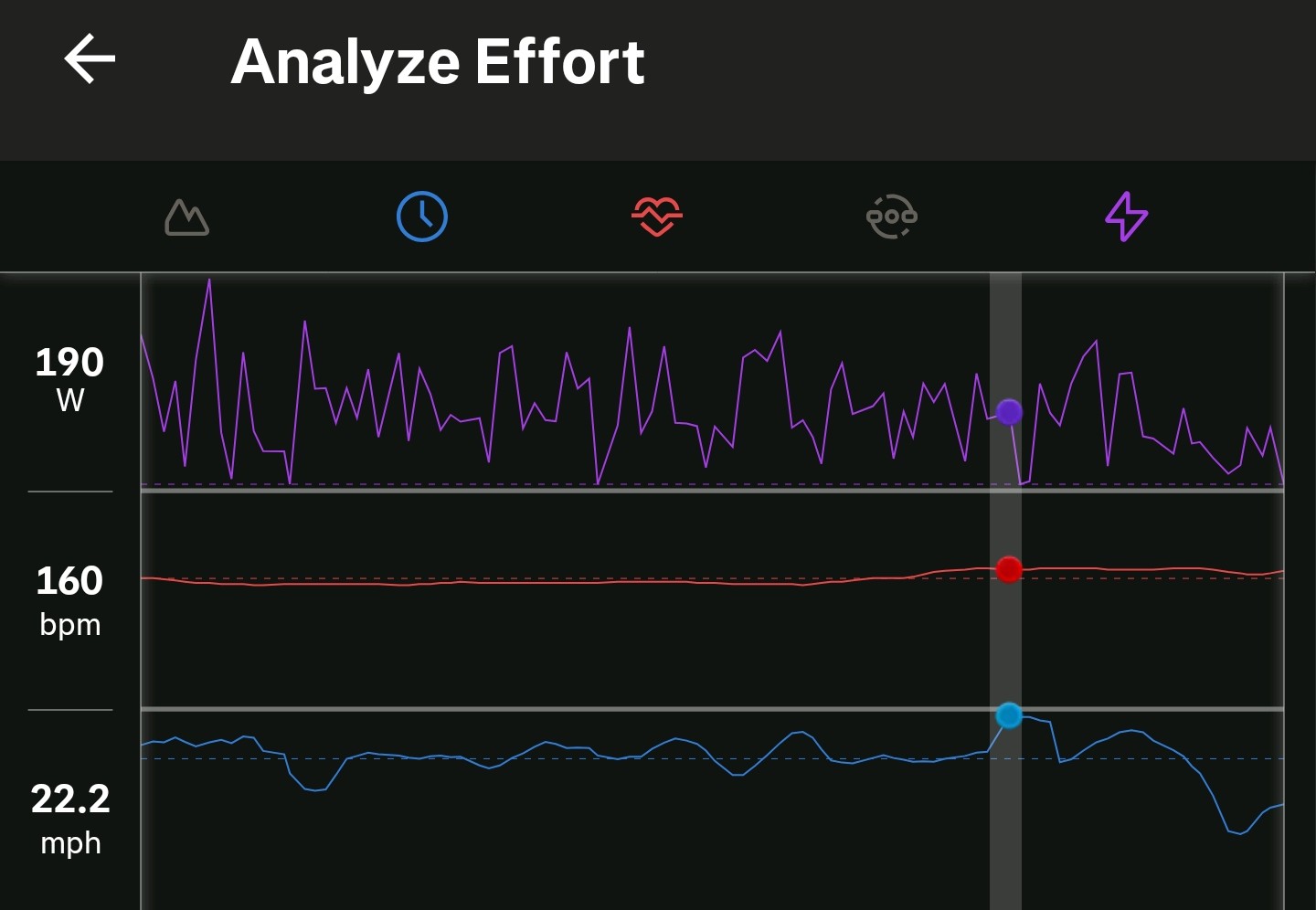
Flat gravel 'shared path', end of a ride, last leg home, not particularly fit, slightly fat, smoking biffer not trying 'that' hard, average speed 18mph, max 22mph on a niche....gravel bike.
I'm not sure how fast you actually think 20mph is
20 mph on the mixed use paths where the vast majority are used is no a sensible speed.
Fine, no problem with that. It is possible to slow down though you know.
If 20mph on the flat isn't acceptable, I think we should start restricting normal bikes to 15mph. Happy with that?
Normal people on normal bikes barely do 15mph on the flat. It's clearly a long time since you've ridden a proper bike so I'd suggest trying it. Riding a normal mountain bike with modern grippy tyres at a sustained 16mph is hard work but worth it if riding with ebikers to make them suffer too. Even for roadies 20mph requires quite a lot of effort.
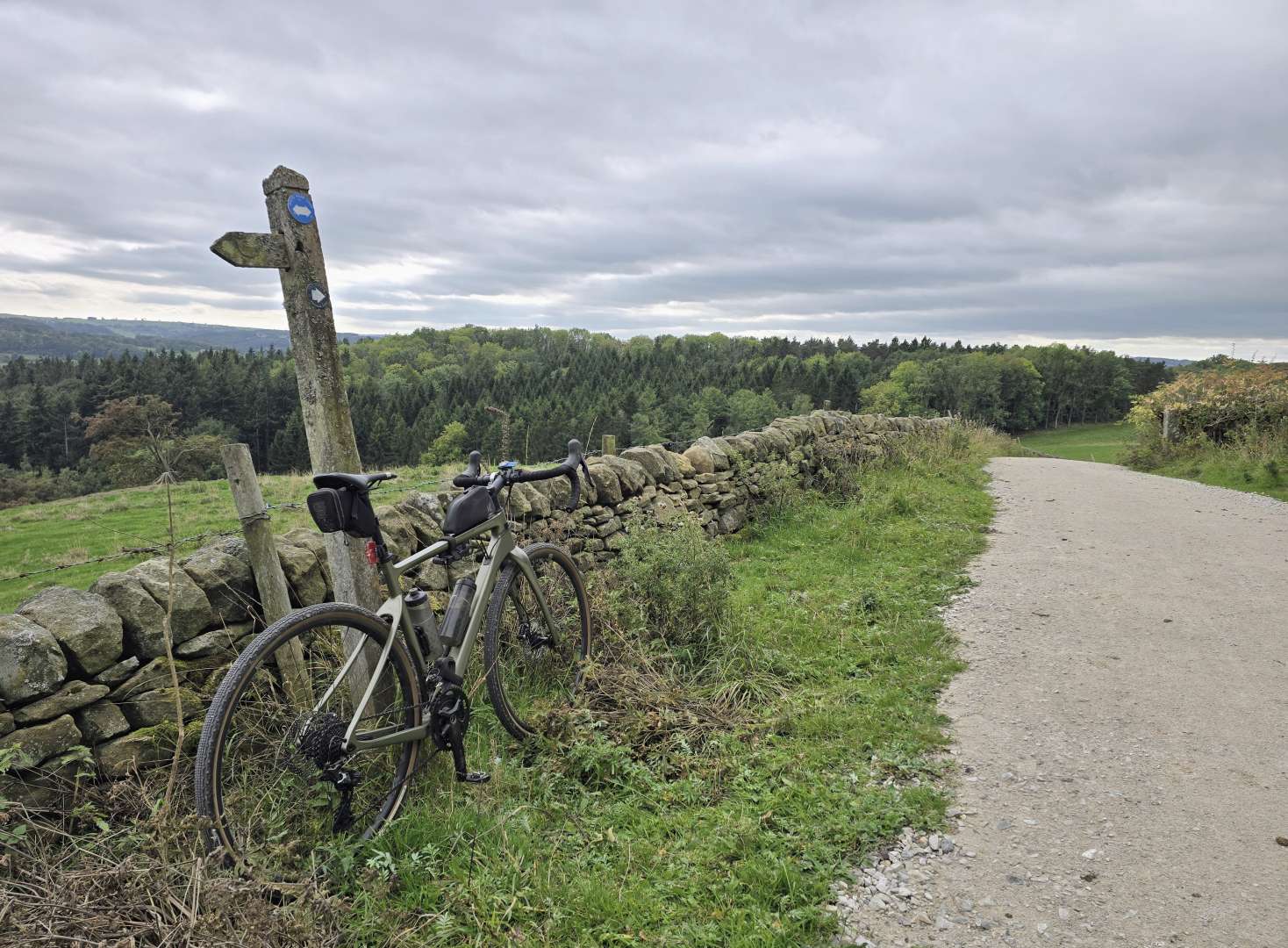
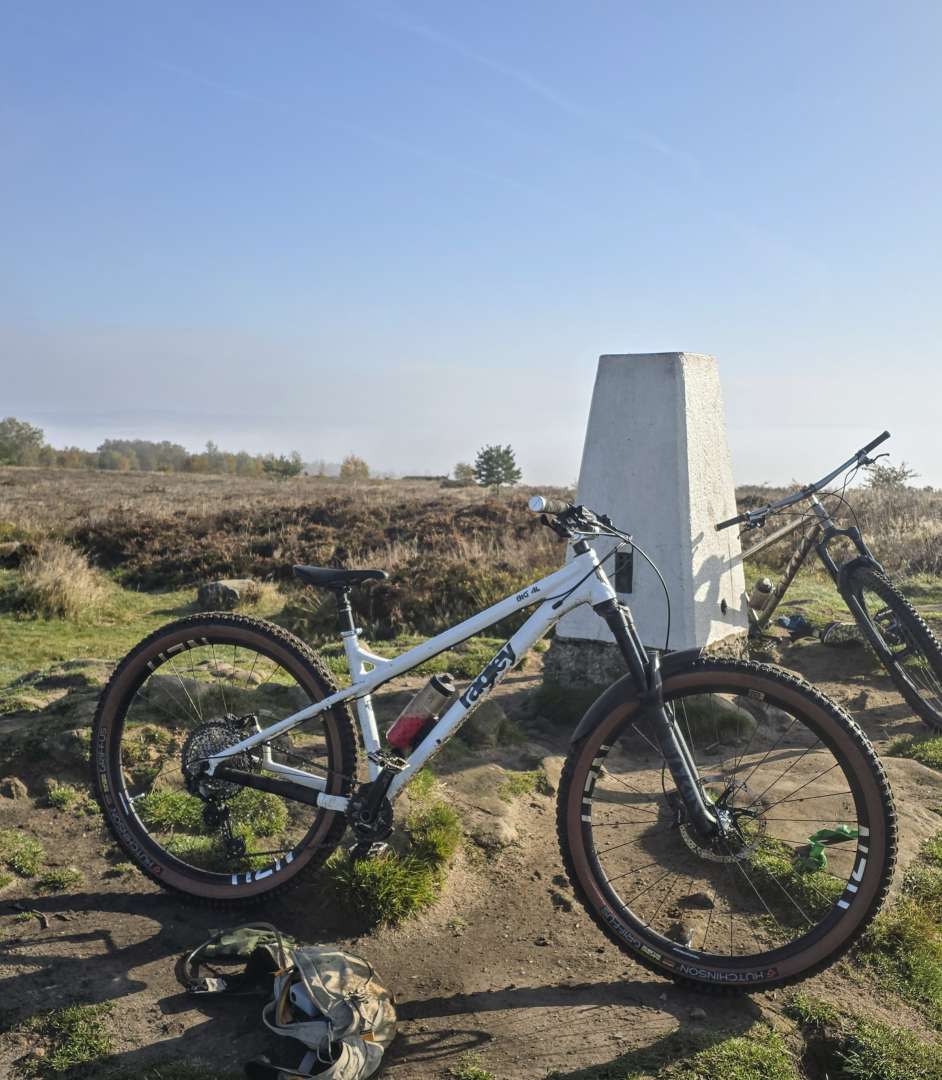
not trying 'that' hard
Your HR is 160 bpm. I don't know what your zones are, but it looks like you're disproving your point of 20 mph being easily achievable.
not trying 'that' hard
Your HR is 160 bpm. I don't know what your zones are, but it looks like you're disproving your point of 20 mph being easily achievable.
Ok, I was trying a bit.
Regardless of how much effort a not particularly fit me put in, the KOM on that section is average 25mph/max 27.5. The top 10 are all above 23mph average
I’m not sure of the argument here? If 20mph is so easy to attain and hold for any duration they why do we need even is in the first place? And if they do need to exist then the 15mph limit is surely fine as you can ride up to that limit and just give it a little nudge to get to 20 and be on your merry way
I’m not sure of the argument here? If 20mph is so easy to attain and hold for any duration they why do we need even is in the first place? And if they do need to exist then the 15mph limit is surely fine as you can ride up to that limit and just give it a little nudge to get to 20 and be on your merry way
Need is a relative term. The same sort of argument is often used against 20mph speed limits in Wales. People give reasons why some times it is inappropriate to have a 20 limit because they could safely go faster or whatever… that the exceptions prove the rule and that driving at 20 is annoying and frustrating. But they miss the point. It’s not about you and what you can do, safely, fairly, whatever. It’s not about your need as an individual. It’s about everyone else, the community in general.
Raising the cut off speed on e-bikes would be bad for the community of people who use shared use paths. It would subject them frequent encounters with faster more dangerous cyclists on heavy bikes. Yes people exceed that speed on bikes, e or non e. But not that often and only in some circumstances. Raise the limit and high speed encounters would be the norm and not the exception. The walking, cycling, scooting, running, playing environment would be the worse for it… and cyclists would be even less popular than they are now.
I’m not sure of the argument here? If 20mph is so easy to attain and hold for any duration they why do we need even is in the first place? And if they do need to exist then the 15mph limit is surely fine as you can ride up to that limit and just give it a little nudge to get to 20 and be on your merry way
Have you ever ridden an ebike?
"I've said it a thousand times before, not that anyone listens. Just make ebikes give assistance to speeds that an average MTB'er can ride to - 20mph on the flat would probably do just fine."
Yes, it's possible to pedal even a chunky tyred ebike past 15mph but it's bloody hard work getting it to 20 and holding it there for a good length of time without gravity or a tailwind helping - I know, my old commute involved a lot of this on my ebike. And if you've got the bike fitness to ride a bike that fast without help then there's a reasonable probability you've spent enough time on a bike in shared spaces to have reasonable bike handling and road/people awareness skills.
Let every ebike run to 20mph and anyone with zero bike riding ability can hop on and cause even more chaos than on a bike doing 15mph. The extra speed is more likely to surprise pedestrians etc, there's less time for decision making, longer braking distances and almost twice the kinetic energy to dissipate (possibly with squishy human crumple zones) in the event of a crash.
We've all seen inconsiderate roadies at some point trying to cane it down a shared cycle path a 20+mph, and we know it's rarely a good idea. We don't need every ebike doing that, it's bad enough with all the illegal food delivery ones!
Probably a moot point regarding speeds anyway, as I can't see the law getting changed any time soon.
In the mean time, I'll carry on riding my Levo with no restriction and probably get a DJI powered bike next. It just makes the bike far more usable.
Just for the record - my fastest ebike time along the (almost identical) segment I mentioned earlier is quicker than my gravel bike, but slower than the faster meat riders on there.
Several posts and a few hundred words trying to justify why you chip your e-bike in contravention of existing legislation and ride on public trails, because your ‘needs’ are more important than other people’s safety and preserving access.
If 20mph on the flat isn't acceptable, I think we should start restricting normal bikes to 15mph. Happy with that?
You don’t have a robust argument so obviously felt like a little whataboutary.
because your ‘needs’ are more important than other people’s safety
If you could kindly demonstrate where I've personally compromised anyones safety with my chipped ebike I'm all ears. Thanks
You don’t have a robust argument so obviously felt like a little whataboutary.
So is in excess of 20mph on a normal bike competely safe and a suggested limit of 20mph on an ebike unsafe? Please define the difference.
How fast have you actually ridden your MTB including DH on public trails - be honest?
So is in excess of 20mph on a normal bike competely safe and a suggested limit of 20mph on an ebike unsafe? Please define the difference.
Tell me your ignoring simple physics without telling me.
Any bike can be ridden unsafely, but the consequences of doing so on a bike with more mass is much more serious.
If you could kindly demonstrate where I've personally compromised anyones safety with my chipped ebike I'm all ears. Thanks
I’m sorry, I don’t have any video. That’s a ridiculous requirement to be honest.
How fast have you actually ridden your MTB including DH on public trails - be honest?
Over 30 MPH on the public road at the end of a trail in Morzine. Specifically on UK trail centre XC trails, less than 25 MPH.
Typically in my non-disabled fitter days, on woodland multi-use trails I averaged around 18.5 MPH on a 15-20 mile loop. There wasn’t much people traffic in the early mornings.
Never raced DH, but had multiple uplift days in Scotland and Wales where I used specific MTB trails on trail centres and on private land. I didn’t measure my speed - I didn’t use a cycle computer or GPS.
Even on trail centre cycle specific trails, I have never been in the habit of going as fast as I could whenever I could. Even before my disability it would be a an outlier if my average speed reached 15 MPH.
Hilariously, in the mid-90’s my Cateye computer registered over 450mph - something tells me that was an error…
I’m all for moderating your speed on multi-use trails. Consideration is king.
because your ‘needs’ are more important than other people’s safety
If you could kindly demonstrate where I've personally compromised anyones safety with my chipped ebike I'm all ears. Thanks
You don’t have a robust argument so obviously felt like a little whataboutary.
So is in excess of 20mph on a normal bike competely safe and a suggested limit of 20mph on an ebike unsafe? Please define the difference.
How fast have you actually ridden your MTB including DH on public trails - be honest?
The fact that you can ride a non e-bike fast in some circumstances does not justify raising the cut-out limit. Those fast speeds are outliers in any dataset of bike speeds. Most of those outliers occur away from the location where the e-bike limit is of most importance and most bike speeds will be significantly lower than 20mph. If you raise the cut-out limit, then e-bike speeds will increase everywhere (and all the time) and will make the shared use environment more dangerous and intimidating and will exacerbate tension and dispute.
You may well not have endangered anyone. But again, that is no argument for allowing everyone to derestrict their bikes or raise the limit.
You can explain why you chipped your bike and why you have not directly endangered anyone in doing so… but, aside from making no difference to the legality riding a chipped bike, that explanation does not transfer into a justification for raising the limit.
Normal bikes self regulate as it’s really flipping hard to ride at 15mph for any length of time for most people off road, let alone 20! I did an xc race at the weekend, 4 laps, 400 meters of overall climbing over an hour, managed a mighty average speed of 8.5 mph according to my garmin, seems I need to train more.
Heres a question, what magical nirvana would be achieved by upping the cut off to 20?
that explanation does not transfer into a justification for raising the limit.
People who chip their bikes, they don't need to justify it... like speeding in the car, you do it cos you can, and you're unlikely to get caught. Even more so with the bike thing. And it's never dangerous... til it is.

