Yup, it's just the terminology- the bike squats but the swingarm jacks up, it's the same thing viewed from 2 different locations. TBH most people couldn't care less, they just notice the bike acting differently on the brakes. And even then that's not necessarily anything to be [i]bothered[/i] about. It's a bit like declaring anti-squat on pedalling to be right or wrong
Brake squat is quite straightforward. If you lock out the fork and only brake with the back brake, a bike with 100% brake squat will stay level. If you have more than 100% brake squat the back end will squat down. If you have less then it'll rise up. If you draw a line from the rear tyre contact patch to the pivot point and it's at 45 deg to the horizontal the bike will have 100% brake squat. If it's steeper you have more than 100% brake squat, and shallower you have less than 100%.
On a single pivot bike the pivot point is obvious. On a 4 bar (short link or Horst link) if you draw two lines, one through the upper pivots and one through the lower pivots, where they cross is the pivot point. Generally Horst link bikes project the pivot point further forwards so have less brake squat than short link (VPP etc) designs.
The brake squat on the tons of linkage driven single pivot bikes is no different to on a simple single pivot with the pivot in the same place.
If there's a problem with simple single pivot designs it's finding a way to drive the shock from the swing arm without suffering a falling rate.
Falling leverage rate:
[img] 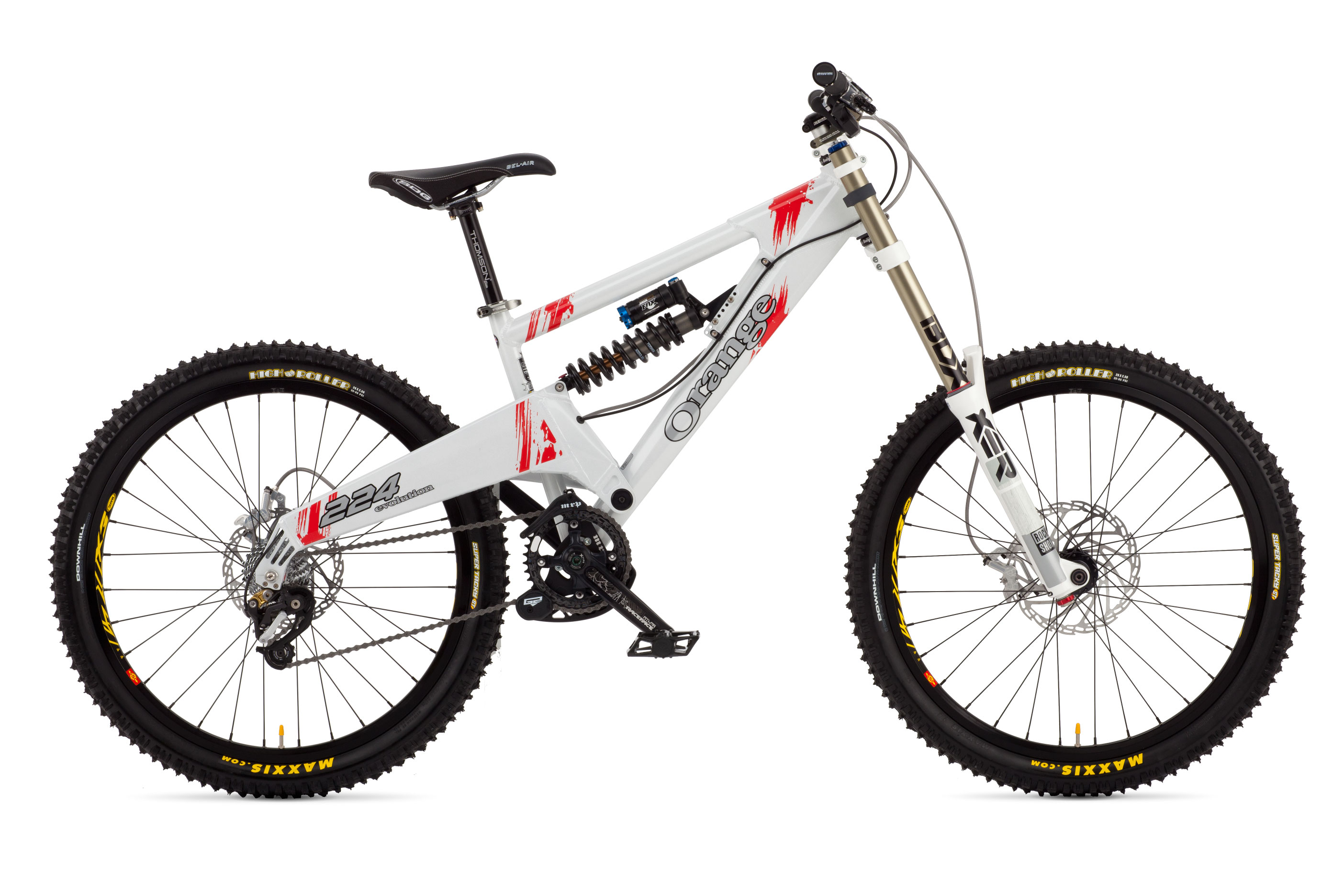 [/img]
Constant leverage rate:
[img] 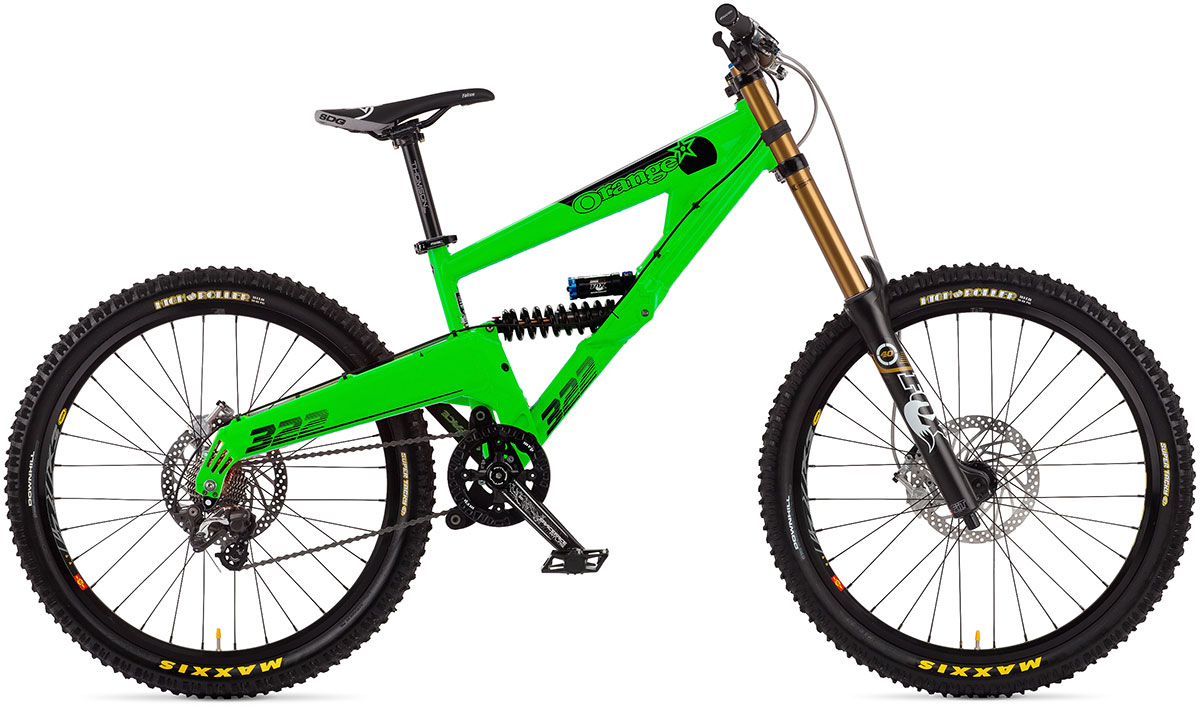 [/img]
and the best part about it when the bearings in the pivots go its just £4 from the local engineering shop around the corner , not 2 weeks down time while the LBS sources then parts , or a full day rebuilding.
I think it took under an hour to do my last set of rocker bearings, and as that is the only set in 3 years that have failed it's not really an issue is it. Are you exaggerating for effect?
On brake jack my old hecklers did it and after a chat with Tracy M about that long brake arm on the old kona dh bike learned to use it for good, if you could catch it right you could use it to squash the bike low into corners and accelerate out of them.
Mikewsmith.. Just experience at trying to get parts from a dealer
I would say it's not exactly representative, I can't remember the last time I had bearings that were not standard off the shelf items. In 6 years I only ever did 2 bearing changes in my old Enduro frame and it was ridden into the floor.
With and FSR/VPP, you may be able to achieve a slightly better brake jack and axle path, but this comes at the cost of more complexity, bearings (maintenance), flexibility and weight.
With clever design, and modern shock technology the compromises for a single pivot are less than they use to be. With good design or a shock yoke, the shock curve can be progressive. Modern shocks can work well with a linear curve anyway. Chain forces, anti-squat/rise can all be optimised with a single pivot.
Personally, I think the main reason single pivots are considered defunct is that companies were forced to have a differentiator in order to sell their bikes. A new suspension design is a selling point.
Some of you who like the latest and greatest and will always want pivots and acronyms. I want the best bike, regardless of how many pivots it has. And personally I favour simplicity over complexity.
Loads of linkage bike are single pivot anyway. Gwin didn't do too bad on a single pivot Trek Session!
I think these new metric shocks may help because they fit more stroke in less shock length, and (if my brain is working right) having the fixed end of the shock on the inside of the circle whose centre is the main pivot and outside is the moving end of the shock, means you get a progressive rate whilst if it's on the outside of the circle you get a falling rate. If you picture how you package a shock within the front triangle, there is much less space for a more downwards pointing shock (within the circle) than a more horizontal shock (outside the circle), hence why often single pivot bikes have a falling rate.
The easiest way to understand the leverage nature of a single pivot is to consider the line from the main pivot to rear end of shock. Then consider a second line along the length of the shock. The angle between these two lines at mid-shock-stroke, is an indicator of leverage ratio.
If the angle is 90°, you'll have the stroke linear and constant (within small tolerances).
If the angle is greater than 90°, you'll have a falling shock ratio, i.e. softer at the end of the stroke.
If the angle is less than 90°, than you'll have an increasing shock ratio, i.e. 'progressive' in modern terminology.
You can see this clearly on the picture of the two 224s posted before.
However, air and coil shock have their own spring rate that affects the final behaviour. A coil shock has a relatively constant spring stiffness through it's curve. Whereas an air spring stiffens up as you get to the end stroke.
So a slightly falling rate on the frame may result in a linear rate when combined with an increasing rate air shock.
Considered one of the best bikes you can buy, single pivot doesn't hold back the glowing reviews.
[img] 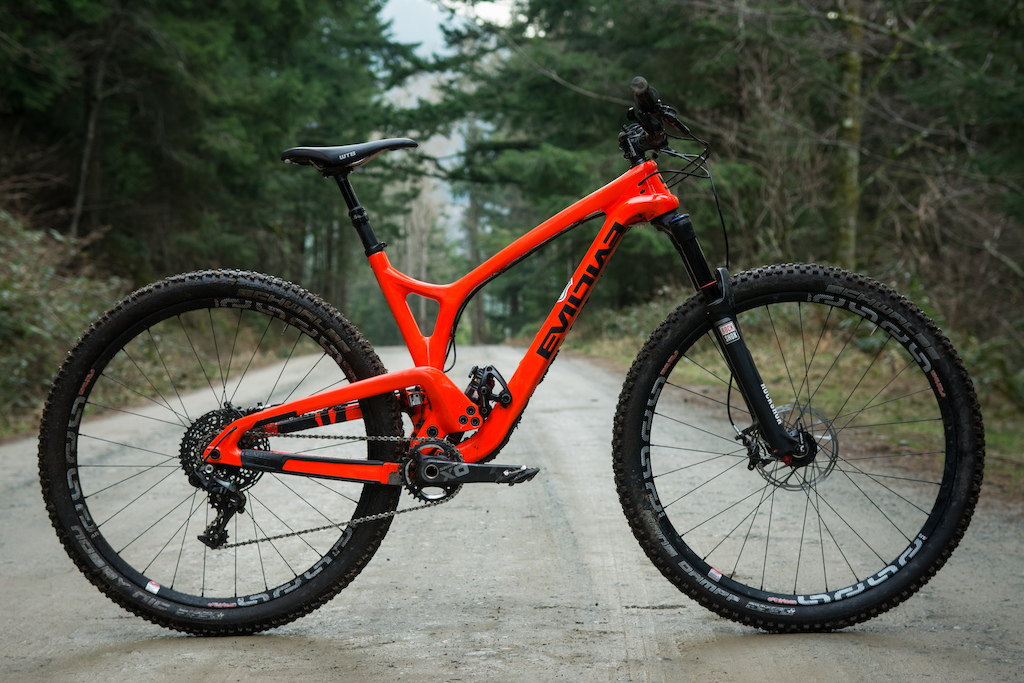 [/img]
I would have said given the recent developments in shock technology, owning a single pivot has never made more sense. I'd have another as a winter bike, with a good shock the only real downside is brake jack and squat. If you ride fast enough, none of that matters. (I do not ride fast enough).

