Only 5% overtly against the idea. But where are we at with the Trails For Wales campaign?
Cycling UK:
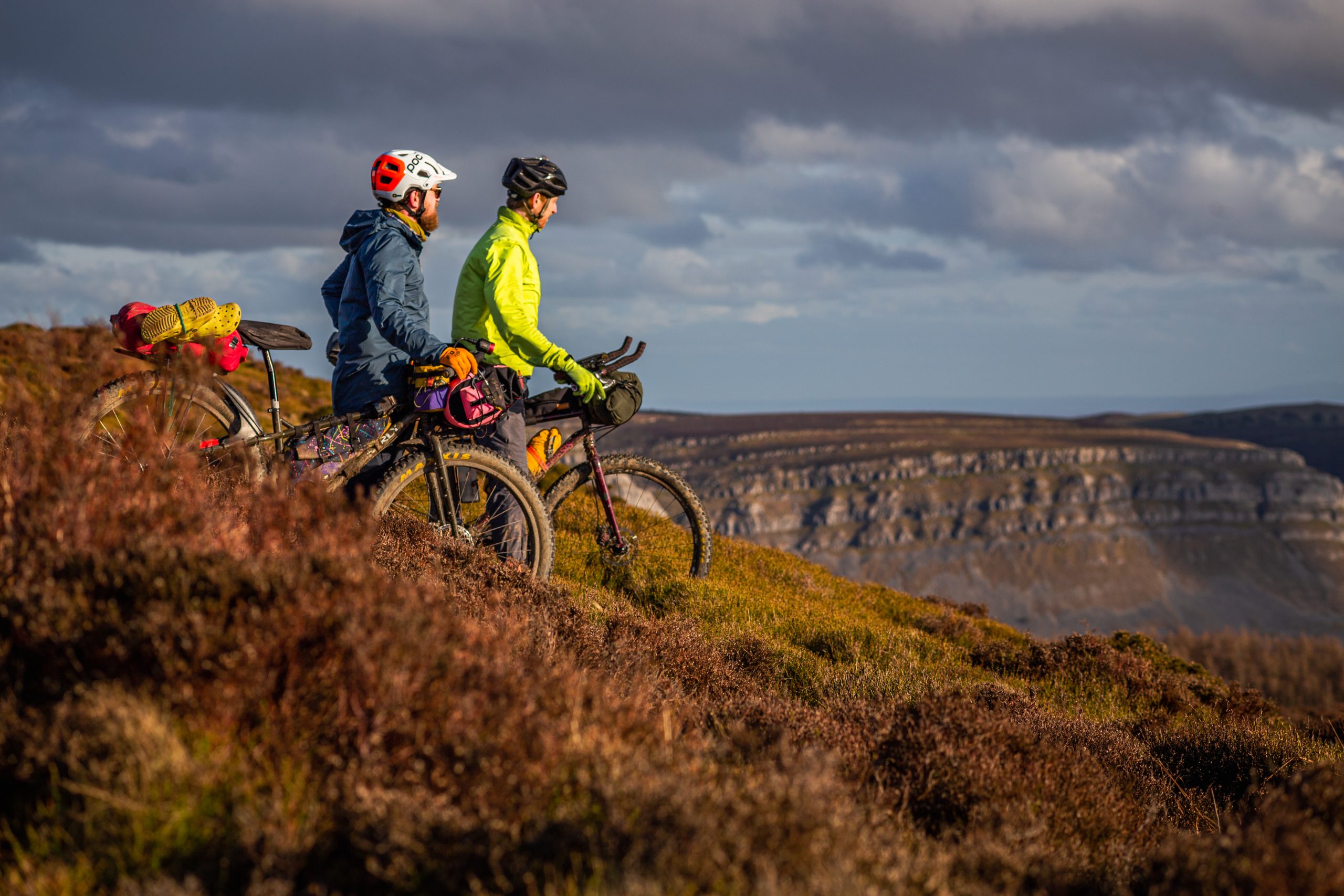
A staggering two thirds (67%) of Welsh residents have stated their support for improving people’s access to the countryside, with only 1 in 20 (5%) opposing the idea. This is according to new YouGov research commissioned by the national cycling charity Cycling UK, ahead of May’s Senedd elections, signalling a significant show of unity across the country.
From North Wales (68%) to the South West (64%), from those that speak some Welsh (77%) to those that speak no Welsh at all (62%), from urban residents to those living in more rural parts of Wales, people across Wales overwhelmingly support greater countryside access. Support peaks at 77% for people who speak some Welsh, with the lowest figure being 58% among people aged 65+. Opposition remains strikingly low across every demographic group surveyed, not exceeding 10% in any segment of the population.
The findings reflect More in Common’s recent research which revealed that love of nature and green space is one of the few things that brings people together across politics. Over 3 in 4 (78%) of those aged 16 to 30 backed expanding access with support holding firm across every socio-economic background, with an average of 2 in 3 (66%) working-class and professional communities (routine 64%, intermediate 65% and higher 69% socio-economic classification) in favour. Even in rural Wales, almost two-thirds (61%) of respondents supported improved access.
While three National Parks cover 20% of the land area of Wales, not everyone can easily reach them without using a car. Cycling UK argues that by improving cycling and walking access to the countryside as a whole, not just national parks, more communities will benefit, with local economies also given a boost.
The findings come as countryside access has proven to deliver huge economic benefits as well as environmental ones, creating significant job opportunities and adding more to the economy. The Economic and Social Evaluation of the Outdoor Activity Sector in Wales, published in 2023 that the outdoor activity tourism sector contributes a total net impact of £1.6bn annually and supports 31,278 jobs (21% of all tourism jobs in Wales).
Recognising the importance of access to nature, in 2023, Cycling UK launched Traws Eryri, a multi-day route that runs for 122 miles (196km) through the wilds of Wales, connecting Parc Cenedlaethol Eryri (formerly Snowdonia National Park), with the Mawddach Estuary, the forests of Coed y Brenin and Gwydir, and remnants of North Wales’ slate mining heritage.
Separate survey data collected by Cycling UK along its King Alfred’s Way route in 2020 demonstrated that on average each person riding the route spends £107.61 per day, when adjusted for inflation, on food and accommodation. The charity also found that cycle tourism spending in the UK generates £520m per year, with 1.23 million overnight trips made each year. As a member of the Outdoor Alliance Wales, a coalition representing the outdoor sector in the nation, Cycling UK has backed calls to address the increasing disconnect between Wales’s population and its natural environment.
Cycling UK’s manifesto recommendations:
- Increase investment in active travel to at least 10% of the total transport budget within five years
- Safer roads for everyone
- Public health and access to green spaces
- Increase transport choice and connectivity for all
What’s happening with Trails For Wales?
Trails For Wales is/was essentially Cycling UK’s campaign to get Scottish-style cycling access introduced in Wales. We hadn’t heard anything about the campaing for a few years now and when we asked Cycling UK replied “Unfortunately we don’t have any updates on that campaign as such at the moment.” Which is not much of a surprise but still disappointing (non) news.



Having moved from Yorkshire to the Welsh Boarders it surprised me how little access there is to the land
Less footpaths etc?
I’ve always had the thought that the enlgish/welsh model of access works well for densely populated area, less so away and the opposite for the scottish model
mmm… I always go back to a Football365 trope about headlines, “if the exact opposite would make a better headline, what’s the point of the story?". Like yeah, when presented with “do you want more/ less access to the countryside", who’s going to say “actually, I want less access to the countryside". Coupled with mentions of YouGov and More in Common, the whole thing smacks of a lightweight publicity campaign that doesn’t stand up.
That said, I’m very interested to read about this issue. A much better approach by Cycling UK would be to present people with a choice “would you like more access to the countryside if [insert tradeoff]". That then provides results that are actually meaningful and actionable.
The Scottish model also works around Edinburgh, Glasgow and other towns and cities. It’s not exclusive to the less populated areas. I can’t therefore see a reason why it wouldn’t work in Wales and/or England. However, as I’ve commented previously, I think the increased number/power of ebikes might mean that the horse has already bolted when it comes to increased access rights in W&E.
Jump in your time machine and let them know.
So 67% want better access and 5% own it (or are directly employed by those that do as IIRC slightly under 1% do the actual owning)?
100%. An adapted version of the Scottish model could work. The only reason it won’t happen is opposition from property owners. If it was to happen, it would need investment into information provision, education and enforcement… but we badly need that already.
Footpaths either blocked purposely by landowners or just completely impossible to get down due to been so overgrown/ fallen trees etc (very little use). They also have styles every friggin 100 metres or so it feels
Useable BW’s are almost none existent.
For ref. I used to do a lot in Surrey on foot and bike, and live in Norway. When I moved to Norway I was surprised by how few paths there were, but it’s a big place with a few people so that access model falls over a bit. When I look back at Surrey I realise how well the system of footpaths works and guaranteed access worked, but a Norsk model would mean a lot less access as a lot of the right to roam is proviso’d for farmland, grazing, gardens etc.
It was really dependent on the local councils when the various access laws were passed.
When I lived in Essex we had plenty of footpaths but not much else. In Herts there is a reasonable mix of footpaths and bridleways but some suspiciously empty areas where some influential people lived.
There are then all those areas where once you cross a parish/county line a footpath becomes a bridleway and vice versa which makes absolutely no sense if it was based on historical usage. There might be some special cases where the use of horses stopped at a village but people walked on for a bit but when I am in the middle of a field it really doesnt.
The Ridgeway is a good example. I am not overly convinced that in the past people stopped once they hit a certain area and abandoned/carried their horses.
The way definitive rights of way were mapped after the 1947 town and country planning act was by civil parish wasn’t it? 🤔 I think that’s why these discrepancies exist, or sometimes a path on the map just stops in the middle of nowhere?
And in the Welsh Boarders we have a similar but different issue
The area is littered with no longer used riding stables. It used to be so quiet here the horsey people used to just ride on the roads/dirt tracks so there was never any need for Bridleways
In the last 50 yrs or so most have shut as there is no where safe left to ride your horse.
Its well known locally at JFK used to ride around the local lanes, stop at the local pub before heading back to the manor house
What I don’t understand is why proper wales / snowdonia has very few decent BWs
I am not sure at what level it was decided but yup it was reasonably local hence these weird anomalies.
Not sure those sheep would appreciate the idea!
So the group who are least in favour are the over 65s…. “We aren’t using the countryside as much so neither should you"
%of the population who actually own the land is a terrifyingly small number which I think is the major issue