When Alpkit went into administration back in January, plenty of us feared the worst for one of Britain’s best-loved outdoor brands. Six months on, it’s set out how it plans to rebuild – and it’s a good deal more reassuring than that winter headline suggested.
Alpkit today confirmed the shape of the restructure that follows the investment which rescued it in January. The short version: new leadership at the top, a deliberately simpler business, a tighter Sonder bike range, and a store estate that comes through largely intact.
Start with the shops, because that’s where the human story sits. Of Alpkit’s ten UK stores, two – Inverness and Ilkley – will close later this summer. The Kingston store is set to relocate to new premises in the same area, and the remaining seven stay open and get money spent on them: refreshed layouts, locally curated ranges and better merchandising. The company says it’s still on the lookout for new sites, too. For a brand that was staring down administration six months ago, keeping seven of ten stores open and reinvesting in them is not a bad outcome at all.
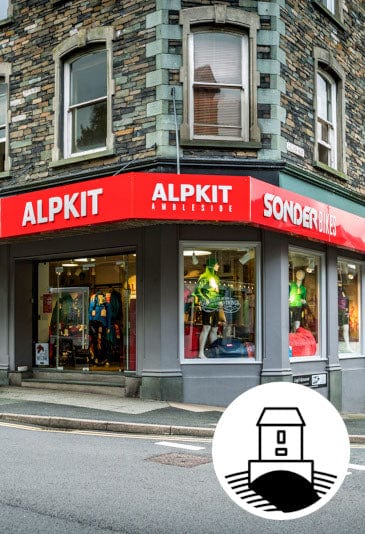
It won’t feel that way to everyone, though. Two closures means real uncertainty for the teams at those shops, and that’s the sober note beneath an otherwise upbeat announcement. Our thoughts are with the staff affected.
On the money and the boardroom: the investment came in January 2026 from entrepreneur Jeroen van den Berge, who has since taken the role of Executive Chair alongside Alpkit’s original founders. “The decisions we’re making today are about taking lessons from the past and building a stronger business for the future,” he said. “We’ve focused on what Alpkit does best, creating a business that’s simpler and financially stronger.”
For Sonder, the bit closest to home for us, the plan is to concentrate on its strongest adventure bikes and retire the lower-volume models, freeing up investment for new metal. There’s “an exciting new gravel bike” promised for later this year, which we’ll be keen to throw a leg over. Elsewhere, Alpkit launched its first footwear range earlier in the year, rounding out a genuinely head-to-toe kit list.
Co-founder and MD Nick Smith framed it all as a return to first principles. “Some people felt we’d tried to do too much, too quickly, and had drifted from the focus that made Alpkit special,” he admitted. “Every one of those decisions has been guided by a simple principle: getting Alpkit back to doing what it does best… Our mission hasn’t changed.”
Our take: It’s a familiar arc. A much-loved brand expands hard, hits the wall, then trims back to what it’s actually brilliant at. The “Go Nice Places, Do Good Things” ethos, the direct-to-consumer value pricing and the 1%-of-sales Alpkit Foundation all survive. If the restructure does its job, this looks less like a retreat and more like a brand adapting to a brutal retail climate with its identity – and most of its footprint – intact. Alpkit’s a long-standing favourite around here, so we’ll be watching to see how it plays out.



Inverness will be a loss, though it’s obviously selling to a small market and many folk “local" will be buying online anyway. There’s a cafe and climbing wall in the same premises so this will be a bit of a test for them too.
Cutting down on product ranges was surely a given. A casual search on their website for jackets, rucksacks and so on throws up a bewildering choice and, in my experience, many times always seemed to be out of stock. It was this that usually put them out of my mind when looking to buy something.
Here’s hoping this will turn them around.
Looking at the new footwear range, it’s a lesson they’re struggling to learn; an ‘approach’ shoe, a ‘walking’ shoe and a ‘multi activity’ shoe f’rinstance.
A few thoughts:
– still does not sit with me the ‘close, fire, walk away from debt then re-open’ approach.
– excessive range and routine lack of stock (in-store and online) meant I have not bought from them in about 4 years, despite having lots before.
– prices of everything were often higher than other brands, particularly in the sale.
Good. As per Matt’s comment above, the “close shop, write off debts, leave people up shit creek, reopen" a’la Orange doesn’t sit right with me either but like Orange, I really like Alpkits stuff and their aftersales support and will continue to support them as a business.
People haven’t stopped shopping at Alpkit because their stores need a refresh and more regional curation, they stopped shopping there because it’s no longer the good value for money brand that it once was.
Reduced overheads and better targeted stock should let them address the pricing a bit. Thing is many folk are now quite happy buying that titanium stove (etc) straight from Temu, Alibaba and so on.
I’ll give them 18 months before they’ve burned through the new money.
They’re trying to be North Face but on a Temu budget (and products).
As a bit of aside, Here’s a discussion with Nick from Alpkit regarding his acquisition of Trakke bags,
arghhhh…..up there ^…….why does the forum occasionally refuse to accept copy/pasted links in threads/posts, I wanted to include the link below into the post above but had to add an additional reply below.
In this episode, I’m joined by Nick from Alpkit—a veteran in the backpack world and a true OG when it comes to thoughtful design and quality manufacturing.
We kick things off with the story of how Alpkit started, from four friends with a passion for outdoor adventures to building a versatile brand that covers everything from travel gear to technical outdoor equipment.
We dive deep into the challenges and advantages of making bags in the UK, including training skilled seamstresses, balancing craftsmanship with production efficiency, and why producing locally can actually be a huge business advantage. Then we pivot to one of the most exciting parts of the episode—the Trakke story. Nick shares how Alpkit rescued the beloved heritage brand, preserved its iconic designs, and is now paving the way for a new chapter that balances classic aesthetics with lighter, technical gear.
Bums, the Ilkley shop is shutting. Not that I’ve ever bought anything there but I nearly have and liked the staff so would have in the future, maybe.
Was never convinced about the Inverness store location. Yes, it was paired with a climbing wall and a cafe but it was not in a bit of town most folk would choose to go to unless specifically travelling there. Completely the opposite to Keswick store on the high street for example. TBH it would have been much better located in Aviemore.
I was a very early adopter of Alpkit but have tailed off in recent years. Quality is often not quite big brand but the prices have crept up so there is not as much in it. If you are prepared to shop around or wait for a sale the gap disappears completely. Previously I could forgive it not being quite as good for a good chunk of savings.
There was a period where they made interestingly innovative products – like the Gourdon rucksack for example. I can’t recall the last new thing I saw them bring out that I thought, wow- not seen that before from a big brand. And the near miss products like the Brukit – yes it works about as well as the jetboil, but frustratingly a bit bigger which is a pain to pack but even more frustratingly 5mm too short to pop a 220g gas cylinder in and close the lid alongside the burner. Why would you do that unless it’s not great R&D.
Agreed. For me, living on the other side of town it was rarely worth the effort to make the trek to the store only to find they wouldn’t have what I wanted in stock.
What was worth the effort, and will be a significant loss to me is the in-store repair service. They’ve saved a good few things from landfill for me.
Ah. I thought that was just me doing it wrong 😁Annoying, but good to know.
We’ve not bought a anything from them and it not been pretty good.
But the product selection is baffling. They do 3 synthetic “down jackets”. One is a touch warmer. The other 2 i still couldn’t tell you how there are differentiated.
My waterproof trousers are still going strong – bought back in 2021 for £75, & my water proof jacket bought back in 2019 is starting to show signs of wear. The same trousers are today in the sale for £135 (reduced from £159) I would not purchase them for that money.
It might just be me, but I’ve been interested in hiking & biking since the 90s and I’ve never heard of them!
My views are pretty much reflected above, frequent purchaser when they were quirky and good value but there’s competition from big brand discounters and buying direct from Aliexpress to contend with. Oh, and the phoenix from the flames business.
I think Sonder does some really good bikes at a competitive price. The Camino is a phenomenally good, well-priced, mountain biker’s gravel bike for example, the Transmitter is/was a really fun hardtail etc.
The clothing side of things is more difficult. There’s currently very little innovation in technical outdoor clothing and equipment generally – I think the last ‘wow!’ component/fabric was probably Polartec Alpha – so it’s hard to stand out in the middle market, where Alpkit sits. Especially when you can wait until what you want pops up on Sport Pursuit or similar at half price.
I’d go further than that and say things from a performance point of view have actually got much worse since everyone had to stop using PFAS.
Their shop in Keswick is an odd one. We go up there a few times a year to visit family and more often then not end up in Keswick at some point. I always take a look in Alpkit to see if anything catches my eye.
For all the times I’ve been there I’ve never bought a thing as nothing appeals when compared to other brands. Slightly more telling is the fact that I don’t think I’ve ever seen anyone else buy anything. In there either! I’ve no idea how that shop survives.
I’ve bought a few things from Alpkit in the past and it’s all been good stuff. The new stuff just looks and feels cheap in comparison.
Yeah, not for me. When they were copyists, they were cheap (AKA ‘good value’). Now, they’re like all the rest with a brand position similar to Karrimor, Craghoppers, Rohan, Peter Storm etc. All used to be good, now less so and either rubbish or poor value. The only brand I can think of in recent years that went bust and came back better is Mountain Equipment. There early gear was tremendous. Now it’s very well designed and bit more sophisticated but still excellent.
Not sure that’s quite fair –
Karrimor were once good ( I know a scout leader who still uses his Jaguar rucksack which must be 35 years old) but have been bargain-basement Mountain Warehouse/Sports Direct level for years.
Peter Storm were always ‘basic but functional’. It was what your mum bought when you were a scout, even though you begged for the Karrimor…
Craghoppers stuff has always been decent but never ‘trendy’ as they have a rambler image.
Rohan are uber-rambler and still, as far as I know, produce decent if unexciting kit.
Kit-wise Alpkit are probably a more trendy Craghoppers, but unfortunately they see themselves as a Mountain Equipment.
Agree with most of the posts here, I like Decathlon stuff and I like Rab stuff. But I don’t want to buy Decathlon stuff at Rab prices, which is where Alpkit seem to position themselves these days. The Sonder and bikepacking ranges are great, and they have some other nice products, but most of their range is a bit muddled and hard to shop from.
Yeah Karrimor were Berghaus’s equal and rival until they went under. I had a Jaguar 4 as my first decent sac back when backpacking required 75l. I wore it out. I still have an Alpiniste, a Hot Route, 2 pairs of panniers and a couple of 25l day sac thingies that are indestructible. The current stuff is trash in comparison (IMO).
Craghoppers in the 1980’s was A grade. Then went down market. Regatta level now.
Rohan, similar story. Superstriders and Bags were their shtick. High quality and innovative but went bust and downmarket.
Phoenix, Ultimate etc. All producers of high quality gear, now no more…
I have never been in an alpkit shop (don’t think any are nearby), bricks and mortar shops must be a huge financial drag on a company that started out as direct sales over the internet outfit.
As heartless as it sounds if the business wants to survive I would be hacking back the high street part of the business harder as well as trimming back the product lines.
I can’t imagine their VC angel or whatever he is, is keen on bigger overheads unless he can see a clear demonstration of profitability.
I reckon that 18 month forecast is about right, happy though if they prove it wrong…