Porsche – the company behind Fazua lightweight drive systems – cites a fundamentally changed market.
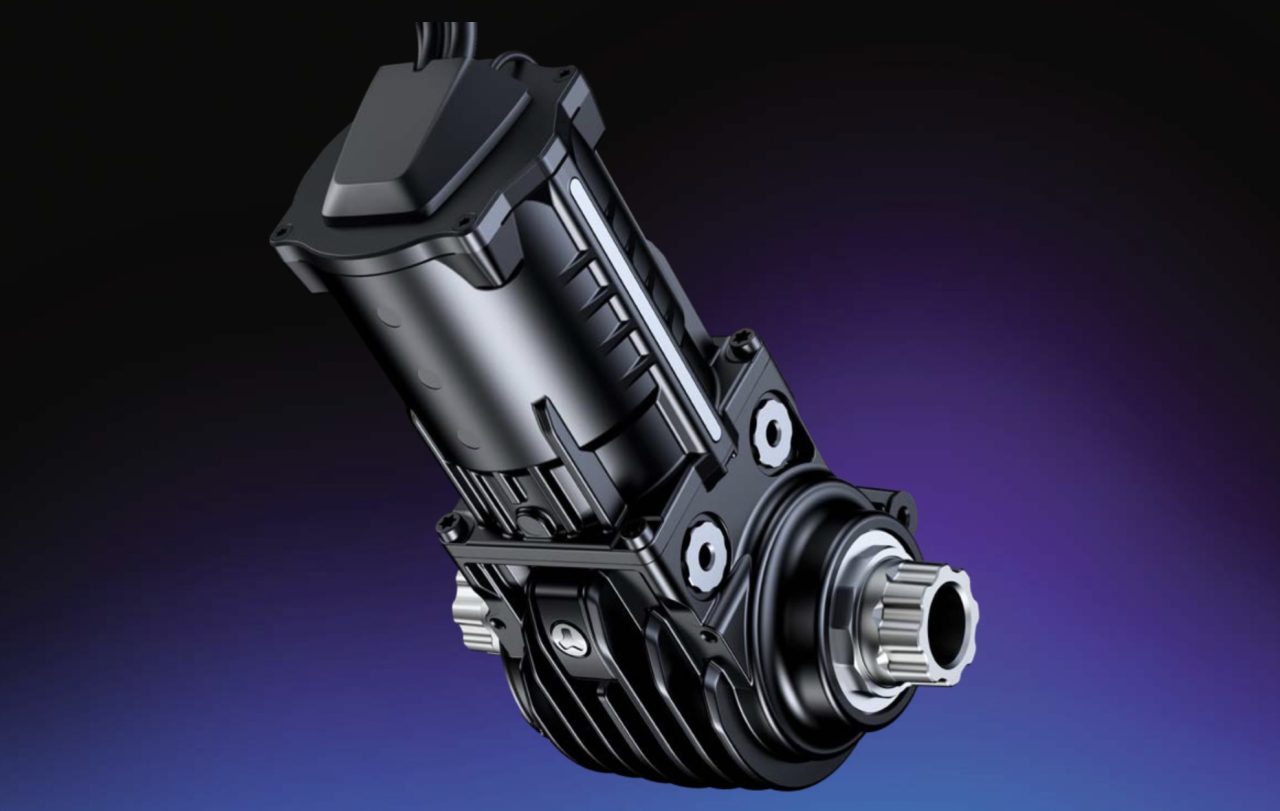
Porsche has announced the closure of Porsche eBike Performance GmbH, the subsidiary it created after acquiring Fazua in 2022. The move affects around 360 employees across Porsche eBike Performance’s sites in Ottobrunn and Zagreb, and forms part of a wider strategic realignment that also sees Cellforce Group GmbH and Cetitec GmbH discontinued – more than 500 jobs lost across the three subsidiaries in total.
Porsche cited “fundamentally changed market conditions for e-bike drive systems” as the reason for winding down the operation. That’s a significant understatement of what has happened to the e-bike motor market over the past 18 months. *cough* AVINOX *cough*
Dr. Michael Leiters, Chairman of the Executive Board of Porsche, was direct in the announcement: “We must refocus on our core business. This is the indispensable foundation for a successful strategic realignment. This forces us to make painful cuts – including our subsidiaries.”
Fazua’s troubled run
When Porsche acquired Fazua, on paper it made sense: Fazua’s Ride 60 system had genuine appeal for the growing lightweight eMTB segment, and the backing of a major automotive brand promised the investment needed to develop it properly. Brands including Haibike, Cube, Canyon, Santa Cruz and YT were among those building bikes around the Fazua system.
In practice, the Ride 60 endured a difficult few years. Reliability issues plagued early production batches, and the system accumulated something of a reputation as the problem child of the lightweight motor category. More recent batches reportedly resolved those teething problems but the damage to the brand’s reputation was done.
The DJI earthquake
The bigger shock to the entire e-bike motor market came when DJI entered the e-MTB motor space with the Avinox system. With 1,000W of peak power and 120Nm of maximum torque, it moved the goalposts entirely. Crucially, the Avinox didn’t just deliver brute force; it delivers its assistance smoothly, raising questions not just about peak numbers but about what the entire eMTB motor category should be doing.
For a lightweight, relatively low-torque system like the Fazua Ride 60, competing in a market suddenly electrified by DJI’s numbers was a significant challenge. And it wasn’t just DJI, Fazua’s ouright rival – TQ – revealed the ultra-compact HPR50 carved out the premium quiet-motor niche.
What happens to Fazua-powered bikes?
That’s the question that will concern a number of riders in the short term. It’s a fair worry given the business is being discontinued rather than sold.
We put the question directly to Porsche. A spokesperson told us: “FAZUA customers and dealers will continue to have long-term access to spare parts and service. Further information will be announced shortly.”
That’s reassuring as far as it goes, though “further information will be announced shortly” suggests the full picture isn’t yet settled. We’ll update this story as that becomes clearer. If you’re riding a Fazua-powered bike and have specific concerns, your dealer is still the best first port of call.



Buys Fazua, closes Fazua. There has to be a better way.
Is this the first ‘victim’ of Avinox?
Edit, I should read the article before posting!!!
The pity is, the Fazua motor is really good when it is working. I love mine. I’ve only tried a Bosch powered bike other than my Fazua bike. Didn’t like it all in comparison. Gutted that Fazua is gone.
Seems a shame but as a newly e-bike curious punter the Fazua equipped bikes haven’t registered even a tiny blip on my radar. You’d have thought there’s money to be made in full fat motors though which they should be able to develop? Saying that, seems the market is settling down to Bosch or Avinox so is it really worth the effort and expense to even try?
I have a Ride 50 Fazua powered gravel bike and a Shimano emtb . I like the way the Fazua delivers power but it’s a lot more pernickety than the Shimano. The Shimano works or it doesn’t, I’m on the second motor, but the Fazua needs a lot of tlc to keep going. Just as an example all Fazua contacts are tiny fiddly things which need constant cleaning whilst the Shimano has large spade contacts which are fairly robust. I thought Porsche would sort the niggles but it clearly requires too much investment in a perilous market.
Shame, once I started looking at ebikes, I was curious about how the Boardman gravel ebike could remove the Fazua motor and battery from the downtube, replace with a cover and ride as a pretty standard gravel bike.
This is precisely why I am not yet ready to buy an e-bike. Th technology and winners and losers have yet to settle down and you run the risk of outlying a lot of cash for something either outdated or obsolete very quickly. The rest of cycling technology and geometry has settled down of late to the extent that changes occur at a very slight rate, but e-bike tech is moving as quickly as analogue mobs did in the early 2000’s.
To be fair I think Fazua failed because their product was (or perceived to be) woefully unreliable while everyone else is more or less OK and they were owned by a car company that is facing massive losses from over investing in electric cars. Porsche also bought and shuttered Greyp bikes in an even shorter time.
Sure an Avinox is arguably the ‘best’ but that doesnt make my old Gen 2 Levo ‘bad’ it happily dragged me around the Syfydrin the other day with no issues (including my 12 year old on a tow rope up the longer/steeper climbs).
“Th technology and winners and losers have yet to settle down and you run the risk of outlying a lot of cash for something either outdated or obsolete very quickly.”
The tech has barely changed since I got my Levo in 2018. Slightly more battery density, reliability seems generally better and manufacturers are letting the motors produce more power because they’ve realised the regulations are too poorly written. My old ebike still does a great job and when I’m with more modern e-bikes it’s not been a problem.
There’s nothing groundbreaking about electric motors and batteries and torque and speed sensors. Just takes R&D time to make it reliable and light enough to work in the harsh MTB environment.
Not sure it’s true to say the tech has barely changed….
The avinox has 3 times the power and double the range for the same weight! (the motor is more efficient as well the the extra energy density of battery)
“The avinox has 3 times the power and double the range for the same weight! (the motor is more efficient as well the the extra energy density of battery)”
The 3x the power may be true but it’s also a dubious benefit. Does it really have double the range for the same weight? I’d like to see some independent tests that verify that because batteries haven’t got much better in the eight years and electric motors less so.
Realises why all those £10k Hecklers were selling at £4k 2 months ago ….
“ owned by a car company that is facing massive losses from over investing in electric cars.”IDK, I’d argue that if anything Porsche/VAG have perilously underinvested in BEVs as they have continued to push ‘choice’ by retaining an extensive legacy of ICE vehicles. It may not be that long before increasing competition from innovative competitors forces Fazua-like moves on their legacy automobile business. This news of closure is sad for workers and consumers and Mark seems to lay out the influences well. Porsche may have had other options but they chose this one. 🫤
Well, you could argue that but…
https://www.evo.co.uk/porsche/207696/porsche-officially-puts-ev-plans-on-hold-developing-new-petrol-models-instead
Compared to what? Based on tests on other sites, Avinox.motors have middling efficiency and energy density of batteries hasn’t increased that much.
A source perhaps? That’s clearly utter nonsense. Yes, it has peak power thats much greater than any other current motor, but it *eats* battery if you use that a lot. There’s no magic beans – increased power/torque = battery used quickly.
Avinox is at the light end of full power motors but the difference is tiny, The m2s motor is a little heavier than the M1 and weighs 2.65kg. For comparison the Bosch CX is 2.7kg. Shimano Ep801 is basically same as the m2s.
The Avinox 700 battery has an energy density of 220 (wh/kg) and 3.18kg. Their old 800 was 214 (3.74kg). Bosch’s 800 battery weighs just 160g more. The 630 battery in my Orbea Rise is 219 (2.88kg). Removable batteries result in a heavier frame, heavier mounting stuff/connectors and a heavier battery.
Ie the total difference between an Avinox and a Bosch system is probably a few hundred grams.
Efficiency losses in these motors are small – Avinox claim c85%. They waste some energy as heat. They’ll be less efficient when working hard and their efficiency will vary based on output speed. So how you ride them – in terms of input cadence and gearing will impact. Theres a German rider who greatly increased the range on his m2s for the riding he was doing by putting as 32t chainring on instead of the 38 stock on the Amflow.
Plus the power delivery – motor output vs rider input is going to vary between motors based on the software. It’s very difficult to do an accurate comparison. I think one of the German sites tried but IIRC they couldn’t get their test rig to work across all the motors.
So Avi probably has a very small edge on weight and battery packs. It’s got a load of torque (that will destroy drivetrains quickly) and power (that will eat battery/range). The software looks excellent and the output control – how it rides – seems to be really good.
I suspect the true variation in efficiency between all the motors and batteries is negligible in what it means for range – it’s how you ride them. You can pretty much change the settings on any of them to limit support/torque/power and optimise for long range or turn it all up for short range ‘power hour’ riding.
(though of course the super small battery/low power motors can’t do the latter, but they give you a kg or two off the weight of the bike)
I have a Pivot Shuttle SL with a Fazua Ride 60. 2,250+ miles with no problems, BUT I was highly disappointed when the dropped the plans for the range extender as it has greatly limited my ability to ride and enjoy longer distances (as I used to on my manual bike before my knee replacement). This announcement is just the final nail in the cofin and not surprising.
“The Avinox 700 battery has an energy density of 220 (wh/kg) and 3.18kg. Their old 800 was 214 (3.74kg). Bosch’s 800 battery weighs just 160g more. The 630 battery in my Orbea Rise is 219 (2.88kg). Removable batteries result in a heavier frame, heavier mounting stuff/connectors and a heavier battery. “I was comparing it to the old Levo 500wh (about 160wh/kg) battery when someone said they’d not improved in 8 years.irrc avinox is more efficient than others when running at 700w (boost on bosch) due to better heat management needed to cope with higher power.Range tests are similar for both (below), but thats running them both on boost (750w bosch, 1000w avinox). Match them for speed/power and it’ll get more range. https://enduro-mtb.com/en/e-bike-motor-test-range-efficiency-vertical-rangee-bike-motor-test-range-efficiency-vertical-range/
That’s really not a comparable battery – it’s a removable battery with the mounting hardware and a ‘rock guard’ attached. The removable 600 Avinox battery drops to an energy density of 200 and that doesn’t include the cover flap. I suspect larger batteries are always higher density as the case and mounting hardware are don’t change much as the battery gets bigger. The 2019 Levo 700wh battery had an energy density of 184 for example.
Sorry – you were claiming double the range for the same weight. I dont see anywhere that suggests that.
In fact, the efficiency of all the motors was remarkably similar. (and they note they aren’t sure about the Bosch SX and Shimano motors as they got more variable readings and seemed to have trouble with them in their test rig)
This graph shows their results. Now they thing the low Shimano and SX dots are unreliable. So all of the motor are actually between 75 and 80% across the working range (and the variability where some are dipping up and down on different readings might be recording/methodology error). I can’t see anything between Bosch CXR and Avinox there.
Most of their testing is really good but I’d question that the best way to test the range is to do it in full boost mode on all the bikes. I’d have gone for trying to normalise the settings so that they were all the same power.
So in summary
– battery energy density has only increased marginally. larger batteries have a higher density. non removable batteries are best.
– theres not much at all between any of the motors in efficiency. But if we call it 5% and says that translates directly into extra vertical that might be an extra 75m on my stretch target 1500m out of my Rise.
“So in summary
– battery energy density has only increased marginally. larger batteries have a higher density. non removable batteries are best.
– theres not much at all between any of the motors in efficiency. But if we call it 5% and says that translates directly into extra vertical that might be an extra 75m on my stretch target 1500m out of my Rise."
Thank you – this is what I’d assumed as someone who doesn’t work on this tech but did study engineering and designs amps and speakers in my business.
“It’s got a load of torque (that will destroy drivetrains quickly)"
My old Levo destroys drivetrains with a whole lot less torque – and I may singlespeed on my other bike but there are plenty of bigger and stronger pedallers out there and a lot of very expensive cassettes (unlike my 10 speed Linkglide ones which I still don’t like replacing every 1000 or so miles!) on these new ebikes.
Sams bikes in YouTube tested the old 500wh systems and they got around 1000m on boost and the bikes weigh the same as modern ones with 800wh batteries.
The older ones never got 500wh either as that was nominal capacity. Usable capacity was less. Modern 800wh ones are stating usable capacity.
Not sure we’re going to agree on this but I think they’ve improved a lot in 8 years and I owned an older Shimano e8000 500wh bike.
Ok – I’d agree with that. They’ve definitely improved a lot from the bikes of 8 years ago, but I’d say most of that happened in the first half of that time. I’d not really looked into it this much before but I’d expected to see *more* difference between the motors in efficiency and greater gains in battery. I think whats actually happened is batteries have got a bit cheaper and settled on an optimum size/weight combo.
Also the Avinox motor/battery combo doesn’t have as much of a weight advantage over the others as I’d thought it would.
As a rider, for me, the real objective for a bike is ‘will it get me up the hills at roughly the same time as the other people I’m riding with and have enough range to have slightly less range anxiety than they do’. And how well the whole bike/motor rides (that said, despite all that, I’ve got a DJI bike reserved for later in the year)
Similar. Mine’s worked without issue (so far) and I love the bike it’s attached to. Given the shambles of the Fazua range extender debacle, I’m not holding out too much hope about “FAZUA customers and dealers will continue to have long-term access to spare parts and service. Further information will be announced shortly.”
I’m following Skywalker Designs in the US (who’s working on mounts to replace Fazua motor with ‘normal’ cranks or possibly a DIY motor) and KRANKE Adaptors in Australia (who’ve confirmed to me they’re working on a bracket to convert Fazua bikes to ‘analogue’. Obviously not ideal but would be a worst-worst case scenario in event of a dead Fazua motor and no way to repair.
This.
I have a gen 4 bosch and my mate has a gen 5. He has been bragging about it being way better. We climb at the same pace, he weights slightly less than me, his battery runs out faster. There is only so much in the headline figures and marketing.