MTB legend asks if it is time to draw a line in the sand of when e-bikes become “too powerful”
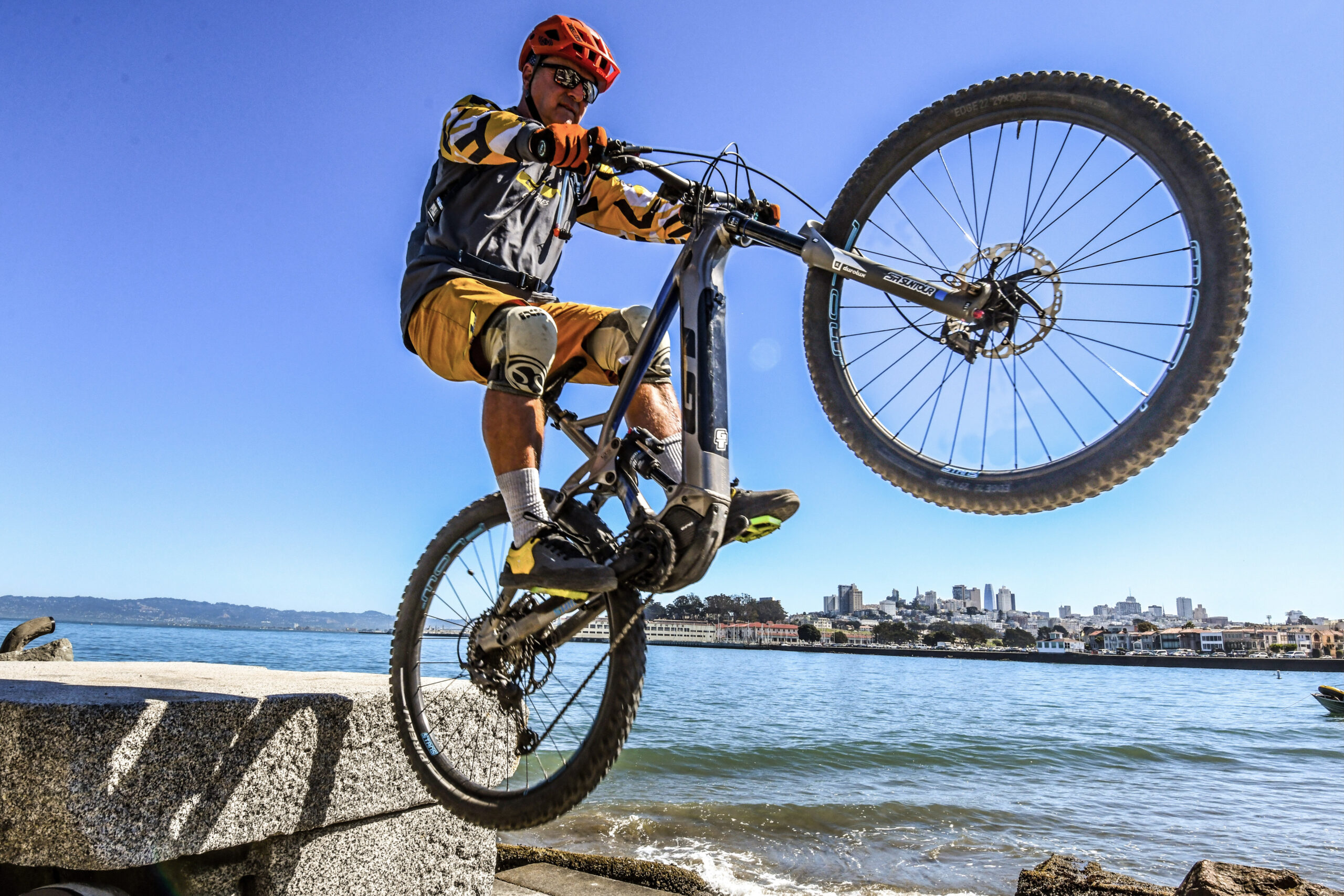
An Open Letter to the Bicycle Industry
To the leaders, builders, advocates, and riders who shape our industry,
I’m writing because I care deeply about where bicycles—and electric bicycles—are headed. We are at a crossroads. The decisions we make about language, power limits, and definitions will determine whether Class 1 e-bikes remain accepted as bicycles—or get grouped with much more powerful machines that don’t belong in the same category.
It’s time to define our language and it’s time to draw a line in the sand of when e-bikes become too powerful.
Words Matter
Today, the term “e-bike” is used to describe everything from a lightweight pedal-assist mountain bike to electric mopeds and full-blown electric motorcycles. That lack of precision creates confusion—and conflict—with land managers, other trail users, parents, and lawmakers.
If we don’t define our terms, others will define them for us.
Ideally, “e-bike” would mean one thing:
A Class 1 pedal-assist bicycle with a maximum assist speed of 20 mph [in North America – Editor] , no throttle, and a motor not exceeding 750 watts of peak power.
Instead, the label has expanded to cover vehicles with throttles, higher speeds, and significantly more power. That blurring of categories puts access at risk.
Clear Categories, Clear Expectations
We need distinct names for distinct machines:
- E-bicycle (EMTB): Class 1 pedal-assist only (20 mph max assist, 750W max peak power)
- E-moped: Throttle-equipped or faster than 20 mph or exceeding 750W, incl. Class 2&3
- E-motorcycle: High-power electric motorcycles well beyond bicycle-level performance
Clear labeling should be mandatory. Every electric vehicle should visibly state its category, assist speed, and peak motor power. This isn’t about enforcement—it’s about clarity and accountability.
The 750-Watt Line Matters
The 750-watt peak limit is not arbitrary. It helps determine whether a vehicle is treated as a bicycle or a motorcycle—and whether it remains welcome on trails and bike paths.
Maximum peak power and nominal (or average/rated) peak power are not the same.
A bike limited to 750 watts peak never exceeds that output. A motor rated at 750 watts nominal can produce much higher bursts of power. That difference is significant.
Class 1 e-bikes gained acceptance because they behave like bicycles: pedal-assist only, no throttle, limited speed, and moderate power. If we allow power creep—higher torque, faster acceleration, motorcycle-like performance—we shouldn’t be surprised when access disapears and regulations increase.
We are already seeing warning signs. In New Jersey, a bill was already signed that will require insurance, registration, motorcycle helmets, and will restrict trail access for electric bikes. In California, lawmakers are working to reinforce the 750W peak limit to improve safety and preserve trail legality. These debates are not theoretical—they are happening now.
A Call to Responsibility
To manufacturers:
Resist the temptation to chase bigger numbers at the expense of long-term access. Short-term sales gains could lead to long-term collapse.
To media and marketers:
Use precise language—even when it’s less convenient. Help draw and defend the line that protects this category.
To riders:
Ride responsibly. Understand what’s at stake. Don’t take trail access for granted.
To advocates and trade groups:
Defend Class 1 clearly and consistently. The industry must self-regulate until the laws are defined.
In order to protect what we have we must stop asking how much power we can get away with—and start asking how much power is too much.
— Hans Rey
What’s the problem with power?
Why is more watts a problem? Well, it’s nothing really much to do with mountain biking rider safety or trail erosion or even the forever in the background spectre of illegal de-restriction. It’s to do with pedal assist bicycles straying too far from their original remit and raisn d’être. Namely, to add a bit of extra motor power on top of the rider power going into the pedals.
Anyone who’s ridden a DJI Avinox ebike – such as the Amflow PL Carbon – will know that it doesn’t take very many rider input watts to get the motor ro give out its much hyped 1,000 watts of motor assistance. The experience is akin to using soft-pedalling of the cranks as essentially a throttle.
It’s this ‘support ratio’ issue that the bike industry is concerned about. Although 1,000w pedal assist bikes are still quite far off things like Surron e-motos in terms of power (minimum 12,500w of peak), there’s no denying that higher and higher wattage e-bikes have the potential to stray too far from regular bicycles.
Also, it should be mentioned that Hans Rey is a Bosch ambassador, so is not entirely without skin in the game, as they say.
Read more about the e-bike power struggle.

Several posts and a few hundred words trying to justify why you chip your e-bike in contravention of existing legislation and ride on public trails, because your ‘needs’ are more important than other people’s safety and preserving access.
You don’t have a robust argument so obviously felt like a little whataboutary.
If you could kindly demonstrate where I’ve personally compromised anyones safety with my chipped ebike I’m all ears. Thanks
So is in excess of 20mph on a normal bike competely safe and a suggested limit of 20mph on an ebike unsafe? Please define the difference.
How fast have you actually ridden your MTB including DH on public trails – be honest?
No insurance, tax, registration, no proper motorcycle helmet.
Tell me your ignoring simple physics without telling me.
Any bike can be ridden unsafely, but the consequences of doing so on a bike with more mass is much more serious.
I’m sorry, I don’t have any video. That’s a ridiculous requirement to be honest.
Over 30 MPH on the public road at the end of a trail in Morzine. Specifically on UK trail centre XC trails, less than 25 MPH.
Typically in my non-disabled fitter days, on woodland multi-use trails I averaged around 18.5 MPH on a 15-20 mile loop. There wasn’t much people traffic in the early mornings.
Never raced DH, but had multiple uplift days in Scotland and Wales where I used specific MTB trails on trail centres and on private land. I didn’t measure my speed – I didn’t use a cycle computer or GPS.
Even on trail centre cycle specific trails, I have never been in the habit of going as fast as I could whenever I could. Even before my disability it would be a an outlier if my average speed reached 15 MPH.
Hilariously, in the mid-90’s my Cateye computer registered over 450mph – something tells me that was an error…
I’m all for moderating your speed on multi-use trails. Consideration is king.
The fact that you can ride a non e-bike fast in some circumstances does not justify raising the cut-out limit. Those fast speeds are outliers in any dataset of bike speeds. Most of those outliers occur away from the location where the e-bike limit is of most importance and most bike speeds will be significantly lower than 20mph. If you raise the cut-out limit, then e-bike speeds will increase everywhere (and all the time) and will make the shared use environment more dangerous and intimidating and will exacerbate tension and dispute.
You may well not have endangered anyone. But again, that is no argument for allowing everyone to derestrict their bikes or raise the limit.
You can explain why you chipped your bike and why you have not directly endangered anyone in doing so… but, aside from making no difference to the legality riding a chipped bike, that explanation does not transfer into a justification for raising the limit.
Normal bikes self regulate as it’s really flipping hard to ride at 15mph for any length of time for most people off road, let alone 20! I did an xc race at the weekend, 4 laps, 400 meters of overall climbing over an hour, managed a mighty average speed of 8.5 mph according to my garmin, seems I need to train more.
Heres a question, what magical nirvana would be achieved by upping the cut off to 20?
People who chip their bikes, they don’t need to justify it… like speeding in the car, you do it cos you can, and you’re unlikely to get caught. Even more so with the bike thing. And it’s never dangerous… til it is.
Last 4 solo ebike rides, average speed 9-9.8mph on my killing machine. Most I average in summer is around 11mph
20, 18, 17.5, anything but bloody 15mph. Ride one and see how annoying it is. Removing it just makes it more fluid
Last three proper rides on the gravel bike
The purpose of the cut off is not to stop you having a fluid ride… it’s to make e-bikes compatible with mixed use cycle infrastructure. Surely that is more important than you getting a more fluid ride. The speed restriction in turn allows us to have a category of motorised bike that is exempt from the regulation to which most motorised bikes are subject.
In short, the imperative of regulating e-bikes trumps the desire of a minority group i.e. mountain bikers, to have a more fluid ride.
No-one is accusing you of using your e-bike like a killing machine.
True, guns don’t kill people rappers do
Perhaps it’s not the speed limiter that’s going to cause problems for us but the power? The ability to keep at 15mph up hill and down dale (literally) can cause friction with other trail users, horse riders, walkers and us ATB users don’t expect a bicycle hurtling towards us, uphill.
We’ve probably all met trail riders riding considerately, quiet exhausts and pausing to let you past. We’ve probably met others hurtling past at speed, spraying debris up and, occasionally abuse too.
Which do you remember? Do you remember the nice ones or the others?
Follow up interview with Hans:
https://road.cc/offroad/feature/do-e-bikes-need-firmer-categorisation-hans-rey-reveals-all-about-his-recent-letter-to-the-industry
“The ability to keep at 15mph up hill and down dale (literally) can cause friction with other trail users, horse riders, walkers and us ATB users don’t expect a bicycle hurtling towards us, uphill."
It’s both the power and the speed. We’ve had bikes hurtling downhill for more than a century – it’s not a new thing. What is a new thing is bikes silently accelerating VERY fast, being able to go fast on the flat with minimal effort so it happens more often and more often under less experienced/competent riders, and being able to go uphill fast (which I notice surprises car drivers on the road, when I’m pedalling like a singlespeeder who’s running late but with the motor on turbo, and that’s on an old heavy full-sus ebike with draggy tyres and the legal speed limiter – they pull out because they don’t expect a bike to go uphill that quickly!)
I’ve become a complete convert to e-bikes. I just love mine. I have a lightweight one and a full power one. I’ve been riding them pretty much exclusively now for a year and a half. Here’s the thing. In that time, when I’ve ridden more often than ever before (i pretty much ride 5-10km off-road every day now), I have never once felt any kind of speed limiter cut off. I genuinely have never felt myself hitting some kind of cut off or limit.
Admittedly, I don’t ride on the road or commute. But im surprised that I have no personal experience with this issue, which seems to be such a deal breaker for so many people.
A few thoughts on some of the points coming up,15kg bike or 25kg e-bike, I don’t think it makes little difference in terms of risk to others. Speed matters most there and it’s downhill >15mph where that’s most likely to be an issue. I don’t see e-bikes being a greater risk in that way.
Speed restrictions aren’t changing any time soon so not really a discussion point. Chipped bikes that do more than 15mph assisted – that’s your lookout, it’s an illegal moped but if you’re riding with consideration for others and the trails why would I care. Bigger issues in the world..Trail access for e-MTBs may be a challenge/fear but unless the laws and regulations are changed, an EPAC is a bike and can go where bikes go. I don’t see that changing easily or suddenly. And .. I ride trails where I’m not supposed to be on my pedal bikes. I don’t dig daft trails or ride like a d1ck and I do no harm so I don’t see the issue riding a few quiet footpaths here and there. If that’s how you approach riding and trails that are usually shared with others, it just doesn’t matter whether you’re on an e-bike or not imo. I think this is may be more of a concern in the US and it’s a valid concern for all, but I still think it’s more complex to do anything about than acting on the simple message of max power concern with an EPAC power cap. Address the needs of cargo bikes via type/use classifications within the EPAC regs (MTBs already have a clear type or use class) and we could set a power limit for some EPACs inc MTBs.
FWIW I have no axe to grind here, I’ve ridden e-MTBs and they were fun but I have zero urge to own one. It makes no odds to me what happens with e-MTB access. I just think that all the problems are with the irresponsible users not the product itself.
@jameso; yes I suspect the issues are mainly in the USA, where apparently many trails are still forbidden for e-bikes. For example, around Whistler – I think Lord of the Squirrels is a no-e-bikes trail. So I think Hans’ point is that if e-bikes aren’t regulated, then increased trail access may stall, due to folks riding e-mopeds.
That’s probably due to the motor. Maybe you need to ride harder.
I ride to my local trails and definitely feel the limiter kick in when I’m on the road. It’s like hitting a big patch of glue. I’ve started just turning the assistance off for sections where I know I’ll be over 15.5mph
The only time I’ve ever felt it kick in off road when was when pedalling to get a bit of extra speed to clear a gap. Otherwise the speed limit has never been an issue off road as I can’t pedal 15.5mph uphill and I usually don’t pedal at all on proper downhill sections.
I don’t really feel it on mine either, I know it’s happening, but on the sort of terrain where you’re going over 15.5mph, it doesn’t make much difference [edit: Yes, except on the road sections, but then… just chill.] It is a lightweight bike though. I did used to feel it more on my Bosch motor Cannondale.
Quoting for context 🙂
‘but unless the laws and regulations are changed, an EPAC is a bike and can go where bikes go. I don’t see that changing easily or suddenly.
I think this is may be more of a concern in the US and it’s a valid concern for all, but I still think it’s more complex to do anything about than acting on the simple message of max power concern with an EPAC power cap. ‘
Actually I can see another problem that can change quickly. A very high % of E-bikes are sold as commuter wagons, a lot , lot more than are used for mtb. Start bumping up that power and start to mess around with that 25 kmh limit, and you might well be required to get a helmet and insurance via losing the bicycle status.
At this point your more powerful MTB isn’t legal for the road, isn’t legal as a commuter bike in Europe, amd getting caught comes using as such come with usual consequences.. Plus I can’t see that making a motor that’s a lot more niche is going to do anything for spares availability, price etc….
In Germany you can buy S-pedelecs, E-Bikes that will reach 45kmh. But you need a number plate, a helmet and can’t use all bike paths.
@who, there already are commuter restyle ‘speed pedelecs’, type-approved 28mph limited e-bikes that are basically mopeds as far as road rules and regulations go. There aren’t any real MTB versions but if there were I can see them blurring some lines in ways that could cause problems. Still, it’s into illegal use if they’re used on bike trails and most ROWs.
edit, beaten to it 🙂