MTB legend asks if it is time to draw a line in the sand of when e-bikes become “too powerful”
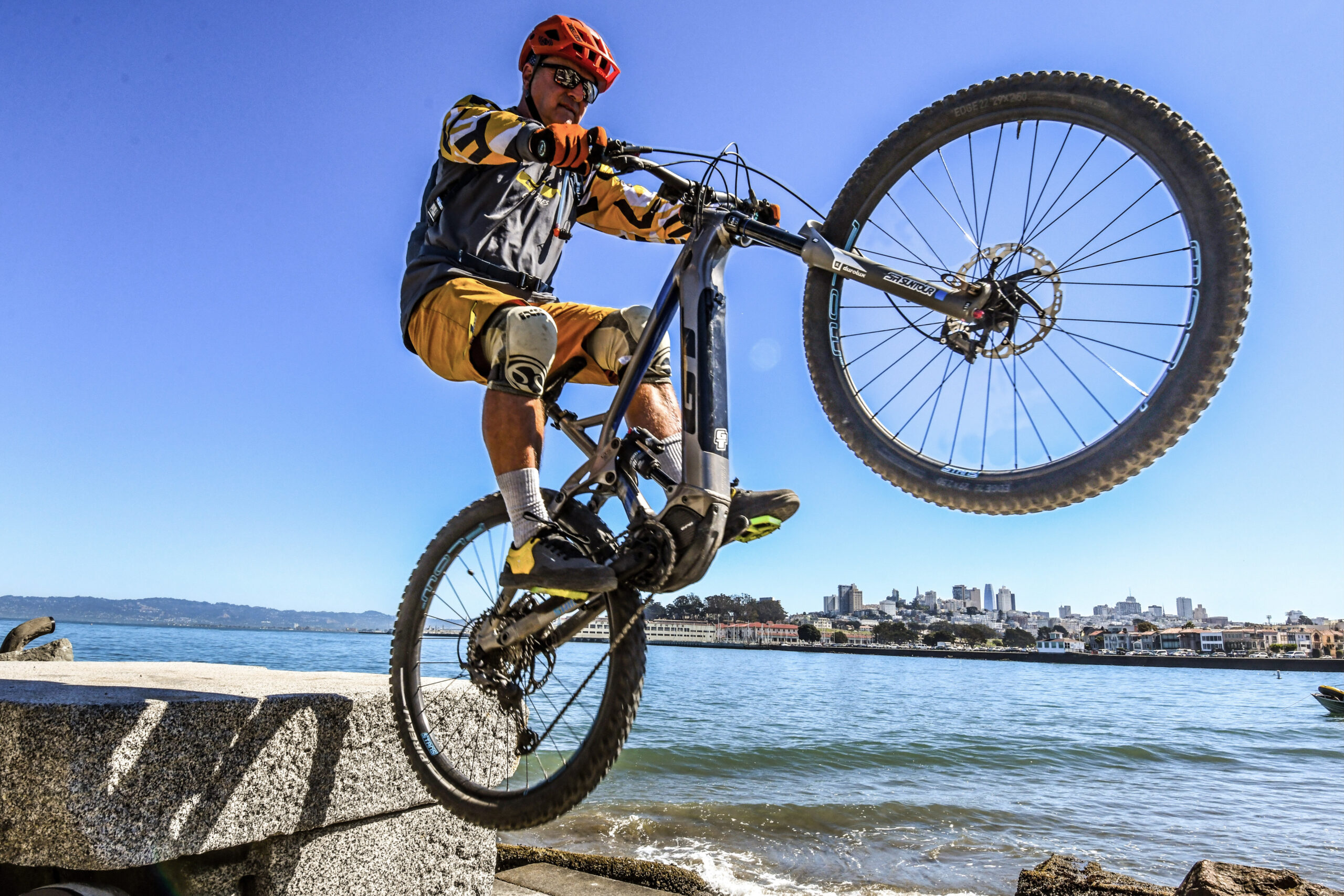
An Open Letter to the Bicycle Industry
To the leaders, builders, advocates, and riders who shape our industry,
I’m writing because I care deeply about where bicycles—and electric bicycles—are headed. We are at a crossroads. The decisions we make about language, power limits, and definitions will determine whether Class 1 e-bikes remain accepted as bicycles—or get grouped with much more powerful machines that don’t belong in the same category.
It’s time to define our language and it’s time to draw a line in the sand of when e-bikes become too powerful.
Words Matter
Today, the term “e-bike” is used to describe everything from a lightweight pedal-assist mountain bike to electric mopeds and full-blown electric motorcycles. That lack of precision creates confusion—and conflict—with land managers, other trail users, parents, and lawmakers.
If we don’t define our terms, others will define them for us.
Ideally, “e-bike” would mean one thing:
A Class 1 pedal-assist bicycle with a maximum assist speed of 20 mph [in North America – Editor] , no throttle, and a motor not exceeding 750 watts of peak power.
Instead, the label has expanded to cover vehicles with throttles, higher speeds, and significantly more power. That blurring of categories puts access at risk.
Clear Categories, Clear Expectations
We need distinct names for distinct machines:
- E-bicycle (EMTB): Class 1 pedal-assist only (20 mph max assist, 750W max peak power)
- E-moped: Throttle-equipped or faster than 20 mph or exceeding 750W, incl. Class 2&3
- E-motorcycle: High-power electric motorcycles well beyond bicycle-level performance
Clear labeling should be mandatory. Every electric vehicle should visibly state its category, assist speed, and peak motor power. This isn’t about enforcement—it’s about clarity and accountability.
The 750-Watt Line Matters
The 750-watt peak limit is not arbitrary. It helps determine whether a vehicle is treated as a bicycle or a motorcycle—and whether it remains welcome on trails and bike paths.
Maximum peak power and nominal (or average/rated) peak power are not the same.
A bike limited to 750 watts peak never exceeds that output. A motor rated at 750 watts nominal can produce much higher bursts of power. That difference is significant.
Class 1 e-bikes gained acceptance because they behave like bicycles: pedal-assist only, no throttle, limited speed, and moderate power. If we allow power creep—higher torque, faster acceleration, motorcycle-like performance—we shouldn’t be surprised when access disapears and regulations increase.
We are already seeing warning signs. In New Jersey, a bill was already signed that will require insurance, registration, motorcycle helmets, and will restrict trail access for electric bikes. In California, lawmakers are working to reinforce the 750W peak limit to improve safety and preserve trail legality. These debates are not theoretical—they are happening now.
A Call to Responsibility
To manufacturers:
Resist the temptation to chase bigger numbers at the expense of long-term access. Short-term sales gains could lead to long-term collapse.
To media and marketers:
Use precise language—even when it’s less convenient. Help draw and defend the line that protects this category.
To riders:
Ride responsibly. Understand what’s at stake. Don’t take trail access for granted.
To advocates and trade groups:
Defend Class 1 clearly and consistently. The industry must self-regulate until the laws are defined.
In order to protect what we have we must stop asking how much power we can get away with—and start asking how much power is too much.
— Hans Rey
What’s the problem with power?
Why is more watts a problem? Well, it’s nothing really much to do with mountain biking rider safety or trail erosion or even the forever in the background spectre of illegal de-restriction. It’s to do with pedal assist bicycles straying too far from their original remit and raisn d’être. Namely, to add a bit of extra motor power on top of the rider power going into the pedals.
Anyone who’s ridden a DJI Avinox ebike – such as the Amflow PL Carbon – will know that it doesn’t take very many rider input watts to get the motor ro give out its much hyped 1,000 watts of motor assistance. The experience is akin to using soft-pedalling of the cranks as essentially a throttle.
It’s this ‘support ratio’ issue that the bike industry is concerned about. Although 1,000w pedal assist bikes are still quite far off things like Surron e-motos in terms of power (minimum 12,500w of peak), there’s no denying that higher and higher wattage e-bikes have the potential to stray too far from regular bicycles.
Also, it should be mentioned that Hans Rey is a Bosch ambassador, so is not entirely without skin in the game, as they say.
Read more about the e-bike power struggle.

I think if you were a ‘real lawn mowerist’ you might – and I’m sure there are people who do – take that view. In honesty though, some of my take on e-mtbs is that it exempts me from nuanced and largely pointless discussions on ‘how much power is enough power’ etc as ‘any level of assistance’ is too much in my boat. One thing mountain bikes and lawn mowers do have in common though, is the noise thing. Traditional cylinder mowers are just part of a bucolic, British summer soundscape along with the smell of freshly mown grass, a Flymo is aural abuse. Similarly the noise e-mtbs make is annoying, like a sort of mountain biking (sic. because it’s not 😉 ) tinnitus. Similarly kites, imo, are fine in the outdoors – gentle flappy noises at worse – drones are not. People are worryingly eager to invite automated, noise polluting tech into quiet outdoor spaces without considering how they change those spaces for others. And yes, I get that, that particular drone has already flown etc.
…and yet here you are 😊
I don’t care about any of that stuff either. I just like getting out on my mountain bike (which it is 😘)
Selflessly presenting others with an escape route 🙂
Off to mow my lawn now.
Similar situation for me, an ebike for my misses was cheaper than other alternatives
For 1 person, on a smooth road.
Throw in potholes, uneven surfaces, and some kids or cargo and I’d happily share a path with a throttle operated, but still speed restricted version of this.
<img src=" removed link " />
And then have the same thing with a 30mph restriction classified as a moped with uprated brakes and tyres for the riding gods who can’t hold themselves back to 15mph.
I’m also with Hans.
Very much this too.
From my position, I don’t get this.
Yes, I would rather not ride an e-bike – but it keeps my now disabled self out riding with my buddies as I used to.
this is the positive to ebikes regardless of power, you get to still ride with your mates
My point isn’t that there’s anything inherently wrong with e-mtbs, just that once you add assistance, it’s kind of no longer mountain biking as I understand it. I used an e-mtb to help me recover from long covid and I have absolutely no issues with them, I don’t even care if they become more or less powerful, I can see that they are a massive boon for many users, I’m just arguing over the semantics of whether riding an e-mtb is ‘mountain biking’. For me it isn’t, for other people it is and I’m fine with that – as everyone will doubtless be relieved to learn, ahem. I guess for me, one of the joys of mountain biking is the feeling of your body working hard, being pushed, having a limit that you can nudge at which is non negotiable. You can either hit that short, hard, technical climb/step fast enough to get over it or not. Which doesn’t mean I don’t enjoy descending, I do. Just that for me, the two come as a package. And I appreciate that other people would happily materialise at the top of a descent with minimal effort and roll down it.
I’m not sure being able to ride 5mph faster or 10mph faster makes any real difference to anything much at all. My favourite e-mtbers were the two guys I bumped into at the bottom of Jacob’s Ladder a couple of years ago, they were engulfed by the aroma of weed and had no idea where they’d come from, where they were going or where they’d left their car. Because they weren’t moving, their bikes were more or less silent. I totally endorse their take on e-mtbing. 🙂
Interesting that views are so polarised re e-bikes and we obviously have very different experiences.
I push myself hard on my ebike. I do more technical practice uphill and downhill. I build a much better fitness base as my recovery can be planned. Steep hills on a normal bike are largely at a non negotiable higher intensity.
My last six rides have been on my Tyee, sometimes with people on e-bikes, regardless, I’ve done a lot of high intensity exercise every ride along with lots of moderate intensity, which felt fine, but clearly would break me done every day and I definitely need some recovery.
I feel like I “mountain bike” more on my ebike than I do on my normal mountain bike. I do ride pretty much every day and I ride a lot of miles on a normal bike. We are all different but we choose our own intensities and we choose our own recovery. 🙂
The vast majority of e-bikes I see are clearly stolen. Presumably there’s a cycle of theft, insurance payout and re-purchase that’s driven the current market – but what happens once all the scrotes already have an e-bike? Do they also get bitten by the upgrade bug?
Personally – and I ride both, riding the ebike feels like MTB’ing to me. It’s the same rides (often longer), the same craic, the same vibe, the same adrenaline, much of the same skillsets and technical capabilities.
I don’t have to suffer on climbs to feel like I’m MTB’ing – albeit I like doing that sometimes too
How are you determining they’re stolen?
Perhaps we’re better off not saying what MTB is and isn’t because no-one should care what you or I might think it should be or what an accepted definition of this thing is. Defining something like this just creates in and out crowds, barriers and resentment and though this is very low level stuff in the grand scheme of it, we have enough of that going on in the world.
(maybe a bit ott considering you’re not saying anything that divisive, and I’ve said in another post that ‘I don’t see myself as an MTBer’ in many ways which means I have an image of what MTB is like we all do – point is that e-bikes as they currently are don’t change my view on what the activity is or it’s value – so I think power limits are good to keep things that way)
For access reasons, and shared path use, you still need to define what is and what isn’t a bike legally though. If you want cycling access/facilities to be greater/different to motorbike access. Which brings us back to how the lack of a limit on ebike power, and the ability to change the max assist speed limit on ebikes, are a threat to access and facilities for all ebike users, and potentially non-ebike users as well.
Sure, I didn’t mean the legislative definition. We already have e-bikes that are ‘mountain bikes’ as far as the law goes, and I’m with you in favour of the way their output is used or measured being reviewed to curb what happens to MTB in general. My earlier points were about how limiting all e-bike motors (via test/legislation across the whole EPAC category) in order to limit e-MTB motors isn’t a simple argument – limit e-bikes and perhaps you reduce cargo bike scope. In that respect a separate definition and test class for e-MTBs beyond the current EN test splits may be needed, plus cargo bike testing (I don’t have the recent German cargo bike standard to hand which may already provide or support the separation – afaia the motor output aspect in that standard is all EPAC norms).
Edit to add, there’s also the use classes that could be used to combine motor limits with intended use. That might be much simpler as you couldn’t then make a bike that’s tested and marked for genuine MTB use with excess power (i.e. peak power appropriate for a cargo bike but over sensible MTB use on ROWs) and sell it, at least not under GPSR.
OK, here is an alternative suggestion (yes, I’m still banging on about continuous power).
Let’s change the regulations so that the maximum continuous power is actually maximum continuous power.
In order to do this the continuous power test from the electrical machinery regulation would be removed. There would then be a continuous power test included in the Bicycle regulation that was the same as the one currently used. The only difference would be that in order to pass the test the temperature would NOT be stable after 30 minutes, as opposed to the the temperature MUST be stable after 30 minutes.
This is a test of the motor only and the way it’s designed means that you can’t put clever electronics in place to game the system (I don’t think). If you limit the continuous power it inherently limits the peak power that can be safely delivered (safely from the point of view of not damaging the motor). It would be up to motor manufacturers to figure out what compromises they wanted to accept.
As it stands at the moment there is NO limit on motor power. Lets try putting a limit in place (and I suspect this might have been the intention when the regulations were first written but something got lost in translation somewhere along the way) that still allows manufacturers to innovate and then we can see what happens.
If it then turns out we need new regulations to govern e-cargo bikes that can haul rider, bike, and 300kg of cargo then making separate regulations for this particular class of vehicle doesn’t sound like the worst idea in the world to me.
Not too dissimilar – for me historically it was me and my bike getting out there and seeing what could be achieved – whether it was distance, speed, technical challenge or pure fun with my riding buddies.
I’m just glad that for now – I can still get out there and feel the joy of being with supportive friends. Whatever, we individually choose to call it – it’s given me another 6 years on the trail. I’ve not been mountain biking since the start of it all – but at 39 years of riding off-road, its been the vast majority of my 51 year life.
I do see young, sometime teenagers, fit people riding them and think they are lazy bastards! I had to enjoy it the hard way until I got to 60! And I did bloody enjoy it.
“I guess for me, one of the joys of mountain biking is the feeling of your body working hard, being pushed, having a limit that you can nudge at which is non negotiable. You can either hit that short, hard, technical climb/step fast enough to get over it or not. Which doesn’t mean I don’t enjoy descending, I do. Just that for me, the two come as a package.”
Yes, I agree – apart from the non-negotiable bit. The equipment we use changes what it’s possible to ride up – I ran 1×10 11-36 for years and when I went to 1×12 with that big 50 tooth sprocket it made a particular climb possible. Likewise a full-sus can clamber up something that’s much harder on a hardtail, due to grip etc.
Nowadays I split my riding between my singlespeed and my ebike. I don’t get much time to go to other places where there’s lot of interesting climbs to challenge myself, so locally I’ve basically done every climb I can do on a geared MTB.
But there’s a whole load of climbs that are a serious challenge or that I have yet to do on the singlespeed.
Likewise, the ebike opens up a whole load of climbs that are impossible for me on an unpowered bike but are also really hard or as yet done on the ebike – the juggling of power from me, traction, steering and not wheelieing, getting over lumpy bits without being bounced off, etc.
If you’ve only ever ridden an ebike because of a health problem which meant you couldn’t ride it like you’d ride a normal MTB then I see why you don’t understand this and keep going on and on and on and on and on and on about how e-bikes aren’t real MTBs.
James May seems to understand the problem…. https://road.cc/news/very-few-people-can-break-the-speed-limit-on-a-bike-says-james-may?fbclid=IwY2xjawQX8K1leHRuA2FlbQIxMQBicmlkETFhYjlHOG9lSFYyeFV3UTFyc3J0YwZhcHBfaWQQMjIyMDM5MTc4ODIwMDg5MgABHulfG_x6C9wZHgwDlfF_Cabg8S6ws6kNle6BqCSIZuIIOY7c0emNakF3HWsv_aem_lKSilbFDEGa6njxGcUE4qA
Well, at least we’re not at this point yet unless the madness of Stanton Bikes spreads!
https://www.bbc.co.uk/news/articles/cy8l1d221evo
I agree. The current system provides bikes that are plenty powerful enough. Faster and more powerful e-bikes would cause more problems than it would solve (I get the idea of a higher power limit for bigger cargo bikes – but think that they should be in a different category).
I also think that speed and power restrictions should be applied to cars…
I’m more than happy with the current UK/EU speeds and restrictions in place. Any faster and I think you’d start getting the problems the yanks currently have with ebike hate. In the UK and Europe they’re widely accepted as just bikes because 15.5mph isn’t really that fast.
agree with the limit as it is.
Yeah happy with current limits. Getting more concerned that sensible (and totally legal) e-bike owners will get impacted by the behaviour of the forever increasing number of derestricted (illegal) e-bikes and thoughtless users.