MTB legend asks if it is time to draw a line in the sand of when e-bikes become “too powerful”
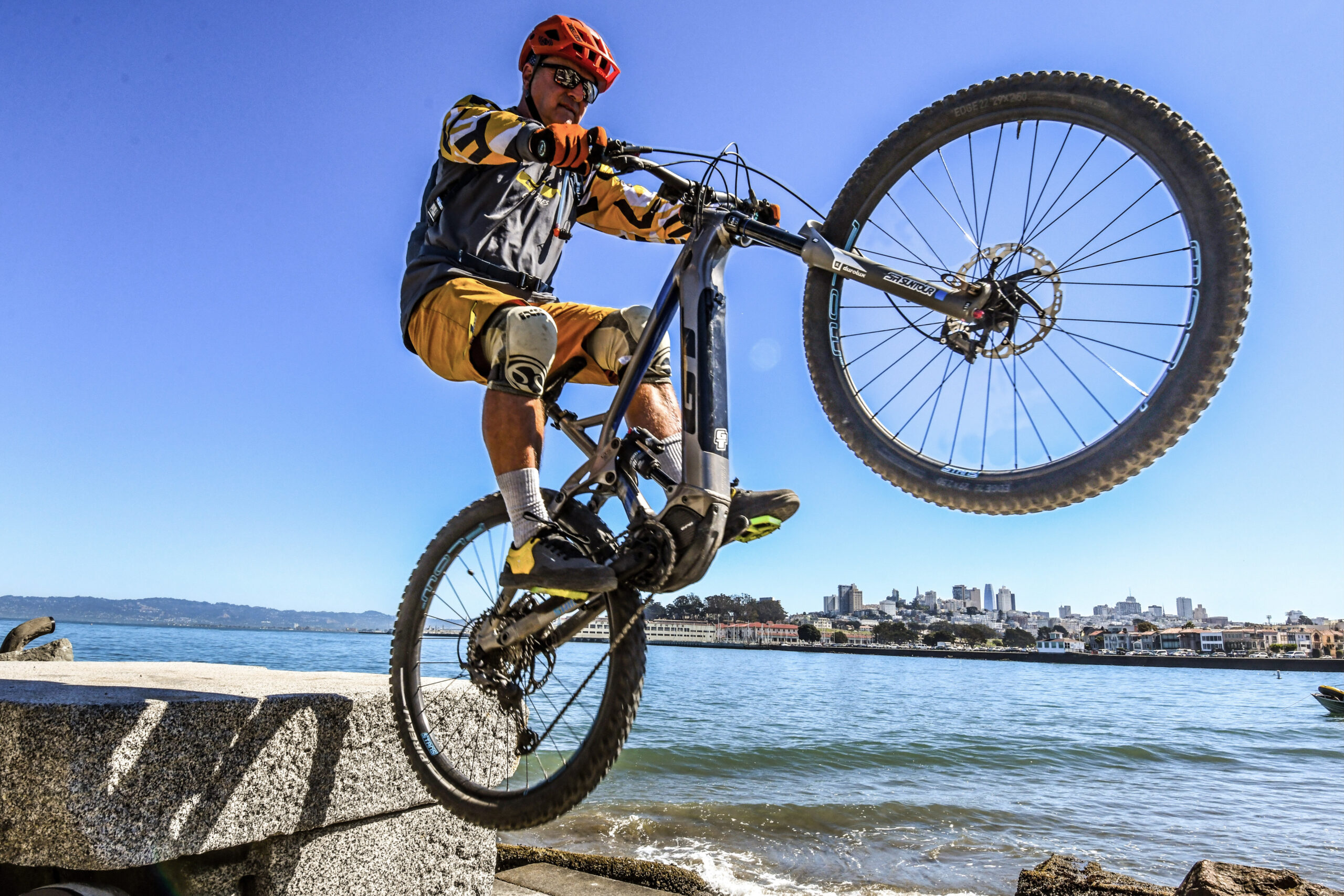
An Open Letter to the Bicycle Industry
To the leaders, builders, advocates, and riders who shape our industry,
I’m writing because I care deeply about where bicycles—and electric bicycles—are headed. We are at a crossroads. The decisions we make about language, power limits, and definitions will determine whether Class 1 e-bikes remain accepted as bicycles—or get grouped with much more powerful machines that don’t belong in the same category.
It’s time to define our language and it’s time to draw a line in the sand of when e-bikes become too powerful.
Words Matter
Today, the term “e-bike” is used to describe everything from a lightweight pedal-assist mountain bike to electric mopeds and full-blown electric motorcycles. That lack of precision creates confusion—and conflict—with land managers, other trail users, parents, and lawmakers.
If we don’t define our terms, others will define them for us.
Ideally, “e-bike” would mean one thing:
A Class 1 pedal-assist bicycle with a maximum assist speed of 20 mph [in North America – Editor] , no throttle, and a motor not exceeding 750 watts of peak power.
Instead, the label has expanded to cover vehicles with throttles, higher speeds, and significantly more power. That blurring of categories puts access at risk.
Clear Categories, Clear Expectations
We need distinct names for distinct machines:
- E-bicycle (EMTB): Class 1 pedal-assist only (20 mph max assist, 750W max peak power)
- E-moped: Throttle-equipped or faster than 20 mph or exceeding 750W, incl. Class 2&3
- E-motorcycle: High-power electric motorcycles well beyond bicycle-level performance
Clear labeling should be mandatory. Every electric vehicle should visibly state its category, assist speed, and peak motor power. This isn’t about enforcement—it’s about clarity and accountability.
The 750-Watt Line Matters
The 750-watt peak limit is not arbitrary. It helps determine whether a vehicle is treated as a bicycle or a motorcycle—and whether it remains welcome on trails and bike paths.
Maximum peak power and nominal (or average/rated) peak power are not the same.
A bike limited to 750 watts peak never exceeds that output. A motor rated at 750 watts nominal can produce much higher bursts of power. That difference is significant.
Class 1 e-bikes gained acceptance because they behave like bicycles: pedal-assist only, no throttle, limited speed, and moderate power. If we allow power creep—higher torque, faster acceleration, motorcycle-like performance—we shouldn’t be surprised when access disapears and regulations increase.
We are already seeing warning signs. In New Jersey, a bill was already signed that will require insurance, registration, motorcycle helmets, and will restrict trail access for electric bikes. In California, lawmakers are working to reinforce the 750W peak limit to improve safety and preserve trail legality. These debates are not theoretical—they are happening now.
A Call to Responsibility
To manufacturers:
Resist the temptation to chase bigger numbers at the expense of long-term access. Short-term sales gains could lead to long-term collapse.
To media and marketers:
Use precise language—even when it’s less convenient. Help draw and defend the line that protects this category.
To riders:
Ride responsibly. Understand what’s at stake. Don’t take trail access for granted.
To advocates and trade groups:
Defend Class 1 clearly and consistently. The industry must self-regulate until the laws are defined.
In order to protect what we have we must stop asking how much power we can get away with—and start asking how much power is too much.
— Hans Rey
What’s the problem with power?
Why is more watts a problem? Well, it’s nothing really much to do with mountain biking rider safety or trail erosion or even the forever in the background spectre of illegal de-restriction. It’s to do with pedal assist bicycles straying too far from their original remit and raisn d’être. Namely, to add a bit of extra motor power on top of the rider power going into the pedals.
Anyone who’s ridden a DJI Avinox ebike – such as the Amflow PL Carbon – will know that it doesn’t take very many rider input watts to get the motor ro give out its much hyped 1,000 watts of motor assistance. The experience is akin to using soft-pedalling of the cranks as essentially a throttle.
It’s this ‘support ratio’ issue that the bike industry is concerned about. Although 1,000w pedal assist bikes are still quite far off things like Surron e-motos in terms of power (minimum 12,500w of peak), there’s no denying that higher and higher wattage e-bikes have the potential to stray too far from regular bicycles.
Also, it should be mentioned that Hans Rey is a Bosch ambassador, so is not entirely without skin in the game, as they say.
Read more about the e-bike power struggle.

I recon that the gun analogy is a bit of a Freudian slip… guns are generally illegal and if you want to own one without a licence or even at all, then I guess you have to get it deactivated some how?
The built in cut off is the thing that allows you to ride the ebike. It is the concession to you that allows you to use a powered vehicle as if it is just a bike.
If you want to go faster than 15mph you have lots of choices.
Pedal harder.
Buy a motorcycle.
Ride a normal bike.
Being overtaken by other traffic will still happen just get used too it, or don’t ride on the road.
I really notice this on my emtb to the point I’ve wondered about getting a 2nd set f wheels for XC type rides
There are definitely some sections of trail where an emtb is slower than an analogue mtb . However I am sure if I put the tyres from my emtb onto an mtb I wouldn’t be able to do 35 miles and 5,000ft of climbing
Where did the 15.5mph come from, Whats the logic behind it?
IMO you could even argue that’s too fast compared to other users of bridleways. Yes a fast horse can do 25/30mph but I’ve not ever seen a horse doing more than a canter on a BW. Good runners might do 12mph? So actually 15.5mph is quite high compared to other users.
There’s more to this one. While this makes sense within e-MTB it’s got wider implications. What does need addressing is how the EPAC class applies to all e-bikes and the proposed limits here affect e-MTB and cargo bikes differently.
Hans/Bosch/ZIV may be in danger of damaging the e-bike and e-cargo market scope by trying to protect the e-MTB market / trail access. Load-carrying e-bikes (Tern GSD etc) may need 800W+ peak power to get up a hill at 10mph. Why limit that possibility? Limit a bike with firmware suited to it’s design and use, don’t limit the peak output of all EPACs that may make a great LEV viable. IMHO – put e-bikes (city/transport type) and e-cargo development scope ahead of e-MTB needs, or make both equal. That puts me with LEVA’s position on EPACs more than Bosch/ZIV, but I also agree that e-MTB outputs need some control. Thing is, you can’t limit e-MTBs w/o limiting all e-bikes and cargo bikes bc of the regulations framework and that’s important.This is essential reading because it rarely surfaces, LEVA don’t have Hans Rey and other influencers talking for them:
https://leva-eu.com/leva-eu-statement-on-ziv-position-on-e-bikes/
^ for anyone who sees e-bikes as not real bikes .. LEVA are kinda with you, just not for the same reasons.
RE Hans being a Bosch ambassador and Bosch’s current motor power – that puts him in an influential position with Bosch and he’s only really saying what Bosch have been for a while, that there needs to be a cap and 750W seems sensibly powerful but not daft (potential issues with the implications of their direction aside). Some say it’s protectionism in the face of DJI’s motor. I’d say DJI just played the marketing by numbers game and will continue to do so because DJI have a no effs given, dry your eyes approach to our trails and any MTB culture we have / had. They’re a drone maker in China, they don’t care what happens to our trails (I’m not convinced they care how their drones get used either). So I get the sentiment behind the article but there’s more to all this than only e-MTBs.
Good luck with that. What have many been saying recently about MTB marketing? Has he seen youtube recently? Siding with LEVA on all this means I may end up seeing e-MTBs with 1250W and a trail access ban on all e-bikes. I don’t want that to happen. My wife has a rigid city e-bike with 2.0″ tyres and rode it on easy dry trails at Swinley ages ago, for us to be told e-bikes are banned there. That’s the problem.. similar here, or in govt and business, the powerful few fk it up for the rest of us.
Edit to add, I’d like to see the bike industry media discussing LEVA’s take on all this more openly, for balance and perspective. E-MTBs and electric transport futures are linked by regulations and type/class approval. This is a good article on the e-MTB power topic that also misses the point that what we want for e-MTB might not help wider e-bike development that could benefit city transport - https://ebike-mtb.com/regulierungs-dilemma-der-e-bike-branche/
Are Ebikes are banned at swinley?
^ No, that was just a belief at the time in one area. IDR the detail now, was ~2018. OT sorry. Point was that an access ban would restrict what I’d call regular e-bikes (low power leisure use on byways for ex) use because of the image and issues of more powerful e-MTBs.
I disagree strongly. We need high powered and often large electric vehicles with pedals to be in a different category and not using bike lanes. Something like the current Shimano and Bosch motors are plenty powerful enough for genuine cargo bikes… they just need big batteries.
Sorry to keep banging on about the continuous power thing, but I really think it damaged the way the emtb market ended up going.
As I said earlier, the ‘maximum’ continuous power limit didn’t put a limit on how large a motor could be but it did limit how small a motor could be.
I was thinking the other day that ebikes should be a leveler. Ideally the way they should be used is so that me and Tom Pidcock can go for a ride together (perhaps not the most realistic scenario as I don’t think there is a motor powerful enough to compensate for my Watt peashooters) or my Dad could use an ebike so me and him can go out riding together.
The actual power needed to close the gap between a reasonably fit rider and an unfit rider is pretty small, imo. Even 100W would be enough for most people.
With a very small motor the footprint and torque would mean there is a good chance you package it in such a way that the whole thing could be bolted onto ISCG tabs, and of course the battery could be much smaller.
As it stands, ebike kits have to conform to the regulations and the regulations say that your motor has to be rated to 250W continuous power. A 100W continuous power motor would fail the test and would not be legal to use.
I’d like to see the continuous power requirement removed and then see what we can do with much smaller kits that do what everyone says emtbs are intended to do which is close the gap between riders of different levels of fitness.
Personally I can’t help thinking this is part of a much wider societal problem around behaviour, responsibility and how we interact with the world and each other. This ranges from problems like litter and dog waste to the frankly ridiculous 1700 or so people who die on UK roads each year, the vast majority preventable. The latter destroys a lot more lives than the 1700 too and it’s insane it still happens given the seriousness.
E-bikes fall in there somewhere and are just another part of modern life that are subject to humans, and the whims and selfishness that goes with them. We need to be better humans.
Just my thoughts, the 15 mph limit and the power of Bosch / Shimano motors is more than enough to add a lot of positives to mountain biking. Beyond that and people just can’t appear to be trusted not to affect other people and our environment negatively. Not surprising really, but a bit sad.
I can happily blat along sections of the HPT or Monsal Trail at close to 20mph on my gravel bike.
Obviously being an adult and not an idiot (although some may challenge that) I slow down for other users.
If the ebike limit were 20mph, I and probably many others would be far less inclined to deristrict them.
On mixed rides, the restricted ebikers are often dropped on fire roads or road sections by the meat powered riders.
@steamtb The EPAC rules would be fine, but the issue is the number of overpowered bikes sold for use ‘on private land’ or which have been modified. I’d be very surprised if the majority of these aren’t ridden at least briefly on the public highway, and as we know from watching Deliveroo bikes whizzing uphill with no pedalling and sometimes no chain, the enforcement of the EPAC rules is non-existent.
I agree with you that the current product works for cargo bikes but I don’t want to see design or product scope limited in principle by power. Also agree there’s a size/weight limit for bike lane use, as part of the same discussion. Higher-power and size/weight but speed limited EPAC LEVs might be viable on roads and more useable/useful if viable w/o moped/motorbike licensing but that’s getting into a future products debate. I just prefer not to take design options off the table when EPACS or LEVS could offer so much. I do think we already have most of what’s needed though, it’s infrastructure that limits uptake more than current product scope.
They’re not the same thing though, and leaving EPAC rules wide open enough to enable LEVS is entirely unnecessary/lazy. We need new regs for LEVS in the UK closer in line with other countries, that enable their use from 14 etc. Trying to sneak LEVS out as if they are pedal bikes results in a mess for the users of both categories (and pedestrians).
Not the same no, though I think cargo/LEV products can benefit from being the under the same frameworks and regs as EPACs (mainly related to licencing and how that relates to use/uptake – and perhaps commercial use or insurance needs are a dividing line rather than it only being about product spec, that’s beyond my knowledge of regs). The suggested limitations are not all wrong but some are limiting, mainly the power. The tricky bit is that I agree that e-MTBs could have limited max power and also that a limit that works there may be detrimental to other products.
How many people know/understand the whole ‘support ratio’ thing? IMO it’s the support ratio that feels like it’s the key thing to discuss and legislate for.
ie. limit 2-wheel ebikes to only be able to product 4(?) times what the rider is putting in. So if you want 1000w, you need to be putting in 250w yourself. Type of thing.
Why? Do you feel in danger riding a normal bike on the road? Unless you’re superhuman* a sustained 15.5mph is hard work. It’s the top gear (29×2.4, 30/10 gear, 60rpm) on most modern trail/enduro bikes. It’s faster than I’d average on the road outside of late summer.
*well, in the top few percent of keen amateur cyclists anyway
I think that conflates (or even causes) two issues.
1) The motor on Dan Stanton’s bike may well be useful on a fully laden cargo bike. But that doesn’t mean he’s being any less of a dick with it.
2) I don’t really want 200-300kg vehicles in the bike lanes or shared paths. Yes they can help solve those last mile logistics problems, but they only exist as a solution because the regulations never anticipated them. A better solution would be to create a new class of four wheel vehicles akin to mopeds (or just call them quad bikes under the existing moped rules). Tax, MOT, (easy) licence, and maybe a 5mph limit in pedestrian areas or cycle lanes.
About the support ratio point, could that would mean that e-MTBs were no longer the ride-leveller that they can be? I’d get less out of my motor than my riding buddy if he’s fitter so I’d be dropped again.The regs would also need to differentiate enthusiast/performance bikes and transport/load carrier products (no problem though they already do for other test areas). The users needing the highest support ratio may also justify the highest peak power – a parent transporting a small, heavy load and 2 kids to school while wearing normal clothes on their way to work. That same support ratio and peak power on an e-MTB might be a problem?
Works in theory but not sure it’s an all-good thing unless accepted as a variable or adjustable by the rider like a mode level.
Some buddy.
Does it though?
Say it was 1:1. That means an average person could get on a cargo bike capable of moving ~80kg of cargo as if they were riding a normal bike. And they’re probably only going to output about 250W peak. Remember we’re talking about average people here, having an FTP >2W/kg makes any of us a statistical outlier.
It’s a pointless argument though, the can of worms is open and I doubt there’s any appetite in the DoT or the EU to change anything. It’s now just a nail in the coffin of utility cycling as any attempt to add cycling access to pedestrian areas will just be met with comments about e-bikes.
We gave a ‘dragons den’ type pitch this week to get some charity funding to upgrade the lights at the Bike Hub to LED’s to try and reduce our huge energy bill. And someone in the audience went off on a rant. So it really is a problem that’s going to block funding for active travel inititiatives.
If you both cared about aerobic exercise on your ride, your buddy would have to turn his assist level down a bit until he reached a level that you were both putting in equal effort.
As opposed to the current system where the weaker rider just turns theirs up until everyone goes 15.5mph with varying effort levels.
That may work out, but some who ride cargo bikes don’t want to put in much effort like you or I on a regular bike. Or in a similar way the ‘active’ part of active travel puts off a lot of people imo.
I don’t think I do! – so in the last couple of years my riding buddy has been my partner. A 60 year old, 5’2″ woman. She bought an eMTB so that we could go on rides out in the country together… so she’s suppose to work up to the same level of power as me for us to go on enjoyable rides together? Currently we use the “system" (lol) mentioned above, where by I ride in a lower power and she rides in whatever mode is enjoyable for the ride.
But then they’re no longer doing bike things at bike speeds, they’re doing cargo things at (slow) car speeds.
Bike infrastructure is mostly built around people doing 50-100W and ~12mph. If someone’s sweating (even an unfit person) they’re probably putting in too much effort for a shared path.
If the pedals are just turned into a throttle by the legal back door then it’s something different. If that’s the goal we should just change the rules to allow throttle control and vastly simplify the electronics/installation. I don’t have any issue with throttled e-bikes or scooters if they sat at the same 15mph speed limits. Same with these cargo / rikshaw delivery vehicles, get rid of the vestigial pedals and just make them part of the same umbrella as mopeds.
I’ve said before on the topic of e-scooters,
for urban mobility, and for people with no interest in even light exercise or willingness to get sweaty, or any real desire for the actual action of “riding" a bike
an electric scooter is by far the better solution in cost, weight, ease of storage and ease of use than a commuter ebike.