MTB legend asks if it is time to draw a line in the sand of when e-bikes become “too powerful”
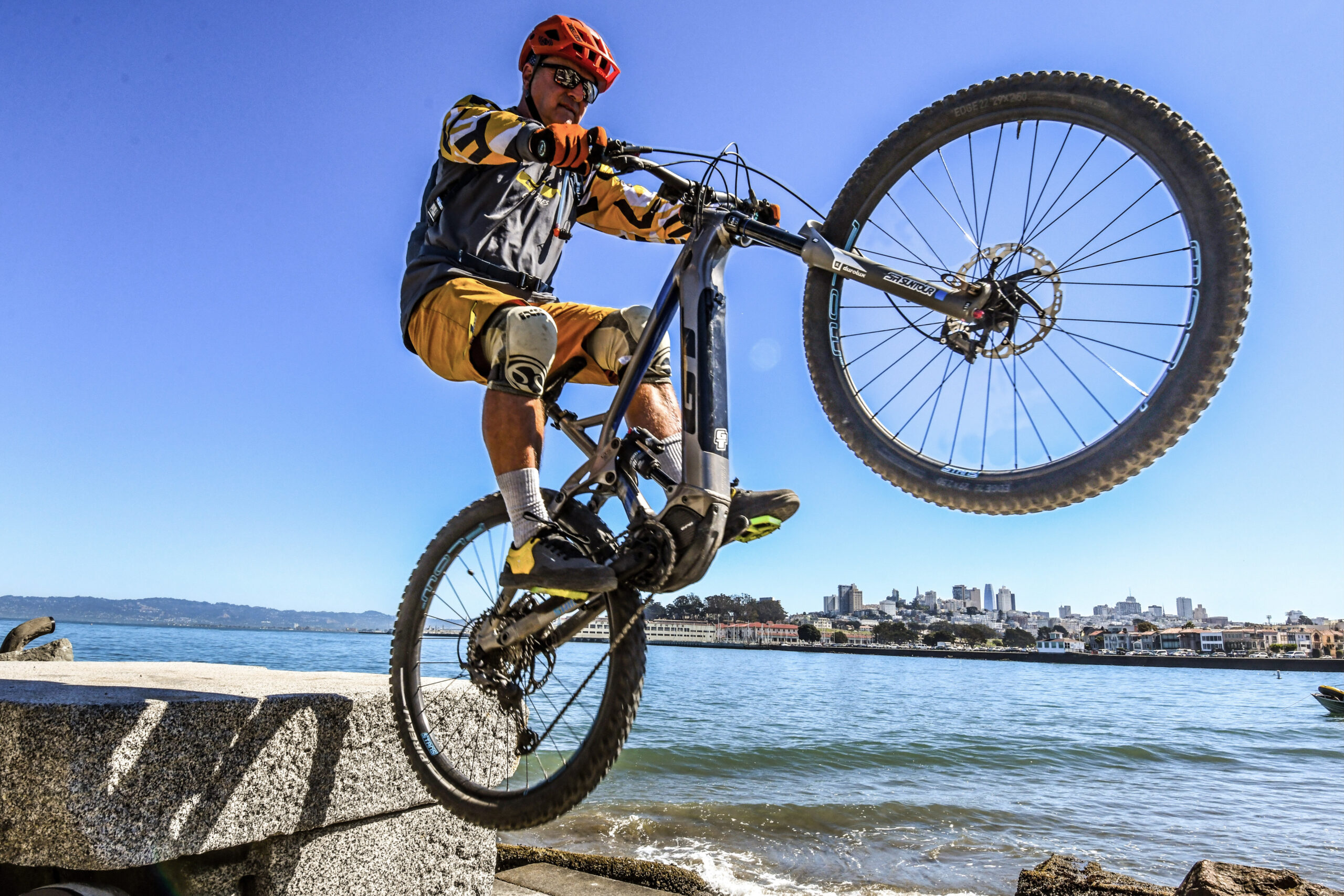
An Open Letter to the Bicycle Industry
To the leaders, builders, advocates, and riders who shape our industry,
I’m writing because I care deeply about where bicycles—and electric bicycles—are headed. We are at a crossroads. The decisions we make about language, power limits, and definitions will determine whether Class 1 e-bikes remain accepted as bicycles—or get grouped with much more powerful machines that don’t belong in the same category.
It’s time to define our language and it’s time to draw a line in the sand of when e-bikes become too powerful.
Words Matter
Today, the term “e-bike” is used to describe everything from a lightweight pedal-assist mountain bike to electric mopeds and full-blown electric motorcycles. That lack of precision creates confusion—and conflict—with land managers, other trail users, parents, and lawmakers.
If we don’t define our terms, others will define them for us.
Ideally, “e-bike” would mean one thing:
A Class 1 pedal-assist bicycle with a maximum assist speed of 20 mph [in North America – Editor] , no throttle, and a motor not exceeding 750 watts of peak power.
Instead, the label has expanded to cover vehicles with throttles, higher speeds, and significantly more power. That blurring of categories puts access at risk.
Clear Categories, Clear Expectations
We need distinct names for distinct machines:
- E-bicycle (EMTB): Class 1 pedal-assist only (20 mph max assist, 750W max peak power)
- E-moped: Throttle-equipped or faster than 20 mph or exceeding 750W, incl. Class 2&3
- E-motorcycle: High-power electric motorcycles well beyond bicycle-level performance
Clear labeling should be mandatory. Every electric vehicle should visibly state its category, assist speed, and peak motor power. This isn’t about enforcement—it’s about clarity and accountability.
The 750-Watt Line Matters
The 750-watt peak limit is not arbitrary. It helps determine whether a vehicle is treated as a bicycle or a motorcycle—and whether it remains welcome on trails and bike paths.
Maximum peak power and nominal (or average/rated) peak power are not the same.
A bike limited to 750 watts peak never exceeds that output. A motor rated at 750 watts nominal can produce much higher bursts of power. That difference is significant.
Class 1 e-bikes gained acceptance because they behave like bicycles: pedal-assist only, no throttle, limited speed, and moderate power. If we allow power creep—higher torque, faster acceleration, motorcycle-like performance—we shouldn’t be surprised when access disapears and regulations increase.
We are already seeing warning signs. In New Jersey, a bill was already signed that will require insurance, registration, motorcycle helmets, and will restrict trail access for electric bikes. In California, lawmakers are working to reinforce the 750W peak limit to improve safety and preserve trail legality. These debates are not theoretical—they are happening now.
A Call to Responsibility
To manufacturers:
Resist the temptation to chase bigger numbers at the expense of long-term access. Short-term sales gains could lead to long-term collapse.
To media and marketers:
Use precise language—even when it’s less convenient. Help draw and defend the line that protects this category.
To riders:
Ride responsibly. Understand what’s at stake. Don’t take trail access for granted.
To advocates and trade groups:
Defend Class 1 clearly and consistently. The industry must self-regulate until the laws are defined.
In order to protect what we have we must stop asking how much power we can get away with—and start asking how much power is too much.
— Hans Rey
What’s the problem with power?
Why is more watts a problem? Well, it’s nothing really much to do with mountain biking rider safety or trail erosion or even the forever in the background spectre of illegal de-restriction. It’s to do with pedal assist bicycles straying too far from their original remit and raisn d’être. Namely, to add a bit of extra motor power on top of the rider power going into the pedals.
Anyone who’s ridden a DJI Avinox ebike – such as the Amflow PL Carbon – will know that it doesn’t take very many rider input watts to get the motor ro give out its much hyped 1,000 watts of motor assistance. The experience is akin to using soft-pedalling of the cranks as essentially a throttle.
It’s this ‘support ratio’ issue that the bike industry is concerned about. Although 1,000w pedal assist bikes are still quite far off things like Surron e-motos in terms of power (minimum 12,500w of peak), there’s no denying that higher and higher wattage e-bikes have the potential to stray too far from regular bicycles.
Also, it should be mentioned that Hans Rey is a Bosch ambassador, so is not entirely without skin in the game, as they say.
Read more about the e-bike power struggle.

How do they compare price wise?
To those who’ve adapted their bikes to go faster than the laws allow – why not just by one of these and ride it illegally?
You can get a Maeving for £5k.
Top Speed 45 mph
Continuous Power 3.0 kW
Peak Power 4.4 kW
Torque 160 Nm
CBT, compulsory helmet, etc.
I agree with the first bit to some extent (on the roads/cyclelanes of the UK), I think E-bikes are now an established thing the assistance limit is fair without seeking to enable unlicensed mopeds, those that want to keep using them need to accept a bit of responsibility. And while I take the point that riding a chipped one is sort of a personal choice that (potentially) doesn’t affect others… until it does and you pile into someone’s Nan and some baby robins at 30mph, then it really matters and it very much becomes that whole libertarian “personal choices and responsibilities” sort of argument, I feel like enforcement needs to be significant as in driving licence gone, big fines for “riding an unlicensed, uninsured motorcycle” sort of significant just to give the choice some consequential setting.
Such cases are (hopefully) rare though, but they do fuel the Daily Mail commentary, so eeeeb fanboys beware of disproportionately damaging your own “cause” with what you might only consider minor twattery.
I suppose the use on trails is different, and the bit that needs some consideration by eeeberists. My own view (as a non-E-biker) is that a simple rule to abide by would be if it’s pointed down just turn off the assistance (I assume people would by default anyway?). It can’t be doing that much, and as I’m constantly told it’s just about squeezing more miles into less time the main gain has to be on climbs right? But yeah turn it back into a (heavier) MTB for the fun bits, the leccy is only there to help you speed run the boring bits (supposedly)…
On a DH, there’s no need to turn it off as you’re past the limiter pretty quickly or freewheeling anyway. If there’s an uphill section, well that’s no longer DH is it? Short sharp rises you might easily crank up on a much lighter bike can be difficult on an e-bike with dodgy knees.
Agreed, yet you can kill someone while driving and not lose your license so I doubt e-bike use will have much impact there. The equivalence of car power Vs road speed limits and EPAC power + speed limitations is probably another topic or just whataboutery. Still, I can understand why some think EPAC limits are a bit silly.
Happened a while back https://www.bbc.co.uk/news/articles/ce82z6xnen5oChipped ebikeCapable of 27mphHit and killed pedestrianNo evidence he was riding recklessly at the time.
250 fine and 6 month driving ban
^ I was wrong on that – seems that a driving ban is part of the majority of serious driving offences. My impression of the sentences being too lenient (imo) gave me that idea, but, nope.
Meanwhile locally to be two people were fined more 80000 NOK each for driving an e scooter drunk on the road plus points and it\s iimplied the same for a chipped bike .
Charged for riding motorised vehicle illegally, no insurance, no proper helmet, drunk and so on
I was also unaware of that case, the obvious parallel is there to be drawn with with everyone’s favourite junior hipster Charlie Alliston, who got 18 months (in a young offenders institute?)
No motor in that instance, but his decision to remove brakes from his fixie must have factored in the verdict and sentencing what he was riding still constituted a “bicycle”. A chipped E-bike that can top 27mph is an unlicensed motor vehicle by current legal definition right?
So someone more legally literate explain the differing sentences (or are they broadly equivalent)? Am I better off killing somebody with a Chipped E-bike or moped than a brakeless fixie? (Asking for a friend)…
Edit: Re-reading the article it seems ignorance is now an accepted defence.
Those proudly owning up to chipping their E-bikes would be well advised to go scrub their interweb postings, just in case they ever need to make use of that little nugget 😉