The Cotic Rocket looks like nothing else. And it outperforms every other eeb out there.
- Brand: Cotic
- Product: Rocket
- From: Cotic
- Price: from £7,599*
- Tested by: Benji (and others) for a month
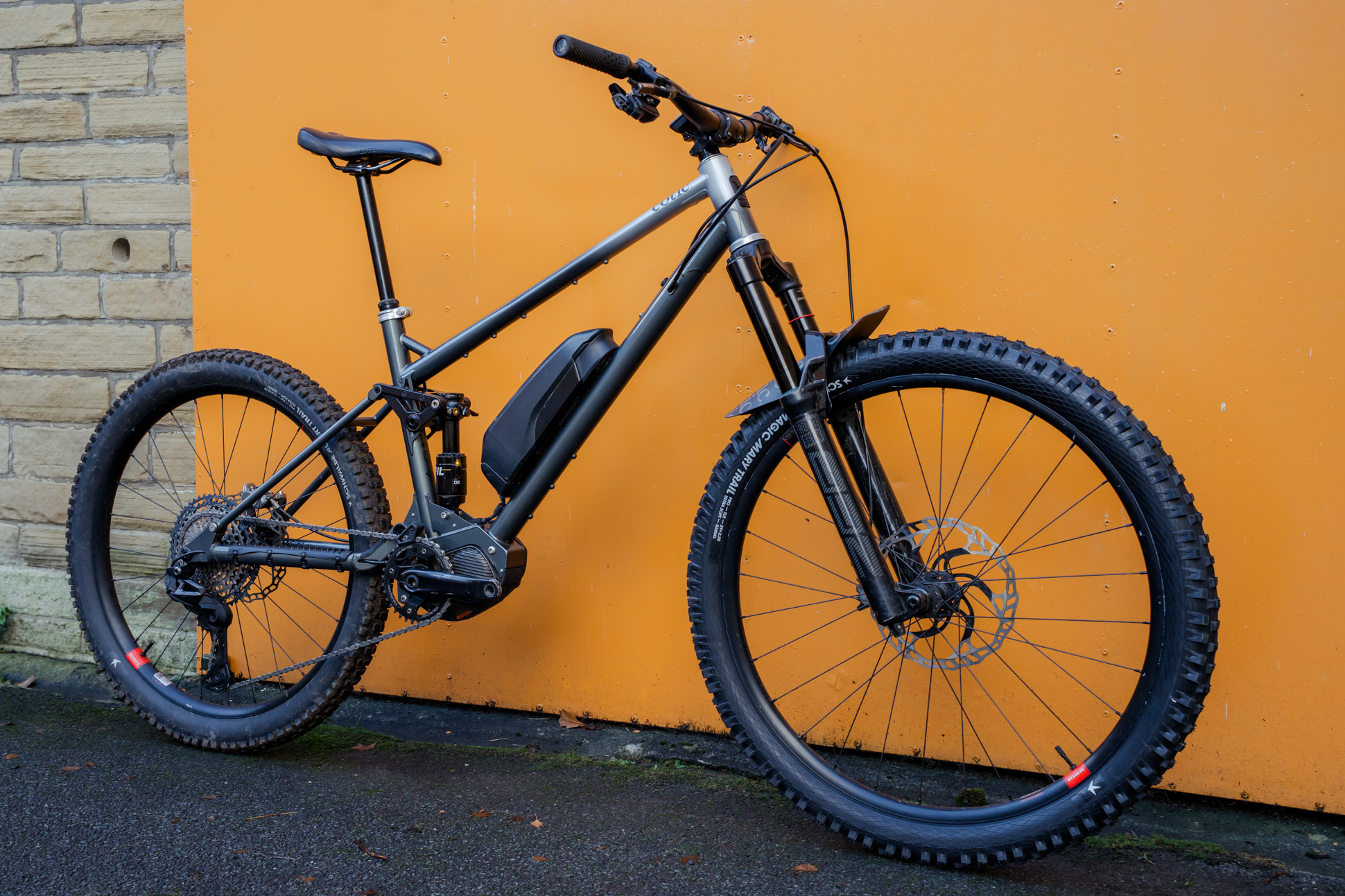
*The bike tested was essentially the Di2 version of the Gold build which starts at £8,799. Cotic can also do a frame/shock/drive system option – where a rider can swap all their bits onto an ebike frame – for £5,999.
Pros
- Flexibility (in every sense)
- Sorted geometry
- Offers everything that actually matters
Cons
- Cost
- Unconventional aesthetic
Our rating
Yes, this bike technically launched in 2024. But it launched in November 2024. In other words, too late to factor in our end-of-year round-up stuff.
Also, back in November ’24, I only had a few hours playtime on the new Cotic Rocket. Enough to give me a sneaking feeling that it was easily the most capable Cotic mountain bike ever. As November 2025 approached, I requested the Cotic Rocket back in for a proper test period. I was not disappointed.
The claim that the Rocket is the most capable Cotic ever may sound rather unsurprising – seeing as it has a motor – but I’m not just talking about climbing capability. Although it is an extremely adept ascender; steeper actual seat tube, longer chain stays and grippy rear suspension in full effect. It is its capability on descents and traverses that is also a step up from any analogue Cotic I’ve ridden before.
If you’ve followed Cotic over the years you’ll probably have noticed that it doesn’t really release bad bikes. It also doesn’t really release ‘safe’, conservative or retro-minded bikes either.
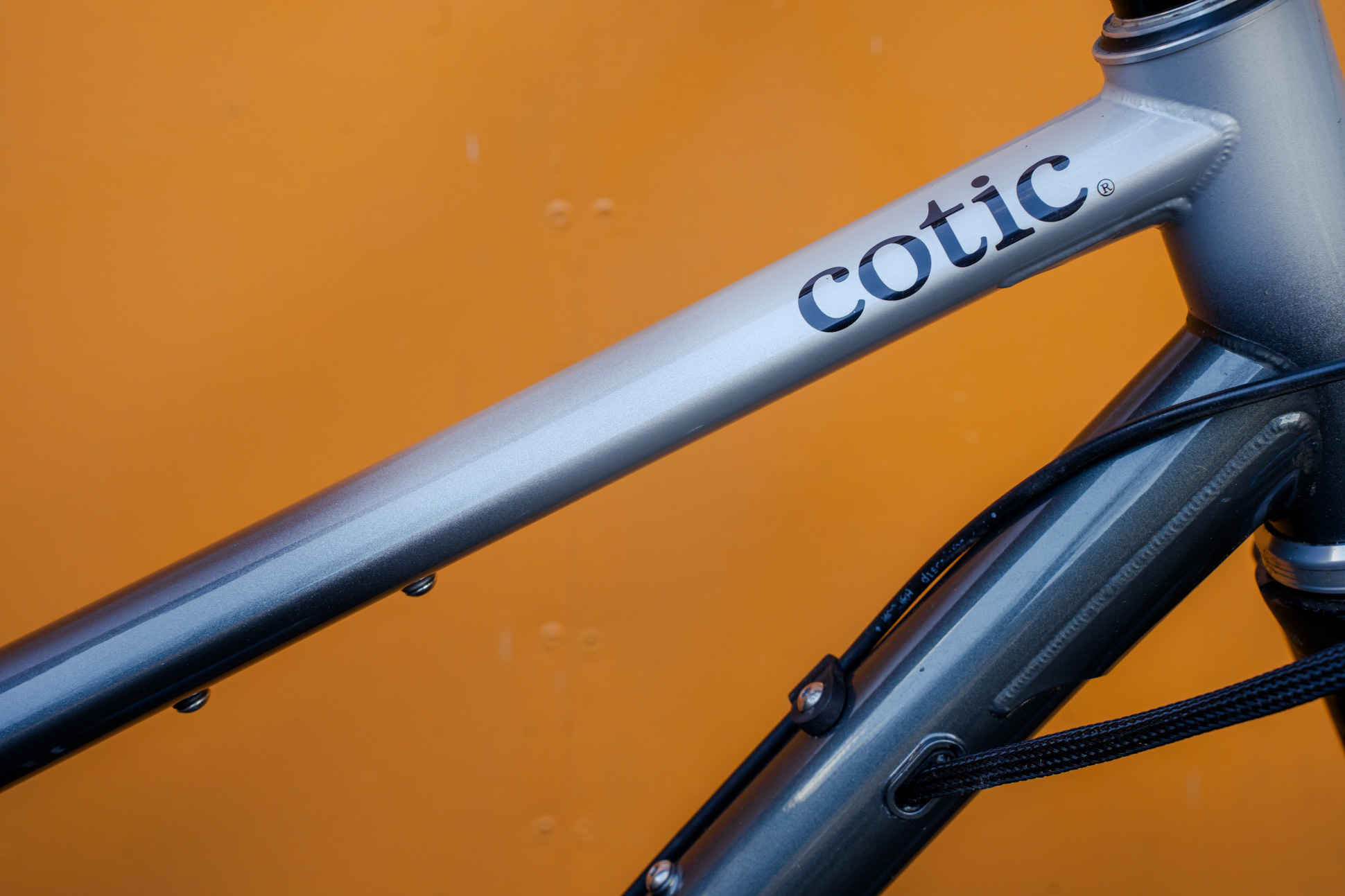
First and foremost a Cotic bike is designed to handle well. It is also designed to be easy to live with. You’ll not see any cabling passing through headsets on a Cotic.
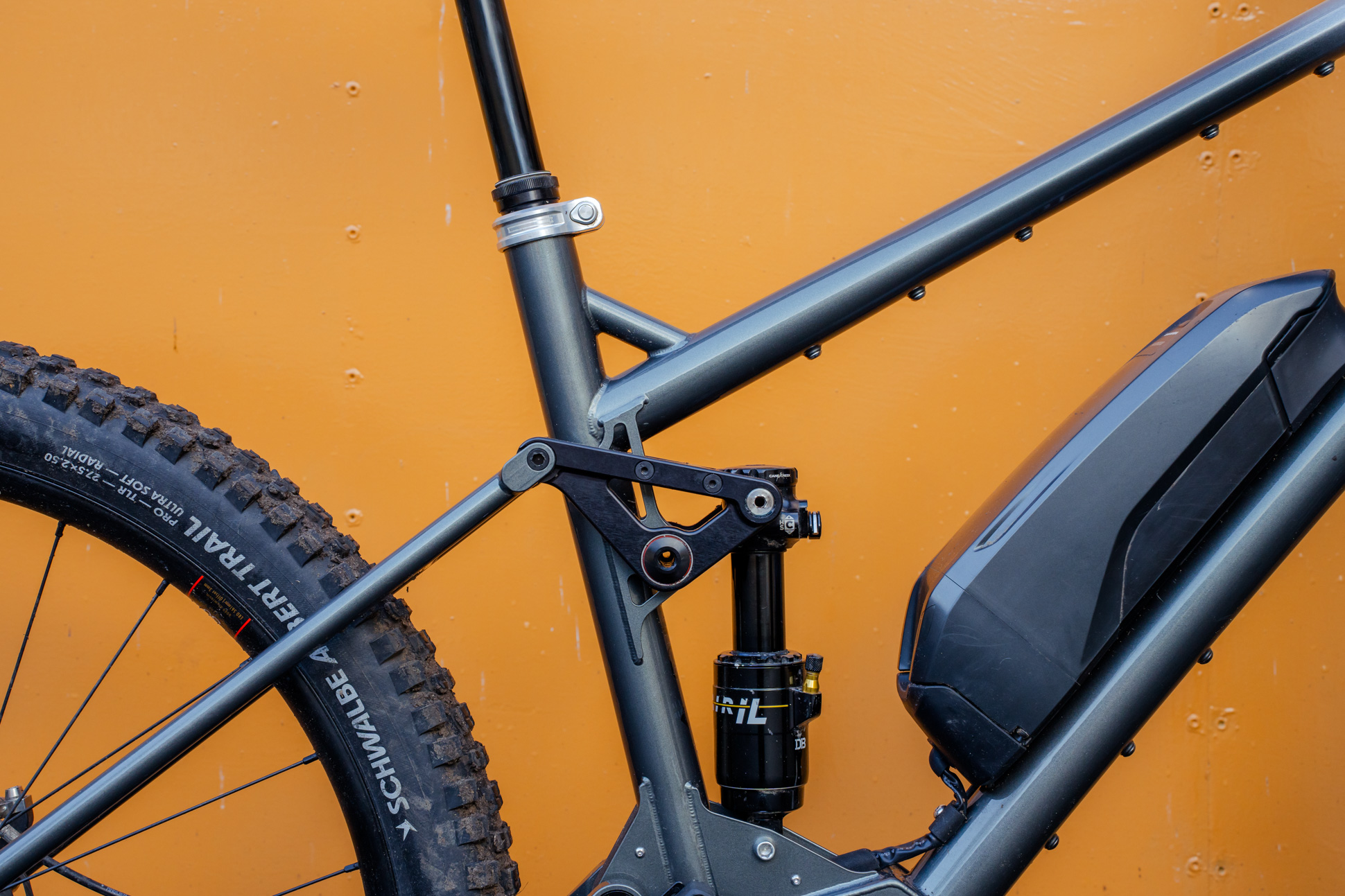
And it is absolutely because of its steel tube fabrication that it rides the fantastic way it does. Going from the Rocket back to other ebikes is revelatory. All other eebs ride feel ‘dead’ – in a chassis sense – compared to the Rocket. I’ve aways been of the opinion that the down tube is the single most important tube on a bike in terms of dictating ride feel. The fact the the down tube of the Rocket is not a drainpipe-sized bit of metal or carbon is significant.
Anyone who’s been on any bike website with a story about the Cotic Rocket on it can’t fail to have noticed the haters. The main contentious aspect of the Rocket. That externally mounted battery.
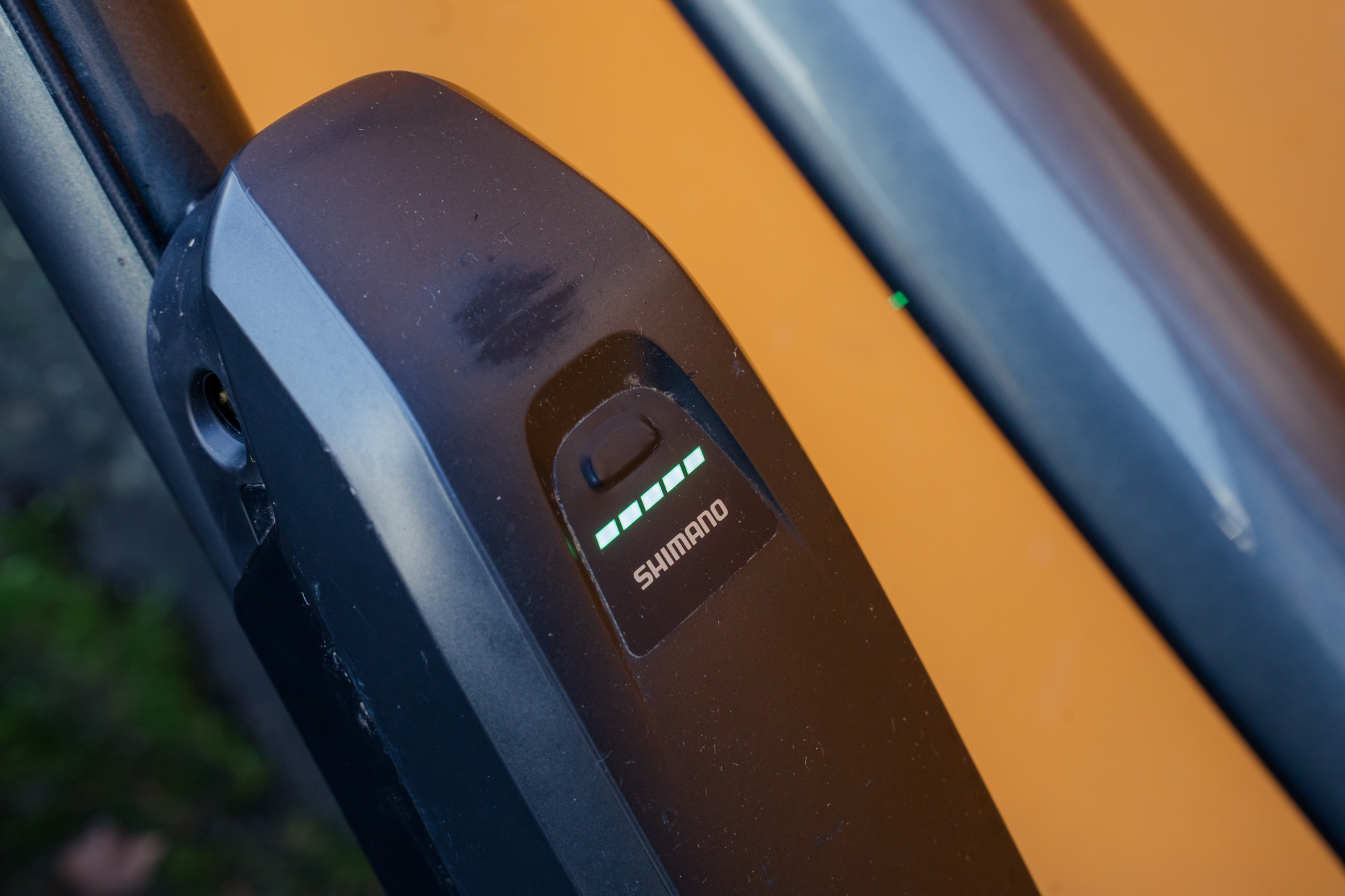
It is not an ‘old fashioned’ location for a battery. It is not a ‘cheaper’ location for a battery. It is not the ‘easiest’ location for a battery. Cotic has gone with an externally mounted battery because it is the best location. It is the best location from a flexibility point of view.
And I mean flexibility in every sense.
The easy-on easy-off nature of the external battery makes it possible to choose what battery to run (Cotic has 418Wh, 504Wh or 630Wh option). You have flexibility in terms of what weight-to-range ratio you wish to run. Run the lower capacity and have a considerably lighter bike. Or go all in with the 630Wh for big mileage days.
And not having a whacking great down tube means you can actually have some compliance in your frame. There is no point in a Cotic that doesn’t offer controlled chassis flex. Compliance is the whole flipping USP of the brand.
Aluminium e-bikes with internally mounted batteries housed in oversized down tubes are incredibly stiff. So are most carbon e-bikes with similar designs. Not all carbon ebikes, mind. Some are okay. But not everyone wants carbon fibre.
I’d actually say that having the external battery weight where it is on the Cotic Rocket is pretty much the ideal spot for it. A lot of brands may state that having the battery nearer the bottom bracket is beneficial as it’s “low and central” but I’ve not found that to be the case.
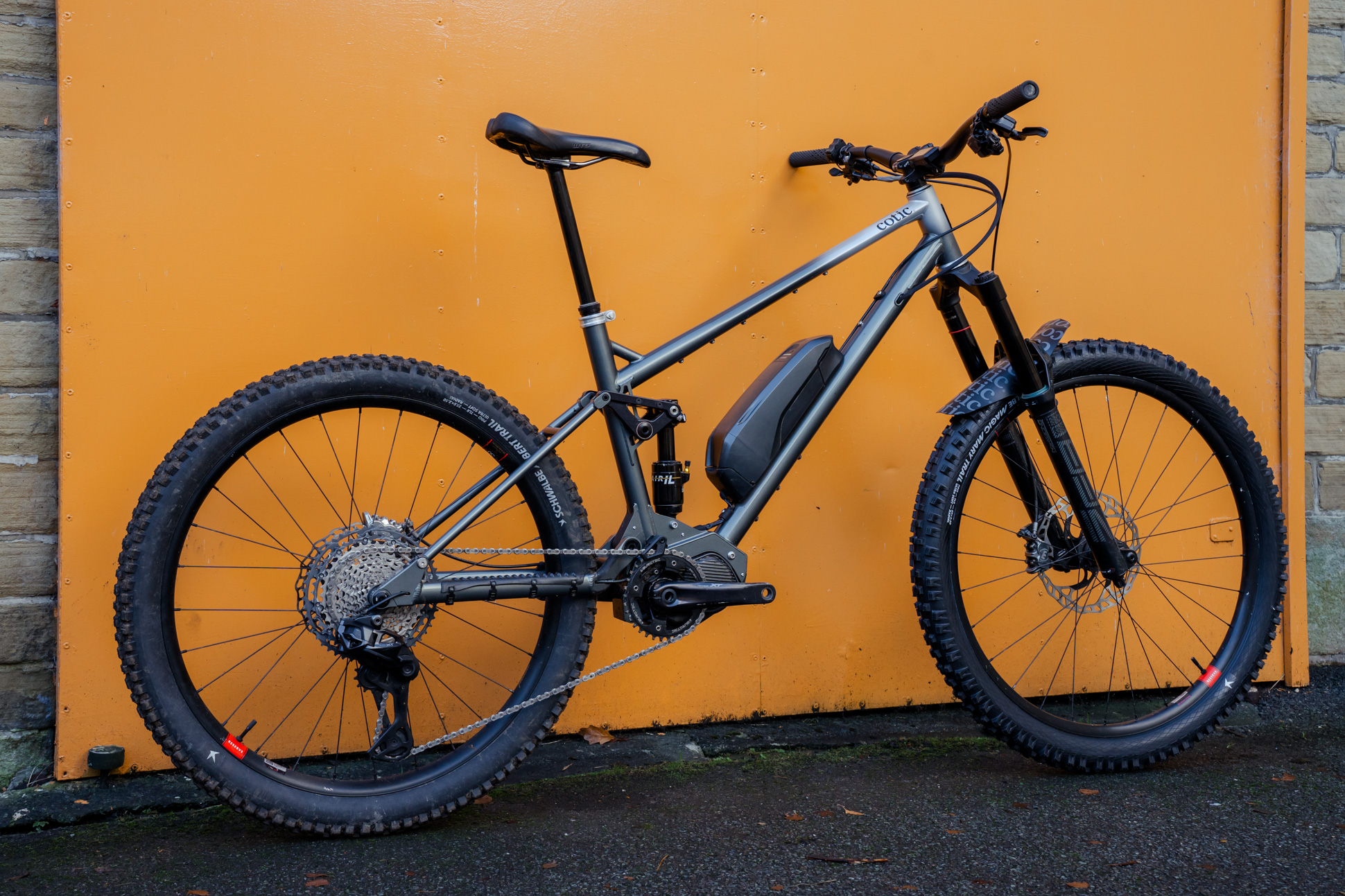
First of all, the BB is not the centre of the bike (the centre of the wheelbase is the centre of the bike). And secondly, low slung weight can make bikes handle worse; like you’ve got an anchor between your ankles. Having the battery weight basically at the midpoint between your feet (BB) and your hands (cockpit) is a good thing in my experience. It makes traction much more predictable and controllable and also improves the bike’s turn-in feel.
So yeah. I’m a big fan of the externally mounted battery. I have frequently bemoaned the move away from them.
Before we get on to the bike handling stuff, let’s go in to the motorspeak. The Shimano EP801 should probably have been given a whole new number name. It is not the same as the previous EP8. It has the same headline power numbers (85Nm of torque, 600 watts peak power) but it’s quieter both when delivering power and when coasting (there’s minimal rattle). Anecdotally the EP801 is way more reliable too.
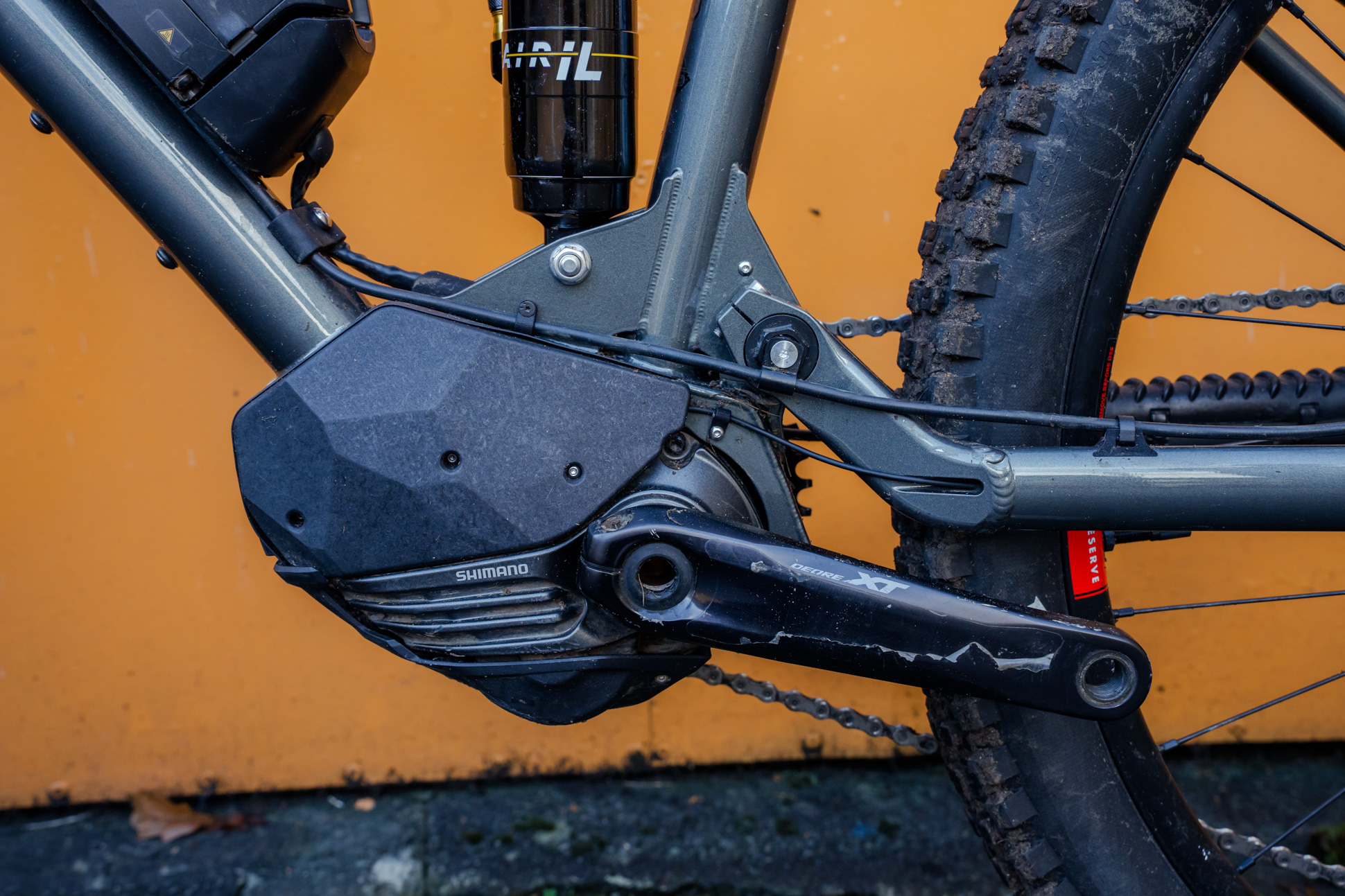
One thing that really stands out about Shimano motors is their fuel economy. For the same capacity battery and same Nm/watts stats, we get more range out of a Shimano system than any other. Obviously, ‘your mileage may vary’ (as they say) depending on a whole swathe of variables but for us, Shimano are the rulers of range. The modest 504Wh battery is very possibly all most people will ever need.
I don’t think there’s any magic to this fuel economy. I think it’s just a by-product of Shimano motors not giving you maximum assist levels as eagerly/early as other motor brands do. You do get 85Nm/600w, just not as frequently as, say, with a Bosch motor. I haven’t yet ridden an EP801 with the new ‘Race’ firmware, which may make things a bit more Bosch-y (with an attendant loss in mpg too no doubt).
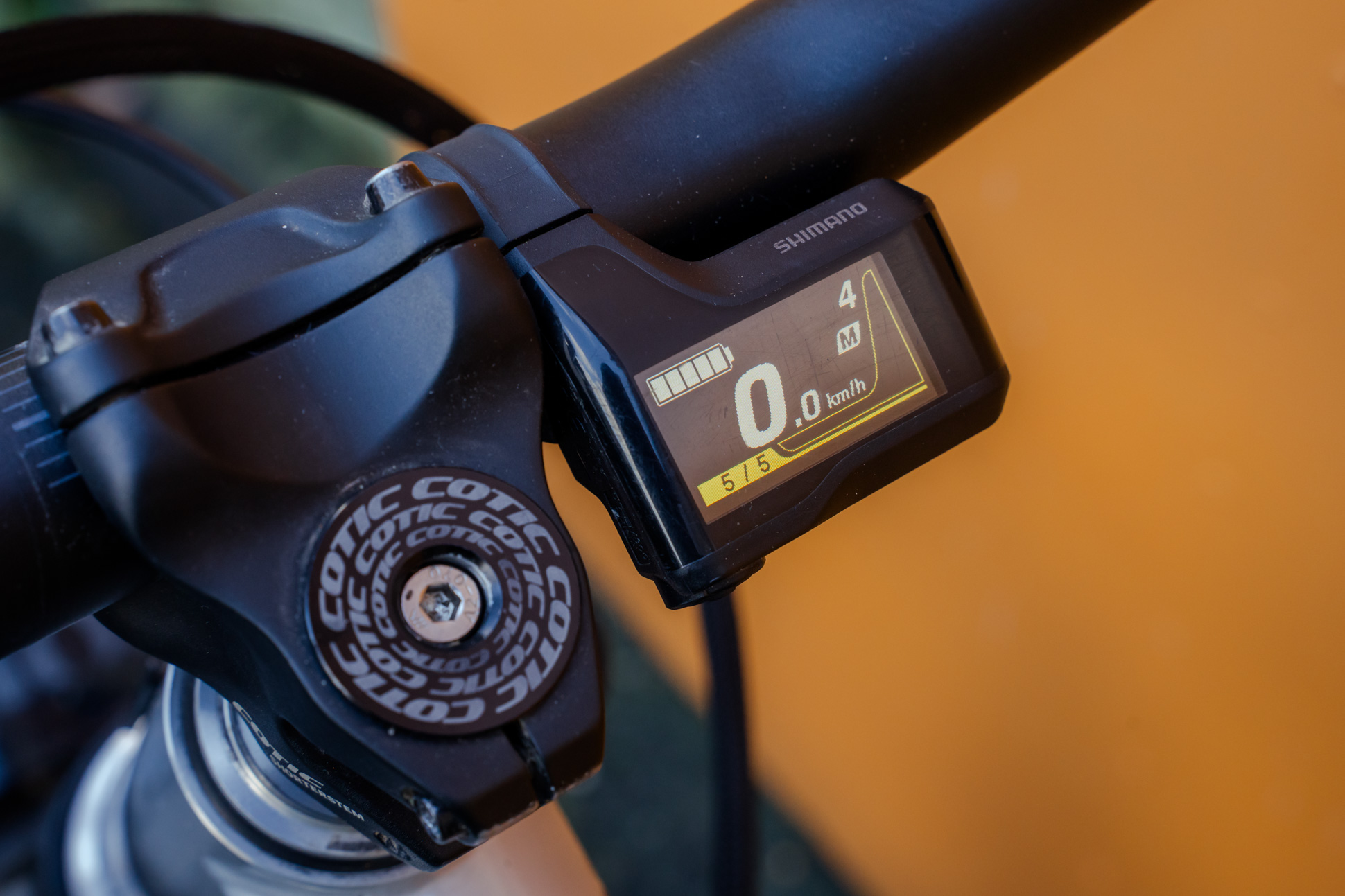
I like the Shimano bar remote. Simple, two-buttons. I kinda like the beside-the-stem display from a size and location point of view but I just wish the specced display would show the current time permanently (instead of defaulting back to current speed after a minute or two). The Shimano EN600 (I think) display with its customisable multiple screens would be a good option.
I will admit that I find the five-blocks battery level indication rather crude on the specced display. I also do wish that Shimano wouldn’t make the motor go into ‘limp mode’ quite so early in its battery depletion level.
On the whole though, I’m a big fan of the way Shimano motors feel. They feel much more like an extension of yourself, with no surprises, nor any underwhelming delivery.
The overall sensation of riding the Cotic Rocket was that it was very similar to the analogue Cotic RocketMAX but with even more calmness and grip. And more standover by virtue of the improved seatpost insertion from the revised rear suspension layout. Cotic’s Droplink suspension design has been… er, dropped. The new design (without a pivot passing through the seat tube and limiting dropper insertion) is called Rocklink.
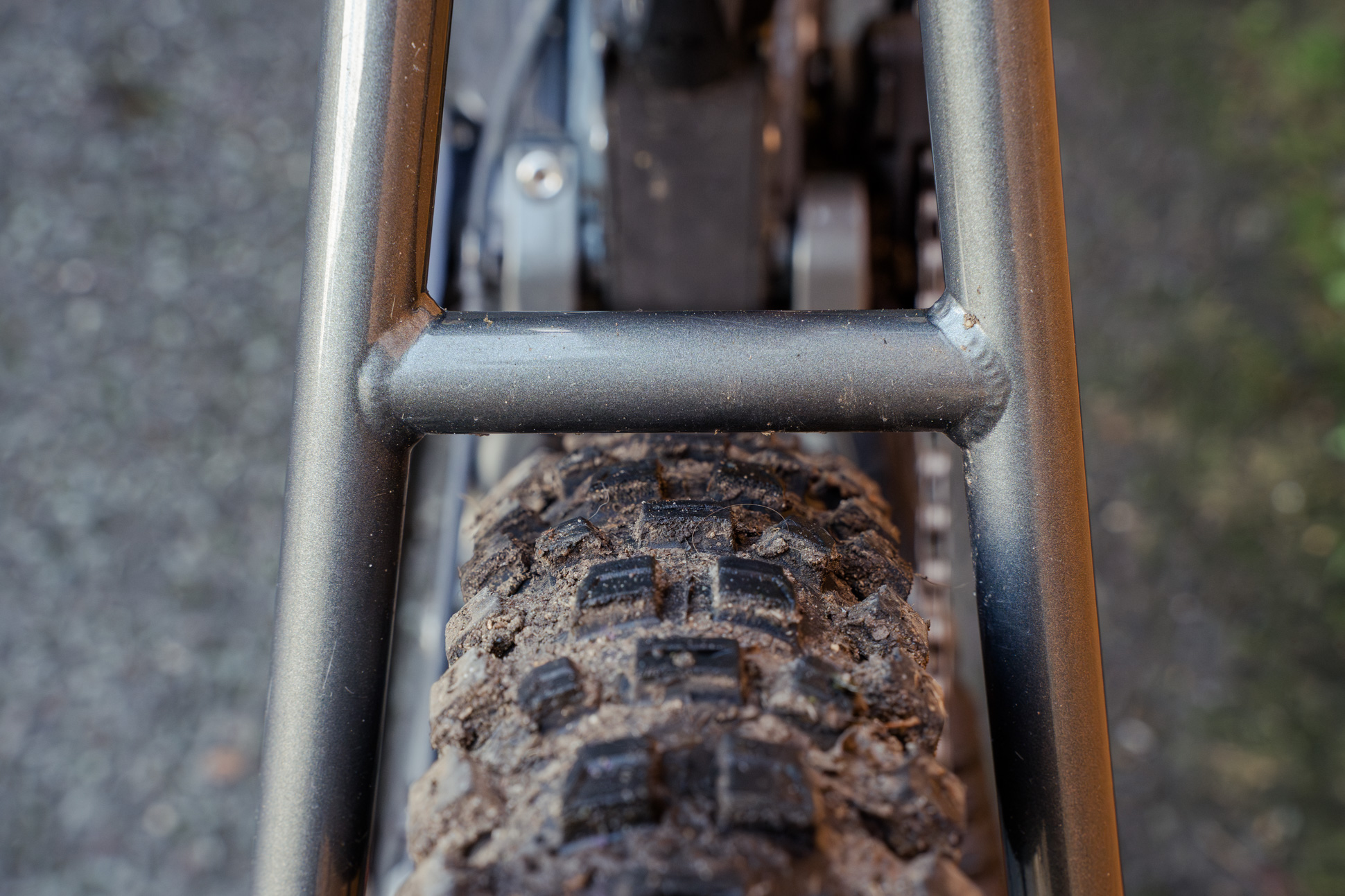
The Rocket ducked and dived into all of the more challenging trails and pretty soon felt like the best bike I’d ever ridden, full stop. E or otherwise.
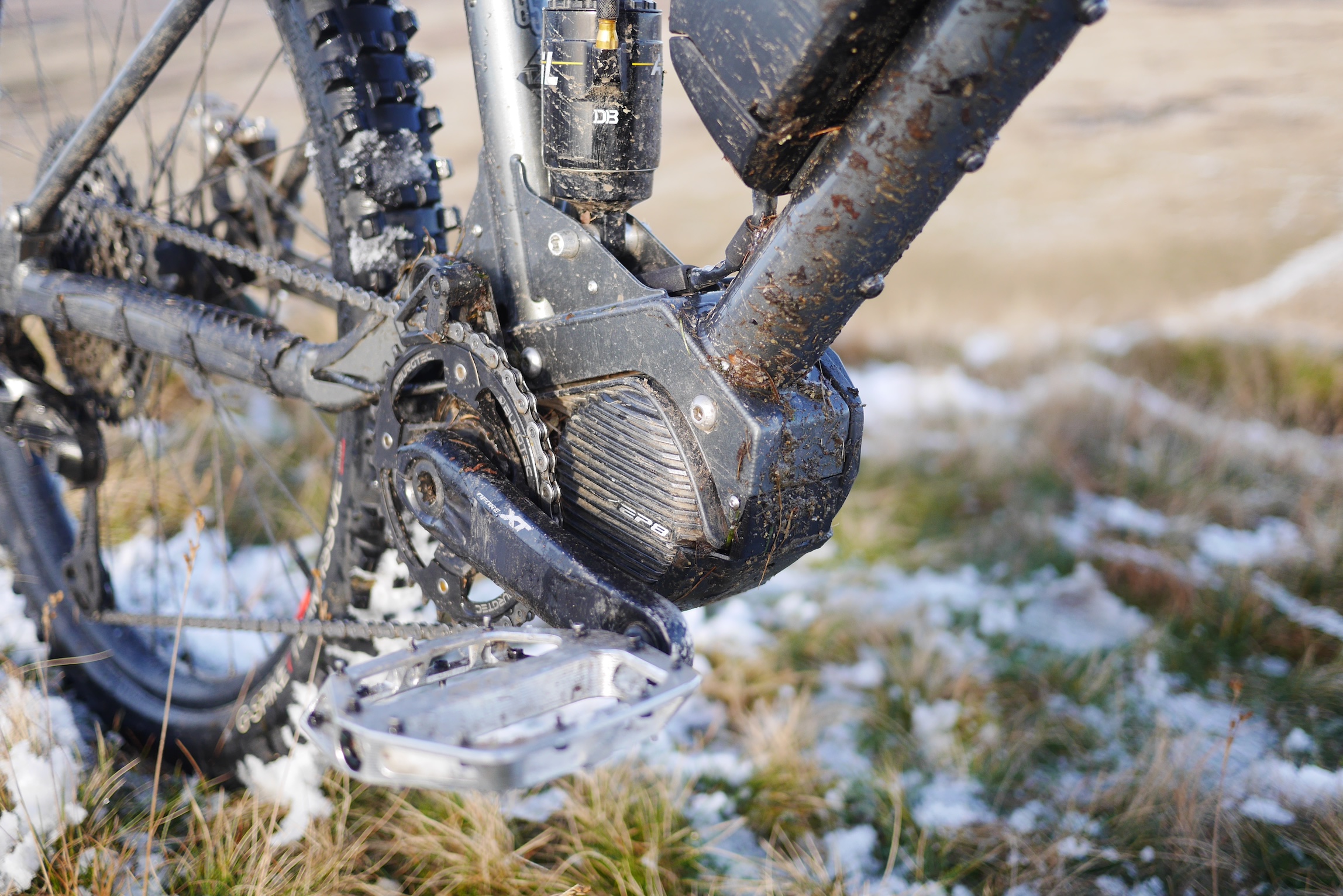


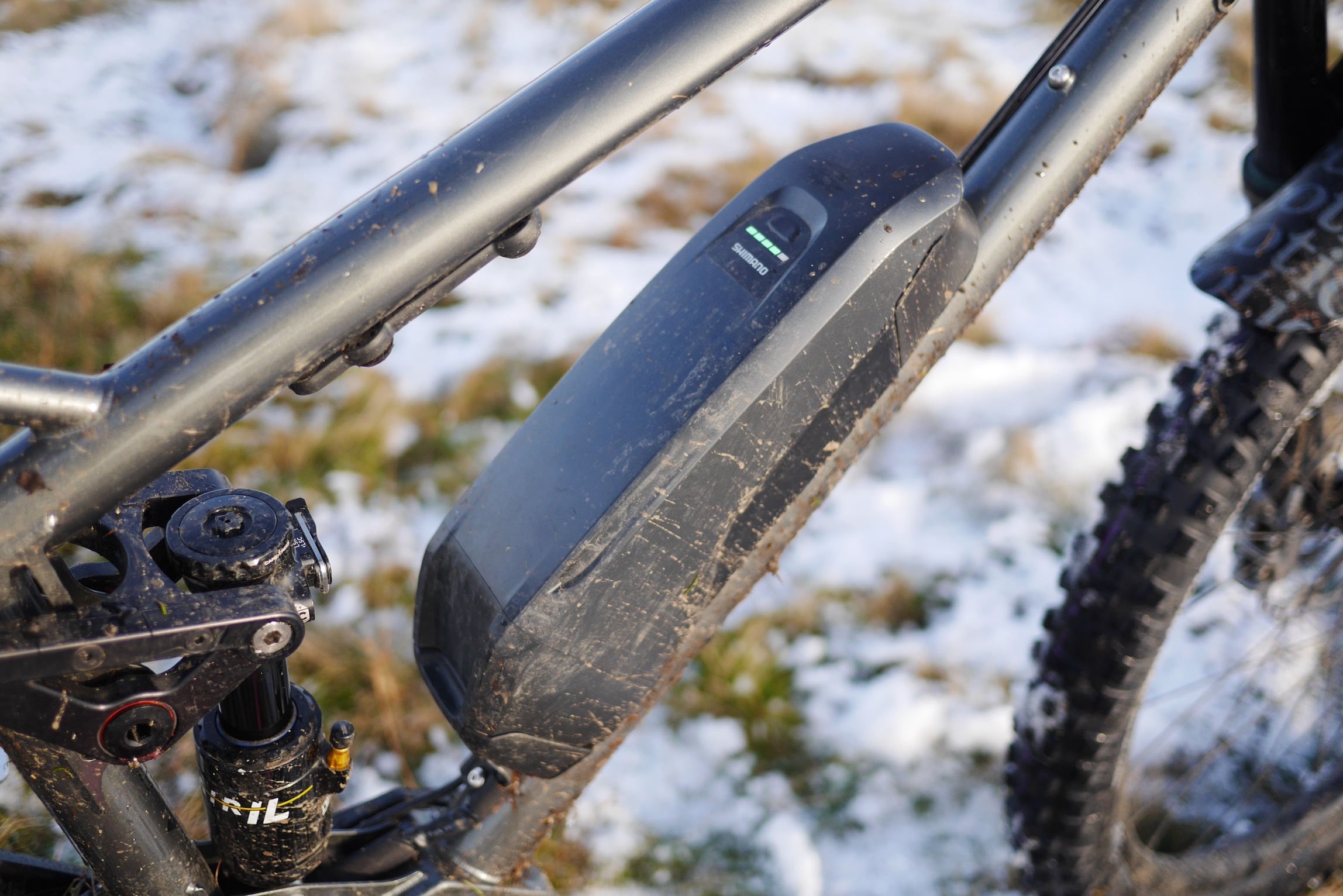
I rode the Rocket everything and anything. For most test rides I ran the 504Wh battery, with the motor in Boost mode, with mud tyres on front and rear. This setup was perfect for my standard 20km (700m climbing) local looping. Running a less OTT set-up (Trail mode and normal tyres) I could easily get over 1,000m of climbing out of the battery. It’s worth mentioning that ground conditions – and tyre dragginess – have a significant effect on an e-bike’s range.
I did also get hold of an additional battery (630Wh). This gave approximately 20% more range than the 504Wh battery. And due to the easy-swap nature of the Rocket’s battery location, it is possible to do some huge rides using both batteries. Either by circling back to the start point to swap batteries, or carrying one in a backpack. Without being overly cagey with the support modes (ie. keeping it to Trail with occasional Boost-ings) you can do 2,000+ metres of climbing.
Overall
In terms of what matters, the Cotic Rocket is a total winner. Great geometry – the best geometry from Cotic so far in my opinion. An impressively retained classic Cotic chassis feel. Super suspension. Good motor. Excellent range. Impressive overall weight for a capable full power eMTB (21.7kg for a larger size bike). Oh yes, it ain’t cheap. But that is literally the price you pay for getting things made in the UK. Regardless, the Cotic Rocket was easily the best eMTB of the past 12 months.
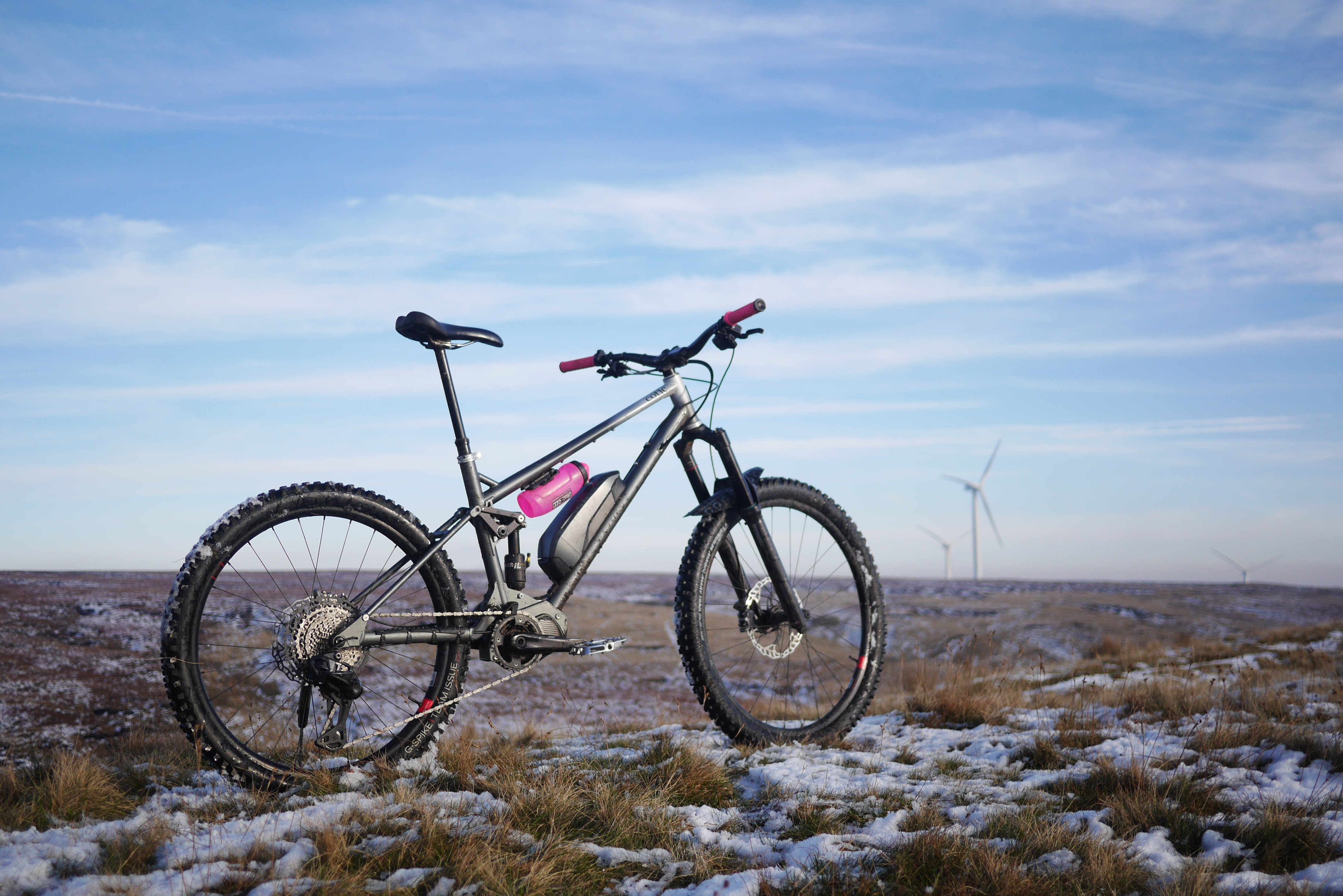
Cotic Rocket specification
- Frame // Reynolds 853 steel w/ alloy chain stays, 150mm
- Shock // Cane Creek DB Air IL G2, 185x55mm Trunnion
- Fork // Rock Shox Lyrik w/ custom damper, 160mm
- Wheels // Reserve Alloy MX
- Front tyre // Various
- Rear tyre // Various
- Chainset // Shimano
- Drivetrain // Shimano XT Di2
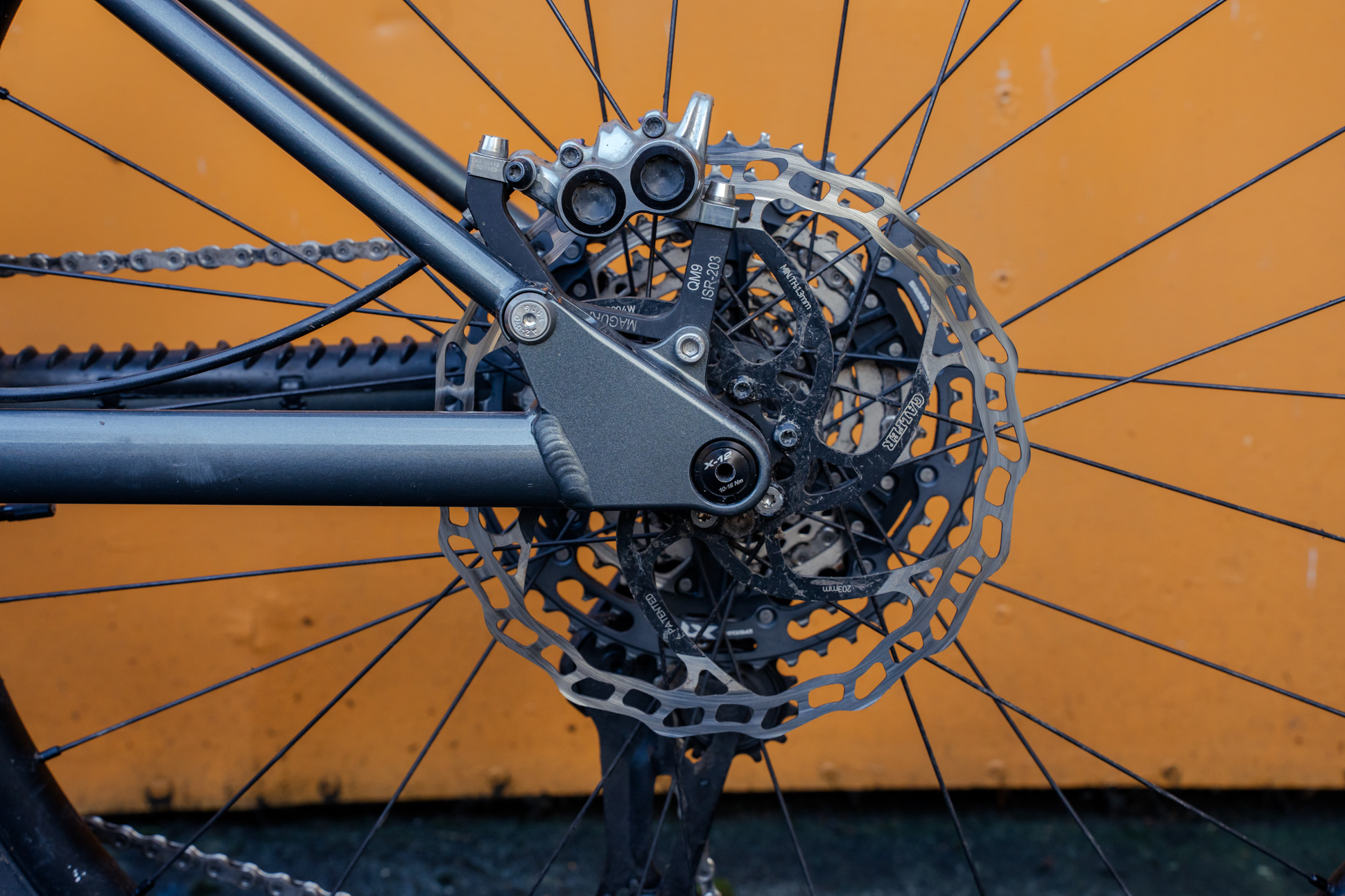
- Brakes // Magura MT7 Pro, 203/203mm
- Stem // Cotic SHORTERSTEM, 35mm, 35mm
- Bars // Cotic Calver
- Grips // Cotic Lock-on
- Seatpost // One-Up V3 Dropper
- Saddle // WTB
- Motor // Shimano EP801, 85Nm
- Battery // 504Wh (and 630Wh)
- Size tested // C5
- Sizes available // C1, C2, C3, C4, C5
- Weight // 21.7kg (504Wh battery)
Geometry of our size C4
- Head angle // 64°
- Effective seat angle // 76.5°
- Seat tube length // 450mm
- Head tube length // 130mm
- Effective top tube // 654mm
- BB height // 36mm BB drop (from front wheel)
- Reach // 495mm
- Chainstay // 456mm
- Wheelbase // 1,306mm

“I appear to remember an article in STW (yes, there’s a magazine) de-bunking the myths around frame “compliance”."
Yes, I read that too. Unfortunately it was written by someone with no formal education in engineering and clearly not a lot of self-education on that either, who is also very light for their height. That’s not a great starting point for writing an article to explain complex engineering concepts or feel-based rider stuff that needs enough rider mass and strength to get a bike to flex more obviously.
The time when a bike needs the most sensitive suspension is when riding on the limit on flat rough corners – and that’s when the force directions mean that the suspension works the least well and the system relies more and more on tyre, wheel and frame compliance.
Yeah, I’m the same. Seat tube insertion and being able to carry a full size bottle are the only two negatives I’ve got with the current RocketMax. If they updated to the Rocket layout I’d push the button on one straightaway
So, @chiefgrooveguru to get the benefits from a “compliant” frame the rider needs to be heavy and strong? I’ve still not read any articles that explain that a bendy frame is a good thing, it may be that I lack the ability to understand these things, or it may be a case of The Emperors new clothes?I’ve recently replaced some excellent Shimano Pro carbon handlebars with some OneUp bars, I tell myself that I can tell the difference and they’re more comfortable but I’m sure it’s all in my head, which is ok as I get a thrill just looking at the beautiful shape!
I understand that suspension doesn’t work as well when the bicycle is leaning over as there will be friction and pressure acting on pivots and fork bushes. This is when I would have thought a stiff frame and perhaps bushes instead of bearings would help the suspension work correctly instead of tubes that are bending in an uncontrolled way?
I think there are too many variables to comprehensively say one material or frame design is better. This bike will likely have a more flexible front triangle than a carbon eBike with a massive internal battery in the downtube but the rear triangle might have a similar amount of flex or the ebike having more. When you start thinking of flex in components (wheels, tyres, bars etc) and which direction the flex might be occuring then it’s almost impossible to pinpoint one thing.
“So, @chiefgrooveguru to get the benefits from a “compliant” frame the rider needs to be heavy and strong?"
Not at all. But a skinny rider will notice less flex than a bigger stronger rider. I may be biased because I bought a waterproof jacket based on said writer’s glowing review and when riding hard downhill there wasn’t enough space in the sleeves for arm pump…
“I understand that suspension doesn’t work as well when the bicycle is leaning over as there will be friction and pressure acting on pivots and fork bushes. This is when I would have thought a stiff frame and perhaps bushes instead of bearings would help the suspension work correctly instead of tubes that are bending in an uncontrolled way?"
That wasn’t the main problem I was referring to – I was referring to how the bike is leant over so the suspension is no longer working up and down. That’s the big difference between cars and bikes – a stiff chassis helps a car’s suspension work better, but because a bike leans over then the chassis flex is essential for when the suspension is working diagonally.
I’ve generally reached the point I can’t be bothered arguing online about complicated things because the world is very complex and most people like to simplify it too much, sometimes based on a lack of technical understanding and sometimes based on an assumption that if they can’t tell a difference then clearly no-one else can. In recent years I’ve realised that I’m a bit different and I notice more than most, for better or worse…
flex is useful for racers for defo (just see bike checks from DH pros – see amory bike setup as well as other charlie hatton etc talking about more flex)
as an avearge joe i think it doesnt really matter too much as i`m nowhere near the limit of traction ( i might think i am on occasion – but really – no ) . however i do I notice if my spokes are loose or if my rear axle isnt bastradd tight.
i think manufacturers for average bikers rather sell a bike to be predictable in every scenario (and cheaper to manufacture) rather than flexy in specific scenarious as most people 1) dont care) or 2) just dont ride enough (or well enough) to get used to specifics.
you can buy top end kit where you can alter frame components for flex (atherton, commencal dh race bikes for instance)
the cotic will have more inherent flex/complinace due to the smaller tube diameters. which could be nice if you like that (steel hardtails are nicer than ali ones for teh same reason). I`d like to try the cotic but i cant afford it.
Its a single pivot (with a linkage) so bearing life should be OK as there is less force on the bearigs because of this- i`d keep an eye on the rear bearing though as that will go first.
At the extremes, a 100% rigid frame and fork would be horrible to ride. But a frame that’s too flexible wouldn’t be possible to ride.
So the conclusion has to be that some flex is a good thing, there is an element of flex that is good and how much variable and subjective. There is no right answer but there will be a consensus of general opinion.
You can’t go wrong with ‘vertically compliant but laterally stiff’.
https://bikesnobnyc.blogspot.com/2007_08_13_archive.html
TLDR that link – what it’s saying?
It’s a Bike Snob blog post that always pops into my head whenever people start talking about stiffness (missus).
It also shows that bike industry marketing/journalism hasn’t changed much in the last 15 years.
thats not what racers are doing though. they are adjusting lateral frame compliance with bolted in plates. longevity isnt a need for them though as they`ll get new bearings every race. do that on a ‘normal’ bike for sale and manufacturers get a roasting and frames will snap.
.. the point being?
Do you think it doesn’t matter or we can’t feel differences in this area, or a reviewer is making this stuff up? Genuine Q.
“You can’t go wrong with ‘vertically compliant but laterally stiff’."
Post, opinions, blogs, information, data etc regarding this for road bikes are almost entirely irrelevant to mountain bikes, especially ones with suspension. Our suspension gives us far more vertical compliance than any road bike can hope to have. The lateral compliance is what we need (in the right amount) to eke out very last bit of grip in corners, especially flatter rougher ones. This is something that teams have been experimenting with at WC DH, not for marketing reasons but to find fractions of a second on a race run.
Cotic made a steel front triangle for Framework Cycles:
I can’t recall what’s in that video but I know the final conclusion was that when racing at full pro speed the steel frame wasn’t stiff enough and felt unpredictable in the highest G corners, so although it was nicer feeling most of the time the flex was too much for how hard they ride their bikes.
The thing that gets me most about that video, in an increasingly cynical world, is that Frameworks got Austin Hackett-Klaube from Specialized to do the back to back riding, because Neko was injured. Love it when people work together to try and understand and progress the riding rather than just sit in their brand silos sticking to justifying what their company is trying to sell.
I think that often, somewhere between the design department and the marketing department, something ends up getting lost in translation. And the marketing department convey this misinformation to the cycling press (and it seems to be both road and mtb) and then it gets repeated until something new comes along and the cycle continues.
This was a joke blog post from 2008 that stuck with me because it summed up the cycling press at the time (the other bit that always sticks in my mind is “Five Ways To Keep Your Beer Gut Off Your Top Tube" but the less said about that the better). And honestly, it feels like the industry hasn’t really come that far.There are still marketing people saying stuff that is flat our wrong and journos who just repeat it without ever once going, ‘Er, hang on…’ And people who pick up on this and then use it as part of their buying decisions for years after.Personally I think mtb design is like pretty much any other engineering. Every decision you make is a compromise and better performance in one area leads to reduced performance in another. And that’s before we get to the most important part of the equation which is the rider.Even compared to motorcycles, with mountain bikes the rider’s ‘style’ has a massive impact. Personally I never really noticed differences in frame stiffness that much but then I’ve always run my tyre pressures lower than I should (according to conventional wisdom and since I’ve discovered inserts that’s only gotten more extreme) and I run my suspension much stiffer than I should. So I suspect I’m putting up with the downsides of lower tyre pressures because then I don’t have to worry about any flex or lack of flex in the rest of the system.
Laterally stiff but vertically compliant (and variations on this theme) was a thing for a while. Hence the blog post taking the piss out of it. It ignored that fact that the energy you put into a spring isn’t ‘lost’. A steel frame being flexed is a spring, not a damper. If the spring get’s energy put into it then that energy is coming back again. And when it does it tends to find it’s way to the wheels.
The lateral stiffness in full suspension frames has at least as many misconceptions around it. There are all those Starlings with their skinny little seatstays that many people seem to think woks absolutely fine so I’m skeptical about the perceived downsides a flexible frame from that point of view as well. But then you also have people who have never ridden Starlings criticising them because ‘they must be so flexy’.
So no, I don’t think lateral stiffness is important, at least as long as it’s not causing the bike to not function. Or rather, it is important but not in terms of making the bike better or worse because so long as it’s within the working limit it’s just another compromise that has to be made.
If you read enough reviews etc about Starlings you’ll find people consistently saying they’re brilliant on natural trails, particularly off-camber stuff, and you’ll find some people disliking how they feel too flexy in a bike park. And on the other end you’ll find reviewers saying how great the old Pivot Firebird was for smashing berms at pro race pace but that it was too stiff for most riders compared to other similar bikes, which make it harder to ride.
Frame flex definitely matters, it’s not black and white and it’s a case of horses for courses.
It is interesting to think how many e-bikes have been made by fattening up downtubes and BB areas vs the normal bikes they’re based on – and how those bigger cross-sections will make for a much stiffer frame.
Actually on that subject I was riding home the last two days on my ebike and there’s this one downhill into a rooty braking-into-a-corner bit and it dawned on me that this bike doesn’t feel any/much smoother on that section than the singlespeed hardtail I rode for the commute the day before. So that’s a big fat alloy ebike frame and 170/157mm of suspension vs a steel 160mm hardtail. I’ll see what I notice next week, it’s a brutal climb without gears but I’m trying to do it once a week in the hope of cleaning it at some point…
Apologies, had told myself I’d stay away from this thread… But like a moth to a flame! You can blame my GF for her shit TV choice causing me to kill more time on here…
No it didn’t… It ignored nothing. Yes “VCLS" were the buzz words in the road market for a while, at least until they all started coming with clearance for 28c tyres or larger… Nobody was ignoring that the frame material wouldn’t want to return the energy. They were actually counting on some give, you know, just like a spring, to move with the bumps, knowing it would then be returned afterwards… Or at least the designs without some kind of damper inserted in there were… Anyway…
And then you have people that have owned Starlings, got pissed off with the feeling of the back end wanting to overtake the front, the tyre rubbing inside the swingarm, the cranks rubbing on the outside of the swingarm… Caveat emptor… Mine was an early one, and I’m also probably 10kg heavier than the average rider. I’m aware that people out there love them, and better riders than me have won races on them. But it just proves the subjectivity of it all more than anything!
Captain Obvious is impressed! 👍🏻
It’s often useful to see what the racers are doing to get performance advantages, but the reality is they will often go too far with something (bike geometry for instance) to then start dialling it back to get to a point not that far from where they were previously quite often, but at least they are then able to rule things out… Don’t get me wrong, there’s been DH race bikes that have been too stiff/unforgiving, but there’s also bikes that have been too flexy too…
It’s this general consensus of opinion that is causing the wildly varying opinions it would seem! You’ll know James, a bike designed purely by committee will have no identity, no real purpose, it’ll just be a hotch potch of compromises that mean very little to anyone… Its blandness will nullify any passion and yet more than likely it will be a sales success because it is so inoffensive (and/or the marketing budget is 10x the development budget for it)… Vanilla Ice Cream basically…And on the other hand, a bike so obviously single minded and as much of a signature for a brand as the Rocket is for Cotic, will absolutely enthral a handful of loyal diehard brand fans, and yet the vast majority will dismiss it purely on the grounds of looks without even having considered any of its potential redeeming features much less having ridden it… Or Marmite in other words…
If we are to come back to the point above about DH racers experimenting with bike setups and even their frame flex and take a look more deeply into the the entire bike as a “system" that occupies space between the riders hand/feet/arse and the ground, then I think that given we are discussing full suspension mountain bikes being ridden predominantly on quite rough terrain here, we’re all in agreement that a level of “give" is a good thing… How you get that give and what it looks like, is the $6m question…
Now we’ve seen people experiment with flex pretty much everywhere on a bike over the years… I’ve been riding since the early 90’s, so I remember when the Girvin Flexstem was being sold as the best solution for absorbing some of the terrain beneath you, and how ineffective they were! Prior to that, the only solution was to run thicker, softer grips though… And then we had suspension forks with 50mm of elastomer damped travel which suddenly seemed like the height of technology by comparison!
Fast forward a number of years… MTB’s have learnt a lot from motorcycle design… Geometry has progressed somewhat, suspension has proper springs and dampers both ends on most longer travel bikes, and fork diameters have increased to provide a level of stiffness that whilst not as stiff as a motorbike’s forks, is generally at least stiff enough for the average 20kg DH bike underneath the average 80kg rider being chucked down a mountain side… Frames have got significantly beefier too, mostly for the same reason. And then of course, wheels have got bigger, which has brought in a bit more flex whether it was needed or not, but certainly the benefits of bigger wheels tend to outweigh the negatives. But it does mean that where Nico Vouilloz was experimenting with lower and lower spoke tensions on his 26″ rimmed DH bikes as your typical 26″ wheel was really quite stiff and unforgiving if it was actually strong enough to survive a DH run, a 29er wheel is inherently that bit more forgiving… A lot of people have actually confused this for being undesirable, and hence the massive rise in sales of carbon 29er MTB wheels, which for anything other than XC I firmly believe still take more away than they add in just about every occasion. But it’s yet another area that people can experiment with flex in the “bike system"… And then of course, there’s the tyres… Arguably the single most important thing on the bike, as the tyres are the only points that contact the ground. And yet there’s still so much heresy and conjecture on the internet as to what is “best" still (I’ve spent years working for a major tyre manufacturer, I know what tends to work for the pro’s and why, but also why a average rider can’t or shouldn’t run the same high pressures the pro’s run too as they simply aren’t riding hard enough!), but just like arseholes, everybody’s got an opinion on the matter, and they never stop to question it!
I know people who’ve bought a steel frame because they wanted compliance, then fitted super stiff carbon rimmed wheels to it along with tyres fitted with DH tyres inserts in, and then wondered why their bike rode like an unforgiving POS! A bit of frame flex isn’t going to undo the work of an overly stiff and unforgiving wheel/tyre setup, not is it going to make up for poorly setup/serviced suspension either.
From experience, I’m absolutely 100% inclined to agree with you… People will invest money into things that reinforce their beliefs, and then they will invest significantly more emotion into defending their purchases afterwards too… A guy I know locally I’ve ridden with occasionally, engineer (for a company that supplies the MoD no less, he’s a very, very clever guy), quick rider and got some skills on him too… He absolutely has bought into the lighter and stiffer is better for everything mantra! But beyond that, he won’t run his tyres above 14psi, and insists on running tyre inserts that reduce the air volume inside his tyres by about 80% too… His bike is damned light… So light that even at about 75kg he snapped his bling bling Titanium crank on a rock last time I rode with him! But it’s a stiff, unforgiving mess too… His is the most extreme case I’ve come across recently, but there’s plenty of others I know that simply just don’t understand that the bike is a system and behaves as such… It’s not so bad when people simply admit they don’t know much about their bikes setup (I know several people a lot faster rider than myself, one of them a multiple national champion and a good friend of mine too, who literally couldn’t tell the difference between one tyre and another wildly different one in use, or how to set their suspension up to even a base setting, or even how to index their gears, but f*** me they can ride a bike fast!), but it never ceases to amaze me how many amateur experts there are that will argue their ignorant opinion til they’re blue in the face given half a chance!
Being able to notice a difference in things… I’m with you there, for better or worse. I’m very much that even utilising all of his knowledge and insider information, is absolutely mid pack at best. So sometimes it does feel like a curse… But then on the other hand, I’m 45 and I’ve spent approx 2/3rds of my professional career working in the bike trade so far, at times earning a decent living being paid to be the person who either knows all about things, or who knows how to fix them, so to speak… So some might consider me very lucky to be quite so sensitive to small changes… The jury’s still out for me, as I know it can be both a blessing and a curse… I’ll let you know depending on which way my next job takes me within my career I guess!
@mboy Thank you for your insight and time!
I’d agree with that. A general problem of communication, or at least of how to take the tech detail and turn it into a sellable or memorable message. One of the issues I have with bike marketing/sales is so much of it is about the tech and so little is about how bikes make us feel and to be fair, a good marketer should be trying to turn the engineering into the emotive – and in doing so an engineer somewhere will probably feel ‘dumbed down’. It’s where small brands have an advantage, the communications are more direct or from the source and the audience is more engaged in the first place.
FWIW I rode a Starling recently, briefly. I wasn’t ragging it, the local trails aren’t that hard and it was wet out, but I liked it a lot. It felt ‘right’. I once had a Commencal Meta 5 that I really didn’t like. Too much swingarm flex, felt I was reacting to the bike as much as the trail.
I know what you mean. Committees can do a very good job though – I expect the big brands like Trek, Cannondale and Specialized are design committees of sorts. With good direction they can do impressive things. It’s all in the direction.
Not everything needs to be in a niche to be credible and brands often need a stable sales base that will come from more recognised mainstream formats. The mainstream stuff can support the more niche or experimental parts of the range. Whether that mainstream range is needed probably depends most on the brand size and position.
The quick change battery must be the future? Especially if manufacturers all use the same batteries! That would be the dream surely. Battery exchange stations or battery hire for long rides and mtb holidays. Bike locked safely away and bring the battery indoors to charge up at home or on holiday and keep an eye on etc.
I think Cotic may have started something here.
Yes the battery does look a little bit clunky , but so does the new VW Transporter (…or insert other brands) . But we would get used to it and some of us are wear Hi Viz on the road because its a sensible thing to do!
I would have a top tube bag of some sorts anyway and a dark colour to make it stand out less ,maybe frame wrap or something on it?
I really like the idea and this bike and will now see if they bring out a more xc type version as I maybe a tad overbiked if I bought this one, I love steel frames and will crunch the geometry in abit more detail and maybe go for a test ride as well.
Plus at some point in the future , I do think some hotels etc will ban bikes inside , not understanding that not all bikes are made in China or like scooters. (Insurance companies will force this to happen?)
So batteries may need charging in a safe fire proof “box " or cabinet or something so quick removal a good solution .
I do not own an ebike (yet) , but this may temp me much more now and for that huge investment if its more future proof that is a good thing as well. The Harly Davidson of the mtb world for us oldies for which horse power is not everything anymore.
I may be missing something here but what exactly have they started? Plenty of older E-bikes had a cheap looking battery case stuck to the down tube like that and plenty of current bikes have removable batteries. I could well be wrong but it just looks like a cost effective way of getting a (needed) E-bike to market whilst keeping their DNA?
Some of us are not clued up on the latest ebikes and removable batteries etc.
The design makes does sense on a steel frame……..
Not for me but kudos for going with something different.
For me my spindly steel hardtail compliments my emtb because its so different.
Riding each reminds me how good the other is in its respective lane.
I keep coming back and reading this thread, I think its the non-serviceable Shimano motor that puts me off more than the battery.
Full price E-bikes aren’t a cheap hobby and the difference between having a motor rebuilt appears to be £350-400, while replacing a Shimano motor at £800-900 is around double. Still not a deal breaker if you can afford the Cotic but the idea that it can’t be fixed is just wrong.
Although by the time it dies you will hopefully be able to swap it out for the Intradrive 🙂